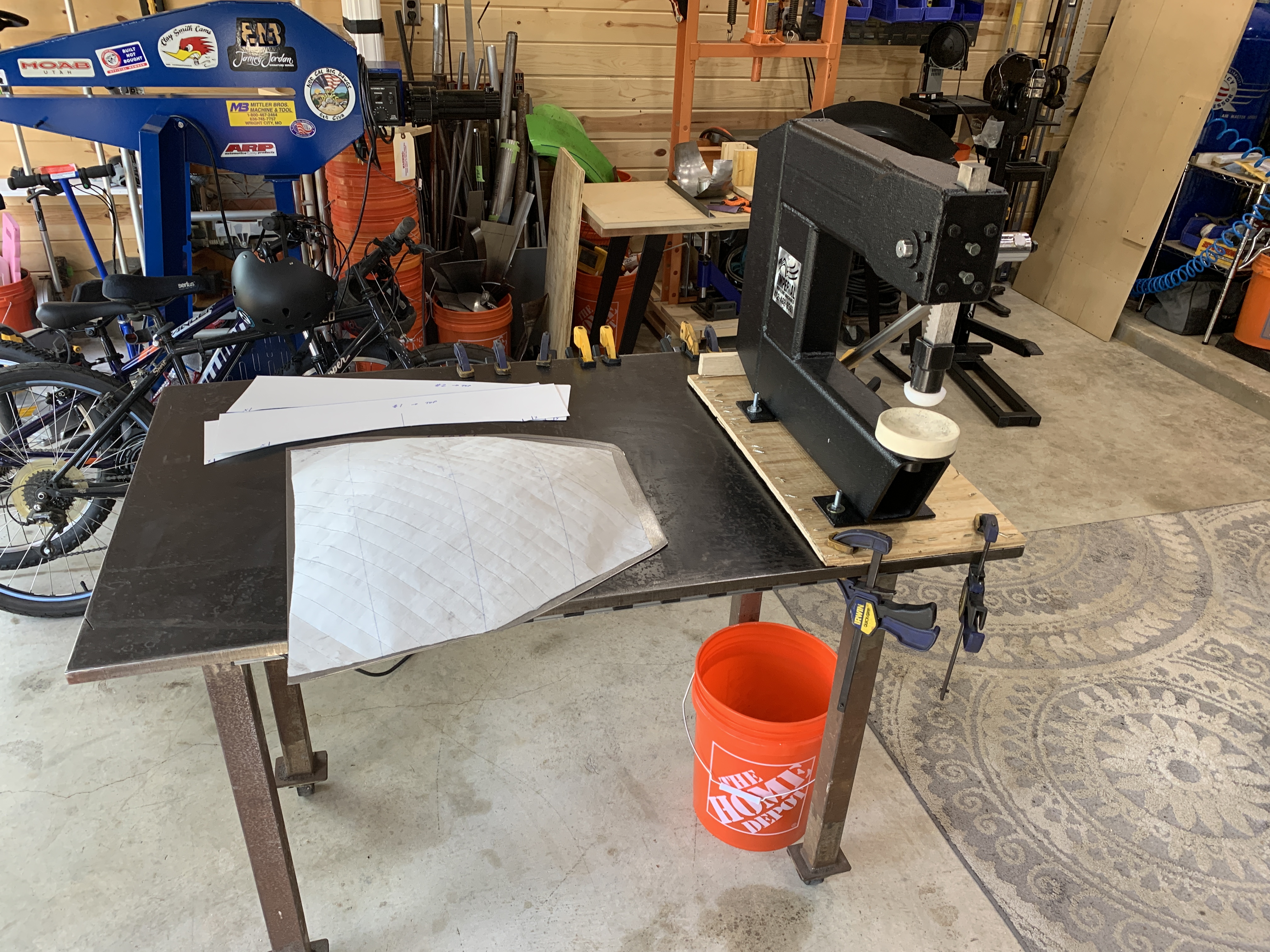
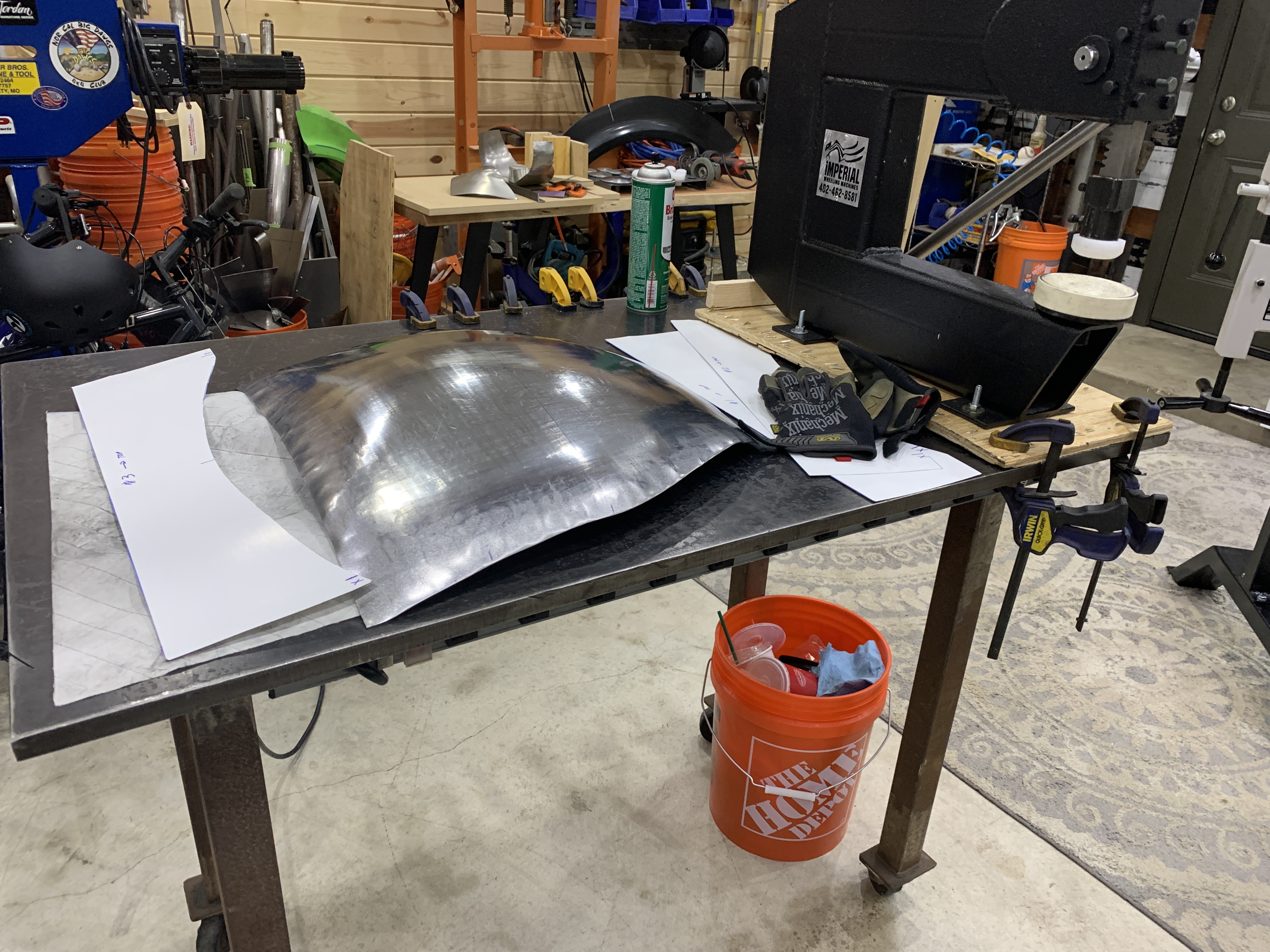
How many hours of practice do you have on that English wheel before you could make panels like that? I've always assumed that would be a time intense tool to learn to use correctly. Your presentation here is of the successes, but I assume there's a good bit of time just learning the tool? Just curious what the learning curve was like.
Good question.

I try not to be like one of those TV Reality shows where everything seems effortless... and I hope that when you see how slowly progress is made that it's because I'm struggling A LOT.
The English Wheel is a "Zen Tool"... and you don't really "think" about how to run the metal through. As you practice (and skate off in the wrong direction a bunch of times) you eventually realize that it's like constantly backing up a trailer... all the motions are "backward" from what you expect. And if you try to
think about how to get to a particular location on the panel it seems like it will never get there.... you just have to screw around with it for a bunch of hours over the course of a few days and then one day it will just sort of "click" in your head... Suddenly, you won't be thinking anymore... you just look at the spot you want to shape and your hands will know how to get the panel lined up automatically. It's quite a cool feeling.
So that's Step 1. Putting curves in a panel gets you started, but you need to have some kind of a plan to get the shape that you really want. That's Step 2 in the learning process. For me, that started out as a wireframe template.... and I suffered a lot trying to get the proper crown in the center of the panel. I'm sure you remember that... 16GA is thick and doesn't want to stretch., and even with heavy hammers it's hard work to get a strong dome shape.... and if you work too close to the edges of the panel accidentally, you will relax the metal that is helping to hold the center crown profile for you and the entire panel will just start to flatten back out again. (Made that mistake a bunch of times before I saw a YouTube video that explained it).
I watched dozens of hours of video from Lazze and ProShaper.com and really studied what they were doing. But you can't just watch them once and then go do it yourself. You have to try it for a few hours, fail miserably... then come back and watch again. You will SEE so much new information that second time and understand the way they work a panel vs. the way you were doing it. It starts to make more sense each time. Go back out.... do better on a panel... come back and watch a few more hours of video.... learn some new tricks or techiniques..... then go out and try again.
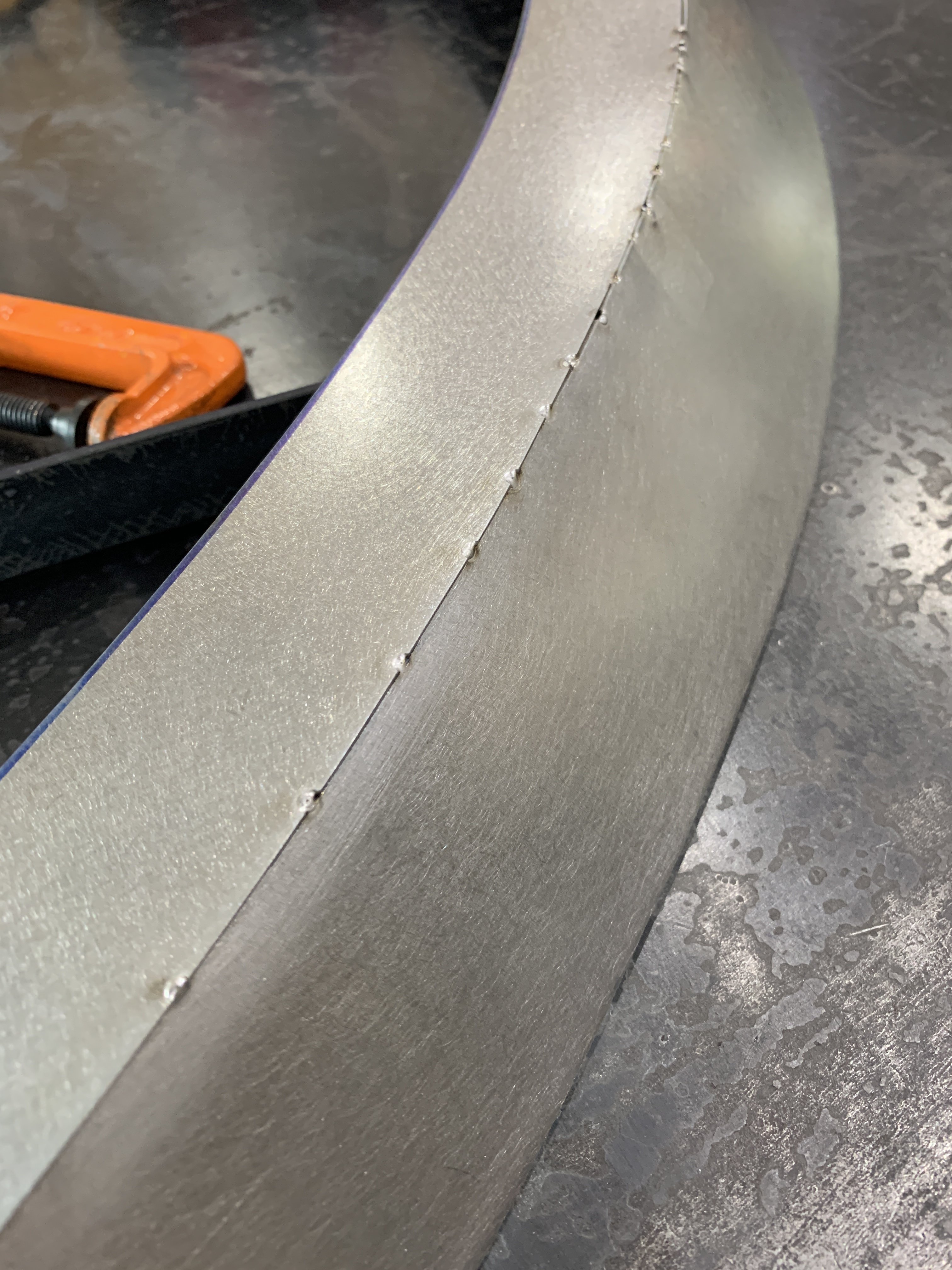
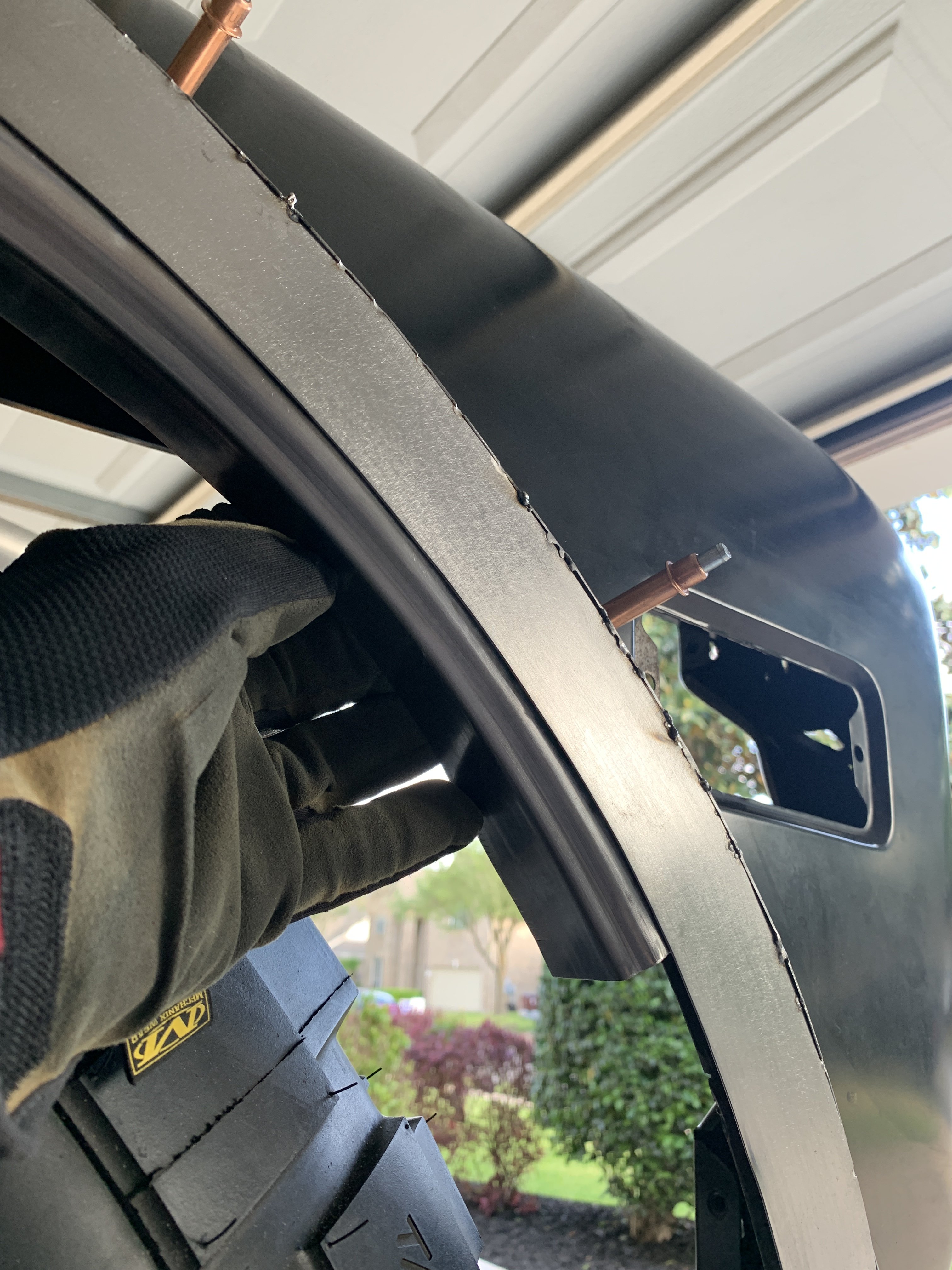
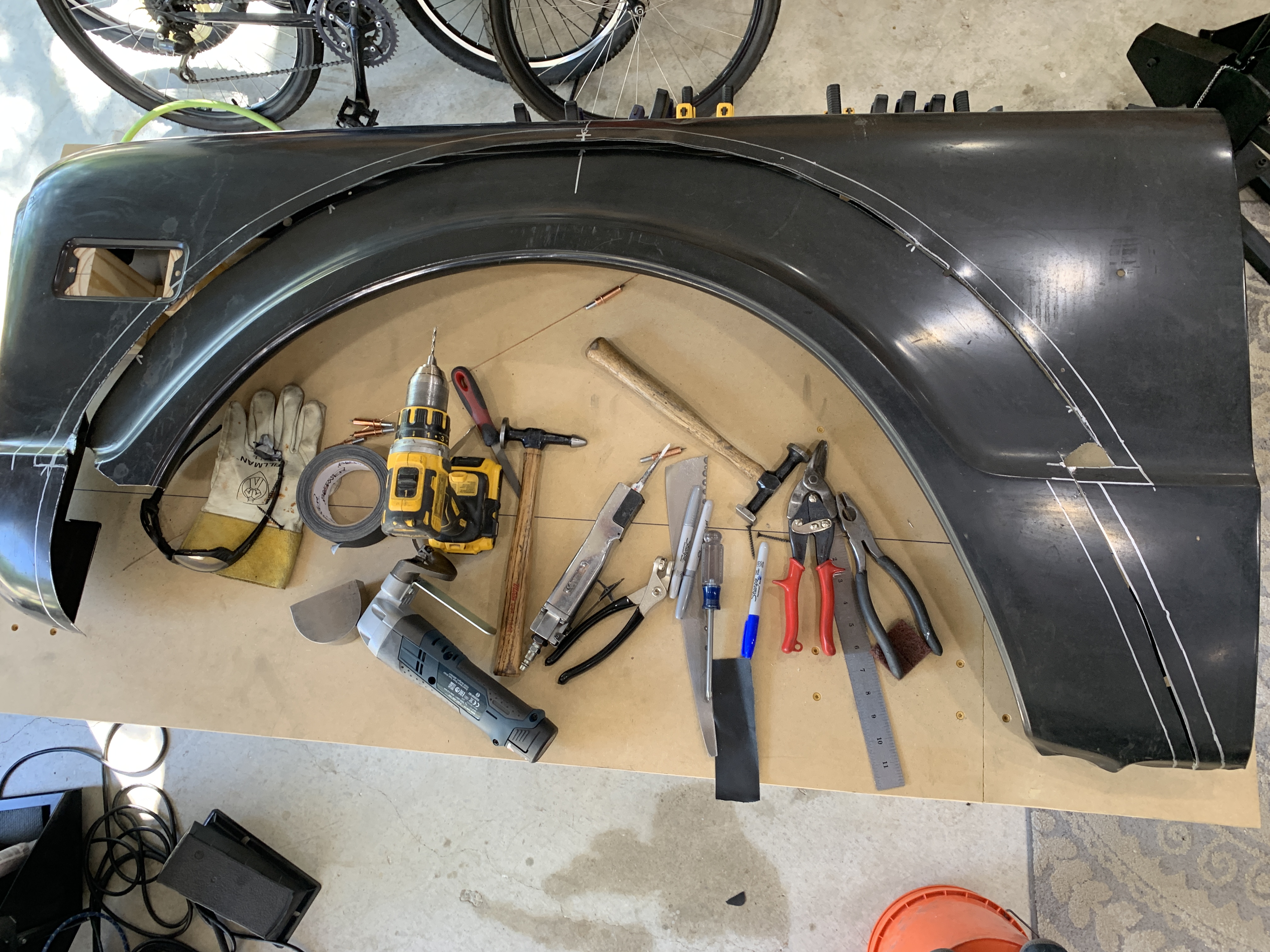
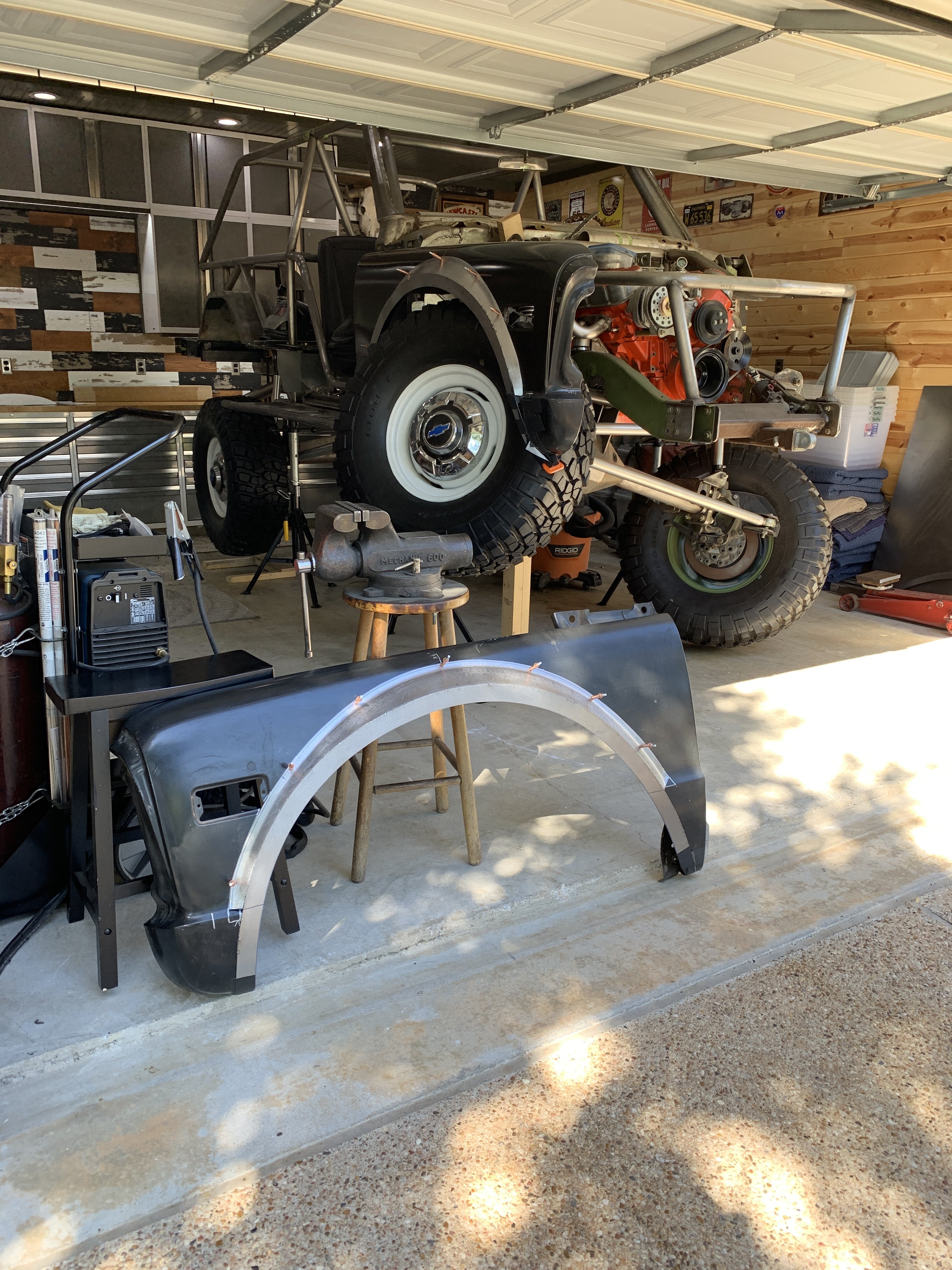
That's what the last month or two have been for me. I could take photos of the same panel over and over for 20 or 30 hours, but it won't really mean anything to the casual observer... each photo will look practically the same. (By the way it is VERY hard to photograph a curved panel in a way that accurately portrays it's shape and profile)... so it's not that I'm trying to hide the failures from CK5, they just aren't that easy to understand unless you are someone who is already well-versed in metalshaping.
I'd say that maybe at this point I've got 60 hours of practice shaping metal, and I skipped over a lot of suffering by purchasing the Arbor Press shrinking tool. If you were only working with 20GA or thinner materials you probably wouldn't need it so desperately, but you'd be doing a lot of hammering... and I really don't enjoy that (and neither do my neighbors). Maybe I'm in Step 3 now...... I can build a panel from a flexible shape pattern, find the low spots and know how to effectively raise the low spot on the Wheel using leverage and proper positioning of the part. I'm starting to look at the reflections in the metal from the overhead lighting and using those distortions to inform me about how close I'm getting to the desired shape. It's getting more fun, and I can really make forward progress on a panel in just a couple of hours.... and that keeps me motivated.
I guess ultimately, there are no revelations here. You have to invest time in yourself to learn new skills. But I guess the part that IS helpful might be the concept that you need to try for a few hours.... then stop and let your mind absorb what it learned (subconciously) and the next time you try again.... your hands/arms/brain will just seem more able to do the work you want to do.... study YouTube in bursts also.... learn and absorb for a while, then get away from it and practice.... then come back and watch with a new perspective.... even the same videos will seem different and more educational after struggling on your own for a while.
-G