2010.07.24 - UPDATE! - DETAILS...DETAILS...DETAILS....
It's always amazing how much time it takes to deal with the little details, and how much money you can spend on the "little stuff" when working on a project.
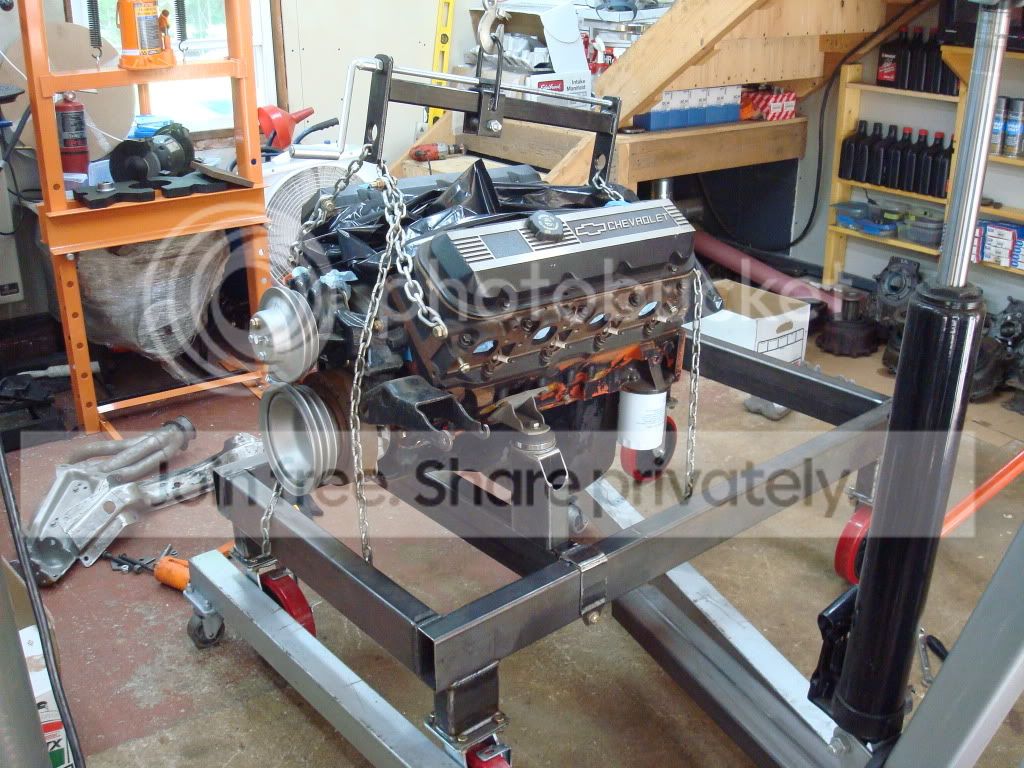
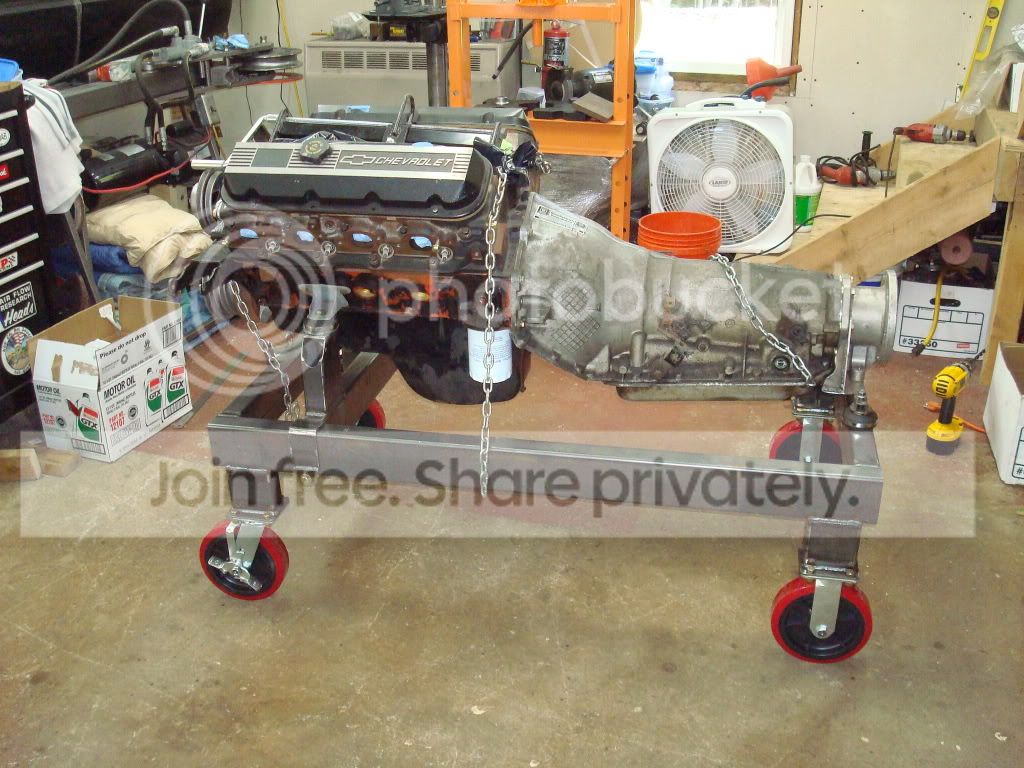
I have been taking a break from the rear suspension stuff for a little while, and decided to change gears from heavy fabrication to some nice finish-work and perhaps a bit of short-term motivation. My idea was to get the 502 finish painted, get the accessories on it, and then fire it up on the new test stand. The idea was that hearing that engine run would be a great inspiration and remind me that this truck WILL eventually drive under it's own power again....someday.
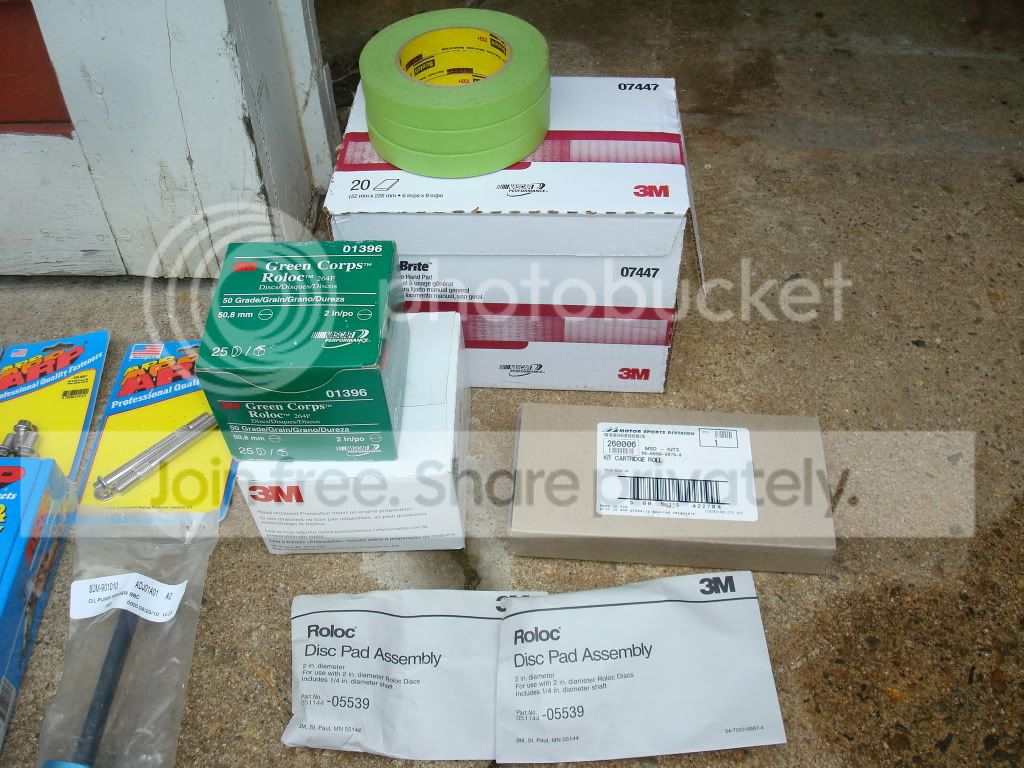
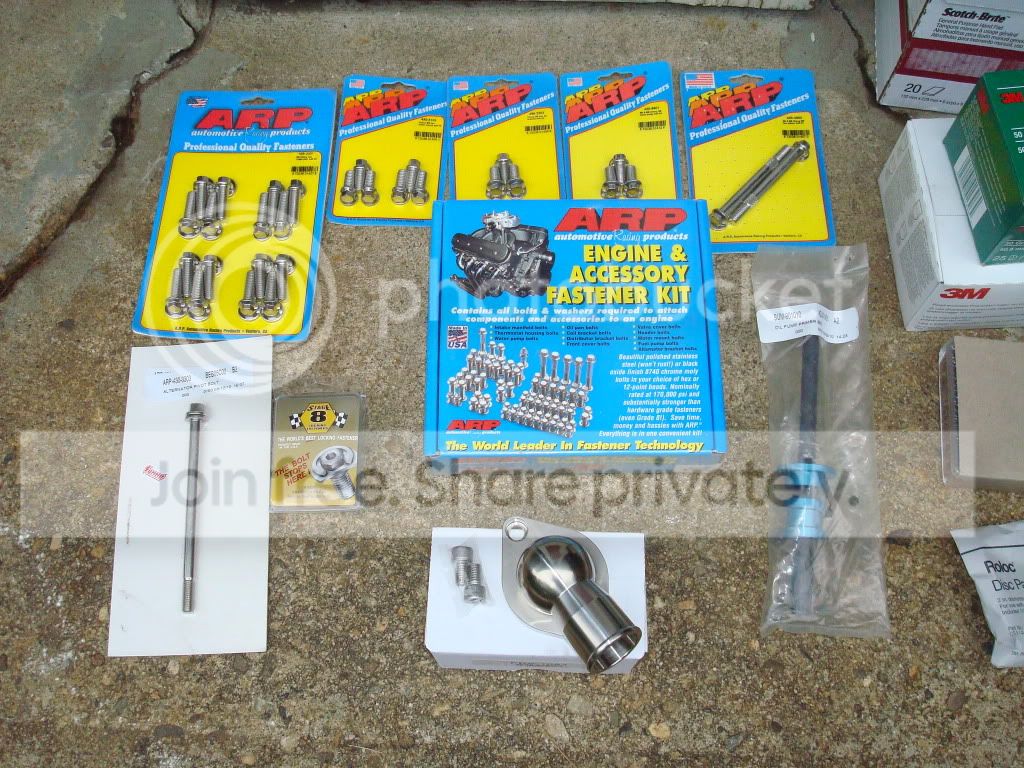
In anticipation of this weekend's work, I collected a bunch of things from Summit...
3M Products...Roloc discs, sandpaper, Scotchbrite pads, etc
And a rather pricey set of ARP Stainless Fasteners to bolt everything up
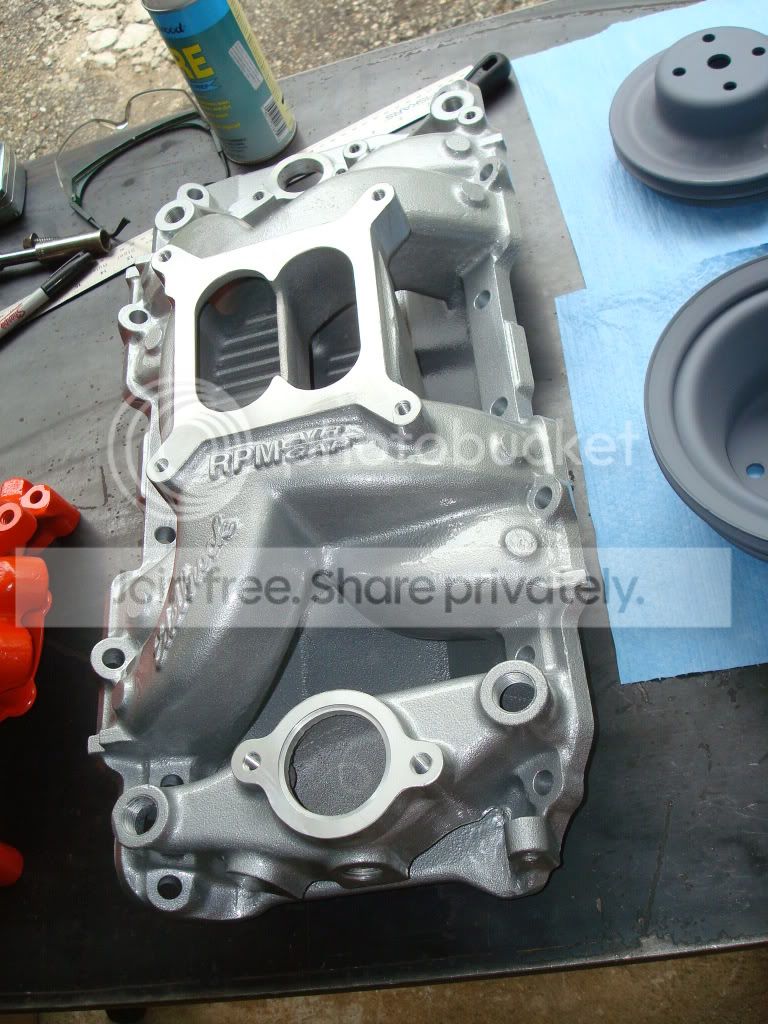
A local powdercoating shop did a nice job laying down a silver powder and a topcoat of clear on my Edelbrock AirGap manifold... should be a lot easier to keep clean than leaving it raw.
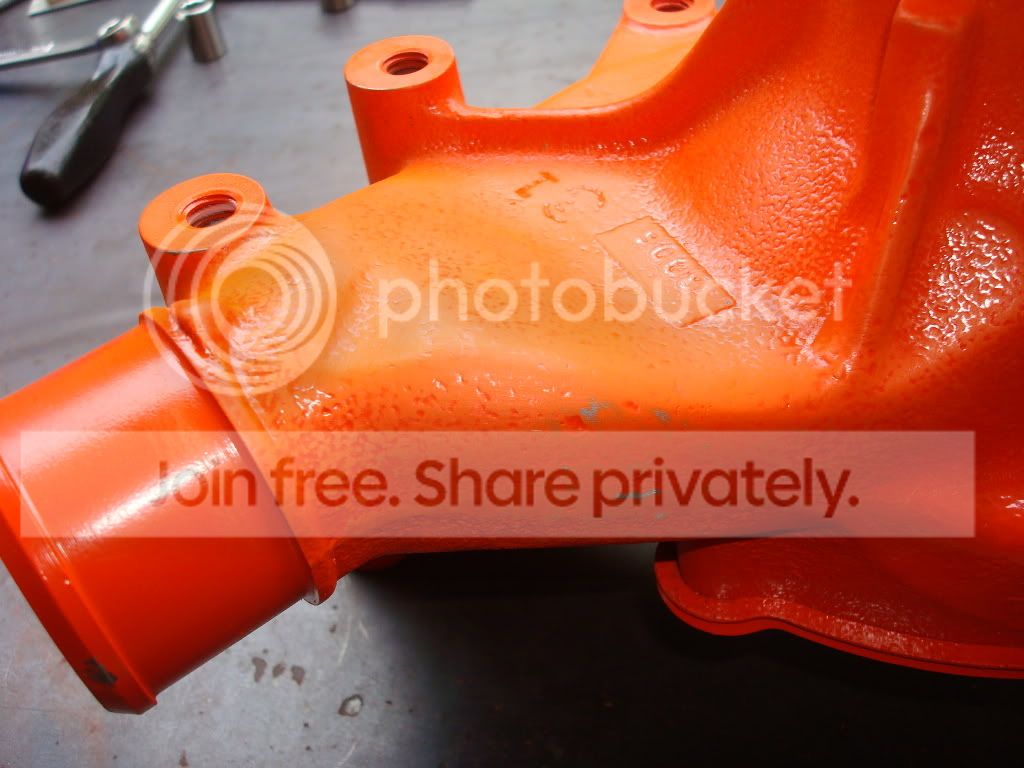
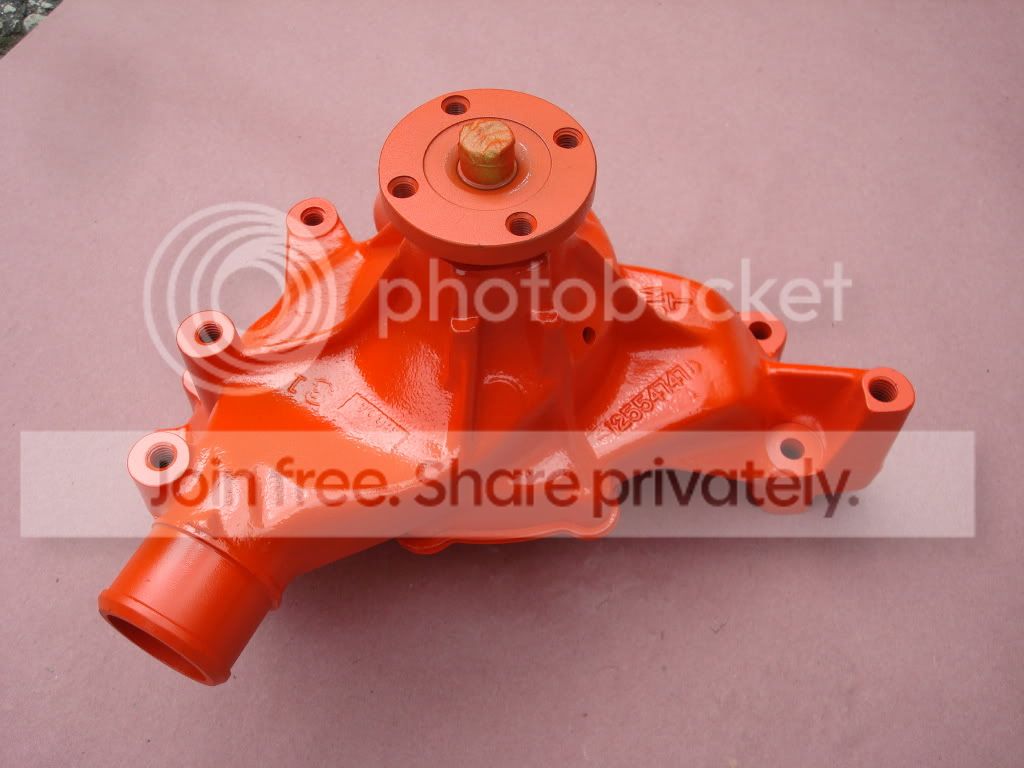
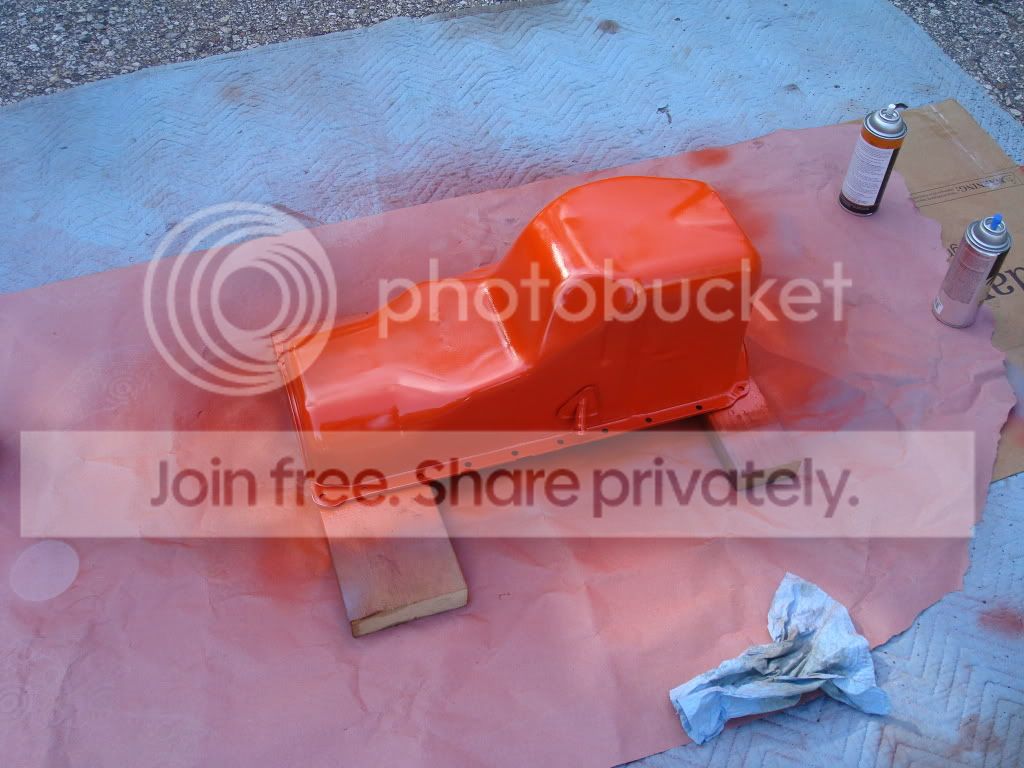
I've been experimenting with some rattlecan techniques to try to get a good professional finish. It all starts with a thorough sanding, grinding and scuffing of the original part followed by a few coats of primer. Unfortunately the primer didn't "build" very well, so when I shot the first few coats of Chevy Orange there was still a significant amount of casting texture in the part. Since you're not supposed to mess with the paint for about 5 days once you let it start drying I had to wait until this morning to finally get after it with a Scotchbrite pad to see if I could knock down some of that porous look.
I didn't really want a totally smooth, pimped-out showcar appearance...just a more modest amount of texture than I was getting. After a few more coats I got closer to what I was hoping for.
The tough part about working with all these small parts, especially when some are further along than others, is that you have to remember to recoat stuff that is flash-cured and not let it dry too far. I spent a lot of time running back and forth between the waterpump, the harmonic balancer, the lower pulley and the oilpan while also trying to do some prep work on the block itself.
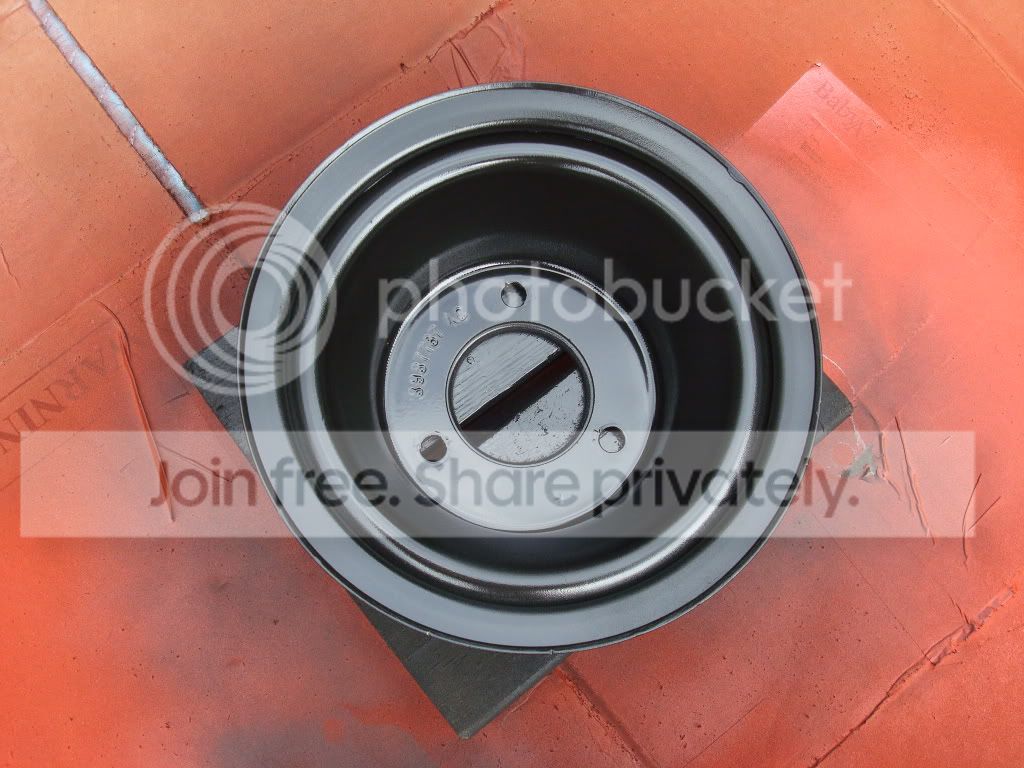
I tried an Eastwood paint called "Underhood Black" on the pulley. It's a lower gloss black, and it really does have a correct factory appearance... not too dull, not too glossy. Just right.
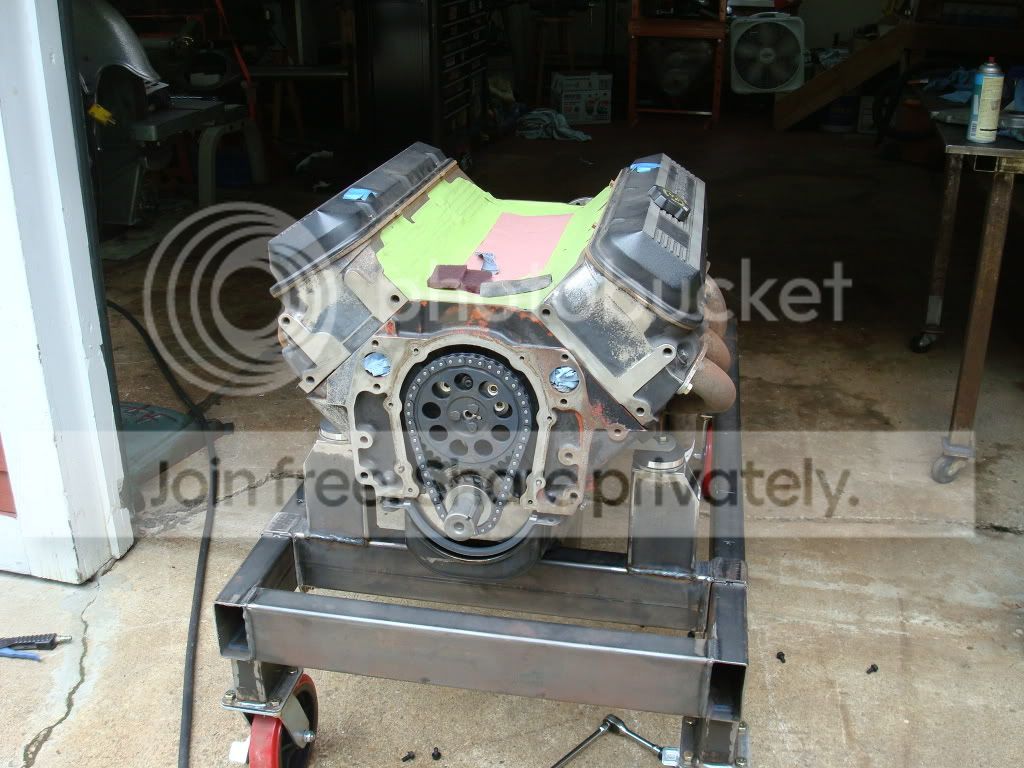
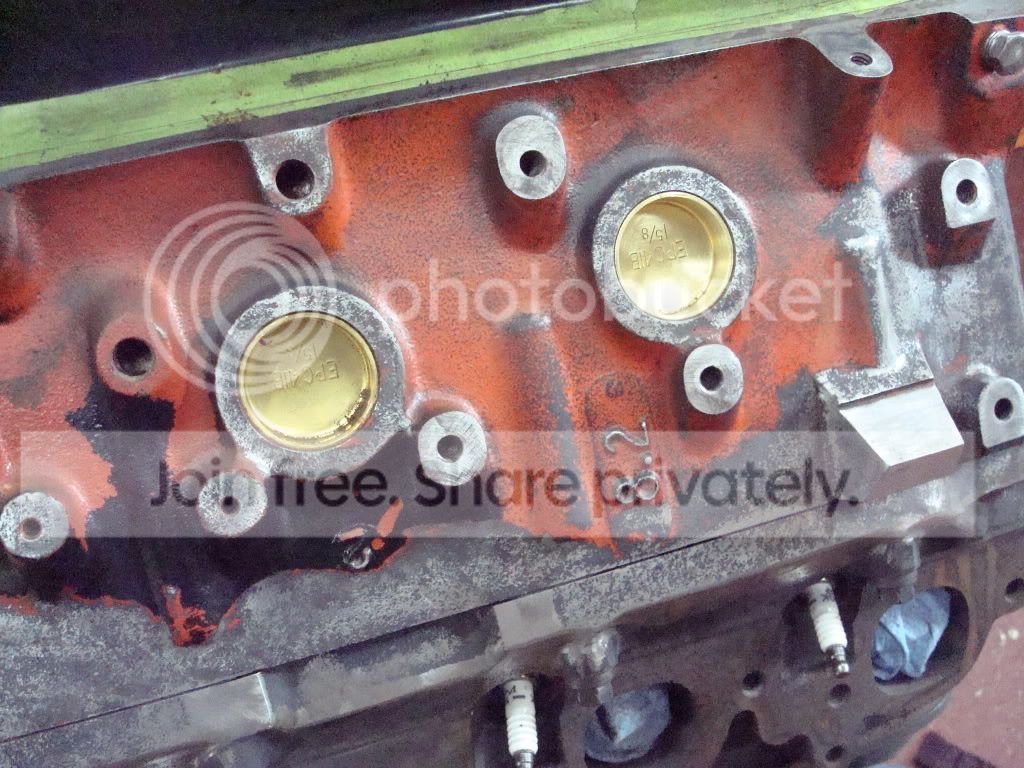
I pulled the timing cover off to paint that seperately. It's aluminum, so instead of the traditional Duplicolor grey primer, I took Ryoken's advice and shot it with some green zinc instead. Since it was hanging from a wire in the side yard, I grabbed a shot of the block instead. It's quite a challenge trying to keep the motor clean on the inside while still doing a bunch of sanding and prep on the outside. It definitely tests my patience and OCD tendencies.

I pulled the oilpan too, since I wanted a really careful job on the edges and wanted to get full coverage even where the bolts will eventually go. I found that the crimson-colored Roloc discs make a GREAT deburring tool on stamped parts. I was able to get rid of all the sharp edges around the perimeter of the oilpan without making them overly radiused. No more sliced fingers or cussing later on.
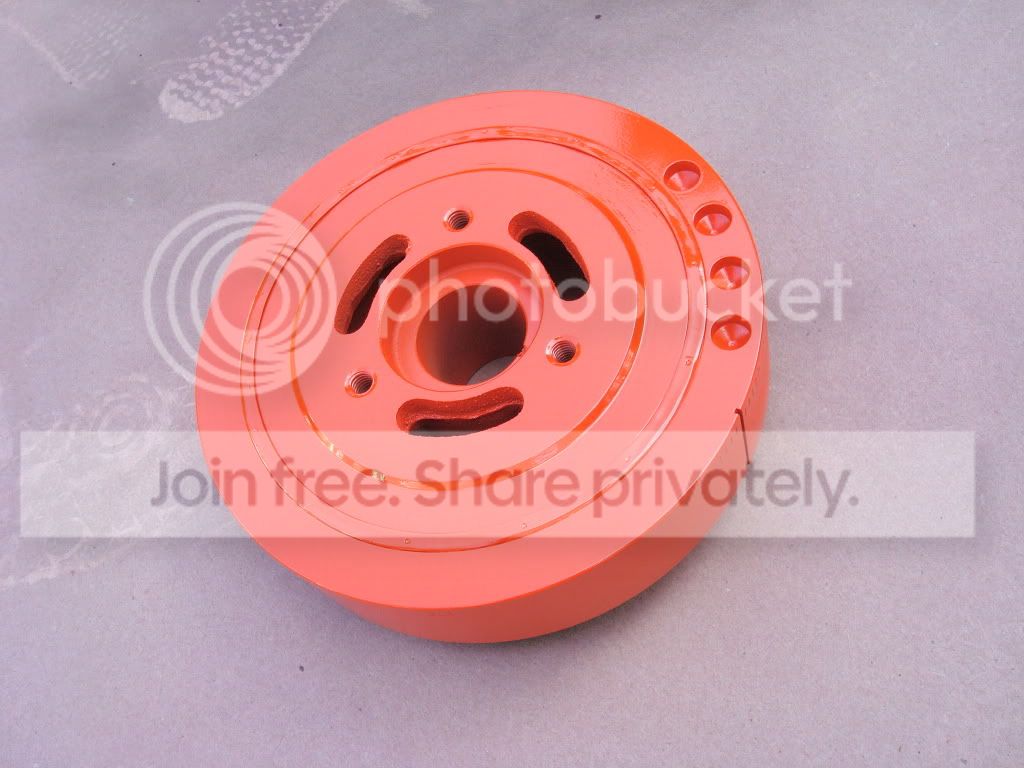
Here's a finished shot of the harmonic balancer. I still need to paint the degree markings with a contrasting color, and I want to shoot all the finished parts with a Duplicolor clear to seal them up just a bit more, but overall I was really satisfied with the quality of the paint once I'd layed down a few coats of the orange.
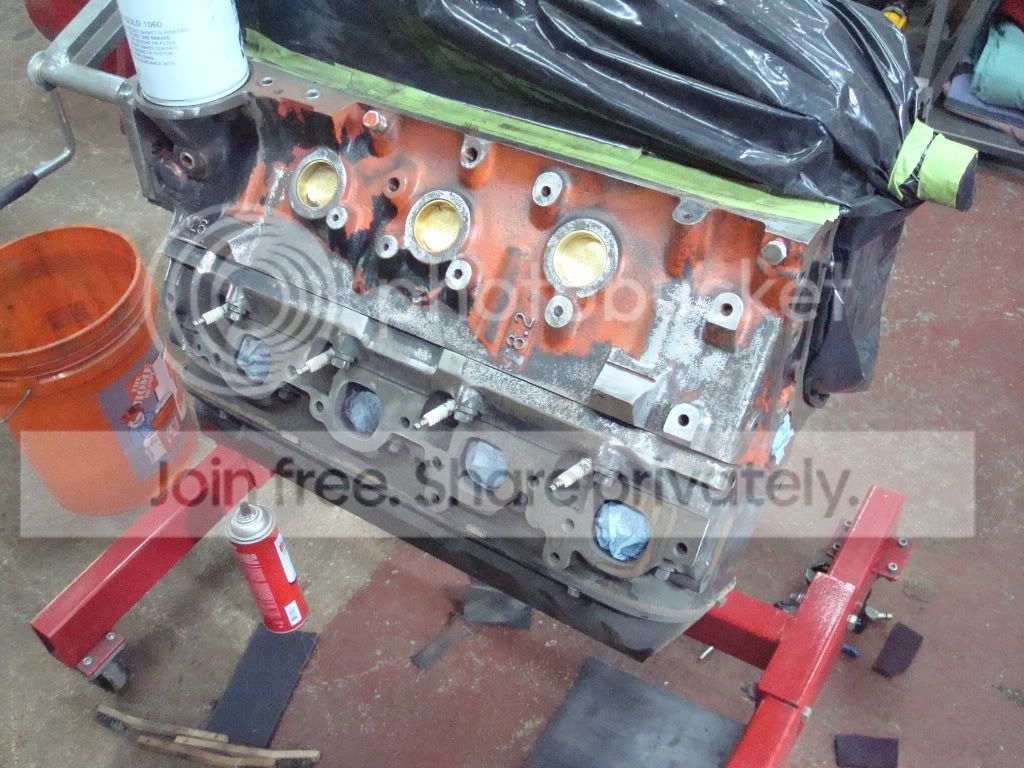
The block is the next big challenge. There is a lot of careful sanding that needs to happen and I want to get rid of some of the really bad casting seams and texture to give it a more refined look....not like a trailered showcar engine, but just a bit more tidy than a regular factory engine would look.





 but I was cheating by measuring a factory sleeve for mounting a steering box.