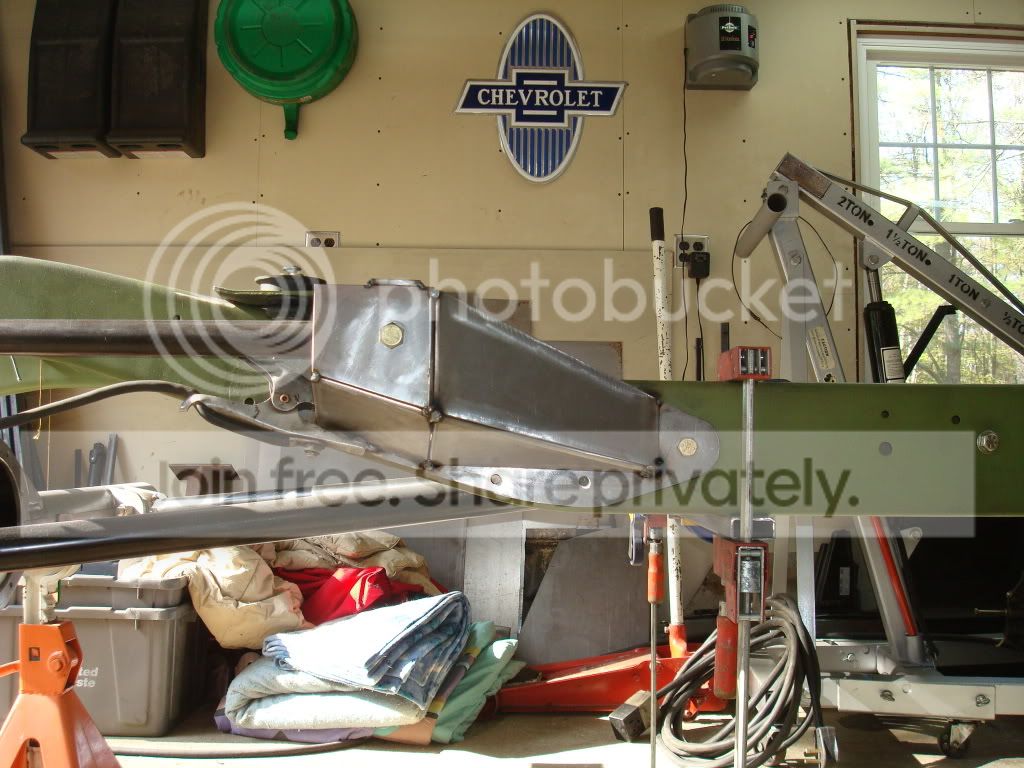
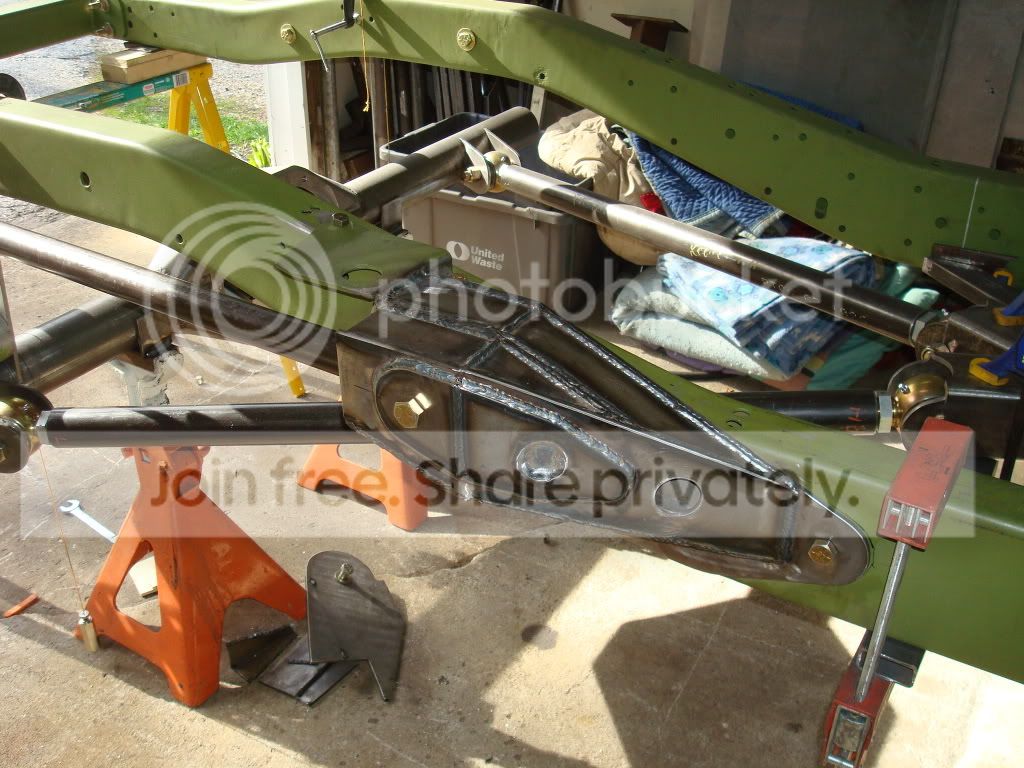
2010.04.25 - UPDATE! - WELL, THAT TOOK A WHILE....
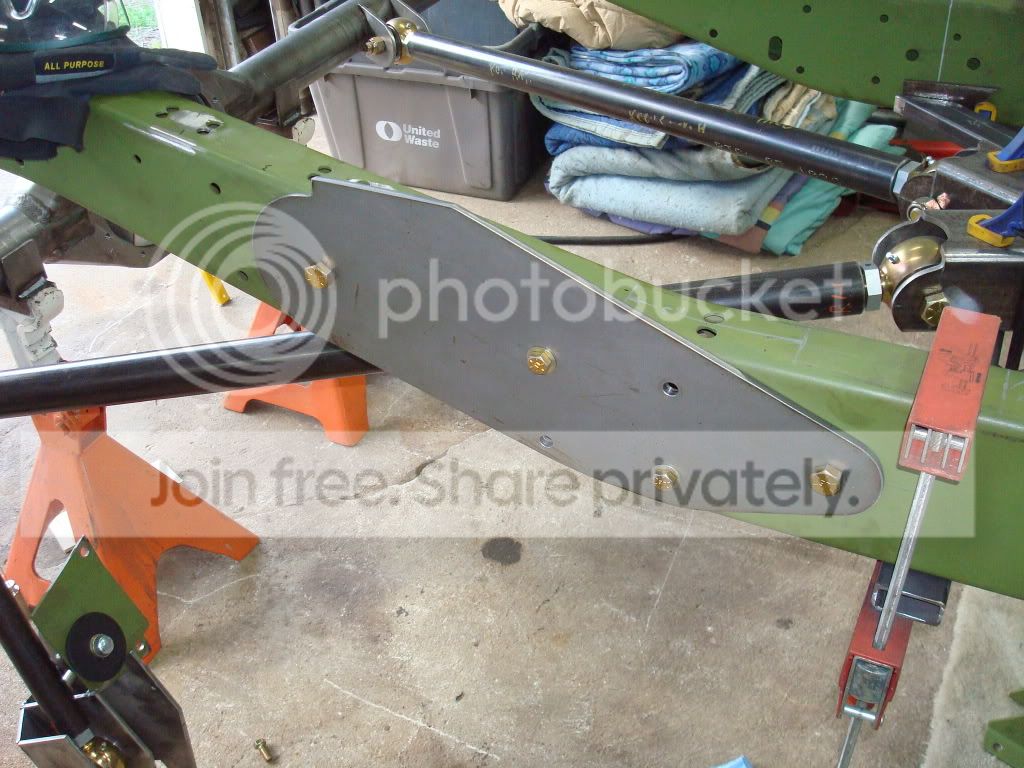
After that Friday update it seemed like a simple matter to just finish up a couple last plates, cut a few access/drain holes and burn the whole thing in. Not quite.
Everything takes longer than you expect, even when you have a pretty good knack for guessing lots of hours. But by the end of the day the results were worth it.
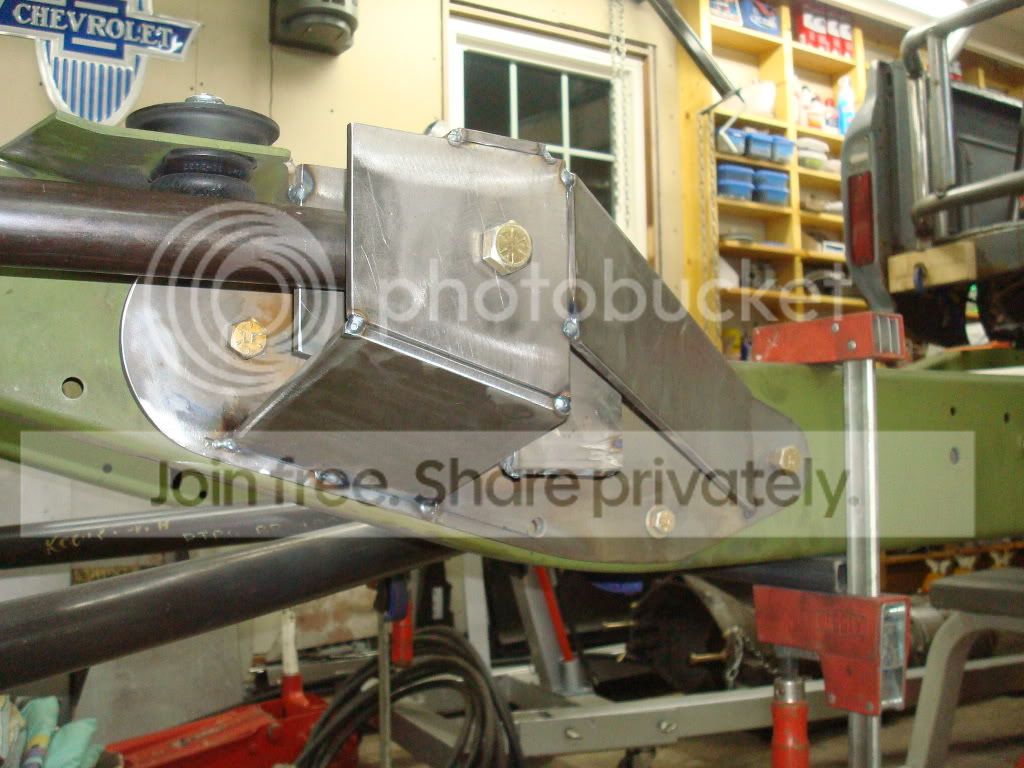
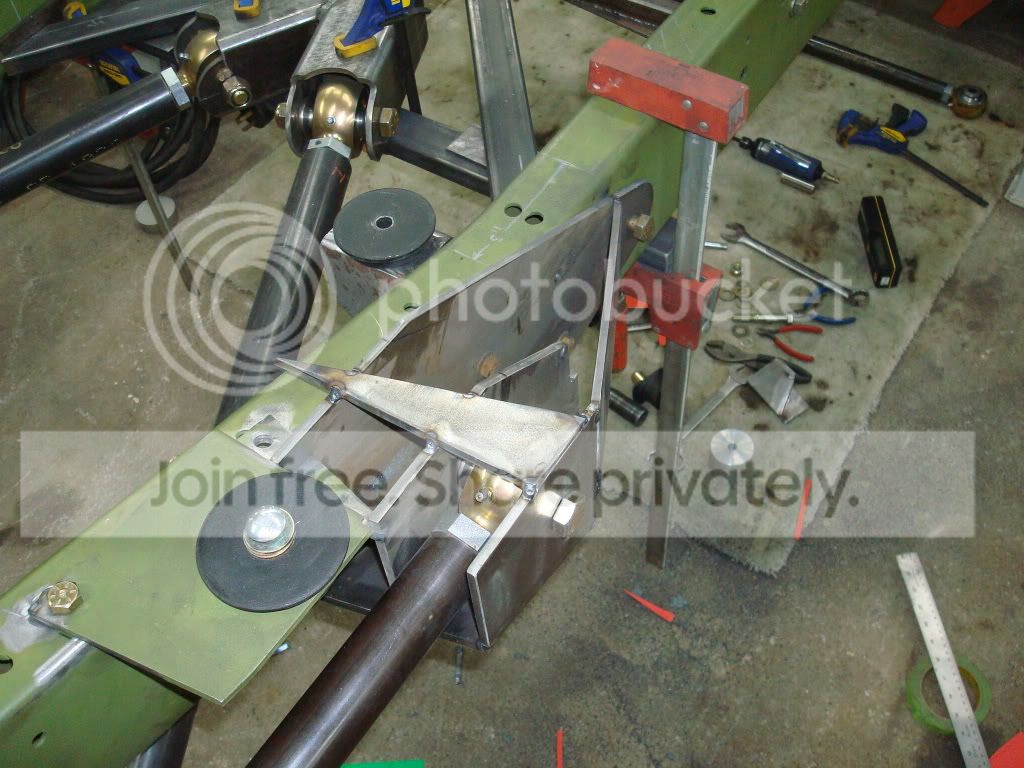
The first step was to do all the interior welding on the bracket. Access was difficult, and I ended up removing the bottom triangular plate to allow me better access to most of the seams. I had a good HAZ (heat affected zone) pattern after doing the interior welding, so I knew I was getting a good hot weld and good penetration. Once the inside seams were done, I tacked the bottom plate back on and welded it on the inside.... then I welded all the exterior seams as well.
It's not visible in these photos, but I cut an additional section of 1/4" plate and welded it to the inside heim mounting hole to effectively thicken that area to a 1/2" mounting flange. I didn't want to take any chances with strength.
At this point, I also cut two 1.5" through-holes. The lower hole is a water drain hole which conveniently also gives me wrench access for the upper body mount bracket bolt. The hole on the side is an access hole for the other upper body mount bracket bolt. Plus it adds lightness and SPEED!

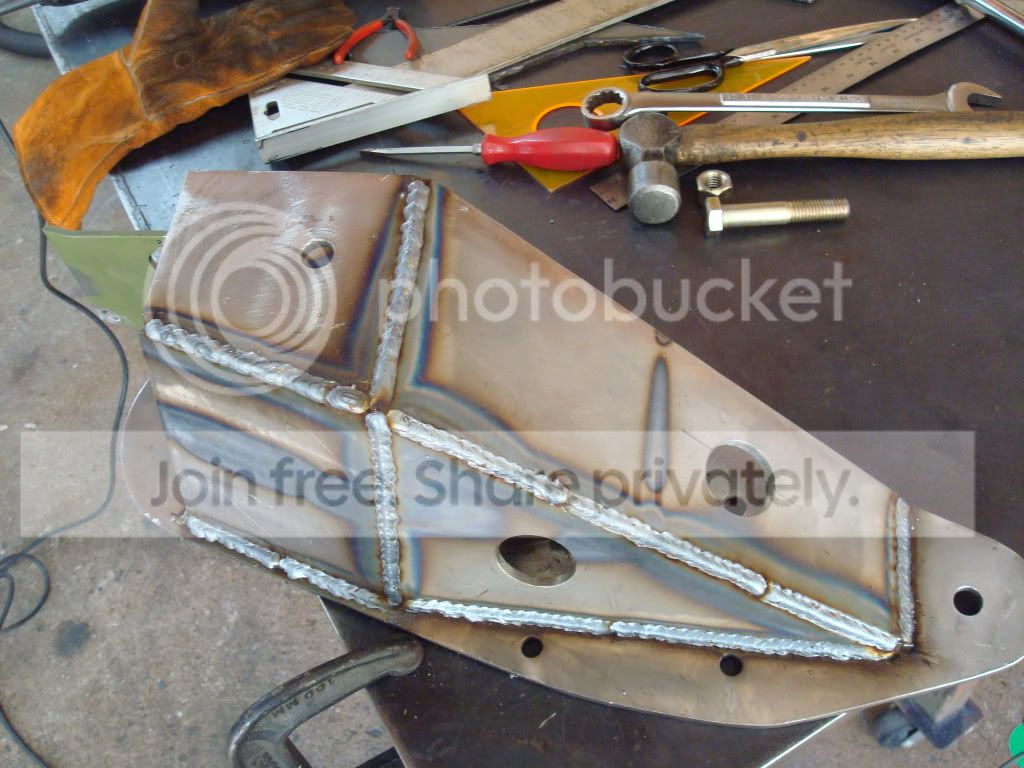
With most of the welding out of the way, I bolted the bracket back on and figured out the final two plates to close-in the top of the bracket. Initally, I was going to lay a big flat plate section across the top of all three vertical pieces, but it didn't make sense due to the difficulty in getting a strong weld... the best I would have been able to accomplish would be a perimeter weld from the top, and it would have been nearly impossible to weld from the inside now that the bracket is all sealed up. I decided to do the plating as two smaller strips and recess them by around 1/4" on each side. This allowed me to do a nice strong fillet weld and really get a lot of strength on the top plating. This plating is a critical component of the design and if it doesn't hold, the entire bracket will distort and ultimately twist into a pretzel under suspension loading.
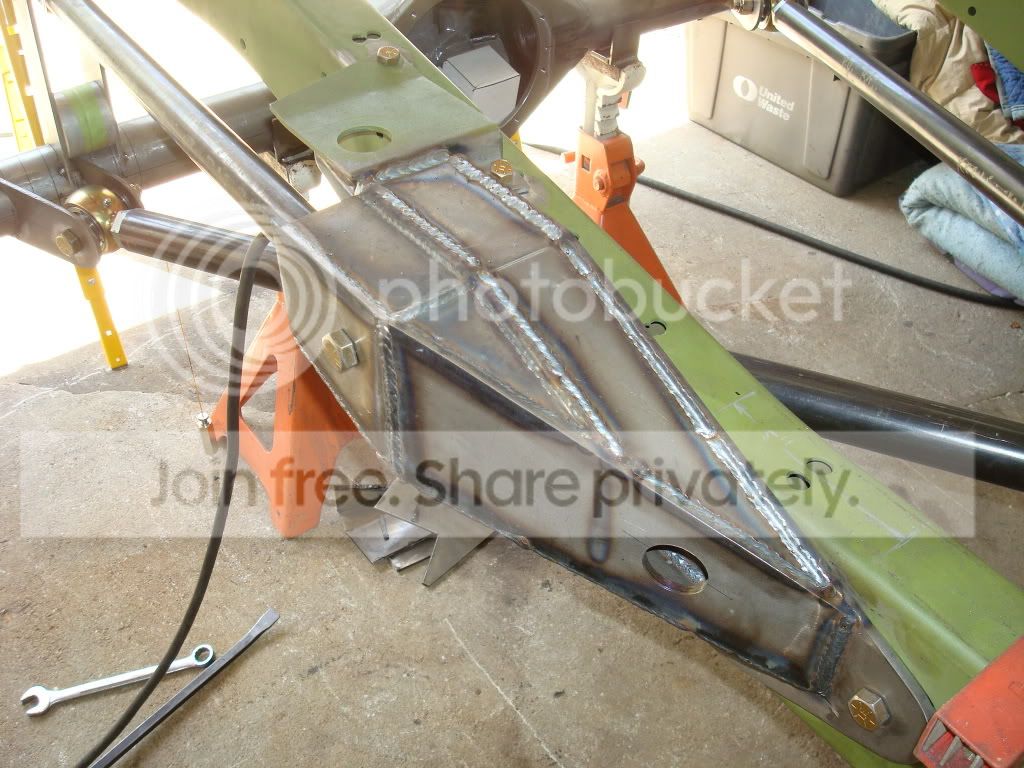
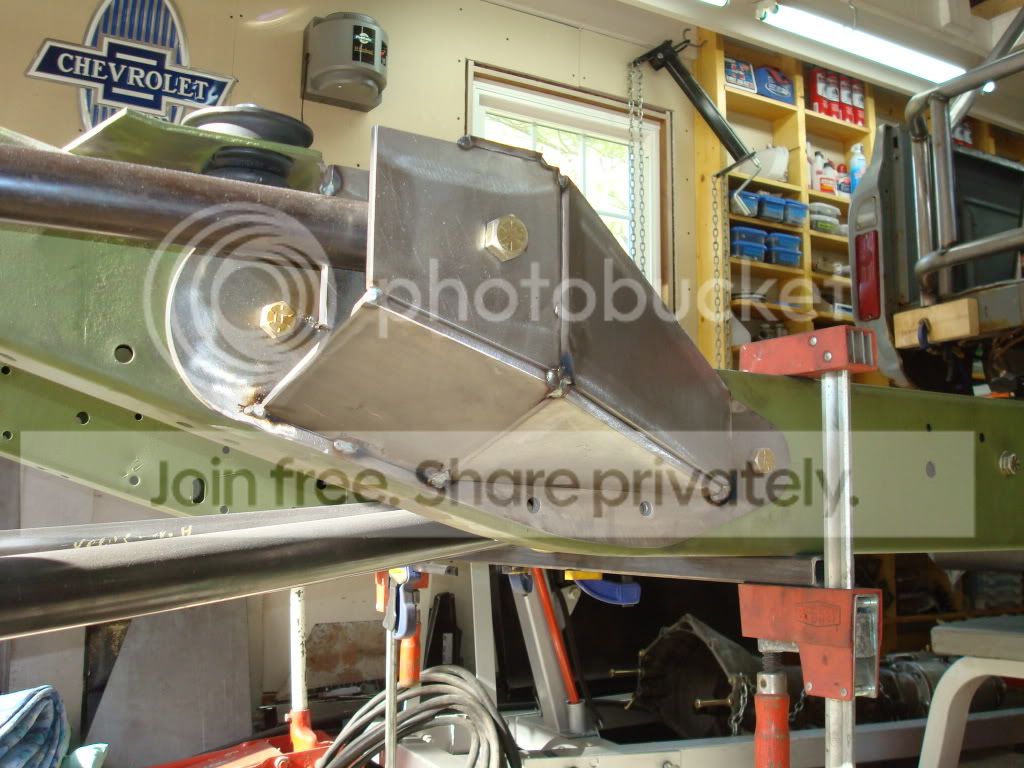
After the upper plates were burned in, I realized that the grease zerk for the upper heim was now blocked in a way that would prevent me from ever getting a grease gun fitting on it (zerk was facing UP at about a 45 degree angle). The answer was to mount the heim with the zerk pointing down, and to cut another speed hole that would give me a straight shot to the fitting for easy service later on. In this shot you can also see a small crescent-shaped clearance cut that was made to allow the large mounting bolt to be removed if needed. It also gives good clearance for a deep-walled socket.
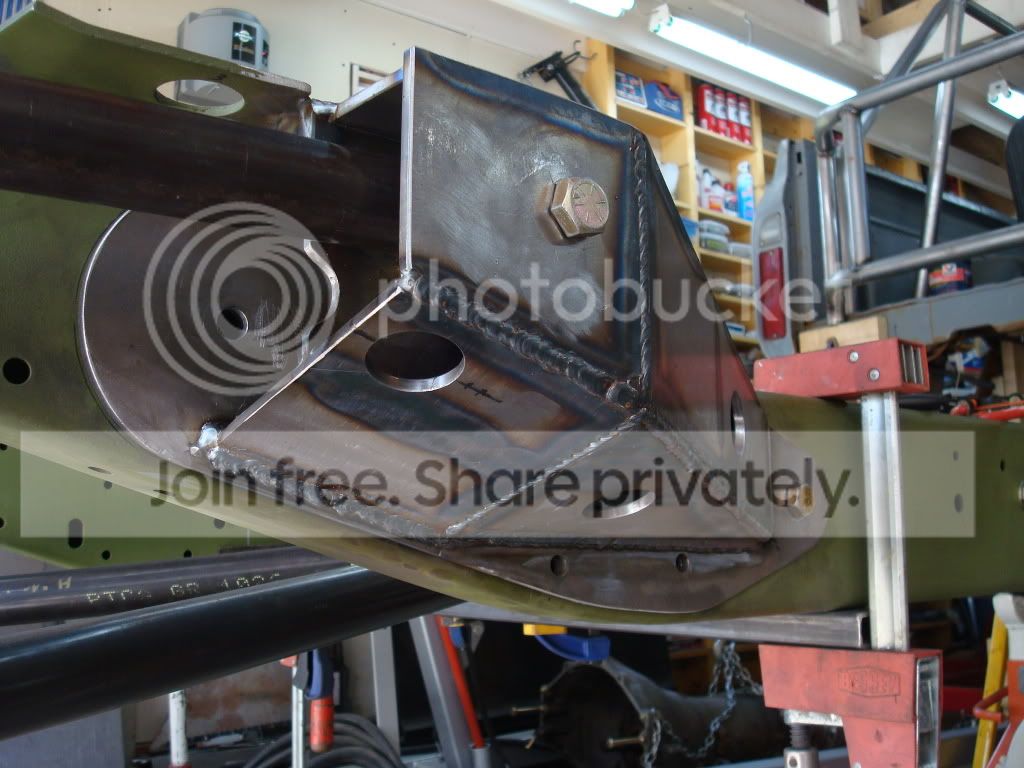
The final item was the addition of an outer laminated plate, again to reinforce the mounting bolt area for the heim and make it 1/2" thick on the outer surface as well. This was accomplished with another piece of 1/4" plate wrapped around the corner and perimeter welded. I cut yet another hole, but this time for the purpose of getting more weld area to hold the plate down snugly. I wanted to make sure that the plate was held tight not just at the edges, but also from the center so that it didn't "balloon" from the original bracketry. The welded hole added a cool look and I don't have any concerns about strength now.
So.......another 8 hours were spent on this bracket but I can finally say that it's DONE!

I was very careful to modify all of my cardboard templates to indicate the new holes, clearance cuts, etc. So when it comes time to do the driver's side I can cut and finish each plate completely BEFORE they get assembled. That will save a tremendous amount of time...and obviously, now that I have a pattern to work from I should be able to cut, fit and weld the other side in just a few hours....instead of days!