CK5
Register an account today to become a member! Once signed in, you'll be able to participate on this site by adding your own topics and posts, as well as connect with other members.
A couple of months back, when I was moving from the sheet metal stage into the heavy plate stuff I had a buddy come over and give my little 211 a run through. He is a pretty big time welding inspector down in Sac. so I trusted his opinion.

The first couple of beads that he laid down we found out that the machine runs a lot hotter than what is on the dial. After he figured that out, the second thing he did was turn the gas way up to about a 28-30. I too had it way down to 18-20 for the sheet metal. It burned in so much better with the gas cranked up. It was one of those things that you could hear and didn't even need to look at it, to know it was a good weld.

His last statement before he left was, " I really like this little Miller, I could weld agricultural with it. That is, I could with this machine, but you can't", smiling, as he walked out of the garage. :doah:
 
Interesting.... :thinking:

As I'm sure you know, the hardest thing on a project it to slow down and figure things out completely before moving forward. It is so tempting to just keep rushing ahead to make as much progress as possible (especially when the "Garage Coupons" are running out!) but at times like this it really is critical to make sure I get it right.

I don't weld 1/4" plate very often, and as it's turning out... there are a number of things that change when moving to the thicker material. My confidence is really starting to climb as I learn more about it, and with a few more experiments I should be ready to get that truss burned into place for good!! :waytogo:

My personal goal is to have the axle back under the truck by the end of the Father's Day weekend.... so far that seems achievable.


-G
 
I am running up to 50 cfh when I'm welding :dunno:

I'm outside so I have to worry about wind though

I'm not an expert or anything, but the welds look good, I wouldn't worry about them failing. But there is pretty much always room for improvement, especially if you ask in pirate :flipoff7:

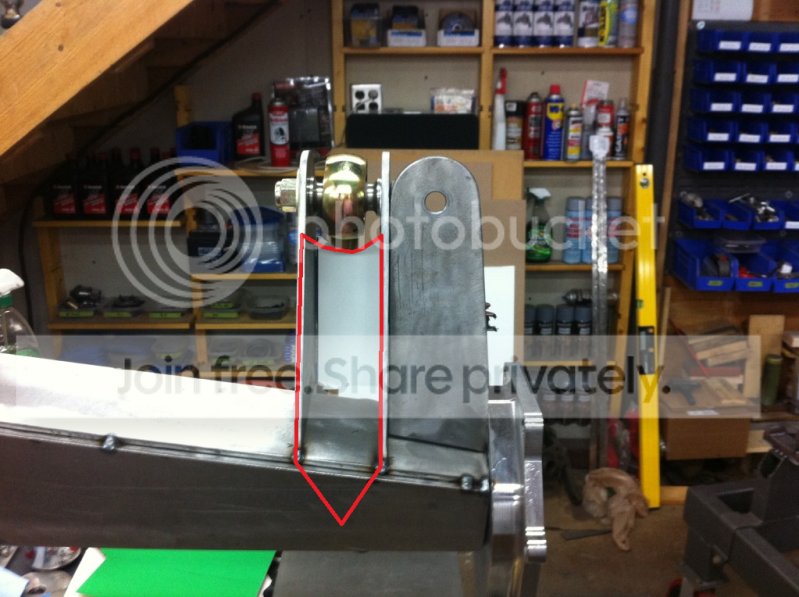
To make you feel better I would probably box all all your link mounts and have as much overlap on the axle where you weld as possible, try to rely on weld strength as little as possible. I don't know if this was the plan already, haven't read the whole thread yet.

box.png
 
You are right on the money, mang!

That red plate is already in the plans, and one just like it on the back side. Running the plate down as a wrapper into the truss is definitely going to help as well...... with the interior welded, the exteriors welded and all of those extra "welded inches" of the front / rear boxing plates, I "think" the link mounts will be strong enough :thinking:

Even after that, there is still a temptation to laminate a little extra metal around the bolt holes too just to be safe.... I don't want to have to go back later and fix stuff, and adding a few extra ounces of metal now is worth the trouble.


-G
 
Greg not sure if I skipped over it but are you pushing or pulling when you weld? Always push when you can. The pics kinda look like a pull, but I could be wrong.
 
I'm pushing 90% of the time....

Pull trigger and move over the top of the weld into new materal with the hose always trailing behind the weld area. A little hard to explain, I guess.

On the truss, because of the angles involved I was welding with a "push" but also heading slightly downhill too (about 10* on those welds). I know I was moving a bit too fast and getting the <<<<< pattern on some of the welds instead of the ((((((( that everyone likes so much, but I'll keep aspiring to that and practicing more before the final welding of the truss to the axle housing.

-G
 
I guess it might seems that way, but this whole truss project is only as good as the welds holding it together. Imagine one of those link mounts tearing off at highway speeds.....not good. :eek1:
-G

If your worried about the weld stregnth, Do it with a stick welder:waytogo:. They are a stronger weld, only ONE setting to make. And work wonders on the 1/4" and thicker stuff. I would guess you have one in the shop somewhere:rolleyes:. Migs are awesome on the thin stuff, and most people use 'em on everything with no isses. but they're not nessesary on thick chit.:D

And this section of this weld IS a little on the fast side. The pattern should be symetrical and rounder. when it points it means go slower

IMG_2185.jpg
 
I'm pushing 90% of the time....

Pull trigger and move over the top of the weld into new materal with the hose always trailing behind the weld area. A little hard to explain, I guess.

On the truss, because of the angles involved I was welding with a "push" but also heading slightly downhill too (about 10* on those welds). I know I was moving a bit too fast and getting the <<<<< pattern on some of the welds instead of the ((((((( that everyone likes so much, but I'll keep aspiring to that and practicing more before the final welding of the truss to the axle housing.

-G

As long as you are not welding gaps larger than 1/2" I see no need for the (((( and I like <<<< better myself, as long as the penetration is good. Then again I think my next machine will be a TIG :)

Greg have you thought about stepping up one wire size say .035. I think that may solve all your problems
 
man, I am learning a TON about welding just reading this stuff.
woot for CK5!!
 
Greg have you thought about stepping up one wire size say .035. I think that may solve all your problems

I guess I was just being a little stubborn about the wire (.030") just because I've got an 11Lb spool already loaded in the machine, and it's a good quality wire that I use for other general-purpose stuff.... I didn't feel like buying more wire and changing the setup on the machine for .035"

In that same vein, I could also move away from my "Gold Gas" ArCo2 mix which I believe is more like a 92%/8% mix instead of the more conventional 75%/25% ratio.... IIRC, the extra Co2 in the mix would give me a hotter, deeper weld. I really like the "softness" of Gold Gas when doing sheetmetal repair. It seems to burn through less and seems to be easier to get my tack welds "just right"

It seems like I can get where I want to be with the current materials I've got....I just need to practice getting a little more "fill" on the welds, and slow down my hand speed just a touch more. Don't worry, I'll do a few more experiments and post up the pics to solicit more feedback! :waytogo:


-G
 
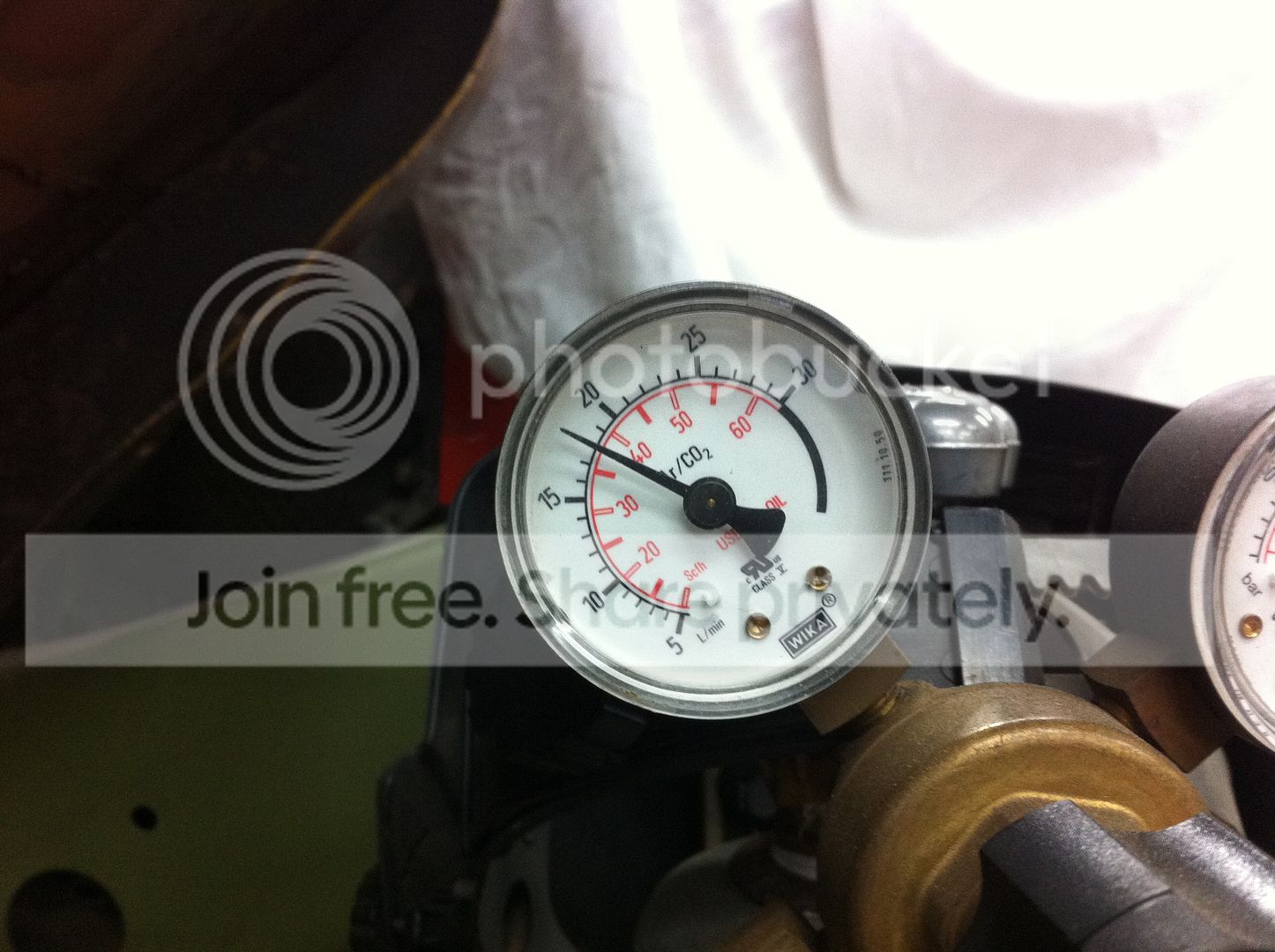
I feel like such an idiot..

fe0a323d.jpg


The outer (black) numbers are what I've been using as "psi" values... Turns out that scale is actually L/min!

So where the heck should I be setting the regulator on this gauge?

-G
 
So nice to see you back in the garage Greg!

If you're running 23 L/min, that's ~50cfh. The inner, red ring is the cfh or scfh which just means standard cubic feet per hour.

IMO, your welds look on par with some of our certified union welders in the shop when using MIG machines. You're doing a great job!
 
Ok,

Rene was saying CFH, but I was reading his comments as "CFM" (minute vs. hour) and the conversions I was doing were making me think I'd gone insane! :)

This revelation tells me that I've been setting my regulator at ~50CFH for YEARS (sheetmetal, 1/8" and the most recent 1/4" stuff) so clearly I've had PLENTY of shielding gas for my welds.... Ironically, it seems that I've been wasting plenty of gas with these settings for almost every type of material I've welded.

The only mystery then is what caused all the porosity in my first set of welding experiments. :thinking: I havent seen that symptom since my first attempt, so I guess I can write that off as an anomaly of the materials I was using (since I never prepped them correctly and probably shouldn't have expected them to be a good test subject).

I still need a few more tests to get comfortable with what I'm doing on 1/4" material... But I'm flattered by your praise.... :blush:
 
Greg, try another outside corner weld, but break it by hitting it the other way. It will break, being that it's only welded on one side, and what you will get to see is depth of penetration/quality of penetration on each side of the weld. What you do not want to see is the fracture be at one edge of the weld...that is what is known as "cold lap".

As for what you see on the inside, it really comes down to how tight the fit-up is. A slight gap and you'll see some burn through, looking at your pics though I can see it was fit tight and you got plenty of heat.

I'd say you're dialed in pretty good now. :waytogo:

.030 vs. .035 on 1/4 material is pretty much moot. You have more than enough wire speed capability to end up in the same place. Much thicker and I'd certainly look into stepping up to .035.


shackleflipetc005.jpg


Not the greatest pic, but that is all 1/4" stuff I welded at work using a similar shield gas that you are (a 92/8 mix). that was welded at 27.5 volts and approx 260 amps with .045 wire. It just hums, and you gotta move faster...

Don't feel limited when you're experimenting with heat/feed. You have the perfect gas mix to get into a "spray transfer". The only real issue is the more out of position the part is the harder it gets when you run really hot. In some ways it's better to run hotter...you have to move faster so the heat is into and out of the part a lot faster, and there is never a question of whether or not it's penetrated enough.
 
You might notice I don't stack dimes...and I'll just leave it at that.
 
If it were me, and take it anyway you like, I would do the welds in a slightly different order. A-B and then on the back flip to the other end as you suggested but then instead of coming back to B and continuing forward I'd skip ahead into the edge of the pumpkin and work back out. Do that again on the other side.

Now go back to the B-C weld. Get the tubes totally welded and do the same type of deal up and over the pumpkin.

On the porosity, to much antispatter can cause issues. Depending on the joint, you can pull porosity in from the back side. Of coure there is always all the usual suspects, wind, plugged nozzle, plugged gas diffuser but don't overlook the "I can almost reach it if I pull a little more....." itermittant hose disconnect.
 
"I can almost reach it if I pull a little more....." itermittant hose disconnect.


LOL I am going to need a mirror and 2x6 cut at a 30* miter, a 75 watt light a leather wrapped pillow, 2 aspirin and some Doritos and I can get that last inch on completely hidden upside down left handed weld.

That or we can remove this side of the truck.

I would also like to point out that most of the welding and for that matter most of the material we use in building our trucks is way overkill.

For instance a suspension bracket will not only have the welded together bracket but it will be welded to the frame and have a bushing or flex joint between it with a bolt holding that ( and the bracket) together.

On a bracket like Greg has I build them so they go together so I can grind the entire outside weld off. I am really only grinding a small percentage of the actual weld off, I just prefer a smooth looking bracket vs one with weld on it.

I also will weld the inside when I do that though
 
You might notice I don't stack dimes...and I'll just leave it at that.

Yessir.... That whole topic is a real sensitive subject with a lot of serious welders. The "stack of dimes" look is not a MIG look, it's something you get with TIG... But a lot of guys try to replicate the appearance when they weld MIG.

I don't know what a certified welding inspector would say about the whole thing.... But I know there's a lot more to welding than welds that just "look pretty". Honestly, that's the scariest part about MIG... You can lay down a pretty weld that is completely cold with no penetration at all. I've certainly done a few of those; you finish welding and grab the part and it goes "tink!" and the entire weld breaks off completely stuck to one of the parts, leaving the other part looking like it was never even welded. :doah:

-G
 

Latest Posts

Top Bottom