

Placeholder for Page 21....


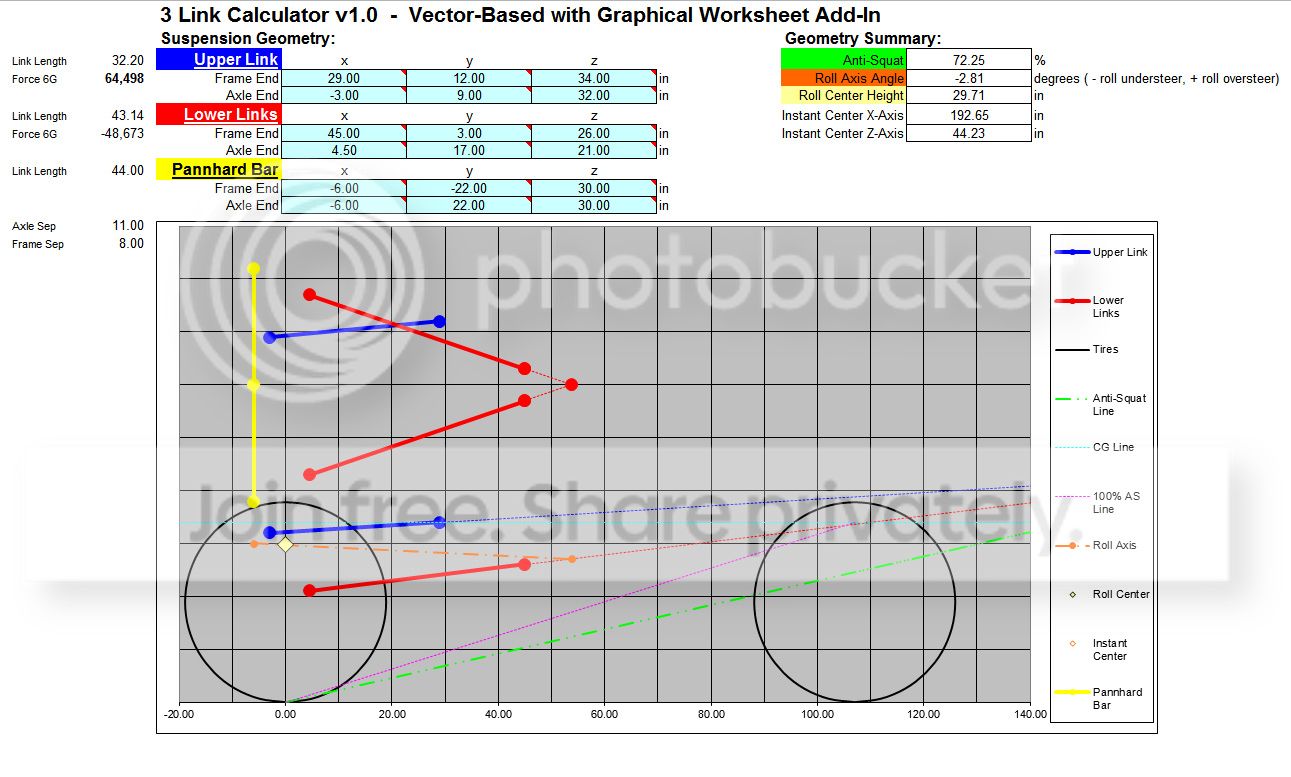
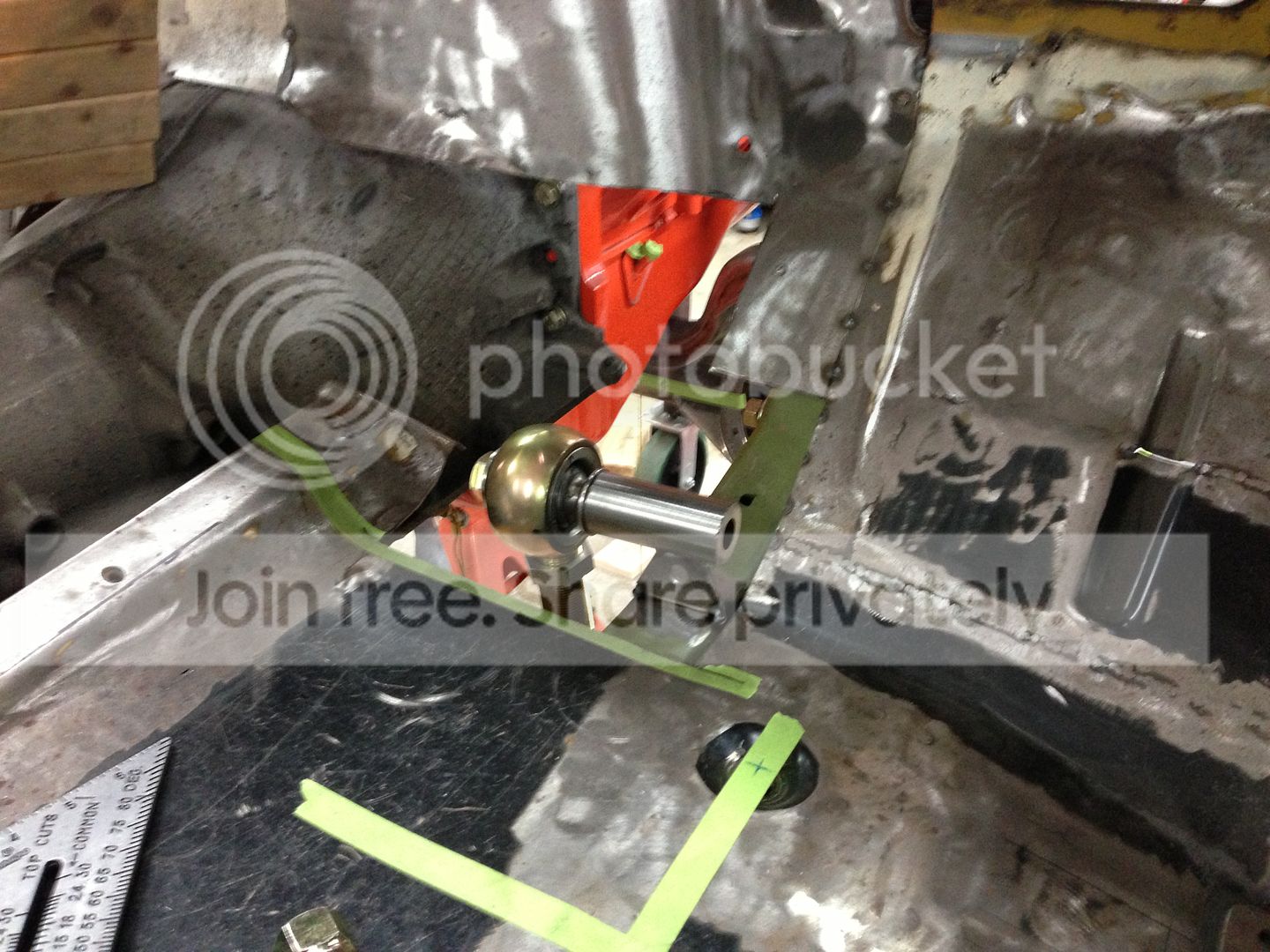
 ) that is going to take a SERIOUS bracket and gusseting to keep that from ripping my axle housing to pieces... (suggestions welcome.)


Heath,
That's assuming that I'm in 4WD under acceleration, correct?It seems that there has to be applied torque in the axle to change from compression to tension...
Correct. And under braking everything is opposite, (including the rear). Bur remember, where the weight transfer is is where the most traction, and the most forces are.
Without power going to the front end, are the lower links under compression for both ends? (I'm trying to think in terms of the vehicle just sitting stationary on the ground, with gravity pulling down on it).
That depends. Sitting stationary will normally depend on your shock angle from vertical (front/back) how it pulls on the links (assuming coilovers/air shocks). However, since you have portals, and the front axle will have caster, the housing will want to rotate back slightly, causing a small tension force on the lower links. However, all this is negligable compared to the forces under braking or acceleration.
What about if I take it off a "sweet jump" (Napoleon Dynamite style) and land on all fours basically flat onto the ground? That would be a fairly high G's event so it would be nice to know if the compressive link forces are going to be cancelled-out during an event like that.
Assuming no braking or throttle is applied, the forces are still many, and dynamic because of traction, wheel momentum, bumps, etc. Too many to calculate, but they will probably not cancel each other out most of the time. Not unless both ends of shocks were heavily angled toward the center of the vehicle front/back and assuming everything is flat and perfect, and that setup would be counterproductive. For the most part, you can count on the back lower links being under tension during acceleration, and the front lower links under tension during breaking. If no throttle or brake is applied, then the shear direction of the hits on the tires will overrule any twisting motion of the axle as far as link forces go. So either everything will be pushing back, or everything will be pushing forward. The forces will never cancel each other out because whenever they are acting in opposite directions they will most likely be magnitudes off in the amounts of force.
With all that said, I would just build the center crossmember plenty strong, and spread the load out on the frame interface, and not worry about it. Its pretty common and a many jeep suspensions share a center crossmember for the links.
-G
I'd get one of the new gear reduction starters, they are smaller and lighter, and you need the room! Even one from the parts store off of a newer truck will work and is easy to find on a trip if needed.

 you guys are unreal!!
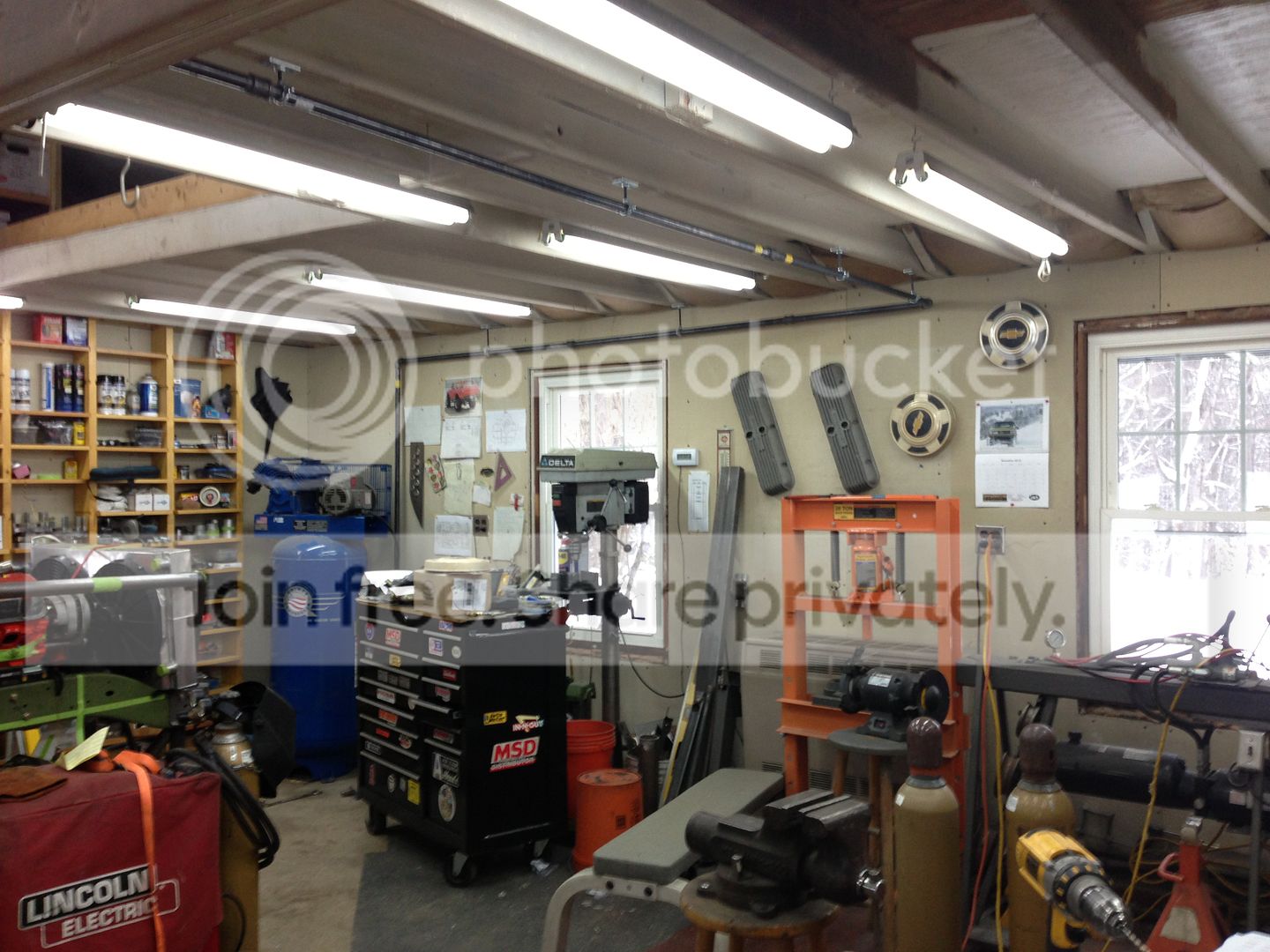
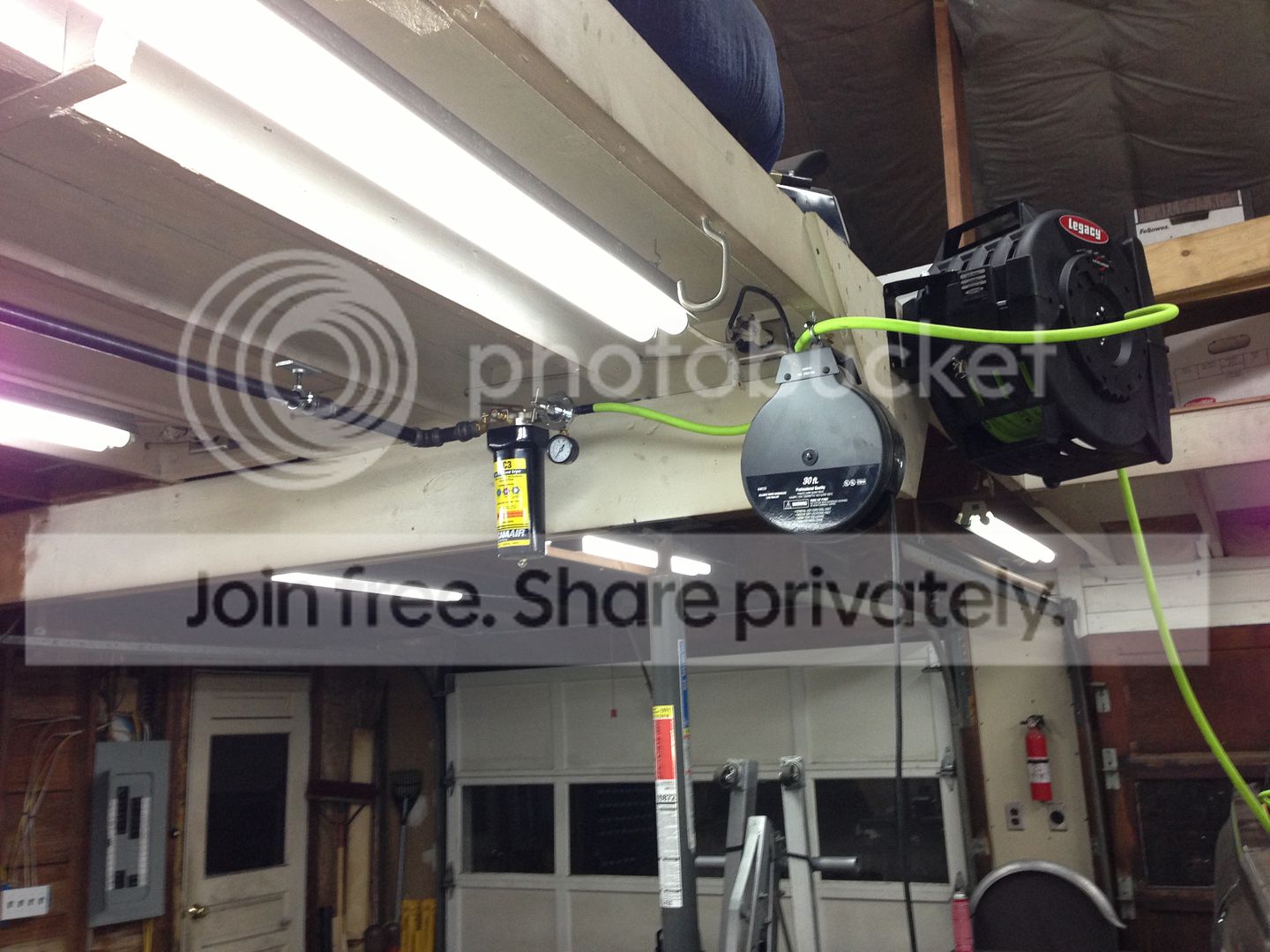
 It's only a 50' setup but it's a LOT larger than I was expecting. In a tall shop it's not a issue, but with my low ceilings I'm going to need to get creative to tuck it up out of the way.


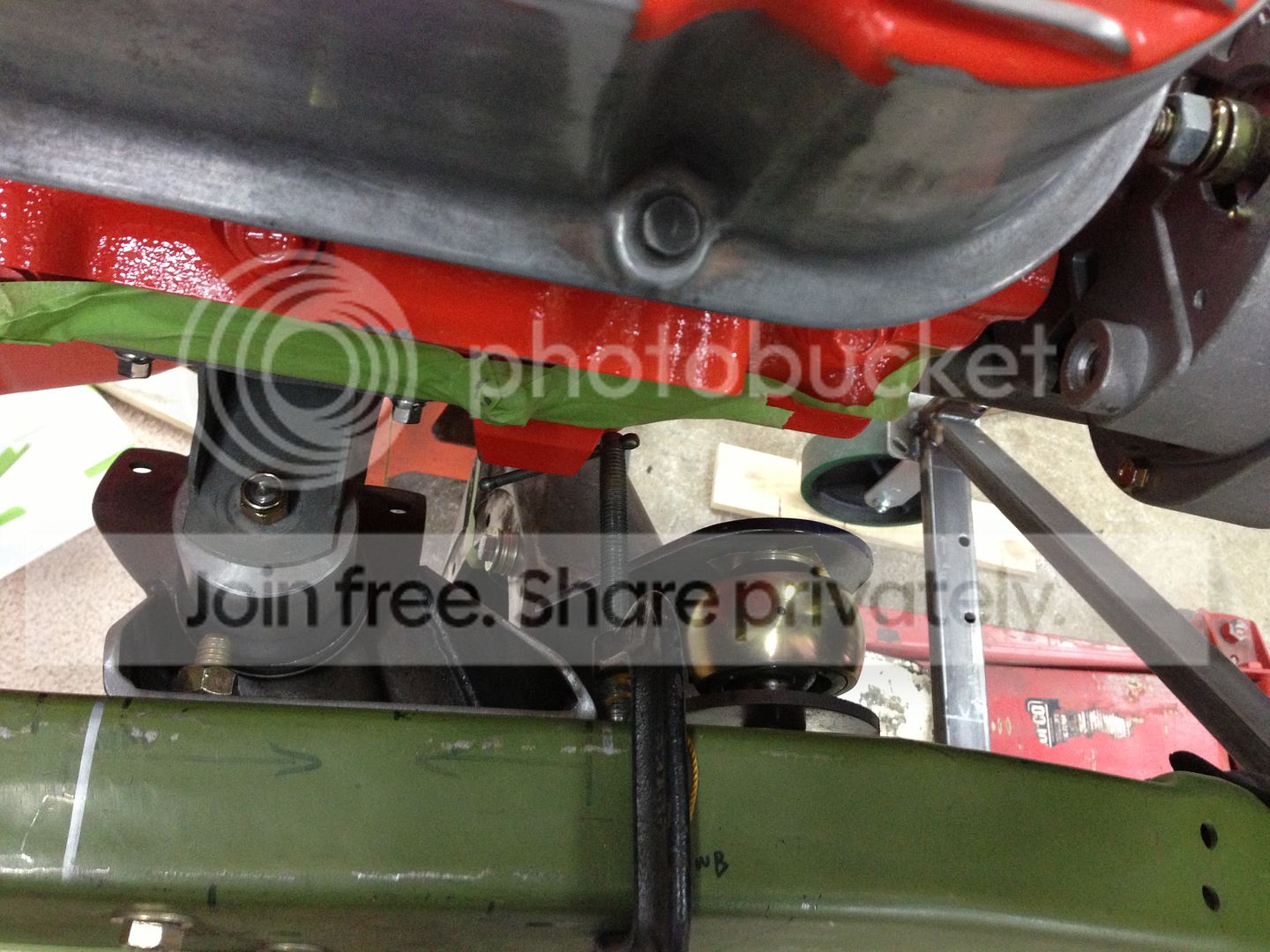 )
)
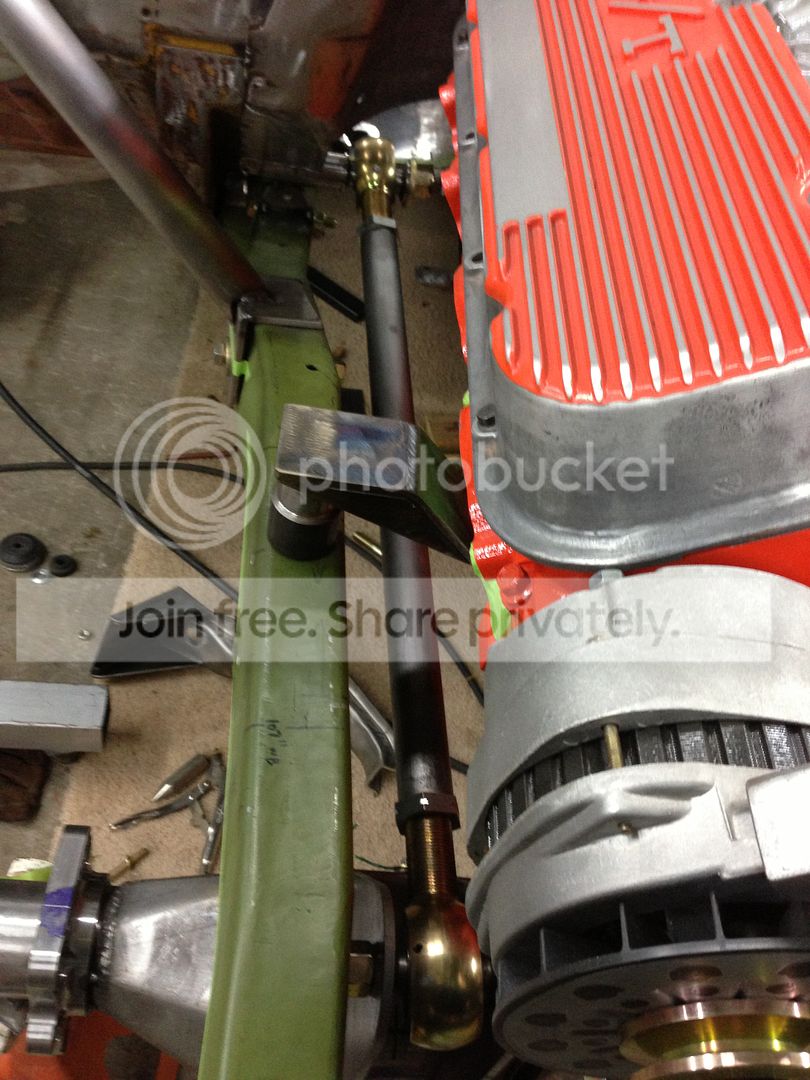
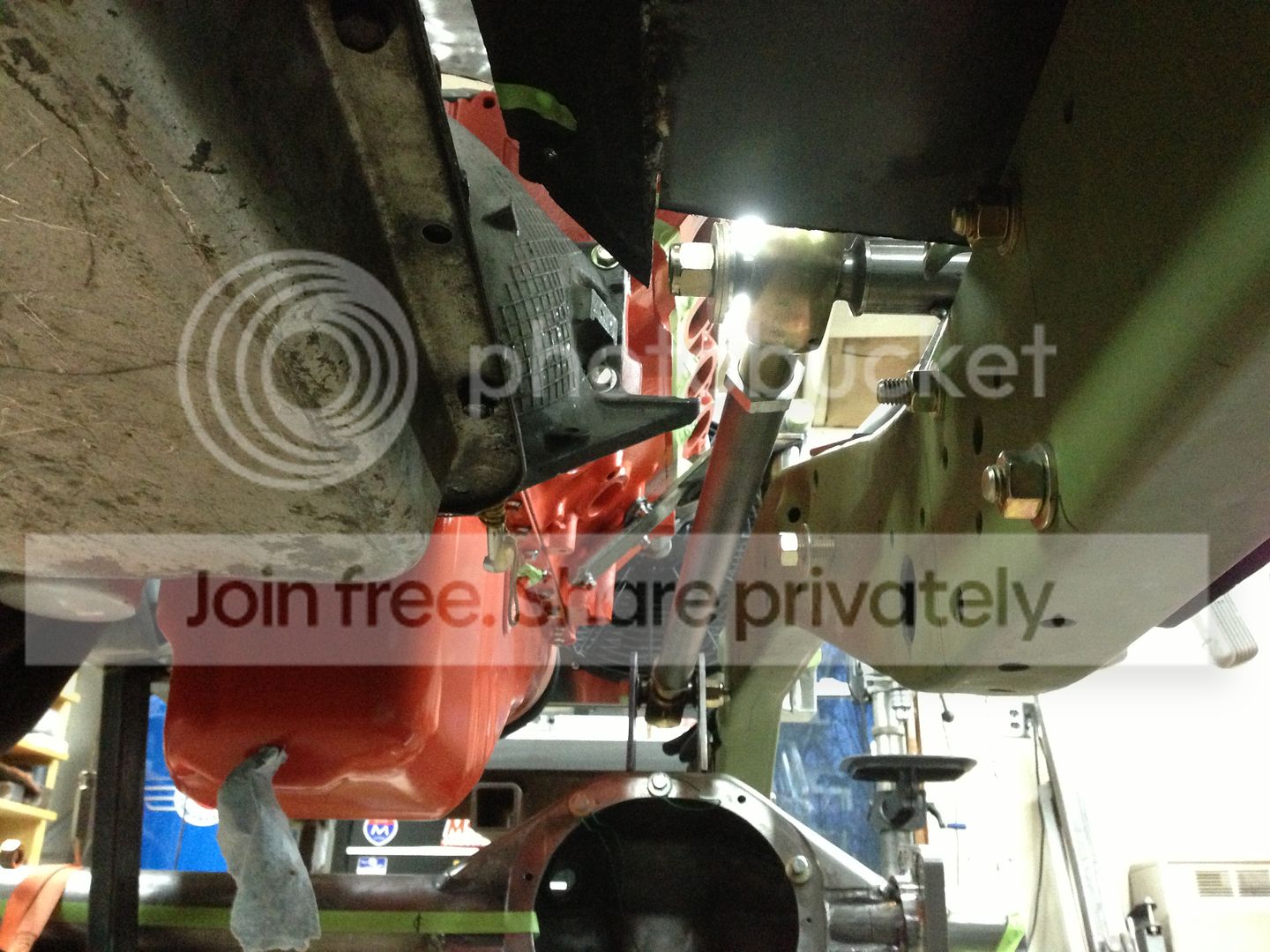
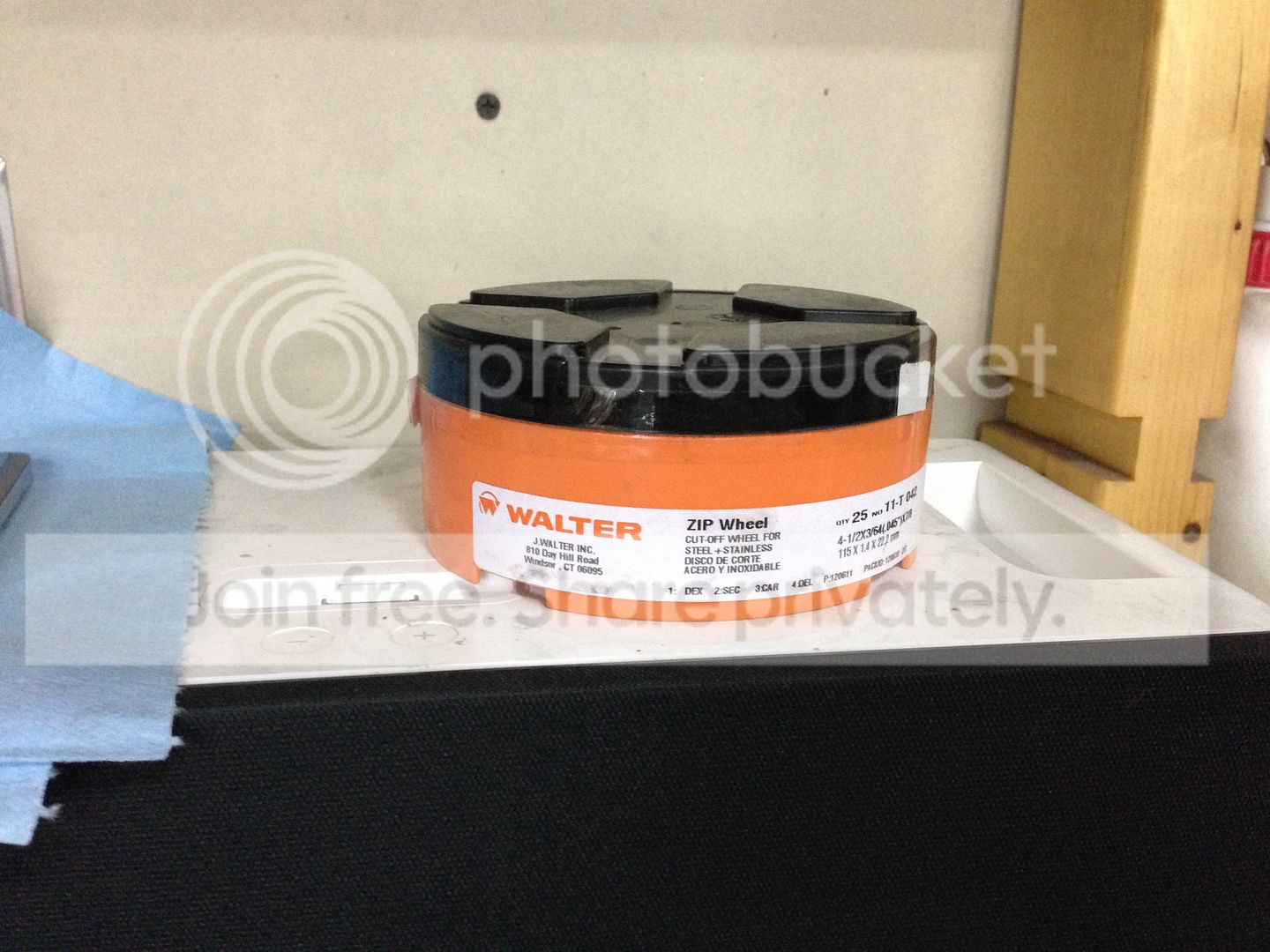


These last a lot longer than the Nortons that I've used forever. Thanks for the suggestion.

Glad they work for you Greg. Nothing better than getting a bit more bang for the buck with your consumables!
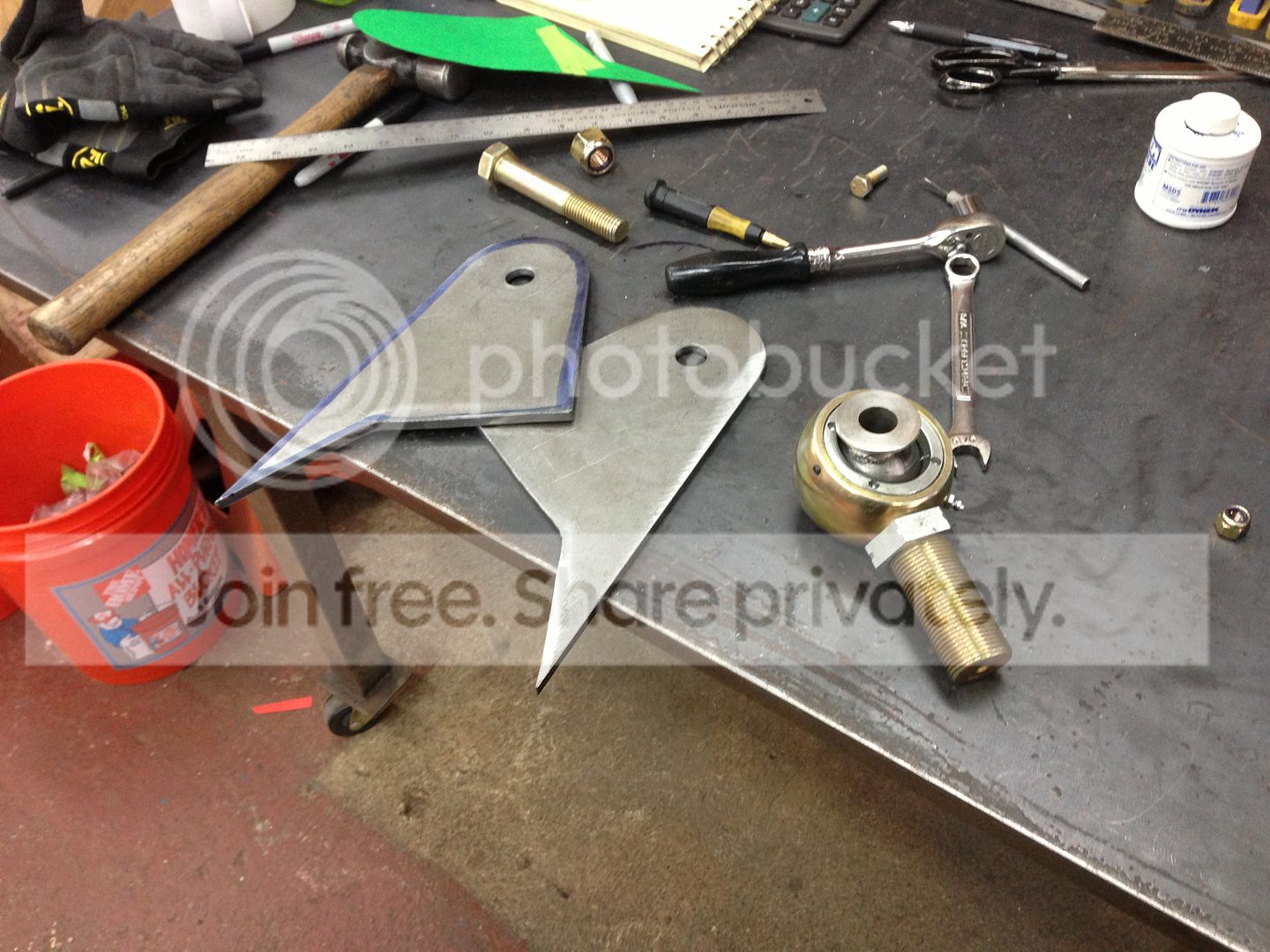
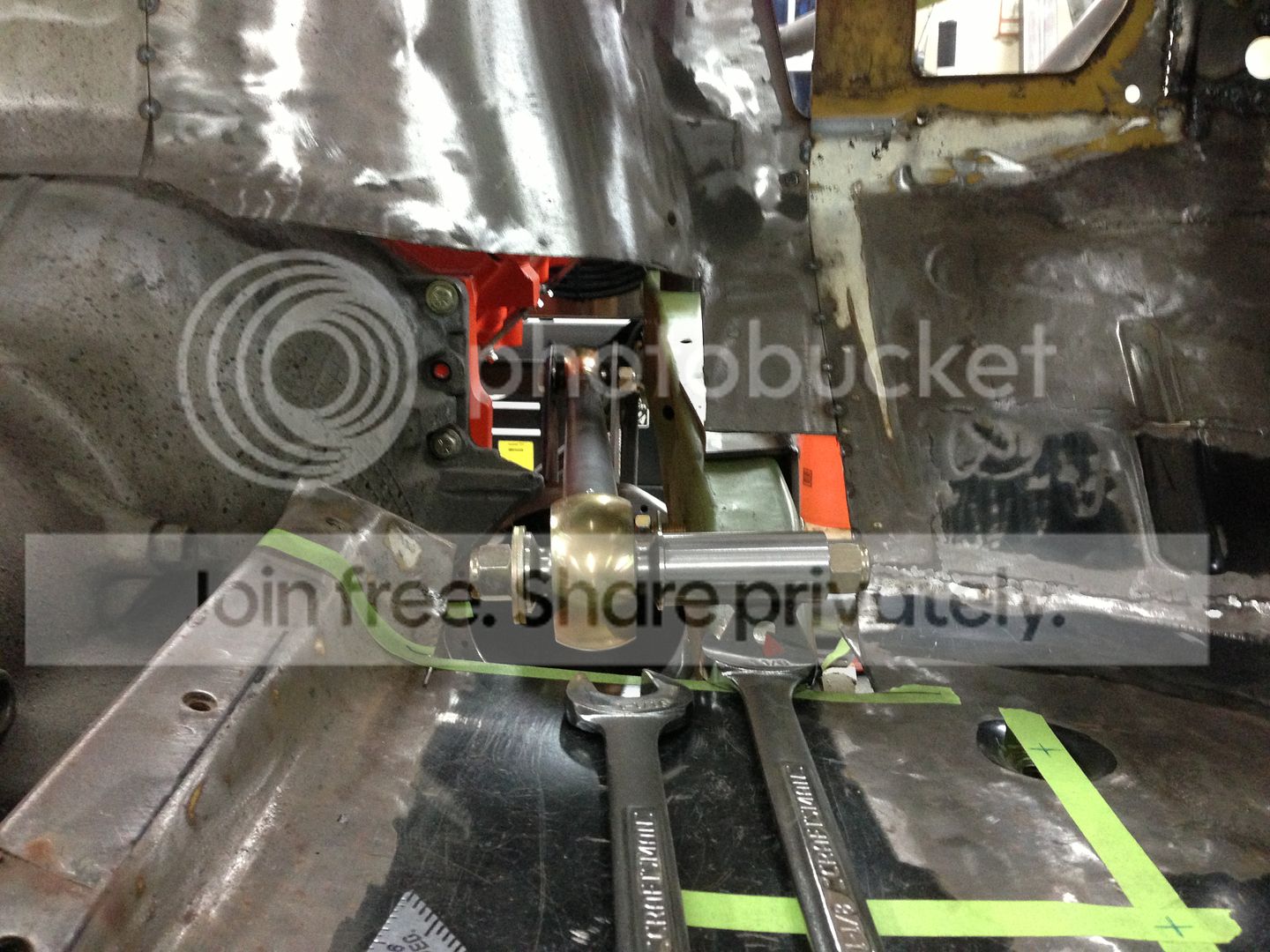
That link isn't staying single shear right?
They wear like iron, and cut really smooth.... I'm a believer.


Link?
Amazon or Summit could have it here in a hurry....hint, hint!
-G


