2014.08.05 - UPDATE! - IDLER MINI-MONOLITH CONTINUES....
Welcome to Page 34.
The progress continues, albeit at a slow pace these days. It's not for lack of effort on my part, it's just that the "small details" that represent that final 5% of the project seem to take just as much time as the first 95% did.....
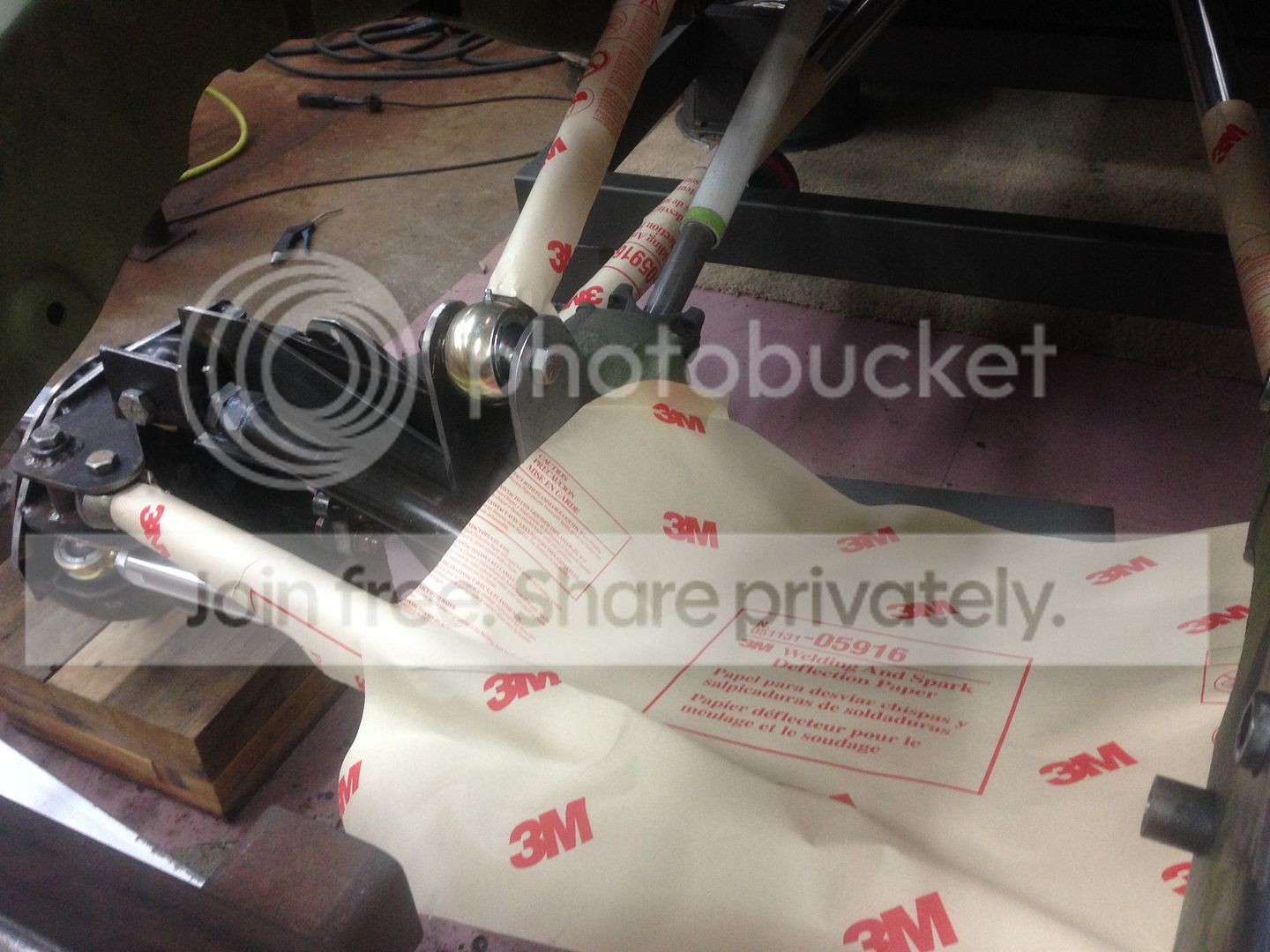
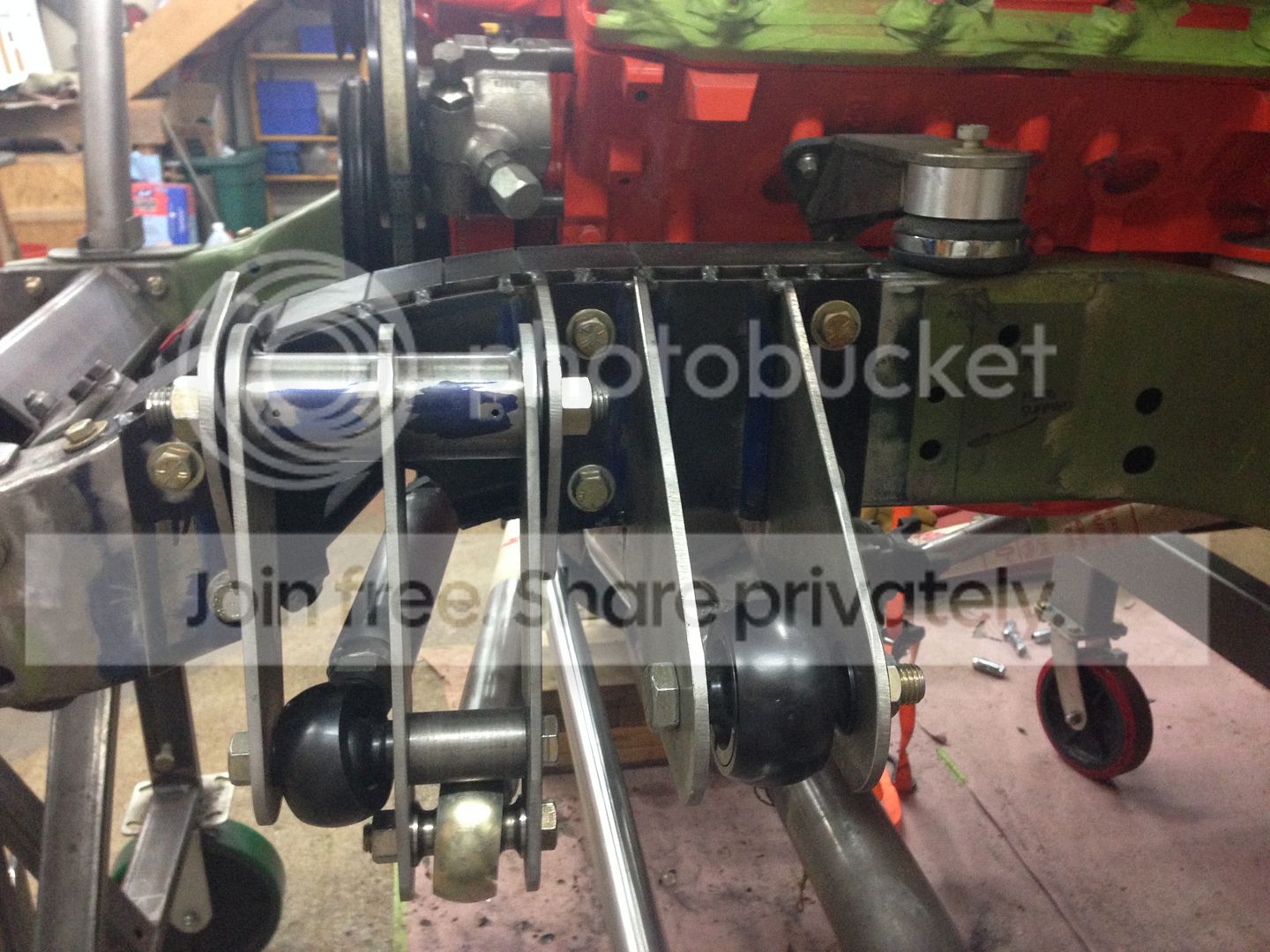
I managed to get the side plates built to support the idler arm and tack welded them into final position.
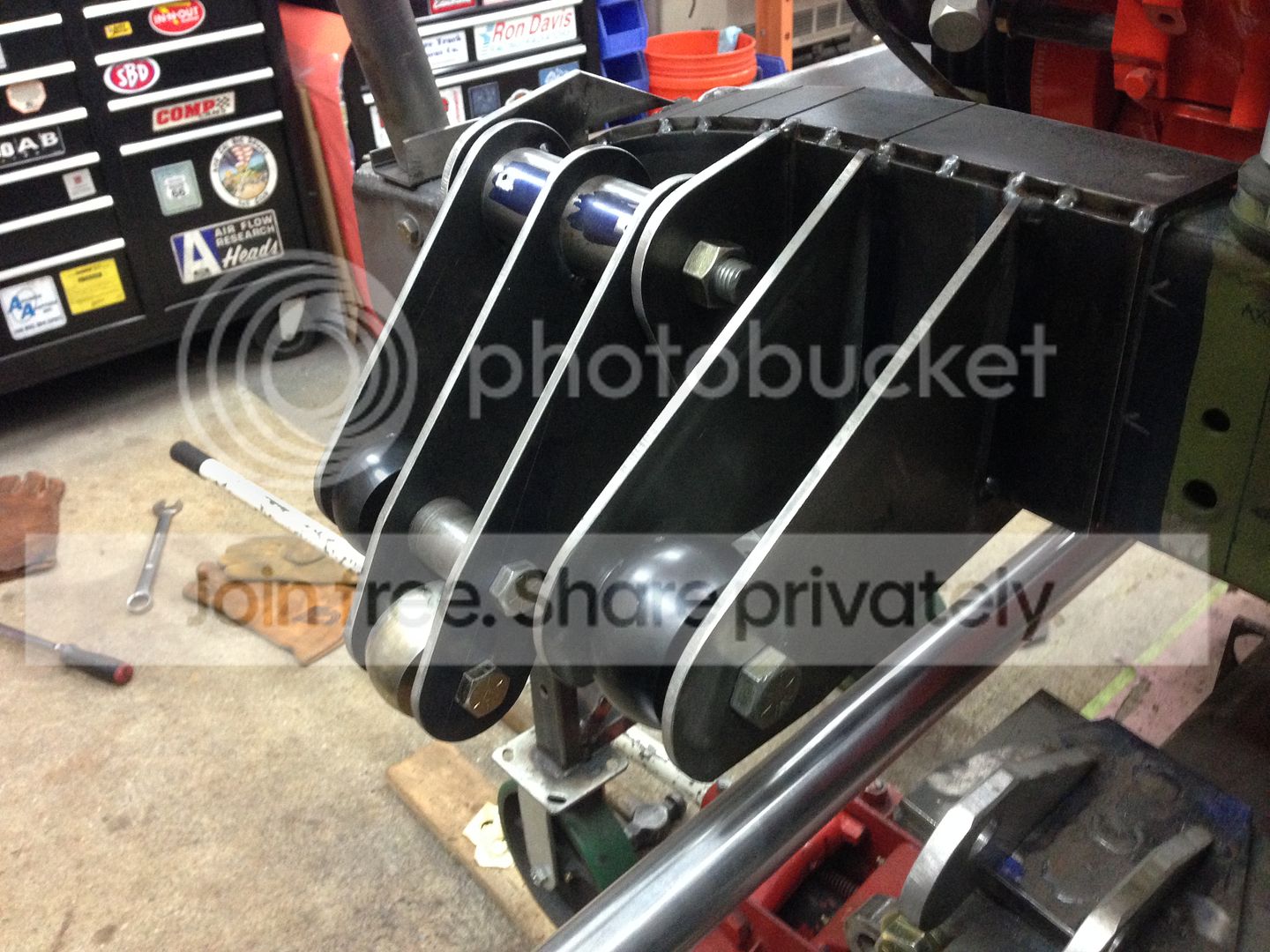
As an example of the "little stuff" that gobbles up time, I also wanted to make sure that the upper pivot could be greaseable so that the Timken tapered roller bearings could be easily serviced..... and I still needed to insert an inner sleeve for the bearing races to seat against, since they were simply placed loose into the ends of the tubing and there was nothing to stop them from moving inward once I tightened up the bolt that secures the idler to the bracket.
So.... a simple idea became:
1. Install the bearing race backstop and secure with a couple of plug welds
2. Drill out two small holes through both the outer and inner tubes for grease zerks
3. Weld-in caps near the end of each side of the idler to contain the grease once it was pumped in. ( I didn't want to have to fill that ENTIRE cavity with grease before it would start squishing out through the bearings themselves!)
4. Realize that welding caps at each end, while effective at creating good pockets for grease containment....prevent me from re-installing the large through-bolt that holds the idler to the mount!!! 
5. Drill 3/4" holes in each of the grease caps for the bolt.
I'm sure some of the grease will now squish into the large center cavity of the idler when I try to grease it, but the hope is that the "path of least resistance" will still be the large voids in the bearing races and 95% of the grease will travel THAT way instead.
Here's in installed shot showing those two small zerk holes...
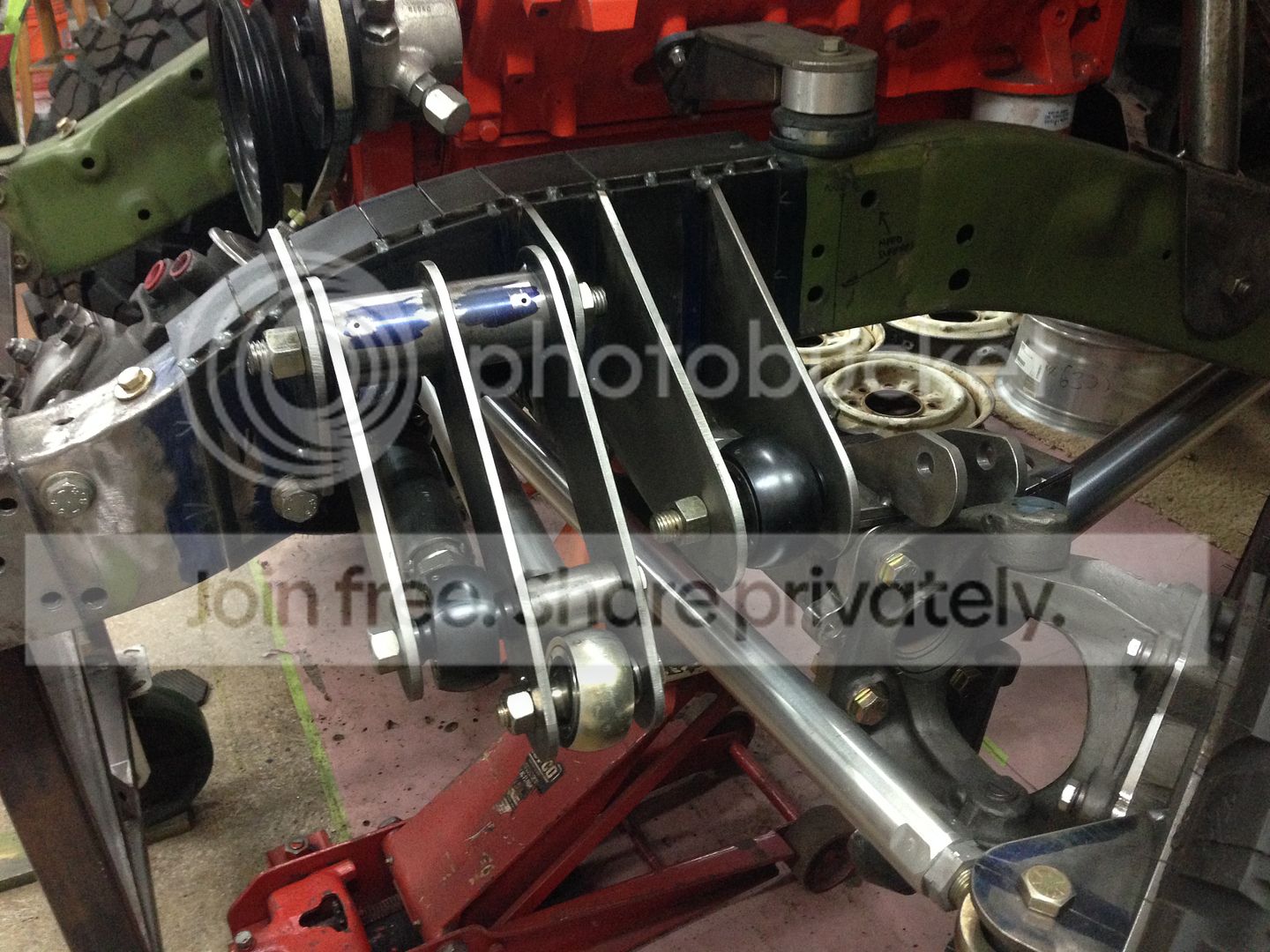
For the record, here's what those Timken bearings actually look like installed in the idler.
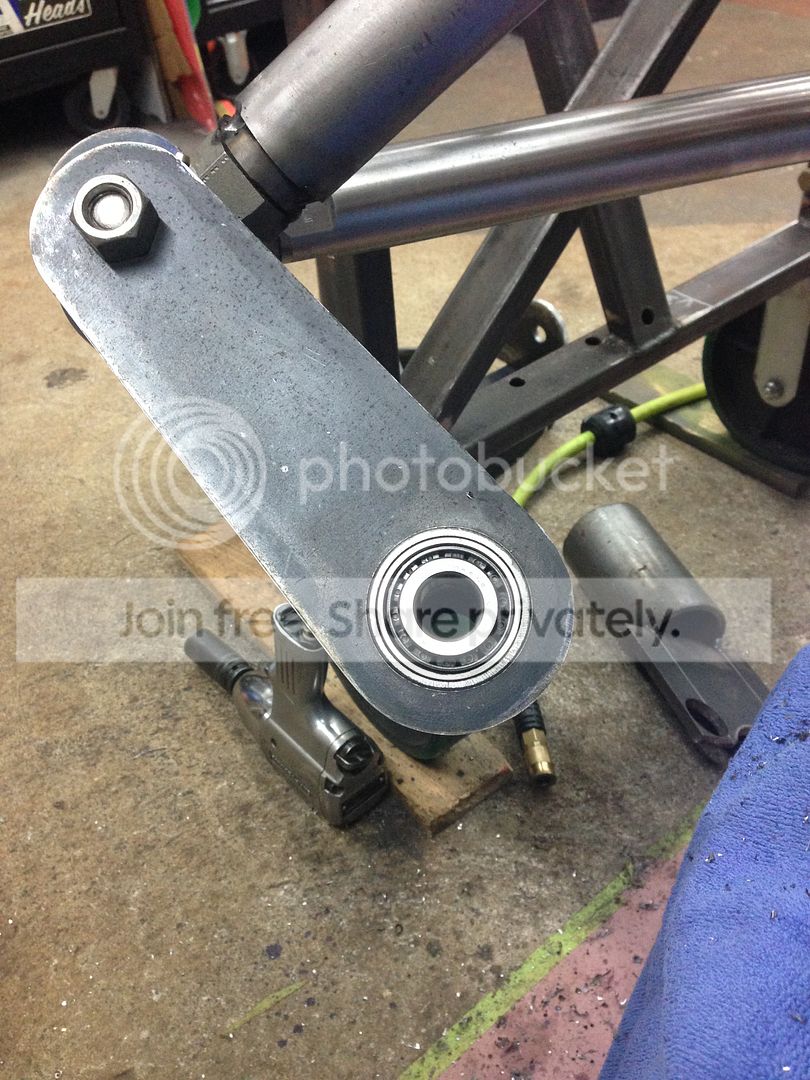
Now of course, in previous updates I showed the mini-monolith installed on the frame but in reality, there was only a single bolt (steering box area) holding the entire assembly to the frame.
In my haste to do some additional flex / cycling tests, I noticed that the rearmost section of that plate was deflecting under load by almost 1/2" off the frame!!! The axle weight working against the PHB mount is pretty substantial... so even though I wanted to defer the work of adding all the sleeved-through-the-frame mounting holes, I really didn't have that option.
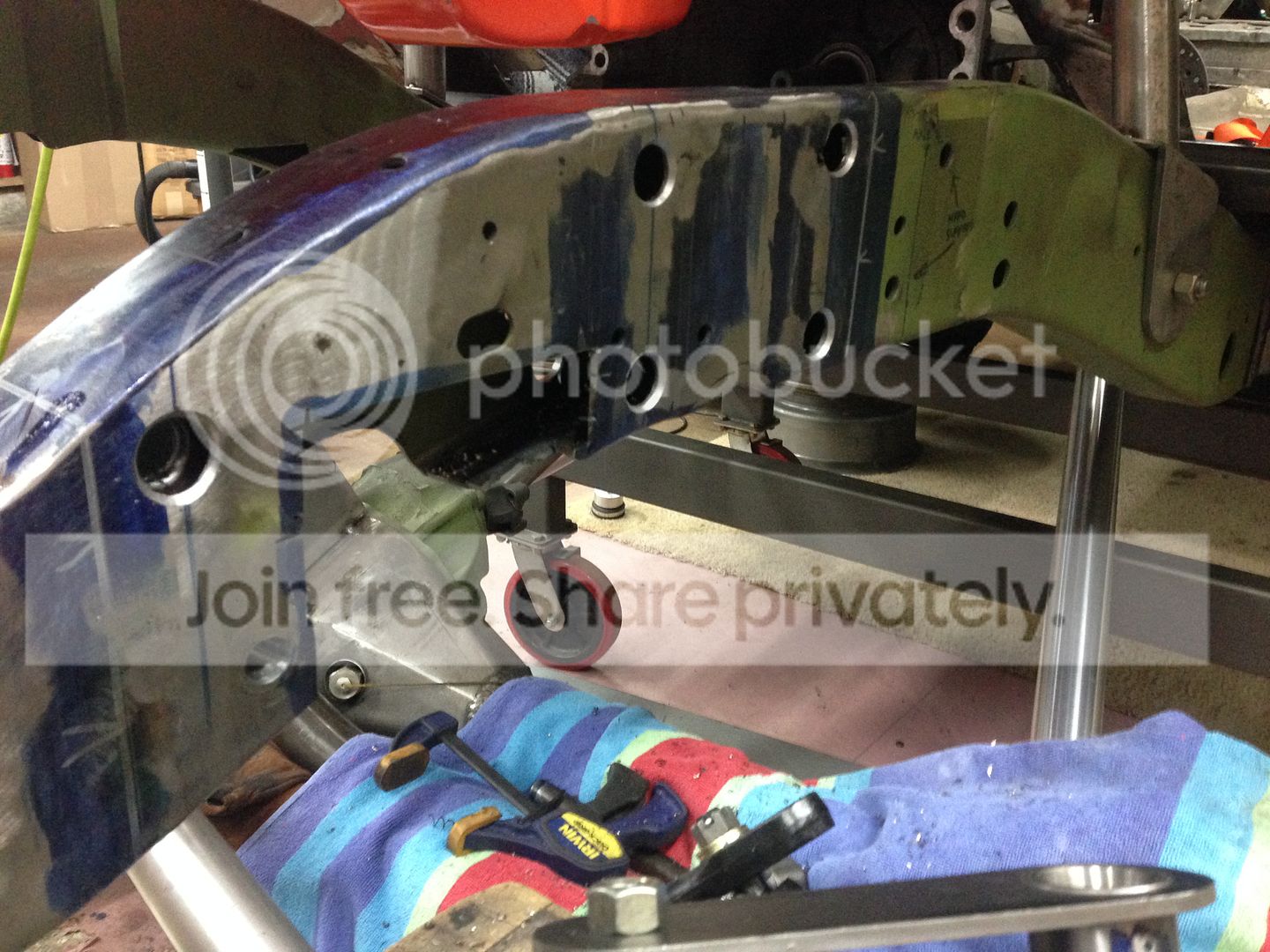
Time to dig in. Holes marked.... a total of 6 bolts will secure the mini-monolith to the frame.....
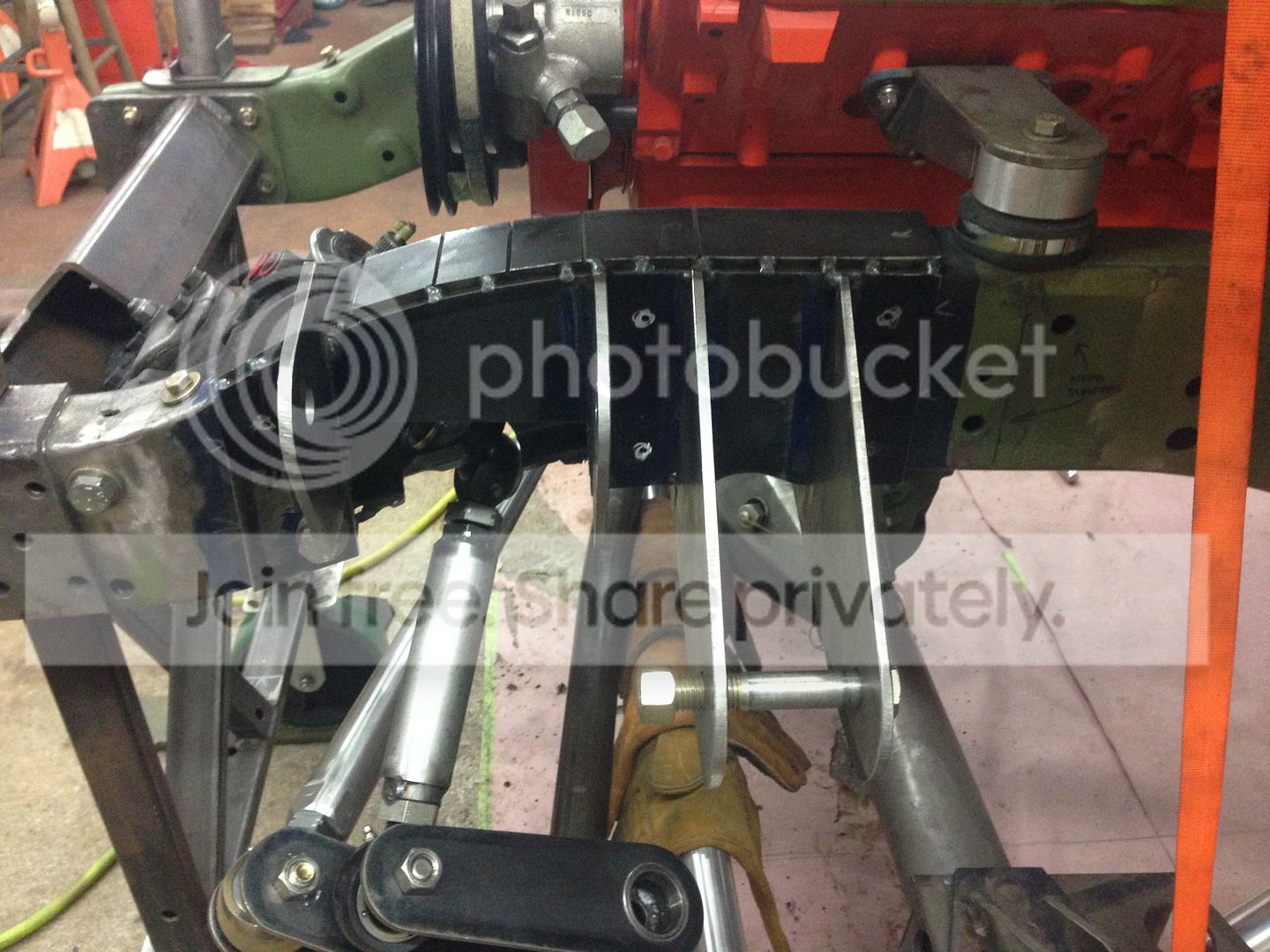
Once I had those marked and pre-drilled with a small 1/8" bit (all the way through BOTH sides of the frame, I switched over to my 7/8" UniBit and drove it all the way through...
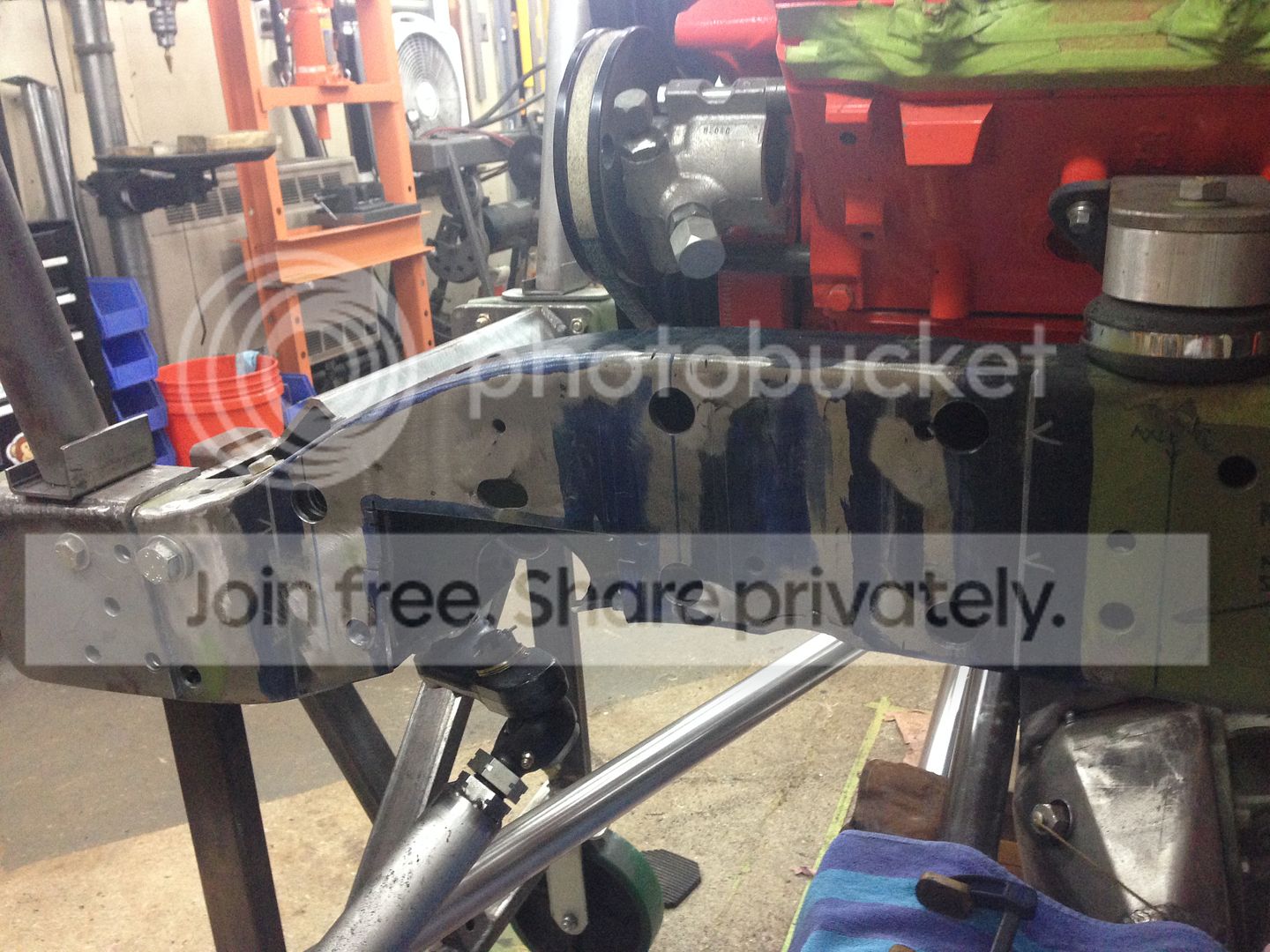
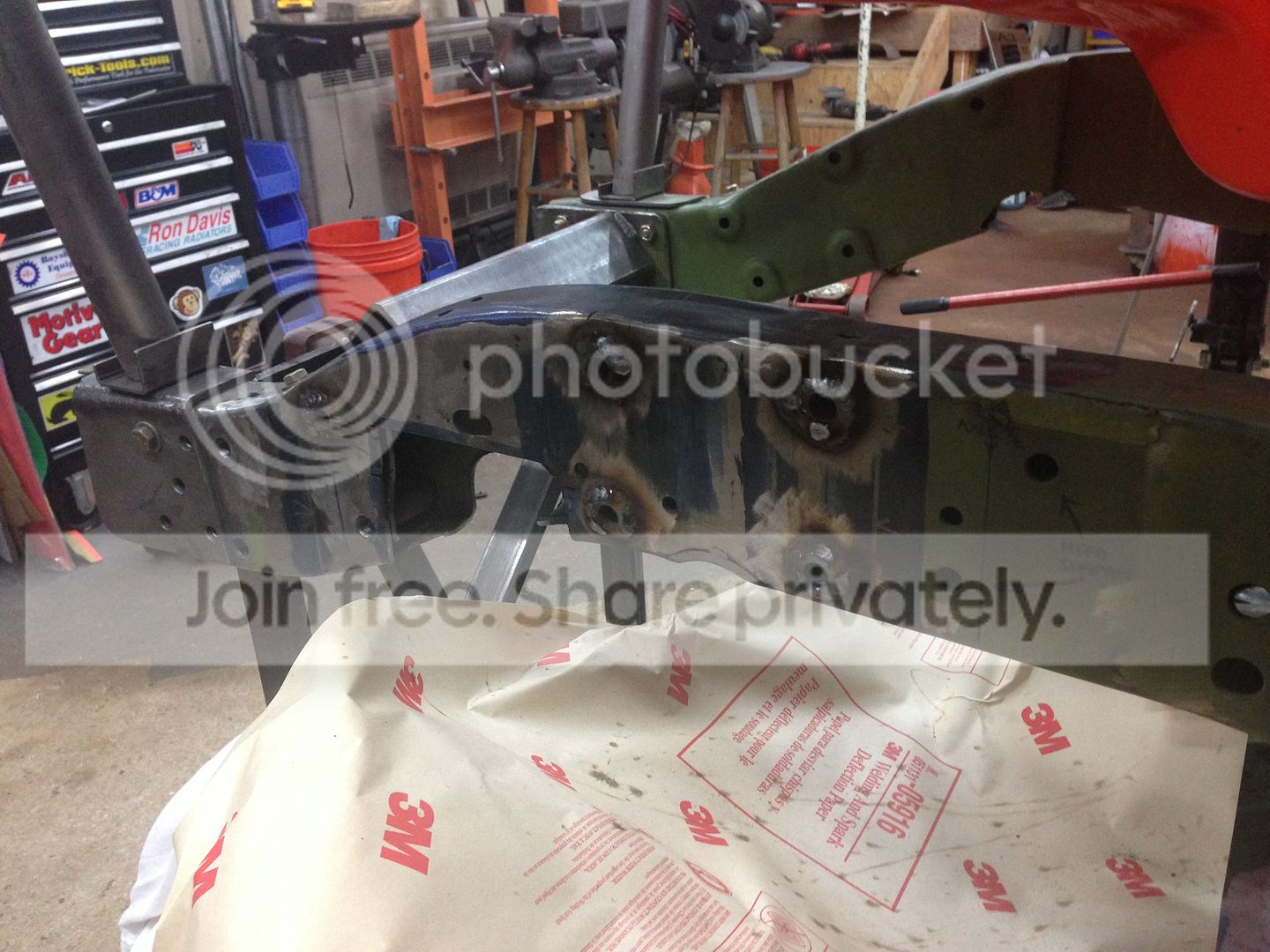
This is the same procedure that I used for the steering box mounting points. A thick-walled 7/8" DOM slug will allow me to use a 1/2" through-bolt in those locations and should be more than adequate to hold things firmly in place.
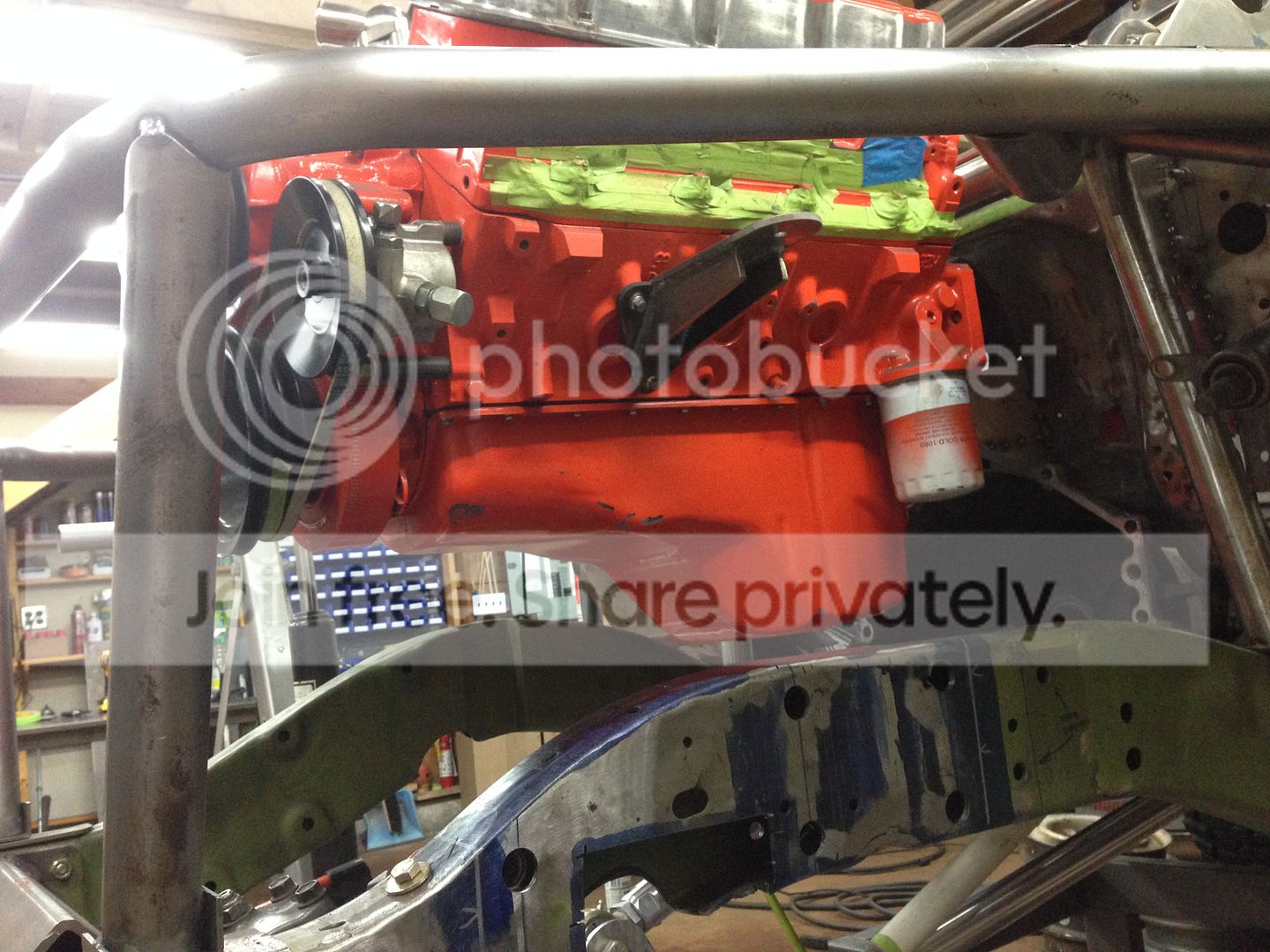
Unfortunately, I will probably have to pull the engine up about 12" to get the drill and welder to the inside framerail areas for those rearmost bolt holes.....
As I said at the beginning.....these small steps seem to gobble up lots of man hours.
-G
Welcome to Page 34.
The progress continues, albeit at a slow pace these days. It's not for lack of effort on my part, it's just that the "small details" that represent that final 5% of the project seem to take just as much time as the first 95% did.....
I managed to get the side plates built to support the idler arm and tack welded them into final position.
As an example of the "little stuff" that gobbles up time, I also wanted to make sure that the upper pivot could be greaseable so that the Timken tapered roller bearings could be easily serviced..... and I still needed to insert an inner sleeve for the bearing races to seat against, since they were simply placed loose into the ends of the tubing and there was nothing to stop them from moving inward once I tightened up the bolt that secures the idler to the bracket.
So.... a simple idea became:
1. Install the bearing race backstop and secure with a couple of plug welds
2. Drill out two small holes through both the outer and inner tubes for grease zerks
3. Weld-in caps near the end of each side of the idler to contain the grease once it was pumped in. ( I didn't want to have to fill that ENTIRE cavity with grease before it would start squishing out through the bearings themselves!)
4. Realize that welding caps at each end, while effective at creating good pockets for grease containment....prevent me from re-installing the large through-bolt that holds the idler to the mount!!!
5. Drill 3/4" holes in each of the grease caps for the bolt.
I'm sure some of the grease will now squish into the large center cavity of the idler when I try to grease it, but the hope is that the "path of least resistance" will still be the large voids in the bearing races and 95% of the grease will travel THAT way instead.
Here's in installed shot showing those two small zerk holes...
For the record, here's what those Timken bearings actually look like installed in the idler.
Now of course, in previous updates I showed the mini-monolith installed on the frame but in reality, there was only a single bolt (steering box area) holding the entire assembly to the frame.
In my haste to do some additional flex / cycling tests, I noticed that the rearmost section of that plate was deflecting under load by almost 1/2" off the frame!!! The axle weight working against the PHB mount is pretty substantial... so even though I wanted to defer the work of adding all the sleeved-through-the-frame mounting holes, I really didn't have that option.
Time to dig in. Holes marked.... a total of 6 bolts will secure the mini-monolith to the frame.....
Once I had those marked and pre-drilled with a small 1/8" bit (all the way through BOTH sides of the frame, I switched over to my 7/8" UniBit and drove it all the way through...
This is the same procedure that I used for the steering box mounting points. A thick-walled 7/8" DOM slug will allow me to use a 1/2" through-bolt in those locations and should be more than adequate to hold things firmly in place.
Unfortunately, I will probably have to pull the engine up about 12" to get the drill and welder to the inside framerail areas for those rearmost bolt holes.....
As I said at the beginning.....these small steps seem to gobble up lots of man hours.
-G