CK5
Register an account today to become a member! Once signed in, you'll be able to participate on this site by adding your own topics and posts, as well as connect with other members.
2014.08.05 - UPDATE! - IDLER MINI-MONOLITH CONTINUES....

Welcome to Page 34. :eek1:


The progress continues, albeit at a slow pace these days. It's not for lack of effort on my part, it's just that the "small details" that represent that final 5% of the project seem to take just as much time as the first 95% did..... :doah:

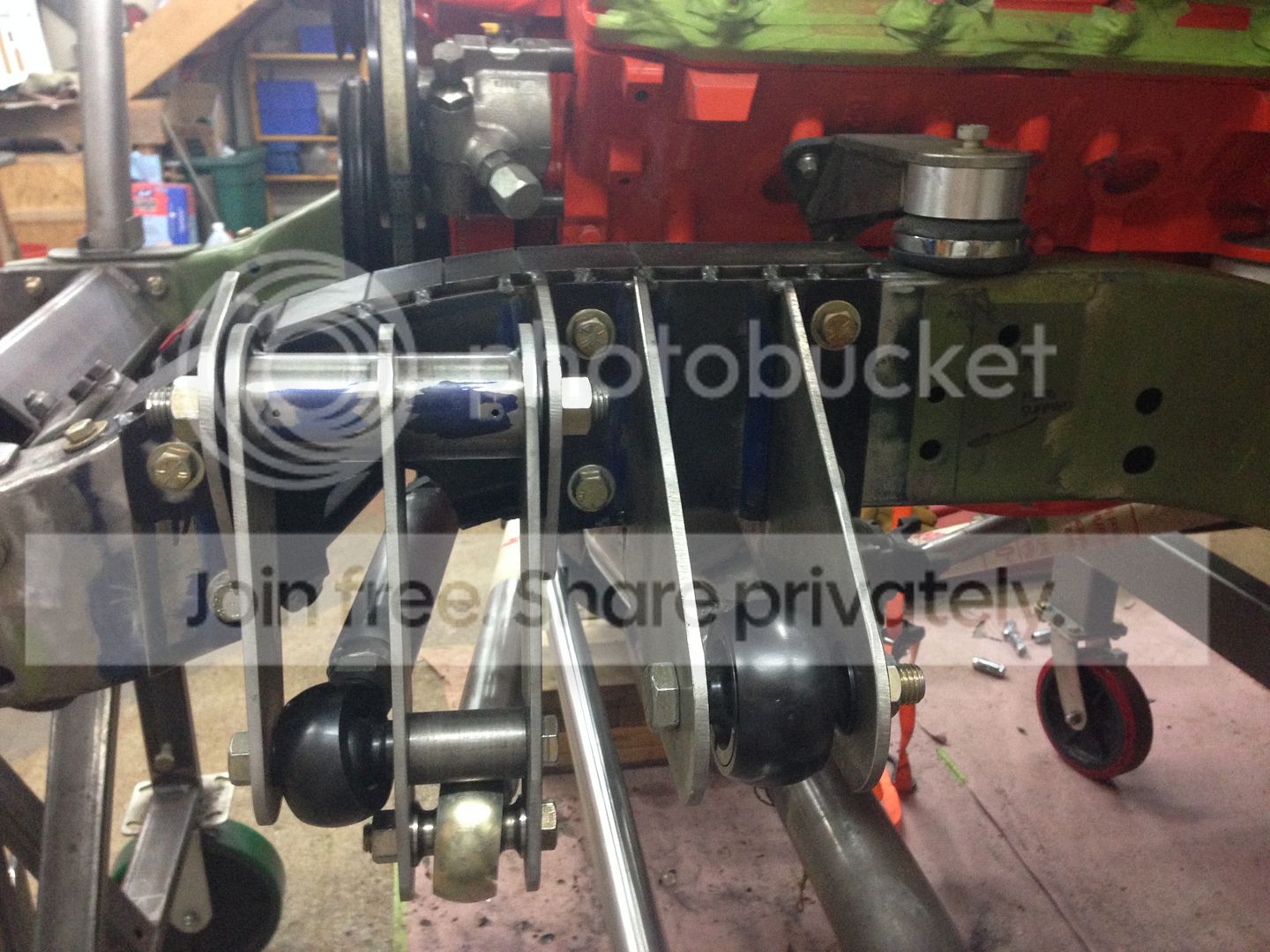
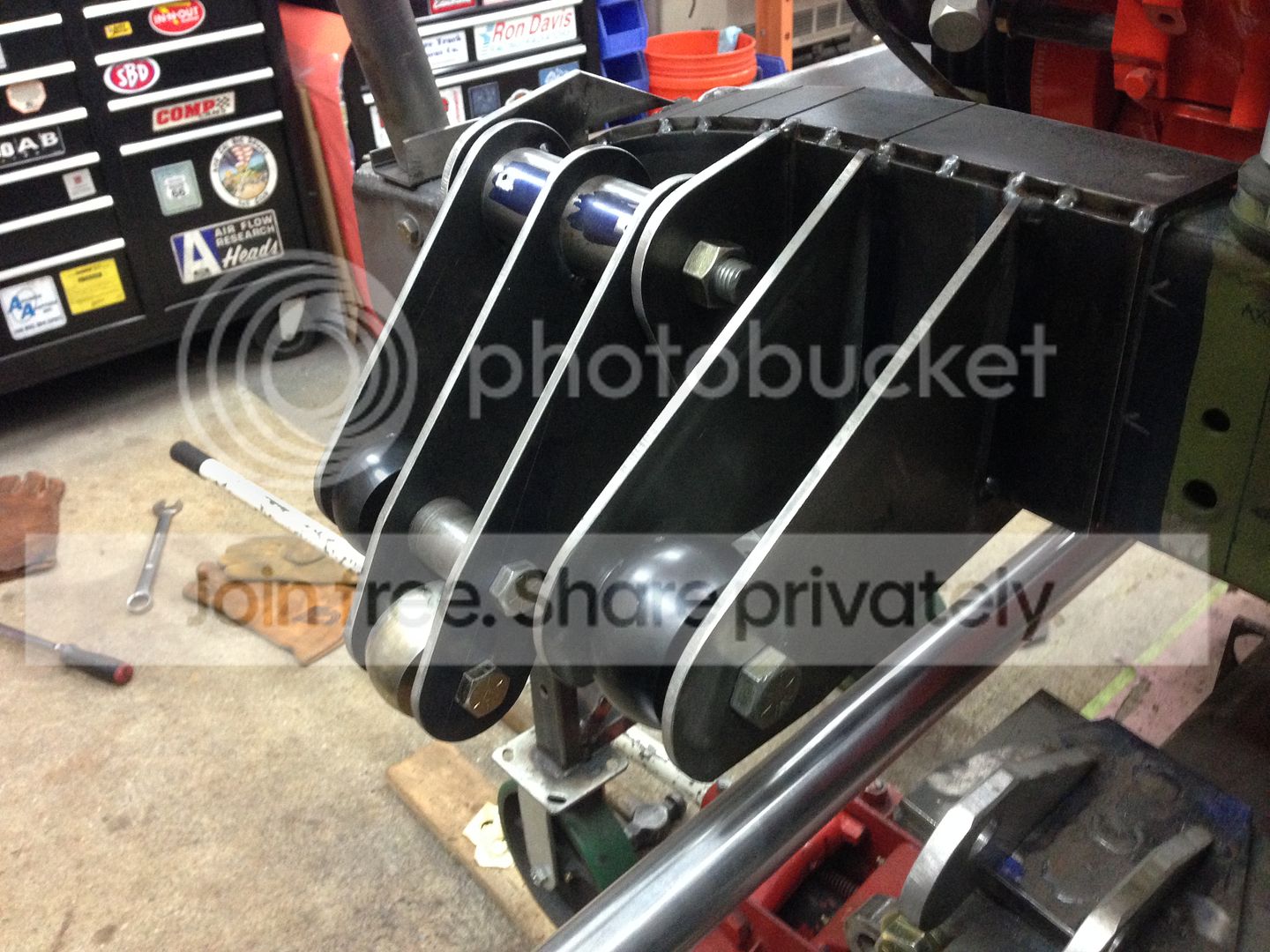
I managed to get the side plates built to support the idler arm and tack welded them into final position.
IMG_9871.jpg


As an example of the "little stuff" that gobbles up time, I also wanted to make sure that the upper pivot could be greaseable so that the Timken tapered roller bearings could be easily serviced..... and I still needed to insert an inner sleeve for the bearing races to seat against, since they were simply placed loose into the ends of the tubing and there was nothing to stop them from moving inward once I tightened up the bolt that secures the idler to the bracket.

So.... a simple idea became:

1. Install the bearing race backstop and secure with a couple of plug welds
2. Drill out two small holes through both the outer and inner tubes for grease zerks
3. Weld-in caps near the end of each side of the idler to contain the grease once it was pumped in. ( I didn't want to have to fill that ENTIRE cavity with grease before it would start squishing out through the bearings themselves!)
4. Realize that welding caps at each end, while effective at creating good pockets for grease containment....prevent me from re-installing the large through-bolt that holds the idler to the mount!!! :doah: :haha:
5. Drill 3/4" holes in each of the grease caps for the bolt. :rolleyes:

I'm sure some of the grease will now squish into the large center cavity of the idler when I try to grease it, but the hope is that the "path of least resistance" will still be the large voids in the bearing races and 95% of the grease will travel THAT way instead. :thinking:

Here's in installed shot showing those two small zerk holes...
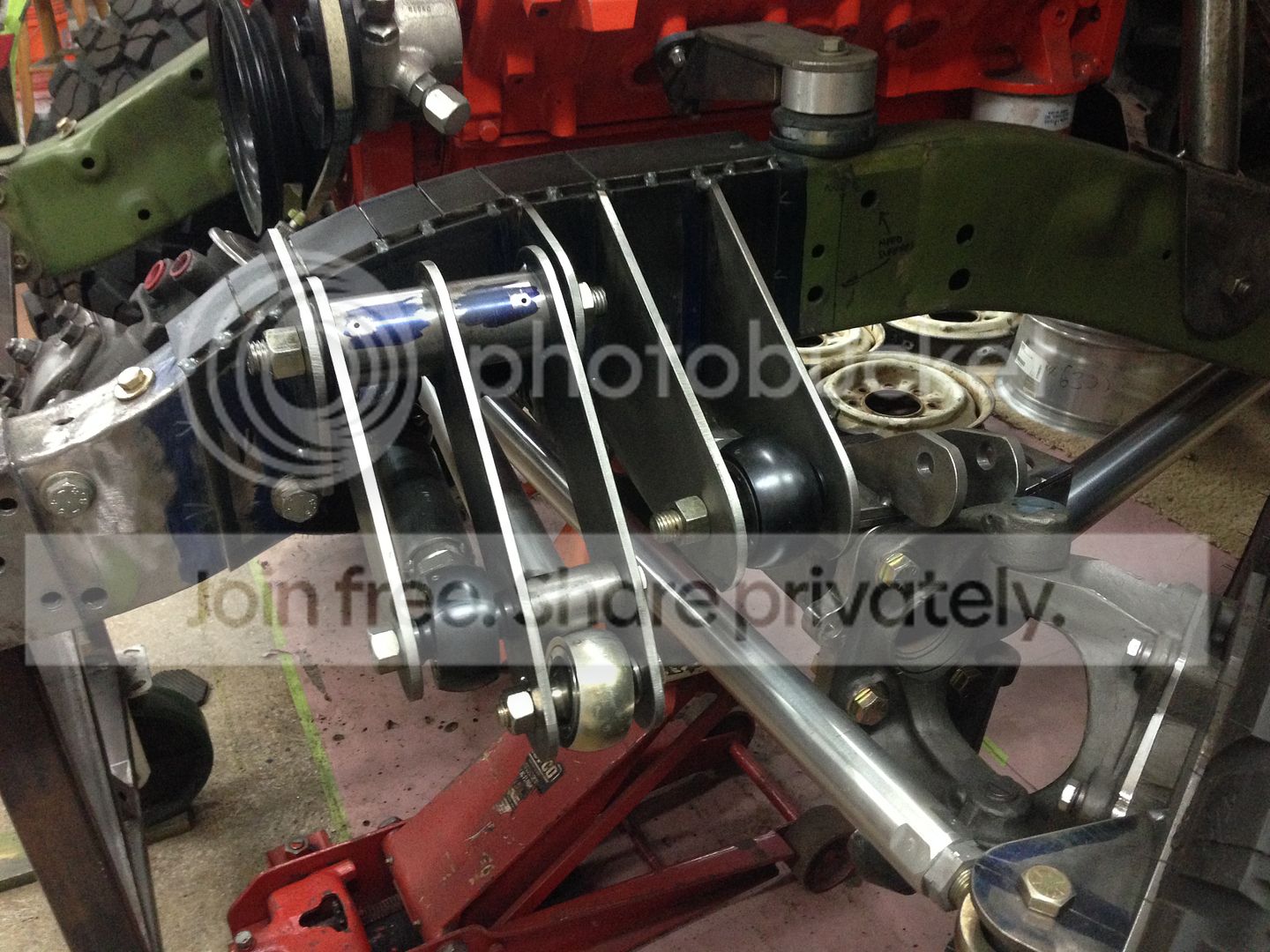
IMG_9866.jpg


For the record, here's what those Timken bearings actually look like installed in the idler.
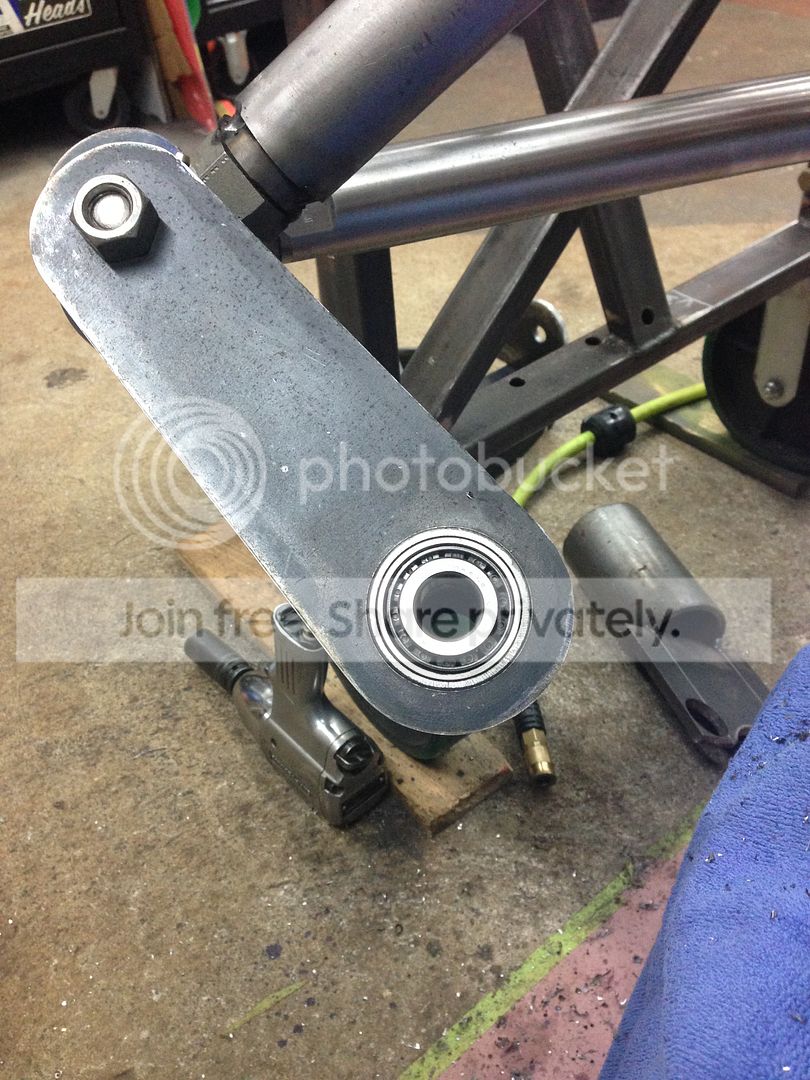
IMG_9895.jpg


Now of course, in previous updates I showed the mini-monolith installed on the frame but in reality, there was only a single bolt (steering box area) holding the entire assembly to the frame.

In my haste to do some additional flex / cycling tests, I noticed that the rearmost section of that plate was deflecting under load by almost 1/2" off the frame!!! The axle weight working against the PHB mount is pretty substantial... so even though I wanted to defer the work of adding all the sleeved-through-the-frame mounting holes, I really didn't have that option.

Time to dig in. Holes marked.... a total of 6 bolts will secure the mini-monolith to the frame.....
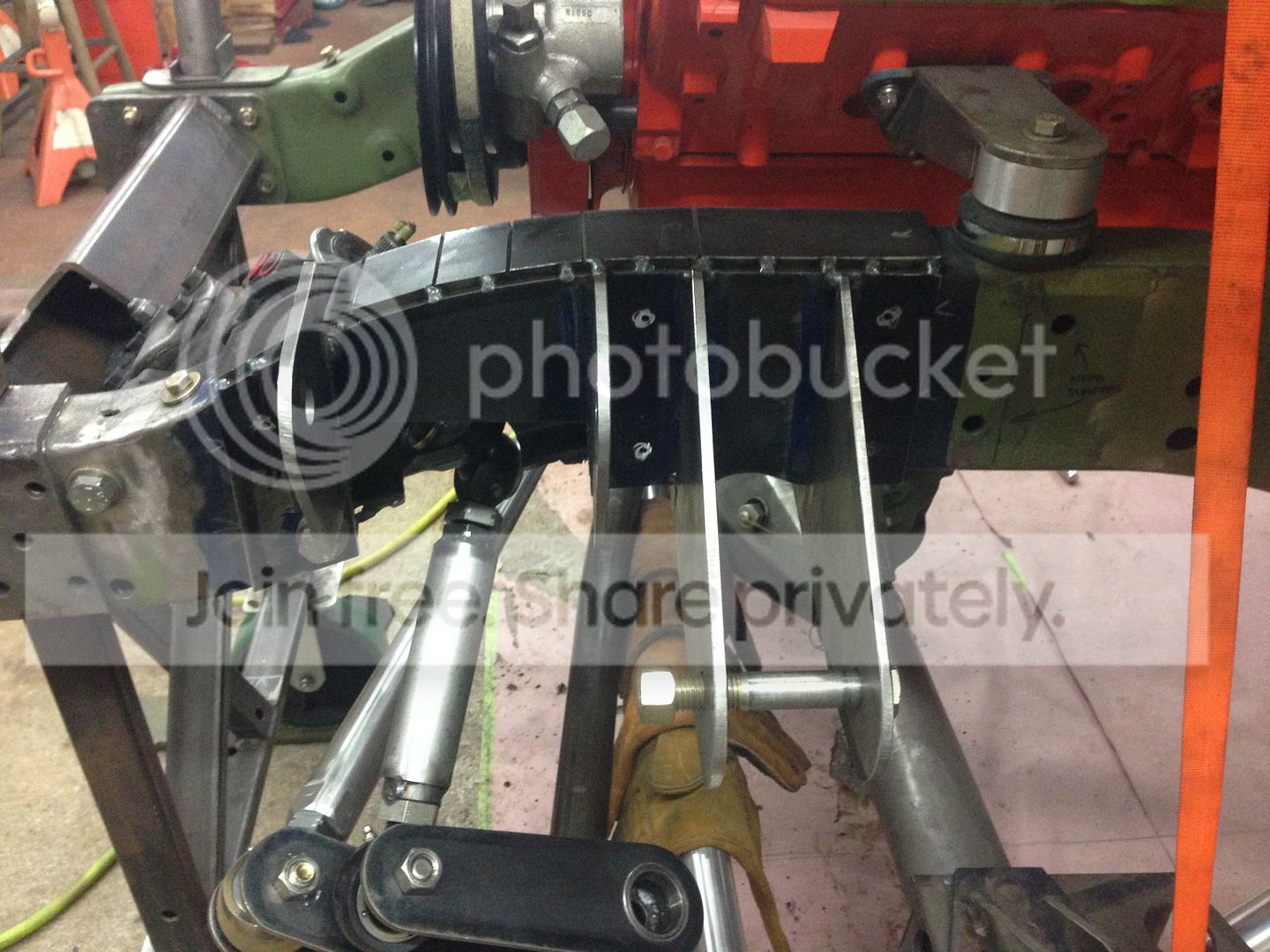
IMG_9884.jpg


Once I had those marked and pre-drilled with a small 1/8" bit (all the way through BOTH sides of the frame, I switched over to my 7/8" UniBit and drove it all the way through...
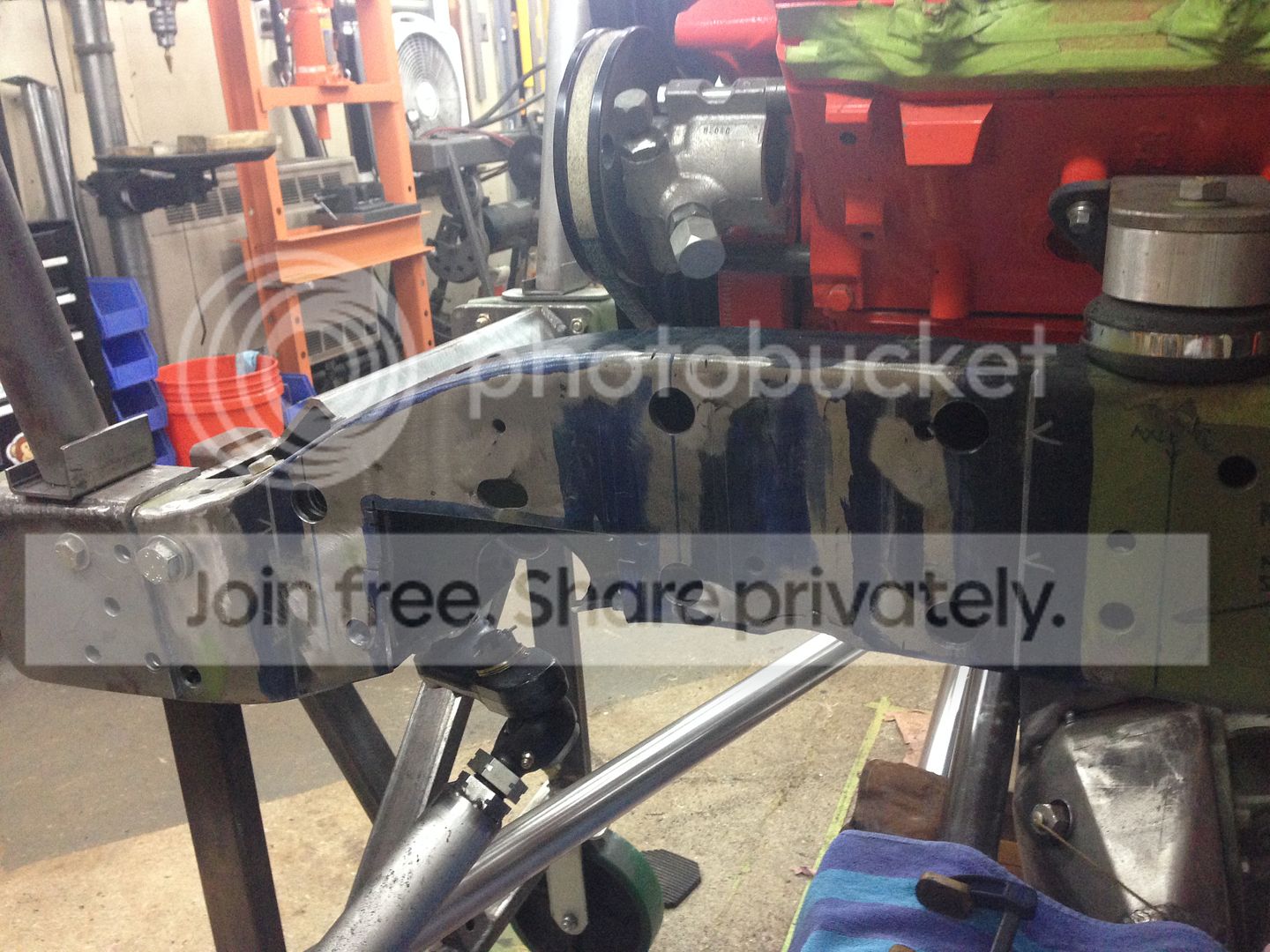
IMG_9905.jpg


This is the same procedure that I used for the steering box mounting points. A thick-walled 7/8" DOM slug will allow me to use a 1/2" through-bolt in those locations and should be more than adequate to hold things firmly in place.

Unfortunately, I will probably have to pull the engine up about 12" to get the drill and welder to the inside framerail areas for those rearmost bolt holes..... :dunno:


As I said at the beginning.....these small steps seem to gobble up lots of man hours.


-G
 
'72 K5 - Greg's "Might As Well™... IDLER MINI-MONOLITH CONTINUED...!!!!

Gobble up time, but it is the right thing to do. On my last build I took short cuts that ended up being weak links on my rig. Never again! Do it right or don't do it at all. Good job Greg!
 
Intresting! love the swinger setup gets rid of that pesky bumpsteer.

I am coming into this really late. But whats the end goal for the truck and its main purpose? I see you have a 4link?

Nice work by the way.
 
Intresting! love the swinger setup gets rid of that pesky bumpsteer.

I am coming into this really late. But whats the end goal for the truck and its main purpose? I see you have a semi triangulated 4link and panhard in the rear?

Nice work by the way.


Hardcore mall trips mostly..... :haha:

The goal is to have a very "period correct" looking 1st Gen Blazer but with tons of subtle changes everywhere to accommodate the upgraded drivetrain & suspension. Basically, I want everyone to immediately recognize this vehicle as an early Blazer (complete with factory-looking paint, white steel wheels & hubcaps.....even the houndstooth interior upholstery). To many people, it will be a stock truck with some bigger tires.... which in my view is a pretty nice compliment. Despite the thousands of hours I'm spending on this build, it would be great if most of the changes I made simply "disappear" into what looks like a simple and tastefully done restoration project. :waytogo:

Obviously, with all the time and effort going into the suspension and axles I expect that the ride quality on the street will be very good, and with the amount of underbelly clearance (and under-axle clearance) this truck has... it should be a very capable performer offroad as well. It's got deep gearing, and a 4 speed transfercase, and ARB lockers in both axles, so it has all the "good stuff" that it will need if anyone ever accuses me of building a show truck instead of a real 4x4. :haha:

Rear suspension is actually a simple 4-link (no panhard bar) with converged lowers, and parallel uppers. Really simple design with no roll-steer, and a nice high roll center vs. the truck's CG. (which is actually a good thing).


-G
 
That's awesome, not a lot of the 1st gens being modded much less to this level. I can appreciate the stock feel with the wild drivetrain.
 
Are you going to put some type of outer seal on the bearings? with your close tollerances you could probably get away with an o-ring groove.

And this is in no way criticizing... your work makes mine look like popsicle sticks and elmers.
 
That would be a good idea.... I'm not really sure where to look to find something appropriate for an application like this...

-G
 
When you do the race backer, allow the bearings to go in far enough to run a conventional seal with a spacer on the bolt?
 
I'm guessing you are using a conventional bolt through the idler, so a lip seal would be pointless due to the lack of a machined surface. If you are using some kind of thrust washer on the sides you could get away with a generic o - ring around the outside of the thrust washer. If the tolerances are so close that you aren't using any thrust washers I'd just have an o ring groove cut in the idler. Are you using anything to set preload on the tapered rollers? You could also just fill the void inside the bearings with a plastic tube small enough to allow grease to pass if you don't want the whole cavity filling with grease. Trailer spindles come to mind with this set up...
 
'72 K5 - Greg's "Might As Well™... IDLER MINI-MONOLITH CONTINUED...!!!!

Isn't there a sealed bearing big enough to fit this or are these tapered bearings?

Edit: I see now where you mention they are tapered. I know mcmaster has some precision plastic or steel bushings you might be able to use to fill the space. I think they are labeled as "precision spacers" and come in various sizes and lengths. They are kind of like really thick walled DOM.

Something similar to this which would both serve as a bearing backstop and prevent having to fill a cavity with grease.

http://www.mcmaster.com/#92510a375/=t5kus2
 
Are you using anything to set preload on the tapered rollers? You could also just fill the void inside the bearings with a plastic tube small enough to allow grease to pass if you don't want the whole cavity filling with grease. Trailer spindles come to mind with this set up...

To set preload I was just planning to crank down on the bolt until I felt a slight drag on the pivot, kind of like when you do wheel bearing preload. Since I'm using a fine-thread bolt with a castle nut, I just slip the cotter pin into the hole to lock the preload permanently.


Isn't there a sealed bearing big enough to fit this or are these tapered bearings?

Edit: I see now where you mention they are tapered. I know mcmaster has some precision plastic or steel bushings you might be able to use to fill the space. I think they are labeled as "precision spacers" and come in various sizes and lengths. They are kind of like really thick walled DOM.

Something similar to this which would both serve as a bearing backstop and prevent having to fill a cavity with grease.

http://www.mcmaster.com/#92510a375/=t5kus2

The backer has already been built at this point. The race sits about 1/16" above the edges of the idler side plates, and the outer bearing ends up just cranked tight against the fixed part of the bracket. So I do have a small amount of space on each side to sneak in a small seal of some kind into those gaps... Just not sure if I can use some kind of thin, scraper-type deal, or if I have to machine a groove for an o-ring. :dunno: I'd rather not have to do machining, just because I'd have to farm that out and I'm kind of a "DIY" guy.... :D


-G
 
2014.08.06 - UPDATE! - SOMETIMES I HATE BEING RIGHT....

Yesterday, I predicted that there was going to be trouble getting access to the through-holes for the Idler/PHB bracket on the inside of the framerail. The engine and oilpan seemed too close to allow the drill to get in there.....and even if I could figure out a way to drill & counterbore the holes, I'd never be able to get into position to do an effective welding job.....

Well, I was right...... unfortunately.

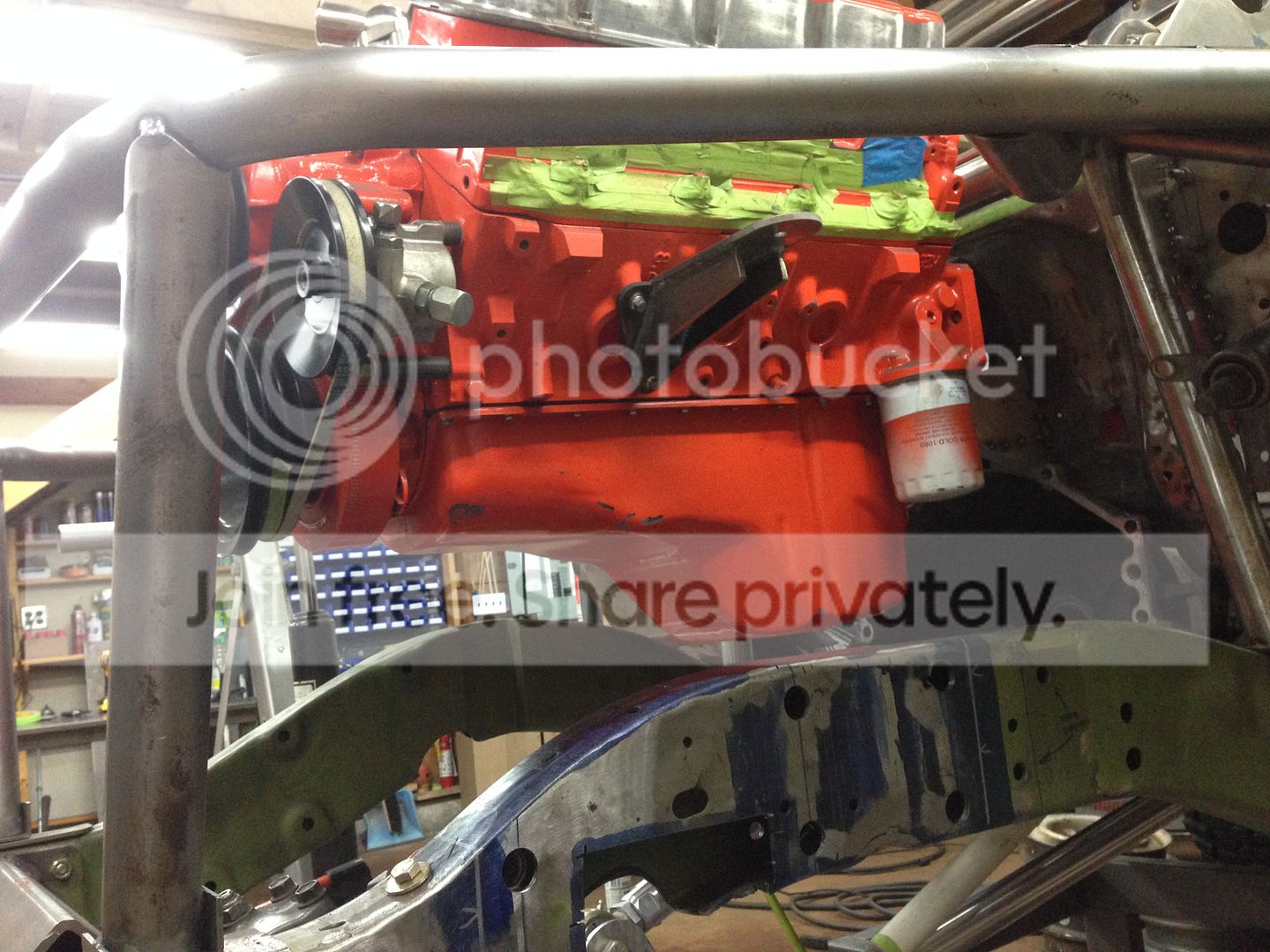
I decided to "embrace the suck" and do the obvious. I got the cherry picker set up and pulled the motor up and out of the way so that I could get into the framerail areas that needed attention.

IMG_9907.jpg


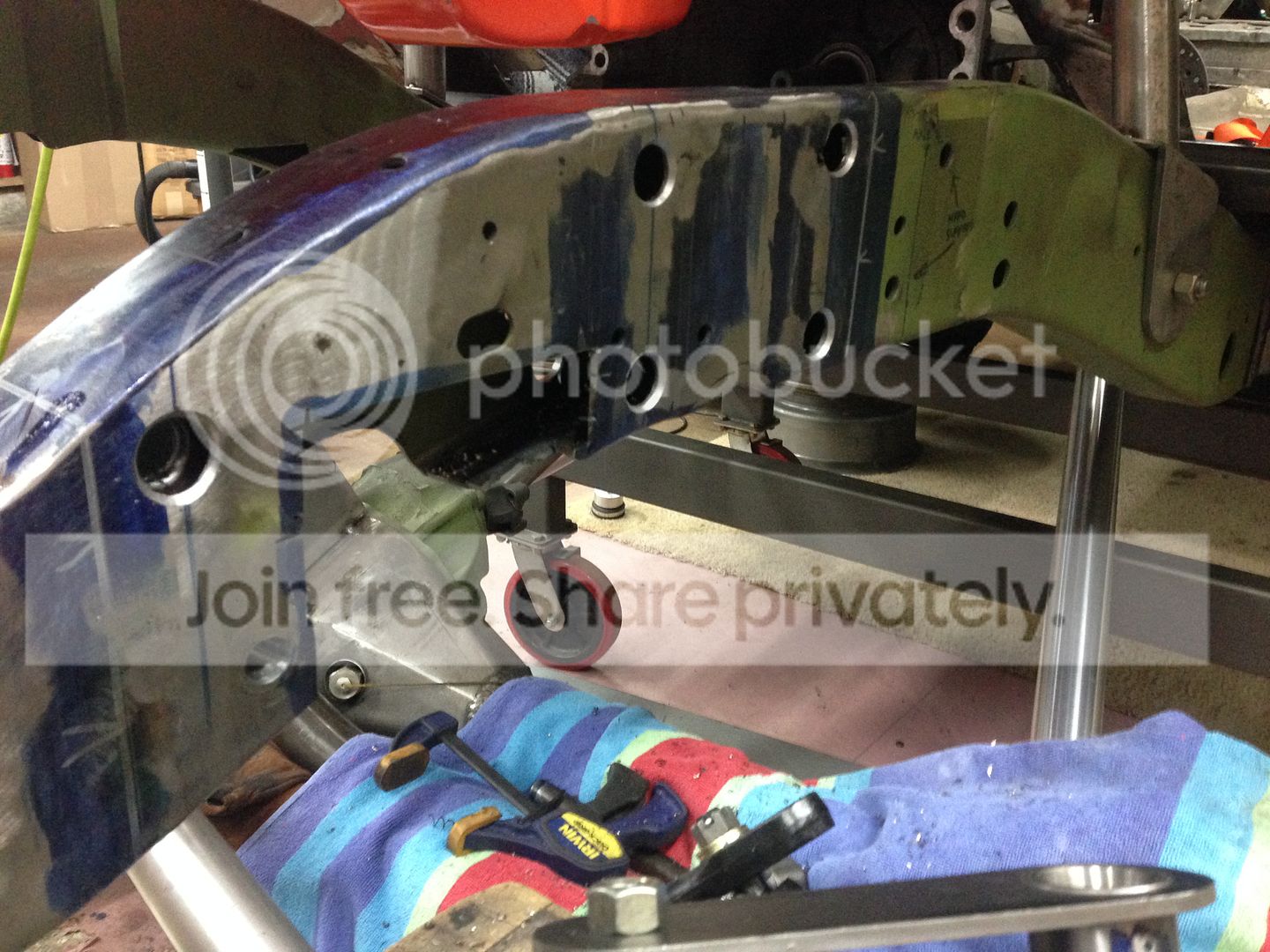
As you would expect, it was about an hour's worth of work to support the transmission/xfercase, and then unbolt the engine and gently lift it up out of the engine cradle area....... and about 5 minutes of actual time spent doing the drilling and counterbores that I needed to get done! :doah:

IMG_9911.jpg


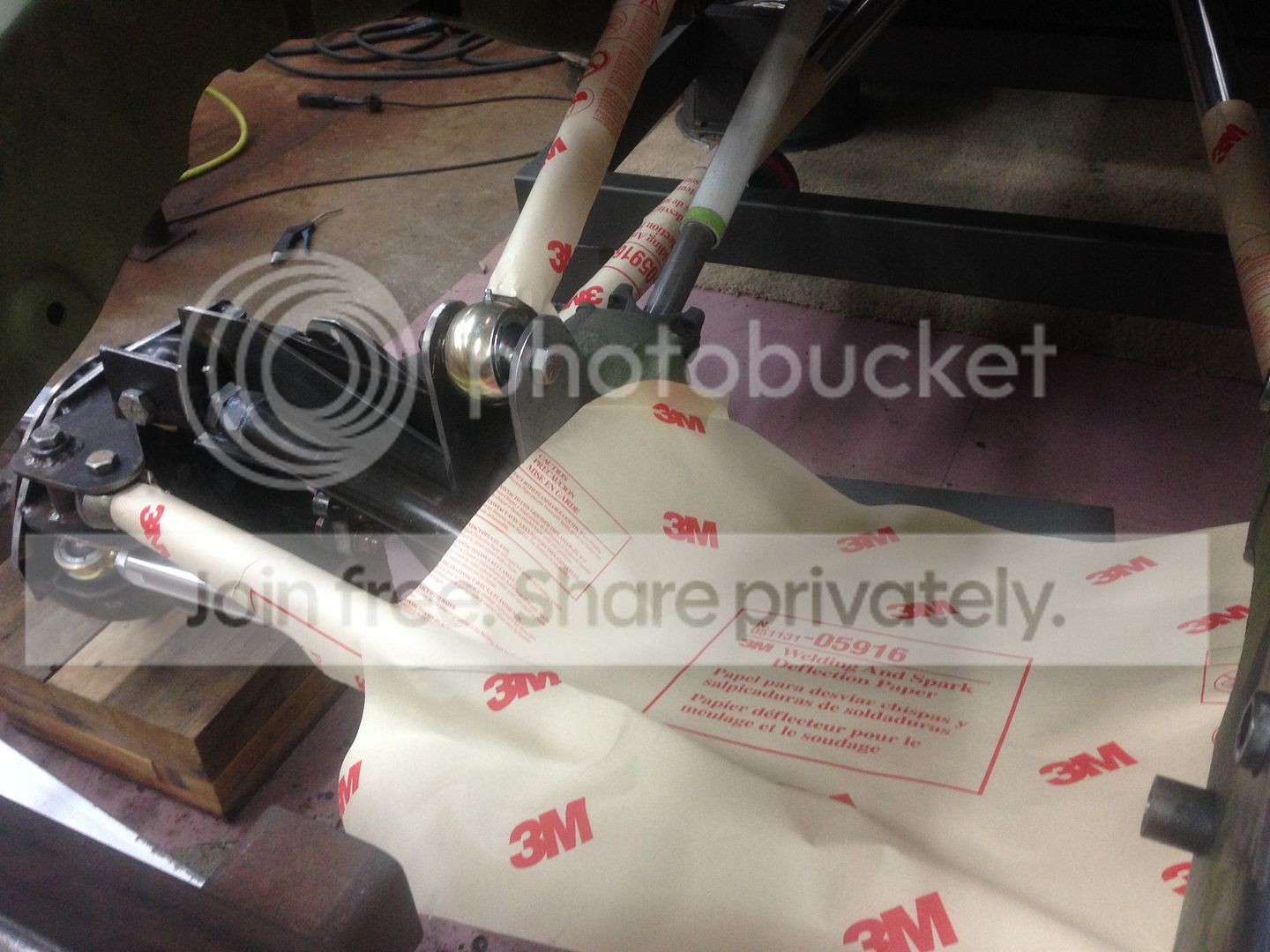
With the new "pretty" parts added to the build, I have to be more careful about welding and grinding spatter... so I rolled out a few feet of the new 3M welding paper and wrapped the links and laid-down some extra over the top of the other critical suspension areas.

IMG_9917.jpg


Good thing too.... when I took a look at all the marks and debris that landed on the paper, it definitely would have marred the finish of those aluminum links.

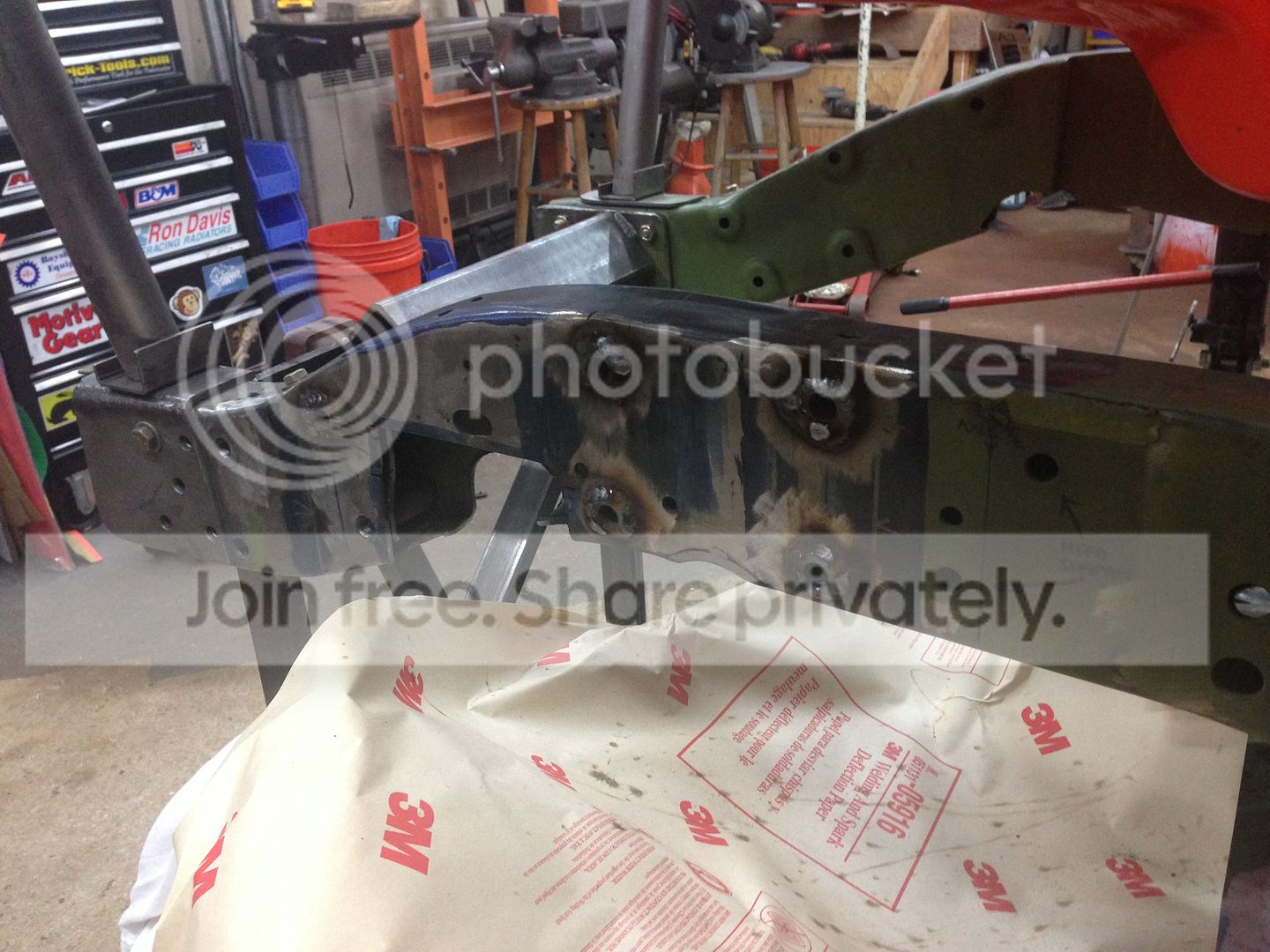
Here's a shot of the frame rail after the DOM slugs were fully welded, but BEFORE the grinding process where they are brought down flush with the surrounding framerail...

IMG_9924.jpg


The end result after several hours of work. Engine back in position, Idler/PHB bracket firmly bolted in place, Steering box back in place and all the linkages re-attached to the bracket..... seems like a shame, you can barely see any visual difference at all.... :dunno: However, with all those bolts torqued-down that area is SOLID...!!!!

IMG_9931.jpg


Next up I suspect.... will be the plating of the Idler/PHB brackets with SPEED HOLES!!! That should be reasonably quick and fun to do. :waytogo:


-G
 
Geesh I admire your "embrace the suck" attitude.

Thanks bud. :waytogo:

In reality, what else can you do? :dunno:

Once you see that you don't really have a choice, there isn't any benefit to wasting time avoiding the inevitable..... just dig in and get it done. Sometimes the work sucks, but it only lasted for a couple of hours.... and now it's DONE!!!

I could have easily spent 3 hours trying to figure out a "clever" way to get those slugs installed and come up with nothing.....and I'd STILL have to do the exact same work that I did last night. Better to just "embrace the suck" and move on with the build.


:D

-G
 
Thanks bud. :waytogo:

In reality, what else can you do? :dunno:

Once you see that you don't really have a choice, there isn't any benefit to wasting time avoiding the inevitable..... just dig in and get it done. Sometimes the work sucks, but it only lasted for a couple of hours.... and now it's DONE!!!

I could have easily spent 3 hours trying to figure out a "clever" way to get those slugs installed and come up with nothing.....and I'd STILL have to do the exact same work that I did last night. Better to just "embrace the suck" and move on with the build.


:D

-G

I think it would save the collective car guy world billions of hours a year. I have done this plenty of times. Only later to realize I just spent 2 hours building something to make something easier than I could have done conventionally in half the time.

Good times :D
 
I think it would save the collective car guy world billions of hours a year. I have done this plenty of times. Only later to realize I just spent 2 hours building something to make something easier than I could have done conventionally in half the time.

Good times :D


Last night I came awfully close to using my annular cutters to create "access holes" in the firewall for the bellhousing bolts!!! :D

Imagine being able to actually REACH those bolts without getting trapped in a mountain of tubing (from above) or a crazy combination of swivel-sockets and extensions (from below)?????

A few rubber plugs could pop right back over those holes when complete to keep the water and fumes out... pulling the engine would suddenly be a LOT simpler!!!


-G
 
So Greg what was the point of making the top fit the frame if you are not bolting it on the top also ?

Strength ?


Beauty....? Aesthetics....???

In a way the bracket wraps around the frame on 3-sides, so I guess there is some strength added... but mostly I just wanted it to look nice.

EDIT: Some of the reinforcement plates that come next will also tie-in to that top horizontal surface as well..... so there's that. Stay tuned.


-G
 
Top Bottom