2014.08.19 - UPDATE! - TAKE YOUR "CHEAP SHOTS" NOW, WHILE I'M DOWN....!!!!
Rough night.
Things started out so well too.... I had the garage all cleaned up and was starting to do my final cycling/steering tests to make sure that the addition of my final link materials and fabricated brackets hadn't created any new interferences.
I found a few small issues, like the new 2.25" lower links actually HIT the underside of the framerail now, whereas the "mock up" ones made out of 1.75" DOM didn't.... and I need a tad more clearance on the frame for the idler to swing underneath on hard right turns when the suspension is fully drooped/flexed. These are all easily manageable and were not causing me any worry.
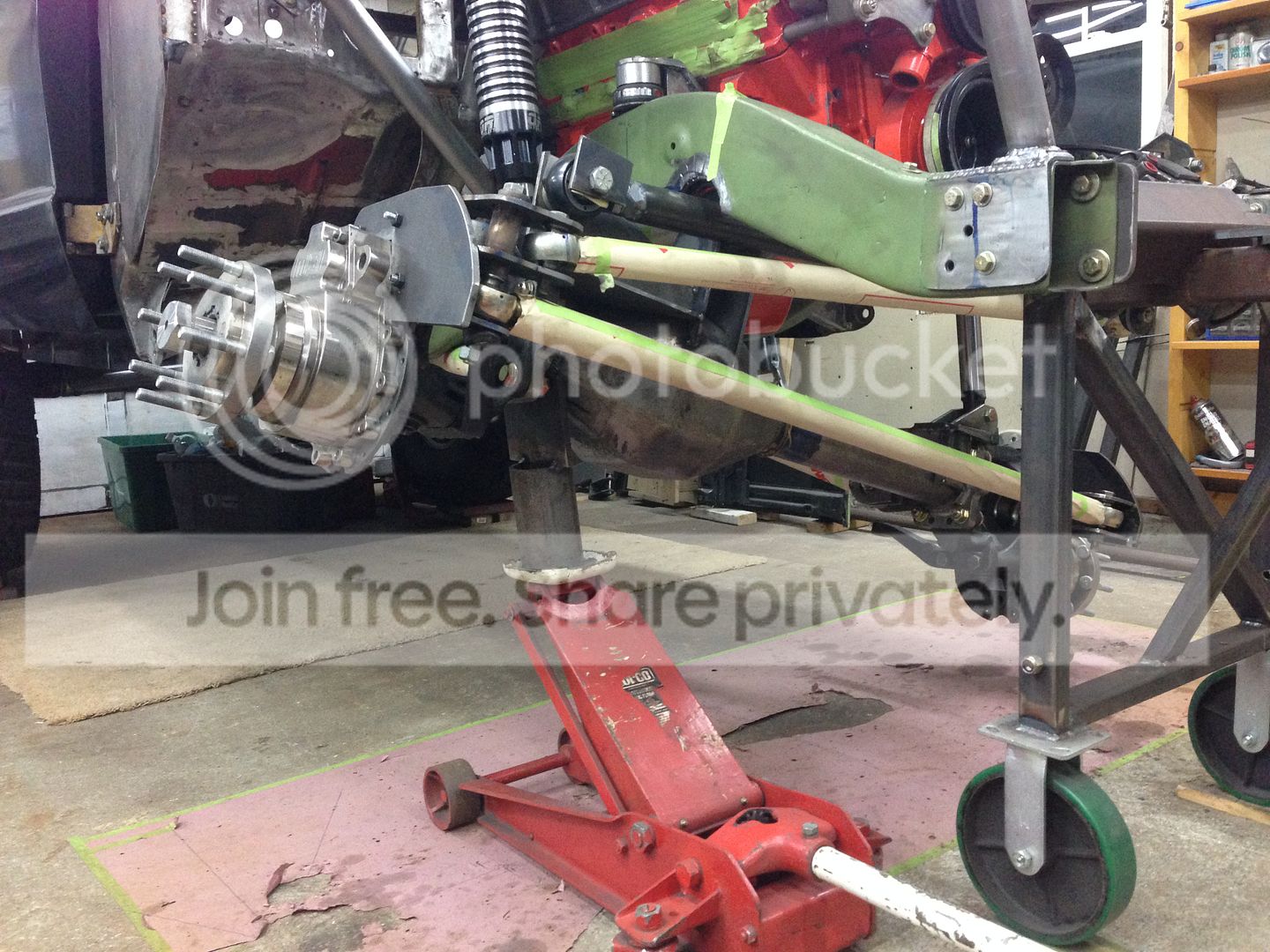
Here's a shot of the front suspension in it's "maxed out" configuration.... strut is fully extended on the driver's side, strut is fully compressed on the passenger side. This is what 100% flexed-out (14" of front travel) is going to look like on this truck...
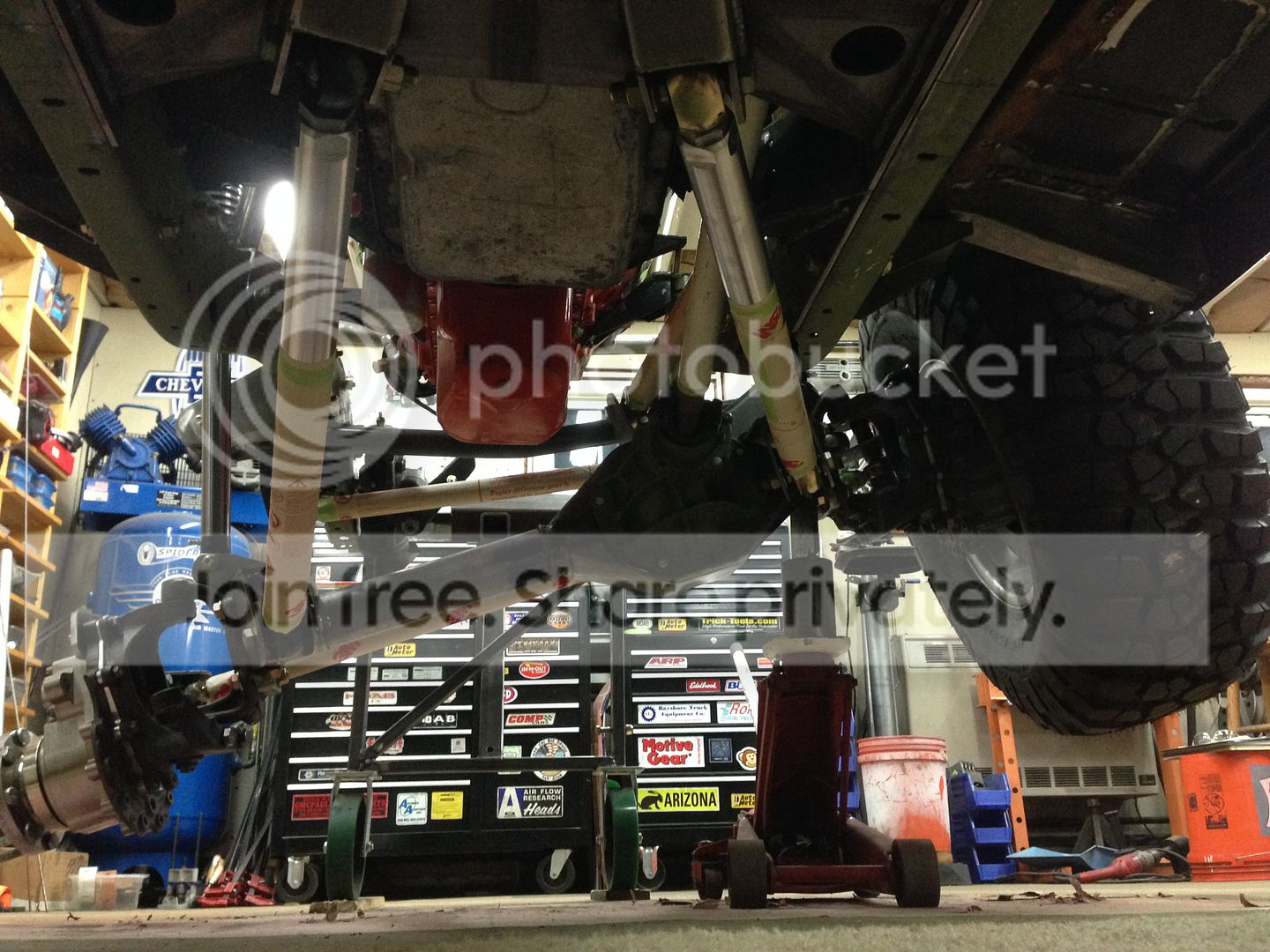
And here's that same shot from underneath with just one tire mounted to show what it would look like from the rock's perspective!
Shortly after this photo was taken, things started to get bad......REALLY BAD. I had to sleep on it last night to fully process what went wrong, and how I ended up in this tough spot but I think I've figured it out. Those of you who would like to take a cheap shot, or say "I told you so" can prepare your replies to this thread now...

 FULL DISCLOSURE:
Here is how I got into trouble. All along I knew that the only way to check for clearance issues was to have the tires/wheels bolted on and to do all the cycling/turning tests. I actually DID those tests, but I made a simple mistake..... I always did my tests with BOTH tires bolted on, unlike last night where only ONE tire was attached. The difference seems trivial, but it's not.
With both tires attached, the non-articulating tire is resting on the floor.... that's the lowest it can go. It doesn't "droop", though it sort of looks like it's drooping when the opposite side starts to stuff into the wheelwell. The problem is that there is about 8" of additional "droop" that never gets tested while the other tire is stuffed and max'ed out. As you are about to see...... quite a LOT of stuff happens differently under those circumstances.
For example:
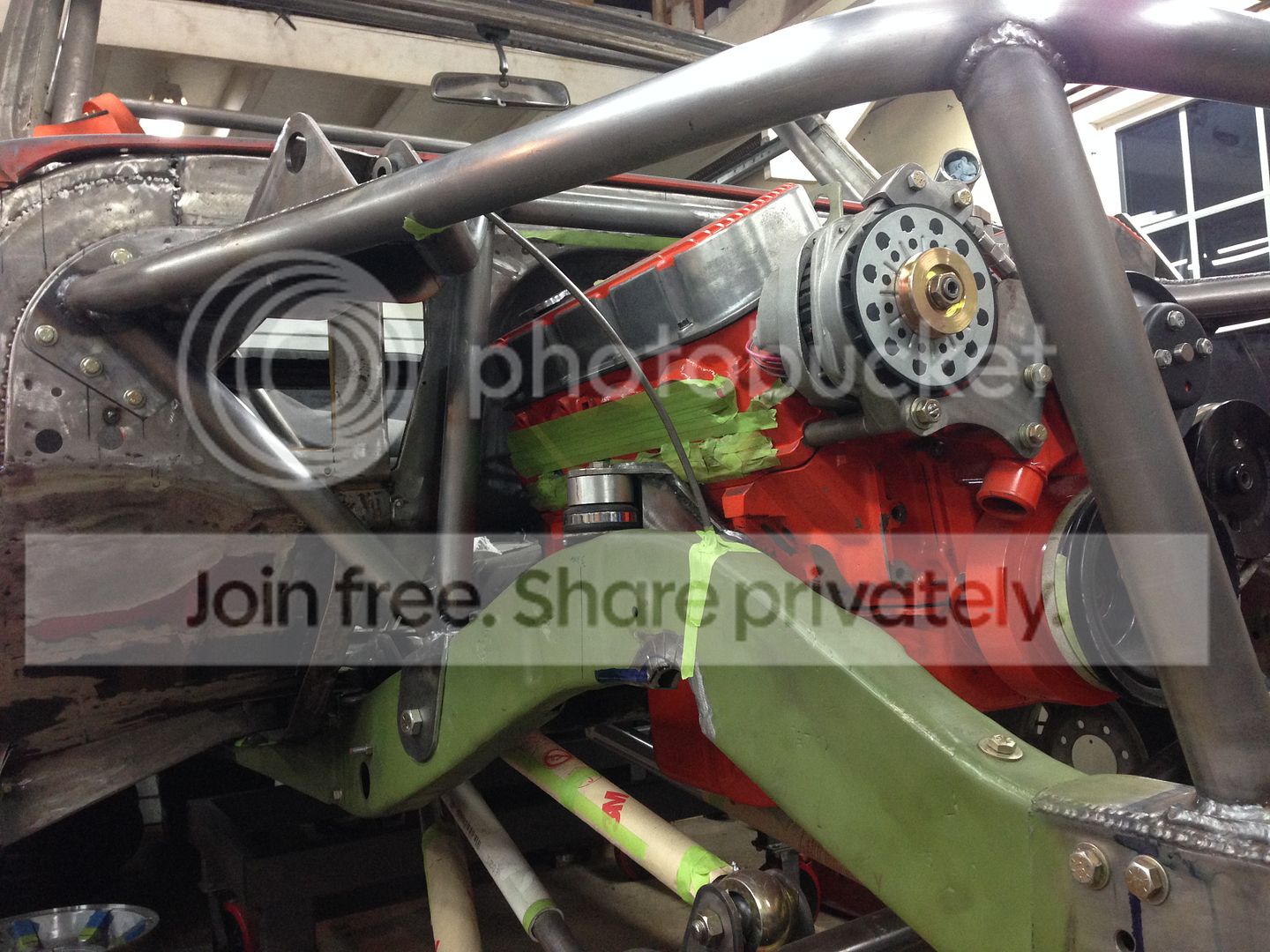
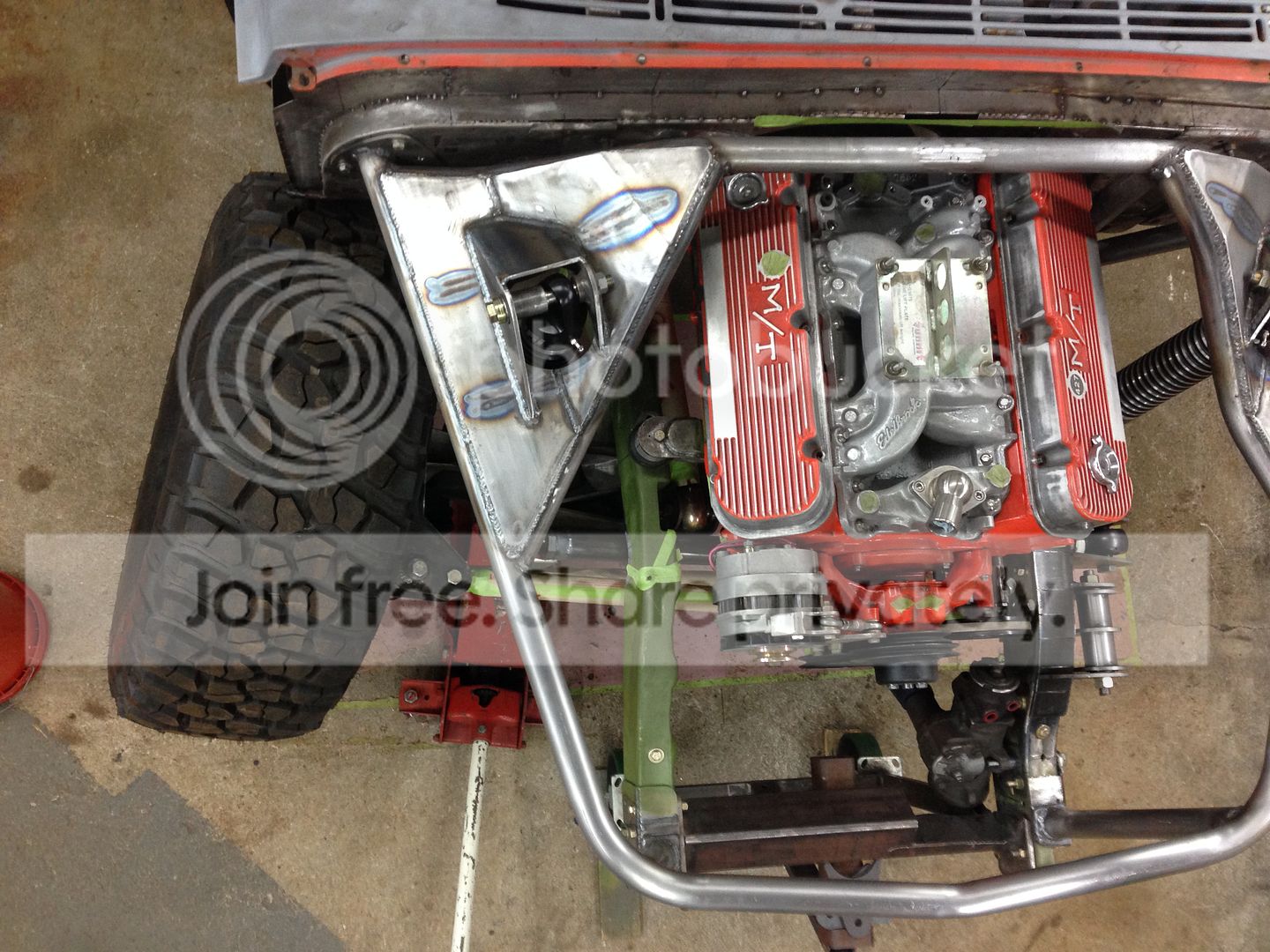
This is with the tire BARELY turning right (maybe 10 degrees?) and I'm already into the firewall in a pretty serious way..... the amount of room needed only gets worse as the tire turns more sharply.
From the attic, looking straight down at the problem:
It's a funky-weird look because the axle is drooping and the tire is angled AND trying to turn..... it almost looks like something is broken, but it's not. It's quite clear that the firewall is going to need some serious rework!!!

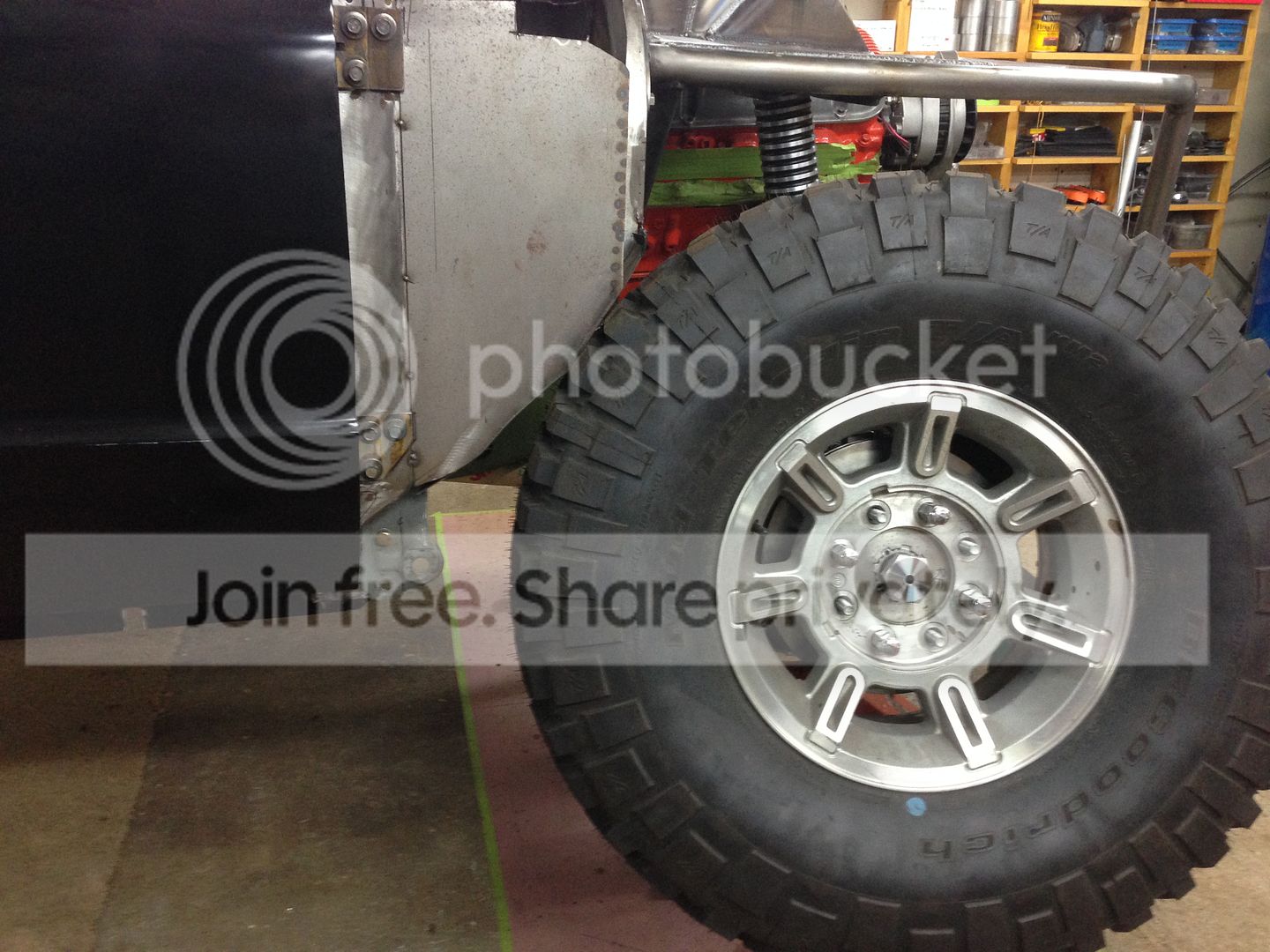
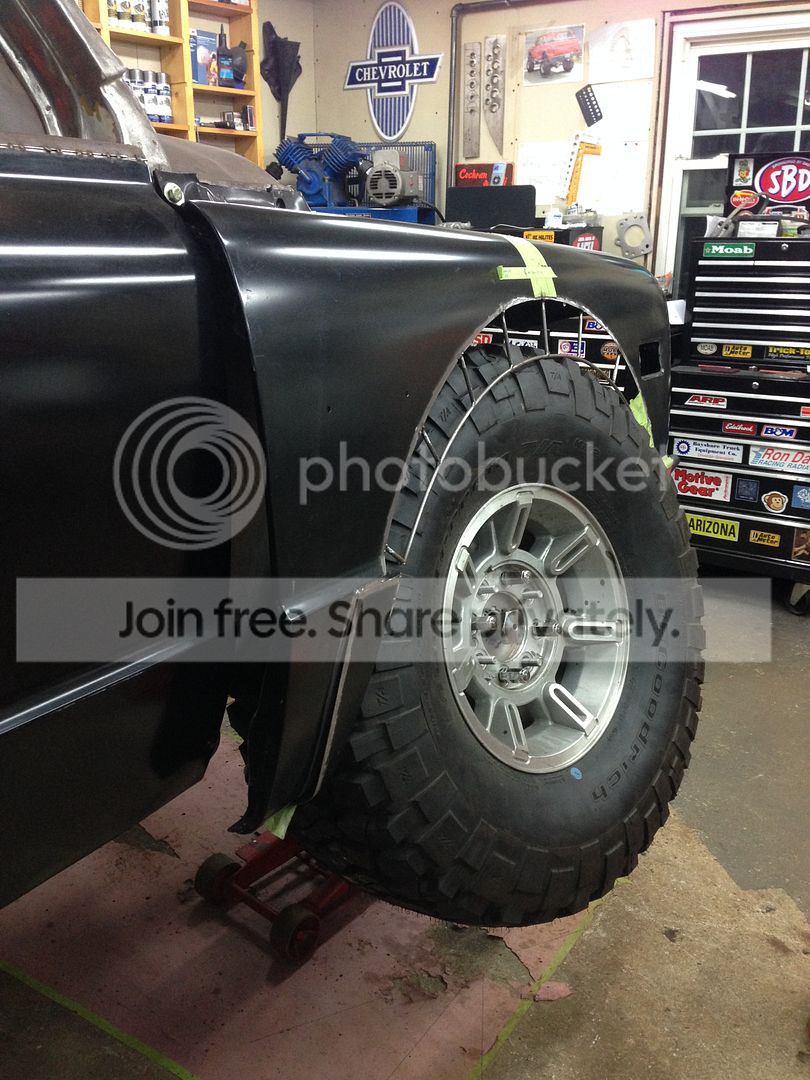
The real heartbreaker though is this one....... I tried to bolt the fender on to see just exactly what kind of issues my mistake was going to have caused.....
Yeah, it's pretty bad.

The tire hits the top of the fender arch so badly that I can't even get the lower fender area within 6 inches of the rockerpanel area to bolt it down. This means that the fender opening is going to have to be substantially enlarged..... and my fear is that the result is going to be ugly.
Unfortunately, there isn't much I can do about it at this point. The suspension is "locked down" in terms of dimensions and axle position. About the only thing I could imagine doing is running a set of external bumpstops for street use to limit my bump travel from 6" to something a lot smaller (like 3" or 4") so that the fenders can't get hit. However, that will REQUIRE me to remove all the body work EVERY time I go wheeling (or leave the bumpstops installed, I suppose) but I don't really like that idea.
Anyway..... unlike one of those "reality shows" where everything seems to go smoothly and quickly, I thought it would be more REAL to share what happened and let you share in my suffering.

-G










 No way I'm going to turn my 14" travel shocks into 6" travel shocks by throwing a massive set of limit straps on there. No droop at all would make for some sketchy handling too, I'll bet.


