CK5
Register an account today to become a member! Once signed in, you'll be able to participate on this site by adding your own topics and posts, as well as connect with other members.
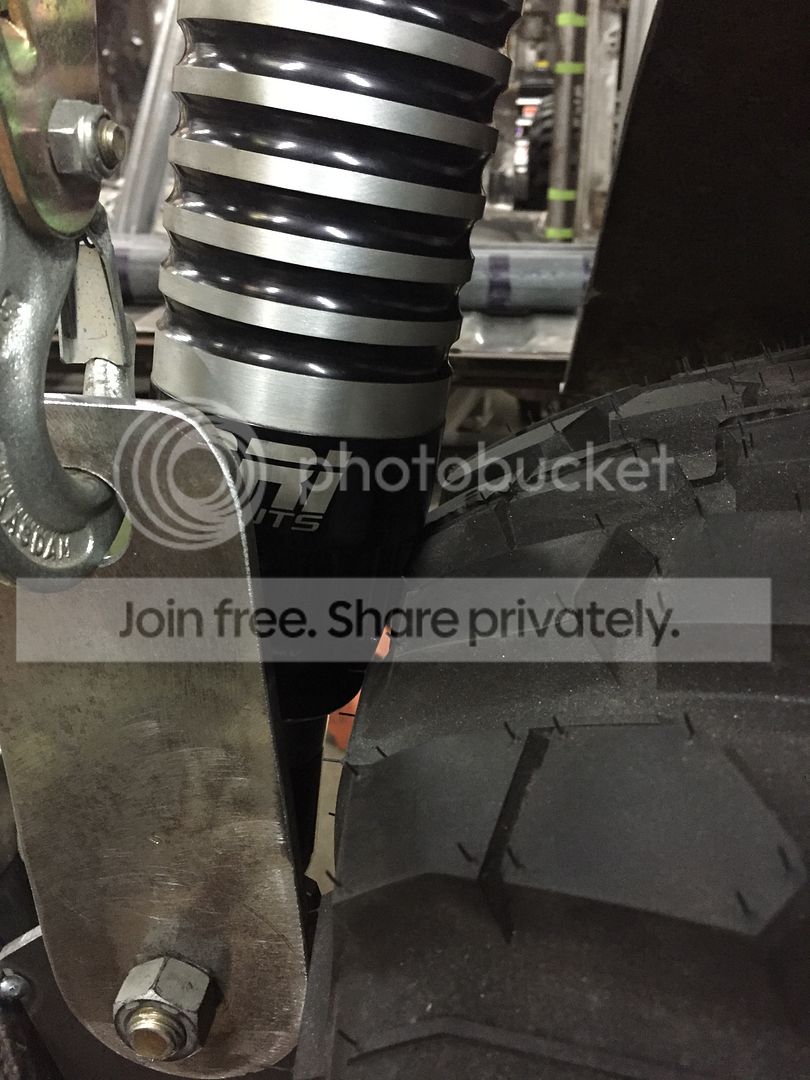
I wouldn't be comfortable with that clearance on the tire. Like you said you could do another .5 on the wheels. I would do that and move the mount in. Then back to cycling
 
Not to mention it doesn't look like the strut is fully compressed, it will get worse.
 
Actually with leaf springs its hard to test that stuff, because you have to compress the leaf (or at least the main leaf). With links you can test it all out pretty easy. :thumb:
 
Why is the strut mounted so high on the axle? If you mounted it directly to axle and not the upper link mount, you wouldn't have to mount them so high. That would eliminate all the problems of sealing the hole and possibly make more room in the back. :dunno:
 
Why is the strut mounted so high on the axle? If you mounted it directly to axle and not the upper link mount, you wouldn't have to mount them so high. That would eliminate all the problems of sealing the hole and possibly make more room in the back. :dunno:

Probably because the upper link mount moves side to side quite a bit by being so tall. If Greg would mount the strut to the axle direclty, the shock shaft might hit the upper link mount when fully flexed out...correct me if I´m wong!!

Not to get you off tracks Greg, but that is why I´m working on a cantileaver setup for my rear suspension, that way nothing will go through the bed. (so that even more plywood can fit!!!) :D
 
Been away for a little with all of the holiday fun. Looking awesome! Glad you didn't have to bust out the demo saw on the shop floor!!:haha:
 
Why is the strut mounted so high on the axle? If you mounted it directly to axle and not the upper link mount, you wouldn't have to mount them so high. That would eliminate all the problems of sealing the hole and possibly make more room in the back. :dunno:

Glenn,

It doesn't work. If I mount directly to the axle the upper link mount will hit the strut under articulation.... If I move it forward of the axle, the upper link itself will hit it. The only options that actually work are to mount the strut substantially behind the axletube (closer to the rear bumper) which would look really weird.... or mount it basically at the top of the upper link mount so that the mount can't possibly interfere with it. I chose the latter.

Of course you could mount the struts inboard of the framerails, but at that point you completely kiss your bedfloor storage space goodbye.... :D

I´m working on a cantileaver setup for my rear suspension, that way nothing will go through the bed. (so that even more plywood can fit!!!) :D

Good luck with that. I spent quite a bit of time considering a cantilever setup too, motivated by the compact packaging and ability to preserve my interior floor space. The more I studied the design the more I realized that it creates a complex association between the strut and the axle due to the asymmetrical lengths of the bellcranks. Figuring out the motion ratios, and their effects on the shock shaft speeds started to get complicated....and the physical size of those bellcranks ends up being pretty large when you want to use long travel struts. IMHO it sort of defeats the purpose of a cantilevered system. It would be better to use a shorter travel strut and let the motion ratio of the bellcranks magnify the total wheel travel.

Of course at that point you are tuning with a stiffer spring and dampening rates to compensate (assuming a coilover setup) and unless you know what you're doing or have access to a local KING or FOX technical rep, the odds of getting it tuned properly are pretty slim. That was a big turnoff with coil overs initially for me..... They cost a fortune, but only deliver their peak performance if you spend the time to valve them properly and do all the tuning work.

ORIs are just the opposite. You can get a very high level of performance with minimal tuning expertise... And since I'm not desert racing, it was a simpler and cheaper way to go.....and I'm all about saving money on this build! :haha:

ORIs can't be installed flat either.... Pretty sure of that, since the oil wants to puke out of the Schraders every time you go to make a pressure change. That would end up being a major hassle for tuning changes.

Ultimately, I chose to do a more conventional setup....there's no free lunch when it comes to packaging suspension. Cantilever has some cool benefits but it also creates it's own problems and eats up a lot of valueable space underneath the truck. It also ends up right where my 30 gallon custom fuel tank needs to go.


My proverbial "5 Lb Bag" already has about 10 lbs of stuff in it... :D


-G
 
My proverbial "5 Lb Bag" already has about 10 lbs of stuff in it...


That shouldn't matter to much, as long as the bag is balanced front and rear. After talking with wade this summer, what everyone forgets in suspension tuning and handling is the 50/50 weight balance. Balance your front and rear weights and tuning gets a hell of a lot more simple.
 
Glenn,

Good luck with that. I spent quite a bit of time considering a cantilever setup too, motivated by the compact packaging and ability to preserve my interior floor space. The more I studied the design the more I realized that it creates a complex association between the strut and the axle due to the asymmetrical lengths of the bellcranks. Figuring out the motion ratios, and their effects on the shock shaft speeds started to get complicated....and the physical size of those bellcranks ends up being pretty large when you want to use long travel struts. IMHO it sort of defeats the purpose of a cantilevered system. It would be better to use a shorter travel strut and let the motion ratio of the bellcranks magnify the total wheel travel.

Well, good thing I´ve raced downhill MTBs before and they all have cantilever suspension on them. So I´m used to tuning the suspension on these for different tracks. But ultimately I would see King for a tuning session to get it dialed in perfectly!

Being an automotive engineer, it helps with figuring out the suspension curves and whet the bell crank needs to look like, what the ratio needs to be, etc.


Of course at that point you are tuning with a stiffer spring and dampening rates to compensate (assuming a coilover setup) -> yes coilovers on all 4 corners. and unless you know what you're doing or have access to a local KING or FOX technical rep, the odds of getting it tuned properly are pretty slim. That was a big turnoff with coil overs initially for me..... They cost a fortune, but only deliver their peak performance if you spend the time to valve them properly and do all the tuning work.

and I'm all about saving money on this build! :haha:I can totally see that! :D

Cantilever has some cool benefits but it also creates it's own problems and eats up a lot of valueable space underneath the truck. It also ends up right where my 30 gallon custom fuel tank needs to go.

good thing my saddle tanks are gone and have been replaced with a 45 gal fuel cell behind the rear axle. So I have way more room behind the cab outside of the frame now than I could ever use up! Heck, I can fit a 2.5" coilover, a 3" bypass and 2.5" hydraulic bumps all in there! The cantilever air helper springs will have to go on the inside of the frame though. but I have quite a bit more length in the chassis than you do!

I just like the idea of a long travel setup (16-20" of travel) but kkeep the bed 100% usable and stock looking! ;)


My proverbial "5 Lb Bag" already has about 10 lbs of stuff in it... :D

I´m at 7.5! :D


-G

see added comments in blue
 
Like I said.... good luck.

It's one thing to be an automotive engineer, it's quite another to actually get it off the paper (or computer) and onto an actual vehicle.


-G
 
see added comments in blue

build thread?

I wanna see it done. I love to read up and look at all these complex engineered builds. especially when I'm over here scared to cut off a rusty panel for fear of not being able to put it back on correctly. :rolleyes:
 
Like I said.... good luck.

It's one thing to be an automotive engineer, it's quite another to actually get it off the paper (or computer) and onto an actual vehicle.


-G

Thanks. I know the toughest part is to see if it actually fits onto the vehicle where the math or programm tells you it would be best. I totally agree that math is not the only thing, but it sure helps to eliminate 10 trys to get it right, but it might still take 3 or so to get it perfect.

build thread?

I wanna see it done. I love to read up and look at all these complex engineered builds. especially when I'm over here scared to cut off a rusty panel for fear of not being able to put it back on correctly. :rolleyes:
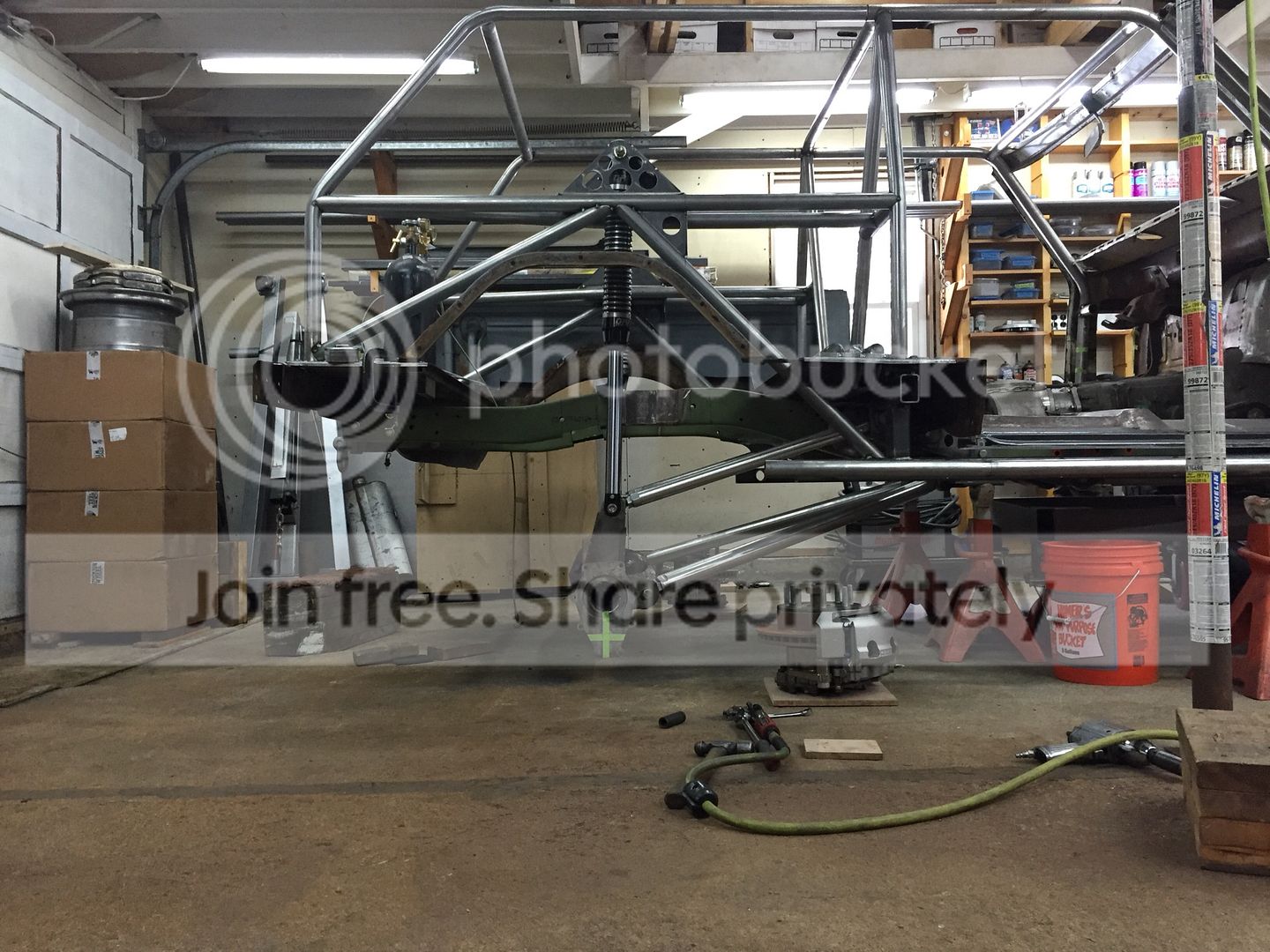
Build thread is linked here: http://coloradok5.com/forums/showthread.php?t=312753 ,but the suspension is not on there yet. Just finnished building the links and got the mounts for frame and axle for the front 4 link. That needs to go in first to set the ride height and then I can tackle the rear. So it´ll be a bit before it´s all on the truck. But feel free to go through my overengineered build. ;)


Back to Greg´s build: When your rear suspension is at full bump, in some pictures it looked like your upper links (not just the axle mounts) are going to be above the bed floor. Is that really the case? And what would you do about that? You wanted to keep the bed floor flat between the wheel wells right?
 
Plenty of clearance...... At 16" of droop anyway!

imagejpg1-3.jpg


At full bump.....not so much! :doah:


-G
 
2014.12.15 - UPDATE! - DOIN' IT THE HARD WAY...!!!


No joy in the workshop yesterday in terms of a finished product, but progress is continuing....

First order of business was to get the PS wheel fully stuffed. I still had a few inches of chrome showing and really needed to get that resolved to find out where my interferences were, and how severe they were going to be.

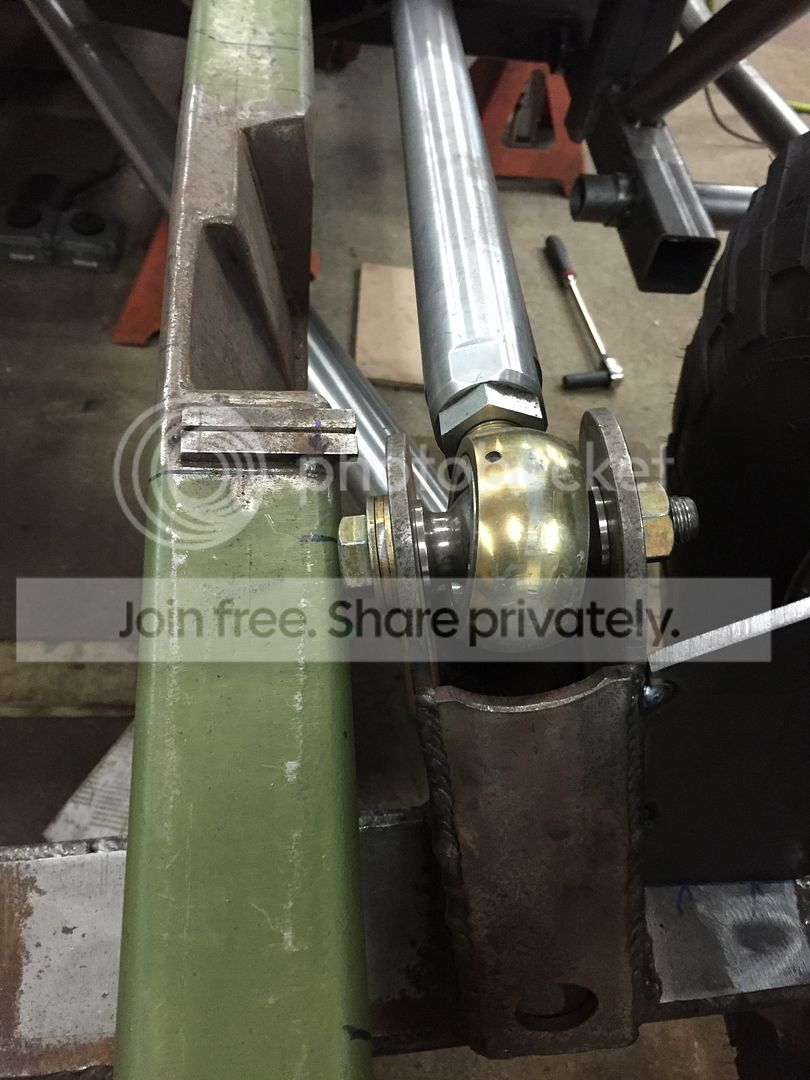
Unfortunately, if you look at the last series of photos the temporary lower strut mount (which was nothing more than a REALLY long bolt coming out of the upper link mount) was about to run out of angularity and bind-up. That's the reason why the bolts are supposed to run front-to-back gents!!! :D So I cobbled a quick mounting plate so that I could run the bolt in the correct orientation and then tried to get the axle fully articulated. It's never easy to cycle a suspension with a floor jack, so I made another quick plate from some "tuition metal" that allowed me to lift the axle from above directly from the lower strut mounting point....
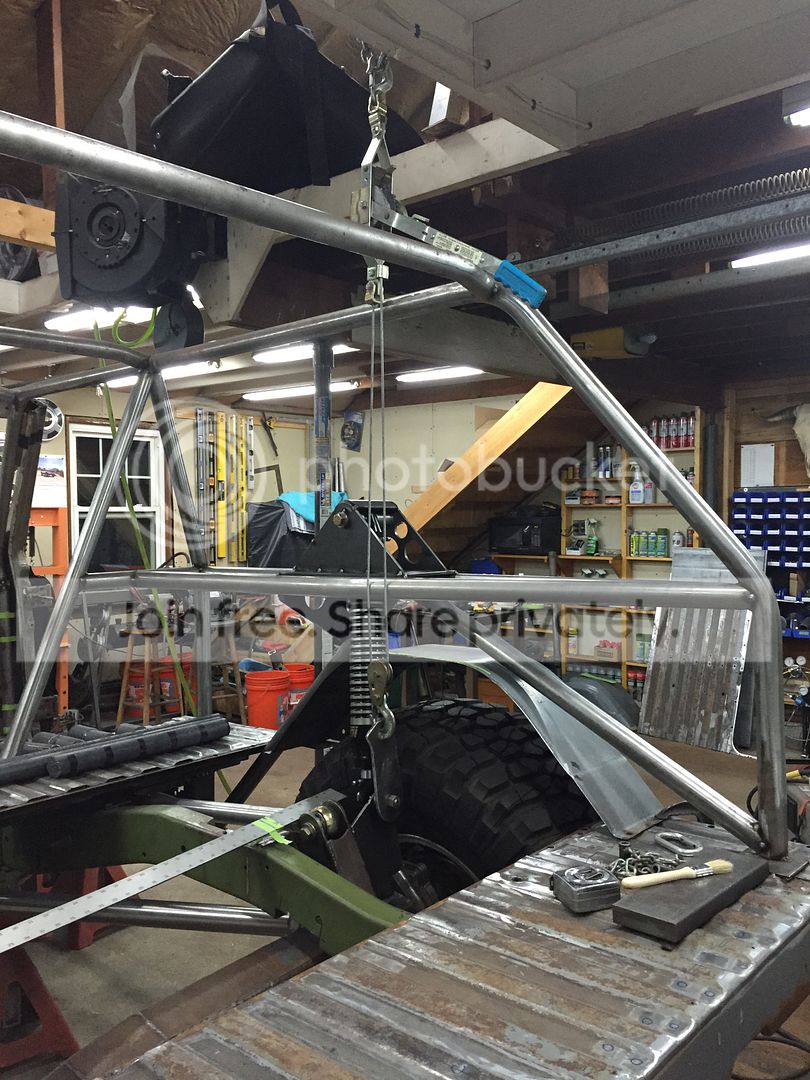
IMG_2320-1.jpg


This worked great...

Right up until I started to lower the DS of the axle. :doah:

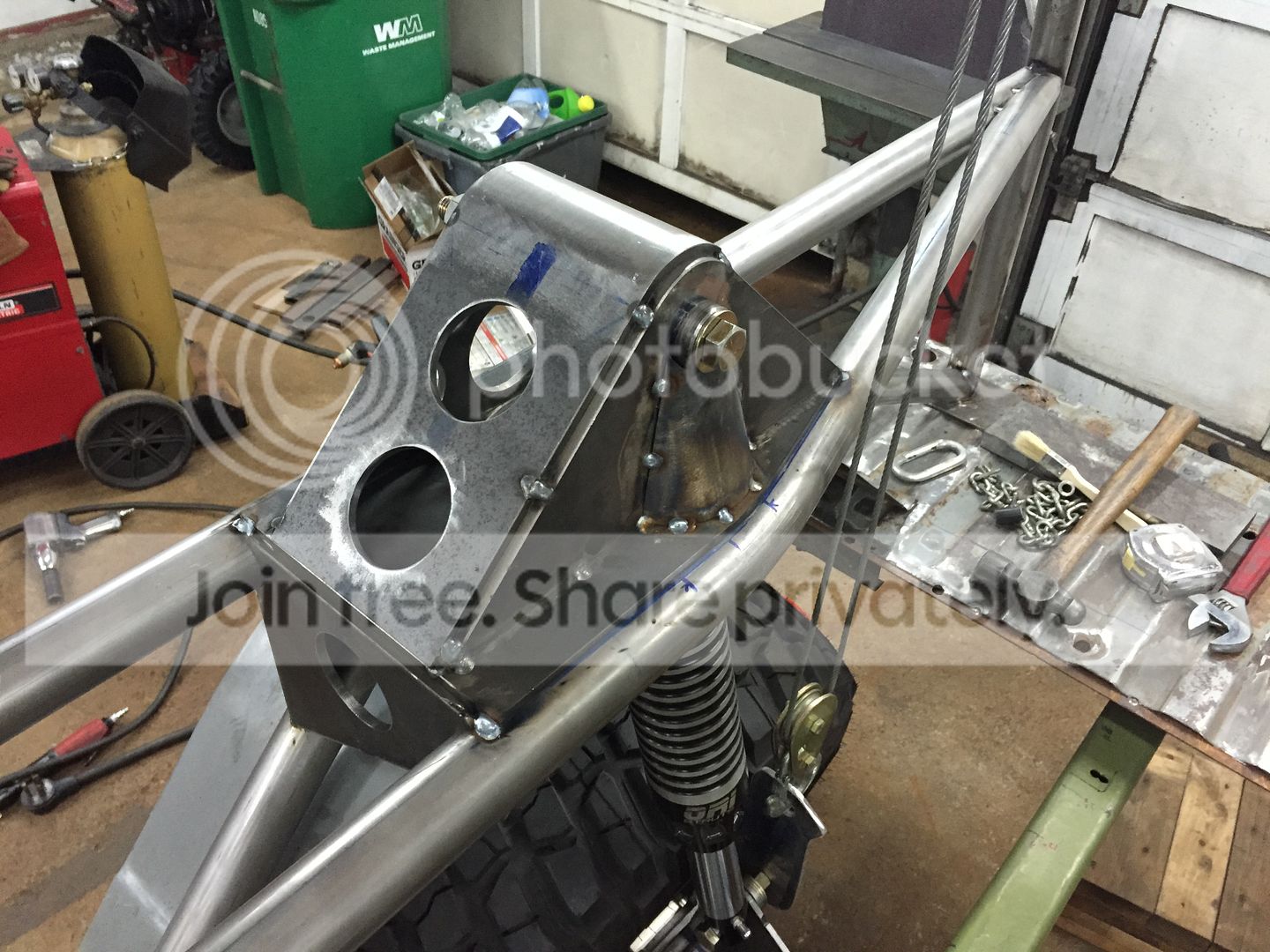
Immediately, I had a couple of interferences... but the most notable was in the upper strut tower. There just wasn't any room left on the inside of that hanger for the strut to move and if I slid the thick DOM slug outward to gain clearance the strut body would just end up into the tire sidewall.

I'd already played all the games I could with ovalling-out the plate for clearance. The next step was going to have to be more aggressive and time-consuming....

Since I had some 4" O.D. DOM sitting around (doesn't EVERYONE have stuff like that just waiting to be used? :haha:) I figured that it could be deployed to get me some REAL clearance.....
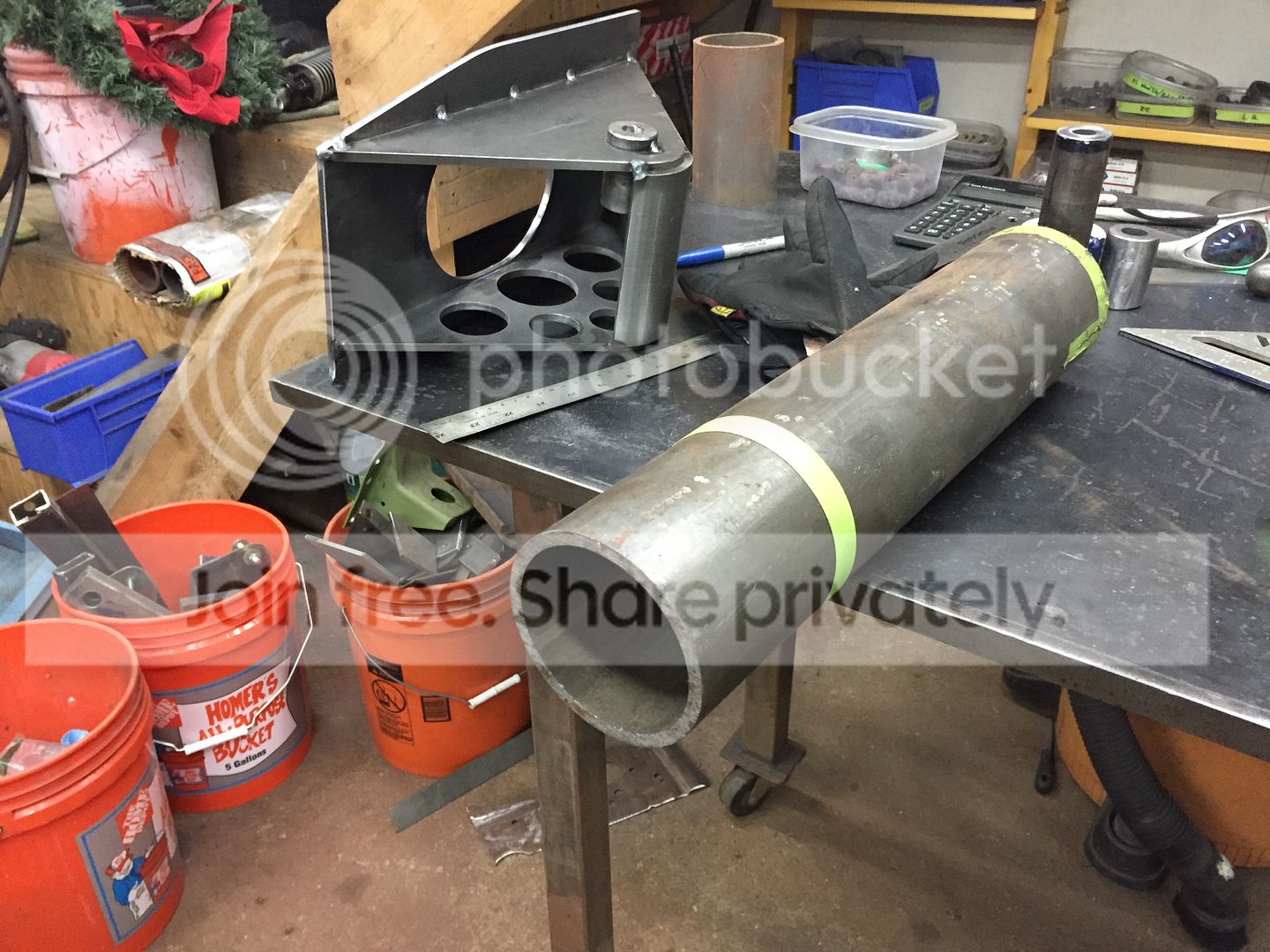
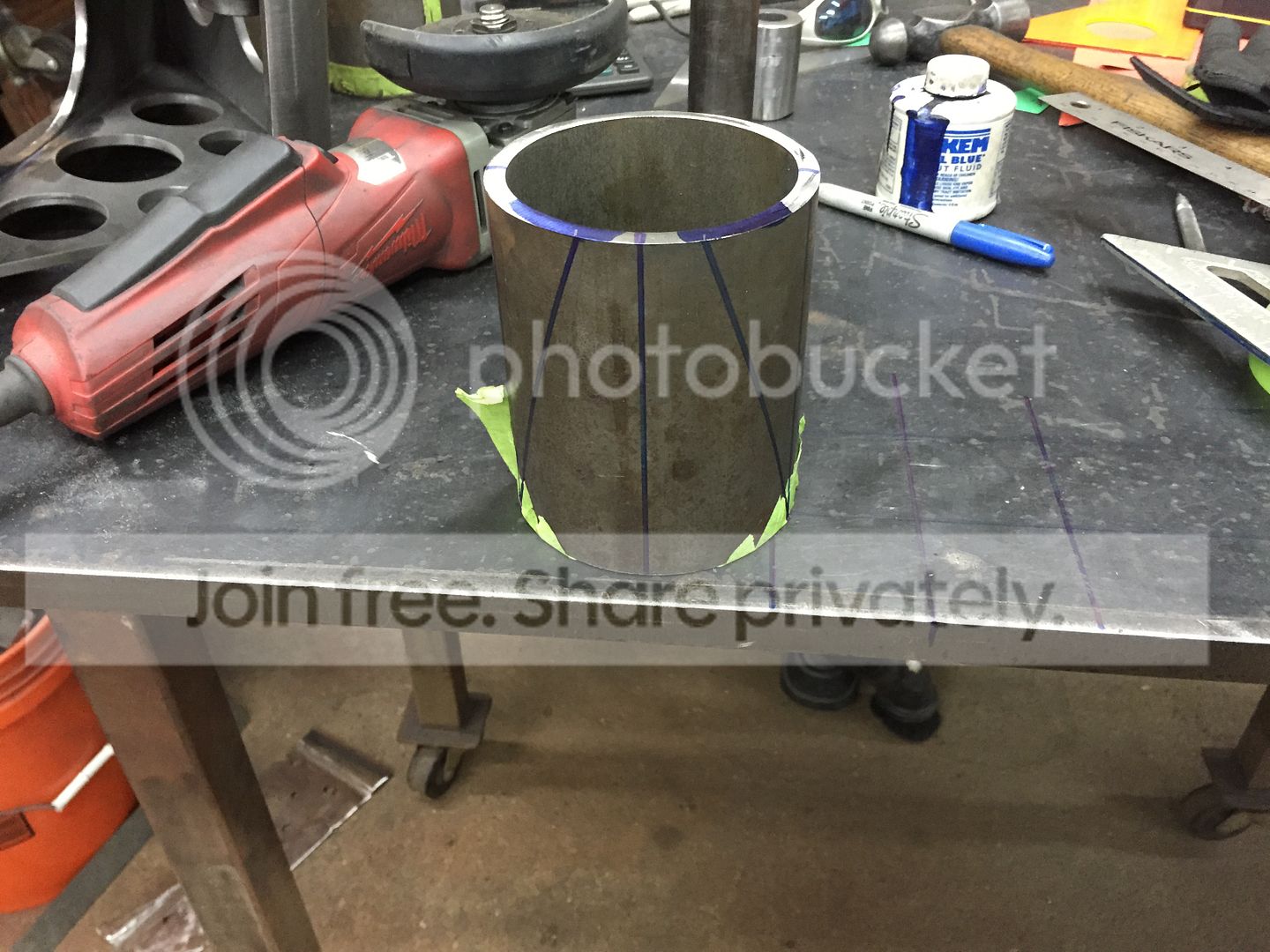
IMG_2325.jpg


I chopped it down to size. Then using a large dose of trigonometry and Tourette's it was marked in the appropriate shape and angle. Basically it's a flat plane-slice through the cylinder with an angled cut in the base just to make it really complicated. :doah:

IMG_2327.jpg


The basic concept gives me about 1" of additional lateral movement across the base plate, while creating a "pocket" for the 3.25" diameter strut body to swing into.... pretty clever, but it was a huge pain to cut the curved part, and then clearance the original bracket on the inside to prepare it for welding.... you can't argue with the results though. It looks pretty cool. :waytogo:

IMG_2346.jpg


Having that extra clearance gave me the payoff I was hoping for (NOT!)....

Collisions with the framerail:

IMG_2341.jpg


...And collisions with the tire sidewall (again):

IMG_2339.jpg


The framerail was not unexpected. Obviously, I'd already notched the frame once back there when the axle was 3" further forward.... so now I just need to cut it a bit more for clearance in it's new location.

The tire interference is a bit of a bummer, but I still have a few aces up my sleeve. I can still move the axle-side strut mount over by another 1/2" or 3/4" and see where that puts things... and I still have the 'nuclear option' of just adding more thickness to the wheel spacers to move the tire out of that area completely.

All things considered, it wasn't a bad day/night in the shop but I was hoping for more of a success story to share with you guys instead of a cliffhanger episode!! :D


-G
 
I am glad you are getting the clearances now instead of later. Keep it up...:popcorn:
 
I like watching your solutions to the clearance issues! :waytogo:

That new pocket does look cool! :pimp: :thumb:

I don't know why you would want to run wider spacers when you could just adjust the offset of your wheels. :dunno:
 

Latest Posts

Top Bottom