2015.06.22 - UPDATE! - VORTEXES OF SPEED..!!!!!
The parts arrived (mostly) for my one-off header build project at the end of last week, so on Father's Day I got the chance to spend some hours in the garage to start learning a new skill.

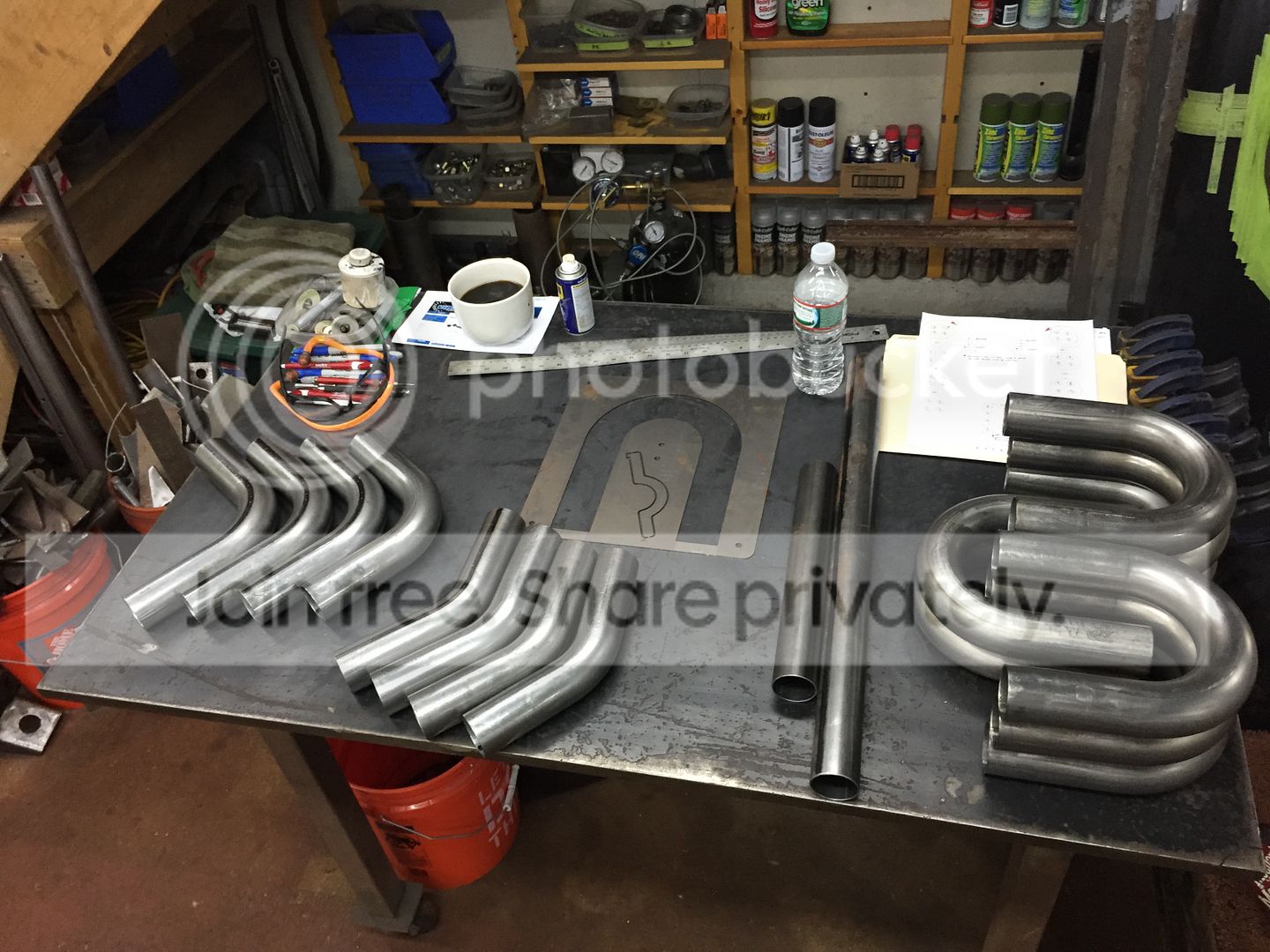
Here is the pile of parts that arrived from Cone Engineering.
That's a 1-7/8" mild-steel "builders kit" that I'm using to build my pseudo-icengineworks header LEGO set.
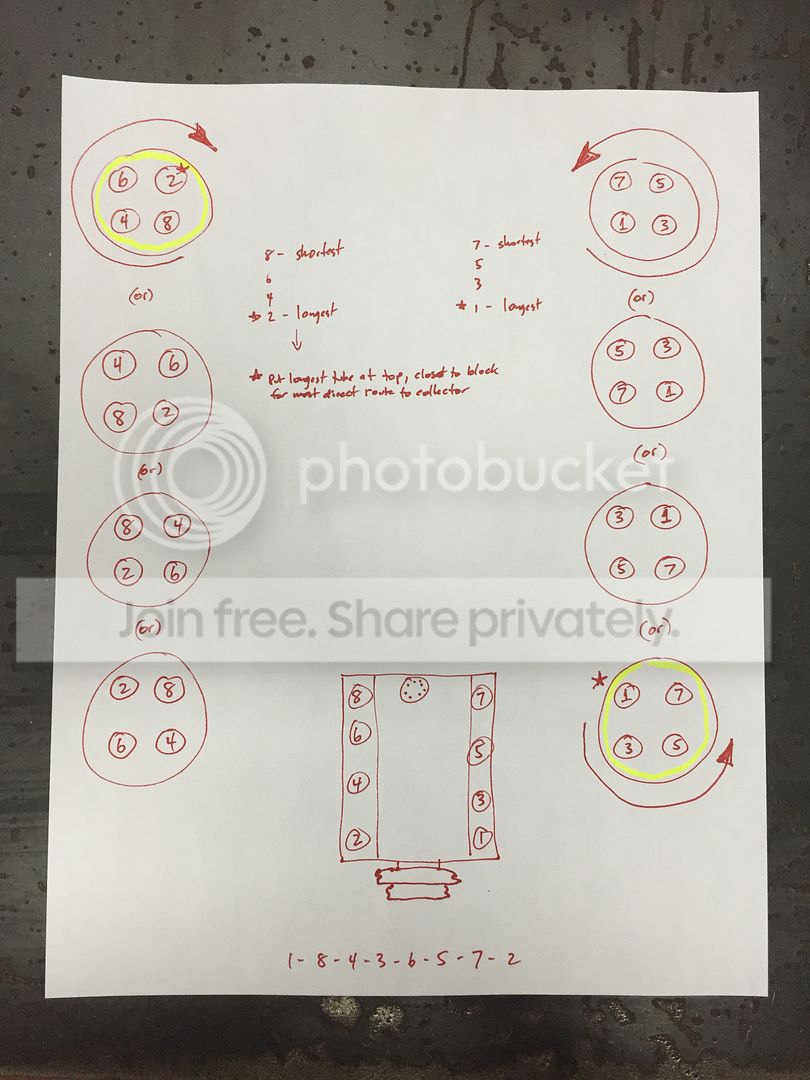
Here is the plan, based on previous advice in this thread. I drew up the collectors for each side of the engine and tried to come up with the best plan for placement of each exhaust tube so that the "sequence" and exhaust flow would be circular and would swirl in a really cool way out the back of the truck!

As you can see from the drawing I have planned the passenger side exhaust to move in a clockwise-motion (from the engine) and the driver side is set up as a mirror-image (counterclockwise) of that. From the back of the truck, the vortexes will exit the exhaust and then curl around from the outside of the truck in toward the center.....just like you see in those cool photos of fighter planes taking off or landing.


Anyway.... each of the collector diagrams has the same pattern for the exhaust, the only difference is that each one is rotated 90-degrees from the previous one so that I can plan-out where the longest and shortest tubes will end up. I don't plan on making this a true "equal length" header since that's a huge time commitment, and the minimal HP/TQ gains just aren't worth the effort. However, I will try to sweep #7 and #8 forward a bit before sending them to the collector so that their lengths are more closely matched to the other tubes.
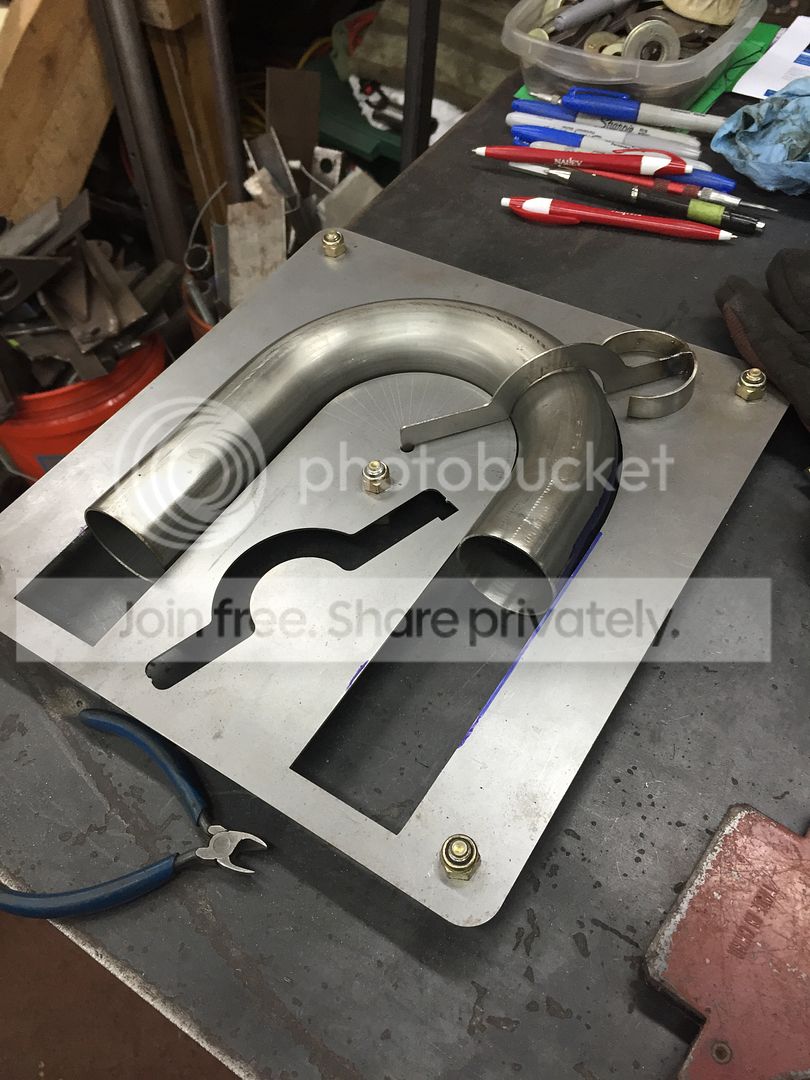
Here is the tool that is used for marking the tube for angled cuts.... only $25. Can't go wrong with that! It's got a faint set of markings at 5 degree increments so that you can drop in a U-bend and then mark-out a 10* or 20* (or whatever) bend accurately... then cut it out.
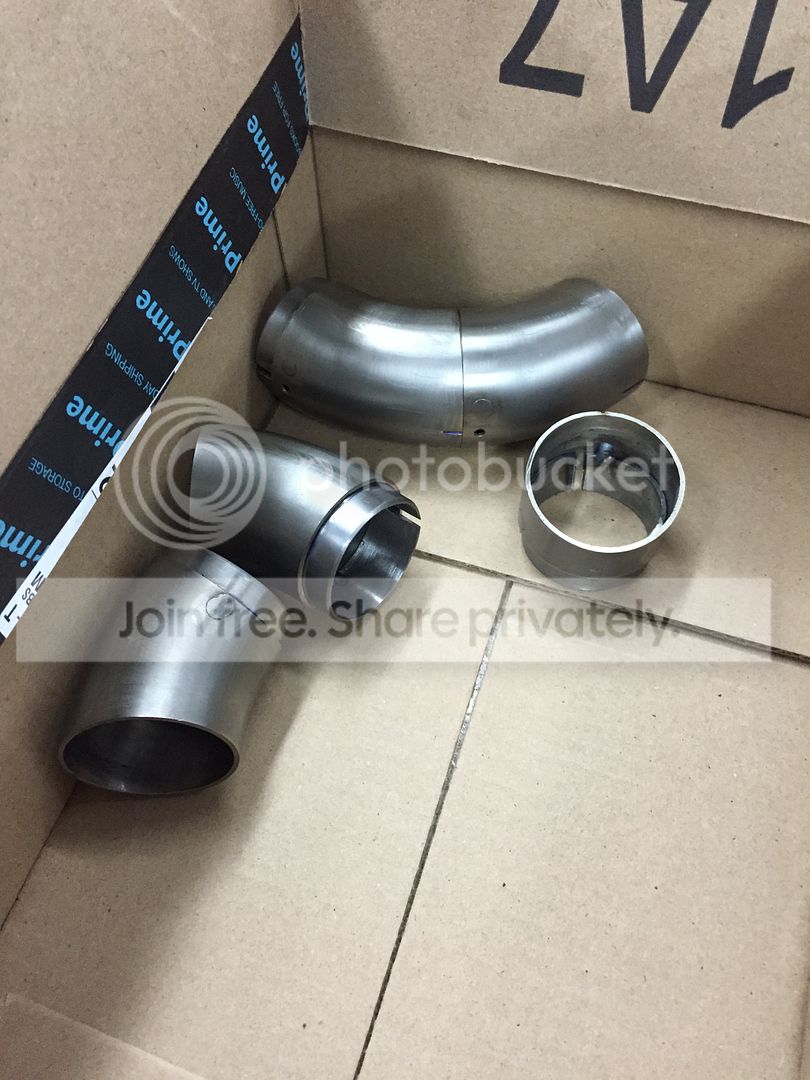
I started off cutting a few segments at 10* and making the first pieces of my LEGO kit, added a small sleeve inside so that they could be attached to each other and rotated to any position I needed. Later on, I decided that 10* was probably a waste of time and started making them at 20* instead... which is still allows for some pretty tight turns and tranistions.
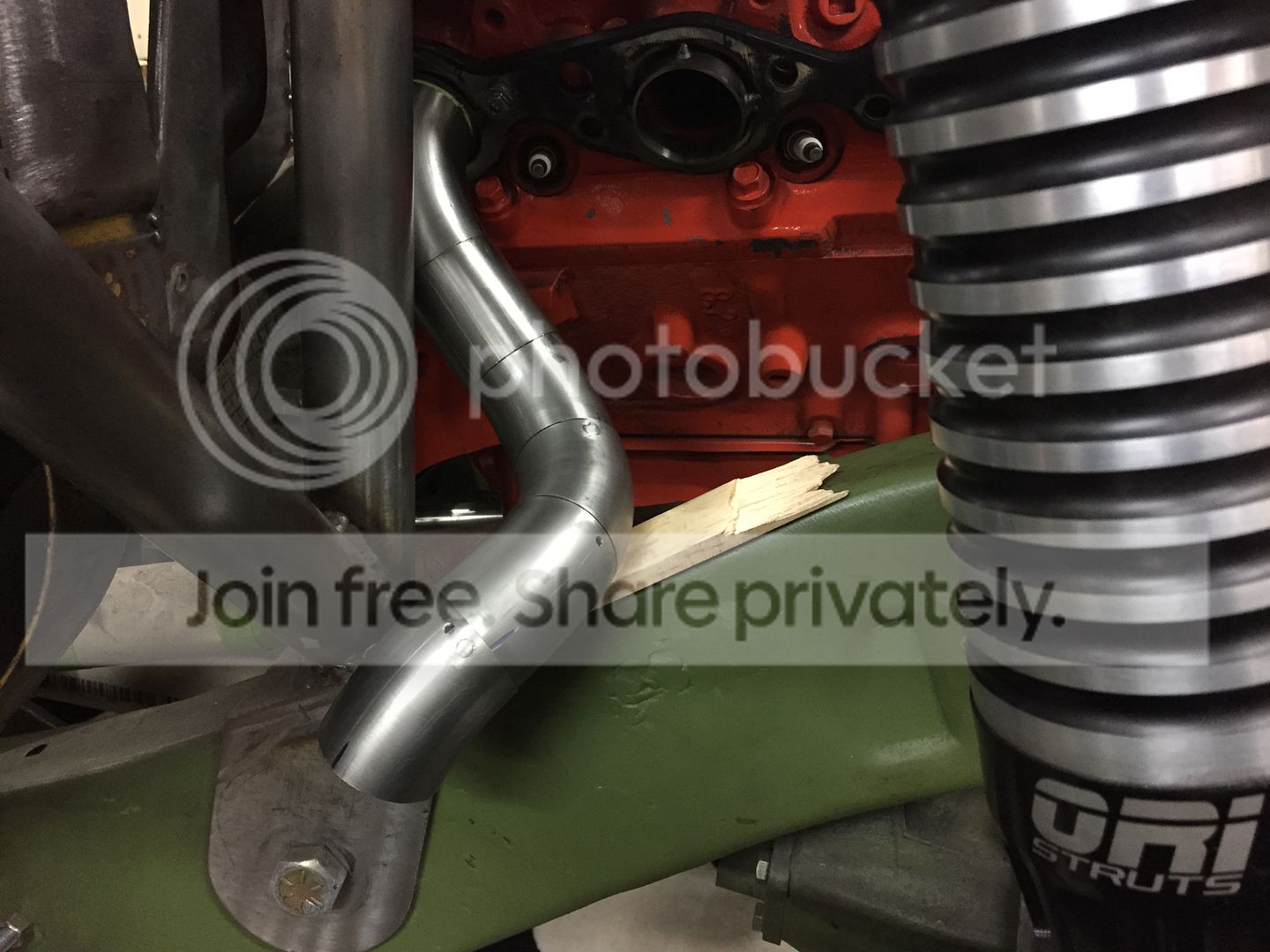
As with all of my projects (especially when learning something new) the progress was slow... but by the end of the night I had actually managed to build about 1/2 of the #8 exhaust port, which as far as I can tell is the hardest one to do. It's the deepest to the firewall and has to bend around the engine cradle support bar, so I figured if I could get that one figured out, the rest would seem simple by comparison.
One thing I learned in a hurry is that building a complete LEGO kit (which usually has around 300 pieces) is going to take a ridiculous amount of time. So I'll probably spend another 8-10 hours making segments, and then see how far I can get with my passenger side design. Once I get something I like, I need to order up the 304 stainless tubing and start cutting it to length.
QUESTION: Does anyone know how critical it is to keep the cutting, and sanding tools separate when jumping between mild-steel and stainless? I know that aluminum and steel is an obvious example of two metals that each need their own tools to prevent cross-contamination, but I'm not sure if the effect is similar between mild-steel and stainless.

-G