CK5
Register an account today to become a member! Once signed in, you'll be able to participate on this site by adding your own topics and posts, as well as connect with other members.
So just to throw my 2 cents in here. When solid mounting a cage I tie it in the the body with tie plates ( thats what I call em just basically a plate cut to tie the cage to the body). The cage makes the wet noodle frame not so much of a wet noodle anymore, a solid mounted cage makes the frame way more rigid than just boxing the frame. More so if a couple of custom crossmembers are added to further extend the load spreading on the frame.

So when solid mounting a cage and leaving the body mounts I ignore the fact that there are still body mounts in there. Even if the cage is tied into the body in 900 places the rubber ( or poly) body mounts will still isolate and absorb some vibration.

When soft mounting a cage I tend to try to use a similar bushing as a body mount bushing. You can use the leaf spring type bushings in certain situations or can modify them to not be able to rotate under a load. But it is best to use as close as you can to a stock body mount.

Body mounts from a CJ5 or CJ7 work well and are small and flat just require a hole cut on a panel.

Soft mounting a cage like this makes it less rattly than a cage only mounted to the floor of the rig, but it will still rattle a bit, because it will still move some. It also does not add as much frame rigidity as solid mounting because the bushing allows deflection.

Not sure if I am rambling yet or not.

Solid mounting is best, harder to do but it makes the cage preform more than one function.

The real trick in solid mounting is keeping all the extra bracketry up and out of the way, putting in a way to be able to remove the body ( not that hard really) and getting around the various braces that are already in the body.

BTW the cage is lookin bitchen dude, almost every cage I have built has some strength compromises in em for comfort or headroom or something or another, you can't really build an insanely strong cage without climbing in and out of a jungle gym.
 
I have to throw Kert's DIY4X Staked Cage Floor plates into this discussion. I have them on mine and I think the are great at taking all the pressure and shear problems off the bolts.


x2, the different sized plates also help prevent any "can opener" problems to the sheet metal.
 
Again, thanks for the replies guys. :waytogo: Still trying to figure this all out.

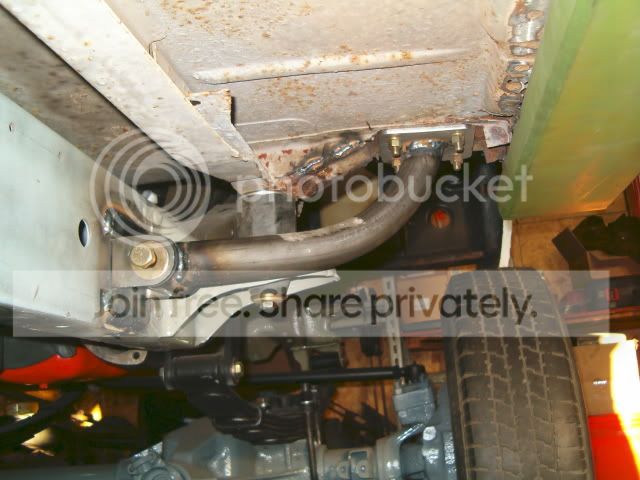
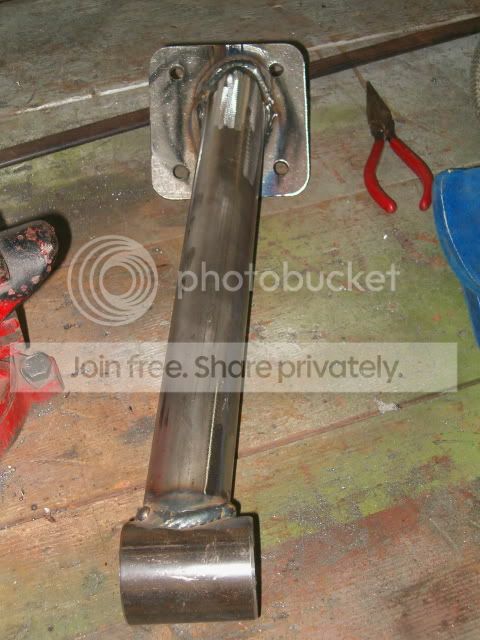
Stole a couple pics from Zim's build. This would still be considered soft mounting correct?

Ironmaiden274.jpg


Ironmaiden285.jpg
 
lol, so really not that much of a difference between the two then.


Duane, are your plates that tie everything into the frame welded or is everything bolt on?

Thanks
 
x2, the different sized plates also help prevent any "can opener" problems to the sheet metal.


I have never understood this assertion.... can we explore this for a minute? :thinking:

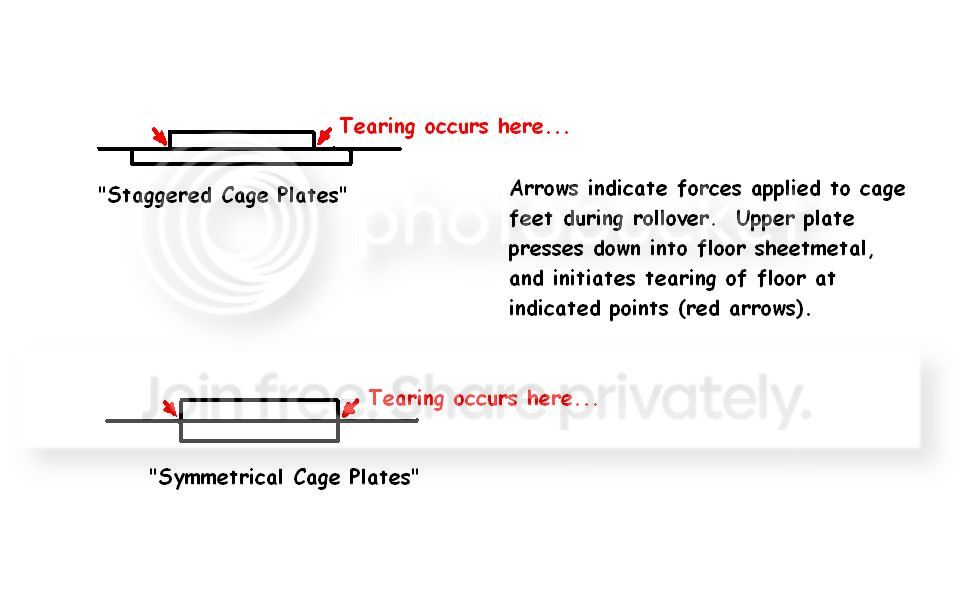
CagePlates.jpg


This is a simple illustration of what I think people are suggesting to do... a larger lower plate is claimed to "spread out" the load somehow during a rollover. (Maybe it's the upper plate that's supposed to be larger?) :dunno:

In any case, I can't seem to understand how it makes any difference at all. The size of the upper plate will determine how many PSI of force is applied to the sheetmetal (so the bigger the better) but the lower plate is completely uninvolved in the process since the forces are coming in from above. The perimeter of the cage plate is where the "action" is since that's the unsupported spot where the thin sheetmetal is going to move first. It makes sense (to me at least) that in any cage plate setup the forces are always around the perimeter edge of the top plate ONLY.

A better thing to do (instead of staggered plates) is to put a significant bevel on the underside of the cage plate so that there isn't a sharp edge pressed against the floor sheetmetal to initiate the tearing... with a slight bevel, there will be some "give" at the transition point and the sheetmetal can move without getting instantly sheared by that sharp cage plate edge.

Does this make sense to anyone else, or am I totally missing the point?


-G
 
Greg your kind of over thinking here.

Real world experience speaking here. I have seen the same size plate tear out of the floor quick fast and in a hurry. I have also seen them hold up. But I have yet to see a serious failure where the plates were different sizes.

Your assumption is correct though beveling the edges should be done to prevent a drastic edge to contact.

But the way the top plate and bottom plate are bolted together, so instead of acting completely separate they are going to act together. It does spread the load out more on the bottom plate.

Besides that if the sheet metal sheers in a large plate small plate type of situation, only if it shears on the larger plate will there be a failure. If the sheetmetal fails on the smaller plate the larger plate would still be attached and supported by surrounding sheet metal

Make any sense at all?
 
Greg I think your reasoning makes sense, and beveling/radiusing the contacting edge would help prevent cracks. However, maybe the reason the sheetmetal is cracking is because sometimes the cage is solid mounted to the frame, and the body isn't, so during normal everyday use the bottom plate is actually the one that would put load on the sheetmetal, not the top one. In a rollover, when upside down, then yes, the top plate distributes the load IF their is no roof on the body. If there is a roof above the cage then the roof may collapse with the force, while pushing the body onto the bottom plate, and then the cage prevents further collapse.

Also, sheetmetal can crack because of fatigue in one spot when repeatedly bent. With staggered plates, when the force is applied and the minute bending happens, the bending up and bending down are occuring in two different places, not the same place.
 
Greg your kind of over thinking here.

Nope....never heard anyone tell me THAT before! :haha:

Based on your description, it sounds like the effect is not so much a "can opener" effect as what I'd call a "paperclip" effect.

You can take a paperclip and bend open up and close one of the bends a few times, but before long it simply snaps in two. My guess is that the "symmetrical plate" failures are nothing more than a floorboard that is constantly bouncing and working against the cage plate as the truck rolls down the road or trail. The flimsy sheetmetal gets fatigued against the immovable cage plate and forms stress cracks. The damage is likely done well before the actual rollover occurs....but doesn't get noticed until then.

A larger rear plate may do nothing more than dampen the floppy sheetmetal so that instead of having a perfect sinusoidal "up-and-down" oscillation, the larger plate acts like a bumpstop and adds some dampening to at least half of that oscillation??? :thinking:


-G
 
Greg thats what I was referring too in my 2nd paragraph, in fact, I almost did the paper clip comparo but I figured you would understand without it, and it seems like you make have gotten it before you even read my post.:wink1:
 
I was just on DIY4X and it looks like both the bottom plate and upper are the same size. I can't see the stake helping in any tear of the sheet metal.

If this is just about the same as a hard mount, I don't see spending the $35.00 per. unit for not much of a gain. What would be the benefit of running these. :dunno:


Edit: Now that I look closer after posting this, it appears that the bushing mount is smaller?
 
Last edited:
I'm dubious that the center stake is really necessary at all.... it's basically taking the shearing loads off the perimeter bolts, but if you're using GR-8 hardware in a 7/16" or 1/2" size, you've already got a LOT of shear strength there.

The only exception would be if the perimeter bolts had worked loose and they were just basically flopping around in those holes. The shear pin would definitely help then, but shame on you for not torquing down your cage bolts (or checking them periodically!) :)


-G
 
Ironmaiden274.jpg

seems to me that you could just hard mount both ends of something like this and it would be just fine.

if anything, to my way of thinking :rolleyes: you'd hard mount the part that contact the frame, then put a bushing under the body. my reasoning being that all of your other body mounts are vertical, so this one should be too so the load forces are all the same. :confused:
of course on yours it would also run out to the step.
 
Nope....never heard anyone tell me THAT before! :haha:

Based on your description, it sounds like the effect is not so much a "can opener" effect as what I'd call a "paperclip" effect.

You can take a paperclip and bend open up and close one of the bends a few times, but before long it simply snaps in two. My guess is that the "symmetrical plate" failures are nothing more than a floorboard that is constantly bouncing and working against the cage plate as the truck rolls down the road or trail. The flimsy sheetmetal gets fatigued against the immovable cage plate and forms stress cracks. The damage is likely done well before the actual rollover occurs....but doesn't get noticed until then.

A larger rear plate may do nothing more than dampen the floppy sheetmetal so that instead of having a perfect sinusoidal "up-and-down" oscillation, the larger plate acts like a bumpstop and adds some dampening to at least half of that oscillation??? :thinking:


-G


This is what I was going to say but you beat me to it. I'll restate your second paragraph by simply saying that the larger bottom plate spreads the stress points out a little. Imagine holding a paper clip with both hands as close as you can and bending the paper clip over and over again. It won't take long before you have 2 pieces, now grab said paper clip out by the ends and start bending again. The larger distance will allow the bending forces to be spread out over a larger area, will it break? most definitely but it will last a lot longer than the previous test.


The "can opener" phrase came about because the broken piece looks like it was removed by a can opener. Your paper clip analogy is a lot more accurate as to what is really going on.
 
Ironmaiden274.jpg

seems to me that you could just hard mount both ends of something like this and it would be just fine.

if anything, to my way of thinking :rolleyes: you'd hard mount the part that contact the frame, then put a bushing under the body. my reasoning being that all of your other body mounts are vertical, so this one should be too so the load forces are all the same. :confused:
of course on yours it would also run out to the step.


:eek1::doah:

This style of mounting is only marginally better than nothing at all!!
If this rig ends up on it's lid that bushing is simply going to pivot and allow the rollbar and underbody tube to bend and push through the floor. The fixes as I see it are to:
a: make the underbody piece out of square or rectangualar to resist bending. Round tubing is not very strong in bending it's a whole lot better at resisting twisting than bending.
b: add a nerf bar that is also mounted to the body to help prevent the tube from swinging down (the underbody tube would be more of an upside down "T" shape).
c: Change the orientation of the bushing so it swings front to back. d: Eliminate the bushing all together(preferable)
e:or a combination of the above

I personally prefer to bolt all roll bar mounts to the frame with sandwich plates on the back side to help spread the stress out over a lager area. There is nothing wrong with welding (as long as you don't want to get it apart) as long there is additional metal welded to the frame to help spread the stress out, these frames aren't all that strong so anything that can be done to prevent cracks will go a long way.
 
lol, so really not that much of a difference between the two then.


Duane, are your plates that tie everything into the frame welded or is everything bolt on?

Thanks

Plates that connect to the frame are bolted to the frame not welded. And the floor plates are just bolted together with holes drilled thru the sheetmetal for the bolts and the center pin.
 
Not a ton of progress this weekend. Saturday was my sons B-ball tournament all day. Fun day, they ended up playing four games by 3:00 and were pretty beat up by the last game. They ended up coming in third place.:waytogo:


Sunday I was able to get out there for a couple of hours. I wanted to go back and start to finish up some of the straggler things I had not done yet, before I end up locking everything down with the cage.


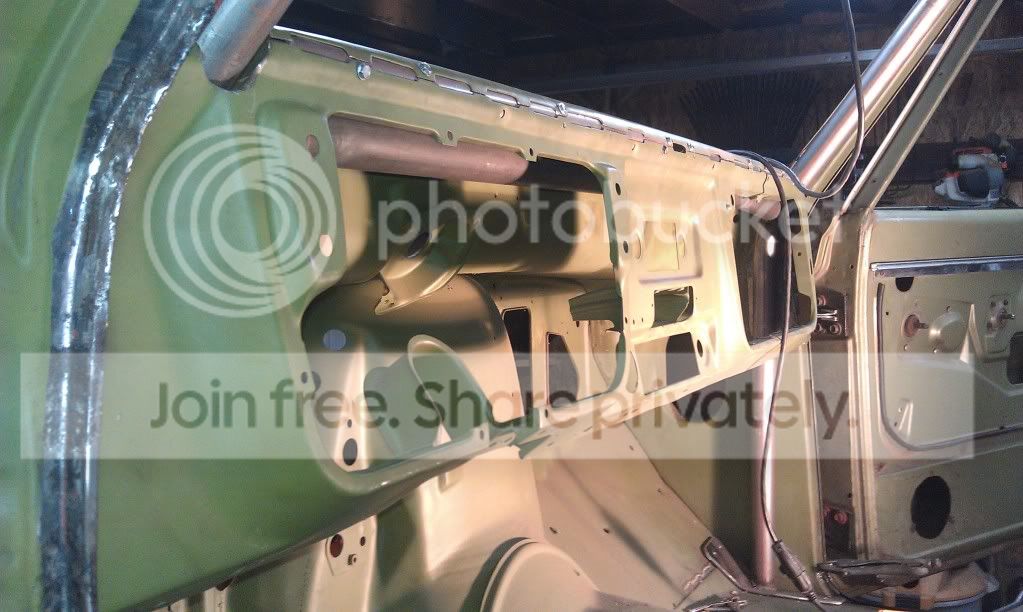
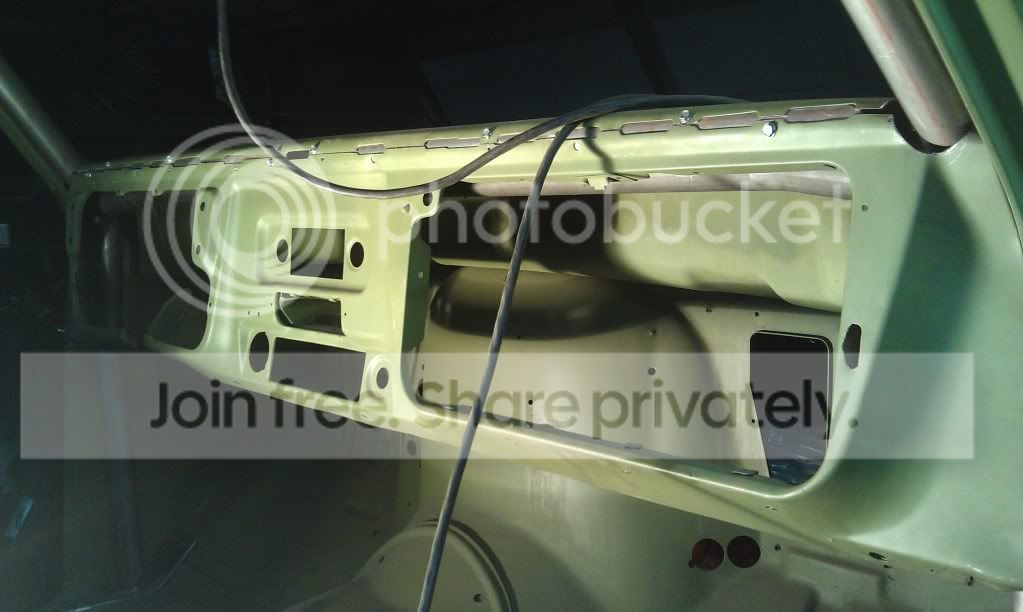
Started with the dash. I cut a 1.5 tube in half and kept on massaging it to fit behind the dash. Put a couple of sheet metal screws in it for the time being to hold it all together. I plan later to use some kind of pan head bolt to go through the dash to some welded nuts back there. I'll then do some kind of bolted gusset between the 1.5 and the dash bar behind it. The entire thing should be able disassemble fairly easy when done, and the cage can be taken back out, if needed for something.


IMAG0923-1.jpg


IMAG0939-1.jpg


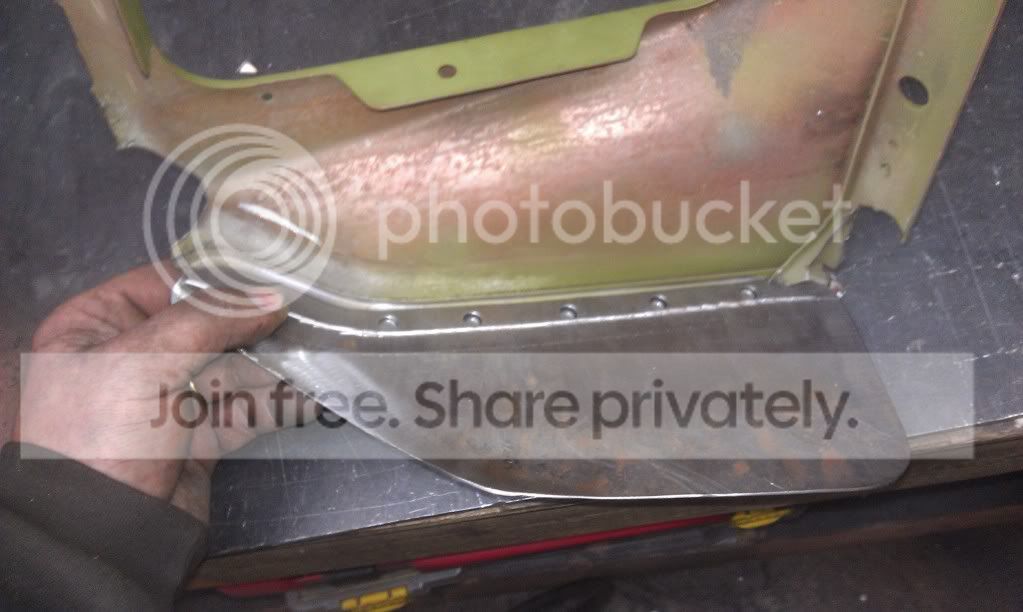
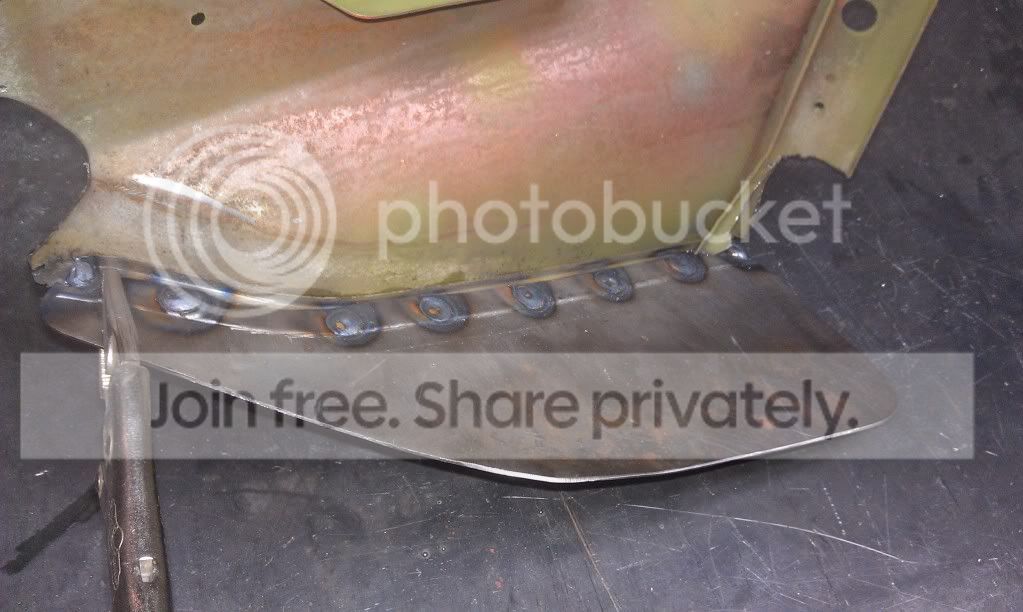
Then I had to figure out how to mount the side of the dash again. There is no way to get the original bolts back into the sides with the A-pillar tube being in the way. So I made an extension for the sides of the dash.


IMAG0918-1.jpg


IMAG0919-1.jpg


The plan is to cut into the kick panel sheet metal and weld a nut back behind it. Just like the original. Need to be able to move the cage back for this though. So it was on to another project.


IMAG0927-1.jpg


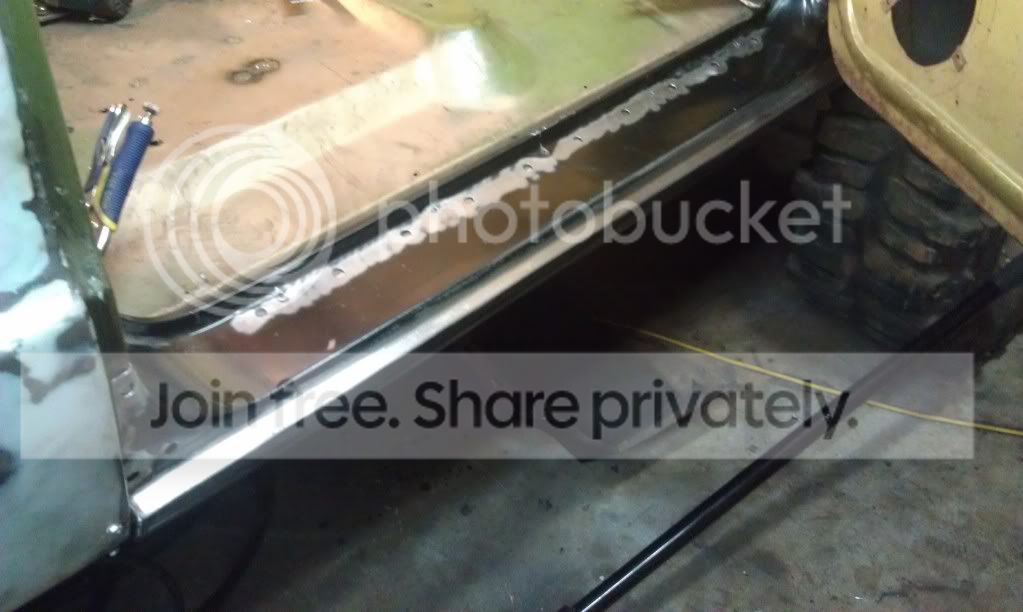
Moved on to the passenger side outer rocker that I really never finished up the fine tuning on. Welded up the ends and got her into the final resting place for the last time. Didn't get a chance to weld it in, but all the hard part is done. This is something I can finish after work this week.
IMAG0938-1.jpg


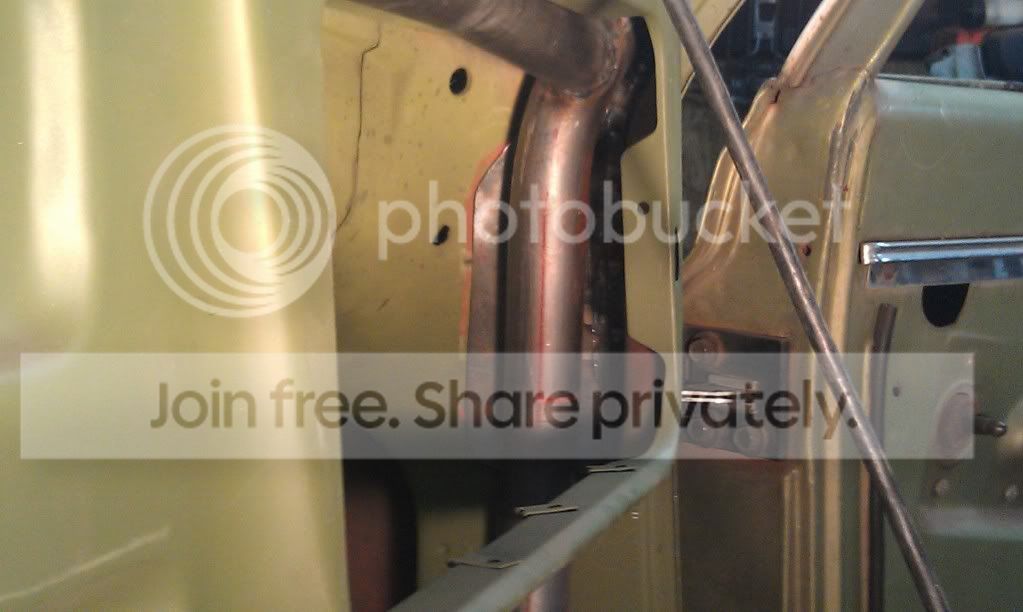
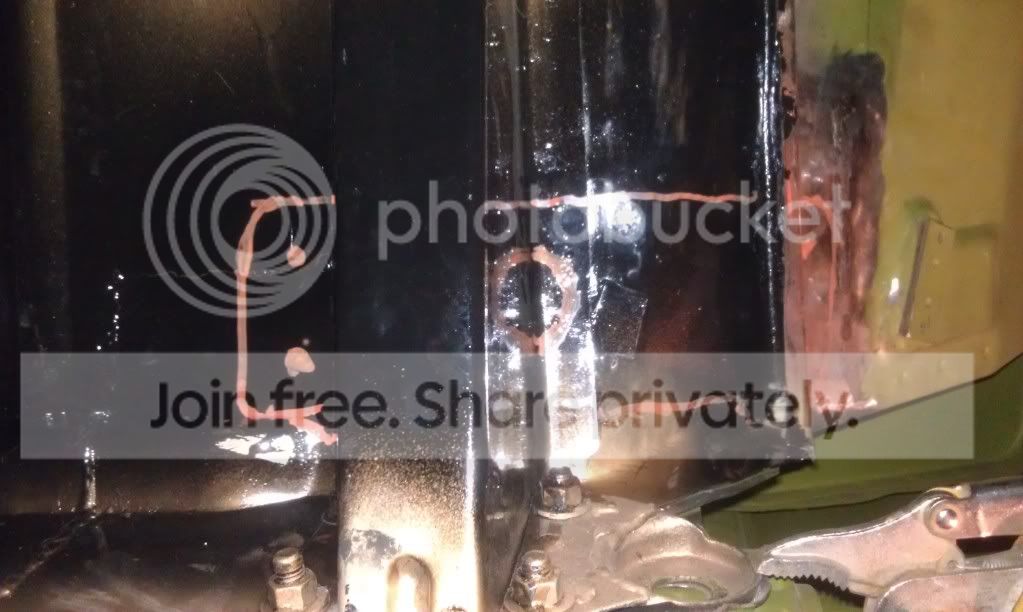
Finished the day, taking a nap under the truck, trying to figure out how to mount to the bottom of the A-pillar cage plate. It's kinda a mess in there for any mounting, with the four bolt area, front cab support and the cab floor to firewall pinch weld in the way. You can see the outline that I did in orange paint, is the plate that sits in the cab. Thinking about boxing it out, or something. I'll get back to you on that one. :whistle: :D


IMAG0921.jpg

My wife came home from work and we had a couple of beers in the garage.
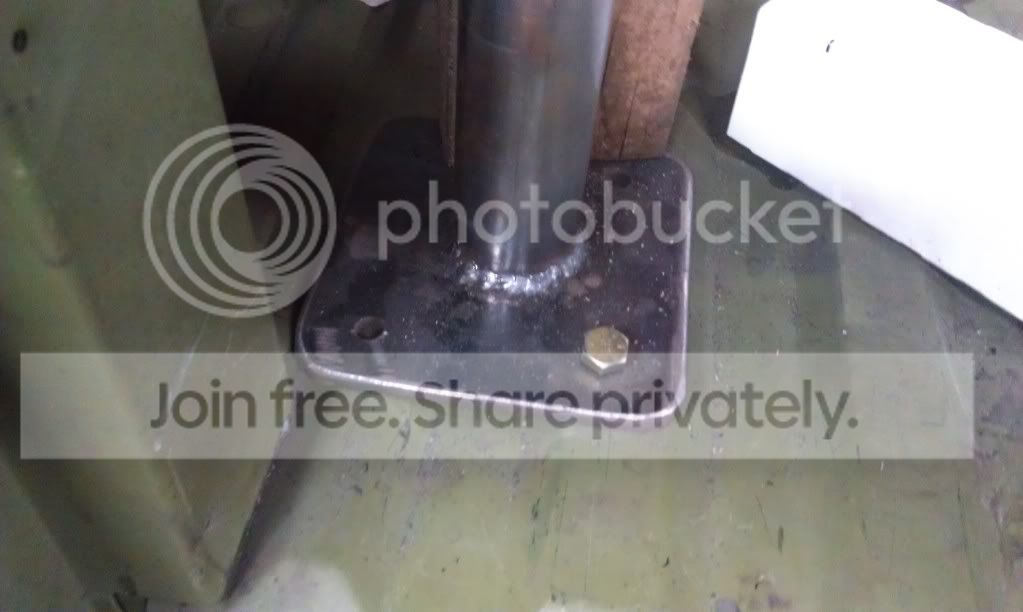
She was sitting in her normal spot, back seat turned around and I started to look at my cage plates and thinking back a couple of posts in this thread. I was thinking about the different size plates, one bigger than the other, and how I was going to do it. It looks like it really wouldn't matter if it's different sizes as all of the bed plates end up on the corrugation of the bed. I landed all four of my bolt holes on the high points of the bed. I guess I could make it longer to hit two more high/ low spots to disperse the weight and hopefully lose the paper clip affect, but It seems that it would only truly hold affect, is if I was mounting this to a completely flat floor, like Ryoken's. Maybe I missing something though.

IMAG0937-1.jpg


And the wife, kickin' it.

IMAG0805.jpg
 
Nice dude! I can't help with your floor/plate situation. I've decided when I do mine it'll be diamond plate. Not worth the cost to me to replace the floor like original.

I like your thoughts on the plating under the front cab support. Gonna be tricky but it'll end up strong.
 
Your plates are ending up in that tricky area that mine were which is why I'm looking at moving them up in the firewall.


-Brian
 

Latest Posts

Top Bottom