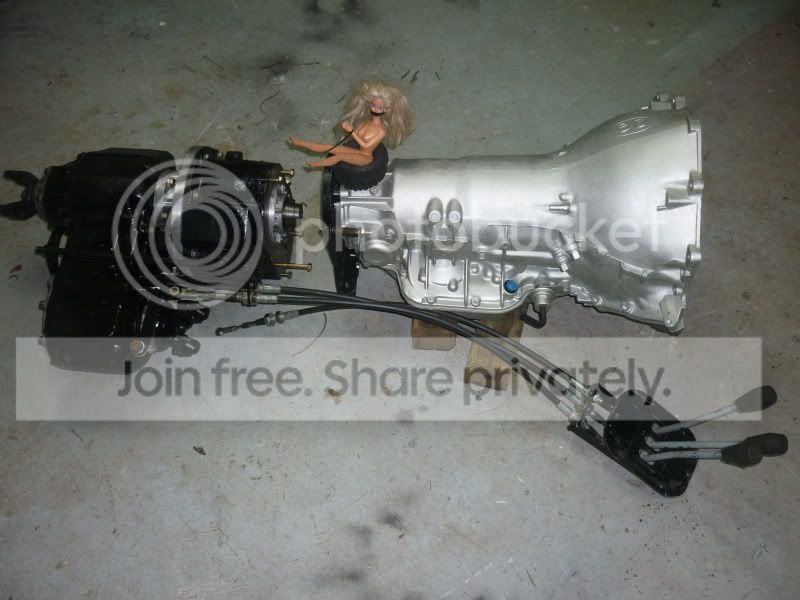
So, I had to swap output shafts in my TH400 because I've finaly got around to putting my 203/205 doubler in the truck. You've pretty much need to take everything out of the case to do that and I know I'd slipped my trans enough letting it get low on fluid that it could use an overhaul.
So, this is my first full rebuild in an automatic and I used this as an excuse to learn as much as I could about building a TH400. So there are a lot more bling parts out there to use but I'm confident that this "recipe" will hold up to more waapow than I can afford.
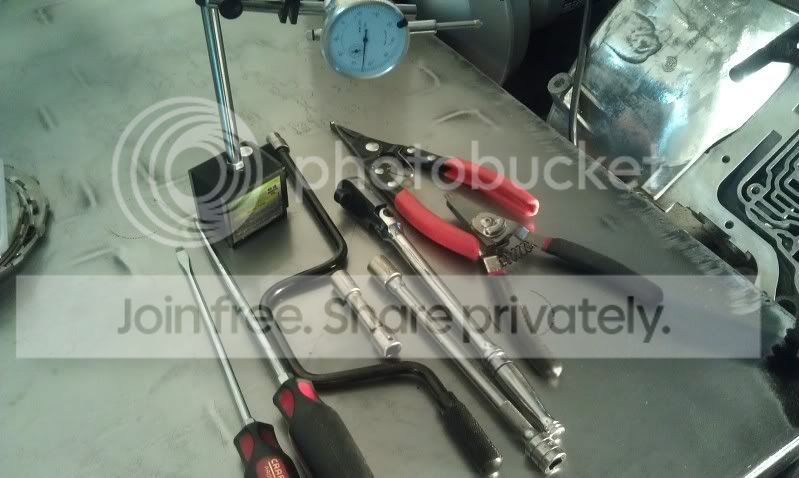
This is far more easy than people make it out to be. The picture below with the addition of two c-clamps, calipers, and feeler gauges is all you need.
Other than studying what I could learn on the internet while I should be working I used the ATSG Manual to guide me along. I'm not going to go into great detail, because you can pick up one of these manuals for $25 and fill in the steps. I'll just touch on the upgrades.
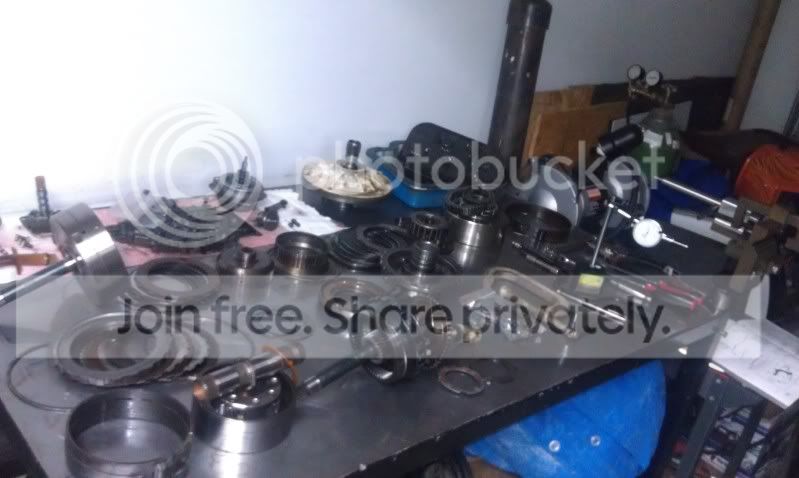
The trans comes fully apart in less than an hour...
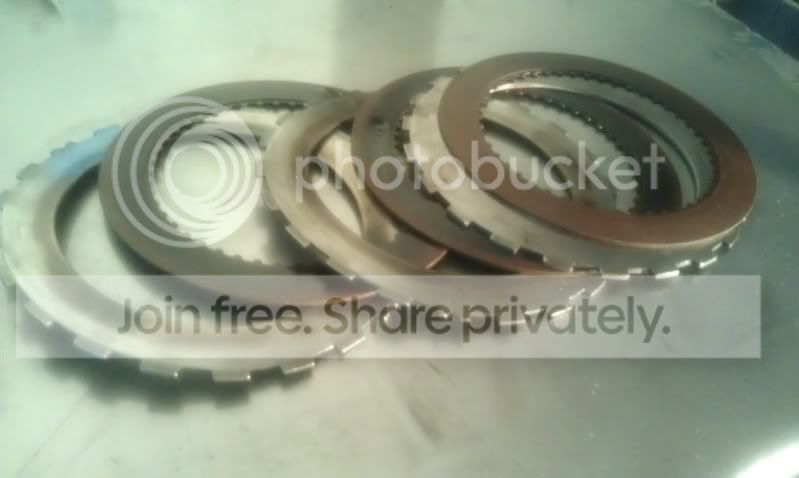
First thing I noticed is the clutches had really been abused. Here is a pic of the intermediate clutches which are what lock up when you hit 2nd. The clutch material should be tan in color and you can see the steels are warped bad enough they dont sit flat on the bench
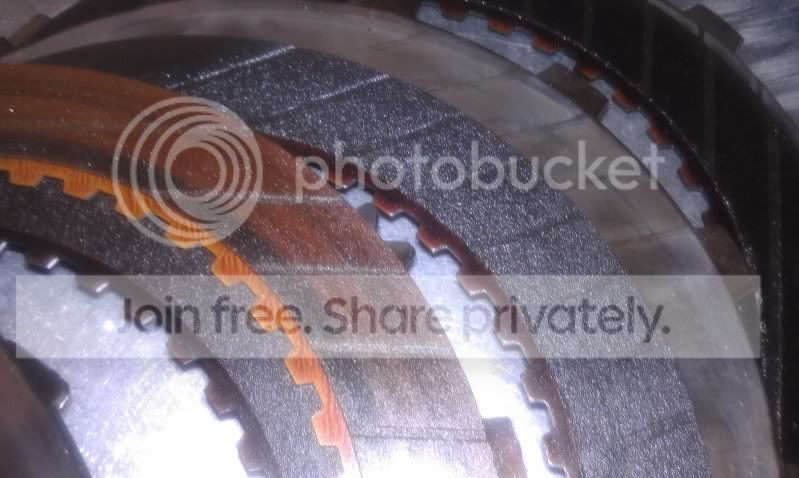
Here is a picture showing an "ok" condition disk from the direct clutch (3rd) and a burnt one from the forward cluch (all forward gears)
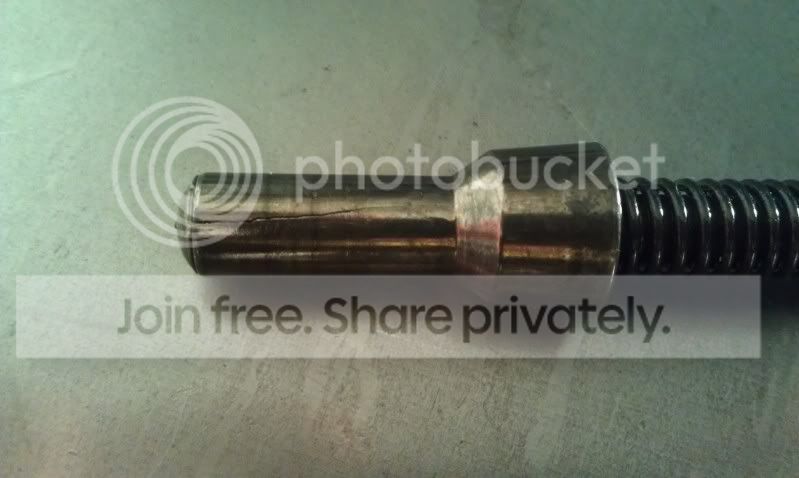
only other issue with the trans is the parking lock actuator had a crack in it. This sucker pushes down on the parking pawl when you shift into park and I think it may have cracked in one of the many times I tried to put the trans into park with the t-case in neutral and the parking pawl is banging back and forth between the actuator and the output carrier. (that grinding noise for those who have also done this before). This part was replaced in the rebuild.
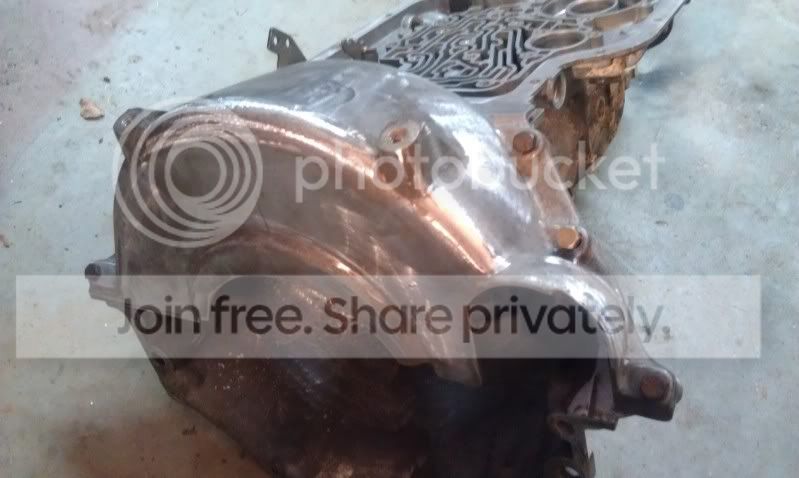
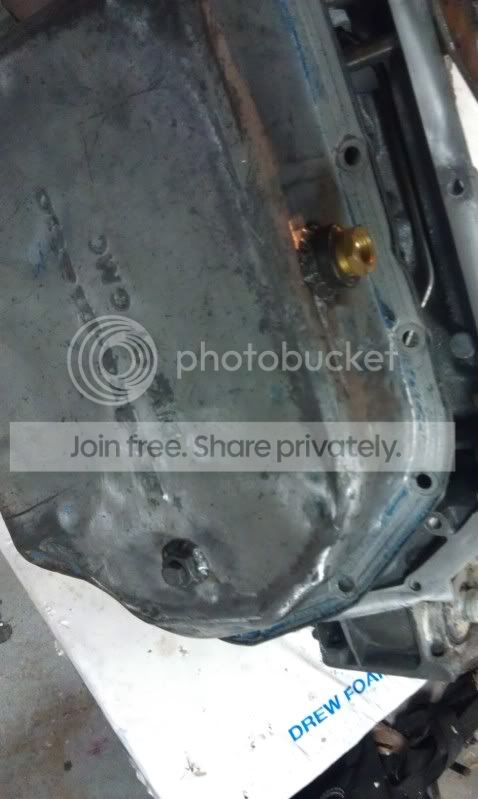
One thing you wanna do is be gentle with the case. Just easily rolling it around on the bench when I was disassembling everything I cracked the housing and had to have it welded.
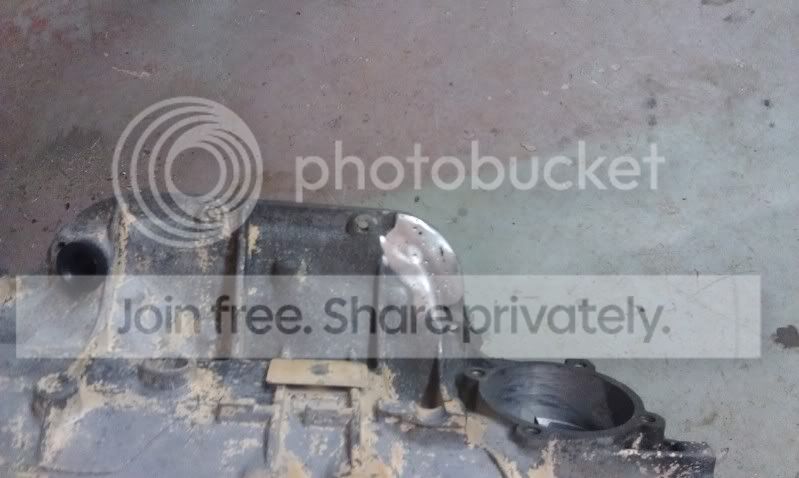
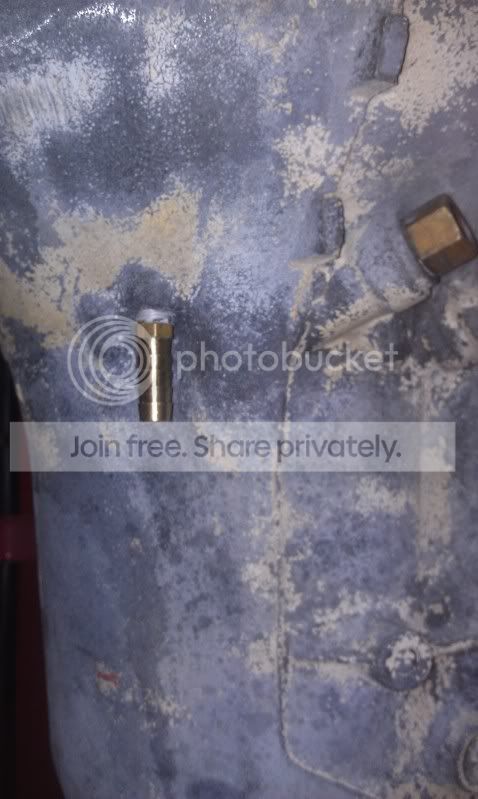
First upgrade was the cast aluminum dust cover that some of the heavier cases used. I had to drill and tap holes in my case to use this cover, but I just really didn't like the plastic and tin covers. FYI, not all cases have enough material in the casting to drill and tap these holes.
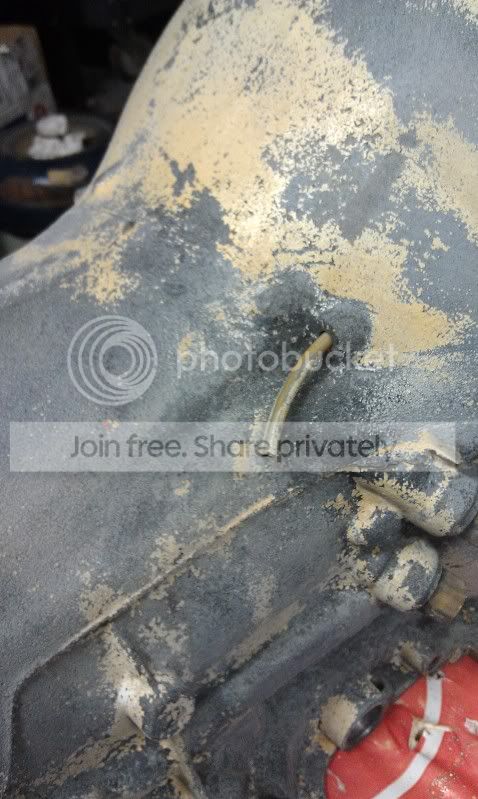
The other upgrades to the case were to drill and tap the case vent for a 1/8npt hose barb. This will allow me to route the breather somewhere safe when this transmission goes into a buggy so that I dont have to worry about hot trans fluid pouring on me when im rubber side up. I also modified the pan to hold a temp. sender and a drain plug. IMO a aluminum tranny pan wasn't going to aid in cooling with the proper cooler/fan and they are pricey. Also, if something hits an aluminum pan it can crack, where the steel pan with just deform.
From all the research I've done, and looking at all the spec sheets for dozens of reputable transmission builders, these are the parts I came up with...
-Transtar deluxe overhaul kit (Transtar # 34008A)(came with transtec soft parts rebuild kit, borg warner frictions and steels, new front band, adjustable vaccum modulator, filter, and a couple bushings)
-Transgo 1-2PRO Reprogramming kit (Transtar # T34171)
-Borg Warner 48 Element Direct Drum Sprag (Transtar # 34652A)
-Sonnax No-Walk Rear Case Bushing (Transtar # S34064BA)
-"Rollerized Rear Output Bearing" (Transtar # 44229 and 44212A? <<A-F shims to set output shaft endplay)
-Scarf Cut Teflon Sealing Rings (most kits contain metal rings) (Transtar # 34175AT)
-New Rear Band (didn't really even need a new one) (Transtar # 34024 or 34024E)
-The important thing to note here is that this is allready a super strong trans. Upgrade the Sprag, Shift Kit and good clutches and some minor mods. No need to spend big $$ on bling parts that you dont need... YET. If I have to report back in the future with my tail between my legs I will. Again, the most important thing will be making sure it's always full of fluid, and your temps are under control.
Ok, so I'm not going to show everything step-by-step because that would take forever. Most of this is in the order that the ATSG book has you doing things..... ( While doing the rebuild pay attention to all the bushings. The book doesn't mention replacing or even checkint them. I didn't find clearence specs for so use your best judgement and replace bushings as necessary)
-Disassemble gear train parts. Measure clearences on planetary gears. Replace lip seals in intermediate clutch pistion and sealing rings on the center support. (You will see a lot of info on the interweb about dual feeding the direct drum with leaving a sealing ring off the center support. If you are going to use the Transgo kit, DO NOT DO THIS or any other mods you read for dual feeding the directs. The Transgo kit does it a different way. I'll try to touch on that later)
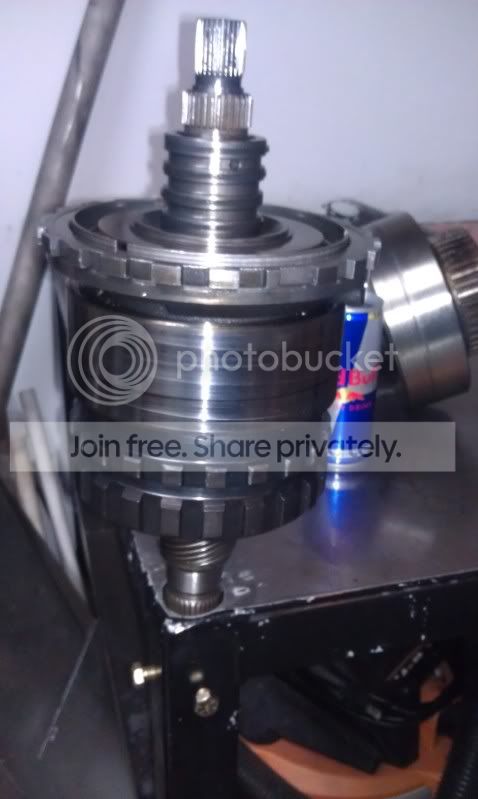
-reassemble the output shaft, geartain, all the way up to the center support and set aside for final assembly.
-Replace frictions in steels for the Forward and Direct Drum with new lip seals. Soak the frictions in ATF before you put them in (book doesnt say to do this but I've always been told to). Now's the time to upgrade your direct drum and sprag to the 34 element kind (most important upgrade BTW, dont skip that). Use a spiral lock snap ring on the direct drum. HD springs included with the transgo kit for the direct drum release. should have about .010" clearance per friction disk. Clearance isn't as critical on the forward clutches as it is the directs because the forward clutch is always engaged except for reverse, but you still dont want it to drag to bad when in reverse.
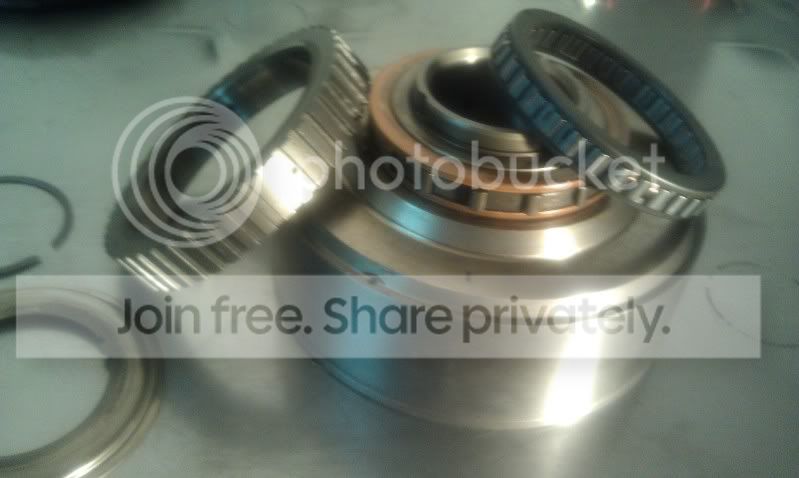
Here is a pic showing the direct drum and the new sprag next to the old one.
-Pull the pump apart and check for wear. Replace input seal, bushing and big o-ring that seals it to the front of the trans housing.
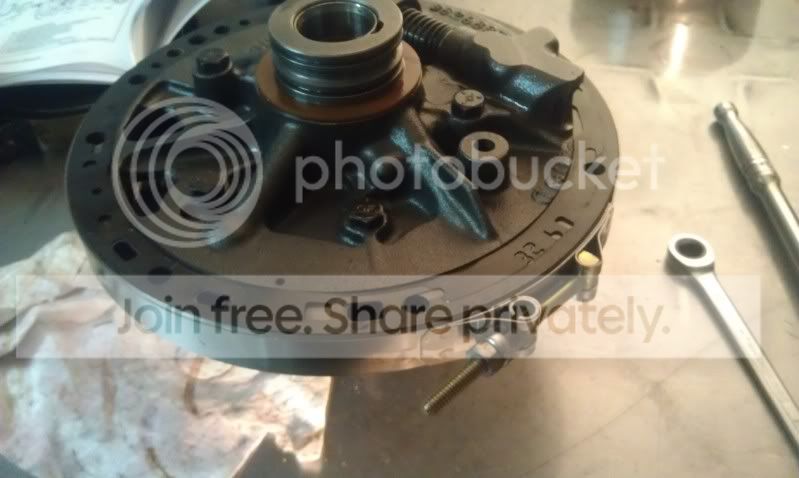
Here is a pic of the pump going back together this is a special tool to align the top and bottom of the pump but a huge hose clamp works too.
-clean and inspect the valve body.
-Transgo valve body mods: (drilling valve plate orifaces for 1-2 and 3-4 shift feel, Governer spring changes for faster/slower 1-2 shift, 2-3 aluminum accumulator and new spring, 1-2 shift valve change for compression braking and no over-ride shift out of 1st and high rpm, and a few more things I can't remember)
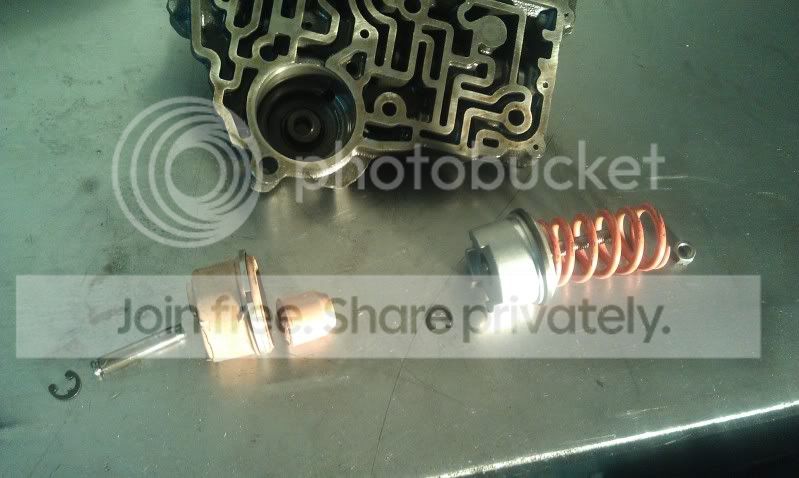
Lots I sould show with these steps but its covered in detail in the transgo instructions. Here is a pic of the new aluminum 2-3 accumulator and spring. Notice how my old accumulator is plastic, broken and missing the spring. This explains my WAPOW shift into 3rd.
Final Assembly
Now is when you start putting stuff back in the case.
One of the biggest failures I've personaly seen is the back portion of the TH400 case breakage. This happens for several reasons, usually people dont have the Tcase mounting well enough or a mount breaks. Transmission housings are not all that strong. The other reason is that the planetaries push against the back of the case and under high loads this can crack the back of the case. All this pressure from the planetaries and the friction from the output shaft to the alumium case is handled by a thrust washer! The upgrade here is to "rollerize" the rear output with a thrust bearing.
The other upgrade in this area is the Sonnax no walk case bushing. The rear bushing in the case has been known to push out towards the rear of the case and eventually the ouput shaft trashes out the hole. There are oversized bushings if you ever have this happen. If you are running a stock style bushing, locktite and stake in place.
If you
dont want to rollerize the rear output you can use the sonnax no walk case bushing and the rear end-play selective washer and your bronze output shaft thrust washer. If you had too much or too little rear output shaft play at the initial measurements you can change your selective washer here.
If you
do want to rollerize the rear output you cannot use the no walk case bushing as the thrust bearing does not fit over it. You replace the thrust washer and selective thrust washer with a TH350 Pump Bearing and selective washer(s) to set your rear end-play.
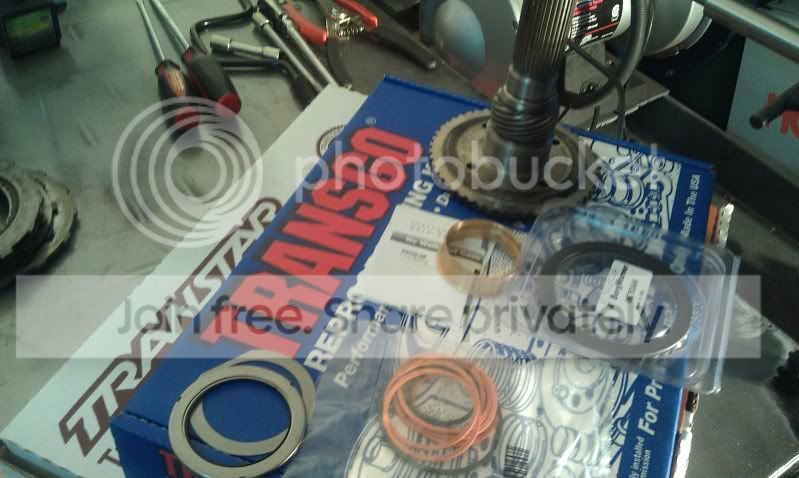
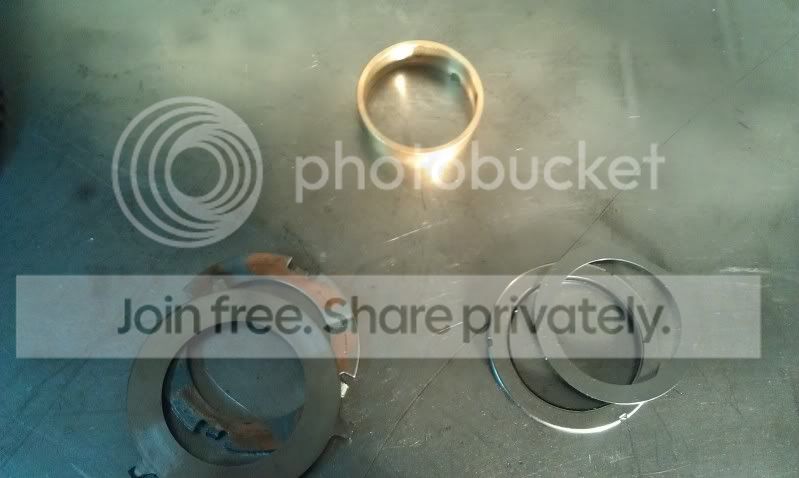
Here is a pic of the old thrust washer and selective, the sonnax bushing and new thrust bearing and shim.
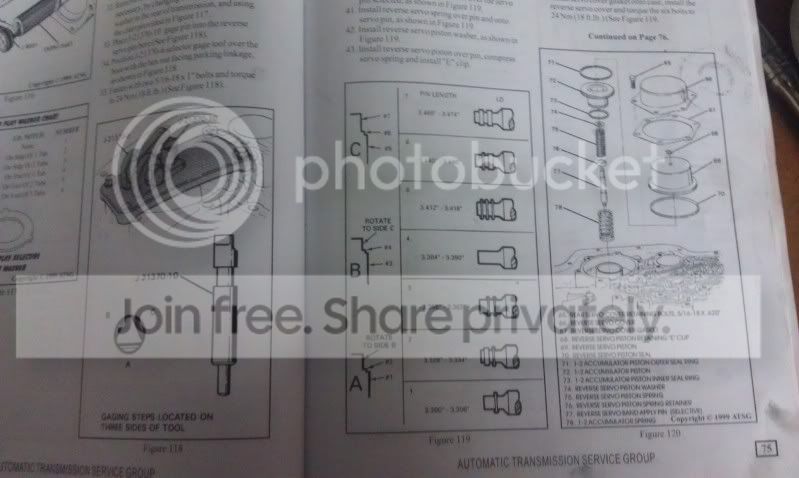
-With your bearing/thrust washer down in the case, you then install the rear band and possibly a snap ring depending on which center support you have. Now, with the rear band, dont replace it unless you have to. I replaced the band and then coudn't figure out why my reverse servo would not go in the bore. Well, the pin that pushes on the rear (reverse) band is selective. There is a special tool to measure which pin you need. I decided to just run my old rear band because I didn't want to find/borrow/purchase this special tool to find the correct pin.
Here is the page in the ATSG Book about the different Rear Servo Pins.
-Next you lower the previously assembled output shaft/geartrain/center support down into the case making sure you line up the center support holes with the valve body. The center support is then held in place with a bolt. This step is one that would be nice to have a special tool because you only have a little bit of shaft to hold onto and this sucker is heavy.
-Now is the best time to check endplay on the output shaft and adjust. You wait till the book says at the end and you have to change it EVERYTHING has to come back out of the case. Should be .007-.019". You want it on the tight side because of the previously mentioned info on the planetaries pushing on the back of the case.
-Once it is in you can install the reverse servo, and then the intermediate clutches. You wanna check the free play on the intermediates for sure. If too much freeplay you will tear the lugs out of the case bangin second. Especially with higher line pressure (250+). The Transgo kit has a HD snap ring to retain the intermediate clutches.
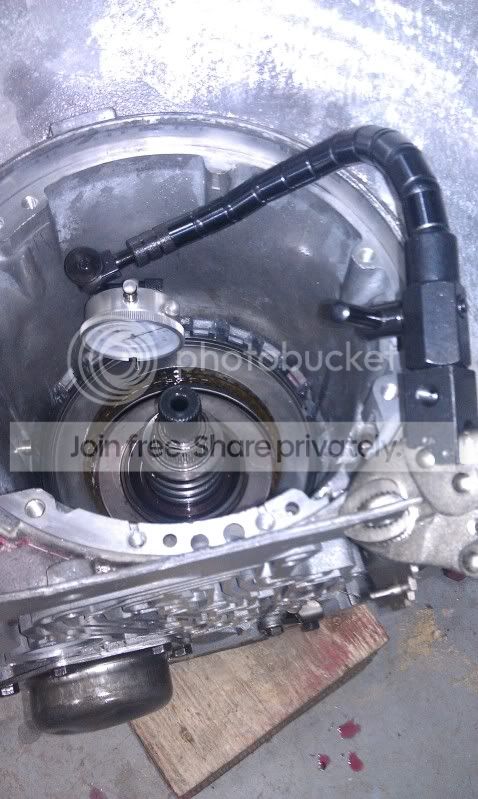
Here is how I checked the clearence on the clutches. The ATSG book says NOTHING about checking clearance here. You want 0.010" per friction. I was right on the money.
-Next to go in is the front band, direct drum, then the forward drum. Make sure they are fully seated.
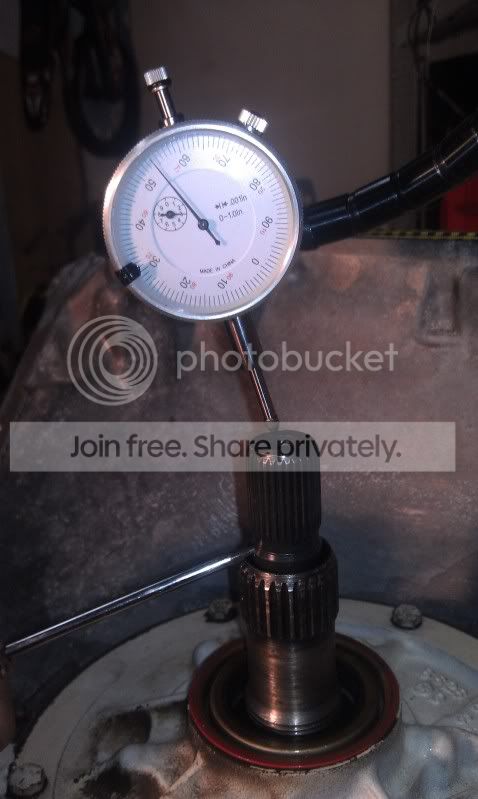
-Next is the pump. Make sure you can still turn the turbine shaft once the pump is torqued down. If you can't, the direct or forward drum isn't fully seated. You then need to check endplay on the turbine shaft. It should be (.007-.024"). You can see by the picture I had ~.055". I will need to go to the parts store for the 10,000 time and get a larger thrust washer for the back of the pump.
Too be continued..[/b]




 ) and broke some front driveshaft stuff but I think I've got that all figured out and it was failing from lack of angle.