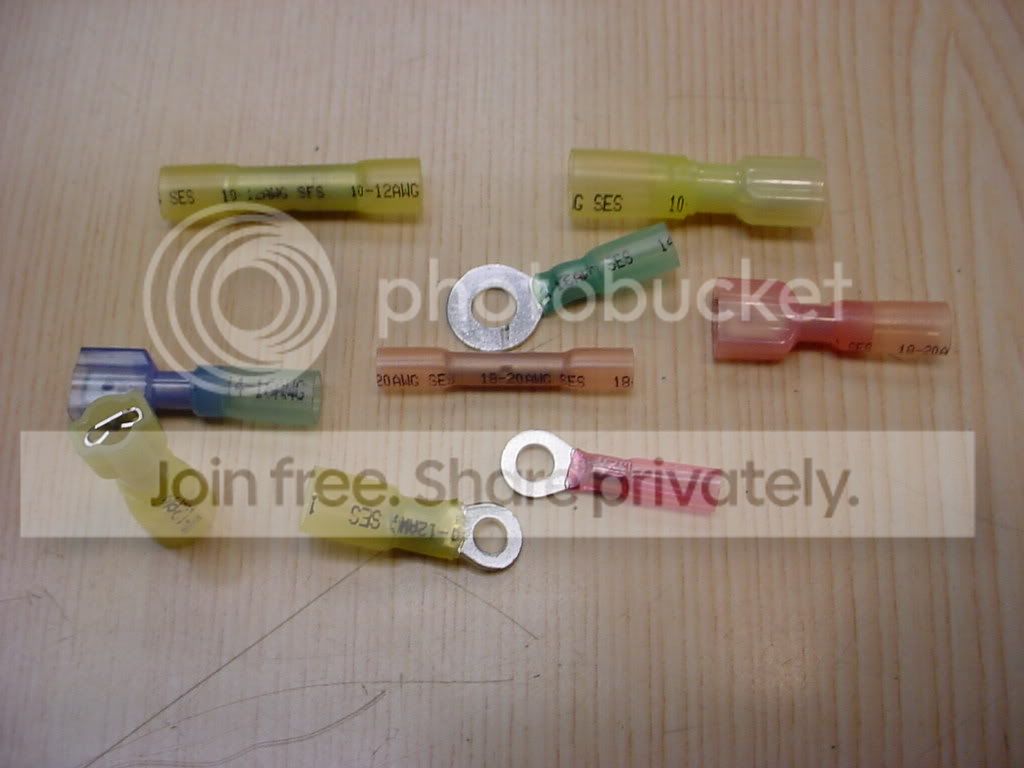
CK5
Register an account today to become a member! Once signed in, you'll be able to participate on this site by adding your own topics and posts, as well as connect with other members.

Heat shrink

didnt even know that kinda stuff existed. when ive done connections that are gonna be exposed to alot of mosture, or under water, i put a glob of superglue on the connection, and then shrink the tubing on top of it. guess that does the same thing???

well, literal super glue wouldn't be my choice, dries to brittle from what i've seen... you want it to be flexible, with some body to it...

when i've been forced to use lousy shrink tube in the past, i precoat the area with this

0-00-54007-14853-1_medium.jpg


i use the stuff ALL the time in the boats.. ALL the time.... i'll coat solenoid posts, power posts, etc with it after it's got the wire/terminal installed.. then a boot on top.. i've looked at jobs i did 10 yrs ago like that, and they look like the day i did em..

there are a couple brands out... another i've used is black, and comes in a yellow container.. can't remember the brand off the top of my head...
 
those are a minimum standard in boats, use em every day..

there are actually better ones than those, that have adhesive in the ends... we don't get them too often... they aren't much more money than the ones you pic'd, just a little harder to find some times..

the only time i shrink tube only, is when it's 6 gauge or larger...
 
As most of you know, I do lots of electronics work, and have been using heat shrink pretty much since it came out.
I wish I could say I usually use a heat gun, but it seems most of the time its either not handy, not plugged in, or there is no 110 handy.

So, I have used a propane torch, mapp torch, pencil torch, matches, Bic lighters, you name it.

As for the adhesive lined, use that a lot too, but only where necessary.
Its wasted if you are just tying two wires together. But, its vital if you have a bare connection.

But, there are lots of types of hear shrink. High temp heat shrink, nylon heat shrink for high abrasion, plus lots of others. The adhesive lined types are limited though.

As for the connections, I like the ones with the adhesive lined heat shrink already attached, but there are some out there with adhesive lined heat shrink with a small blob of solder and flux in the joint.

You crimp on the joint, heat it, and the solder melts and solders the joint, the heat shrink shrinks and the glue is pushed into every crack and then hardens sealing the joint.

I know about the pros and cons of solder joints in vibration areas on boats, but this is confined to the crimp its self, and the heat shrink provides a lot of vibration proofing and strain relief.
 
yup, i've seen the solder ones.. never used em, but seen em.. soldering is highly frowned upon in boats on alot of connections... tho i do a fair amount on electronics package installs, radars, etc. ya have to with alot of the antennas and multi-pin connectors....

it's illegal now for me to solder only battery lugs... tho on my rig i did it.. ;)
 
it's illegal now for me to solder only battery lugs... tho on my rig i did it.. ;)

How so? Sounds like something I should know about.
Being in Fl. I do a lot of work on boats from time to time.

I usually use the screws on the battery terminals, but I have been temped to solder them every once and a while.

And I see the point on soldering wires. It creates a stress riser that can cause a cracked wire.

But, if I have a critical butt splice, I will cut the insulation off a butt splice, slide some glue-type heat shrink up the wire and crimp the two wires with an approved crimper.

Then, I put some solder in the gap between the two ends, but don't put enough solder or enough heat for the solder to wick past the ends of the joint.

That way, the stress riser never forms.
Then finish it up with the heat shrink.
 
How so? Sounds like something I should know about.
Being in Fl. I do a lot of work on boats from time to time.


well, illegal might not be the correct term.. frowned upon... and just to verify, i am talking battery cable lugs... solder only.. pellets, torch, stab it, yada... i did it for yrs on cars, and carried it over into boats and never had a prob..

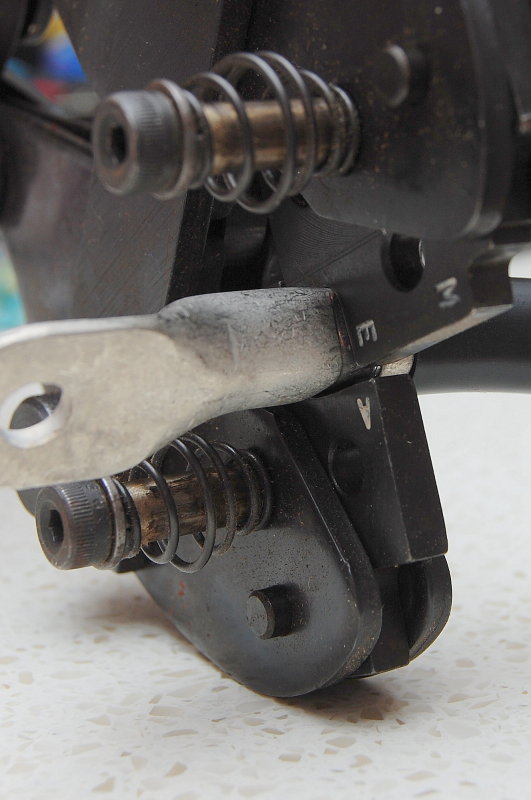
but it's against coast guard regulations... ABYC too... they want a mechanical connection... high amp loads melting out the solder apparently is the reasoning.. we use the hex sided style crimpers, they rock... and WAY faster... color-coded for size.. like this...


109735846.jpg


and that's also a HUGE peeve with me, when some of the cheaper (coughbilgelinercough) manufacturers use the crappy hard plastic connectors... 5 yrs down the road, 1/2 the boat is failing electrically..
 
I gotcha. I knew about the battery cables, most of them I buy premade, or have them made.
There is no way I could justify the cost of a set of those crimpers given my level of use.
I don't think I have ever made a battery cable on a boat.
And darn few on trucks.

Since I have a actual battery shop nearby, I can go in there and get custom cables made with those type crimpers if I need them.

I have been known to drill a small hole inbetween the crimps and flow in some solder finishing it with some heat shrink.

Speaking of the battery shop, I have learned a lot visiting there from time to time.
For instance, although some of the name brands make their own batteries, there are several names folks would recognize that this shop carries, that they only carry labels for.

One lady came in wanting a certain name brand to replace the one in her car.

The owner went in the back, pulled a proper size battery off the shelf, got it ready, tested it, and then opened a drawer.
What name did she say she wanted? He asked me.
I told him, and he pulled out that label and stuck it on the unlabeled battery.
I looked in the drawer, and saw several names I recognized.

I asked him, and he told me that a lot of the batteries were made by only a couple of makers.
Some of the companies who sent him the labels specified which company's battery he could put their label on, but some of the others just did not care.

The coolest thing I saw, was when a customer wanted a certain very large size battery.
They had them in stock, but they were only made with flat terminals with bolts through them, and he wanted standard automotive terminals.

The owner pulled out a pot of lead, started it melting. Took some bolt cutters and cut the terminals off the batteries leaving a lead stump.
Reached in a drawer and pulled out some steel molds. Selected a positive and negative pair, roughened the lead stumps, put a small coating of flux on the stump, and attached the molds.

Then he poured melted lead into the molds and let it harden.
When he pulled them off, the posts looked like factory.

He had molds to convert just about any style top post to any other style.
 
HB1750withstand.gif
trans.gif
Introducing the STEINEL Heat Blower Series

The HB 1750 is the most ergonomically advanced high output blower in its class.
21st Century technology enables STEINEL to acheive maximum airflow from a lightweight, ultra quiet tool. Superior design, materials and workmanship ensure the quality and reliability the STEINEL name guarantees.
For world-class performance...Come into the Blue.

Once you use something like this you'll love it, especially if you use the ultra expensive water proof electrical connectors

This looks like a really good heat gun and I might just bite the bullet and buy it. The cheapest i've found it is $127.00 for the complete kit with all the heat keys.
 
Top Bottom