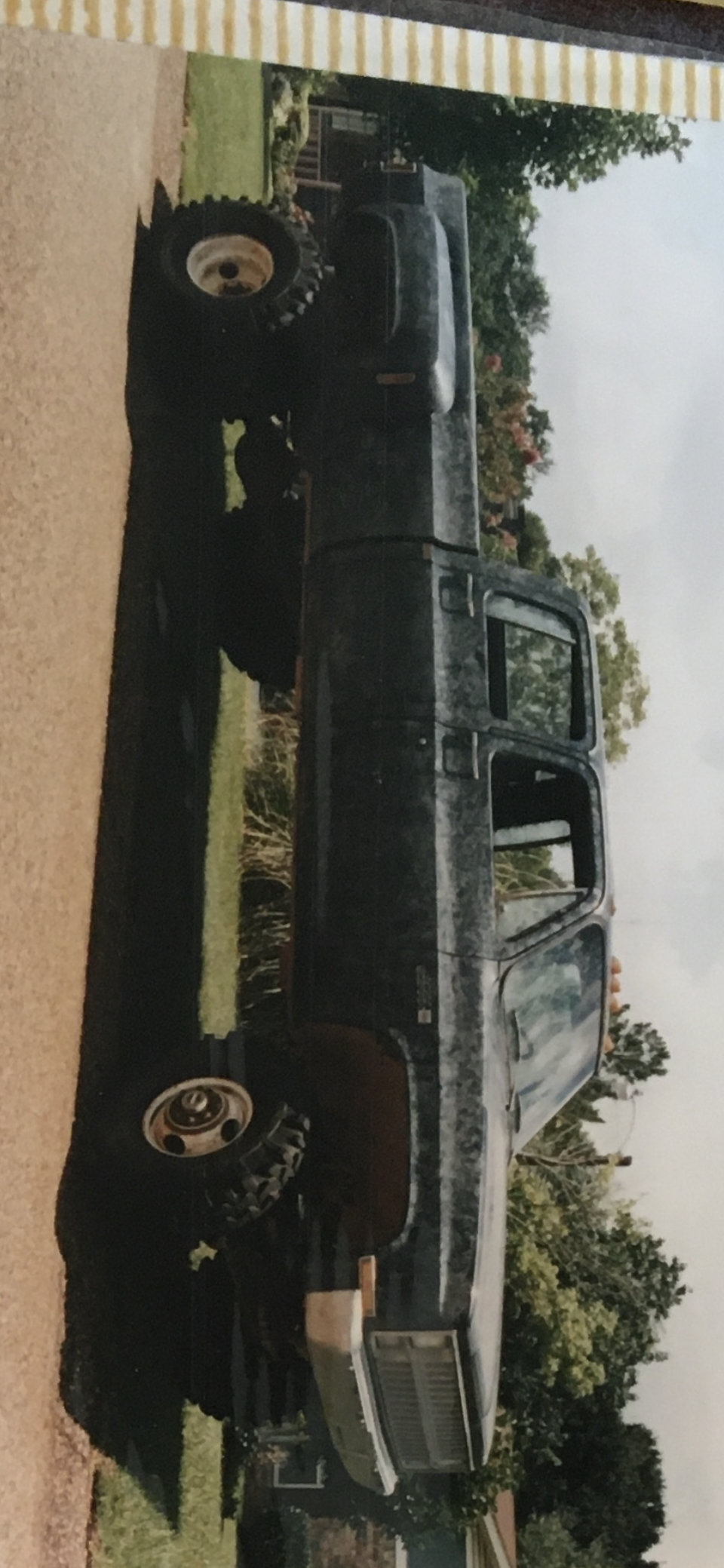
CK5
Register an account today to become a member! Once signed in, you'll be able to participate on this site by adding your own topics and posts, as well as connect with other members.

Opinions on wheel spacers

People put 65k miles on a single torque for a new set of tires and never rotate anything with them being fine. I can confidently say I have personally sent 20,000 or more vehicles down the road with a single torque. Suggesting thread locker is probably a CYA for the manufacturer.

If you did it right in the first torque the nuts won't move and the wrench will click again just like it did the first time. Then the locking compound is still good as new.
Your patience on this topic is appreciated...
Thanks.
 
So it almost pointless to use thread locker? So, re-torquing is the more beneficial part of safely running wheel
No, thread locker has its place and works great when it’s applied and needed.
All I am saying is that with spacers there is added leverage being applied on the retaining hardware as compared to not using a spacer where it’s common to set it and forget it - there is more than one school of thought on how to ensure that the studs are always kept secure.

I’m not against using spacers - I used a set for years between the rear dual wheels on my 83 K-3500 and it always checked out fine when doing a torque check.
full


Go with what you feel most confident in doing - thread locker is a great tool, I am not disputing that, both methods are good options ; you choose which one is right for your hardware.
 
Steel wheels torque and forget, Aluminum wheels I'll go back and check after 50 to hundred miles. Do they always move ? No. I found that after market aluminum tend to need it more than oem aluminum.
Aluminum spacers ...... I would want to retorque several times. Who knows how well the nuts will fit the machining.
 
Arrived. Looks solid only downside not much info I can find about who actually makes these. But in others threads guys here are running these exact spacers. These appear to be --lug centric-- as there is no lip on them

It's the same aluminum that Bora makes theirs with.


One spot (in pictures below) says 100ft lbs another spot says 135-145ft lbs.

Chevys recommend torque for 9/16 is 85-125 ft lbs.

So what should I be torquing these spacers down to
BFB3C8CE-990A-4226-AD43-8C07F4B29DFE.jpeg

9BA89150-E627-49CA-A2CD-A49AC9A1225B.jpeg

0D51B483-816C-4852-92FC-12B179949A13.jpeg

534ED80F-0C6A-48E9-A878-2B74B245458C.jpeg

A3AD114A-1497-4792-AB9A-6B5805D5DB8F.jpeg
 
Last edited:
I think over 125 is to much, you end up deforming the lug nuts and the spacers. I would stick around 100 to 105.
 
I think over 125 is to much, you end up deforming the lug nuts and the spacers. I would stick around 100 to 105.
My wheels now are at 100ft lbs without the spacers

I'm thinking spacers at 100ft lbs as well
But that info pic says 135-145 then on the bottom says 100ft lbs for 9/16 threads

4BF596E2-8FC0-4AE1-951C-688B84A07E32.jpeg
 
I'm thinking I may return these and order the Bora hub centric spacers. I didn't realize these were lug centric.

Would hub rings be ok or? I should probably just get the Bora hub centric for more safety.
 
Plastic hub rings are ok but remember all they do is center the wheel for when you tighten it.
Once it's tight, it isn't moving.


135 -150 is appropriate for 9/16. Never could get a straight answer for why Dodge specs 135 for srw and 150 for drw on both 9/16 studs from 94 and up. 140 for the gm 14mm. But 150 for ford 14mm.

That area is going to be sufficient.
100 is WAY too low.
 
Plastic hub rings are ok but remember all they do is center the wheel for when you tighten it.
Once it's tight, it isn't moving.


135 -150 is appropriate for 9/16. Never could get a straight answer for why Dodge specs 135 for srw and 150 for drw on both 9/16 studs from 94 and up. 140 for the gm 14mm. But 150 for ford 14mm.

That area is going to be sufficient.
100 is WAY too low.
135 for spacer and wheels or just spacer?

You think I need hud centric for mostly street driving or will these KAx when torqued be adequate?

Is these method/trick to centering the wheel on a spacer not being hub centric?
 
All the studs the same. You dont need hub centric IF they are machined lug centric correctly.

The only time you are required hub centric is to use flat lugs like on 99+ superduty if you've seen those. They are a flat washer type and the lugs and holes in the wheel are not tapered at all. Lots of drw trucks are flat washer hub centric but the srw are lug centric.
 
I really think you are over thinking this one. Nothing wrong with being safe. Grab a big lug wrench and tighten them up as tight as you possibly can. It's going to be fine
 
I really think you are over thinking this one. Nothing wrong with being safe. Grab a big lug wrench and tighten them up as tight as you possibly can. It's going to be fine
I think you're right. I'll run the ones I bought. Torque the spacer down and go.

The torque value is what is messing with me. Their own instructions have 2 different values. It's confusing
 
It also mentions anti seize in the tools needed which instantly tosses out all credibility.
 
Yeah NO anti seize on lug nuts. esp the spacer side. AZ doesn't need to worry about rust and corrosion.

@obijuank5 I think the different torque specs from ea mfr, is be cause different materials/ alloy formulas. Tappers and or flat nuts, and dual wheels need more clamping to compensate for any unevenness in the wheel centers.
 
I've read people using antiseize on the back of the spacer, so it doesn't stick to the hub. That's probably climate related.

This and other points being made here is why this is confusing.
 
Last edited:
Passenger side is on
Did increments of 30,50,70,90,110
No loctite used and no trimming of studs was needed.

Final Torque with wheel on and vehicle weight on the wheel to 110

Still to do driver sides then drive and retorque

569C5CDE-AA47-47ED-8F9A-594DC63E2C51.jpeg

79A9F155-B7DF-4076-816D-C0A5837AFB34.jpeg

8108DC10-62BC-49AB-A38E-EFEEF6309C26.jpeg

4FDED7C3-BB9F-4D85-BACF-76805F8772E3.jpeg
 
Top Bottom