CK5
Register an account today to become a member! Once signed in, you'll be able to participate on this site by adding your own topics and posts, as well as connect with other members.

Rear Disks now soft pedal**UPDATE(6/7)**... Help!

mrdrinksalil

1/2 ton status
Joined
Apr 4, 2005
Posts
1,618
Reaction score
60
Location
Atlanta, Georgia
Ok, so I've finaly gotten some brakes for my rig and I've bled everything out with a vaccum bleeder as well as the old fashoned way and im not getting anymore air out of the lines. The pedal felt good until I started it up today to feel what it was like with the brake booster working and the pedal goes all the way to the floor. Bled them out again and still all the way to the floor with the engine running.

im running dana 60 front calipers, and the dana 44 3/4ton fronts in the rear. I've taken the combination valve out of the system and am just running a "T" splitter for the font lines. ALL the parts are new. I'm thinking my master cylinder is too small, but I thought it was a 1 5/16" master (biggest)

Anyone got any ideas???!
 
Last edited:
Are your rear disc bleeders facing down or up? I had this trouble before but I had to leave my bleeder valves pointed down so I can still use my e-brakes.
Try taking the calipers off the brackets and point the bleeders up (you can still have the calipers on the rotors) and bleed them this way. Sounds to me that you probably still have air pockets trapped inside the calipers. I've never used the vacuum bleeders so not sure how to help you there.
 
Have you considered cutting out the floor under the brake pedal?:haha:

im running dana 60 front calipers, and the dana 44 3/4ton fronts in the rear.
For starters, that a lot of caliper volume. Compare the volume of stock 1/2 ton front calipers and stock 1/2-ton wheel cylinders to what you have now and it's obvious that you will inherently have more pedal travel now than you did before (like 2-3 times as much). But that's not to say that it can't work. A larger bore MC will reduce the pedal travel and also reduce the application force due to basic hydraulic principles. The general fix for that is hydroboost.

You might have scrapped the seals in the MC with all of the bleeding. There are also cases of bad ones out of the box, especially remanufactured ones.

Did you bench bleed the MC for a really long time? Assuming that you did, you might consider power bleeding. This can be done by pressurizing the MC resevoir or applying vacuum to the bleeders.

You ought to have at least some braking power, even if the pedal is really low when it happens. I have a theory that small residual pressure valves would help, but I don't know if it's ever been proven or how much would be too much.
 
do the brakes work? When I finished my swap I thought the same thing.. I started it up and the pedal went to the floor. But I drove it after bleeding it twice and the brakes lock up before the pedal hits the floor on mine.. So it was just a matter of getting used to a soft pedal. However I am using the 1/2 ton calipers up front. I dont have experience with the 60's. A new perhaps larger mc may be the answer. But I cant say for sure.
 
I still have the stock perportioning valve, but i am having the exact same issue. Pedal goes almost to the floor to get pressure. They stop, but only an inch or 2 of travel is actually stopping it. 60 calipers in front and 44 calipers in back. Bled 2 quarts of fluid through the system already and no change.

What would be a good upgraded MC for an 83 blazer?
 
A cheap thing you can try is go to a local race shop and see if you can find a residual valve. It will go in line at the rear brakes. Just get one and put it before the T. That will help since you have the need for so much more fluid back there and it is only $20. I would definately try that first.
 
Keep bleeding them.

I run the same setup and I bled about a gallon of fluid through mine before I got a good pedal. I gravity bled mine for a while then vacuum bled them. When I was done vacuum bleeding them I had a pedal like you are saying you have, on the floor but would stop the truck in the driveway. I didn't try it on the street. I finally got a good pedal after I bled the brakes the old way, by pumping the pedal and bleeding.

I think I still have a little air in the system because when I get in the truck the first time of the day the pedal is low, about half way down. I put the brake on once and it has a high pedal the rest of the day.

Gravity bleeding is just opening the bleed screw a little bit and keeping the master cylinder full of fluid. Then repeat the same procedure for the other calipers. Bleed the farthest caliper away from the master cyl. first then bleed the next closest to the master cyl.

I am using the stock proportioning valve.

My short bed truck will lock the rear tires up before the fronts do. I need to put an adjustable proportioning valve in it but I hate bleeding brakes.

A guy I work with says he pressure bleeds brakes. He just took a piece of 3/16" thick steel plate and taped a hole in it to take an air hose male nipple. He puts an old cover gasket with a hole in it on the master cylinder then puts the plate on top of that and holds it to the master cyl. with a C clamp. He turns the regulator down to 3 psi on his air compressor and plugs his air hose onto the steel plate. Then bleed each caliper making sure to keep the master cyl. full. He says it works great and is fast.

I had lost all hope in getting a good pedal also,I thought my master cyl. was junk, but my father talked me into bleeding it more. He knew best.

I hope this helps,
Mike
 
I posted this a few days ago because I was having the same problem. Van also suggested I use a master cylinder for a 86 c30, it has a 1 5/16" bore.

"After talking with Van @ http://www.vancopbs.com/ it appears that even though the bleed screw is at 12o'clock there is still air trapped due to the way the caliper bleed channel is drilled. I will try his suggestions tonight and post back. Scroll to the bottom and see the caliper picture. http://www.mpbrakes.com/technical-su...ng-disc-03.cfm "
 
I think this will answer all the questions....

I THINK I have a 1 5/16 master but im not positive, its been a long time since I bought it.

I did bench bleed the master correctly.

I did vaccum bleed the brakes.

The brakes do work, but there is a LOT of pedal travel (almost to the floor) before they work, and to me that is unacceptable.

My caliper and "bleeder angle" look just like this guys,...


Keep bleeding them.

I run the same setup and I bled about a gallon of fluid through mine before I got a good pedal. I gravity bled mine for a while then vacuum bled them. When I was done vacuum bleeding them I had a pedal like you are saying you have, on the floor but would stop the truck in the driveway. I didn't try it on the street. I finally got a good pedal after I bled the brakes the old way, by pumping the pedal and bleeding.

I think I still have a little air in the system because when I get in the truck the first time of the day the pedal is low, about half way down. I put the brake on once and it has a high pedal the rest of the day.

Gravity bleeding is just opening the bleed screw a little bit and keeping the master cylinder full of fluid. Then repeat the same procedure for the other calipers. Bleed the farthest caliper away from the master cyl. first then bleed the next closest to the master cyl.

I am using the stock proportioning valve.

My short bed truck will lock the rear tires up before the fronts do. I need to put an adjustable proportioning valve in it but I hate bleeding brakes.

A guy I work with says he pressure bleeds brakes. He just took a piece of 3/16" thick steel plate and taped a hole in it to take an air hose male nipple. He puts an old cover gasket with a hole in it on the master cylinder then puts the plate on top of that and holds it to the master cyl. with a C clamp. He turns the regulator down to 3 psi on his air compressor and plugs his air hose onto the steel plate. Then bleed each caliper making sure to keep the master cyl. full. He says it works great and is fast.

I had lost all hope in getting a good pedal also,I thought my master cyl. was junk, but my father talked me into bleeding it more. He knew best.

I hope this helps,
Mike

What master cylinder are you using? I wonder if your stock combination valve is helping it work in anyway. As far as I understand it shouldn't be.
 
Last edited:
my pedal is pretty soft right now, I am still using the stock 87k5 master cyl and prop valve. D60 up front and eaton rear with 3/4 front disc brakes. I also now have 3/4 bore cutting brakes in line. My pedal has always seemed a little soft since the rear disc was done, but they work like a champ. So I dont let it bother me. I will say that coming down trail one after my power steering pump kicked the bucket was much easier using the cutting brakes to help me turn :D... Put the cutting brakes on!
gabe
 
my pedal is pretty soft right now, I am still using the stock 87k5 master cyl and prop valve. D60 up front and eaton rear with 3/4 front disc brakes. I also now have 3/4 bore cutting brakes in line. My pedal has always seemed a little soft since the rear disc was done, but they work like a champ. So I dont let it bother me. I will say that coming down trail one after my power steering pump kicked the bucket was much easier using the cutting brakes to help me turn :D... Put the cutting brakes on!
gabe

Im gonna get the cutting brakes on once I get the cage work done inside the cab and the seats mounted, but I gotta get the old school pedal working first. haha. Does your pedal go almost to the floor?
 
I think this will answer all the questions....

I did vaccum bleed the brakes.

The brakes do work, but there is a LOT of pedal travel (almost to the floor) before they work, and to me that is unacceptable.

What master cylinder are you using? I wonder if your stock combination valve is helping it work in anyway. As far as I understand it shouldn't be.

I am using the stock 1986 Chevy K10 short bed silverado with 305 10 bolt front and 12 bolt rear master cyl. with the plastic reservoir. It was on the truck when I bought it. Is there a way to tell what I have by looking at it or measuring it without disassembling it? I can do that if there is.

I was having the same problem as you. Had a pedal without the truck running then not much pedal, on the floor, with it running. I wasn't getting any more air out. I also bled the brakes by pumping them with the truck running. That was how I got them from the way yours are to the way they are now.

I don't think the combo valve helps me either.:dunno:

I think you need to keep bleeding them. If you have an air comp. I would try the pressure method I told you about. If you don't I would bleed them by pumping with the truck running. It worked well for me.

Mike
 
I am using the stock 1986 Chevy K10 short bed silverado with 305 10 bolt front and 12 bolt rear master cyl. with the plastic reservoir. It was on the truck when I bought it. Is there a way to tell what I have by looking at it or measuring it without disassembling it? I can do that if there is.

I was having the same problem as you. Had a pedal without the truck running then not much pedal, on the floor, with it running. I wasn't getting any more air out. I also bled the brakes by pumping them with the truck running. That was how I got them from the way yours are to the way they are now.

I don't think the combo valve helps me either.:dunno:

I think you need to keep bleeding them. If you have an air comp. I would try the pressure method I told you about. If you don't I would bleed them by pumping with the truck running. It worked well for me.

Mike

So did you have to pressure bleed or u just bled with the truck running? I have a compressor, but dont really wanna make pressure bleeder seeing that I have a vaccum bleeder
 
Well, after closer inspection it looked like the rear caliper bleeder wasn't 100% vertical so I rotated them up and tried bleeding them again. I also tapped on the calipers to try and free and air bubbles. DIDN"T HELP AT ALL! No air comming out at all. Or so I could see. Good solid streams of fluid.

What I did notice was this...

When bleeding with the truck running (vaccum booster working) I noticed a LOT less fluid push out of the rear bleeders when I cracked them. Why would that be?
 
You may want to consider using a master cylinder thats for 4 wheel discs. Like for a P30 Van with rear discs.
 
You may want to consider using a master cylinder thats for 4 wheel discs. Like for a P30 Van with rear discs.

Yeah, I'm thinking the next step may be to try another master cylinder. What P30 vans had disk/disk???

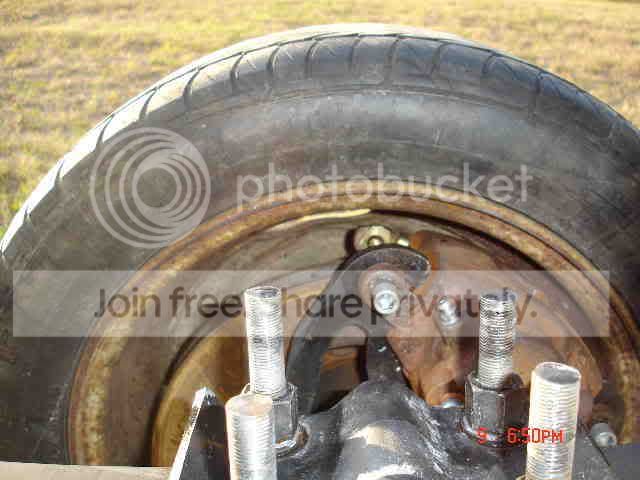
Heres the bleeder angle on the rear caliper.
DSC02271.jpg
 

Latest Posts

Top Bottom