CK5
Register an account today to become a member! Once signed in, you'll be able to participate on this site by adding your own topics and posts, as well as connect with other members.

The Story Of A Cummins Suburban (Lots Of Pics)

You mean...<gasp>...this truck has a driver? I've read this thread through twice. In nearly 900 posts (and probably thousands of pictures), I don't think you've shown any recognizable portrait of yourself or shown anyone in the cab. The truck is always shown empty. I imagine you have several fans (like myself) who would recognize your truck anywhere but couldn't identify you at all. I assumed that was deliberate.


Meh, it might be. I just don't want to steal any attention away from the truck. That's what this thread is all about..


You're in no danger of that! I just noticed a break in what had been quite a consistent pattern. Page after page of "here's what cool things the truck did," accompanied by pictures of it posing by itself in some awesome spot. After a few dozen empty-truck pictures it started to sound like the truck drives itself out to all these awesome places, that you're just along for the ride. And the rides are always fun to read about. :waytogo:

Keep it coming! :popcorn:
 
Barred motor over to TDC. Rotor pointing around 4 or 5. Excessive runout in upper housing bushing allowed rotor to contact cap shearing rotor locating tab off in shaft and knocking the rotor back (retarded). Threw a rotor out of inventory on it, started it up and turned it around. Grabbed distributor from wrecking yard, tore it down and put all new guts from old distributor into it. Dropped it in and the truck is a Timex again.
 
So I guess it is time to catch up on some of the nuts and bolts of this thing. I have been putting off a lot of the pictures of the maintenance/modifications in lieu of posting trip pics. Well, I have a bunch of trip pics from some trips lately, but I need to clear a backlog of the stuff that keeps this mess on the trail. So, here we go.

I have had a few requests regarding pictures of how my winch is mounted. Awhile back I found a Warn M12000 commercial frame winch on the old c/list. It seemed like a good deal, the only problem was it was in Flagstaff and I was not. While normally not a problem, at this point in time a trip to Flagstaff to pick up a winch would have negated the "good deal" aspect of the unit. I managed to hatch a plan with a local member up there who then sent his wife to meet up with the c/list seller in a parking lot to pick up my M12000. All sketchiness aside (and sending his little wife to pick up a huge winch), it worked out rather well.

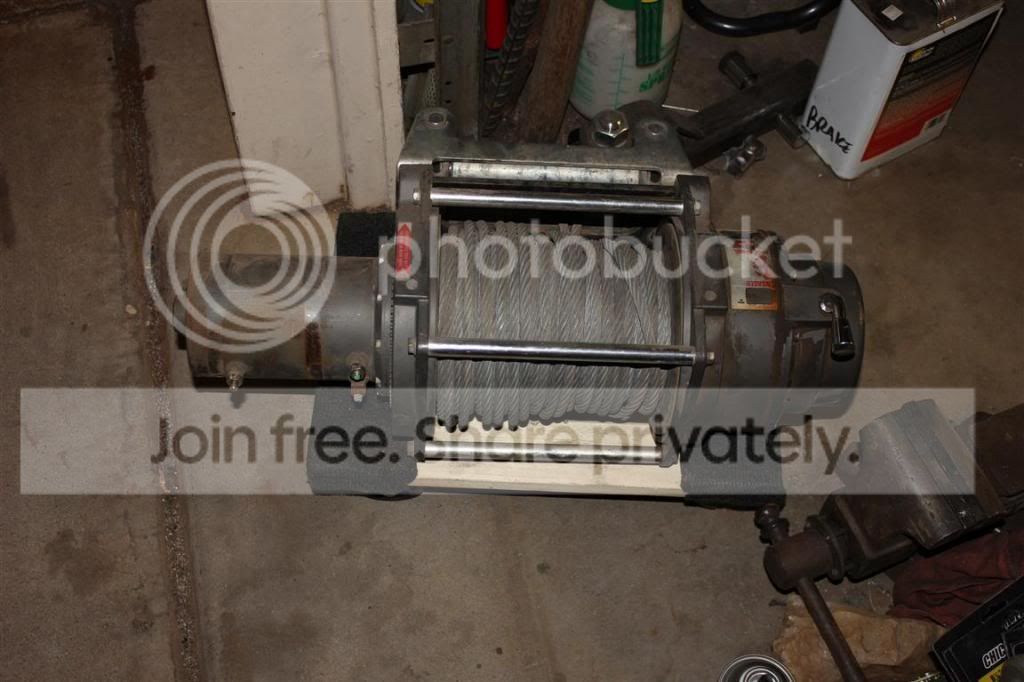
So now I have a winch, a big-ass winch. The sheer size of the winch began to set in. It's big. I want to do some sort of mounting behind the bumper. I started doing some research on how other people had done it and found that people don't do it because it doesn't fit between the frame rails. Oof. Wish I would have done this research before I bought this thing. I decide to strip it down and take some measurements for myself. I removed the control assembly and was left with this:

IMG_8112Medium_zpsb1d42b71.jpg


So I do some measuring and it's not THAT far off. If I do some finagling installing it it gets even closer. I eventually get it down to this:

IMG_8115Medium_zpscd542779.jpg


With a little strategic "polishing" of the inner edges of the frame channels, it reluctantly goes in.

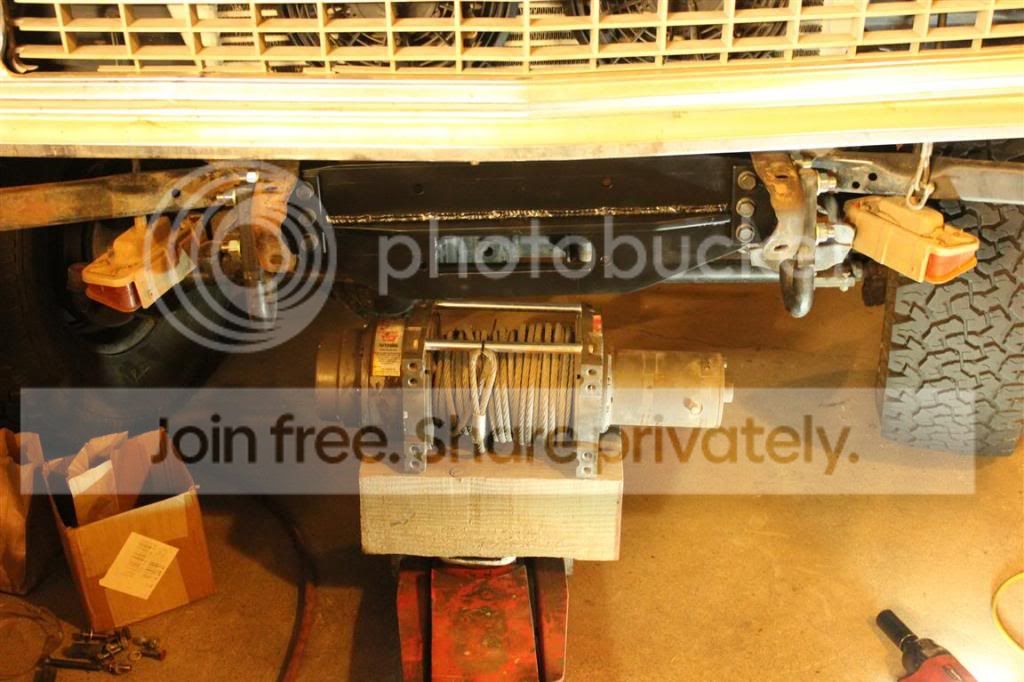
IMG_8117Medium_zps8d0f55b7.jpg


Oh, my. She's a big one. That is as far up as I can get it. I had these neat plans of how I was going to mount it and where I was going to put it. Well, let's just say I put it where IT told me IT wanted to go. There was literally no room for negotiation.

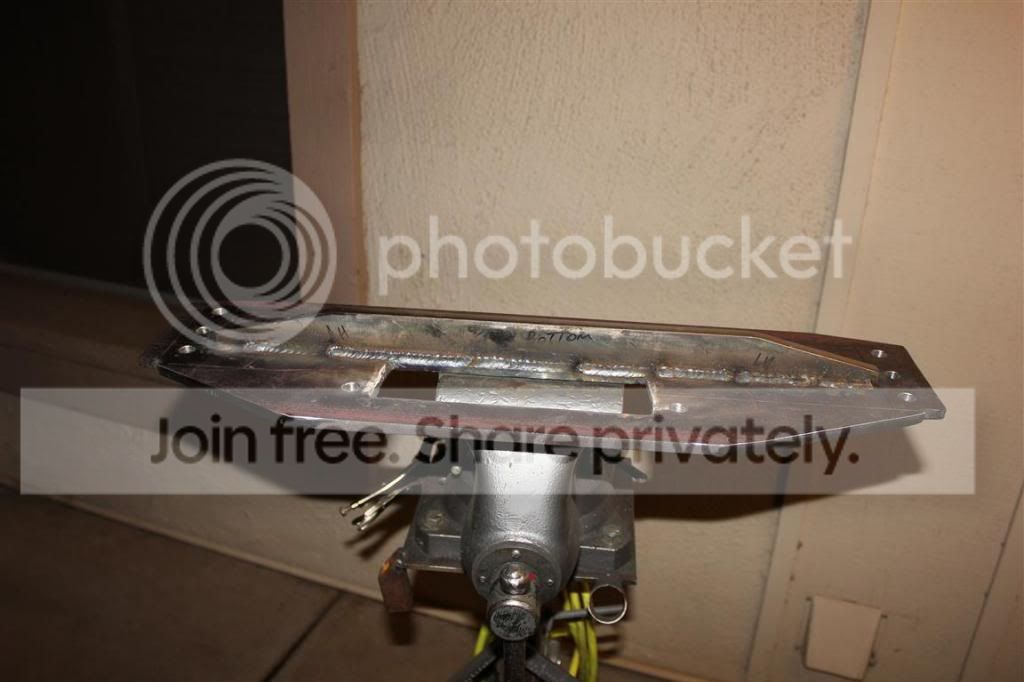
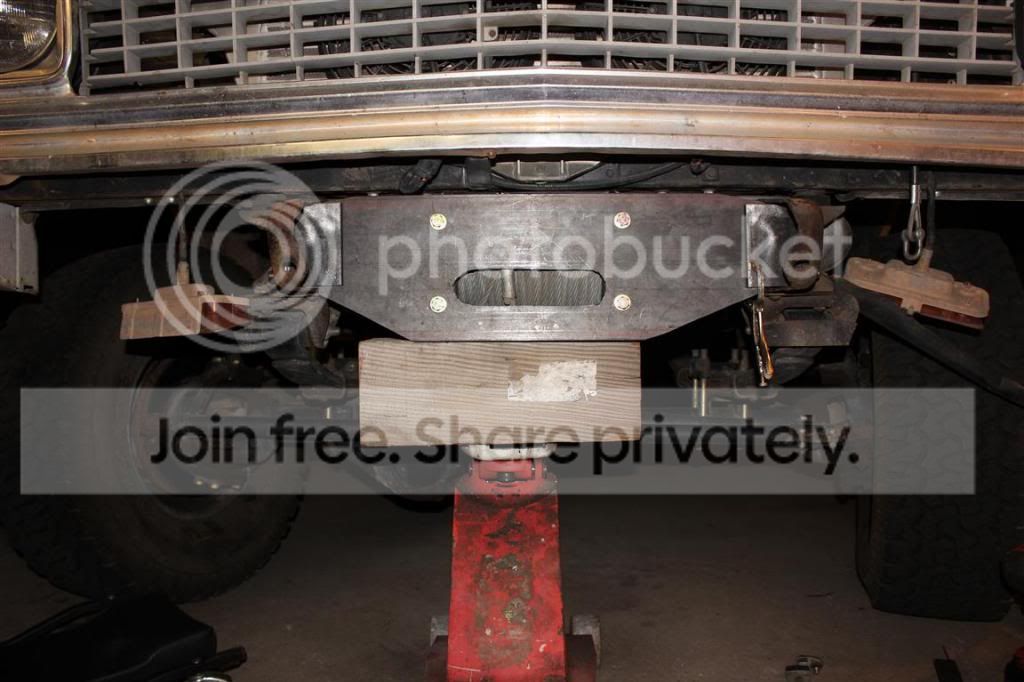
So needless to say, nobody makes a mounting kit for this thing to go between the frame rails on a '72 Suburban. I started looking at any winch mount I could lay my eyes on to see how different winches are mounted. The thing that surprised me the most is how light most mountings are. I even looked at some mountings on different tow trucks and was amazed at how "un-heavy" the mounts are. Now, granted, they are engineered and obviously hold up just fine, but I thought they would have been bigger.... Now the time comes to choose materials. Being that I am very limited on space and how I can mount this thing I went a little heavier on the mounting plate. I roughed out a mounting plate from some 3/8 cold rolled plate. I used some 1/2 x 3" angle in the frame channels for brackets:
IMG_8120Medium_zps23acae60.jpg


After I got everything located on the plate I decided to put a reinforcement rib across the front of it. I grabbed a piece of 1/2 x 1-1/2 flat stock and burned it across the face. I figured that, plus the 3/8 plate to start with should hold the winch sufficiently.

IMG_8127Medium_zps3999a0e4.jpg


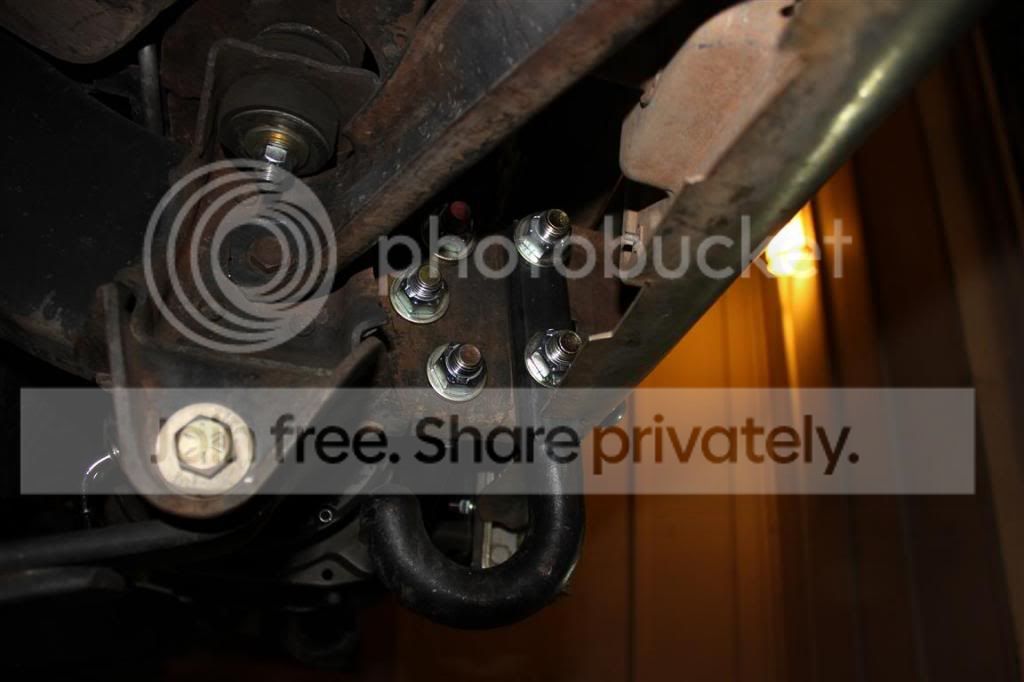
I used six of the 1/2-20 flange head IHC crossmember bolts and nuts to hold the plate to the brackets:

IMG_8135Medium_zps19b10c79.jpg


I then used six 5/8-11 bolts to hold the brackets to the frame:

IMG_8148Medium_zps78d8223b.jpg


Holy few dollars of hardware in the last couple pics.

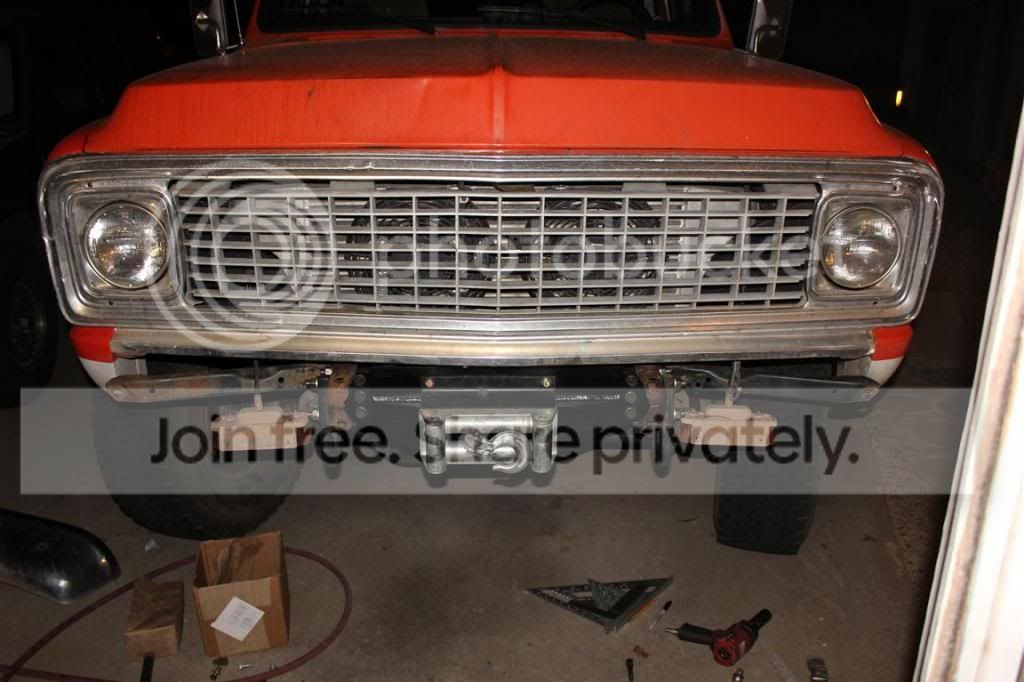
Hopefully the last "trial fit":

IMG_8144Medium_zps2032877a.jpg


The damn thing is heavy and generally uncooperative during installation and/or removal.

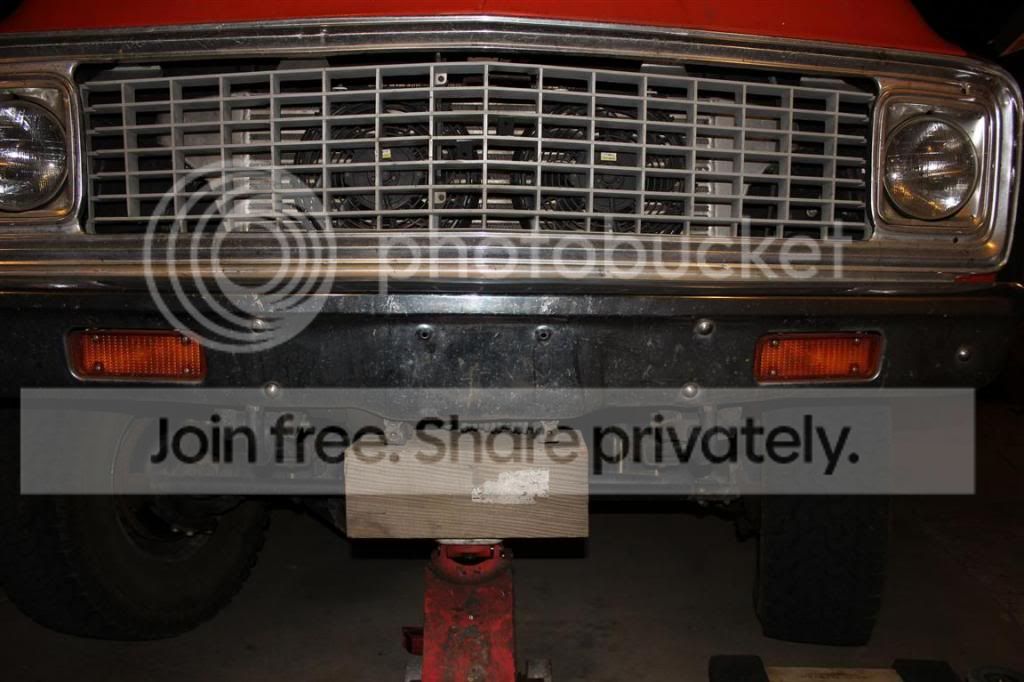
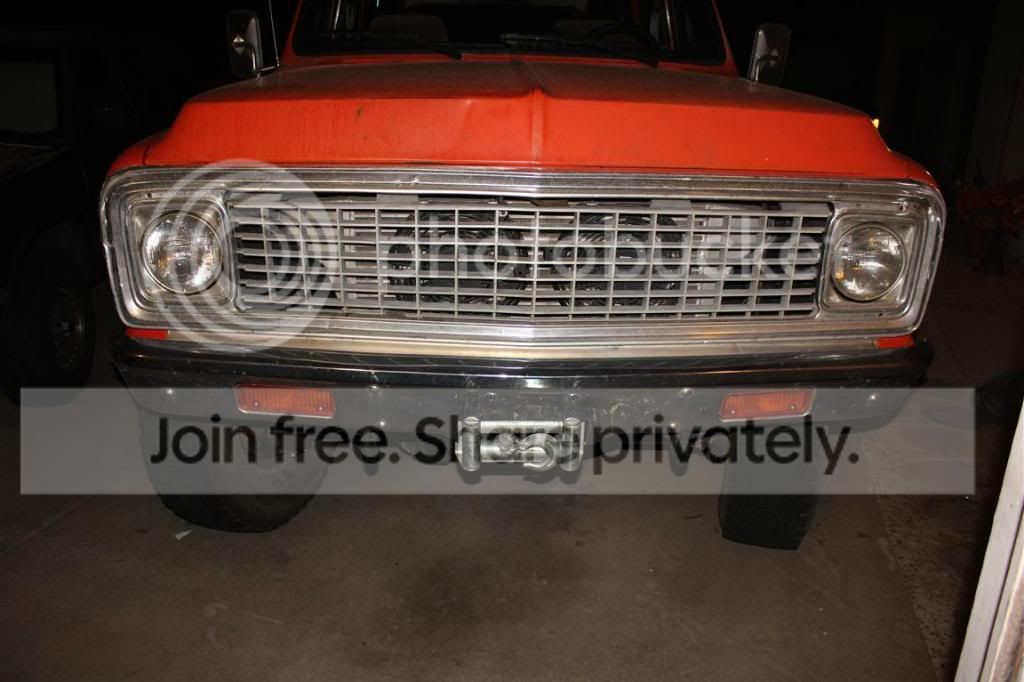
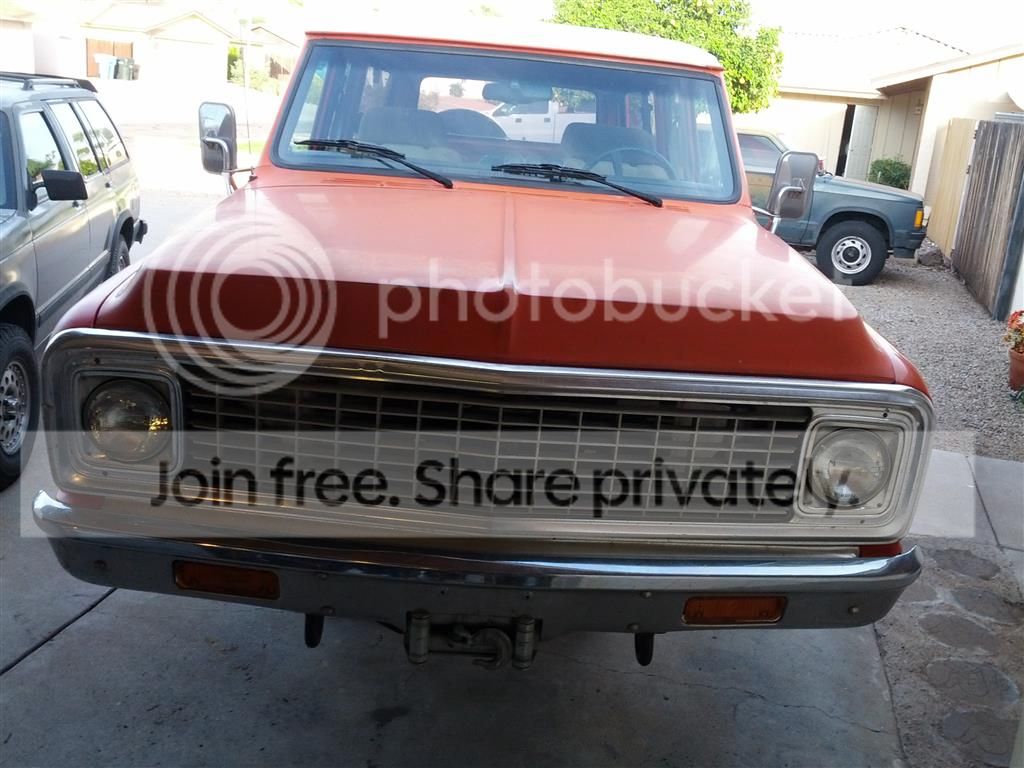
At this point all I need is a bumper. I cut a opening in the original bumper and the fairlead fit right in. The fairlead came with a standoff bracket that save a bunch of time and effort by spacing the fairlead out from the winch face and put it perfectly in the opening in the bumper.

IMG_8145Medium_zps407de4b4.jpg


I mounted the control box assemble to the driver side inner fenderwell. I just realized I don't have a picture of it, but it is there. I made new power cables to connect it to the winch as well as new power cables to the battery. All in all it ended up fitting in there and it has worked great the few times I have used it. I have yet to use it on a trail (and hope I never have to), but around the yard, etc, it works great. The guy that I bought it from said that it was on a truck that had a rear winch so this one never got used. I had to re-clock the housing to bring the shift lever to a lower area and when I had the housing off, it really did look like brand new inside.

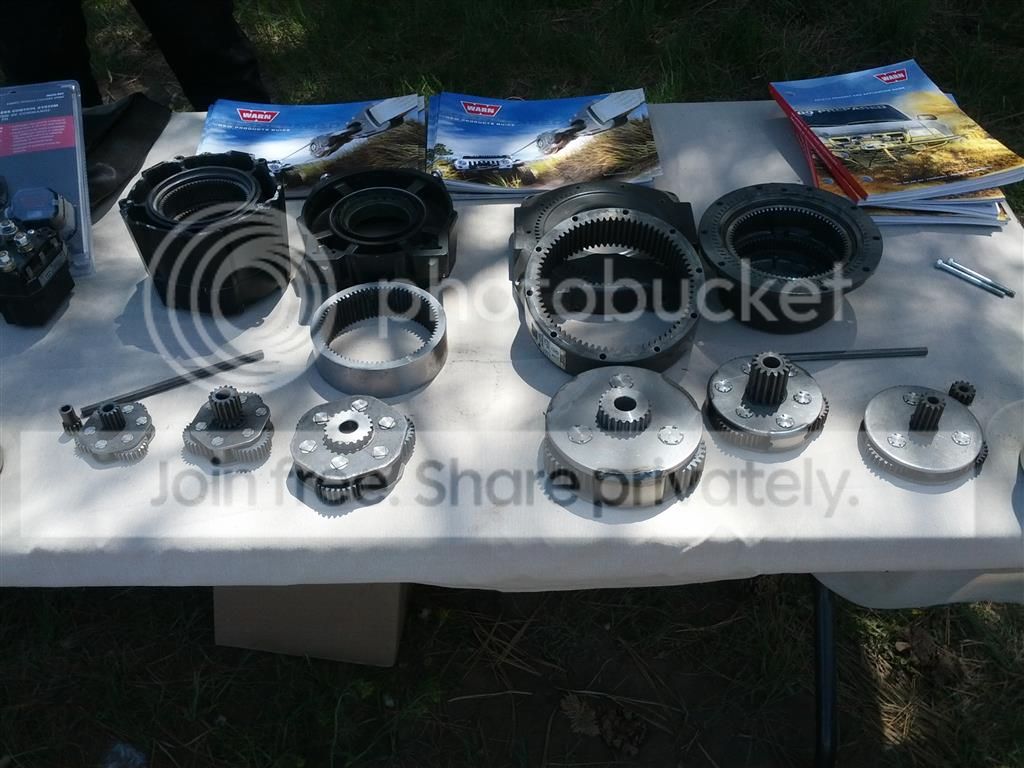
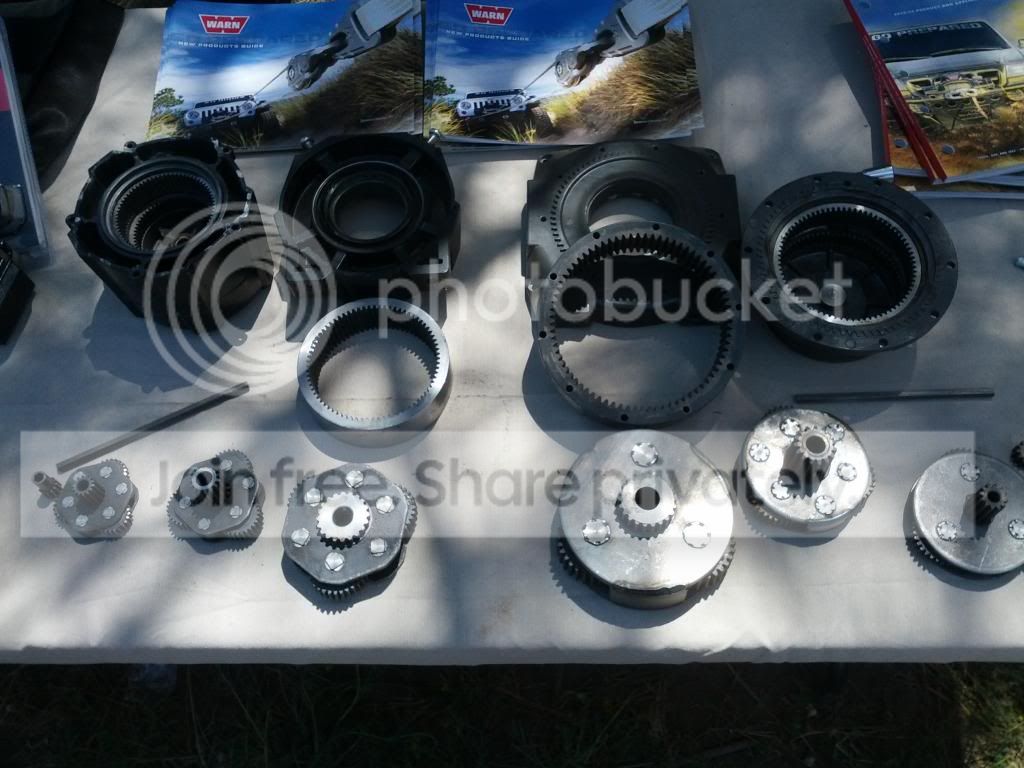
After messing around with this I got to looking at other possibilities for winches and there really aren't many for a winch of this capacity. One option was the Zeon from Warn. I hadn't seen that one until I bought this one, but it is a smaller frame which would have simplified mounting somewhat. When we were at Overland Expo this year, Warn had a booth and had two 12k winches that were disassembled showing the difference between the two.

IMG_20140516_134517Medium_zps935ca858.jpg


Zeon on the left, M12000 on the right:

IMG_20140516_134513_zps58d5cb61.jpg


The ring gear from the Zeon fits inside the ring gear from the M12000. Pretty impressive. The most impressive thing I thought was the fact that all of the power from the winch goes through the pencil-sized hexagonal shaft in the pic (same size for both). Never would have thought that would transmit ANY power without shearing, much less 12k worth of pulling power.
 
Yeah, that looks a lot better than big goofy winch bumpers that stick out a foot on the front.

Martin
 
I like the factory bumper winch mount look.

Thanks!! It didn't turn out as planned, but I am pleased with how it looks anyways.

Yeah, that looks a lot better than big goofy winch bumpers that stick out a foot on the front.

Martin

There are a FEW nice ones, but most fit your "big goofy" description perfectly. My approach angle is the closest thing I have to a "good" angle, so I couldn't destroy it with a huge overhang. My breakover and departure angles leave a little bit to be desired :whistle:.
 
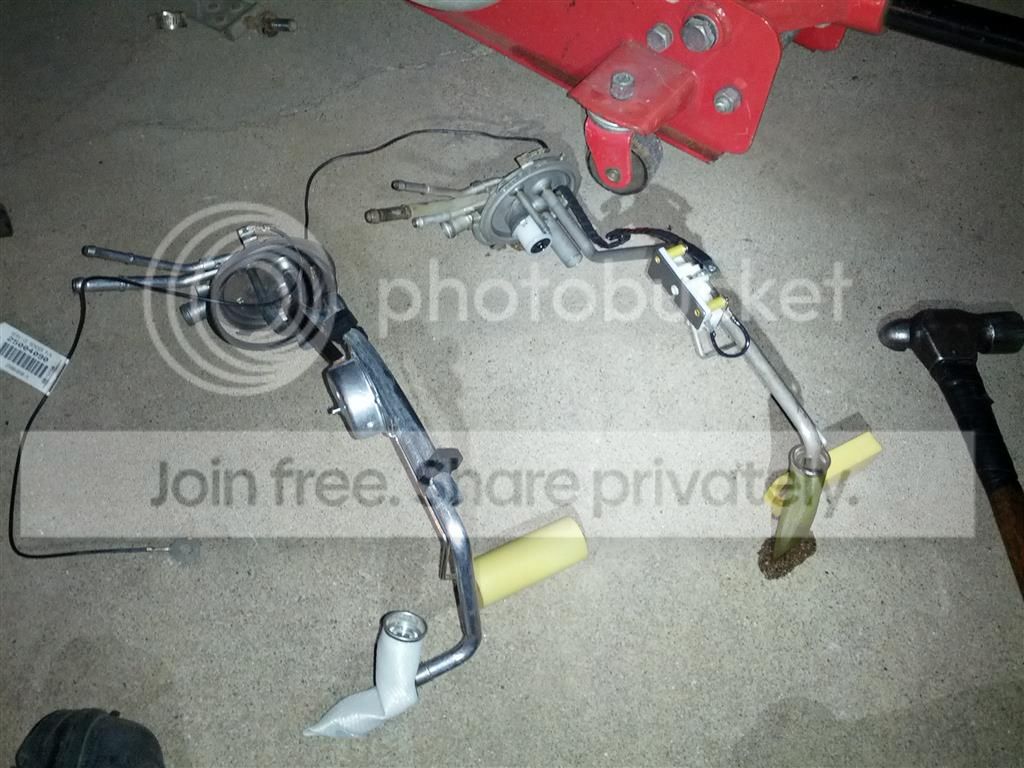
So my truck barfed another fuel level sending unit. I found a NOS GM diesel sending unit this time. I noticed in comparing the two, the diesel unit has the old style potentiometer on it as opposed to the newer plastic pos. Hopefully this one lasts a little (whole lot) longer.

IMG_20131126_182901Medium_zps3ef55d63.jpg


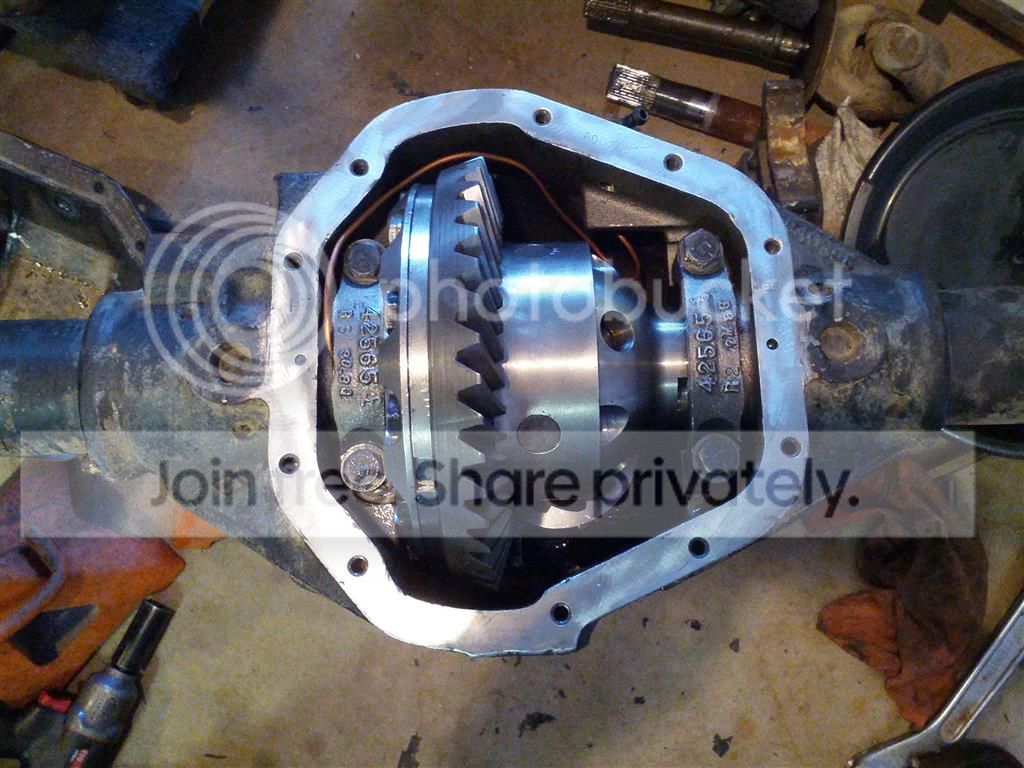
Somewhere along the way I acquired an ARB for the front 60. I had a few things that I wanted to do in the vicinity, so I used that as an excuse to pull the diff and work on it in the shop. By doing this, I was also able to use my case spreader on it which makes the installation of the carrier much easier.

IMG_20131129_160628Medium_zps04edec44.jpg


Which left me looking at this in the driveway:

IMG_20131129_160654Medium_zps3c992555.jpg


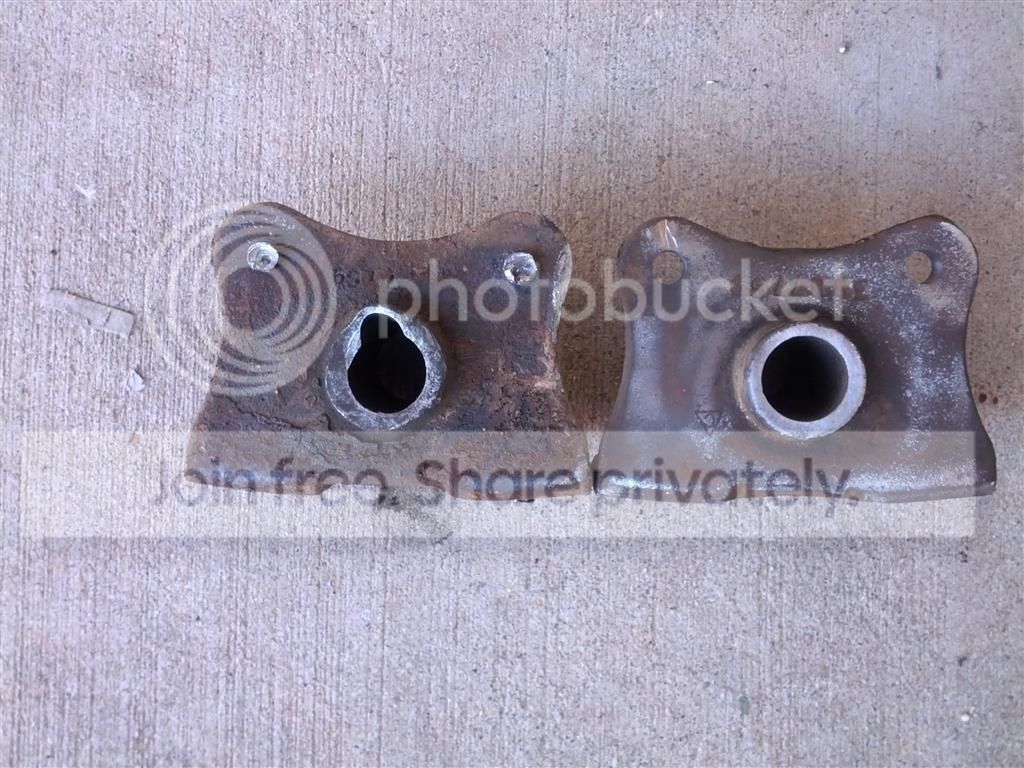
One thing I had to do was replace the frame hangers for the front spring shackles. I found these last year when I put the longer ORD shackles in, but was so tight on time that I put the new bushings in the old shackle mounts. The new urethane bushings were, believe it or not, no worse for wear after many thousands of miles in these raggedy mounts.

IMG_20131130_134644Medium_zps1132b674.jpg


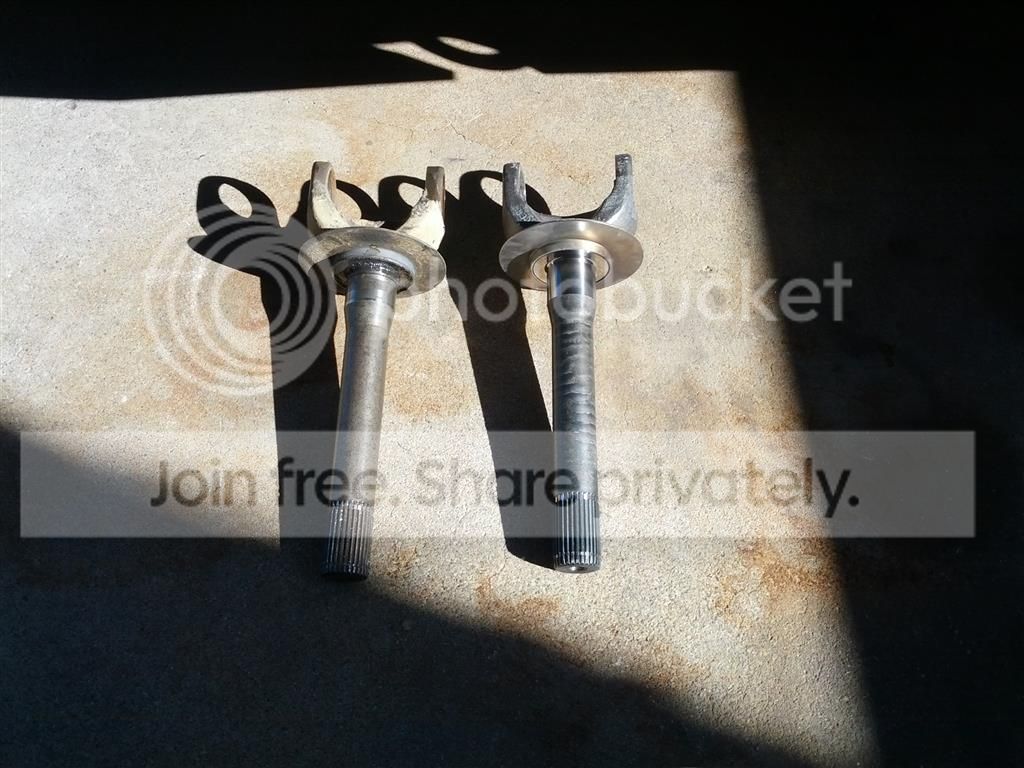
I had a stub axle on the passenger side that had a bearing race that was brinneling itself into oblivion. I picked up a Spicer replacement and swapped it out while it was apart. I like the tiger stripes of the heat treating on the new part:

IMG_20131214_115809Medium_zps96f928c6.jpg


I also swapped in some new components into the Spice locking hubs I am running to try and get some smoother operation out of them. These things are bomb-proof, but boy do they love being high-maintenance.
 
No 35 spline stubs while you were at it?

Oh, and I whole heartedly agree about the Spicers, they may be strong, but they are far from user friendly.

Martin
 
No 35 spline stubs while you were at it?

Oh, and I whole heartedly agree about the Spicers, they may be strong, but they are far from user friendly.

Martin

I couldn't justify the NEED for 35spl stubs in my mind at that point. I was already bleeding cash and then I would have had to buy a second stub and deal with the hubs also. Broach my non-user friendly (true) Spicers or spring for some high-dollar Yukon or Dynatrac pieces. Either way, my cheap-ass-ness won out and I bought one stub and unceremoniously installed it. I did think about it though....:whistle:
 
I can understand that. I kept breaking 30 spline outers, so I switched to 35 spline outers and Yukon lockouts, but it was relatively pricey.

Martin
 
Nice job on the winch install and saving the stock bumper. :waytogo:


I know it was not an easy task. ;)
 
woot for build thread type updates! lol

I love the trip posts too, but I enjoy you talking about truck stuff too. For the most part your truck is kinda a sleeper so unless you point it out to us its hard to tell the custom stuff you've done, and you've done some good stuff.
 
Nice job on the winch install and saving the stock bumper. :waytogo:

Thanks!! I really like the clean look of the front of the truck without a big-ass winch bumper on it.

I know it was not an easy task. ;)

Ha!! Compared to yours, this was a kid's lego project. :bow:

woot for build thread type updates! lol

I love the trip posts too, but I enjoy you talking about truck stuff too.

LOL, this thread has a little bit of something for everyone in it :haha:.

For the most part your truck is kinda a sleeper so unless you point it out to us its hard to tell the custom stuff you've done, and you've done some good stuff.

Thanks!! I guess I never really thought of it that way. Keeping it subtle and/or low-key has been my M.O. forever. I do love me some sleepers so I guess it figures.
 
Those new aftermarket sending units are a POS. I had a LMC one last not even two years. I'm going to try one of those "floatless" style one when I get my blazer going.

blazer gas tank3.jpg

blazer gas tank2.jpg
 
Yeah, I agree on the aftermarkets being crap. The ones I was getting were not 0-90 ohms like they were supposed to be, they were 0-100 so the needle would stay past full for a long time then sink like a stone once it moved. I went through three of them before I started searching out the NOS GM ones. The last couple (three??) have been NOS GM units, but for gas applications. Maybe they are crap too. Maybe the gas potentiometers don't like being used in a man-fuel application?? This go-round I have a NOS GM diesel sending unit. Hopefully it lasts for a long time.
 
So one thing that using a vehicle like I do does is illustrate where problems exist. Having operated this thing in pretty much all weather conditions from below sea level to over 13,000' in elevation in weather from hot dry days to white-out blizzard conditions, rain, snow, sleet and hail, problems tend to make themselves known. There are a few, here and there, that will require attention at some point (like a squeak in the windshield wiper transmission assembly--ugh), one problem kept rearing its ugly head and causing more dismay and gnashing of teeth than all of the others combined. Exhaust gas temperature (EGT).

When we would pull a hill in any season other than winter, I have to watch the pyrometer (pyro for short, measures EGT) like a hawk because the EGT would creep up and could swing past the Cummins specified maximum recommended EGT. Not good. Molten aluminum that used to be in the shape of pistons flowing out the exhaust pipe when you are in the middle of absolute nowhere in Montana or Wyoming, or Arizona for that matter, is NOT a good thing. What can be done about it?? There are actually several things that can aid in keeping EGTs down. One is injecting water or methanol into the intake pipe. This cools the incoming mixture and drops EGTs nicely. If methanol is used, a nice bump in horsepower can be achieved as well. It is easy to plumb and kits are readily available. Win-win, right?? Yes and no. Simplicity, etc, yes. My biggest issue with this setup is I have to haul water or methanol. I just built a godforsaken bumper/swingout to get my water out of the truck. Now I will need to devise some sort of reservoir on or in the truck. This takes up valuable real estate inside the cabin. Not ideal. Really don't want to haul more liquid.

A bigger intercooler (CAC) would do the trick as well, but I am kind of limited in space available to go bigger with that.

One other thing is a different turbo. My motor came with an H1C on it. While not the biggest or best, it is a respectable turbo, especially for what I am doing with the truck. Now, my H1C is not stock as the Banks kit came with a different exhaust housing on it. The stock exhaust housing was something like a 22cm^3 and not wastegated. You could practically drive the truck it was on through the housing and not have to fold in the mirrors. The Banks kit came with a wastegated 14cm^3 housing. The smaller housing helps the turbo spool up quicker and the wastegate prevents over-boosting the intake charge. One drawback to going with a smaller housing is it can create a restriction and that restriction can create a high EGT issue. A balance must be struck between quick spooling and least restrictive. Now, the same thing can happen on the compressor side of the turbo. Too small equals not enough air equals high egt. Bigger is better to a point once again. All of the dimensions and specs of the turbo must be balanced to work well with the motor in the vehicle.

I had done some research on turbos once upon a time and came to the conclusion that my turbo was about the same size as an HX35 that was used on later 12V motors. One minor detail I missed was that the early non-intercooled motors (like mine) was that the H1C that those got was referred to as a "BABY" H1C. Now having a pretty good grip on the modern English language, I do not associate anything LARGE with the word BABY. Further research showed my compressor side was quite a bit smaller than the average HX35. Well maybe I just figured out a problem here?? I happen to have an HX35W here.....

More research and discussions with people that are smarter than I am on the topic led me to believe this might be a worthwhile conversion. On paper it is a simple swap. Pull the old one off, put the new one on and away we go. Yeah, on paper it is easy.... I traded some work to a buddy and he had my turbo rebuilt for me by a turbo shop in town. I reused my 14cm^3 housing off of my H1C because the HX35 had a 12cm^3 housing on it and the wastegate actuator came off of it at an odd angle that would put it into my evaporator case. Not ideal. My 14cm^3 fits, functions and I already own it so in it goes. The big reason for switching to the HX35 is the compressor side is larger. This is good for airflow, but not so good for clearance. Clearance?? Ugh, clearance....

My setup is weird in that I am running my turbo on a manifold that is upside down. This creates a clearance issue between the the compressor housing and the exhaust manifold. Not good. Too much interference to grind to fit. Ugh. What to do now?? Well, I happen to have an exhaust manifold here off of a 24V motor that has been resurfaced before I stored it. The 24V manifold shares the same physical bolt pattern as the 12V, but instead of rectangular ports, the 24V ports are round as is the general shape of the manifold "tubes" if you will. At an initial glance comparing the 12V manifold to the 24V manifold, the round ports will need a ton of grinding to make work with the rectangular ports in the head, but the ports in the 12V head are smaller than the ports in the 12V manifold. I did a rubbing of the cylinder head port with a piece of tape and found very little material needs to be removed to make the manifold work on a 12V.

IMG_20131203_193118Medium_zpsc6b2957d.jpg


Is this an ideal situation?? No. Will it work?? Yes, and the compressor side of the HX35 clears the manifold. Am I going to do it?? Hell yeah. It's free too!!

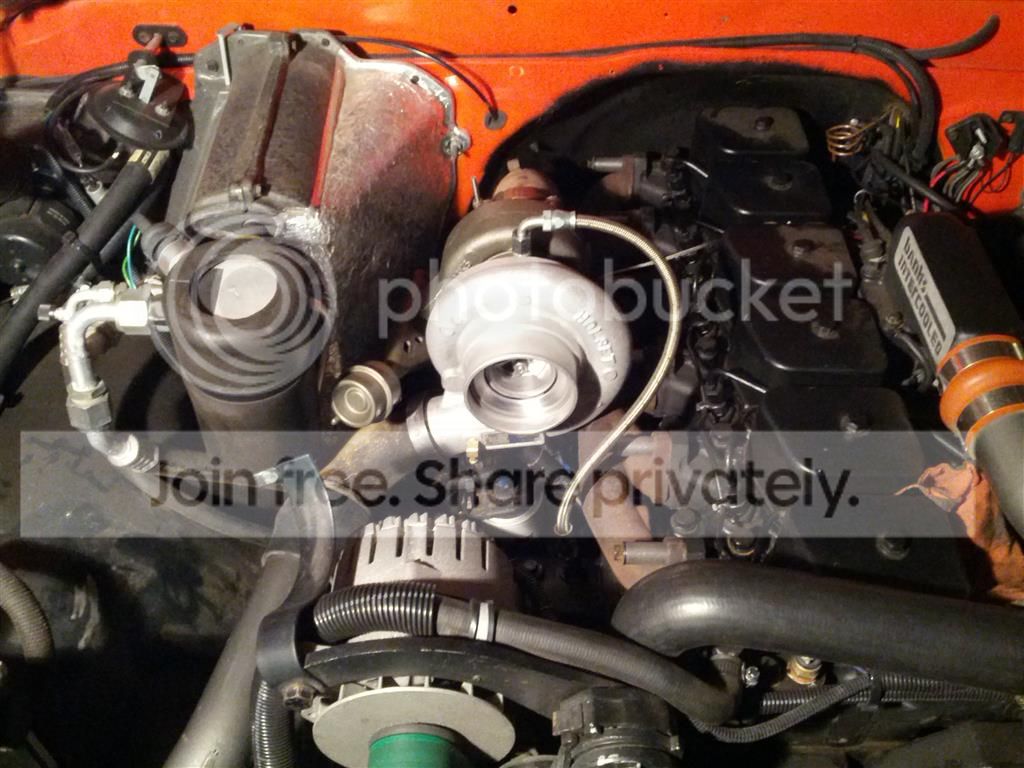
So with just a few minutes of grinding, I opened up the ports in the manifold to be a fuzz larger than the size of the template. I dug through my stash and found twelve brand new Cummins exhaust manifold bolt spacers so those went in with the manifold. I did have to modify the CAC tube coming off the compressor due to the HX35 using a cast elbow that bolts on the compressor vs the H1C that has a straight dump on the compressor and a 90* bend in the pipe that connects to the compressor. All that and the cast elbow is set up for a larger diameter pipe than what I have. Easy enough. I got an adapter silicone connector for the cast elbow to CAC pipe and cut off the bent end of the pipe. I put it all together and this is what I ended up with:

IMG_20131204_220905Medium_zps13e3145d.jpg


One thing that I did when I built the truck is when I made the air intake setup I used 4" elbows and a 4" to 3.5" bushing to mount to the 3.5" inlet on the H1C instead of the 3.5" pieces. This made hooking up the air intake system very easy. I only had to pull the bushing out of the elbow and hook it up to the new turbo.

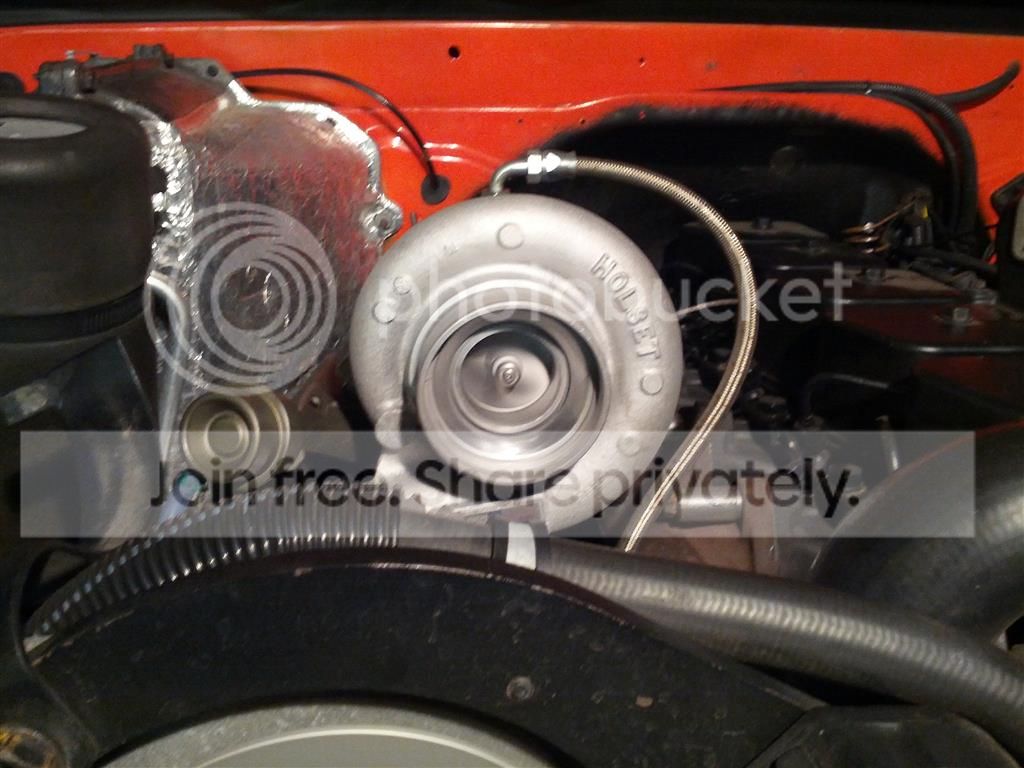
Picture of it in operation:

IMG_20131205_182120Medium_zps67b3d5c5.jpg


So, after all of this; does it work?? I would have to say that it was worth it. We pulled a bunch of hills this summer in the mild temperatures that make an Arizona summer so wonderful. I pulled a long hill just outside of town at over 70mph on a 115* day. Prior to the new turbo it probably would have been 60ish and watching the pyrometer like a hawk adjusting throttle input to keep max EGT under the Cummins maximum allowed number. On various subsequent trips I have found that I am able to cruise up 7-10% grades much faster than I would have been able to before. I can still pin the pyro at a moments notice if I get stoopid with the throttle, but under normal circumstances it is much improved. I did end up blocking off the wastegate and am running about 25-30psi max boost which helps out dramatically in the power department. This turbo is quite a bit louder than the old one was, even under low boost, but it's not so loud that it is annoying or nerve grating. All in all I'd say this was a very worthwhile swap. I know there is a bunch of added power that is available, but I am having a difficult time convincing myself it is worth the time, effort and money to extract when this thing runs so well in its present configuration.
 
Top Bottom