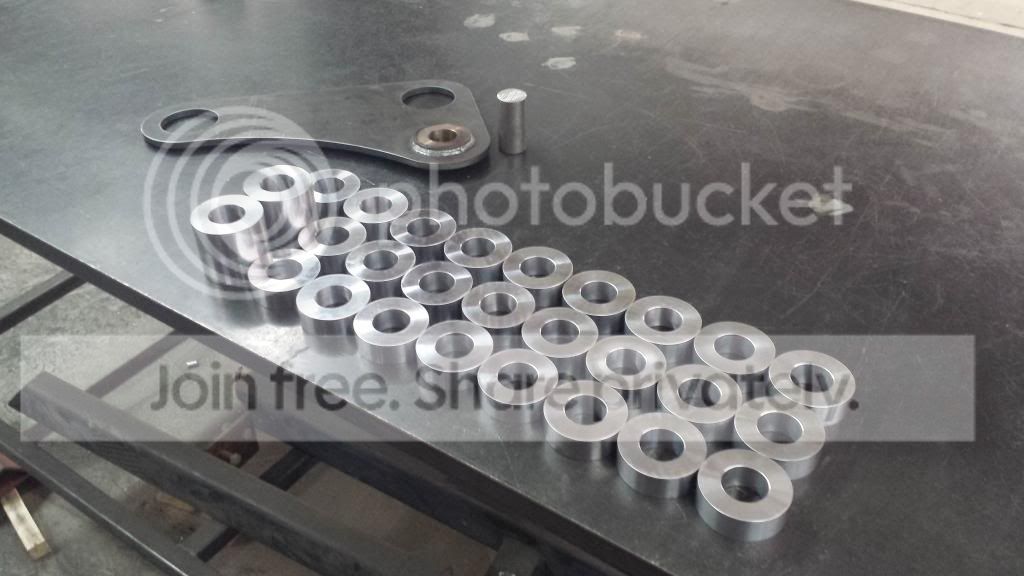
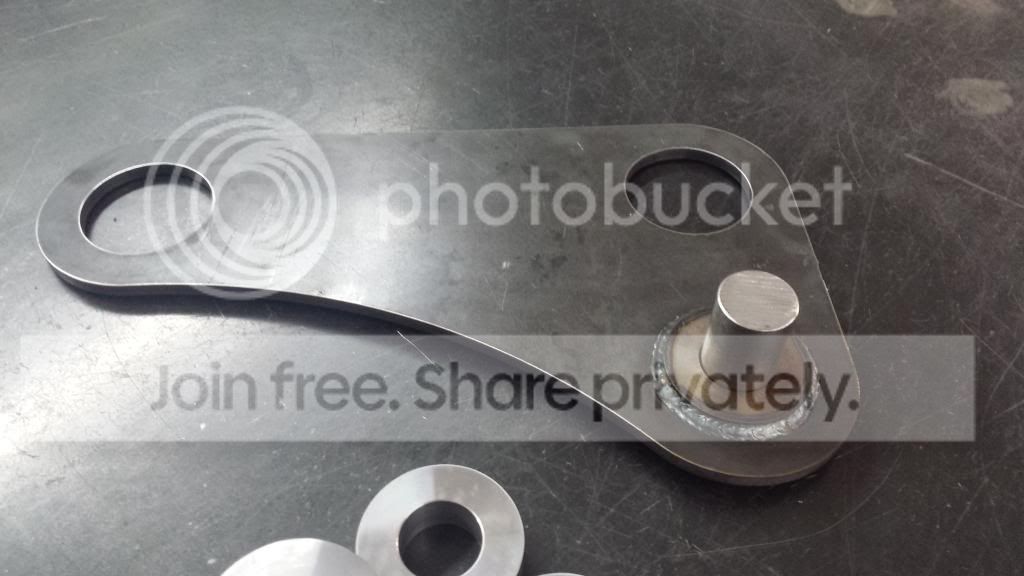
Well, I got all my weld-in pin bushings in from my machine-shop buddy. I told him not to worry about the quality of any surface other than the inside diameter where the pin will ride, since the rest will be either welded or basically free from any real forces to wear it out. That way he could keep the pricing down for me and not take too much of his time.
BUT, being a machinist and having that stereotypical machinist's attitude, he couldn't bring himself to do it that way. ALL of the surfaces are just beautiful, I'm thinking this picture just doesn't do them justice. What do you think??
So I did some figuring (to the best of my ability without spending a week going back to my old school books and really delving into it deeply) to try and "best guess" the amount of shrink that would occur during the welding process on the pin bushings. The last thing I wanted was to weld them in, and then have the pins not fit, lol. So I figured that I'd end up with at max about 0.010" of shrink on the inside diameter. Given that I got 1.50" pins, and that I wanted approximately 0.005" clearance in there, I had my buddy cut the centers to 1.515". They came back to me perfect, on the couple I measured, within about 0.001" plus or minus. Damn he's good, lol.
So after welding one in as a test fit, here's what I ended up with:
The pins fit just a little loose, so I figured that I calculated a little on the "high" side of the amount of shrink. No worries, I'd rather have just a bit of play than to have it too tight and have to have all the pins turned down. Then I measured the pins I got, and guess what?!?!? They measure exactly 4.995", so they already had 0.005" clearance built into them. Now why the hell wouldn't I have measured them first? Like a normal person SHOULD do? Like I would tell anyone else to do? Well, that's why they fit a pinch loose, it turns out I actually figured the shrink from welding almost perfectly! So that's re-assuring to me, that I haven't forgot EVERYTHING I learned in school, lol!
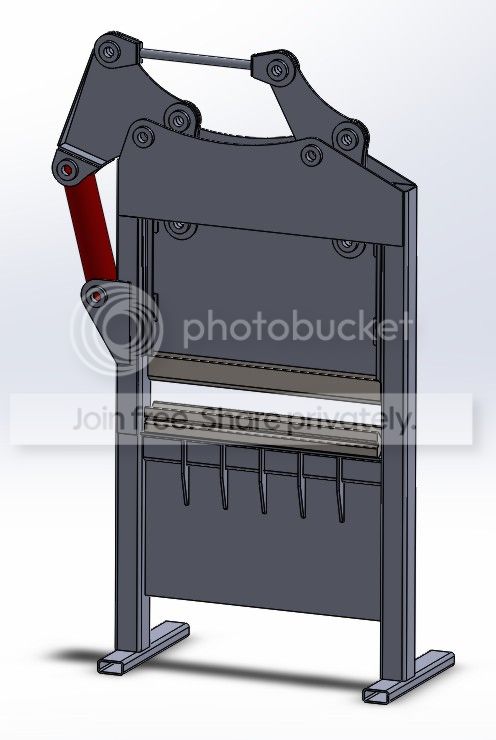
Anyways, I'm very happy with the fit of things, and the little extra play will be good in case I warp something a little when I finish-weld the whole thing up. I have an idea of how to take up any play between the cylinder and the final movement of the upper plate, but I'll cover that one later.
For now, I'm off to work on some custom brakes on a 1951 Cadillac that I built for a friend a couple years ago! Have a great weekend everyone!
-Darren