CK5
Register an account today to become a member! Once signed in, you'll be able to participate on this site by adding your own topics and posts, as well as connect with other members.

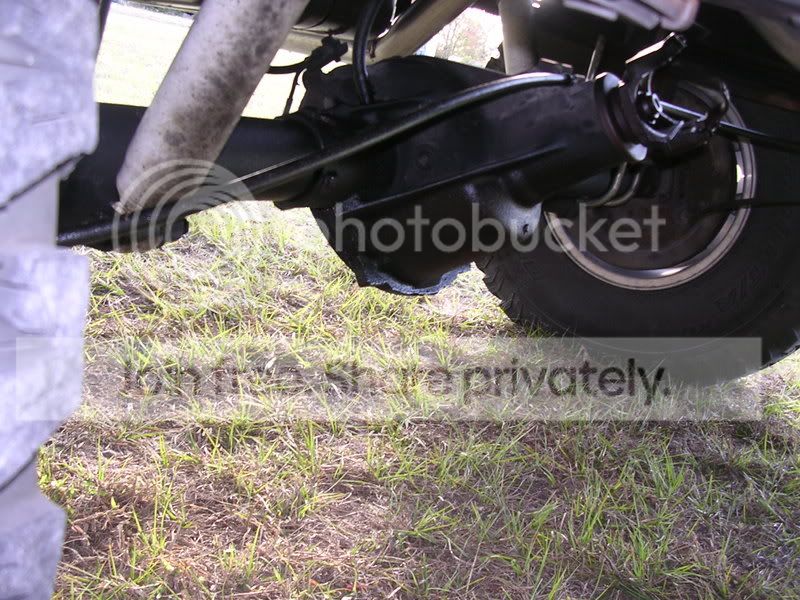
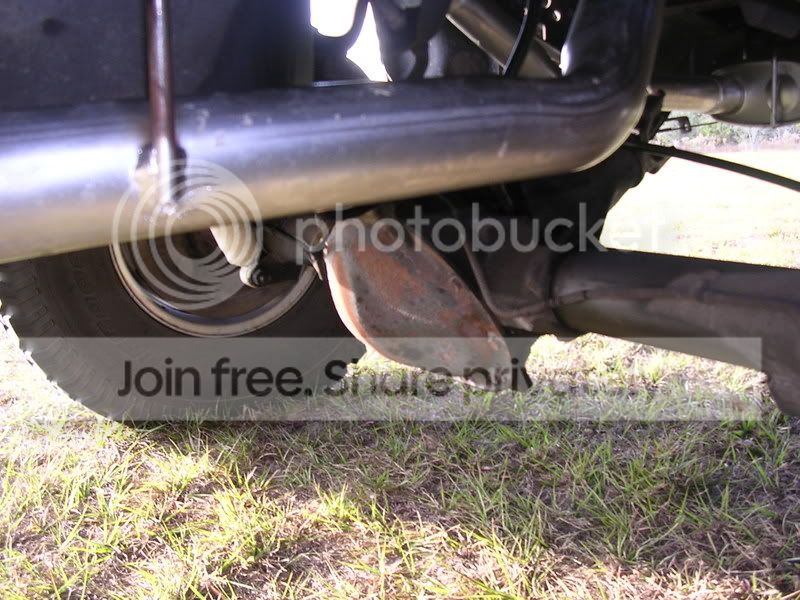
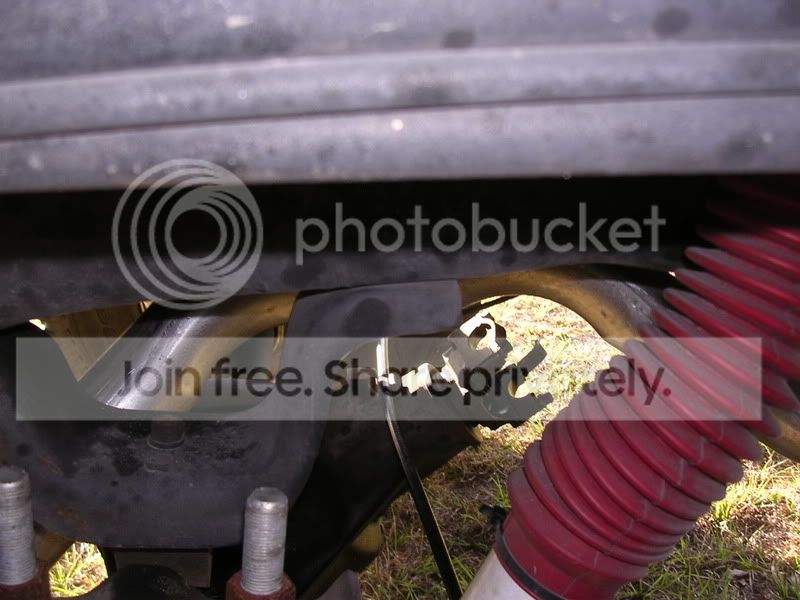
WTF? did the center section spin on the axle tubes? ***PICS***

3car

1/2 ton status
Joined
Dec 16, 2001
Posts
976
Reaction score
2
Location
Hernando, Florida
Last night a took off from a stop and my rear driveshaft fell out. No biggie, duck taped the tailshaft up and drove home in 4WD. This morning I went out to servey the damage, and I am not a happy camper. I looks like the center section has twisted upward from thge axle tubes. I've never seen that happen before. The spring pads are solidly welded to the tubes and everything is tight.:crazy:
Picture127-1.jpg

Picture128-1.jpg

Picture129.jpg
 
That sucks. Have a bottle jack? If so, put it between the bed and the pinion (on the housing, not the pinion itself) and try to move it. That's the best option I have w/o dropping the axle.
 
Yep, that's what happened. The axle tubes are pressed into the center section and then there are a couple small welds that help hold them in place.

Its not an uncommon failure. Time for a new axle.
 
You may not need to replace the axle. If there is no damage you can drill out the rosette weld and reweld it. The tubes are usually only welded in two places per tube. However if the tubes spin fairly easy without use of a jack and the press fit interference is gone, you should replace the axle. I personally have seen axle shops do this before and even drilled and rewelded my axles as I didn't like the look of the factory welds from GM.
 
Look at the brake hard lines in the second picture. That is how much you twisted it. Ouch. I would replace the housing to be comfortable.

PaulC
 
Agree with the press fit issue, axle is toast if they are loose. Not sure how you gauge "loose" on that though. Buddies truck twisted the carrier/tube connection, no noticeable "looseness" in the press fit, welded back up, broke the welds twice afterwards.
 
When the tube spins it usually ruins the interference fit between the tubes and center section and then you are depending on your welds to keep the center section from spinning again. Its tough to get a strong weld to the center section because they are usually iron.
 
The plug welds are not there to "weld" the tubes to the housing.

They are there to act as pins to keep the housing from rotating.

It is a common failure, it can be a real pain to get the pinion to rotate back to the correct location.
You are probably better off to get a new housing and start over.
I have seen this happen to two 14 bolts under buggies in the last year. Both were welded back up and are so far so good.
 
Ok this may sound dumb but why not just weld them back up? He has a good pinion angle now for the rear d-shaft :)
If it was the front then obvioulsy he would have problems b/c the C's would be at a weird angle but out back what's it going to hurt?
 
Ok this may sound dumb but why not just weld them back up? He has a good pinion angle now for the rear d-shaft :)
If it was the front then obvioulsy he would have problems b/c the C's would be at a weird angle but out back what's it going to hurt?

It looks like his pinion is currently pointed too high.

Even if it was at the right angle, its likely the press fit isn't good anymore. Welding to the center section is somewhat difficult and generally not very strong. I would get a new rear end, its not worth having the same failure again IMO.
 
Ok someone suggested this already but what if he was to try and weld it back up and had some traction bars?? would they even help in this instance or am i wrong about the use of traction bars??
 
Both tubes and the carrier would need to be interconnected I suppose, although the springs would *tend* to keep the tubes in place, they don't need to move much to cause a problem.

Can't see the pics as usual here, but without a CV driveshaft, you can't modify the pinion angle with no penalty. :)
 
Ok someone suggested this already but what if he was to try and weld it back up and had some traction bars?? would they even help in this instance or am i wrong about the use of traction bars??

A traction bar (or bars) makes this problem worse. The springs "giving" (i.e. wrapping) takes some of the force off of the fit between the tubes and center section.

14 bolts are notorious for spinning tube and much more so if there is a traction bar on one side.

I guess its about that time to remind everyone to weld up there axle tubes (search) before its too late :deal:
 
A traction bar (or bars) makes this problem worse. The springs "giving" (i.e. wrapping) takes some of the force off of the fit between the tubes and center section.

14 bolts are notorious for spinning tube and much more so if there is a traction bar on one side.

I guess its about that time to remind everyone to weld up there axle tubes (search) before its too late :deal:
Oh ok i got what you're saying now. I'm really stupid when it comes to this stuff so that's why i ask questions. Thanks for the heads up about welding the axle tubes
 
you could do it and have a piece bolt around the pinion, (like a guardsmen) then tie it into the truss, like people have done on anti wrap set ups, that would stop it from twisting.

assuming he could get it all back where it should be.

this is what I plan to do before dropping in a 14
 
you can not re weld an axle that has tubes twisting. The slug welds do not really adhere to the center section they only adhere to the tubes which are steel. They only act as pins. They are meant to be able to take a large amount of force on a correctly machined carrier, now if the press fit was not that good from the factory the welds get over loaded and break which mean that the carrier is junk. I know this problem well i spent most of the summer dealing with stuff like this at AAM who makes the 14 bolt
 
yeah the later ones were pressed, i think the earlier ones were better.

all the tubes old and new are pressed and then slug welded that has been the way that it has always been done on a salsbery style axle. It is manfacturing varibilty that causes issues like this, you get a carrier at the upper end of the spec and a tube at the lower end and you have less of a press fit, for the amount of axles that are produced this happens on a very small amount
 

Latest Posts

Top Bottom