CK5
Register an account today to become a member! Once signed in, you'll be able to participate on this site by adding your own topics and posts, as well as connect with other members.

1966 Chevy C20

That will be good.

First thing it needs is a tune up, tho. Doesn't hardly idle. Based on the receipts the previous owner kept, last tune up was when the motor was rebuilt in 90. :doah:
 
Have a question for the gear jammers. This truck is supposed to have a new clutch; I do have receipts at least. Anyway, I noticed the throwout bearing seems to make some noise when I have the truck idling in neutral with the clutch released; goes away as soon as I push in on the clutch. Does this mean they did something wrong on the install?
 
Have a question for the gear jammers. This truck is supposed to have a new clutch; I do have receipts at least. Anyway, I noticed the throwout bearing seems to make some noise when I have the truck idling in neutral with the clutch released; goes away as soon as I push in on the clutch. Does this mean they did something wrong on the install?
It's possible. Or a bad throw out bearing. Mine was noisy from day one. Confirmed it was installed correctly when I pulled it after 60k miles.
But it needed replaced

Maybe just a bum bearing?
 
I'd have to look at the receipts again, but I seem to remember looking to make sure it was listed.

The receipt lists clutch assembly, clutch fork, and bearing retainer.
Doesn't guarantee they actually changed it. Either way sounds like you might need a new one soon.
 
It shouldn't be any hard to remove bolts since it was just done.
 
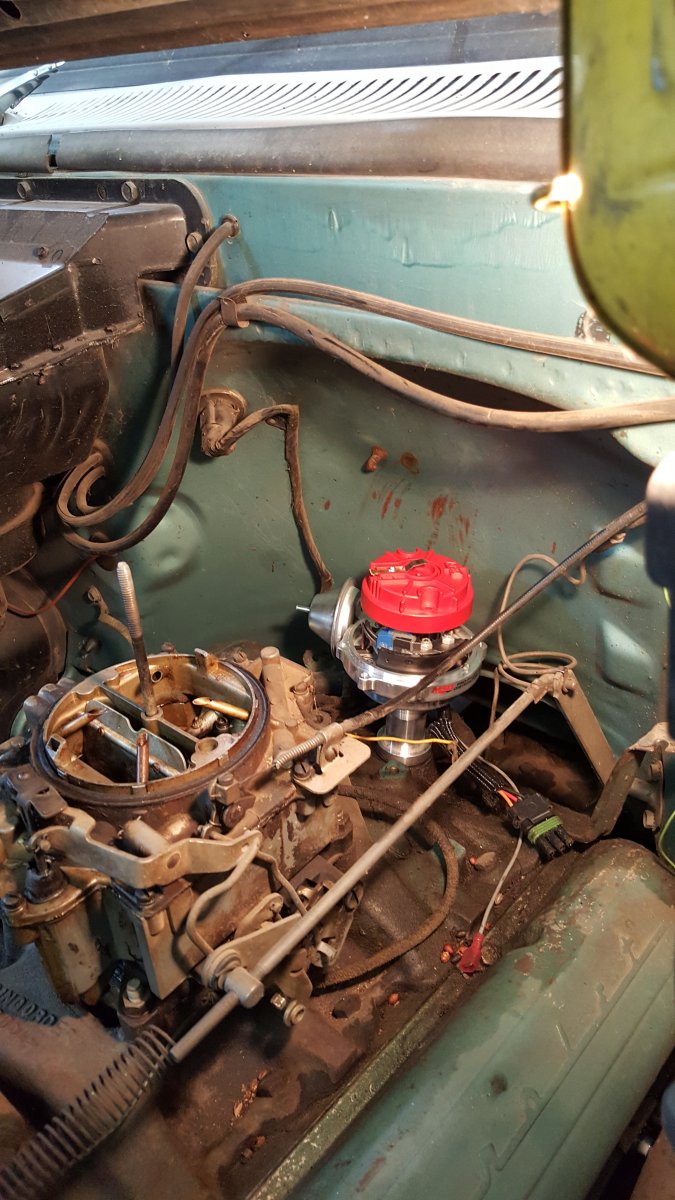
Used the long weekend to work on the 66. Pulled the points distributor and found some interesting things along the way.

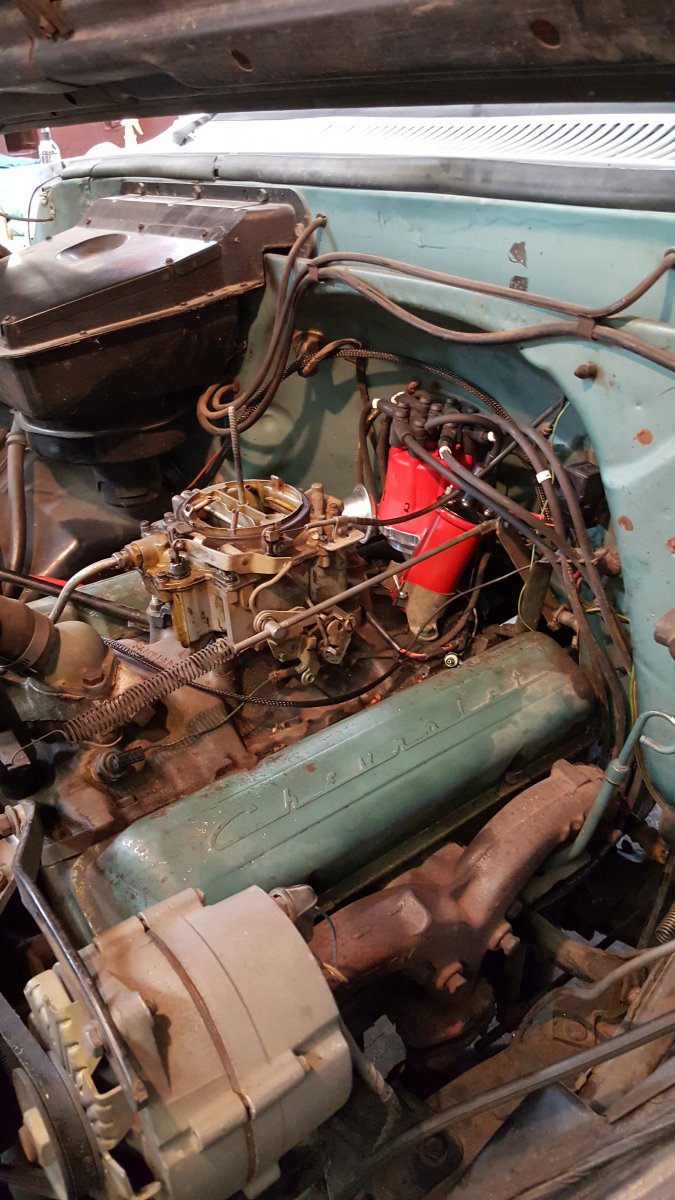
For those unfamiliar with points distributors, they work just fine but require more frequent upkeep to stay in good operation. I want to have this truck in a place that keeps it as low maintenance as possible so I installed an MSD 8360 that was in the crew cab. I have an HEI I could of thrown in but I kinda like the idea of having something that still kinda looks original with the small cap and external coil. In hindsight I didn't think about the MSD stuff being red and not black but oh well.

The first surprise I found was in the coil wiring. Points won't last very long when full 12V is applied so typically a resistance wire was installed in these trucks to drop the voltage down around 9V, maybe less. GM added an extra wire from the starter solenoid that would apply full 12V when cranking only, maybe some of you have wondered what that extra connection was on some of the starters. The surprise was my coil didn't have have the second wire.

That got me suspicious because the wire also didn't look like a resistance wire should. Pulled out the multimeter and sure enough, the one ignition wire has 12V. Somewhere along the line this has been modified but yet it doesn't look to be home-brew, especially not compared to other wiring on this truck. The tape wrapped loom is all in tact.

Another find was the coil was wired backwards; the 12V feed was on the negative and point wire to distributor was on the positive along with the tach. Apparently they will run this way but the output voltage is reduced, about 15% reduction by one source I found.

I had a moment of panic when the MSD distributor wouldn't drop in. Fortunately all I had to do was pull the rotor.

full


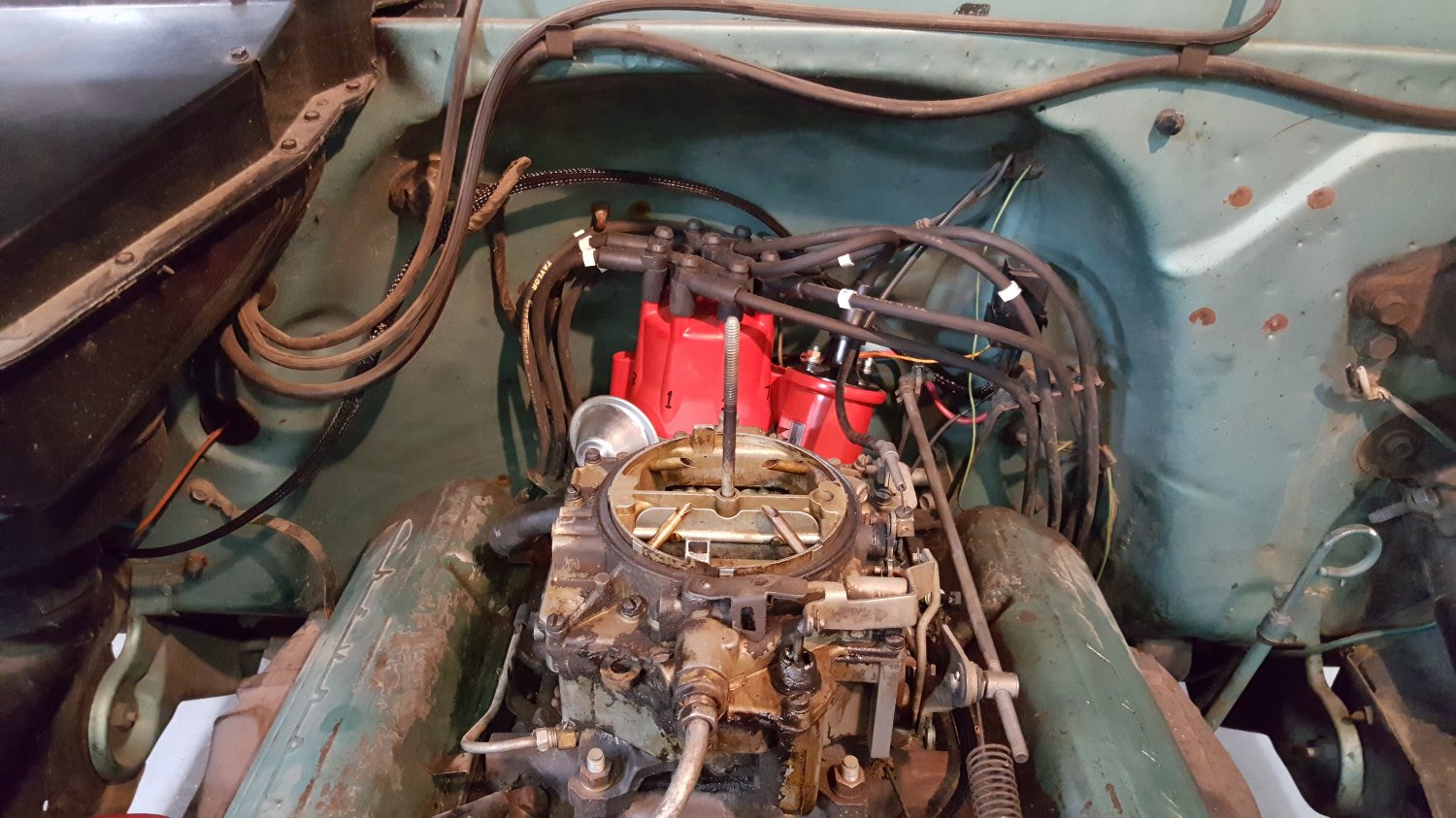
I made up my own plug wires using Taylor StreetThunder wires. It was a bit of a pain in the ass because the boots were super tight. The last set I did was from Jegs and they didn't fight near as much. Figured out the best way to do them was to NOT follow the directions. Instead of sliding the boot on before crimping the terminal, it was easier to crimp the terminals on and then just slide the boots on over the terminals.

full


full


If you look on the picture above, to the right of the coil you can see a relay. The 12V feed to the coil I mentioned above is only 18ga wire. I decided it would be safer to use a relay rather than the tiny gauge wire. I pulled a 10ga wire straight from the battery and the original ignition wire triggers the relay.

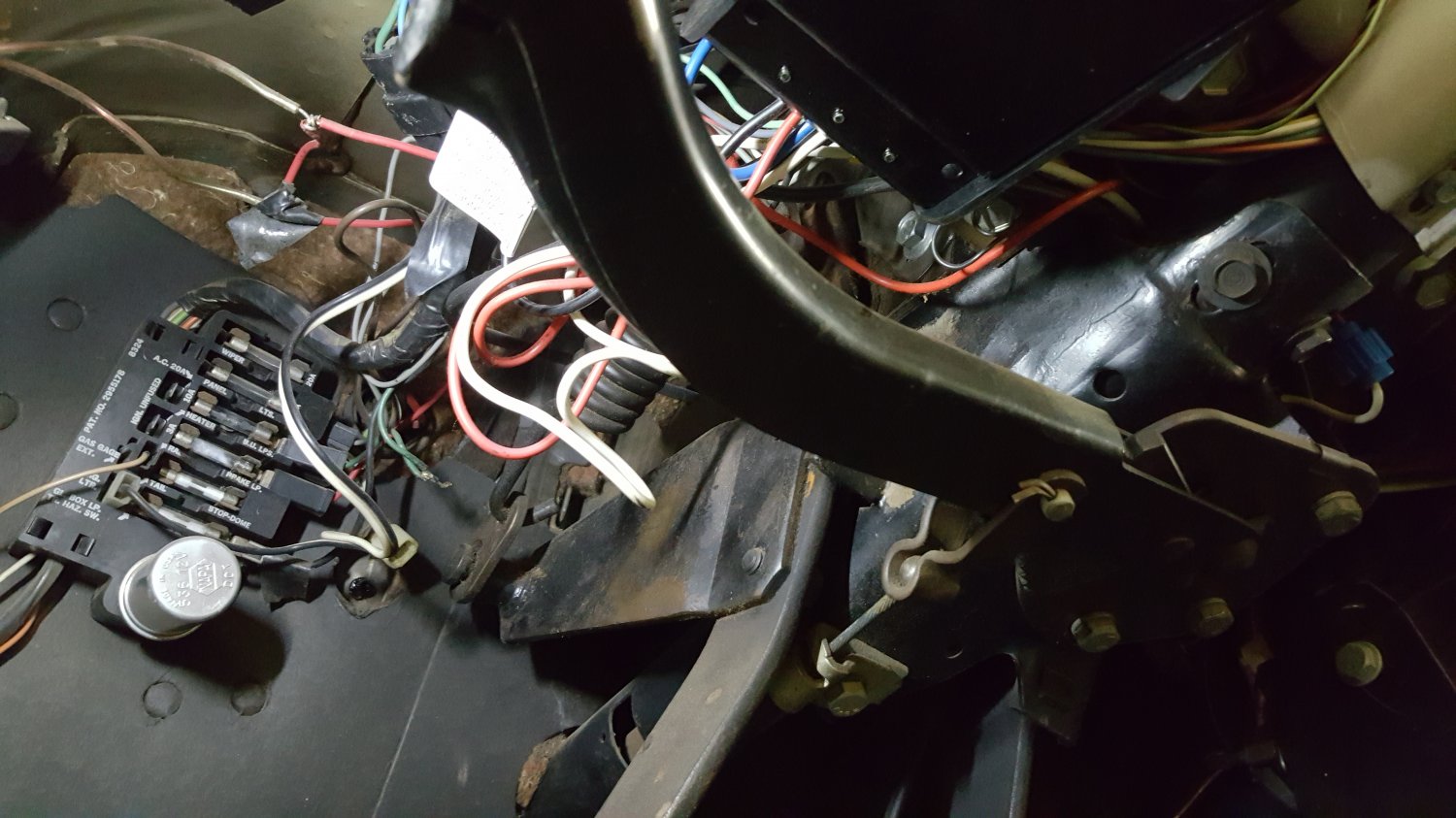
And this is that moment when you look under the dash for an innocent reason and discover this! :yikes:

full


I spotted at least 3 or 4 (depending on how you count one of them) scary splices. Hint, I don't like Scotchloks.
 
not even tape hiding the PO's handy work?

I had the same issue with a Taylor coil wire I recently bought. The also came to the same conclusion that it's easier to terminate the ends and then slide the boot over.
 
I think 1 of the splices was taped. Maybe the tape fell off the others. :haha:
 
Love these vintage trucks--best looking ones GM made next to the '55-'57 second series pickups and Burbs..those script valve covers are cool,always liked those...

You can use a ballast resistor from a 67-72 Mopar with points or an RU-10 Standard brand one,they still sell them at parts stores here,was surprised Autozone actually had one for about $3 when I converted a tractor engine to a car coil..

Your correct about the reverse polarity on the coil--it'll still run,but it does reduce the spark intensity a lot...an old Audel's manual I have shows how to check the coil polarity with a pencil--back in 1941 when the book was published,they would take a plug wire off with the engine running,and put the pencil "lead" between the wire and the spark plug,and by looking at the spark ,you can determine if its wired up right or backwards..(the spark "feathers" on the spark plug side if its correct !)...that old book is like a bible to me,I learned a lot by reading it..

The points distributors work quite well if you keep a good condensor and points in them--the biggest drawback to them is the bushings can wear and let the shaft wobble,that will make the point gap change eratically,and not fire each cylinder at the proper time consistently--a dwell meter can show this,if the dwell varies more than 3 degrees from idle to 2500 rpm,the bushings are worn..

Old wiring and previous owners hacks on the harness ranks as one of the least pleasurable jobs fixing up an old vehicle..I admit I have done some less than stellar "wiring" on my vehicles,and used those wire nuts instead of tape (which usually loses its adhesive and un-wraps after a few years),and I used scotchlocks a few times too,but after I saw what the wire looked like a year later I tossed them away..
 
Have a question for the gear jammers. This truck is supposed to have a new clutch; I do have receipts at least. Anyway, I noticed the throwout bearing seems to make some noise when I have the truck idling in neutral with the clutch released; goes away as soon as I push in on the clutch. Does this mean they did something wrong on the install?


The throwout bearing should not touch the pressure plate when your not depressing the pedal....therefore it shouldn't be spinning or making noise unless you have the pedal "in" towards the floor--it should have about 1" of free play at the pedal before you feel resistance,if not the clutch needs to be adjusted..

Noises with the pedal "up" usually come from the transmission,the input shaft bearing most often...many of GM's 4 speeds were rather noisy in neutral with the clutch pedal "up"--to some degree a slight scoring or whizzing noise is "normal"..it it has sat a long time it may make some noises for awhile until the lube gets to all the bearings and any rust on the gears and ball bearings wears off..
 
The script valve covers are the reason I went to the effort of running the front plug wires under the motor. I wanted to keep the script uncovered. I also really like the factory color on these motors.

I don't think the previous owner had driven the truck much in the past few years so maybe you're right about the bearing. I will be playing it by ear at any rate because it'll be awhile before I have time to pull the trans out if I do decide it's something that needs fixed. Still gonna drive it in the meantime.

The new ignition has made a night and day difference. I really enjoy driving it now. I plan to keep it as original as possible. I'll probably just rebuild the carb and run it manual choke and all.

I thought about keeping the points, but not very long. I did think that even with new parts it's probably still the original distributor and generally getting wore out. Plus I know myself, and I'd rather just set it and forget it. The guts of the points distributor did look pretty clean and relatively new so in reality just changing the wiring on the coil to the correct terminals probably would have had a huge improvement.
 
I've seen a few V8 points distributors for sale on Craigslist for as much as $100--not sure if they are just dreamers,or they ARE getting that hard to come by around here--some restorers want everything "original" and will pay good money for things you might think are not worth squat..

To think I just found 2 of them in my back yard,in an old wheelbarrow full of various old GM parts that I took off old cars & trucks I had in the past--seized solid!..:doah:...I had a tarp over it but it was tattered and let everything get wet...

I found another one in the house in the basement thats still in nice shape though,along with a box of used but good points,condensors,cap & rotor...
 
I put the one I pulled in the box the new distributor came in. I don't throw stuff like that away. :D I figure if I ever sell it the next buyer may pay more if I have it.
 
Top Bottom