CK5
Register an account today to become a member! Once signed in, you'll be able to participate on this site by adding your own topics and posts, as well as connect with other members.
Greg,

Were did you get those frame drawings from? Is there a set for a second gen?

No idea where you'd have to go to find later model stuff.... I don't concern myself with anything after 1972. :haha:

Seriously, it's really hard to find the early stuff. Factory Assembly Manual usually has dimensioned drawings.


-G


ps. .....and welcome everyone to Page 38. :D
 
No idea where you'd have to go to find later model stuff.... I don't concern myself with anything after 1972. :haha:

Seriously, it's really hard to find the early stuff. Factory Assembly Manual usually has dimensioned drawings.


-G


ps. .....and welcome everyone to Page 38. :D
reminds me of a saying Vette buddy once said
"Sure they made Corvettes after 1970 but who cares!"
The backhalf idea I like alot
Reworking existing structures may be more extensive than starting over custom
 
Not a whole lot of forward progress in the shop last night......

I think that I've got a good plan for reworking the rear frame area, but most of last night was spent double and triple-checking dimensions and angles of the various parts of the truck and frame. I will probably tack weld the rollcage down in a few additional spots to add some much needed support to the entire body structure... and probably also weld in a few braces to link the rear and forward parts of the bed together and keep them level..... things got pretty "floppy" when that center section was completely removed! :D

Once I cut the frame apart, the option to pull dimensions and verify the position of all the various parts is lost forever. So I had better be damn sure about EVERYTHING before I lop off 4' of framerail on each side! :yikes:

I've been mulling over options and the simplest and most effective solution will probably be to cut the stock frame just after the mounts that hold the upper link mounts for the rear suspension. That's about the point where the frame sweeps upward and then levels off.... and ends up about 1" below the floorpan area. If I can keep the framerails that high all the way to the rear bumper, there will be PLENTY of clearance for the axle to travel.

The only reason it's hitting now is because it frame slopes back downward and with the stretched wheelbase, the axle actually hits it in the "down-sloped" area, instead of tucking up into the high, level part like it's supposed to.

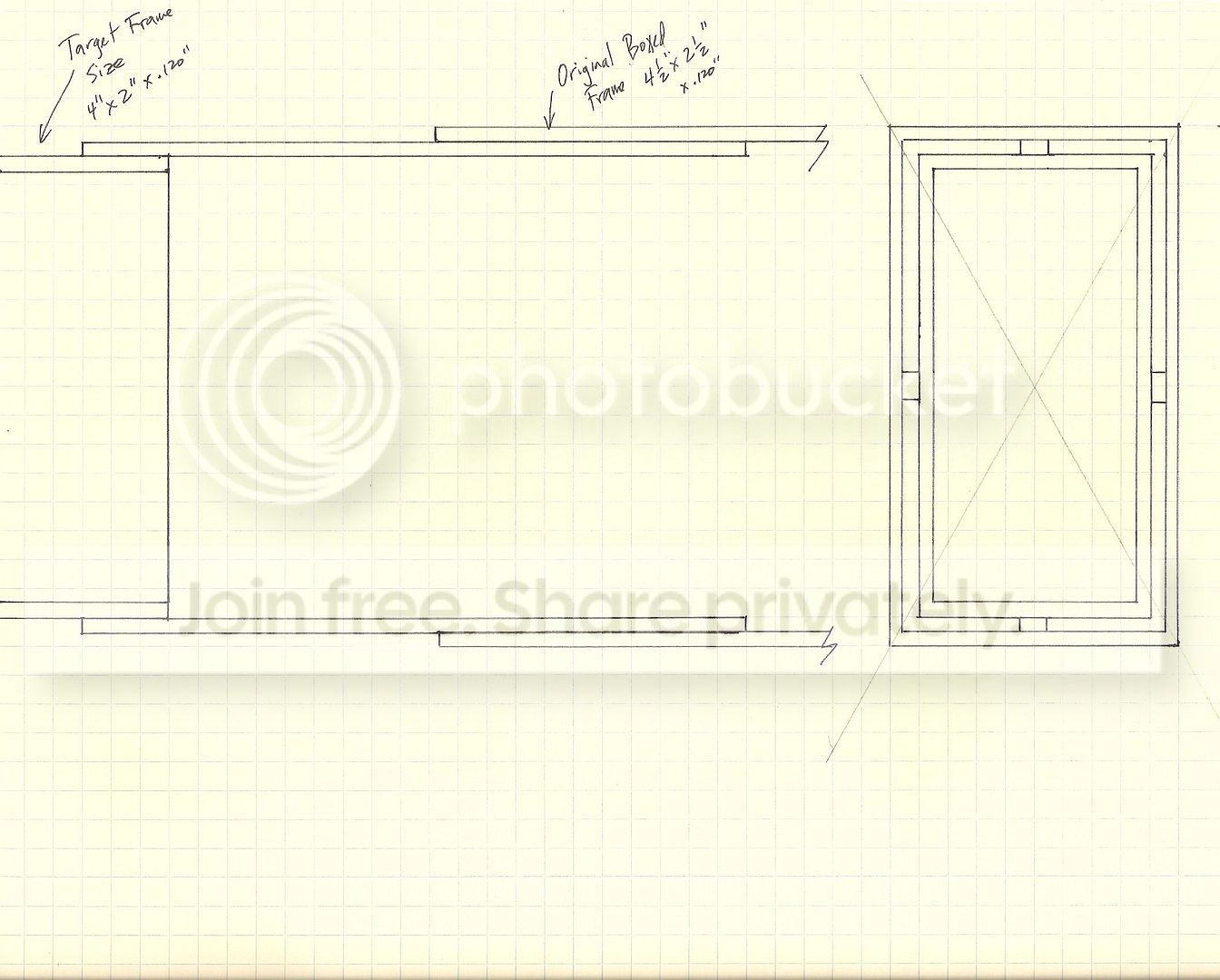
So..... when the frame was boxed, it ended up with an outside dimension of 4-1/2" x 2-1/2" x .125" wall. I am not aware of ANY supplier that makes rectangular tubing in those dimensions.... the closest I can find is 4" x 2" x .125", which means that I've got to come up with basically 1/4" of "shim" material (1/8" per side) to allow me to sleeve the new material inside the old frame.

This was my idea:

Framesplice.jpg


The right diagram is the original frame where I'm going to splice in, the left is just a side-view of the same thing...

Conceptually, what I can do is take a scrap 12" section of the 4' x 2" tube and cut it horizontally on both the 4" and 2" sides. This will give me 4 pieces of shim material that I can place on each corner of my new 4"x2" frame rail section to increase the O.D dimensions so that they match the I.D. dimensions of the original framerail. Obviously, there will be gaps when I put these 4 shim pieces onto the new frame section (as illustrated as those small 1/4" x 1/8" rectangles in my drawing), but that may end up being a nice area to weld them down... so it could end up being helpful.

Anyway, I can play around with the exact amount of overlap/underlap of these different sections, but the end-result is that there will be 1/8" thick framerails at the extreme ends, a transition area (with the shims) that is 1/4" thick, and an area where potentially ALL three sections overlap....creating a full 3/8" thick frame section. The nice thing is that the thickest section should end up at the cut line on the factory frame, so it will have the thickest metal and strongest support where I would be concerned about a weak spot.

Ultimately, I don't have any concerns about using 4"x2" tubing for the rear section of the frame. It seems like plenty of strength for the job, my only concern is being able to safely merge it with the original frame. :thinking:


-G
 
Last edited:
2014.09.29 - UPDATE! - NEW CROSS SILLS...!!!

Looks like I finally found a local source who can replenish my supply of domestic 1.75" x .125" wall DOM. I'm down to my last few scraps, and the situation is getting desperate. Hopefully, by next weekend I'll have 6 more sticks to work with... :waytogo:

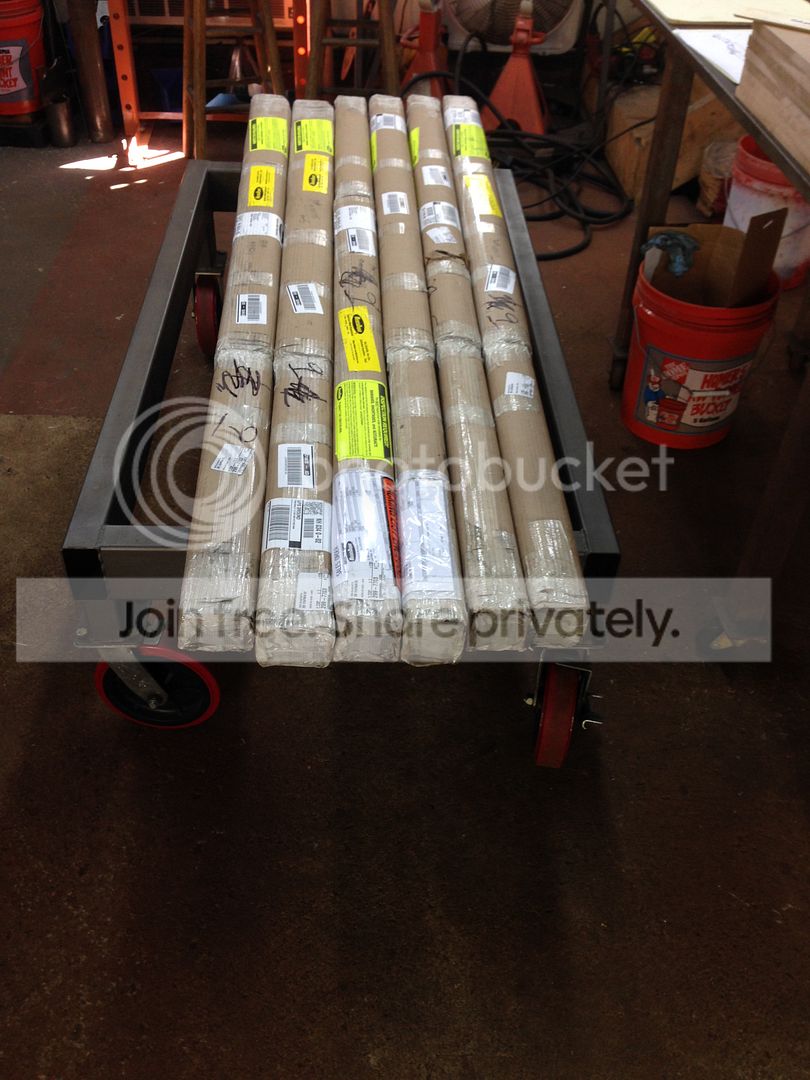
In the meantime, I did receive some material for the cross sills and rockslider construction... some 6' lengths of 3"x2"x.180" and 2-1/2"x2-1/2"x.180"

IMG_0964.jpg


This will allow me to take the existing rollcage mounts and connect them back into the framerails, so that they become structural and not just cosmetic... the 3"x2" tube fits perfectly in the space above the framerails (Between Body mount location #2 and #3) and will be an awesome support for the B-pillar area.

IMG_0965.jpg


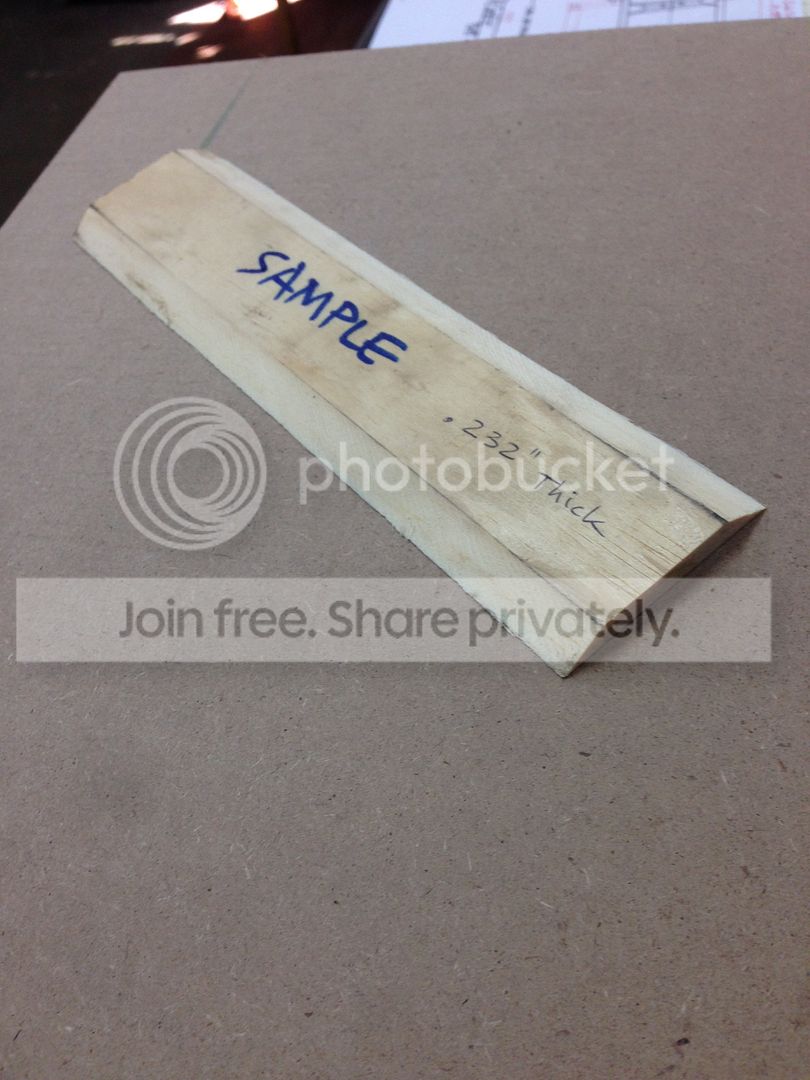
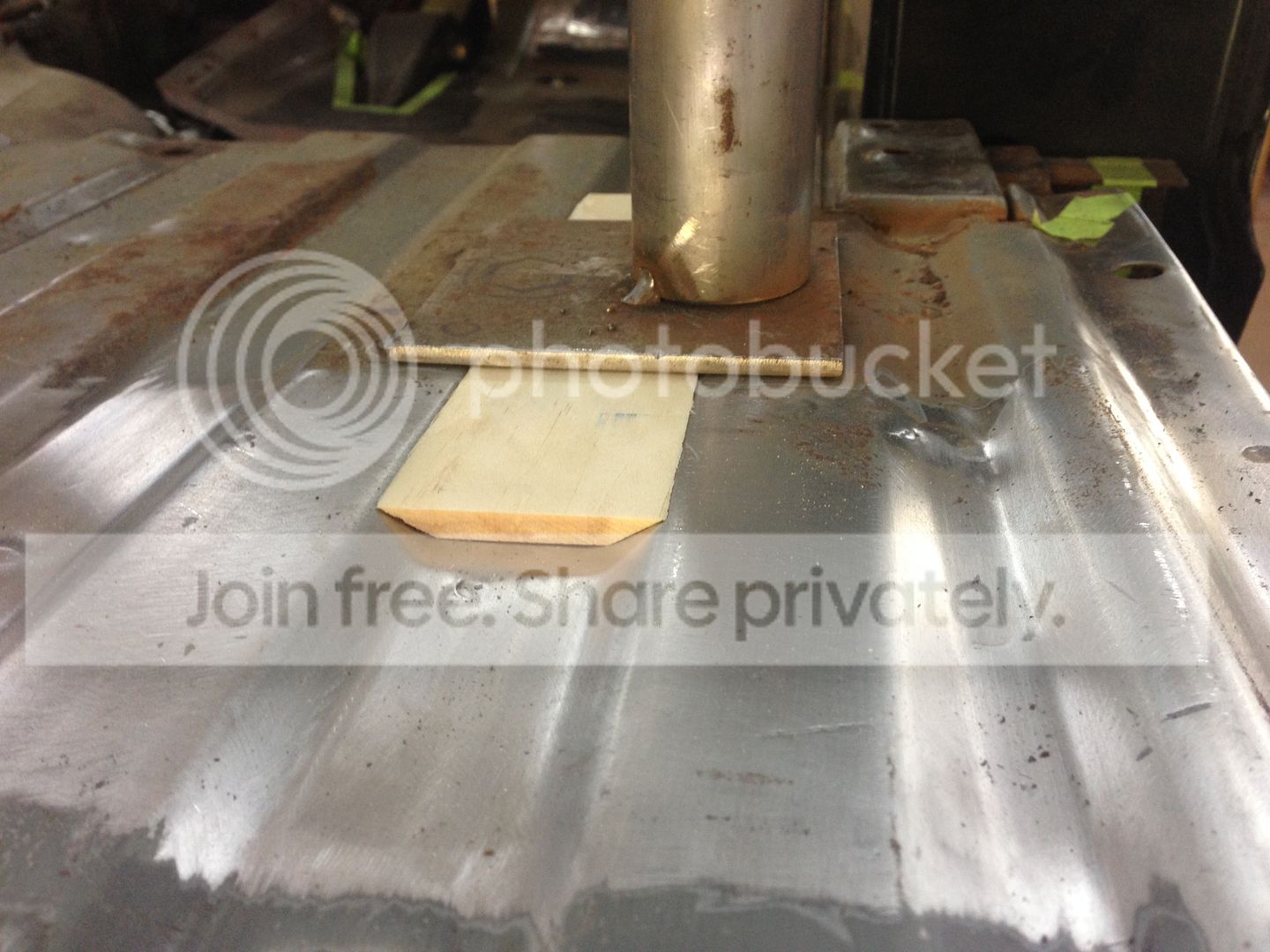
Over the weekend, as is my usual protocol... I was working on the house Saturday to earn my Sunday garage time. Since the tablesaw was already out for my projects, I stole a couple of minutes and made a wooden "shim" for my bedfloor idea.

IMG_0969.jpg


It turns out that my assumptions were correct. GM definitely set up the angles based on a 30-60-90 degree triangle, and the base is exactly 1.25" across. The top is 2" across. That makes the overall height slightly less than 1/4" thick (0.232") but you can't argue with the fitment...!!!

IMG_0970.jpg


I'm hoping Kert can make me a few samples in steel for testing, and few that area slightly narrower for the underside of the bed... and then I can go crazy reinforcing the bedfloor in all of the rollcage contact areas. :waytogo:

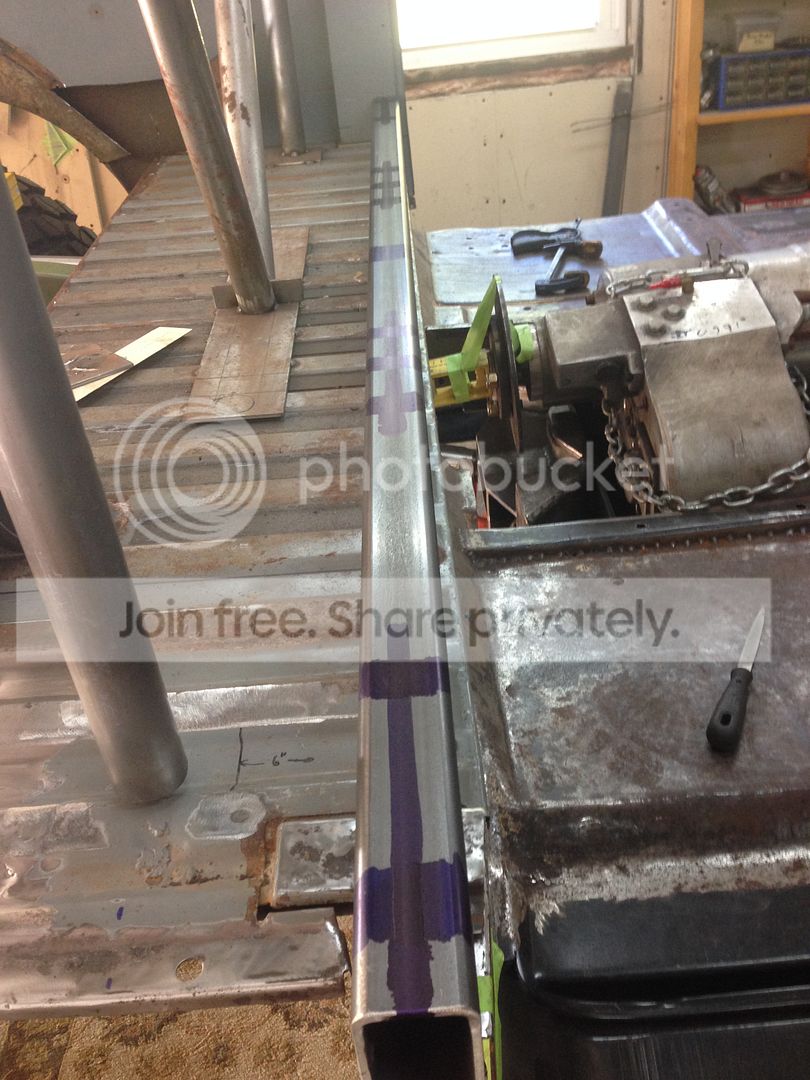
Most people probably don't realize it, but the bedfloor of the Blazer is EXACTLY 6 feet across.....and I mean EXACTLY. When you remove the bedsides and measure to the extreme ends of the flanges that's what you get. My 6' section of 3"x2" ended up about 1/8" too long since it needed to fit between those flanged areas (from underneath) so I lopped off 3/4" so that I would have a little "wiggle room" to reinstall the body and square it up later on. The cross sills that I'm building will attach permanently to the frame, not the body... so it will be important not to make everything super-tight on the fitment or the truck will never fit back together when it's all painted and Line-Xed.

Here's a quick shot of the cross sill, marked up and getting ready for mounting plates.

IMG_0978.jpg


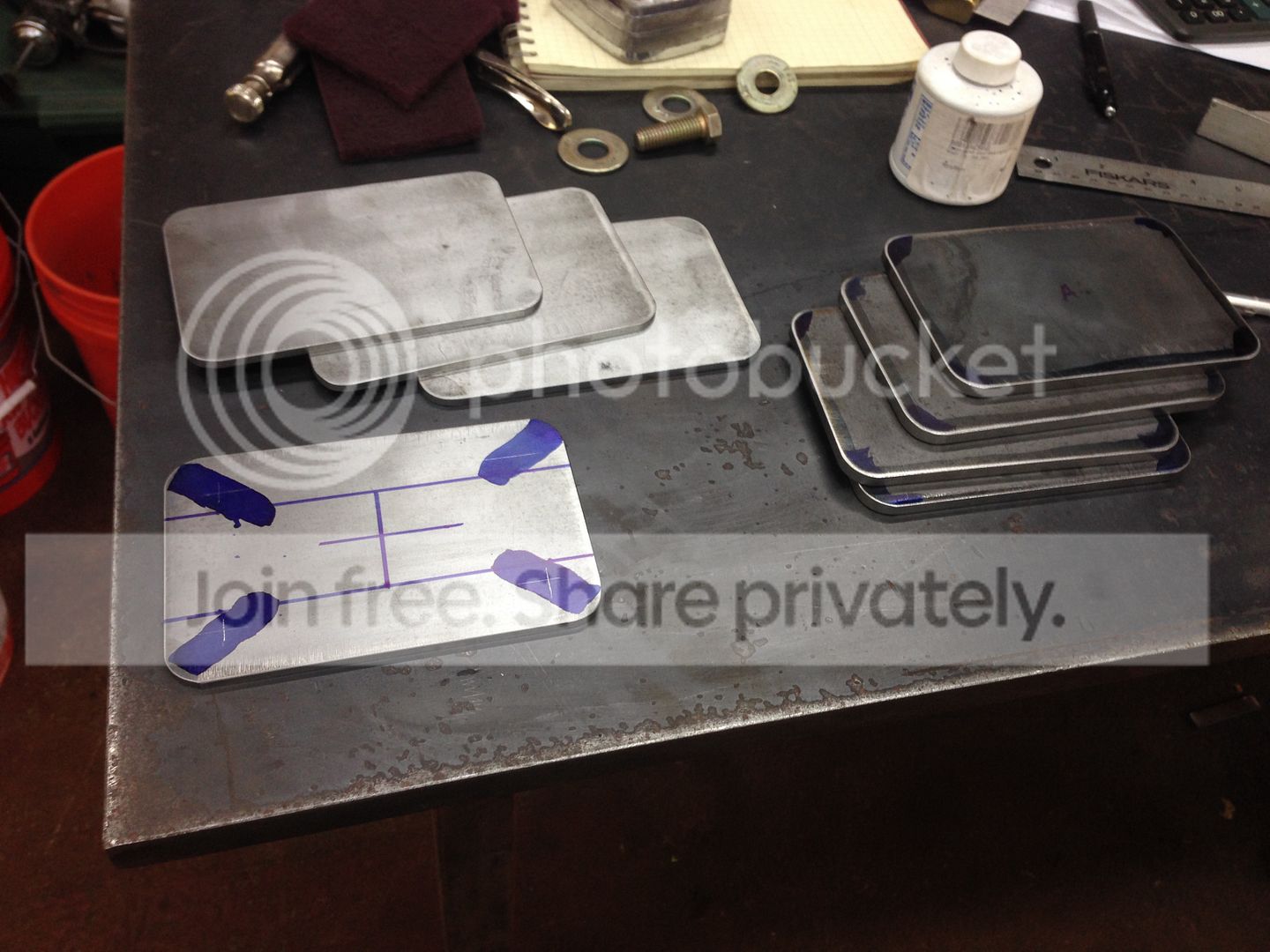
Unfortunately, most of yesterday felt more like manufacturing work and less like "creative work". I wanted to build new cage plates in pairs so that the upper plate (and holes) would be a perfect match to the plate on the underside of the floor.

This is a shot about halfway through the day, with the 4x6" plates cut out, edges ground perfectly and corners radiused. Upper plates are 3/16" thick, Lower plates are 1/4" thick.

IMG_0980.jpg


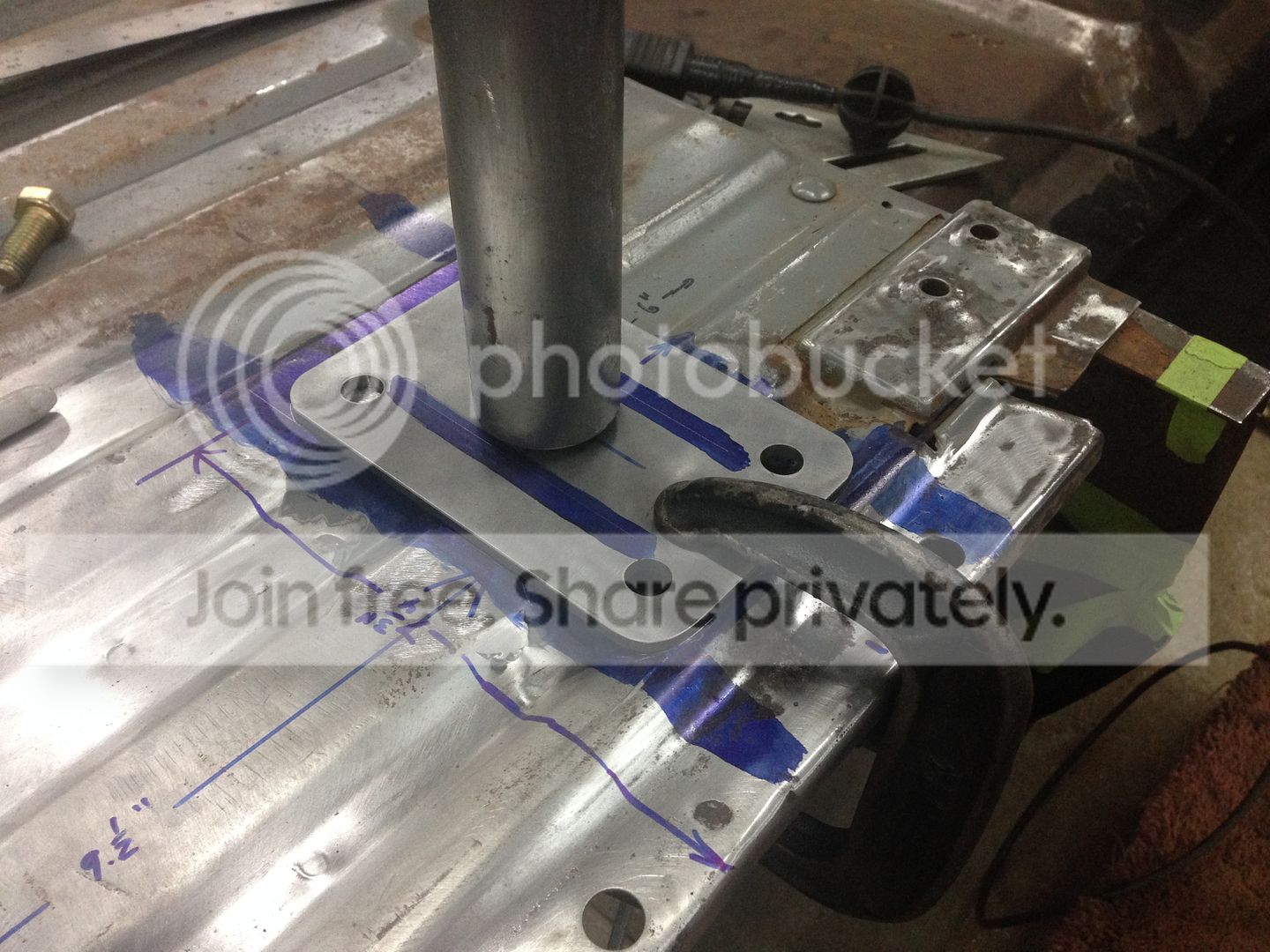
.....and a shot with one plate laid-down into position with the through holes drilled in it.

IMG_0981.jpg


The ultimate goal of these plates is basically to create a new structural body mount location for the truck. Since I will be filling in all the valleys in the floor with solid material, the end result should end up VERY strong.

It's basically a top plate made out of 3/16", then the floor/steel filler (roughly 1/4" thick overall) and then a 1/4" thick plate on the underside that is welded to that 3x2" cross sill. The only "trick" is that I want to leave a small 1/4" to 3/8" gap between the underside of the bedfloor and the top of the underside plate for body shimming (as needed). One of the secondary functions of the factory body mount positions was that it allowed the body to be adjusted to open or close body gaps...especially in the door striker area. If I bolt everything down without leaving some "tuning space", I could end up with either really ugly non-parallel door gaps, or possibly a door that doesn't close at all. So for now, I'm going to make sure that each tie-in that I build has some adjustment capability designed-in.


-G
 
Last edited:
Greg,

I think the filler strips should be identical when used on the top or the bottom of the bed floor. Do you have measurements that indicate they are different? I'm obviously paying close attention to what you have going in there.
 
Greg,

I think the filler strips should be identical when used on the top or the bottom of the bed floor. Do you have measurements that indicate they are different? I'm obviously paying close attention to what you have going in there.

Brian,

I don't think it's possible to them to be the same thickness.

There wasn't a clean underside area to try that wooden sample shim, but by guess is that it would fit the contour of the floor (valley areas) but would stand slightly proud of the upper flats.

It seems like when they stamped that pattern at the factory the upper and lower dies would have to be slight different to allow for the thickness of the metal in between? :dunno:

Anyway, I think it's a minor adjustment to the height and the width to make the lower shims perfect... but once I get a sample (in steel) to play around with... the answer should be obvious in a hurry.


-G
 
I didn't measure as closely as you are so you could be right. I made similar fillers, but used them on the bottom of the bed instead and they seemed really close when I checked the fit on the top side. I just assumed the dies for making those ridges are extremely expensive to make and making them identical would maybe let GM save a bit of cash on the tools.
 
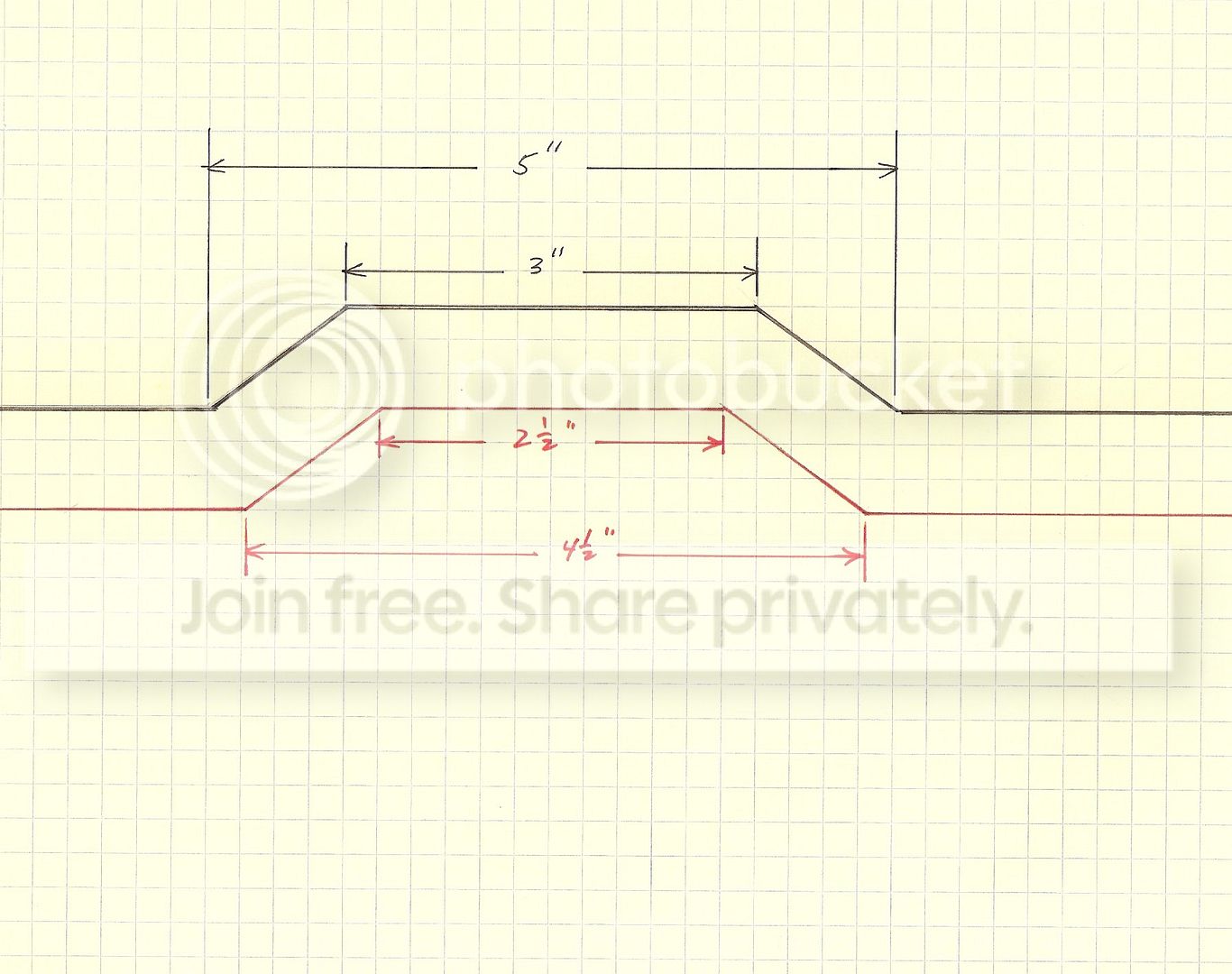
Here's an extreme example to show what I think is going to happen....

floorstamping.jpg


The upper black line is the profile of the upper floor, the red line is the profile of the underside of the floor (facing the ground), and the space in the middle is the thickness of the sheetmetal itself.

When metal is stamped, it just seems to be that the upper and lower dies HAVE to be different to allow for the metal itself. If not, it seems like you'd never get a "crisp" stamping and all the parts would end up "soft" and slightly out-of-shape dimensionally.....

Perhaps this is the difference between the original OEM stampings and the stuff we see coming out of Taiwan now??? :thinking:


-G
 
Last edited:
'72 K5 - Greg's "Might As Well™" Build - !!! NEW CROSS SILLS...!!!

I happen to design sheet metal stamped parts, but my knowledge is more about how it's done after the invention of the computer and CNC milling so it may not be applicable to pre-1970 GM factories.

The stampings are/were made with both an upper and lower die. You're right that the top surface of that sheet has a slightly different profile than the bottom surface. The lower tool die is what creates the 2.5" red line on your drawing and the upper die creates the 3" black line, but both halves of the tooling "pair" have an equal share in creating the final shape.

If you look at it from a different perspective, the upper die not only has long "slat" depressions in it that are directly above the protruding "slats" on the lower die. The upper die also has it's own protrusions (and depressions) parallel to the original. It's possible for the "depression on the top side" to have exactly the same profile as the "depression on the bottom side". I put those two phrases in quotes to illustrate that each half of the stamping tool has it's own "hills and valleys". If you lay both halves of the tool with the "business end" facing up on a table, both will have the convex and concave profiles.

It wouldn't have been difficult to calculate the amount of material thickness offset needed to create each half of the tool even back in 1969 (basically half of the material thickness on the upper tool and half on the lower tool, but it'll be interesting to see what you find out for sure. There may have been other reasons not to make it symmetrical. Sorry for a long diatribe, just peaked my interest talking about sheet metal tools.
 
Ash,

I'm sure it could be done by Kert as well, but it's a different setup (and extra cost) so for the 4 top-side and 4 underside pieces, it might not make financial sense to have them CNC'ed.... may just build those from scratch.

You never know though... if the 1st Gen guys really want this stuff to become a reality, I could do the legwork to figure out the dimensions accurately and send it off for a quote too.

For those of you who haven't already seen it, I posted this up today:

http://coloradok5.com/forums/showthread.php?t=317653


More info coming soon....uploading photos now!


-G
 
OK..... a few Monday Night updates:


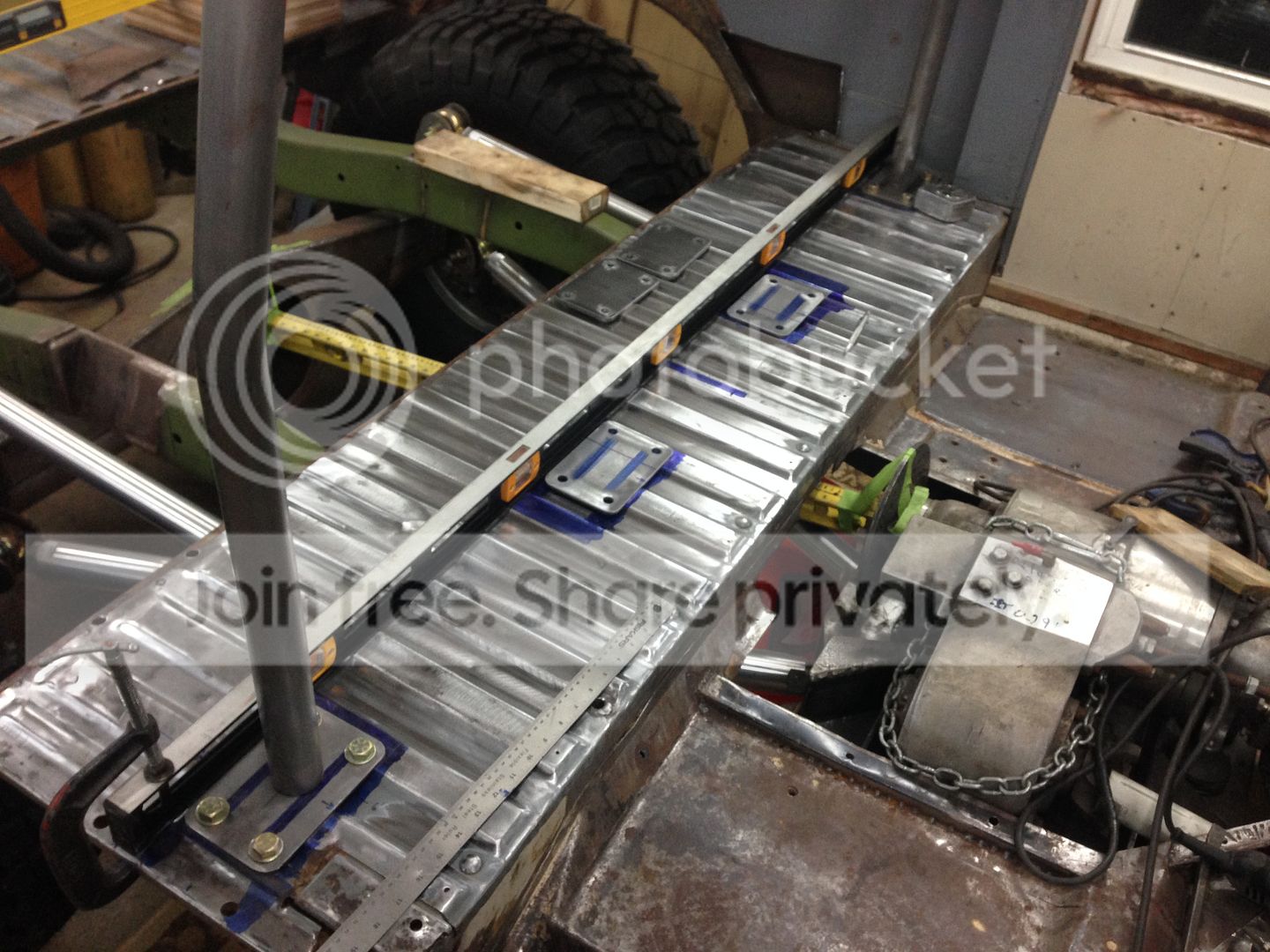
Started the process of locating the new cage plates into their final positions, and reworking the angled down-bars at the B-Pillar area for a bit more clearance for backseat passengers.

Here's my new HDTV rabbit ears antenna! :haha:

IMG_0986.jpg


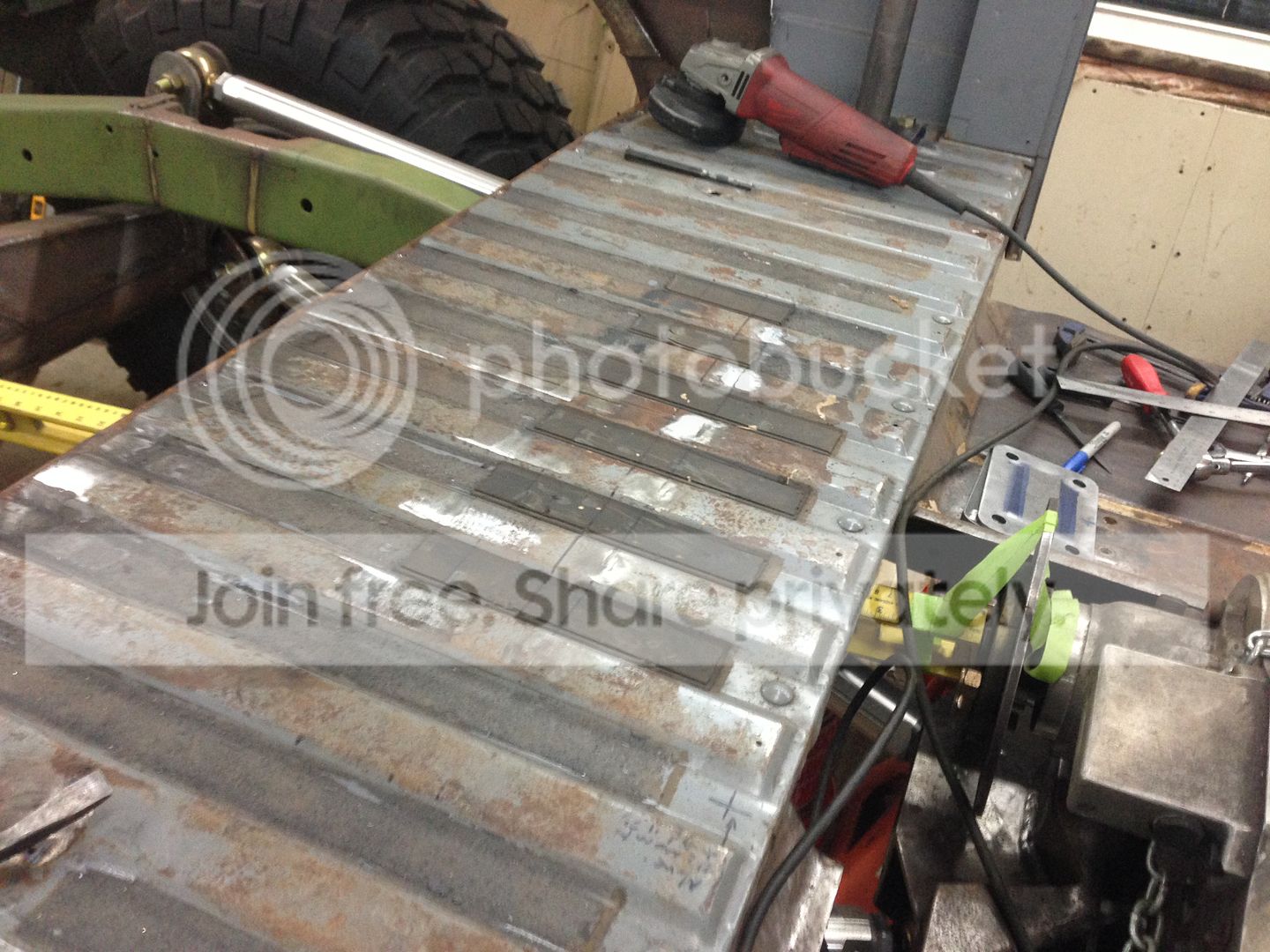
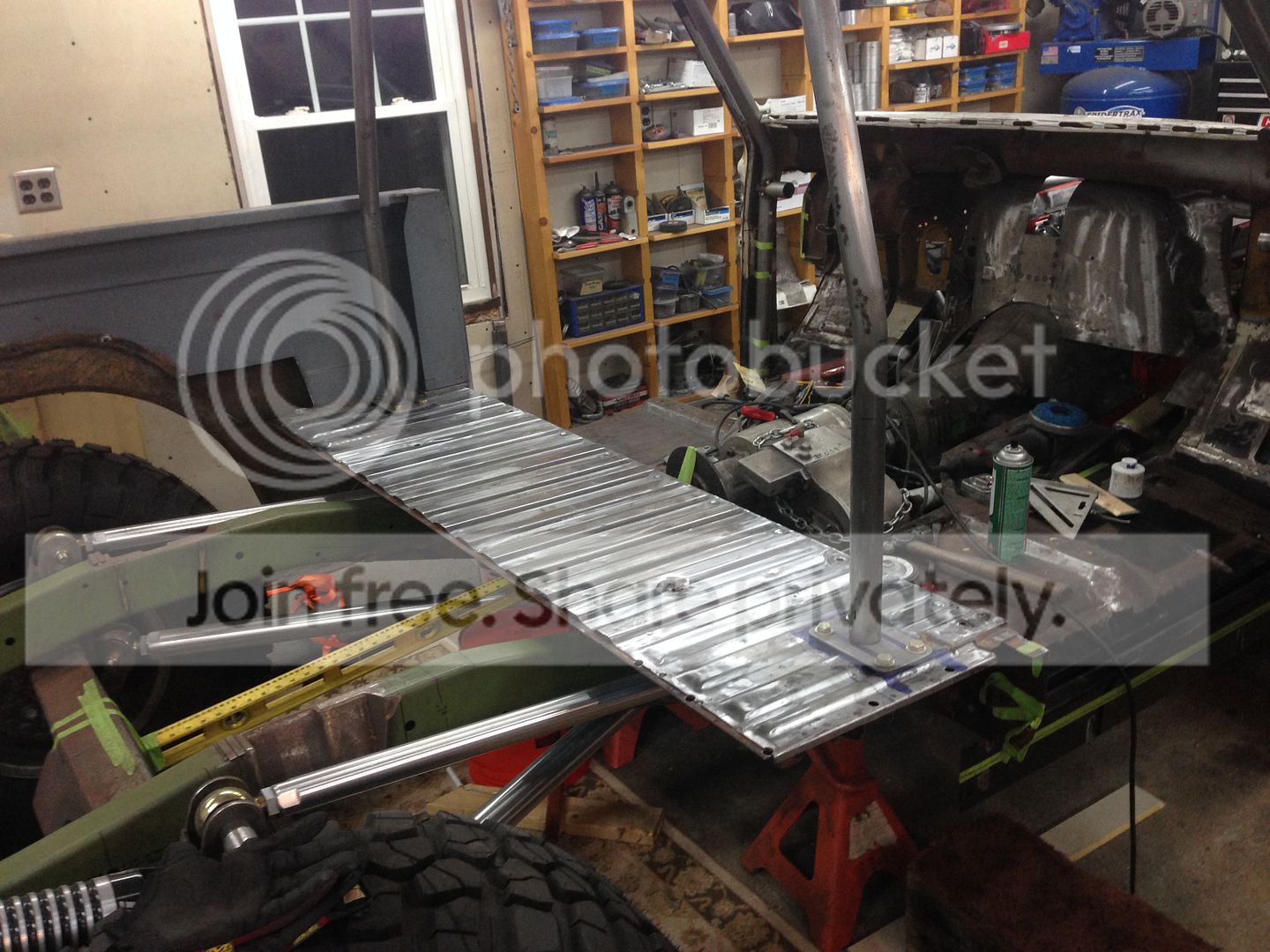
The floor looked like a mess once I cut all the spot welds and removed those center bars.....

IMG_0989.jpg


But after about 30 minutes with a razor (to scrape off the adhesives) and a coarse-loop grinding pad.... it cleaned up NICELY!!!

IMG_0991.jpg


The compromise I reached for the center bars was to land them about 18" apart at the bottom. That still gives me good triangulation and strength, and dramatically improves access when climbing past the passenger seat and into the rear seat area. Charlie will appreciate that a lot.... :D

IMG_0994.jpg


Obviously, I don't have any of the new "shims" in place yet, so I had to be careful not to overtorque any of the bolts down....

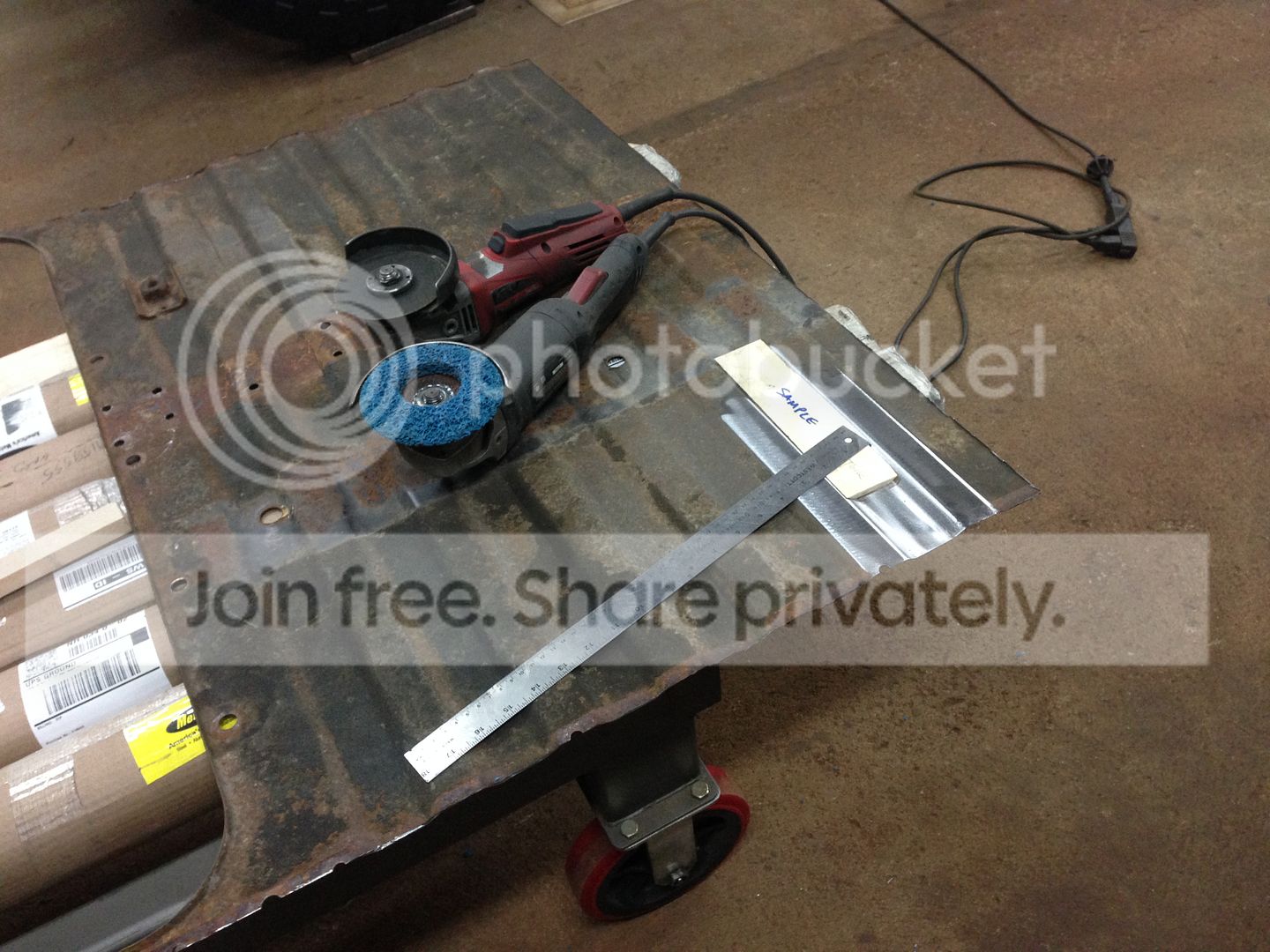
Speaking of which, I figured out that there was a really simple way to check the shim dimensions for the "underside" plates without killing my back and neck. I grabbed the cutoff section of the floor that was stashed in the attic and gave it a quick cleaning (on the underside) to remove the undercoating and rust. Then I dropped my "top side" shim pattern into it, to see how it looked.

IMG_1002.jpg


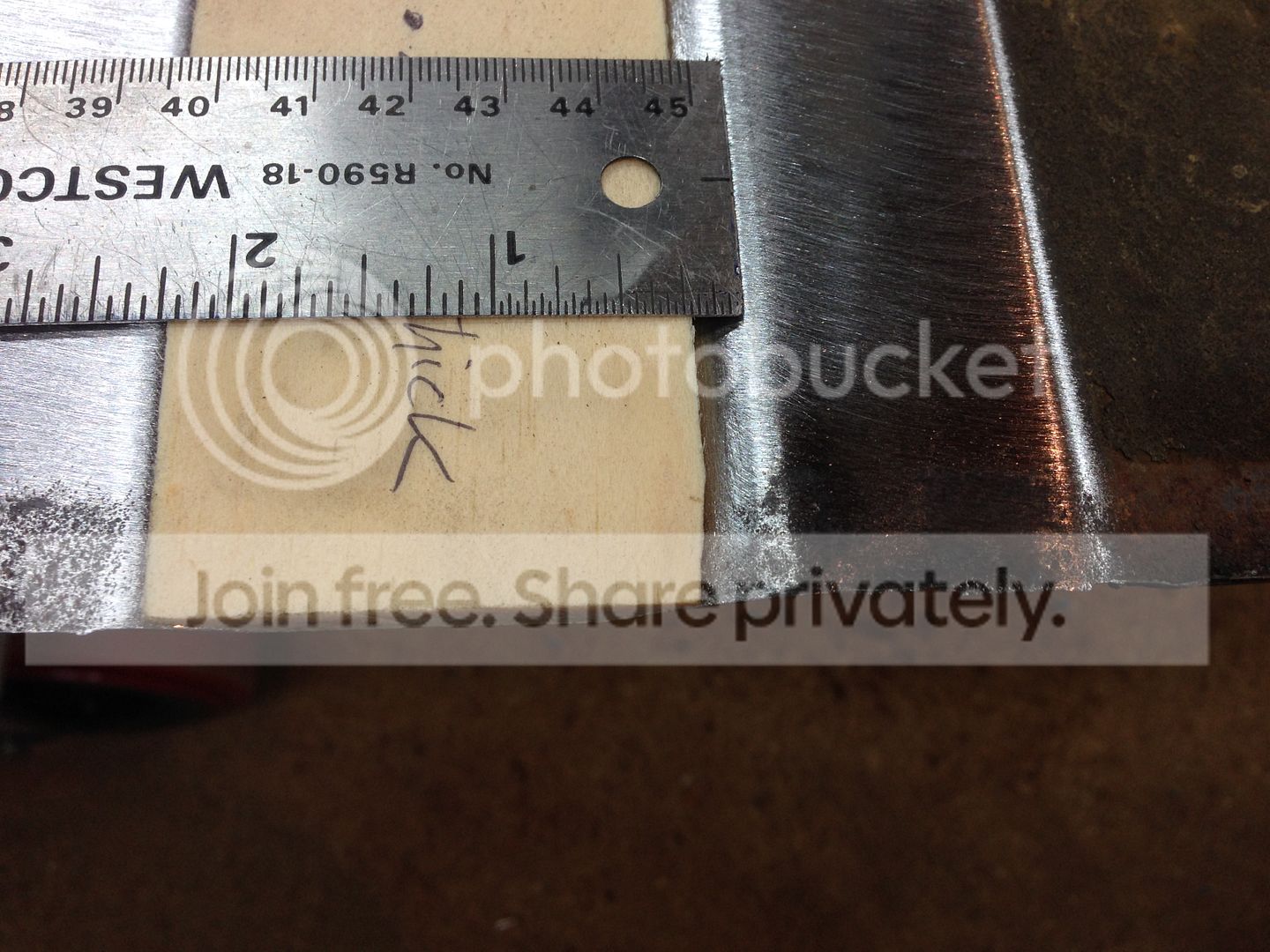
I was surprised to see that the underside pattern is actually WIDER than the topside pattern!

IMG_0998.jpg


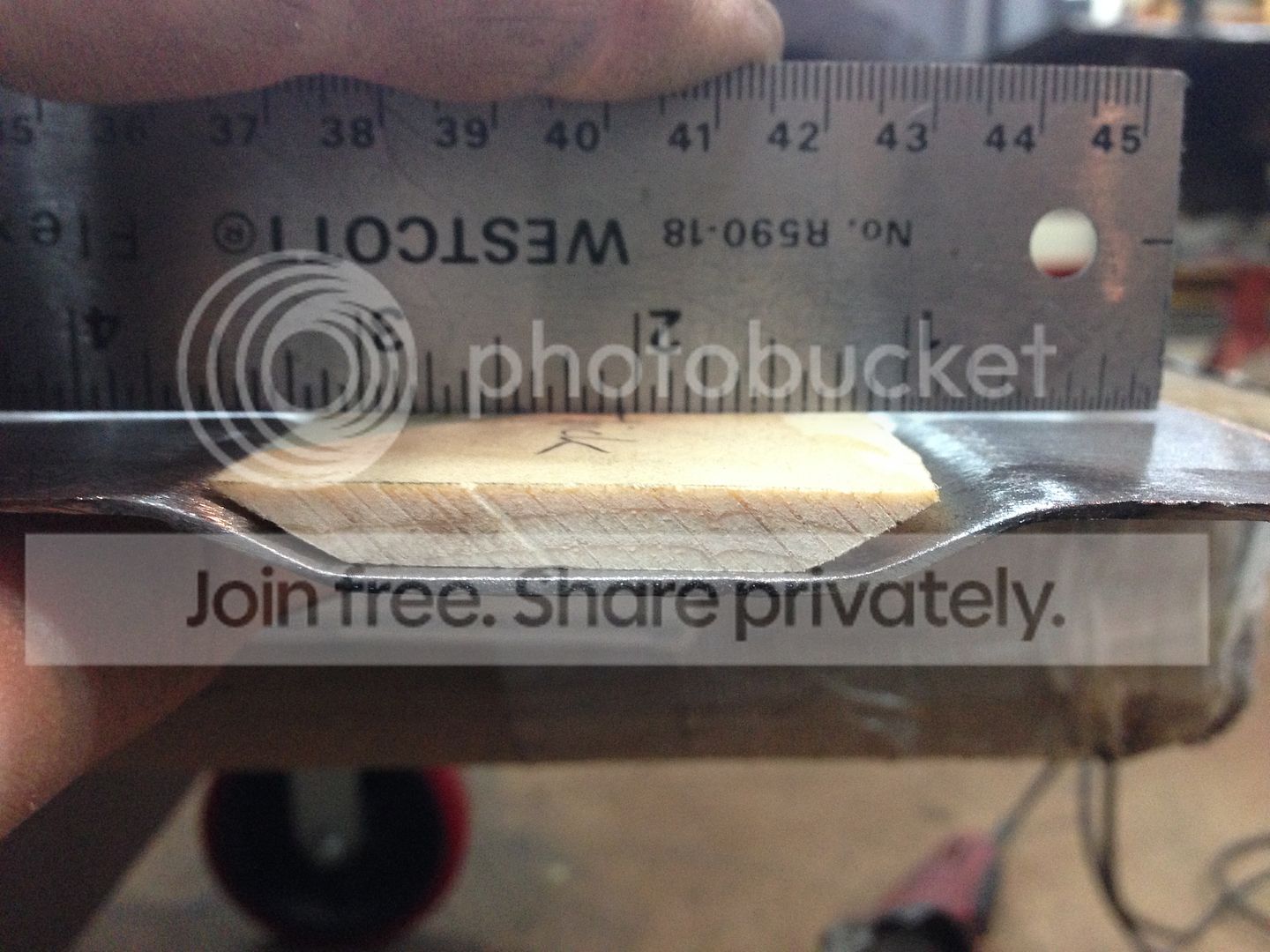
......and taller:

IMG_0999.jpg


I'll make an accurate wood shim to confirm, but it looks like the underside shims are 2-1/4" wide (vs. 2" wide for top side shims) and about 1/16" thinner than the 2.232" dimension of the top side plate.

ALSO.....LOOK CAREFULLY AGAIN AT THAT LAST PHOTO.

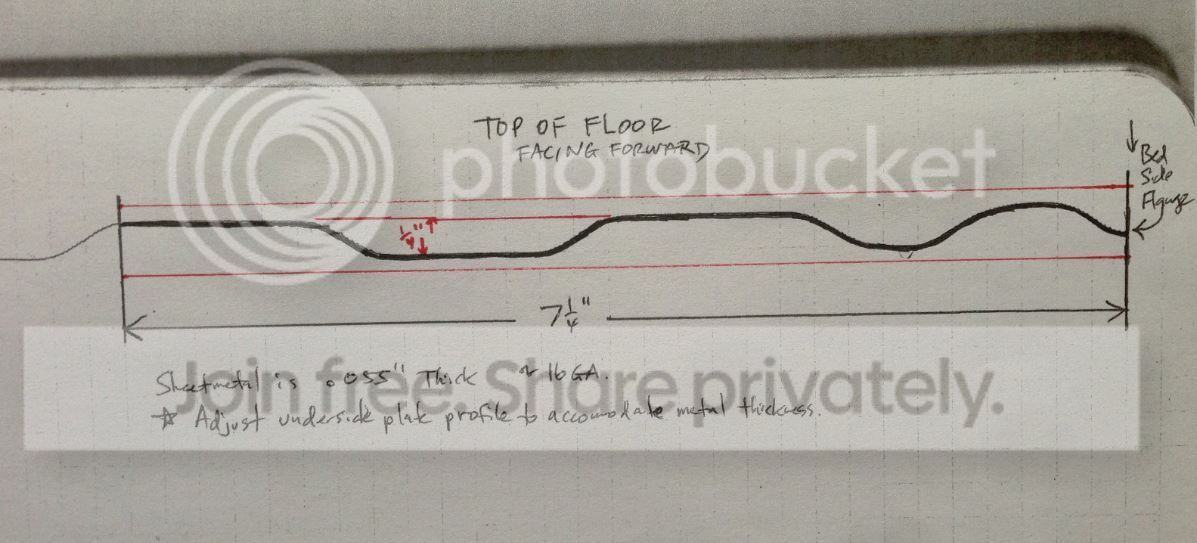
See the edge of the metal? It actually changes thickness as it transitions through those various curves! :thinking: It starts out thick, then in the corners (as it's crushed into it's final shape) the metal appears to be "squished out" of the corners and the metal gets thinner....then as it transitions to a flat surface again, the metal goes back to normal thickness. Pretty cool.

I'm not sure exactly what it all means, except that if you were being REALLY neurotic about making plates that fit perfectly, you'd probably modify the angles for the underside parts by a maybe 1/2* or 1* to compensate for the changing thickness of the metal (and resulting angle).

Yes....for the record, I am actually rocking back and forth in the fetal position struggling with myself about whether to say "close enough" or not. :haha:


-G
 
Last edited:
Awesome work Greg! Can´t wait to see how your wheels turn out! I know I went the way you described, taking a different wheel and making it look close. Yours will be spot on! What is the inside diameter od the 17" wheel barrels you have? How much brake clearance (inner diameter) do these have?

If your roll cage templates work on a square body bed floor too, I´m interested! ;)

About you frame issue, just me and liking the way you did your frame, why don´t you c notch the frame but sideways. So the notch will go inside and maybe up a bit. That should give you the clearance you need but keep most of your nicely done frame (original frame). I bet you have some room toward the inside. That would be the way I´d go.
 
ALSO.....LOOK CAREFULLY AGAIN AT THAT LAST PHOTO.

See the edge of the metal? It actually changes thickness as it transitions through those various curves! :thinking: It starts out thick, then in the corners (as it's crushed into it's final shape) the metal appears to be "squished out" of the corners and the metal gets thinner....then as it transitions to a flat surface again, the metal goes back to normal thickness. Pretty cool.

I'm not sure exactly what it all means, except that if you were being REALLY neurotic about making plates that fit perfectly, you'd probably modify the angles for the underside parts by a maybe 1/2* or 1* to compensate for the changing thickness of the metal (and resulting angle).

Yes....for the record, I am actually rocking back and forth in the fetal position struggling with myself about whether to say "close enough" or not. :haha:


-G

You gotta remember, when they stamped these floors on a 100 ton press brake, they were flat steel sheets. As the curves bent and formed into shape, the metal stretched in those areas thus becoming a bit thinner.
(I sure you realize that, but stated just for the sake of my response)

So just for your sanity, my answer is "close enough". When you get it all assembled and painted, nobody but you (and the thousands of members here that see your pics) will ever know about it........! :waytogo:
 
Awesome work Greg! Can´t wait to see how your wheels turn out! I know I went the way you described, taking a different wheel and making it look close. Yours will be spot on! What is the inside diameter od the 17" wheel barrels you have? How much brake clearance (inner diameter) do these have?

If your roll cage templates work on a square body bed floor too, I´m interested! ;)

About you frame issue, just me and liking the way you did your frame, why don´t you c notch the frame but sideways. So the notch will go inside and maybe up a bit. That should give you the clearance you need but keep most of your nicely done frame (original frame). I bet you have some room toward the inside. That would be the way I´d go.


ID of the barrels is around 14.228"

A 16.5" 8-Lug center is about -.080" (total) from that based on the shim stock I had to use initially to get the center pressed-in for my original mock-up wheel.

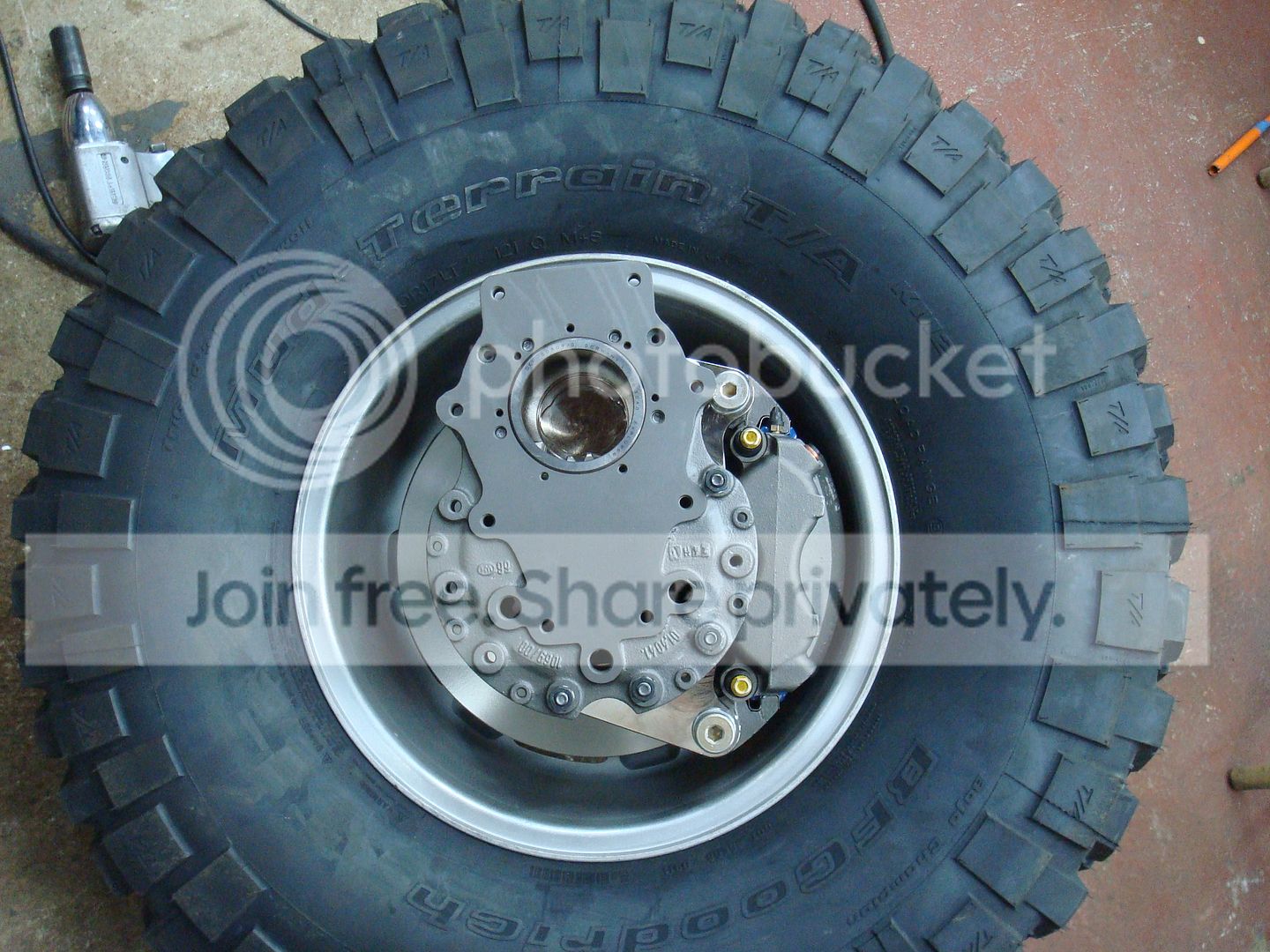
My brakes are pretty massive, they are off an F350 (IIRC). They cleared the H2 wheels, and they appear to have cleared my mockup hubcap wheel too. The only issue would be if I really try to maximize the backspacing to it's limit.... the caliper could eventually hit the "drop center" area, but with my steering arms and axle width already established I won't ever get close enough to worry about that.

Yes, I'm basically planning to do a "lateral C-notch" in the existing frame to clear the upper link mounts. Going to a narrower set of custom framerails would let me keep them perfectly straight all the way back, but creates a bunch of extra work figuring out how to mount them.


-G
 
ID of the barrels is around 14.228"

A 16.5" 8-Lug center is about -.080" (total) from that based on the shim stock I had to use initially to get the center pressed-in for my original mock-up wheel.

My brakes are pretty massive, they are off an F350 (IIRC). They cleared the H2 wheels, and they appear to have cleared my mockup hubcap wheel too. The only issue would be if I really try to maximize the backspacing to it's limit.... the caliper could eventually hit the "drop center" area, but with my steering arms and axle width already established I won't ever get close enough to worry about that.

Yes, I'm basically planning to do a "lateral C-notch" in the existing frame to clear the upper link mounts. Going to a narrower set of custom framerails would let me keep them perfectly straight all the way back, but creates a bunch of extra work figuring out how to mount them.


-G


14.288" hm my rotors are 14.54!! :) that would not clear my brakes off an 08 F550. I can barely fit them in the 17" weld forged wheels with the backspacing I wanted. They are 17x9, like yours but with 5.25" backspacing. I have very little clearance left, so the steelide from you would not fit, damn it! ;)

here is a pic on how close this is on mine....


Glad to hear you´ll keep the framerails and do a latteral c-notch! :waytogo:
 
14.228" is the drop-center (valley) area, not the outer area where the caliper lives.


BTW -> Post #1385

DSC04265.jpg


-G
 
Did you check to see if the wood template fit the top of the extra sample piece?
I wonder if the entire stamp is a little different? :thinking:
Maybe they were stamped by different machines...
 

Latest Posts

Top Bottom