CK5
Register an account today to become a member! Once signed in, you'll be able to participate on this site by adding your own topics and posts, as well as connect with other members.
Been reading through this build thread from the beginning. Found a couple of post sorta humorous. Perspective on how long he's been 'engineering' this - this isn't simply a 'build'...
________________________

2010.02.08 - UPDATE! - 9TH ANNIVERSARY....

I'm a few days late. I bought this K5 on Feb 4th, 2001 but I figure it's close enough to still mark the occasion. Nine years and countless dollars later, and I've managed to transform a completely driveable $7000 truck into a motionless sculpture costing many multiples of that number! :yikes: With any luck, it will be driveable by the 10th anniversary.... :rolleyes:

_____________

Well i'm assuming he is doing a little more "behind the scenes" work than he is posting about. If he stopped to update us on every little thing he did Greg would be lucky to make Moab by 2018. :D


4X4HIGH, Mar 2, 2010 Report

_____________


Yeah, I've read through the entire thread a few times over the years. My optimism was downright adorable at times.....

For the first several years, every project I did revealed sub-projects that needed doing as well.... "Peeling the onion" was really discouraging at times. But I feel like I'm getting to the point where I'm done digging, and the parts are starting to go back ON this truck!

-G
 
Haha, that's only because you ran out of truck to dig into. The dash and firewall is about the only thing left manufactured in 72' no?
 
Haha, that's only because you ran out of truck to dig into. The dash and firewall is about the only thing left manufactured in 72' no?

Actually the firewall is out of a different truck.

Windshield frame, cowl, and a little bit of metal in the lower A-pillars is all that's original at this point.....


-G
 
2016.04.03 - UPDATE!!! - SUNDAY SNOW DAY = TACK...TACK...TACK...TACK....!!!!

Got stuck indoors on a windy, cold weekend so I made the most of it! :waytogo:

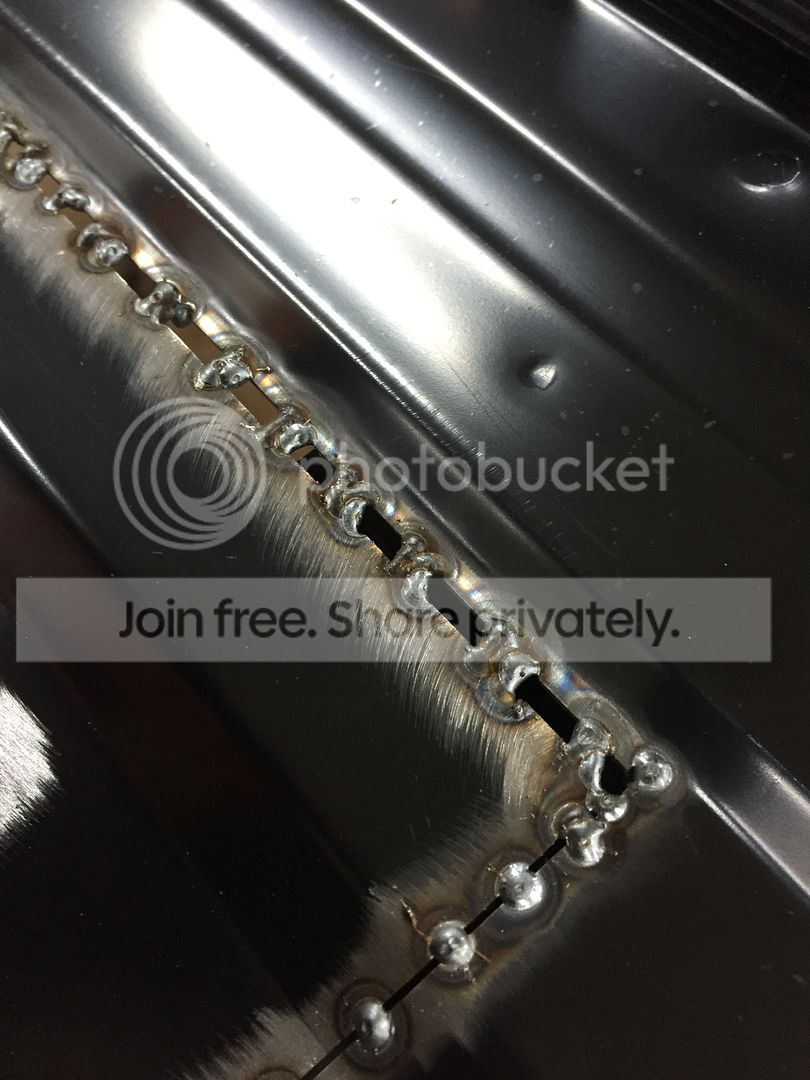
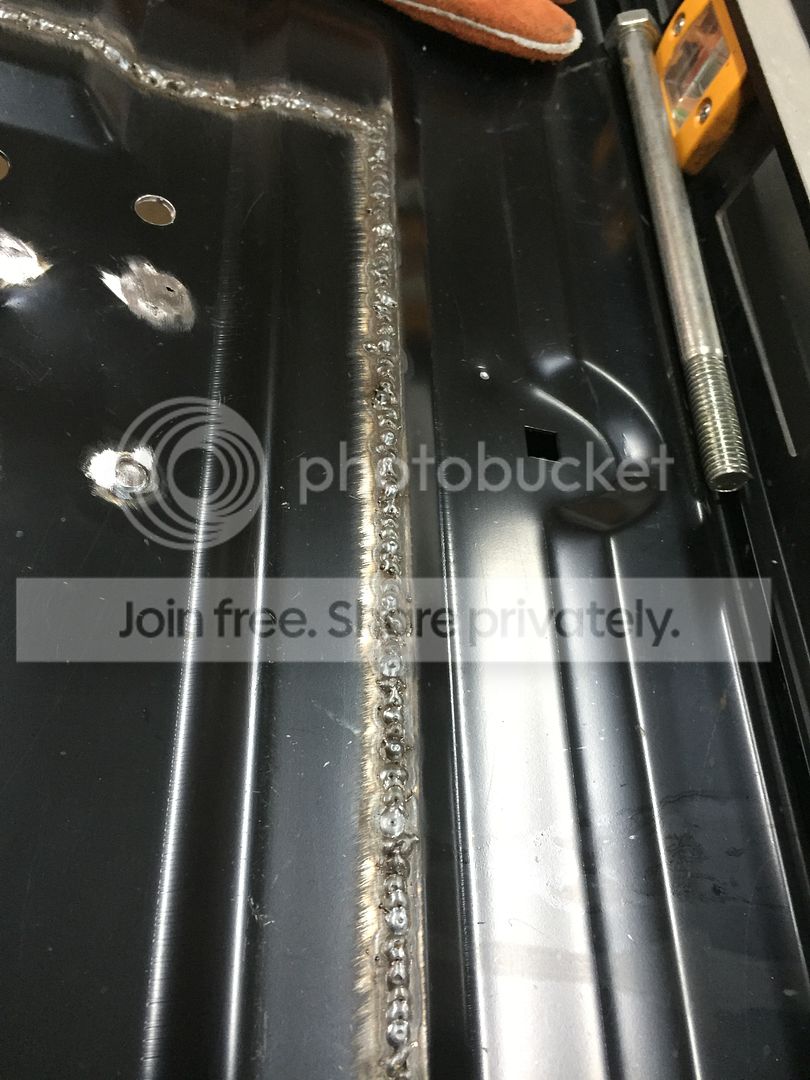
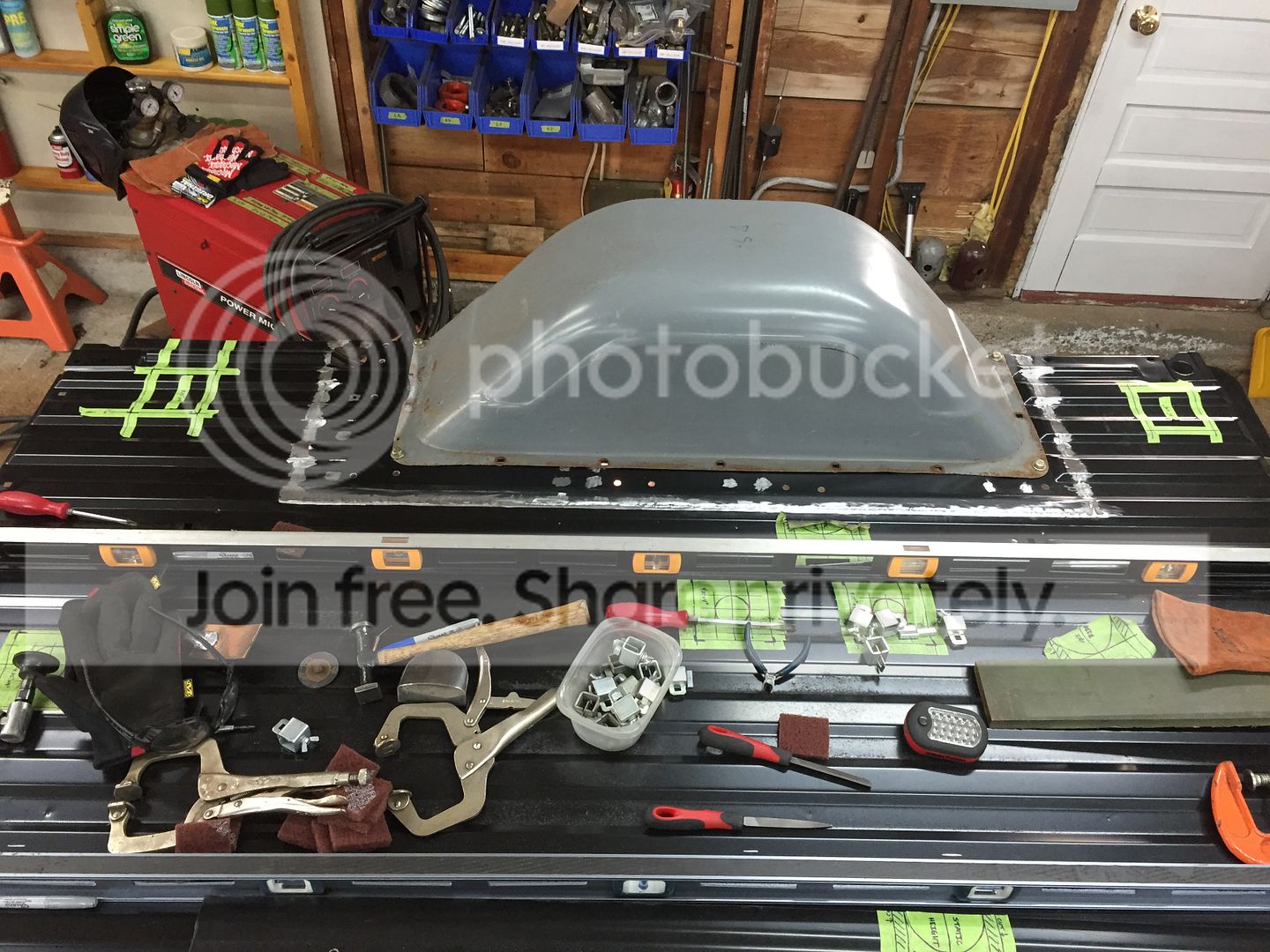
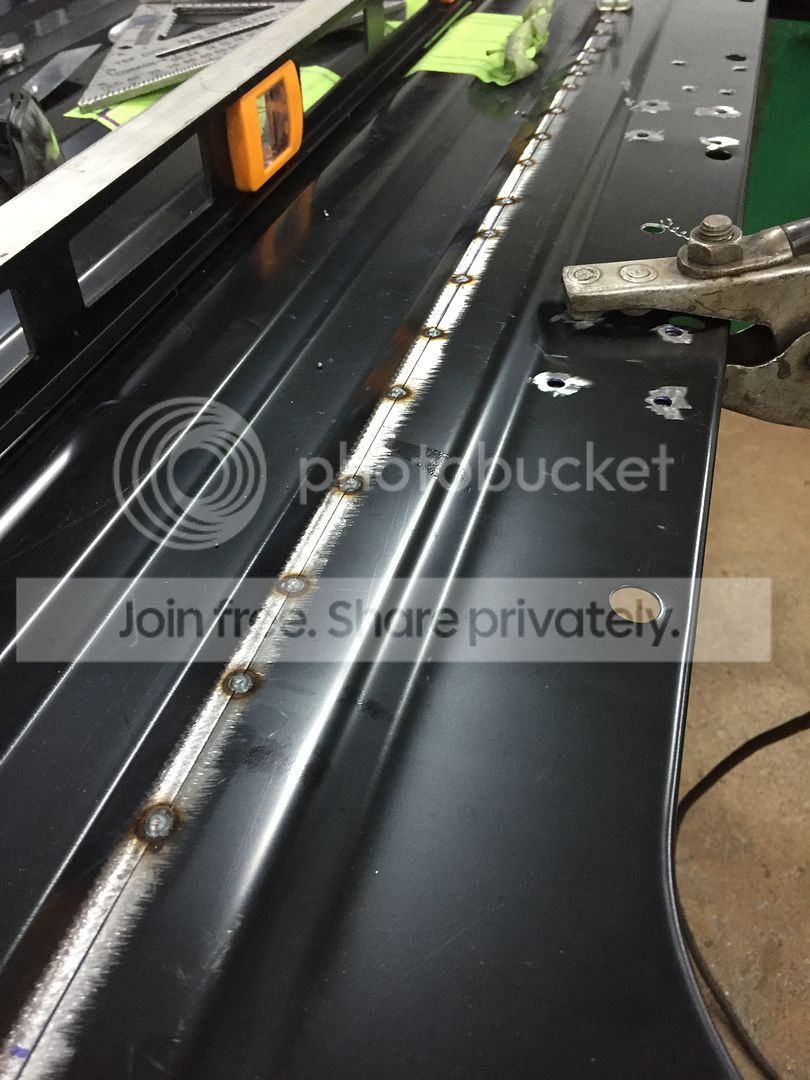
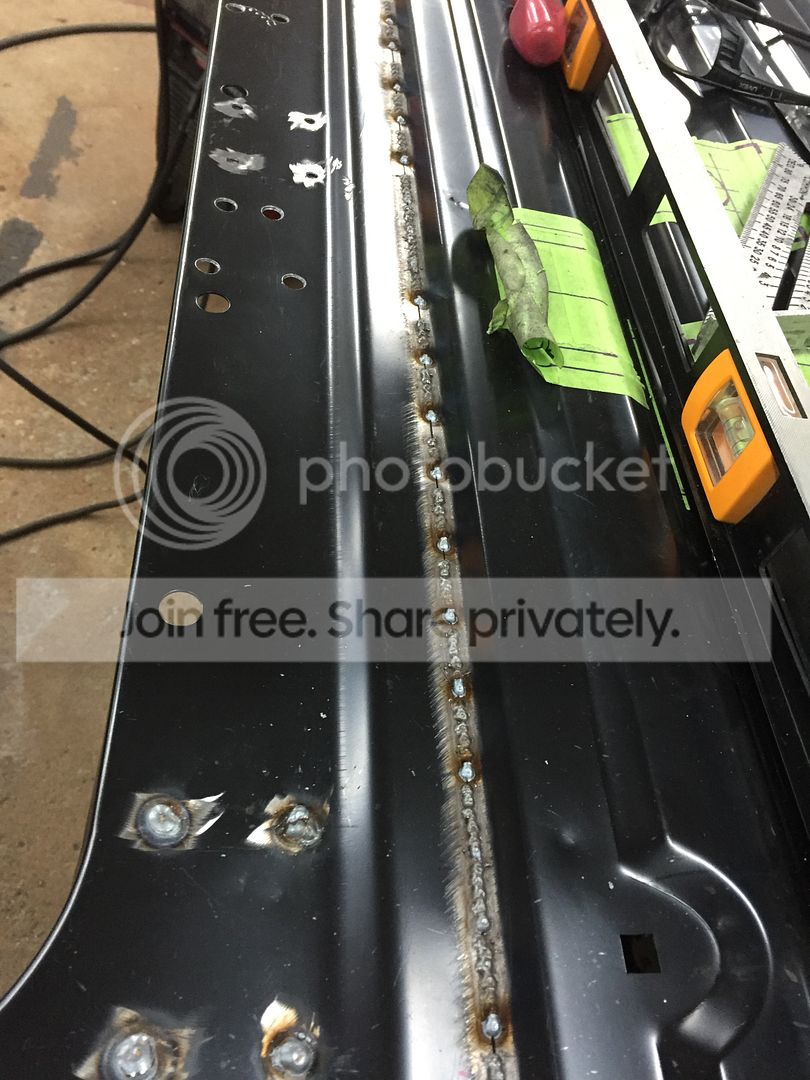
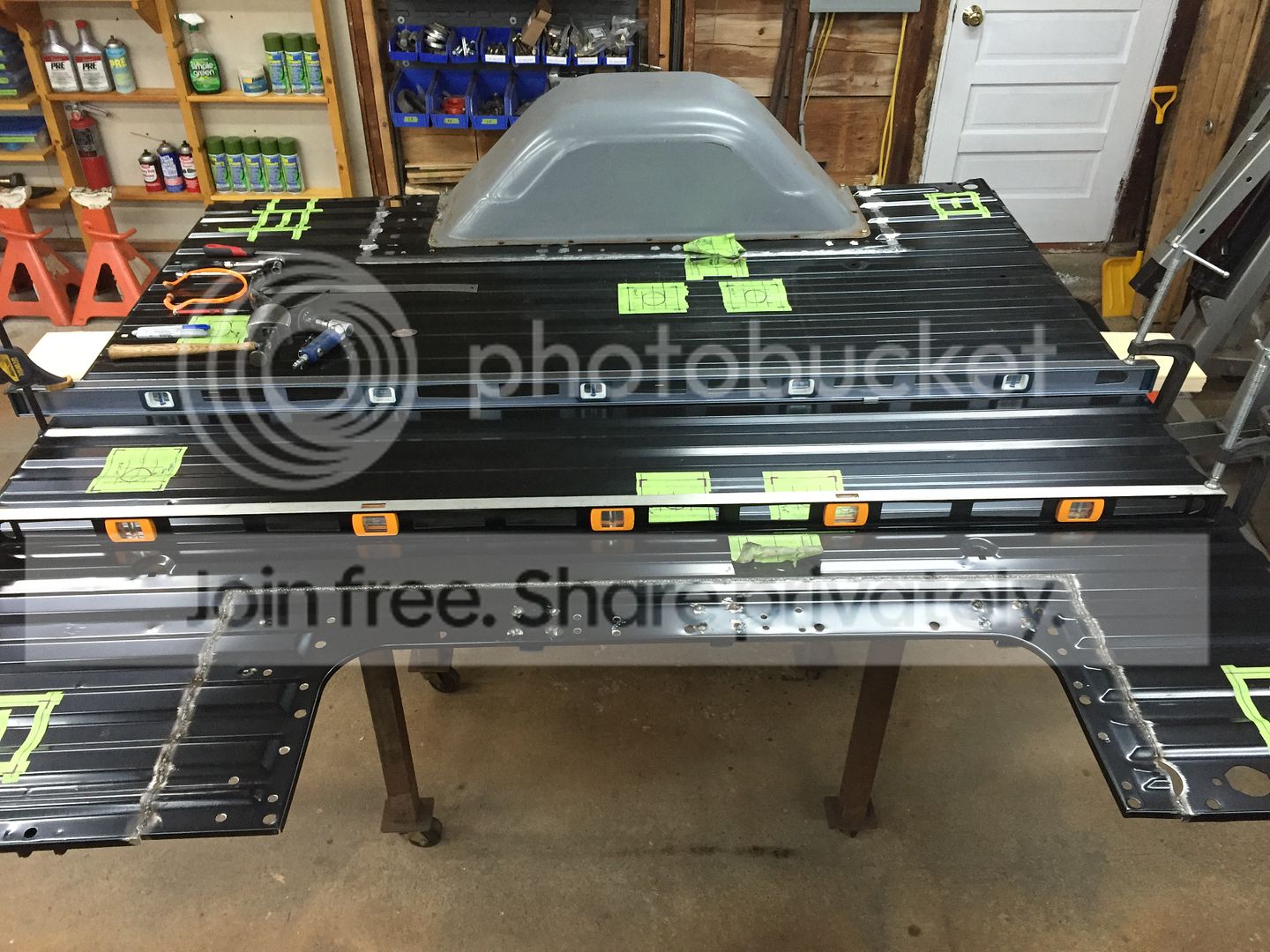
Flipping the wheeltubs gave me a pretty ugly gap on the passenger side (which welded up fine, but took a LOT of patience and hundreds of individual stacked spot-welds) the driver's side ended up with a super-tight fitment. I guess that should have been expected since the two sides were slightly different. Took me all day (and night) but the welding on both sides is now complete. I've got a little bit of "dressing down" of the welds to make them flush... and one final inspection with a bright light underneath to search for any pinholes in the welds. But otherwise, it's time to move on to the next item on the build sheet!! :)

The ugly gap on the passenger side at the beginning of the day...

IMG_9340.jpg


After a LOT of "tack......move......tack......wait.......cool.... tack, etc":

IMG_9345.jpg


I ground the welds down most of the way, and put a bright light underneath to look for any pinholes that needed filling. The weld still sits slightly proud of the original metal and I didn't want to grind a big gouge into it. I'd like to try doing the final cleanup using a DA sander to see if I can get a nice uniform metal finish.... but I don't have a DA (yet) and I don't know what grit of paper to use for that either. :dunno:

IMG_9350.jpg
\


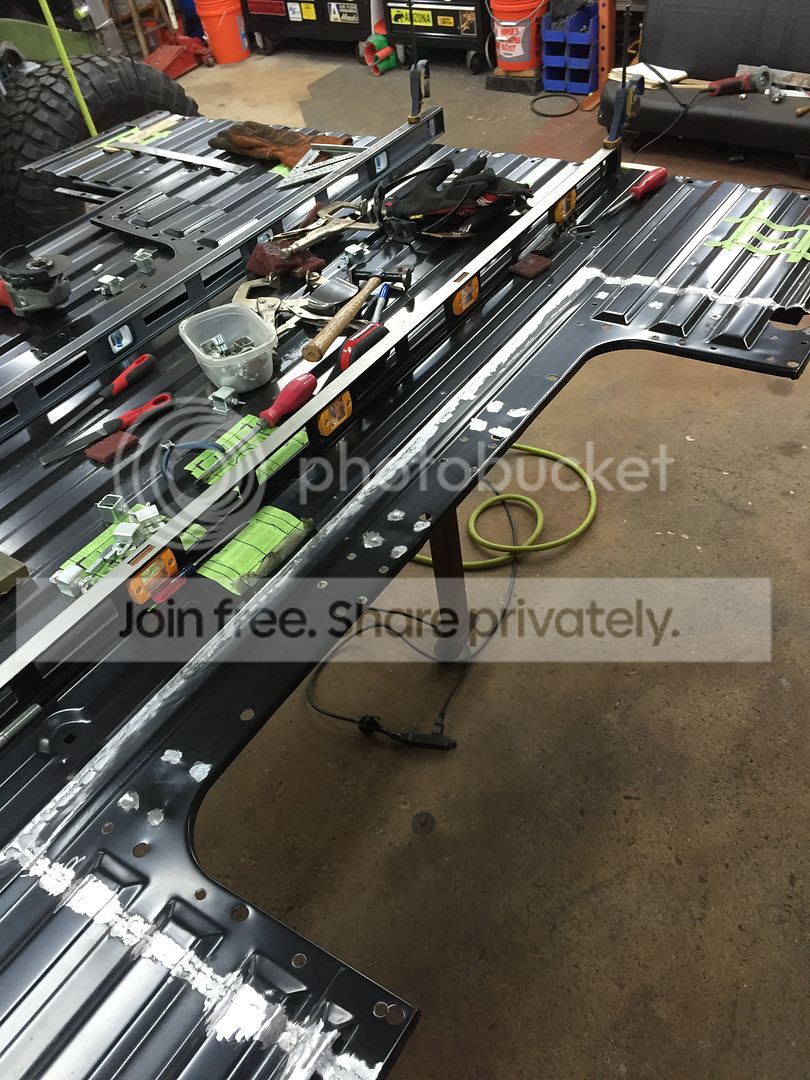
Here's a cool shot that shows the effect of the shifted wheeltub. If you are familiar with the stock look of the interior bedsides, you can tell now that there is a substantial amount of extra floor in front of the wheeltub (closest to the front seats) and the rear area toward the tailgate is noticeably stubbier than normal too.

IMG_9357.jpg


It took a long time to get the passenger side welded and cleaned up, and it was basically after dinnertime when I started to fitment of the drivers side panel... so I didn't really think I'd make much progress before I decided to go to bed. Fortunately, the fitment ended up being MUCH tighter on the driver side. It makes sense, since the "missing" metal that caused that large 1/8" gap on the opposite side remained on the drivers side parts... so they fit really well..

IMG_9361.jpg


The same rules applied as before: Weld.....skip.....weld.....skip.....wait.... etc. But ultimately I wasn't bridging a gap with weld.... just stacking new welds into the side profile of the previous weld beads.

IMG_9367.jpg


By around 11:30PM, I'd finally had enough. The welding was complete (though not dressed down flush) and I was satisfied that I'd put in a solid day's work and made some great progress.

IMG_9372_1.jpg


Tonight, I'll get back out there and grind those welds down... and maybe start filling in some of those "extra" holes where the original spot welds were cut through.


-G
 
Start da with 40, get the 40 out with 80, finish in 180 and you'll be golden. Get the hook it 2 pad and da paper, it's like a vel cro and can be re used as you switch paper around

Floors look great, gaps up sucks but,bad time it comes with the territory
 
Wow! That turned out nice. I guess for some reason I thought you were going to stretch the wheel opening for clearance also, but just shifting it back looks really good and makes more since.
 
Start da with 40, get the 40 out with 80, finish in 180 and you'll be golden. Get the hook it 2 pad and da paper, it's like a vel cro and can be re used as you switch paper around

Otherwise looks great, filling gaps up sucks but,bad time it comes with the territory


Electric DA or Air? I've got a pretty beefy Quincy upright compressor so I can probably keep up with the air demands of the DA. I'm guessing an air version might be a bit cheaper too? :dunno:


-G
 
Wow! That turned out nice. I guess for some reason I thought you were going to stretch the wheel opening for clearance also, but just shifting it back looks really good and makes more since.

I may end up cutting into it again later on, but only in a small area where the upper link mount may try to poke up through the floor..... :)


-G
 
Your compressor will handle a da fine
Make sure you have a good drying filter though....otherwise it will pump water out the da exhaust vent after a few minutes.
I would start w 80 which will also give you a good mechanical bond for a skim coat of filler
 
As stated your air compressor should handle a da, a dryer is recommend. I prefer starting my metal finishing in 40 when I have the material to sustain it and a lot of weld to flatten out, Then move to 80.
 
If you used a higher grit flapwheel that'd been well used w/ light pressure you can knock down those welds to look smooth.
 
If you used a higher grit flapwheel that'd been well used w/ light pressure you can knock down those welds to look smooth.

Yeah, I just don't want to create a "trough" in the middle where the weld-seam is.... I thought that by using a large, flat sander (like the DA) it would help to insure that I didn't dig in too deeply in any one area and would blend things out better...... Ultimately, I'm sure there is some distortion from the welding no matter what.... so if I try to grind it until the entire area is smooth and perfect I will have probably made the sheetmetal a LOT thinner than it was originally.

Probably better to just get it reasonably close, then bust out the plastic filler and blend and smooth everything out that way instead? :thinking: :dunno:


-G
 
as long as you kept the grinder flat, pay attention to the panel, you'd have to really be leaning on it or not paying attention to damage the panel in the way of material thickness. I use t27 flap discs on my makita

But if that's a concern some filler will do the job and look good as well
 
Last edited:
That's why I was saying light pressure on a used flapwheel, it should not remove a bunch of material. If you're going to use any filler, I believe 'All-Metal' holds up better on rough and tough surfaces than typical talc based body filler. 'All-Metal' will also not absorb water like the talc based so if you had any pinholes it would not be as prone to rust and flaking loose.

All-Metal

You should have enough scrap around, test out a couple of methods on them and see what works best - be sure to report back to help the rest of us.

Oh, and if you or anyone doesn't want to use an air-based DA, Porter Cable makes an electric one. But they're generally kind of hard to get locally, and seem to be the only co that does.
 
Electric DA or Air? I've got a pretty beefy Quincy upright compressor so I can probably keep up with the air demands of the DA. I'm guessing an air version might be a bit cheaper too?
I picked up a Hutchins 3500 DA used off eBay, and would quickly recommend. It's smooth, darned quiet, and my QT54 (looks similar to yours) feeds it a constant supply of air. You'll really enjoy the quality of the tool when it comes time to knock down a skim coat of filler on a large panel.

image.jpeg
It's been very effective smoothing butt welds with mild pressure and 40 grit stripit discs.
I like to finish with a 3M strip disc on my 2" right angle - very gentle and doesn't put a ton of heat in the panel.

David
 
Last edited:
David brings up an important point, whatever you use to knock down that weld take your time and try to limit the amount of heat generated by grinding, sanding etc. I like using a spanky new flapwheel disc usng the weight of the grinder only. They're nice and flat when new, so it's easier to not dig a concave track...
 
Greg, as I'm reading through this build... Had a question, maybe you've answered it and I haven't gotten there yet, but did you build in any kind of adjustment for the mog portals, such that when you get this thing going and you do any fine adjustments on your pinion angle your portals stay vertical?
 
Greg, as I'm reading through this build... Had a question, maybe you've answered it and I haven't gotten there yet, but did you build in any kind of adjustment for the mog portals, such that when you get this thing going and you do any fine adjustments on your pinion angle your portals stay vertical?

Hmmm.... Well, very early in the process I rotated the housings so that the pinions were be pointing directly at the transfercase outputs. (I plan on running CV-style driveshafts front & rear) THEN the portal mounting flanges were welded on at a perfect 90-degrees to the floor.

Actually that's not 100% true. The front axle was set up with 8-degrees of caster at that same point in time so I'd have good steering feel and good return-to-center when turning.

So... The setup is VERY close to perfect as it sits now, but obviously with all those threaded heims in the links there are plenty of opportunities to fine-tune my pinion angles (or caster) if there are any vibes during my shakedown testing.


-G
 

Latest Posts

Top Bottom