CK5
Register an account today to become a member! Once signed in, you'll be able to participate on this site by adding your own topics and posts, as well as connect with other members.
So.....one additional question:

150psi OBA system....or 200psi? :dunno:

MAW would seem to indicate that "more is always better" and a 2 gallon tank pressurized to 200psi is going to have more reserve than a 2 gallon tank at 150psi.

The real question is how much harder is it on the compressor to pressurize to 200psi? Every compressor I've ever seen works fast and effortlessly at first....then as it approaches higher pressures it gets slower and slower and generates a TON of extra heat in the process. VIAIR seems to have two distinct product lines depending on the max pressure you want... the 400C is a fast 150psi compressor, and the 444 seems to be the equivalent speed but in a 200psi version?

-G
 
I don't really hear them load up.... here's why


those black bits are fans to cool the compressors - but it's so buried under the car that I don't hear much of anything when they're operating. Believe it or not, they vibrate and that's what I 'hear' when I turn them on. One things - they don't come on at the same time, the each draw something like 30 amps at start up, so I have two pressure switches that turn its compressor on at a different pressure. I also don't have a tank because there really isn't any room.
the black box is gone as is the POS Rancho 9000 shocks (with air adjustment).
 
Last edited:
So.....one additional question:

150psi OBA system....or 200psi? :dunno:

MAW would seem to indicate that "more is always better" and a 2 gallon tank pressurized to 200psi is going to have more reserve than a 2 gallon tank at 150psi.

The real question is how much harder is it on the compressor to pressurize to 200psi? Every compressor I've ever seen works fast and effortlessly at first....then as it approaches higher pressures it gets slower and slower and generates a TON of extra heat in the process. VIAIR seems to have two distinct product lines depending on the max pressure you want... the 400C is a fast 150psi compressor, and the 444 seems to be the equivalent speed but in a 200psi version?

-G
I want to say the new ARB desired air pressure is at least 150 and maybe higher. Check into that and make the final selection. Since your using the 9" ARB your going to want high pressure to slam the engagement collar over to engage.
 
Last edited:
The higher pressures are going to make more heat and drive the pumps a lot harder...

Other pieces in the system have to be able to withstand that 200psi also.
 
It's becoming clear already that I will want some kind of consolidated "manifold distribution block" to put all the pressure switches, sensors, check valves and manual shut offs....keep the supply lines simple underneath and manage everything else from a centralized location... :thinking:


-G
 
It's becoming clear already that I will want some kind of consolidated "manifold distribution block" to put all the pressure switches, sensors, check valves and manual shut offs....keep the supply lines simple underneath and manage everything else from a centralized location... :thinking:


-G
Hmmm... you mean like a small, 2 gallon tank? you're pretty smart - I don't care what Josh said about you.
 
I want to say the new ARB desired air pressure is at least 150 and maybe higher. Check into that and make the final selection. Since your using the 9" ARB your going to want high pressure to slam the engagement collar over to engage.

@miniwally

Is that for the redesign of the RD99 (35-spline version) or is that the recommendation for the older designs as well? :dunno:

I'm going to be using the RD119 (31-spline version)... I just heard too many horror stories about the RD99 that I didn't want to take a chance with it.


-G
 
@miniwally

Is that for the redesign of the RD99 (35-spline version) or is that the recommendation for the older designs as well? :dunno:

I'm going to be using the RD119 (31-spline version)... I just heard too many horror stories about the RD99 that I didn't want to take a chance with it.


-G
I think that the entire current ARB line is able to hold the higher pressure. In a nutshell ULTRA4 showed that faster engagement with higher pressure cut wear on the locking collars.
Many moons ago we were told not to use pressure higher than 80-90 on an ARB. Then we upped to 150 I think and it's been better. Double check but there's new standards that might mean higher storage pressures.
 
2017.05.22 - UPDATE! - !! PUNCHLIST PROGRESS !!

The detailed list that was started last week is already starting to pay dividends. :waytogo: It helps to sharpen the focus on materials and parts that will be needed in the near-term and helps prevent delays.

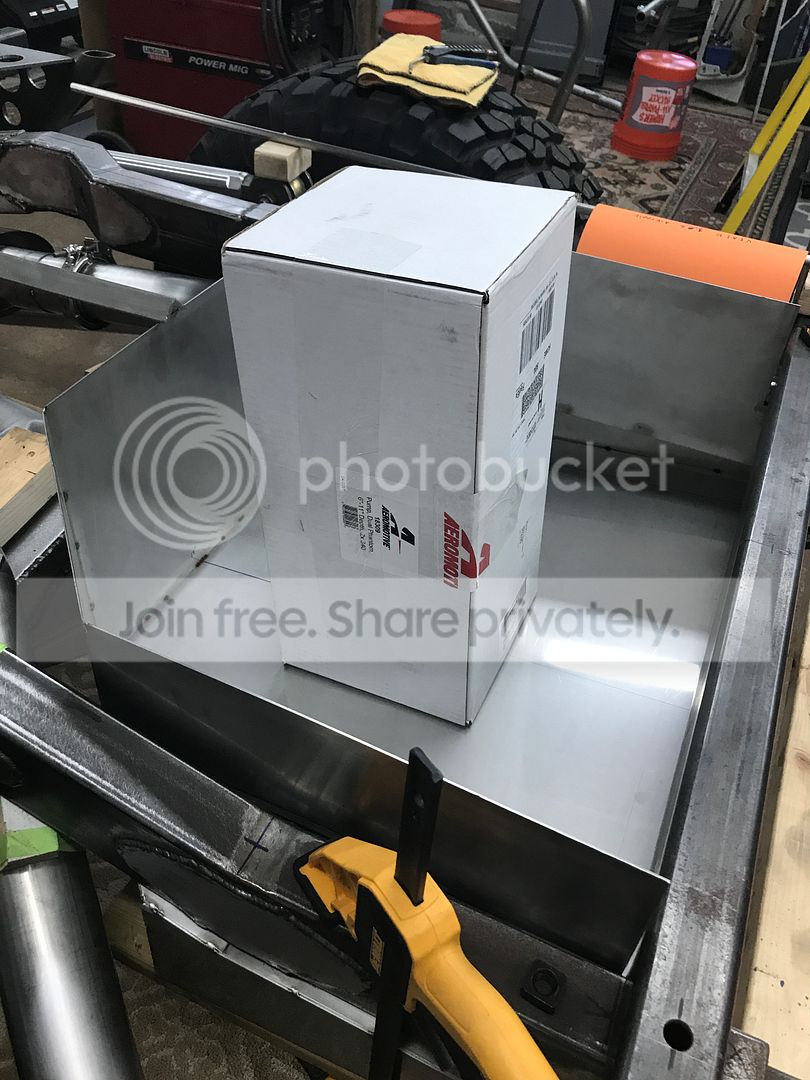
Case in point. Finally got around to ordering the dual-fuel pump Aeromotive in-tank pump setup..... installed it the same day it arrived!!! :haha:

IMG_6842.jpg


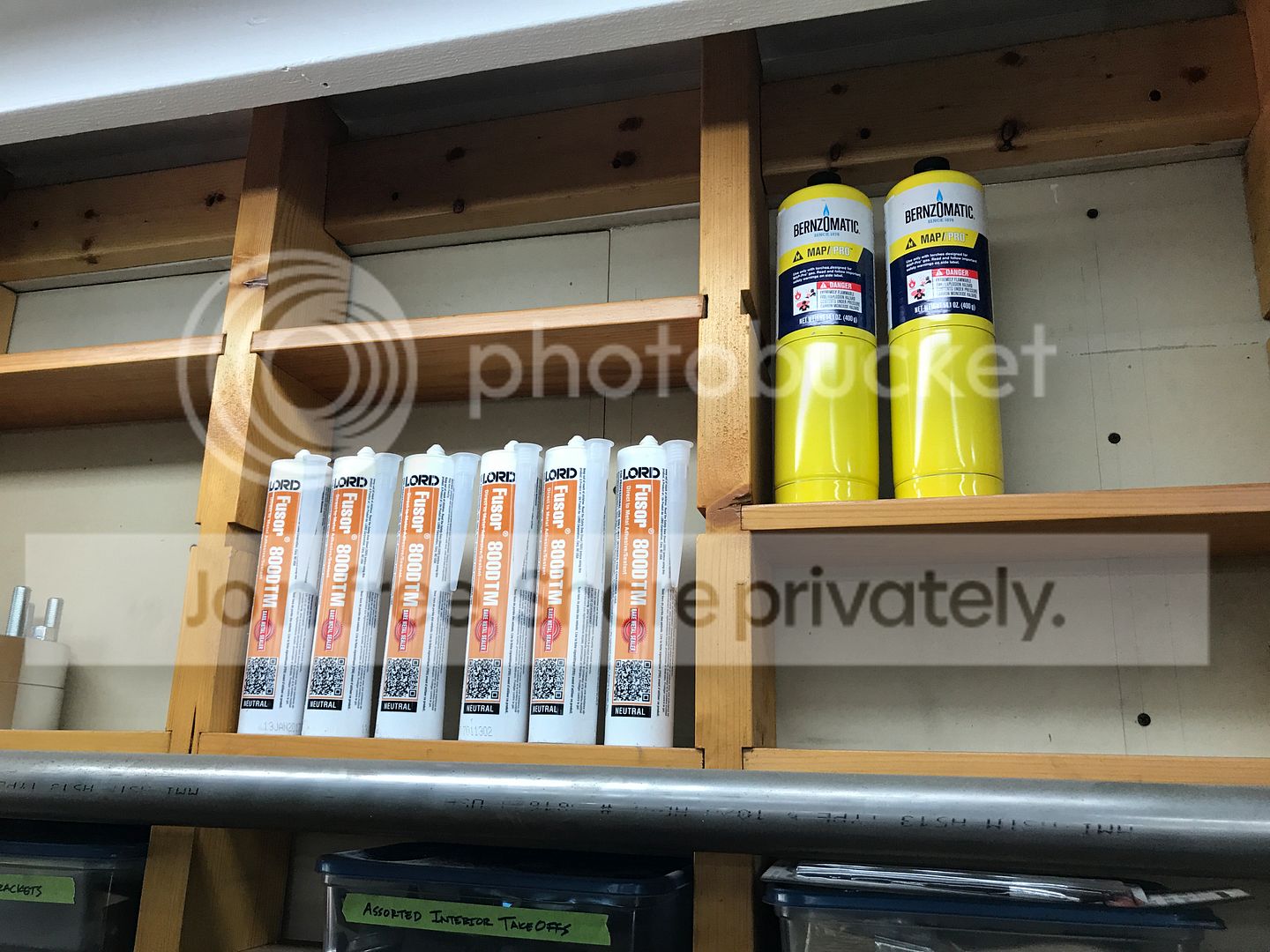
Discussions about the correct type of seam sealer to use, and whether a MAP torch can help to shrink metal were all resolved last week... so instead of putting those thoughts to the side (as I often do) the orders were placed IMMEDIATELY to get the materials to my shop. (Got a copy of the Metal Bumping book, and a handheld IR Temp gun as well!) :)

IMG_6846_1.jpg


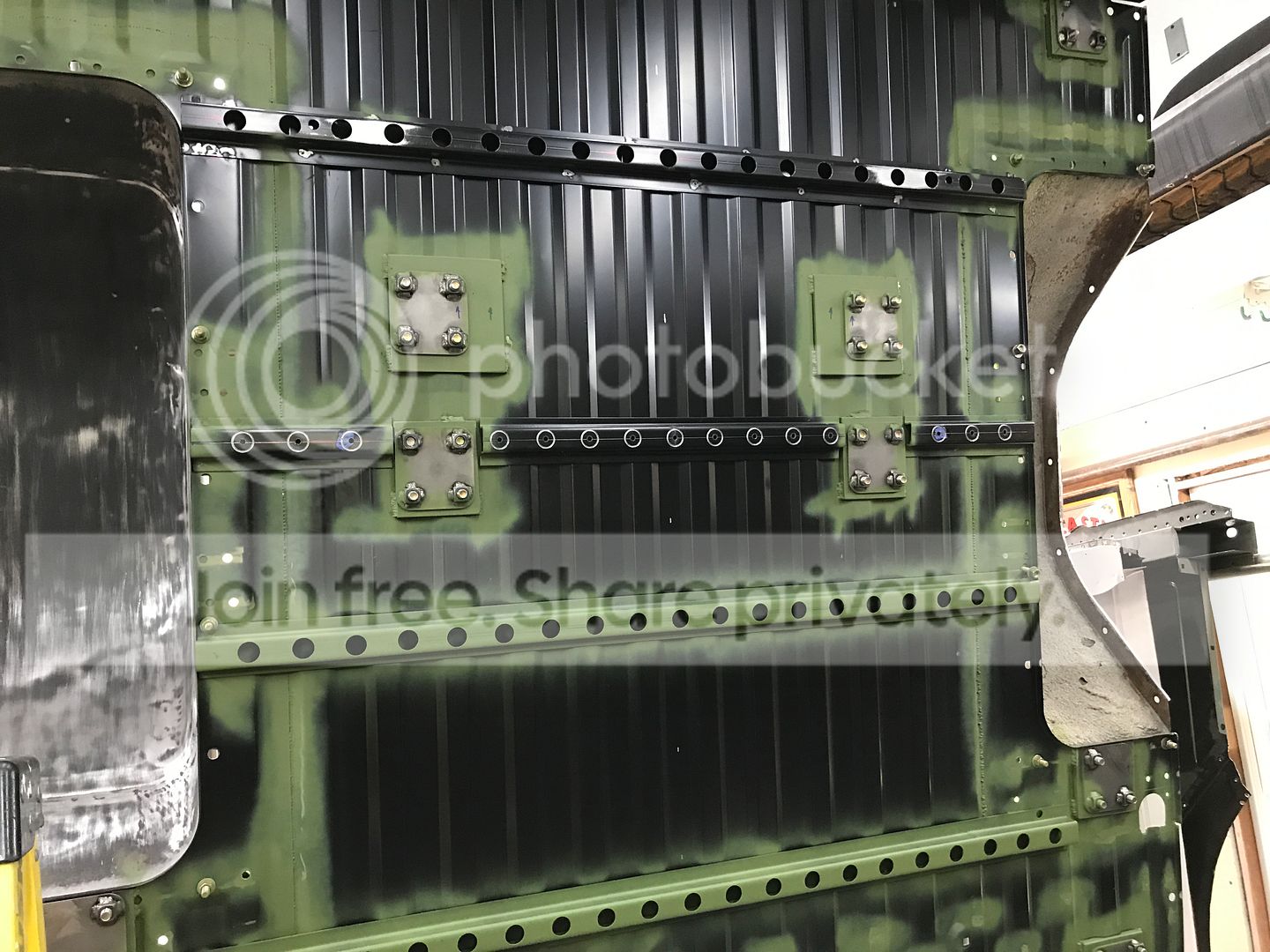
After a long Saturday of "Honey Dos", a full shop day had been earned on Sunday. It felt good to get back to the routine of year's past..... A clean shop, a hot cup of coffee, a sunny day and some music playing in the background with the garage doors rolled up. :waytogo: First on the agenda was finishing up the speedholes in the bedfloor.... I'd already crossed the halfway point and had a pretty solid system figured out so getting all 74 holes drilled, deburred and Ryken Green'ed went fairly quickly.

IMG_6856.jpg


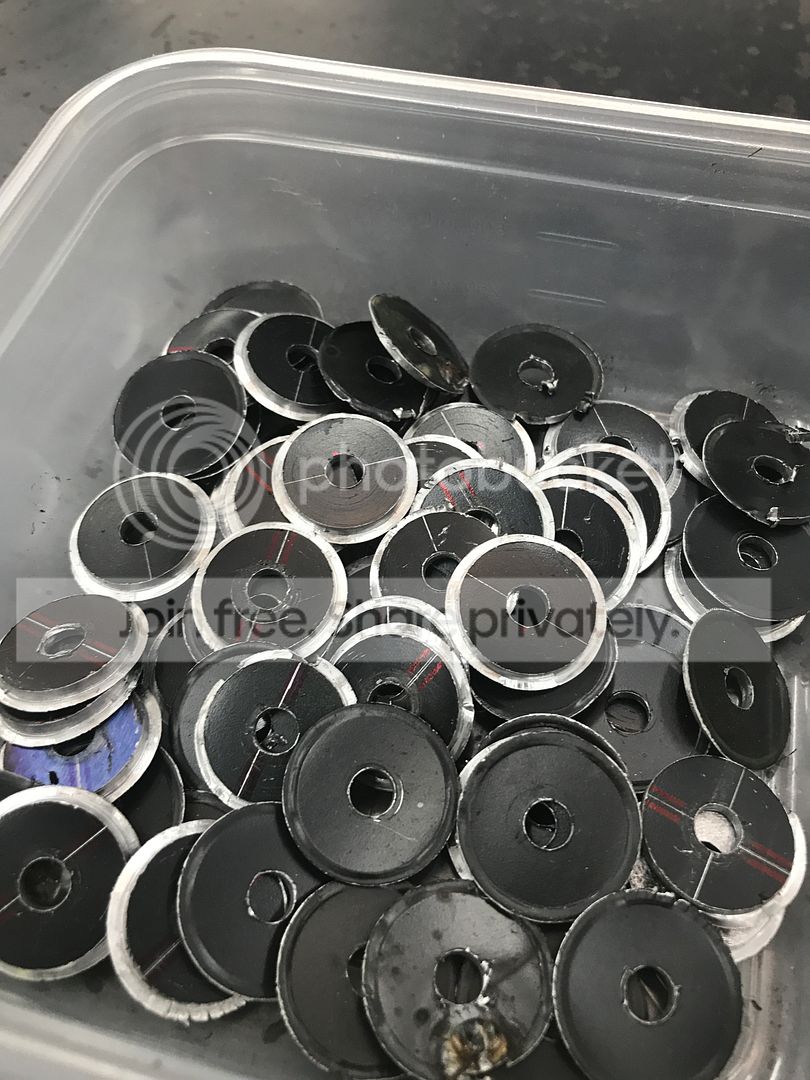
Of course, all of the "holes" were collected so that they could be weighed to calculate the weight savings.
IMG_6862.jpg


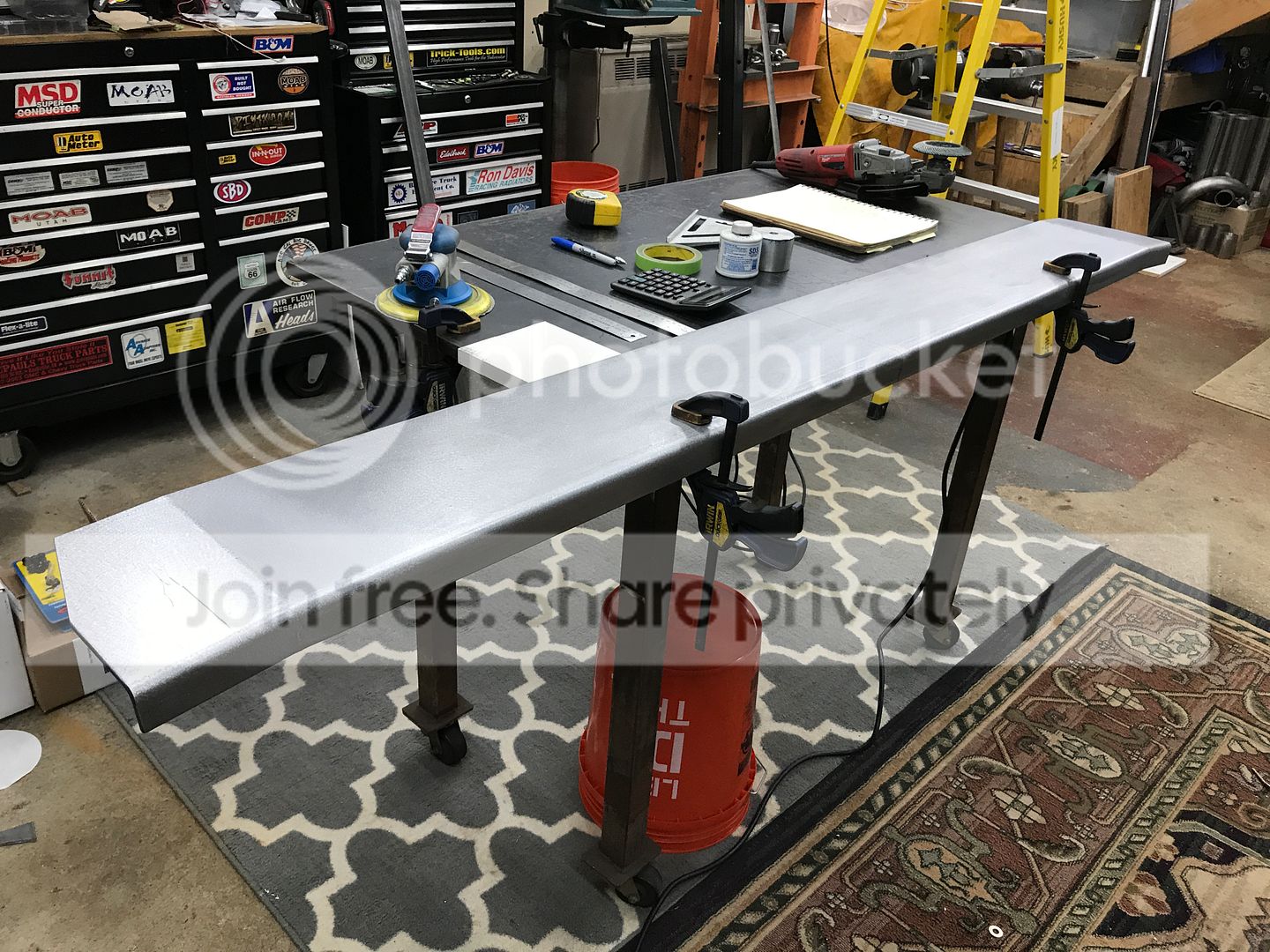
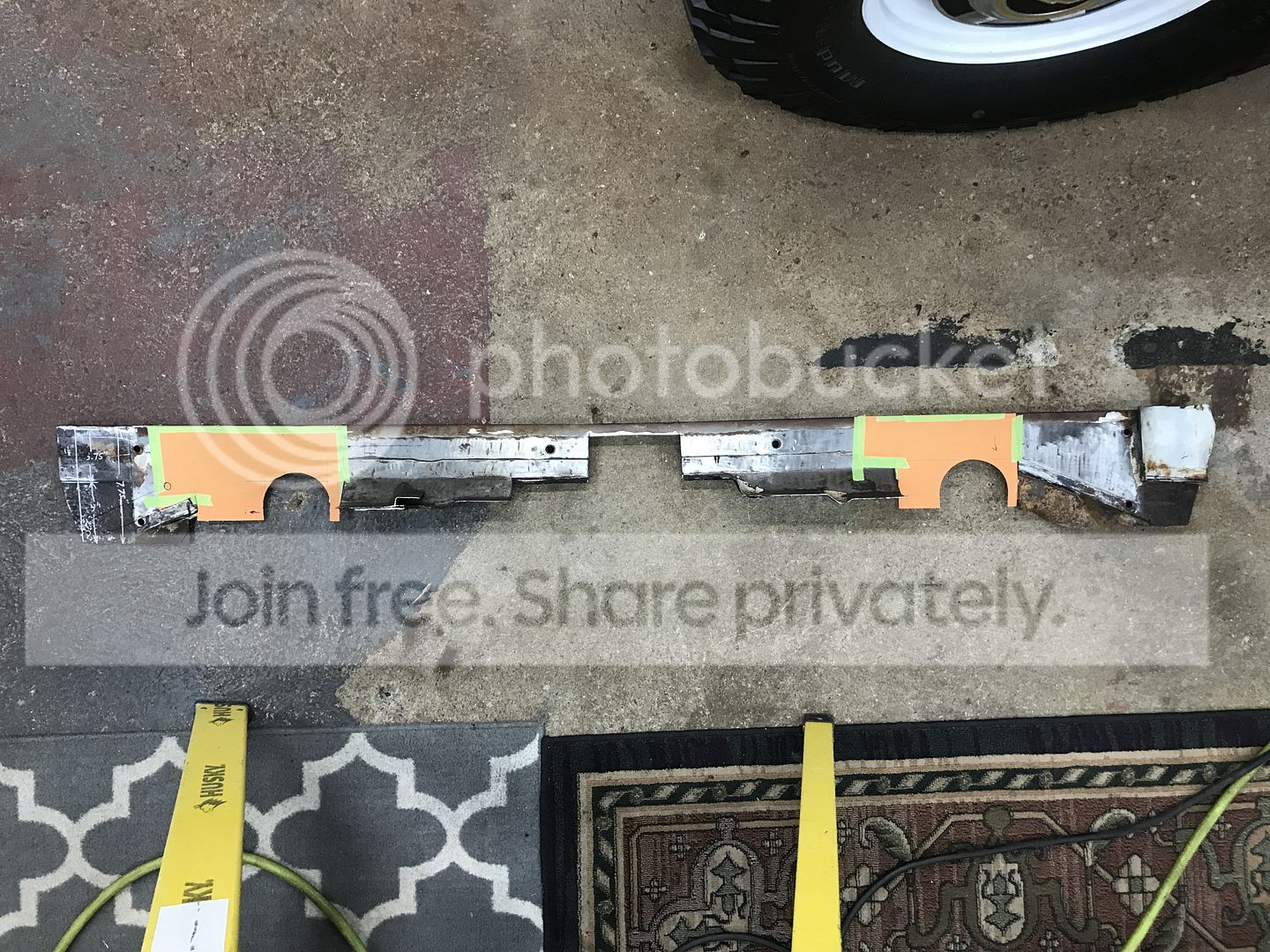
Referring back to my new punchlist, it is clear that the priorities are fuel tank and frame-related. There was one item on the frame that has been bugging me for a while, and that is the vertical "step up" panel that connects the front floors (behind the seats) to the raised bedfloor area. The original one was heavily rusted and had been hacked up for years as I the truck went through various iterations and changes. It also happens to be a pretty important "index" for setting the rear bedfloor height correctly, and therefore determines where the bedsides will land.... how straight the door gaps will be on the striker side as well as along the bottom edge. Over time, the panel has been stepped on, pushed, mashed and misaligned and had a really bad droop across to top lip. A had a local metal shop bend me a 75" long replacement panel out of some 3/16" plate which is far beefier than the original, but knowing that I would cut quite a few clearance holes in it, the strength will probably be about the same overall as stock was.

Here's a shot of the worn-out and butchered panel:

IMG_6877_1.jpg


The process of replicating the original panel shape began... There is a subtle (but critical) 5* angle built in to the factory panel on each side. This is what allows the original bedside sheetmetal to connect without creating a "bulge" that interferes with the door closing properly on the striker side. So the first order of business was replicating that same angle on the new thicker panel. (I used my new D/A to clean the metal and to dress down welds. I love the end-result... looks great!)

IMG_6876.jpg


After a LOT of measuring and reviewing old notes in the Oracle notebook, it was time to cut the old panel away... knowing that the new panel could be fit back PERFECTLY where it needs to go.

IMG_6879_1.jpg


There is quite a bit of additional work left to transfer all of the cuts and fastener holes from the old pattern to the new one, but that is something that should hopefully get finished tonight. :thinking:

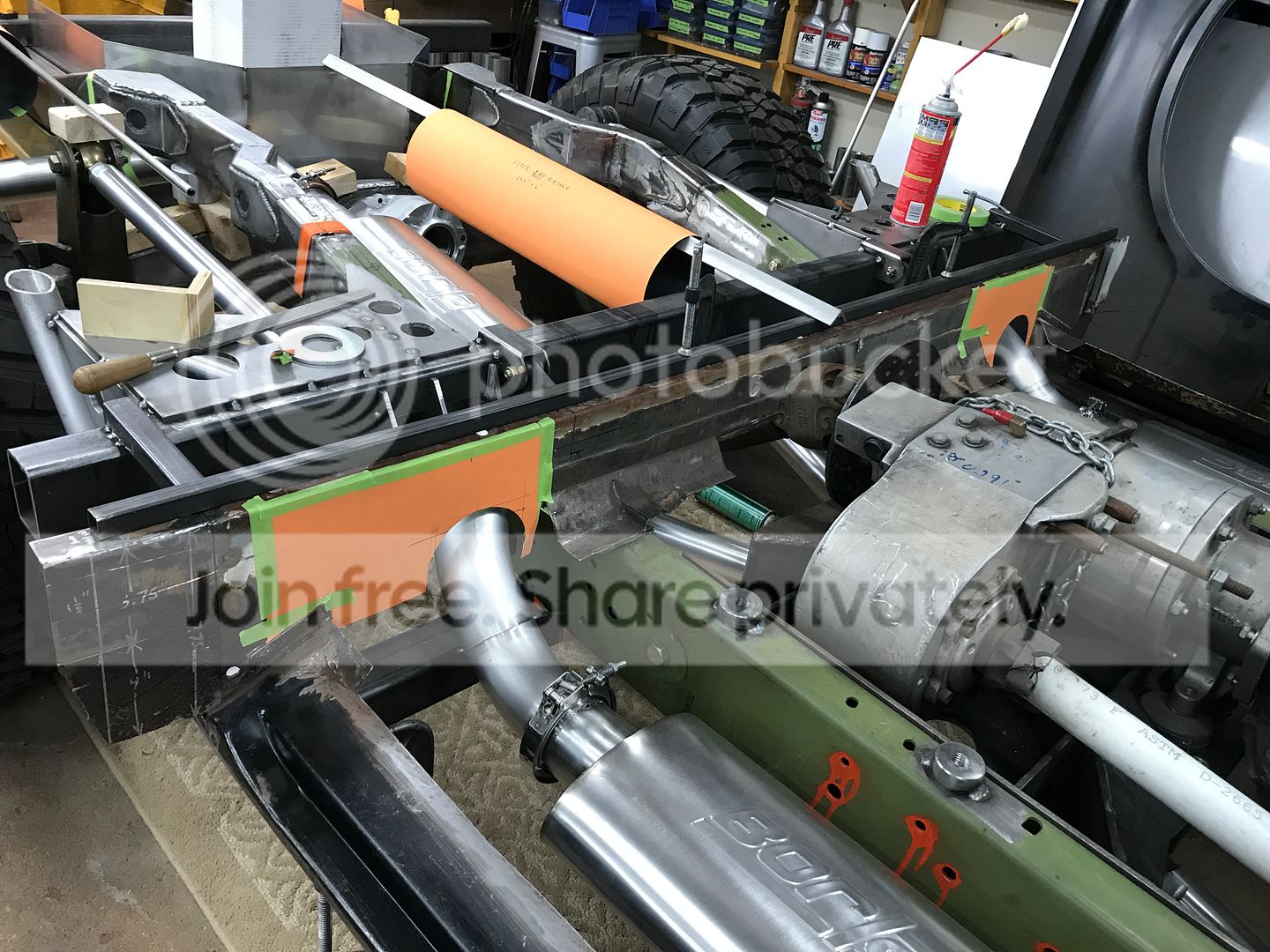
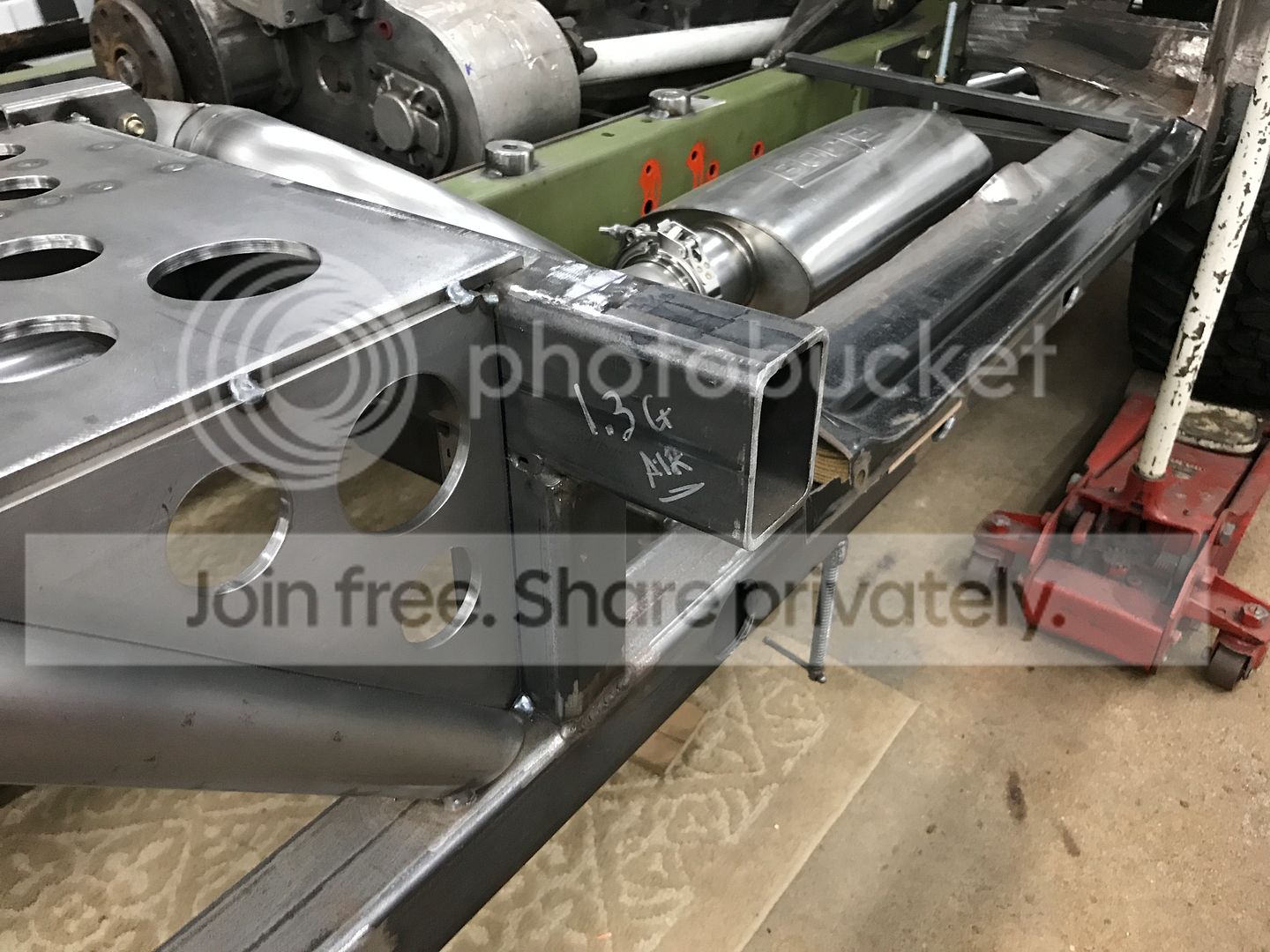
One final curiosity from last night was the revelation about all the new cross-sills (2"x3"X.188") that have been installed. They are actually quite long and offer a substantial amount of interior volume and might even be a valid way to store compressed air instead of fighting for space for a conventional 6"x 24" cylinder.

IMG_6893.jpg


By utilizing the mid-ship mounted cross sill, and the rearmost sill (near the fuel tank) there is a combined internal volume of 2.5 Gallons. :saweet: The concern is whether pressurizing those tubes to 200 PSI is a good idea, and the other concern is the idea that there will probably always be some amount of moisture trapped inside them (like there is for ANY tank that holds compressed air). Rust is a primary concern, though I think with a good interior coating and some thoughtfully placed drain valves it could probably be dealt with adequately.


-G
 
You get to welding on those tubes you're going to change the strength of that tube wall. I'm not you, but I wouldn't put that right between all my passengers. Shrapnel right in your back and/or the front of your rear passengers. Bad juju.
 
I don't think "Pipe Bomb" is the failure mode of a welded steel tube like this would be. In the event that there was a failure you would see a burst along a weld, the pressure drop is so fast that I would expect some deformation outward and that's about it. There are plenty of examples of people successfully using rock sliders and bumpers for air tanks.
 
Rock sliders and bumpers aren't that close to soft flesh. It may only rip, but I wouldn't bet my or my loved ones soft bits on 'may'... But I'm also someone who doesn't go out in the garage in flipflops to weld/grind either... lol
 
:thinking:


What sounded like a good idea last night at midnight..... is beginning to look like more trouble (and risk) that it's probably worth.

I'm finding all kinds of aluminum tank sizes online.... Everything from 4" diameter up through 7" so I can play all sorts of games and trade off diameter vs. length until I find something that fits.

Came VERY close to pulling the trigger on the Viair 480C (200 PSI Dual compressor) packaged system today.... a little more research, and I should be ready to buy the compressors AND the tank to go with them.


FORWARD!!!! :waytogo:

-G
 
there is little reason not to use the tube for merely 200 psi. 2000 psi? sure, that's a bomb, but 200 psi? not at all. Most of us use air compressors with welded tanks that are far less material then that little tube. Worst case scenario there is maybe 2 cubic feet of air contained and it goes out a crack.
 

Latest Posts

Top Bottom