CK5
Register an account today to become a member! Once signed in, you'll be able to participate on this site by adding your own topics and posts, as well as connect with other members.
Looking great Greg. About the warping, etc. The thing that worked for me when I welded on my axles a lot was waiting. I would tack everything in place first, and then only weld 2" at a time, and then let the axle cool, and move around. I would weld 2" on the DS, then 2" on the PS, then let it cool and do something else, then come back and weld another 2" on each side. It's time consuming, but it seams to work pretty well without warping anything. There was always something else to work on in between welds for me.

Rene is this a legitimate method? I have heard that you either need to keep it hot, or keep it cool, but whatever you choose, don't change halfway through.

It's definitely the preferred method for bodywork, but for something more structural a variant is better. The variant is bracing, and weld sequencing. The rough idea is you put a section of weld in, then the next weld that goes in would be one that directly counteracts the 'pull' from the first weld so the part stays as straight as possible and ends up with very little weld stress.

Using Gregg's truss as an example where the truss gets welded to the front and rear sides of the tubes I would mark out a stitch pattern approximately every three inches using soapstone...then put a good tack on each three inch mark. I'd then weld 1/3 of the stitches on the front, the exact same 1/3 on the back, then the same on the other side of the pumpkin. Then make another lap getting it to 2/3 welded, then finish. Let it cool, remove the braces and clean it all up.

It's a good idea to use a 1/8" thick combo disc to cut a "v" into the ends of the stitches so you can burn into them and get good penetration at the stop-starts.

Ideally a back-step method would be used to keep the heat affected zone more consistent.

Rene
 
So Greg, any new updates since the last reply here 2 months ago? Maybe you're still changing diapers as a hobby. :haha:
 
Wow, burn! I suppose being a dad isn't such a bad hobby either though. If your attention to detail in being a good dad is anything like your fabbing, I think your little boy is going to be a hell of a great kid.
 
Damnit!!! I see this thread at the top of the list and get excited thinking

"Long holiday weekend, no updates for a while, thread just jumped back to the top, YES!!!!"

Aaannnd...No update, thanks guys, thanks.:laugh:
 
2011.09.06 - UPDATE! - HAPPY BIRTHDAY TO ME....


What better way to spend a birthday than out in the manspace? Sad to say that my most recent shop day was on Father's Day, so I could barely even remember what some of the tools were for... There was this one red one with wheels that I think is called a "metal melter" :dunno: and another one that cuts metal with compressed air and electricity. :D It took me a few minutes to get reaquainted with everything but eventually the cobwebs cleared and I was able to get started.

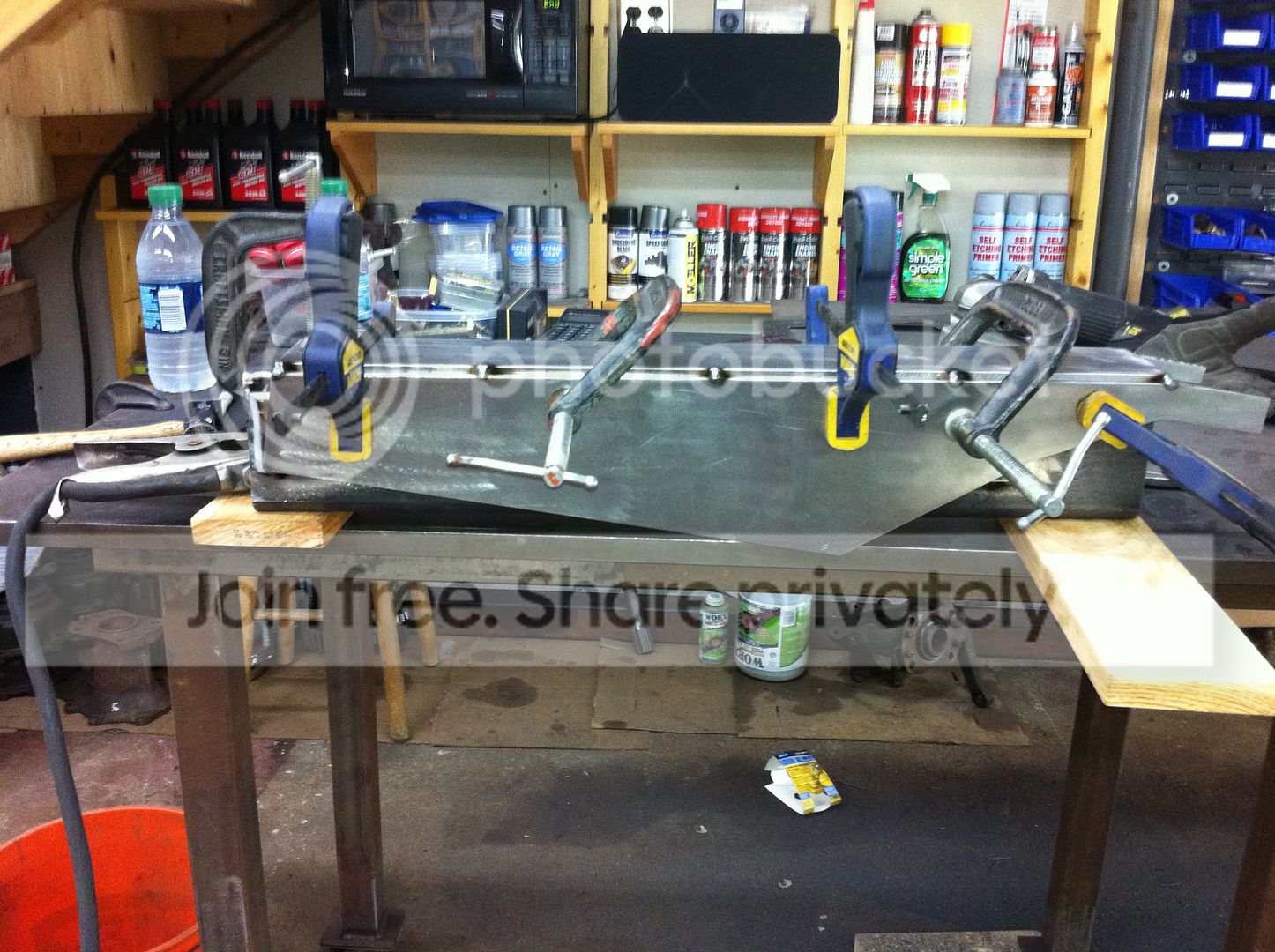
I had created a foam core truss design a while back and wanted to start transferring that into metal so I carefully cut the individual foam pieces apart and used them as templates to trace over to some 1/4" steel

IMG_1157.jpg


I decided to try a new method for fitment. Instead of overlapping the corners, I am actually trying to align them "corner-to-corner" so that there is a full 1/4 fillet gap between the parts. This isn't easy... because there is no way to clamp parts together that barely even touch each other at the corners. So the solution was to use a piece of box tubing that matched the interior dimension of the truss and clamp the sides and top piece against it. This had the added benefit of controlling distortion and pulling when I laid the tack welds in place.

IMG_1161.jpg


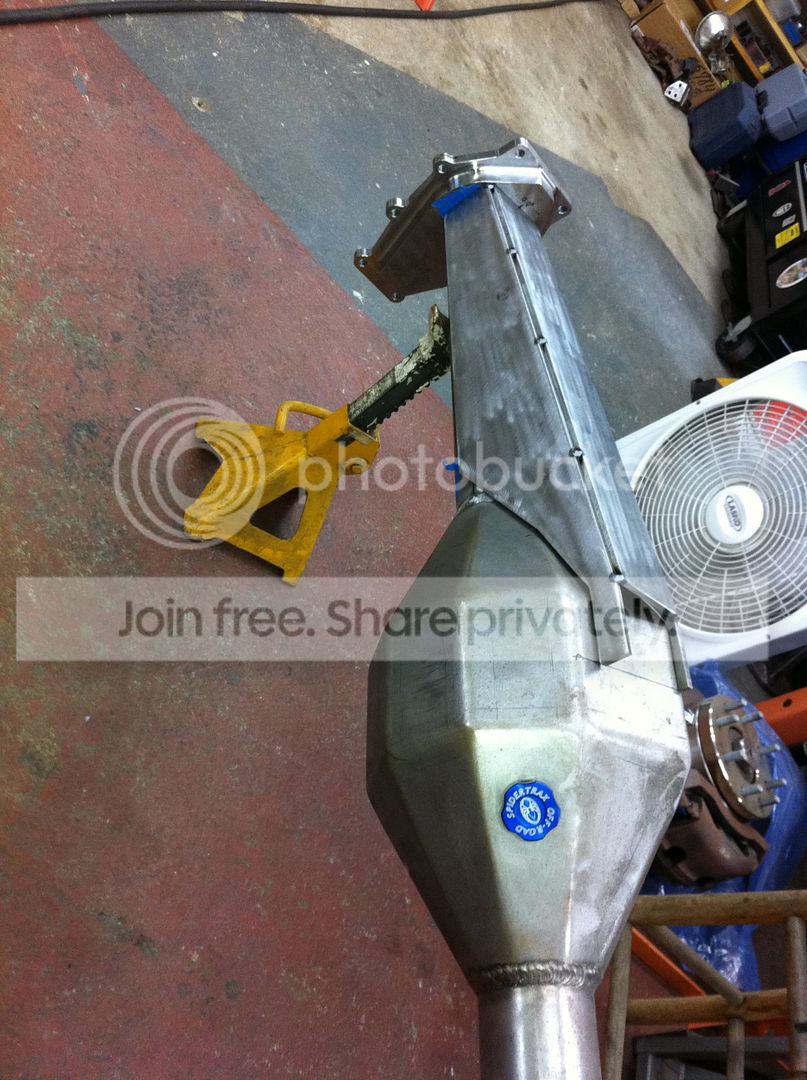
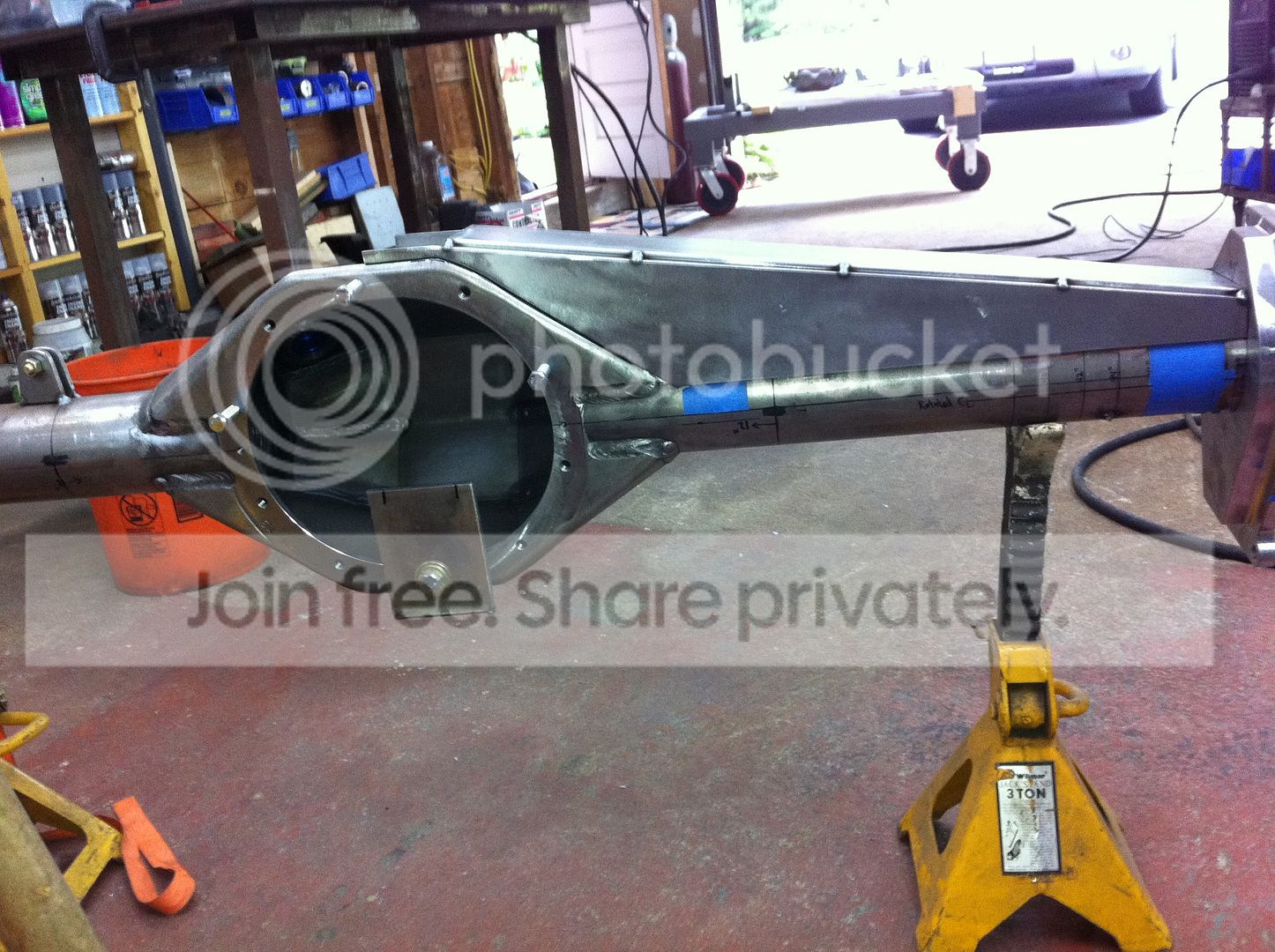
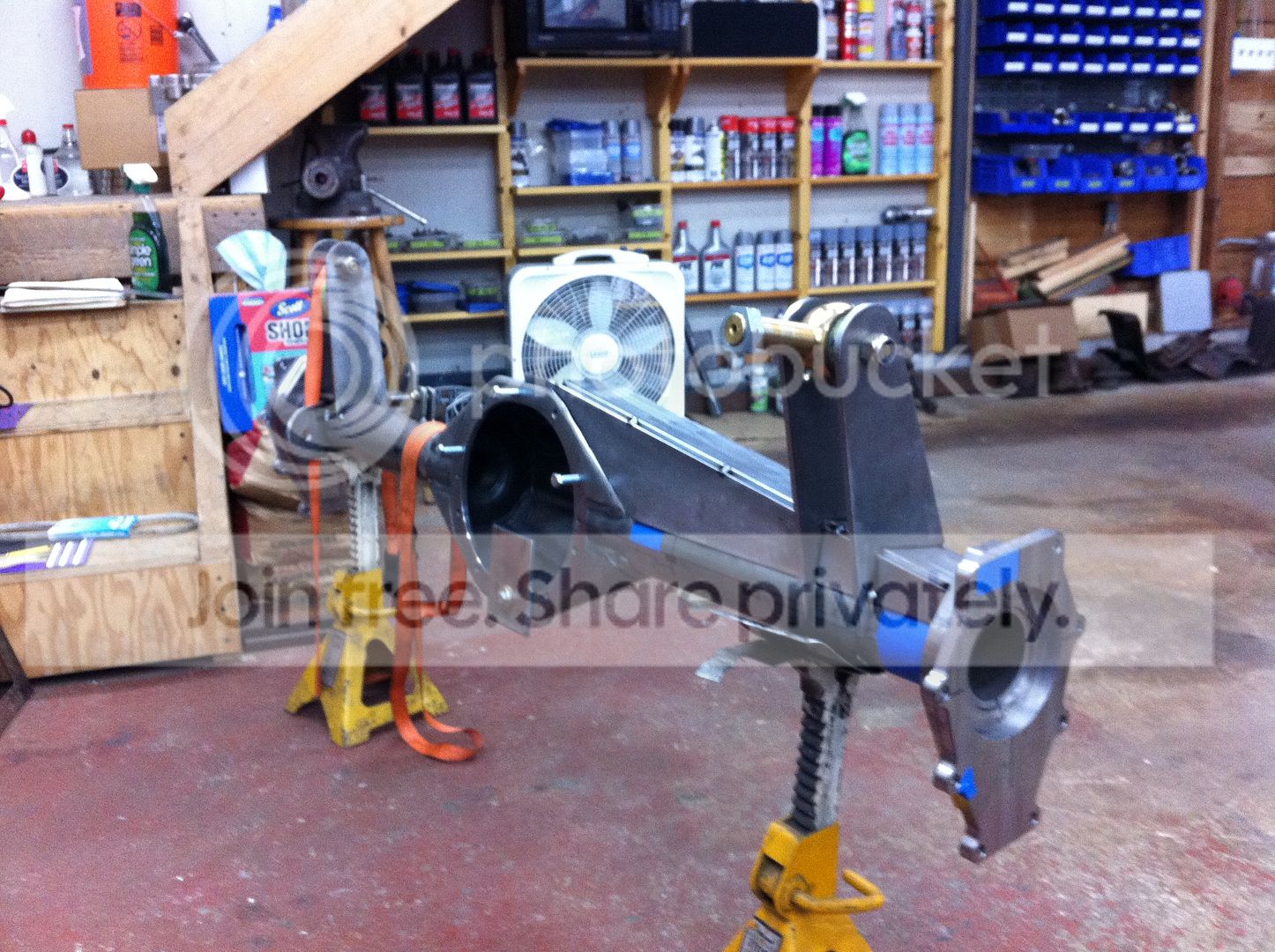
Like so many other previous projects, there was a lot of trimming and test fitting to do before the truss would lay into position correctly, but after a couple of hours I had it right where it needed to be. Here is the view from the back side. Notice where the edge of the truss sits relative to the axle tube height...

IMG_1165.jpg


Now the photo from the front side of the truss... on this side, the edge sits much higher. This is necessary to keep the truss flush with the mating surface of the 3rd Member. I wanted to have the truss welded right along the edge of that plate... not in front of it.

IMG_1167.jpg


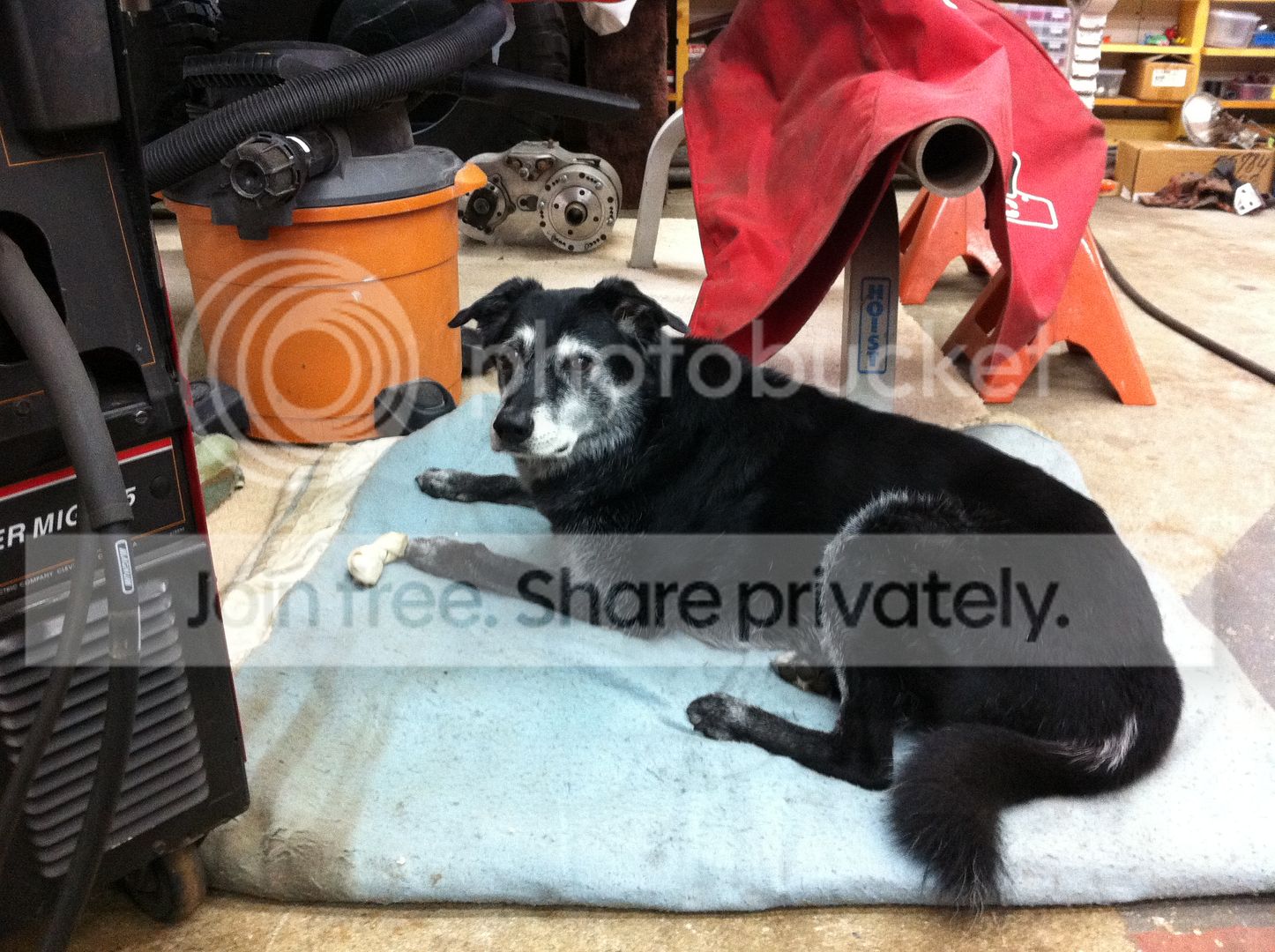
It was a sort of rainy, and overcast day....and I was pleasantly surprised that my old friend decided to come out and visit me for a while. He's been with me for MANY years (he'll be 15 years old in November) and that scruffy old blue blanket has been "his spot" in the workshop that whole time. He's now 100% deaf, so the shop noises don't bother him at all...but I still need to shoo him away when I've got welding to do so I don't hurt his eyes.

IMG_1178.jpg


Even with slow progress (mostly due to being rusty on shortcuts and techniques) I still had time to get the first parts of the upper link mount fabricated and tacked into place. This will serve as the basis for not only the upper link, but there will be tabs for the lower link and the coilover mount integrated into this part too. It's a pretty complex piece so I'm sure there will be many more hours spent getting it just right.

IMG_1194.jpg


The plan of record is to completely build the driver's side truss (tack welded) to make sure I've got everything correct. Then use my templates to make the passenger side parts since they should be perfect mirror image parts...just reversed. Then, I will finish weld the link brackets (seperately), then fully weld the truss parts (inside and outside) using the clamping technique shown earlier... then weld the link mounts to the truss and drop the whole assembly on top of the axle to be permanently welded in place.

My thinking is that I can more carefully control the welding by doing everything seperate, and if there is any warpage I can make adjustments before it goes onto the axle. Having the truss as strong as possible before it is welded to the axletubes should help to control warpage during that final step.... and obviously, I'll be hitting up Rene for a more detailed explanation of exactly HOW the welding sequence should go to prevent warping the housing.

I know it's not a huge update, but it still felt good to get into the shop again...even if it was only for a day. In the coming weeks, I am hoping to get a few hours in the evening at least one night per week. Now that my little boy is going to bed around 7:30PM and sleeps pretty much through the night now my hope is to slowly give myself back some of the "shop time" hours that have been going to diaper changes and late night feedings.





:usaflag:
 
Great to see some progress on this. Been long overdue, but more than understandable.

Hope to see things flow a bit more regularly now.


Nothing like mans best friend to tag along. My Rambo (3yr old Boxer) will just sit right next to me in the driveway, and happy as could be just watchin.
 
I hate to tell you this but I think your going to crash your strut into your upper control arm in articulation.

We've been using this same design rear suspension for years and have found that the towers being that tall on the axle gives them a lot of side to side sweep if you will during articulation. We have mounted the shock behind the upper link bracket and now have then on the upper arms for the race car.

I don't think you will clear your tire and upper link with the strut mounted there.
 
Really...?

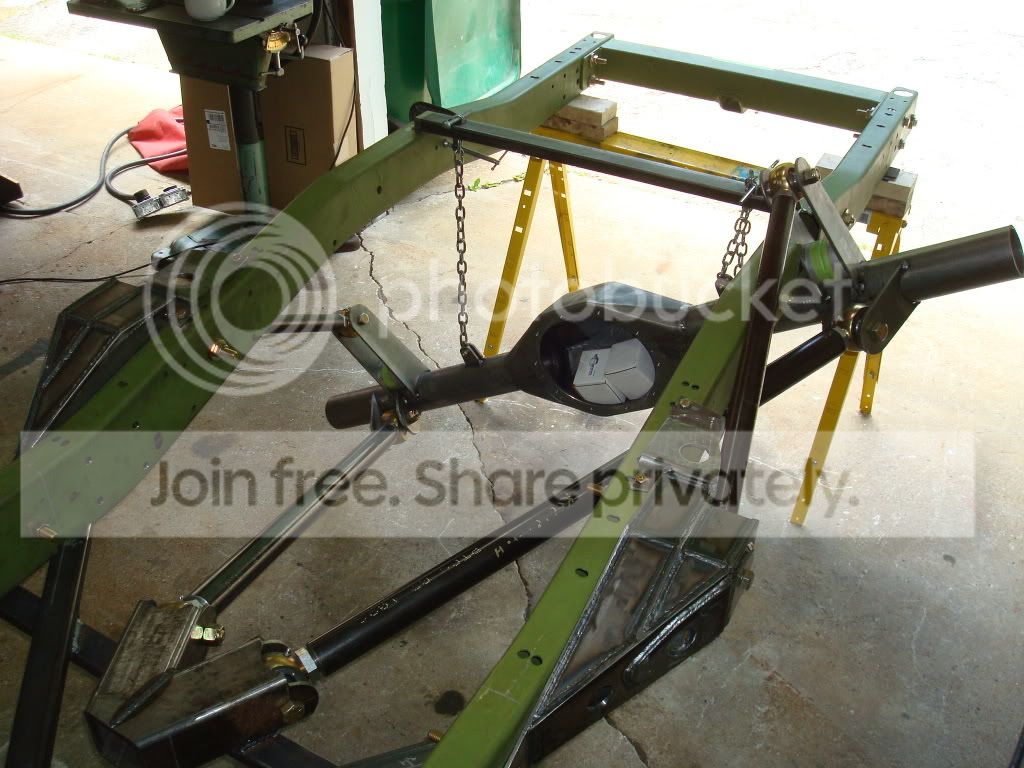
The photos in post #1529 are the clearest ones I've got so far to show the position of the links vs. strut mount.

When I put the mounts beside the upper link mount (parallel to the axle tube) there were all sorts of interference problems.. So I knew I'd have to either mount the strut behind the axle tube or in front of it. The latest design has it a few inches forward of the link bracket. There isn't a ton of extra room in that area but it seems like it would be adequate for the strut shaft to clear as the upper link tower swings up and down with articulation.

It seemed to make sense at the time, so I hope my logic is correct on this one. :dunno:


:usaflag:
 
It looks like you have 4" to 5" from the center line of the strut to the center line of the link, from the way the mounts look. Correct?

Take out the ~1.5" radius of the shock, and ~.75" radius for the control arm and you only have ~2.25" give or take a bit between the body of the strut and the control arm. I bet that when you articulate the low side tower will move/angle outwards 4" plus, then depending on your mounting width for the struts at the frame end you will end up with the strut angling in and that's when your going to see the interference.

Look at the ongoing build up page of Stephens blazer, http://offroaddesign.com/K5morph.htm there are a few pictures that show just how much the towers interfere with everything.

There isn't a good way around it but to mount the shock really high off the axle or behind the axle. I mounted a set of bypasses off the top of the towers for the Vegas to Reno race in 09' and it worked but just barely without getting into the chassis.
 
I think I see it now......

Old pic:

DSC03154.jpg


The drooping side shows the upper link tower rocking forward under serious droop, and I think this is the interference point you were referring to?

I am starting to see why you suggested that mounting the strut behind the axle solves a lot of interference issues.


:usaflag:
 
I think I see it now......

Old pic:

DSC03154.jpg


The drooping side shows the upper link tower rocking forward under serious droop, and I think this is the interference point you were referring to?

I am starting to see why you suggested that mounting the strut behind the axle solves a lot of interference issues.


:usaflag:

You got it. If the strut doesn't hit the tower it will hit the link. Mount the strut 4" or so off the back and you should be golden. I wish I had pictures of my old set up to show but I don't.
 
Looking very good Greg! Don't worry about rushing back into the shop, that boy is much more important that what some weird guys on a forum think. :grin: They just grow up so fast, but I do look forward to seeing more updates.
 
Looking very good Greg! Don't worry about rushing back into the shop, that boy is much more important that what some weird guys on a forum think. :grin: They just grow up so fast, but I do look forward to seeing more updates.

W3RD!

Sometime in the future it will probably be fun to go back and remind myself where "Danger" was in his development at different points in this build thread....

Here's a recent shot of my little buddy:

IMG_0174-1.jpg


He's a total blast. :waytogo:


:usaflag:
 
Hey Greg, you going to wait to weld the mog adapters on until you have all of the bracing stuff cut and tacked together?
 
Yeah probably...

I did all the calculations for the pinion angle a while ago, but should probably confirm everything one last time before burning them in permanently. I'm welding them on both the inside and outside edges, so they will need to be finish welded before I can drop the truss into place... Otherwise I will end up hiding some unwelded areas....


:usaflag:
 
Yeah probably...

I did all the calculations for the pinion angle a while ago, but should probably confirm everything one last time before burning them in permanently. I'm welding them on both the inside and outside edges, so they will need to be finish welded before I can drop the truss into place... Otherwise I will end up hiding some unwelded areas....


:usaflag:

Do you mean pinion offset? You should really have a center section BEFORE you assume pinion angle. :thumb:
 
No, I meant pinion angle.

The mounting face of the housing is parallel with the pinion yoke, so if I use the mounting face as my reference I should be able to accurately set the pinion angle as well. Last time I ran the numbers for it, I ended up with a rear driveline angle of 10*. The combination of the portals and the effect of a flipped low-pinion centersection (creating a hi-pinion setup) gives me a very flat rear driveline, and very shallow operating angles for the u-joints.

My plan was to re-use my old 1-Ton rear HAD CV-shaft, so I'll need to set the pinion side to as close to 0* as possible (no angularity in u-joint) and let the CV side deal with whatever angularity is left.

You can see from the last photos that the upper link towers are slightly angled forward. When the pumpkin gets rotated into it's final position, most of that forward "rake" will go away. There should still be a slight amount left since the upper links are designed to be 1" forward of the axle centerline.


:usaflag:
 

Latest Posts

Top Bottom