2009.01.31 - UPDATE! - IT'S ALIVE!!! HYDRO-BENDER ACTUALLY WORKS!
It turned out to be a REALLY productive day in the shop today. In an unusual twist, I actually accomplished MORE than I was expecting...
On to the pics!

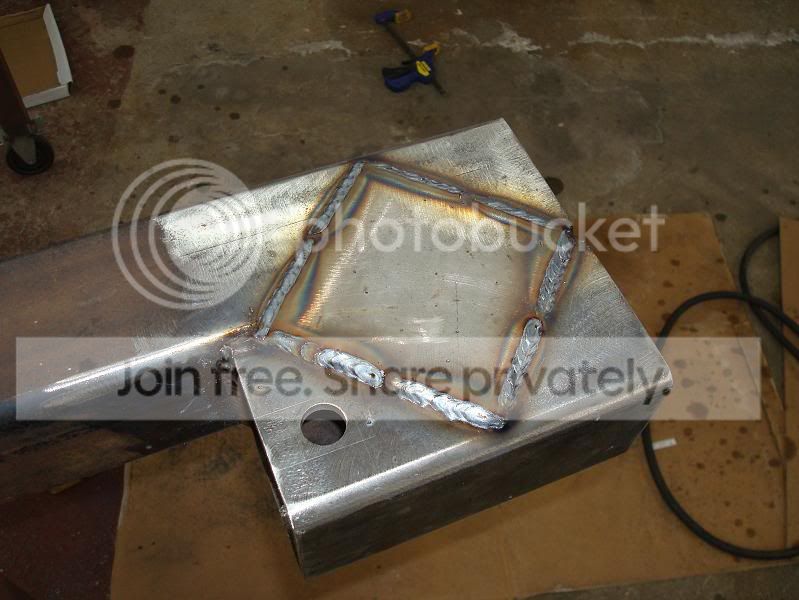
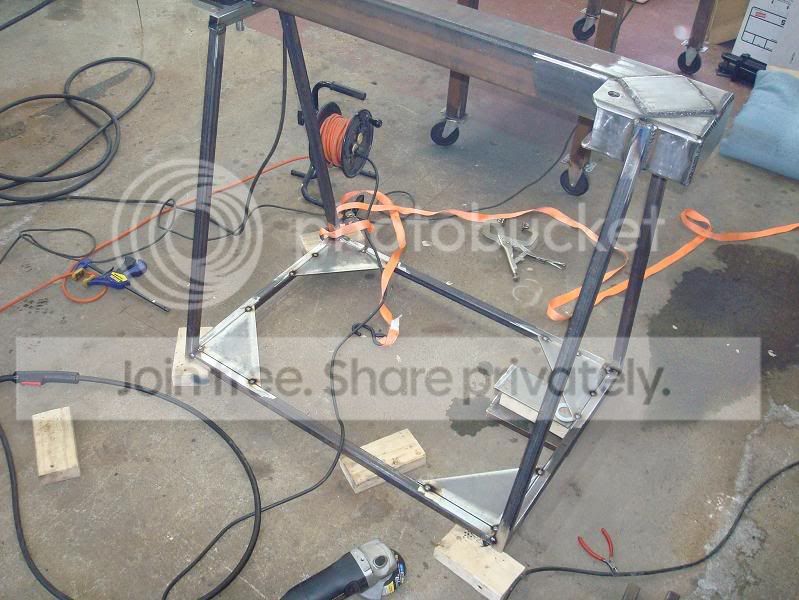
Here's a shot from this morning. Once I got the legs finish-welded, I wanted to add some gusset plates to square up the base and also provide a spot to add the casters to make this thing more portable and storable when not in use.
After that, I welded on some casters I got from McMaster-Carr as well as 3 leveling feet so that I can easily get this base off the wheels and stabilized. Three is a lot easier to make level than four would be....just like a 3-legged stool is a lot more stable than a 4-legged one.
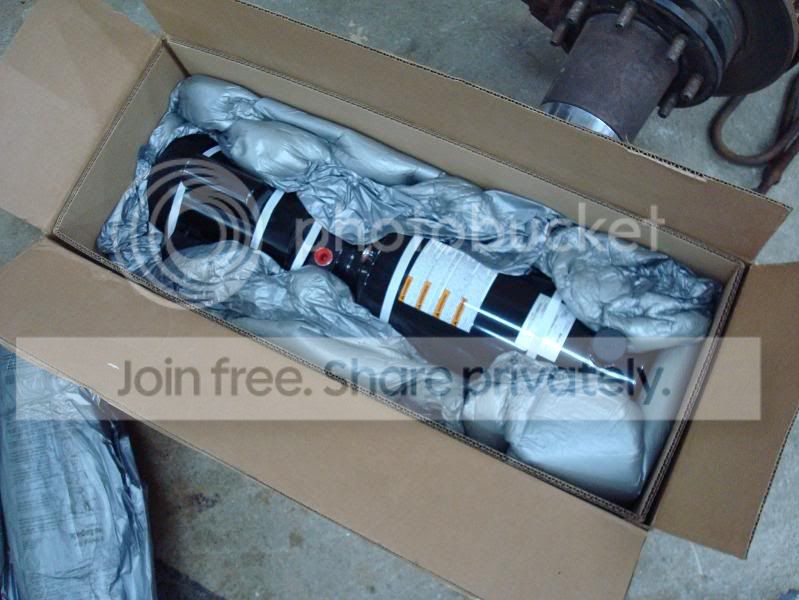
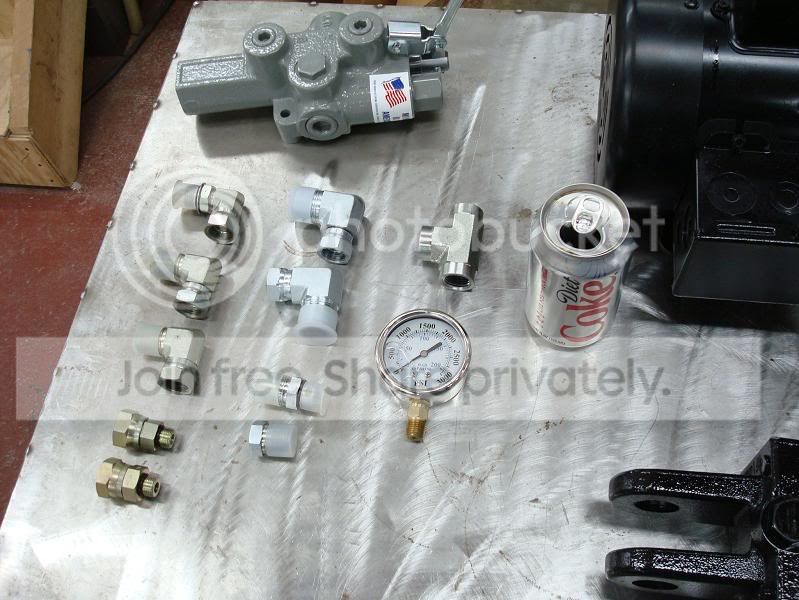
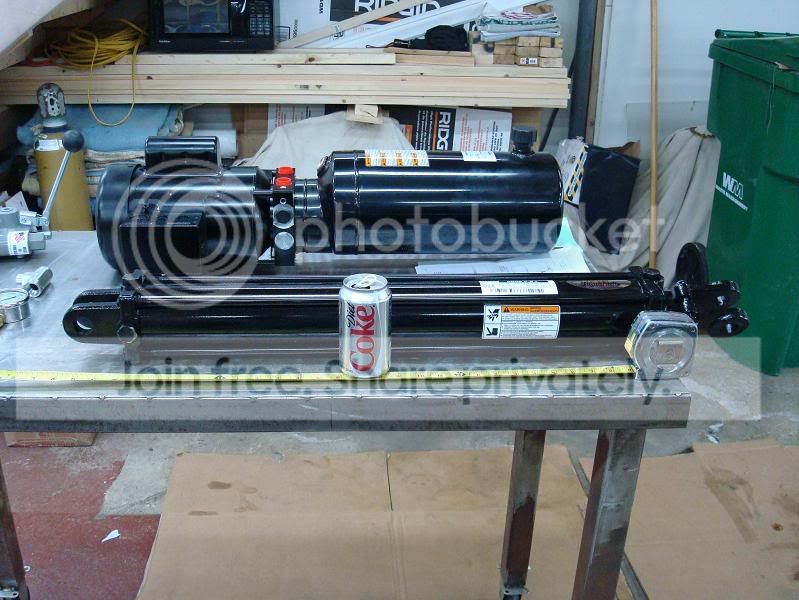
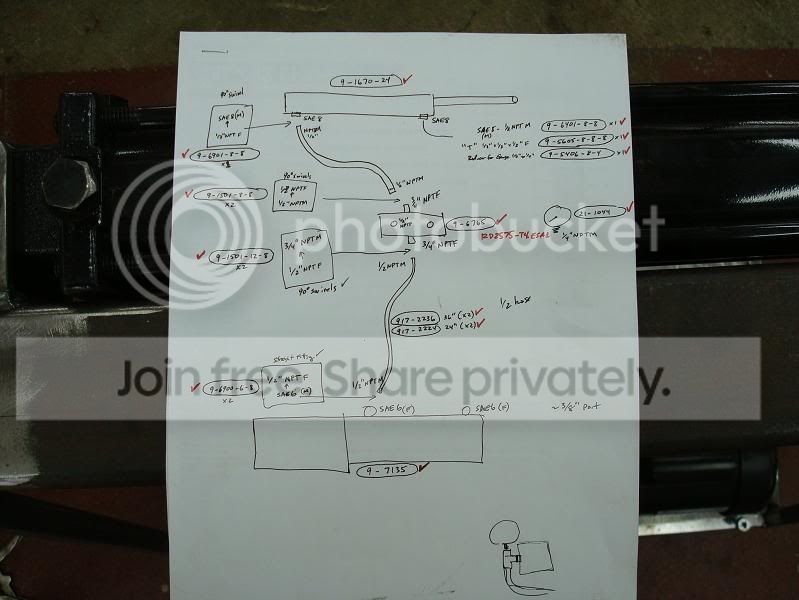
Once the base was done, I was anxious to get the pump mounted and try to get the hydraulic hoses mocked-up. Here's how I imagined it in my head when I was trying to build my parts list.
I wanted to dry assemble everything once to make sure I remembered which adapters went where...Also, I only bought two 24" hoses and two 36" hoses. In retrospect, I wish I had bought longer hoses....they didn't seem nearly as long once I had to start working with them and getting the routing finalized.

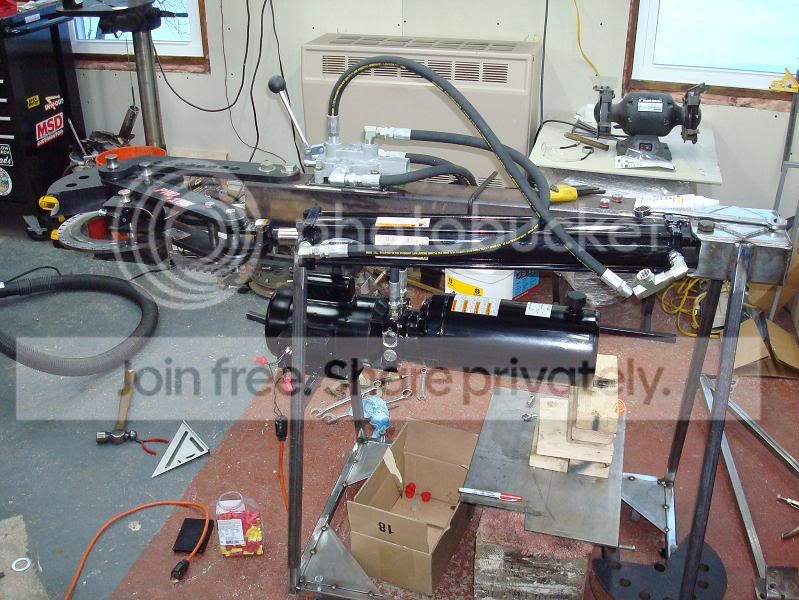
Here's how things looked once I got the hoses and fittings deciphered. The pump ended up mounted about 16" from the bottom platform (I'll admit, more a function of the short hoses than actual intent) but I think it will be more protected from damage in this spot. I could just imagine dropping a 2" 240* bending die on that motor. Not pretty.
About an hour later, I had everything in it's final position and went back to add thread sealer to each fitting and tighten them down for good. I wasn't really sure which of the ports on the PowerPack was the output and which was the input, so I filled the reservoir with fluid and powered it up for a fraction of a second to see which port pushed the fluid out. I had to do the same thing for the control valve, since I wasn't 100% sure which port would be "extend" and which would be "retract".
Once I had all the hoses connected I was excited to turn the pump on and start moving the lever to see if this whole mess was actually going to work. At first, since there was a lot of air in the hoses....the ram would surge and I'd get about 3" of extension almost instantaneously. It was a bit unsettling how much it was jumping around and shaking the whole stand. I did a few full extensions and retracts, then topped off the fluid tank which had emptied out into all the dry hoses and empty ram. Once I got that all done, the unit began to move nice and SMOOOOOTH for both the extension and retract motions.
Since I didn't have any tube to load into it, the pressure gauge read "0" most of the time. The only time it would move is when I would max out the ram, or bottom it out.....then I could get about 1000psi in an instant. A quick flick of the lever to the opposite position would release all the pressure and drop the gauge to "0" again. I think this will be a nice feature, since I won't have to worry about springback calculations. If the gauge is reading "0", there isn't any tension in the part to worry about.
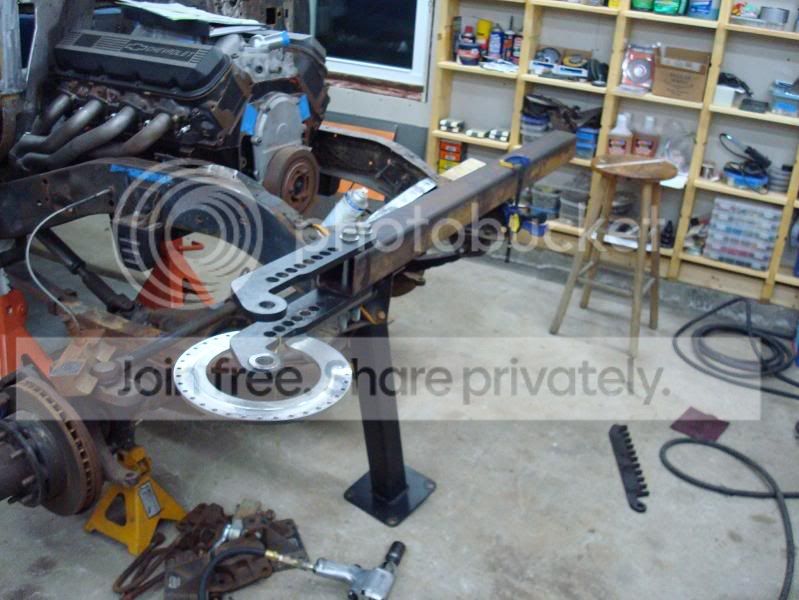
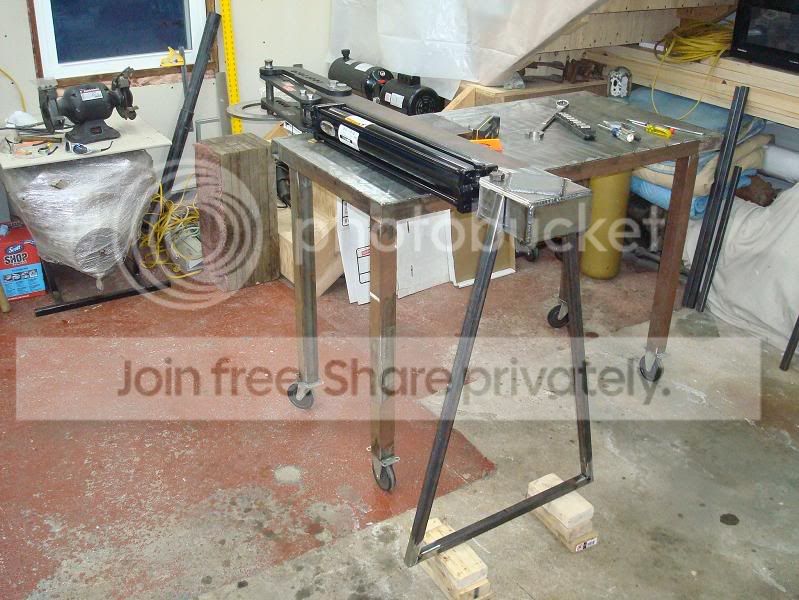
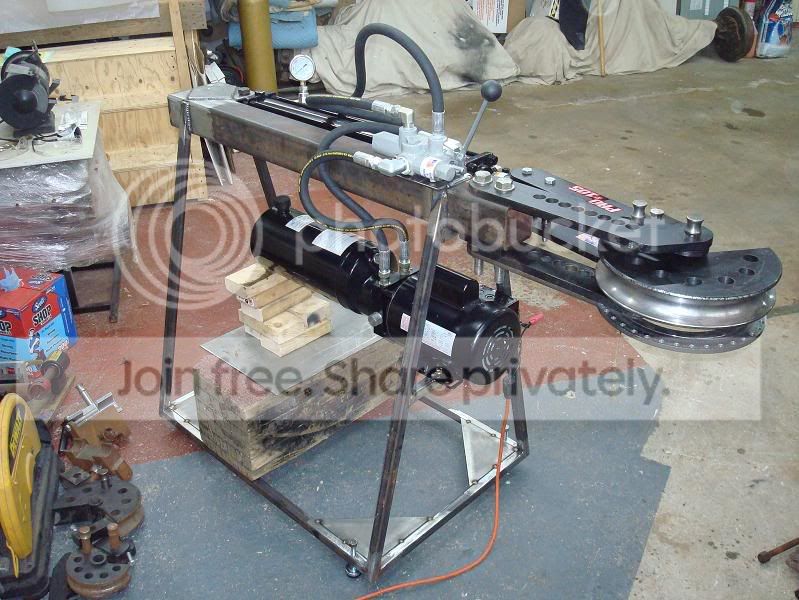
Here's the shot as it looks right now...
If you look carefully, you can see the leveling foot setup, and it's quite obvious that I didn't have enough time to finish the bracket to hold the reservoir side of the PowerPack yet. This is the operating position that I expect to use it from. In this position, it is easy to read the degree wheel, operate the control valve and see the pressure gauge on the fixed-end of the ram. This puts me on the "incoming" side of the tube also, so regardless of what I'm bending I should never have to worry about the part being in my way as I'm trying to operate the controls.
So, as of now there are a few small details to finish up. I need to finalize the wiring and add a switch, get a longer bolt for the fixed end of the ram, and then build some hangers for all my dies and follower blocks so that they can stay with the machine and also add weight help keep the machine balanced when I'm working with long sections of tube.
It was a good day!

ps. POB is "Plane of Bend". Basically it's a bracket that allows you to connect a digital angle finder to the incoming tube and set a reference point (You start at 0 degrees). For each subsequent bend, you move the tube forward into the bender and rotate it until you have the next offset degree measurement you need for more complex 3-axis bends.


you fooled me into thinking there was an update.