CK5
Register an account today to become a member! Once signed in, you'll be able to participate on this site by adding your own topics and posts, as well as connect with other members.
UPDATE:

Greg just got back from CES in Las Vegas. :D

Work stuff.....plus some walking-around looking at plasma TVs and other fun stuff.


:usaflag:
 
2009.01.17 - UPDATE! - HYDRO BENDER BUILD BEGINS...

I finally got back into the shop and straightened things up out there, it had really become a mess from other woodworking-related house projects. Once I had things suitably back in place, it was time to open the boxes that had been waiting there patiently since before Christmas...

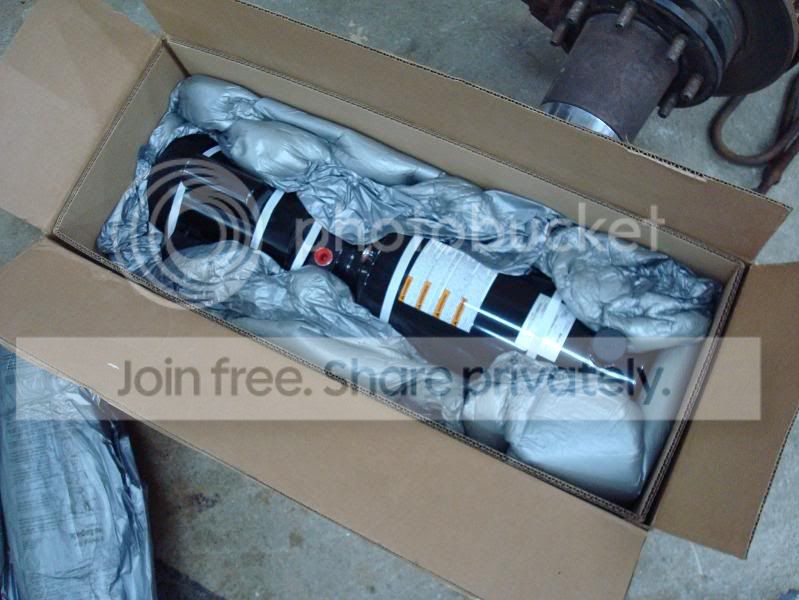
Here is a shot of the PowerPak from SurplusCenter. They did a nice job protecting it for shipment, and even though it's heavy it didn't get damaged or punch-through the outer box like most poorly packed stuff does...
DSC01382.jpg


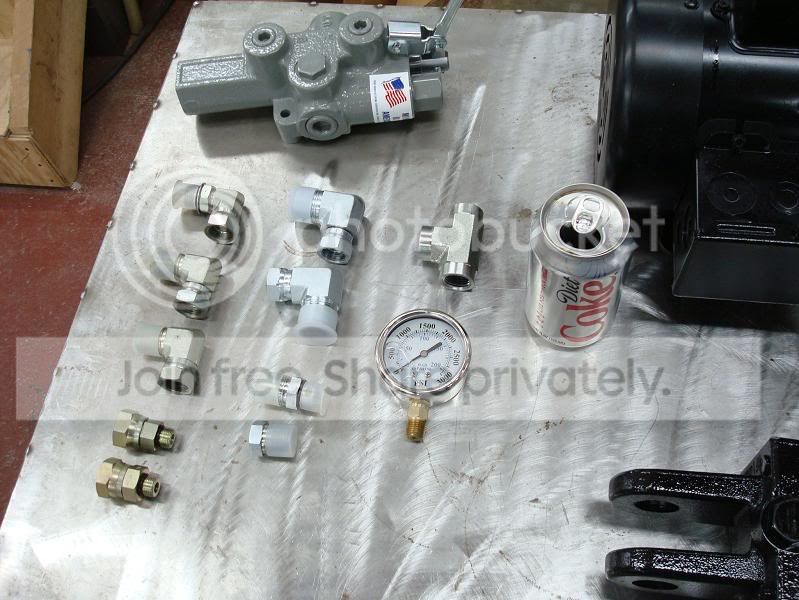
A shot of the control valve, and a bunch of the fittings and adapters that I'll need to get the hoses to work with the numerous types of NPT & SAE threads. I decided to get a nice liquid-filled pressure gauge also just for fun so I can see how many PSI are required to initiate a bend in various types of DOM vs. HREW. :wink1:
DSC01390.jpg


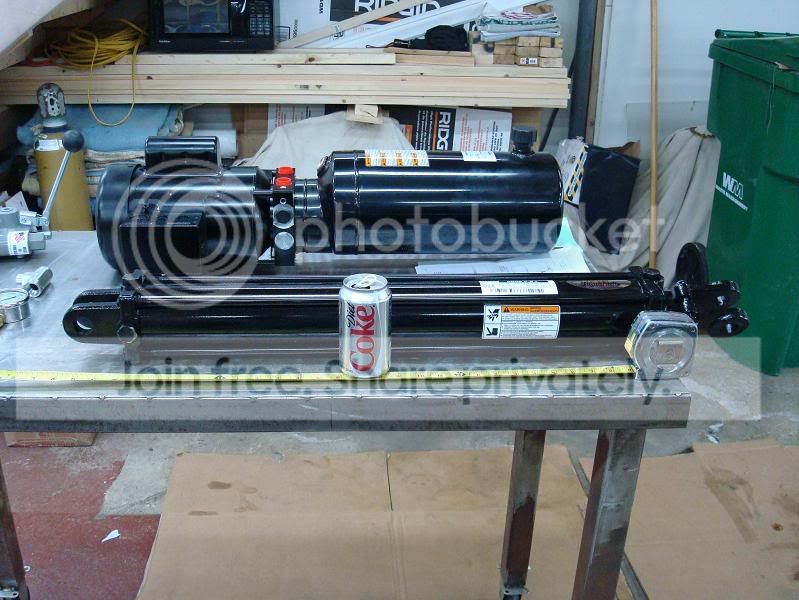
Here's a shot of the 24" ram.....This thing is HUGE! I didn't really have a good understanding of how heavy and long this item was, especially when fully extended. It forced me to re-think my original plans for mounting it to the bender and go with a more "tried-and-true" method.
DSC01392.jpg


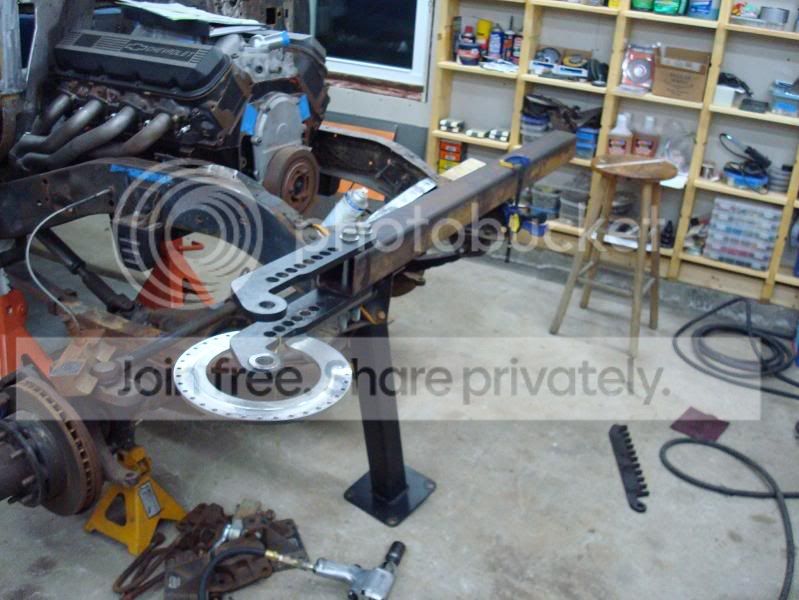
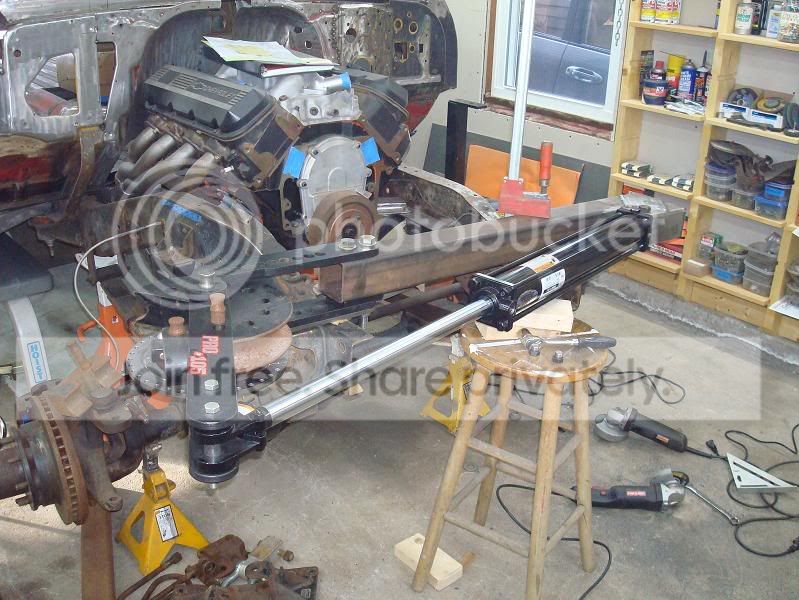
And here's the beginning of the mount for the ram and bender. Just a 3.5"x3.5"x .250" tube. Unlike some of the designs I've seen on PBB, I decided to mount the square tube between the bender arms instead of trying to bolt them both to the top of the tube. This should make the whole assembly more torsionally stiff, and I won't have to come up with a crazy, over engineered double-shear mount for the fixed end of the ram. A couple of well-gussetted tabs welded directly to the side should do the trick. :thumb:
DSC01396.jpg


Hopefully, I'll have a few more hours this weekend to mess around and get the ram mounted completely, and perhaps even start on the mounting base for this VERY heavy setup.... it's nice to be back in the shop and making forward progress.

:usaflag:
 
Last edited:
Your building a portable cart for it right? Thought you had mentioned that somewhere?

Seeing the plate on the floor had me wondering...?
 
Optical illusion.

That base is unbolted and was just laying against the frame crossmember. Mobile cart for sure....doesn't make any sense to me to have a floor-mount once you go hydro.

:usaflag:
 
Having it mounted to the front of your truck's frame like that will be awfully handy for trail repairs. :D
 
Having it mounted to the front of your truck's frame like that will be awfully handy for trail repairs. :D

Yeah! Forget that giant pump. Run it off your power steering pump. :haha:
 
2009.01.25 - UPDATE! - A BIT MORE HYDRO PROGRESS...

A few more hours and I've been able to formalize the mounting scheme for the ram. This ended up being a really simple solution, and I was able to re-use a lot of the original hardware from the manual bender setup (sleeves, bolts, spacers, etc)

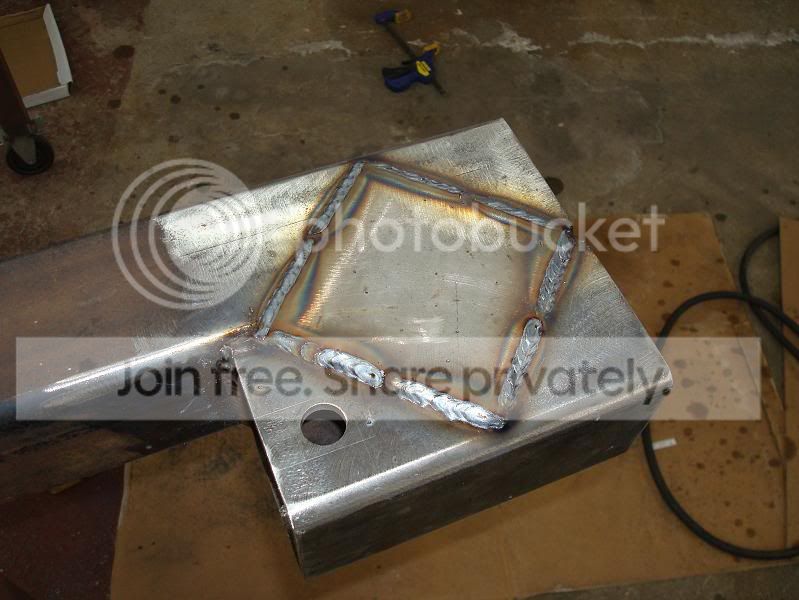
Step one was adding a second piece of square tubing to create the mount for the fixed-side of the ram. I welded the two parts together first, then added fish plates on the top and bottom to add even more strength overall. I even plated in the end of the tubes....more for cosmetics than for strength, though I'm sure it helped a little too.

DSC01403.jpg


Once I had the ram mounted and centered in the tubing the way I wanted, it got a little "proof of concept" test for extension...

DSC01409.jpg


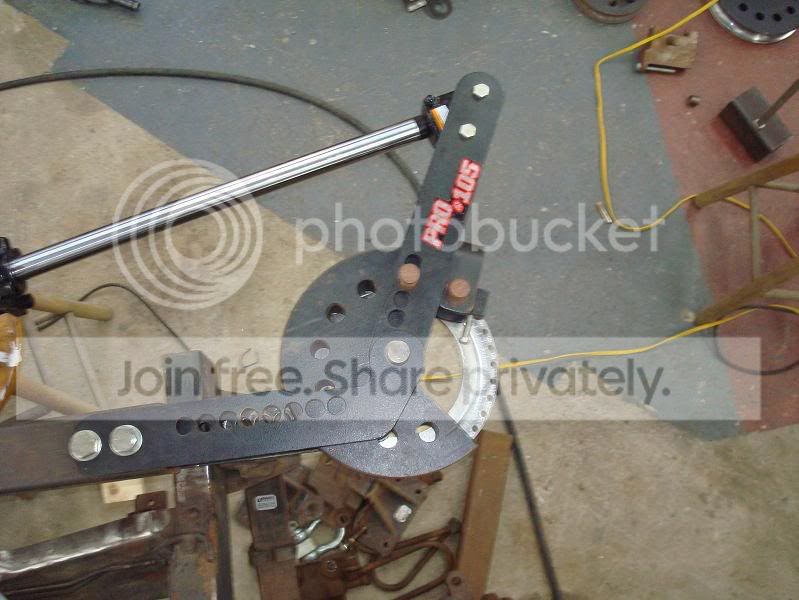
Here's that same shot from above...

DSC01413.jpg


From that angle, it certainly looks like this setup will easily do a 90* bend without re-pinning the die....so that should keep bending projects moving along swiftly.

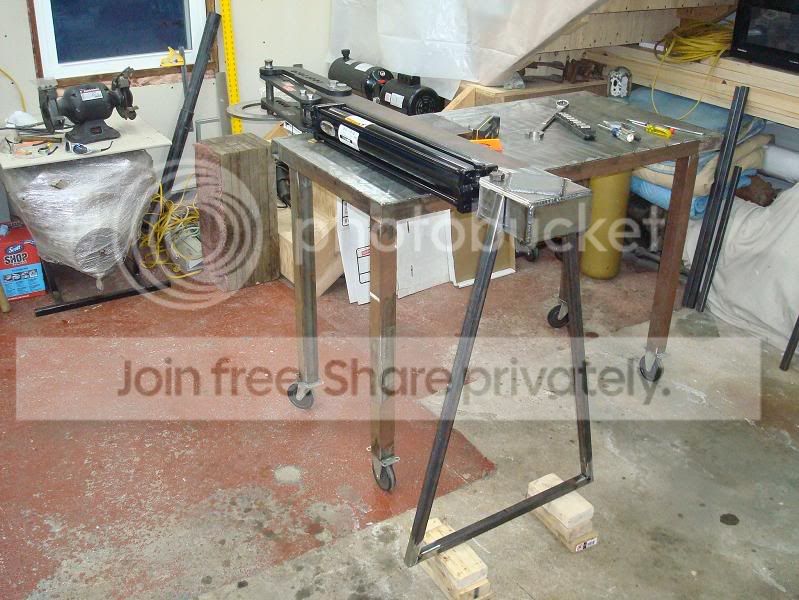
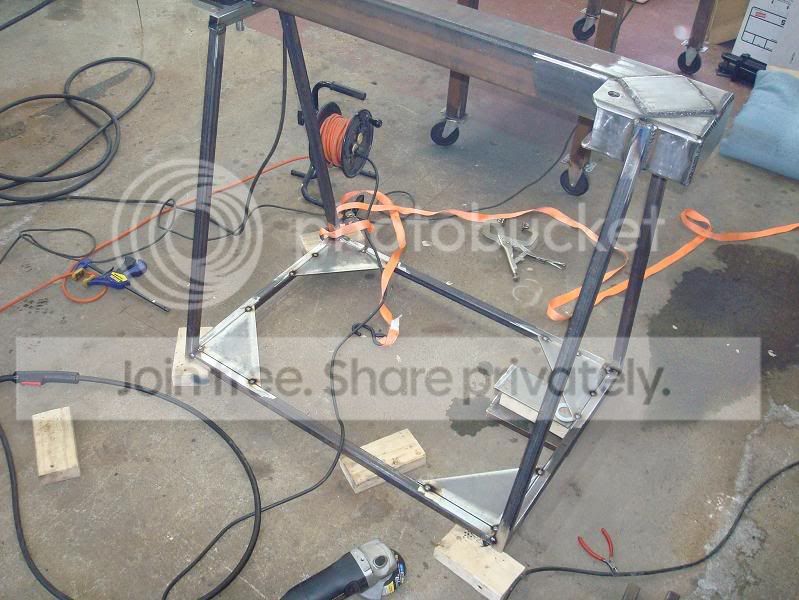
Here's the "end of the day" shot. I got one set of legs built and fitted-up but didn't have time to actually burn them in. I'll use this one as a template to cut my pieces for the other side before doing any more welding.

DSC01414.jpg


Next steps are to get a few heavy duty casters on order, as well as some leveling feet that can be screwed down to lift the wheels off the floor and stabilize the whole deal. I know that it doesn't ACTUALLY matter if the bender is level when bending, but my OCD won't allow me to work that way....it's going to have to be leveled before the tubing gets loaded for bending.

:usaflag:
 
Last edited:
Heading out to the ManSpace for day of welding/fabricating therapy....

New photos and updates later today. :saweet:


:usaflag:
 
I forgot to add that if you're using any kind of angle finders or plumb finders when bending stuff, having the stand level would seem to help reduce the math involved to figure out that stuff.
 
That's my thinking as well, but supposedly as long as you call whatever the starting point is as "zero" you can build off that and still be accurate.

Knowing myself, I'd forget to add the "compensation factor" to subsequent rotations of the tube and I'd end up wasting a LOT of expensive tube! :yikes:

Interim Update: I've now got the legs welded to the cart and got the whole thing squared up to the base. Added triangular gussets to the lower structure and got the caster wheels installed at each corner. Next step is adding the leveling feet.... then getting the pump motor mounts fabricated so I can start installing the hydraulics and hoses. I'm making good progress today, the photos should be pretty good tonight!

:usaflag:
 
as you call whatever the starting point is as "zero" you can build off that and still be accurate.

Well, at least having it level will help you eyeball something that's not quite right before you waste too much time or material.
 
POB bracket and dial indicator solves ALL of those issues. Once the POB bracket and dial indicator are install and zero'd out then everything works from that AS LONG AS it does not get moved until you're done with that piece of tube.
 
2009.01.31 - UPDATE! - IT'S ALIVE!!! HYDRO-BENDER ACTUALLY WORKS!


It turned out to be a REALLY productive day in the shop today. In an unusual twist, I actually accomplished MORE than I was expecting...

On to the pics! :saweet:

Here's a shot from this morning. Once I got the legs finish-welded, I wanted to add some gusset plates to square up the base and also provide a spot to add the casters to make this thing more portable and storable when not in use.

DSC01422.jpg


After that, I welded on some casters I got from McMaster-Carr as well as 3 leveling feet so that I can easily get this base off the wheels and stabilized. Three is a lot easier to make level than four would be....just like a 3-legged stool is a lot more stable than a 4-legged one.

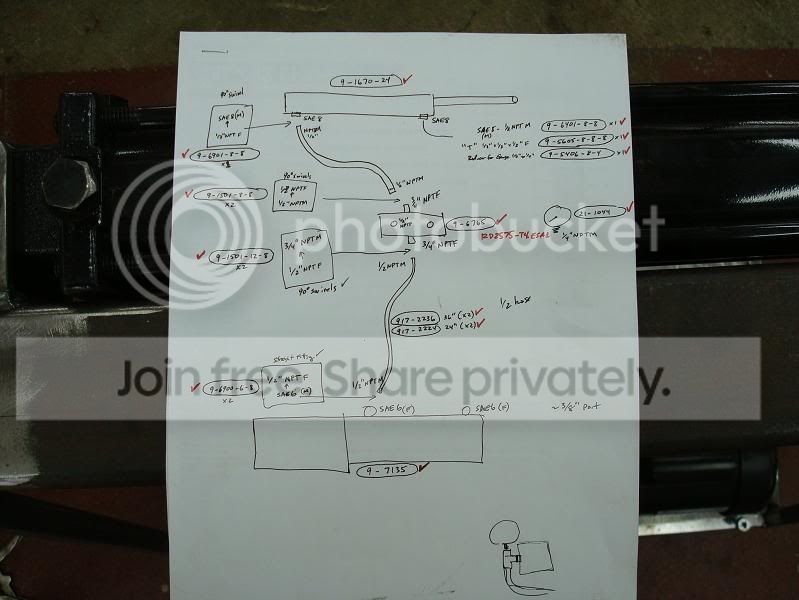
Once the base was done, I was anxious to get the pump mounted and try to get the hydraulic hoses mocked-up. Here's how I imagined it in my head when I was trying to build my parts list.

DSC01424.jpg


I wanted to dry assemble everything once to make sure I remembered which adapters went where...Also, I only bought two 24" hoses and two 36" hoses. In retrospect, I wish I had bought longer hoses....they didn't seem nearly as long once I had to start working with them and getting the routing finalized. :eek1:

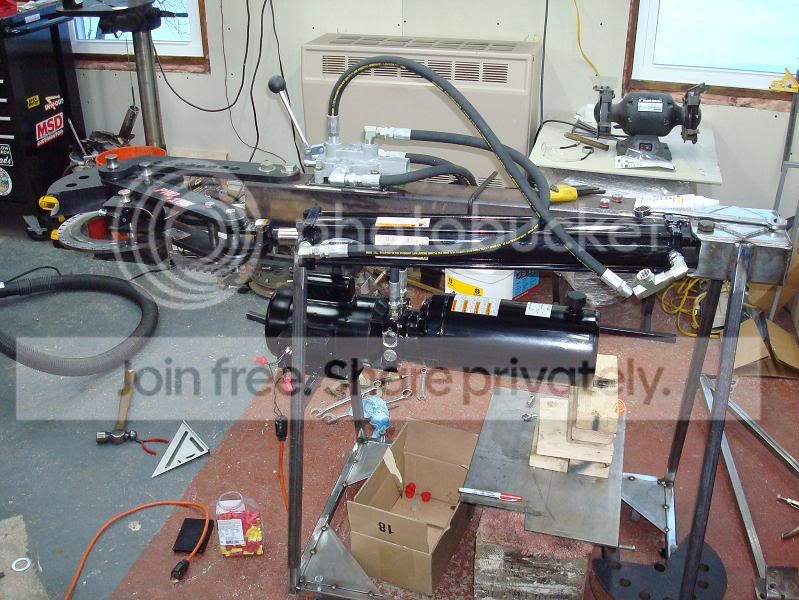
Here's how things looked once I got the hoses and fittings deciphered. The pump ended up mounted about 16" from the bottom platform (I'll admit, more a function of the short hoses than actual intent) but I think it will be more protected from damage in this spot. I could just imagine dropping a 2" 240* bending die on that motor. Not pretty.

DSC01427.jpg


About an hour later, I had everything in it's final position and went back to add thread sealer to each fitting and tighten them down for good. I wasn't really sure which of the ports on the PowerPack was the output and which was the input, so I filled the reservoir with fluid and powered it up for a fraction of a second to see which port pushed the fluid out. I had to do the same thing for the control valve, since I wasn't 100% sure which port would be "extend" and which would be "retract".

Once I had all the hoses connected I was excited to turn the pump on and start moving the lever to see if this whole mess was actually going to work. At first, since there was a lot of air in the hoses....the ram would surge and I'd get about 3" of extension almost instantaneously. It was a bit unsettling how much it was jumping around and shaking the whole stand. I did a few full extensions and retracts, then topped off the fluid tank which had emptied out into all the dry hoses and empty ram. Once I got that all done, the unit began to move nice and SMOOOOOTH for both the extension and retract motions.

Since I didn't have any tube to load into it, the pressure gauge read "0" most of the time. The only time it would move is when I would max out the ram, or bottom it out.....then I could get about 1000psi in an instant. A quick flick of the lever to the opposite position would release all the pressure and drop the gauge to "0" again. I think this will be a nice feature, since I won't have to worry about springback calculations. If the gauge is reading "0", there isn't any tension in the part to worry about.


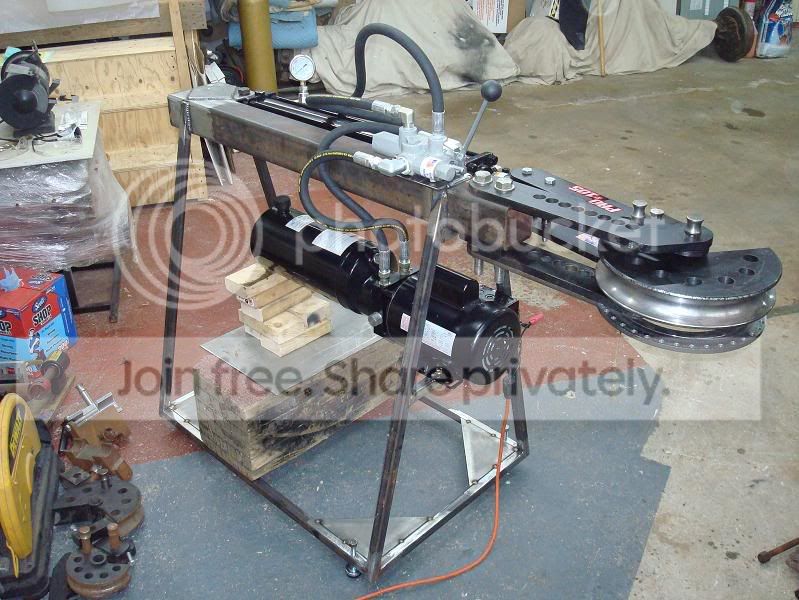
Here's the shot as it looks right now...

DSC01430.jpg


If you look carefully, you can see the leveling foot setup, and it's quite obvious that I didn't have enough time to finish the bracket to hold the reservoir side of the PowerPack yet. This is the operating position that I expect to use it from. In this position, it is easy to read the degree wheel, operate the control valve and see the pressure gauge on the fixed-end of the ram. This puts me on the "incoming" side of the tube also, so regardless of what I'm bending I should never have to worry about the part being in my way as I'm trying to operate the controls.

So, as of now there are a few small details to finish up. I need to finalize the wiring and add a switch, get a longer bolt for the fixed end of the ram, and then build some hangers for all my dies and follower blocks so that they can stay with the machine and also add weight help keep the machine balanced when I'm working with long sections of tube.

It was a good day! :waytogo:


ps. POB is "Plane of Bend". Basically it's a bracket that allows you to connect a digital angle finder to the incoming tube and set a reference point (You start at 0 degrees). For each subsequent bend, you move the tube forward into the bender and rotate it until you have the next offset degree measurement you need for more complex 3-axis bends.


:usaflag:
 
Last edited:

Latest Posts

Top Bottom