CK5
Register an account today to become a member! Once signed in, you'll be able to participate on this site by adding your own topics and posts, as well as connect with other members.
I know it may not mean much but I have welded a whole lotta trusses on axles. Never had an alignment bar and never needed to straighten one.

I know I have warped a couple just cause it had to be done ( in one case literally the guy said I wanna go on the run today, can we weld my truss on now, we were meeting in 20 minutes). That axle had been running around for several years now. No unusual seal leaks and when my buddy put it up on the alignment machine the rear wheels showed no unusual characteristics.

Take that for what you will. I don't think its possible to weld a housing without some major jigging and keep it perfectly straight. Will the slight misalignment you cause lead to problems, I seriously doubt it.

You have taken more steps than most to prevent issues. The chanced of having an issue that is caused because of the welding is minimal
 
I dont see how if you have it all secured down, and tack it along the entire axle before laying big beads, how it would cause it to warp. If you wanted you could take some braces on the bottom of the axle to hold it from warping while you weld the top. I imagine that would hold it from alot of warpage, then cut the braces off and grind smooth when your all done and its all cooled down.

Or you could get really in depth, and do the bracing on the bottom, then take a torch to all the welds and get them red hot along the axle housing and anneal the metal, allowing it to cool as slow as possible which would releive all the stresses from the welds. Then allow to cool and then take any bracing and straps off. Im sure for as much as you know greg, that you have already thought of all of this, but I learned alot about annealing and normalizing in my metalurgy class, and I would imagine if you took all the stress out of the metal while it is all clamped down it should not warp much when all is said and done.
 
If you are that worried about it don't let it get hot. Only weld a small amount at a time and let it cool, it takes a long time but it won't warp. I welded my axle only 2" at a time, the axle housing itself was never hot to the touch except for in the spot I just welded. When I welded my brackets on my radius arms I didn't do that, just welded the entire thing all at once, and yep, it warped a tiny bit, not enough to matter for a radius arm but enough I would of been concerned with an axle.

Also, in my uncle's chassis shop when they need to straighten an axle tube they use a torch. They heat up the side they want to shrink and then as it cools it shrinks and pulls the tube toward that side.
 
Greg, FWIW when I was building my race car the guy that did the back brace on my 9" said you always want to weld 2" at a time but weld at one end then the opposite end and side (lets say front left first then rear right) keep doing that until you've got the whole thing welded. Make sure it is tac welded in all 4 corners first though.
 
Brandon,

So I have to ask: If the housings always end up warped how do you ultimately deal with it? :dunno:

There must be some amount of distortion that is acceptable.... The clearance of the axle splines and/or the wheel bearings should tolerate a slight misalignment... The question is how much? :thinking:

I've also heard of shop that will put a warped housing into a MASSIVE hydraulic press and with a talented operator, it is possible to make it perfectly straight again.

There is still time for me to buy an alignment bar (I think Currie sells them) for around $350 and try to fixture and clamp the tubes internally before the final welding happens... I just dont hear of many 4x4 guys going to this much trouble when they add a truss to an axle......


-G
Welllll.:whistle:

If you are doing this the "right" way, you wouldn't have the ends on right now, weld the truss on taking all practical measures to keep the housing straight, then install the ends (typically spindles will need to be offset machined) with an alignment bar.

Now for the redneck way,:haha: preheat the entire axle, weld it up using all practical methods keeping even the top of the truss about 200 degrees and let it cool slowly, even wrap it in a blanket or three. Last one I was part of was still over a hundred degrees 12 hours later(during winter time, shop is heated but still only 50 degrees or so overnight)

Then check it with an alignment bar. It can be off for the average joe type vehicle, there is more misalignment in the side gears and ends than we give credit for. I have had to do a few really heavy beads right near the brake mounting plate (on the bottom of the tube only) on a few 14b housings to make the spindles parallel to the alignment bar but the bar wasn't centered in the spindle.

The rear axle that was original to my buggy had 5 years of recreational use, 1 KOH, Vegas to reno the long way (1,000 race miles in one shot) and was "bent" from welding and never had an issue. You could see the tires had a camber to them and the alignment bar probably wouldn't have gone through that housing.

The current housing is a tiny bit better but has had the weld on the bottom trick done. It was built and installed in 2010 and has nearly a few thousand race miles and has never been a issue. You can see a bit of camber in the rear tires, one worse than the other but we think that might be crash damage.

Bottom line is that you can't keep it from bending while welding, you can reduce that with spread out stitch welds, pre heat and really slow cooling, I think you will help yourself by adding some preload to the ends but at the end of the day let the side gears and portal gears and the shaft take it up cause I say they will and be fine for a number of years.

:dunno:

Renee would be a better source than I am for jigging and keeping things straight while welding. There are tricks of the trade that I still learn from my old man. Bastard is 61yrs old and still keeping secrets from his dear old kid.:confused:
 
Thanks Brandon, I appreciate the help. :bow:

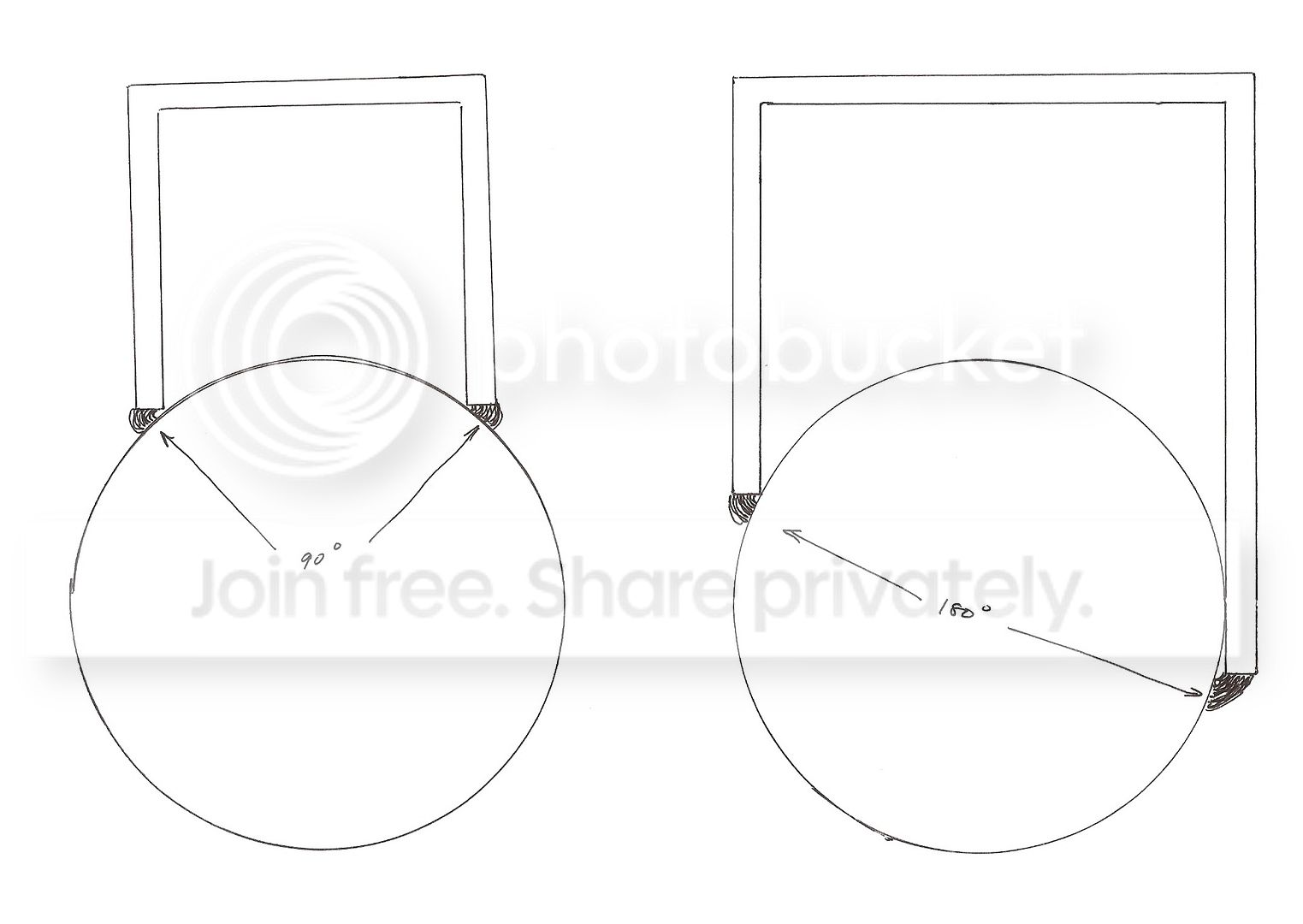
I can certainly do some additional fixturing of the axle before I weld it any more but this truss may be a bit different from a "typical" axle truss. Here's a diagram to show a side profile of a conventional truss vs. the truss I've built...

TrussComp.jpg


The left image is what I imagine most people build. It's substantially narrower than the axletube diameter (in this case 3.5") so the truss may only be something like 2.5" wide and both sides of the truss will be welded in the same "hemisphere" of the tubing. In this illustration, it's about 90* apart. If this truss is welded as indicated, the shrinking will occur on the top side of the axletube and will de-camber the axle if it is not pre-loaded somehow to pull the ends of the axletubes down to resist the shrinking.

The second illustration is how I built the truss for my project... it was built substantially wider than normal so that the ends would be as close to 180* apart as possible. My objective was to cancel-out the forces of the welds as they cooled and shrunk, and being on completely opposite sides of the axletubes would make it easier to equalize those forces.

Of course, now the shrinking that I'd be fighting wouldn't be a typical top-to-bottom effect (positive vs. negative camber of the wheels) but more of a front-to-back issue...... :thinking:

I bought a 2' length of 4" tubing (.250" wall) which I can cut lengthwise to create a perfect "saddle" for the underside of each axletube. I can then fixture to either press against those saddles to create a downward pull and the end of the axletubes, or I could even tackweld them to the housing and use it to pull downward if necessary.

A lot of you guys have already said it.... I'm probably just overthinking this, and I just need to "man up" and starting burning it in with some reasonable weld sequencing and be done with it.

-G
 
well that changes things, if that is what your setup is like you should be OK, the left example is what I had thought you did.
:thumb:
 
More welding experiments.....

Per Rene's advice, I wanted to crank up the voltage before doing the final truss welding.

Here are the basic specs on the machine and setup:

Lincoln PowerMig 255 (220v)
Lincoln SuperArc (L-56) wire - .030"
Airgas "Gold Gas Steel Mix" Ar/CO2 shielding gas
Max Voltage = 28.5V
Max Wire Speed = 700 ipm

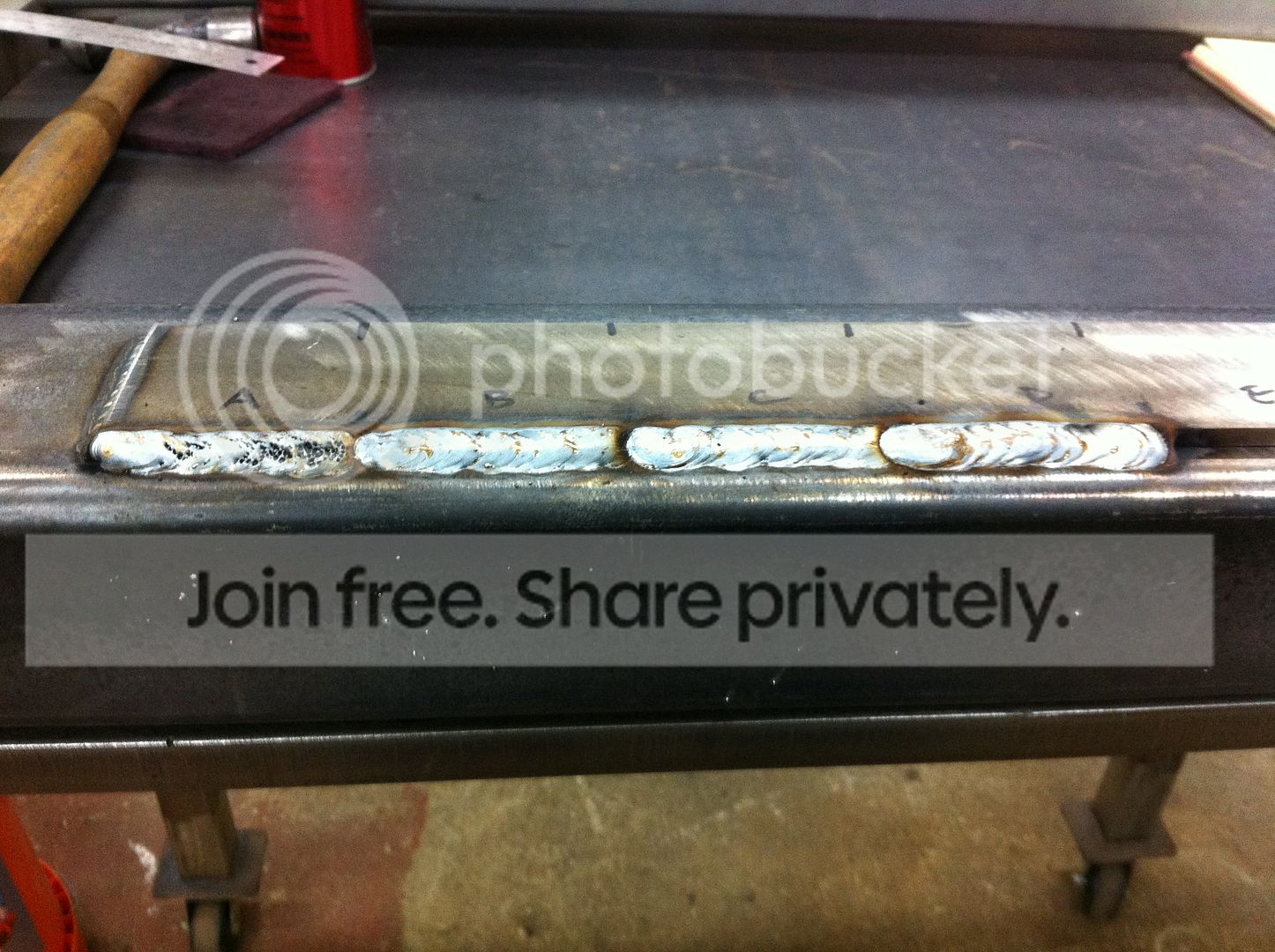
I set the welder at 22.4V (couldn't get it to stay exactly 22.5V) and took a SWAG at the wire speed.... Here are my first few passes:

dcb920d6.jpg


A= 390 ipm
B = 410 ipm
C = 420 ipm
D = 430 ipm

It seemed like maybe I was in the ballpark, so then I backed it off to the 420 ipm setting and ran passes E, F and G and got massive amounts of porosity. :(

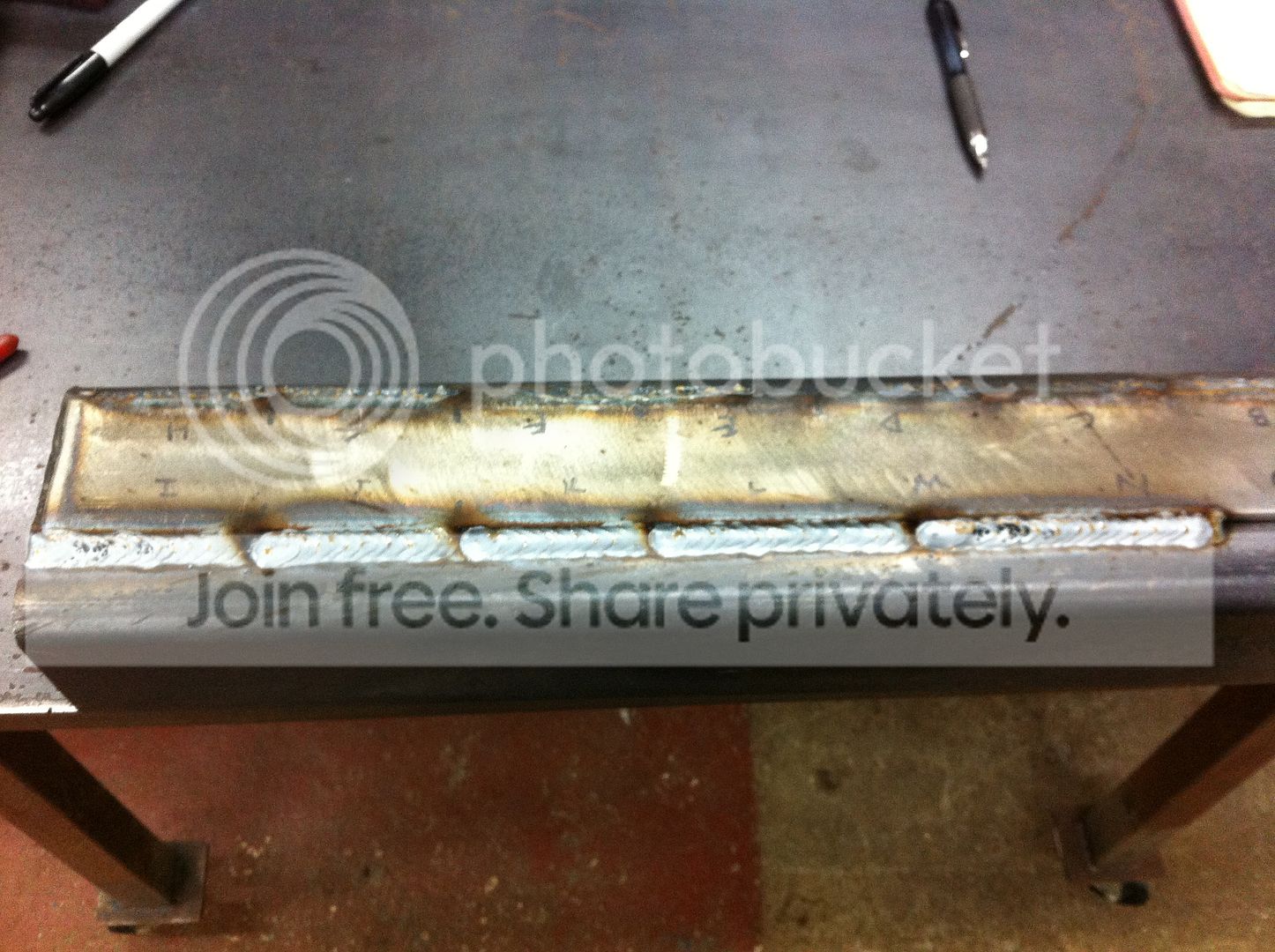
I decided to keep cranking up the wire speed just in case I was still too slow.

H = 440 ipm
I = 460 ipm
J = 480 ipm
K = 490 ipm
L / M = 500 ipm
N = 520 ipm

f5f2e6f8.jpg


Everything was looking pretty good between 480 - 500 ipm. Bumping up to 520 ipm gave me the same porosity as I saw at the low wire speeds. Is this possible? :dunno: I always thought that too much wire speed would just cause the weld to get tall...but not porous.

It's interesting that in most cases the porosity occurred at the end of the weld (backstepping) where I was approaching the hot steel from the previous weld.

In these photos, I start with a hot tack weld toward the right side of the new letter, then move from right-to-left in these photos with a slight weave that moves me slightly out of the deepest part of the groove so that I'm getting up into the sides of the fillet for both pieces I'm welding... I guess this is what people would call a "push" weld.

Any ideas?


-G
 
usually the porosity is low gas:dunno: I've never seen it with changing speed or V. thats odd
 
I'm running around 23 psi currently which has always worked fine, but I've never tried welding this hot before either. The tank has about 1000 psi left, so I know I've got plenty still in there...

Any suggestions for a wire speed at 22.5V? It seems like 500 ipm is close but I won't trust it until I find the source of the porosity.

I am using an anti-spatter spray on the part but that's something I've also done for a while now when I weld.

-G
 
I'm running around 23 psi currently which has always worked fine, but I've never tried welding this hot before either. The tank has about 1000 psi left, so I know I've got plenty still in there...

Any suggestions for a wire speed at 22.5V? It seems like 500 ipm is close but I won't trust it until I find the source of the porosity.

I am using an anti-spatter spray on the part but that's something I've also done for a while now when I weld.

-G
Well I don't need to remind you that what has worked before doesn't mean anything when you are changing a few variables, you might want to play with the gas flow again, and as for anti spatter, I never heard of using it on the parts, I use it on the gun so it doesn't build up too much splatter.
The other thing I know you are just experimenting but you wanna do as close as you'd do on the actual piece so how about you do not weld stretches so close to each other and back to back, I noticed you said you get porosity close to and earlier weld.
Maybe it's still too hot there, see what happens if you space them out.
 
Another experiment at 500 ipm:

6525c804.jpg


And the back side of the same part:

d9b704e8.jpg


That one seems perfectly fine, with no porosity.... I think the problem with the first tests were that I never cleaned the mill scale off the rectangular tubing and the extra scrap I was welding might not have been that well prepped either. My best guess is that the extended welding heat was drawing out contaminants from underneath the upper plate. :thinking:

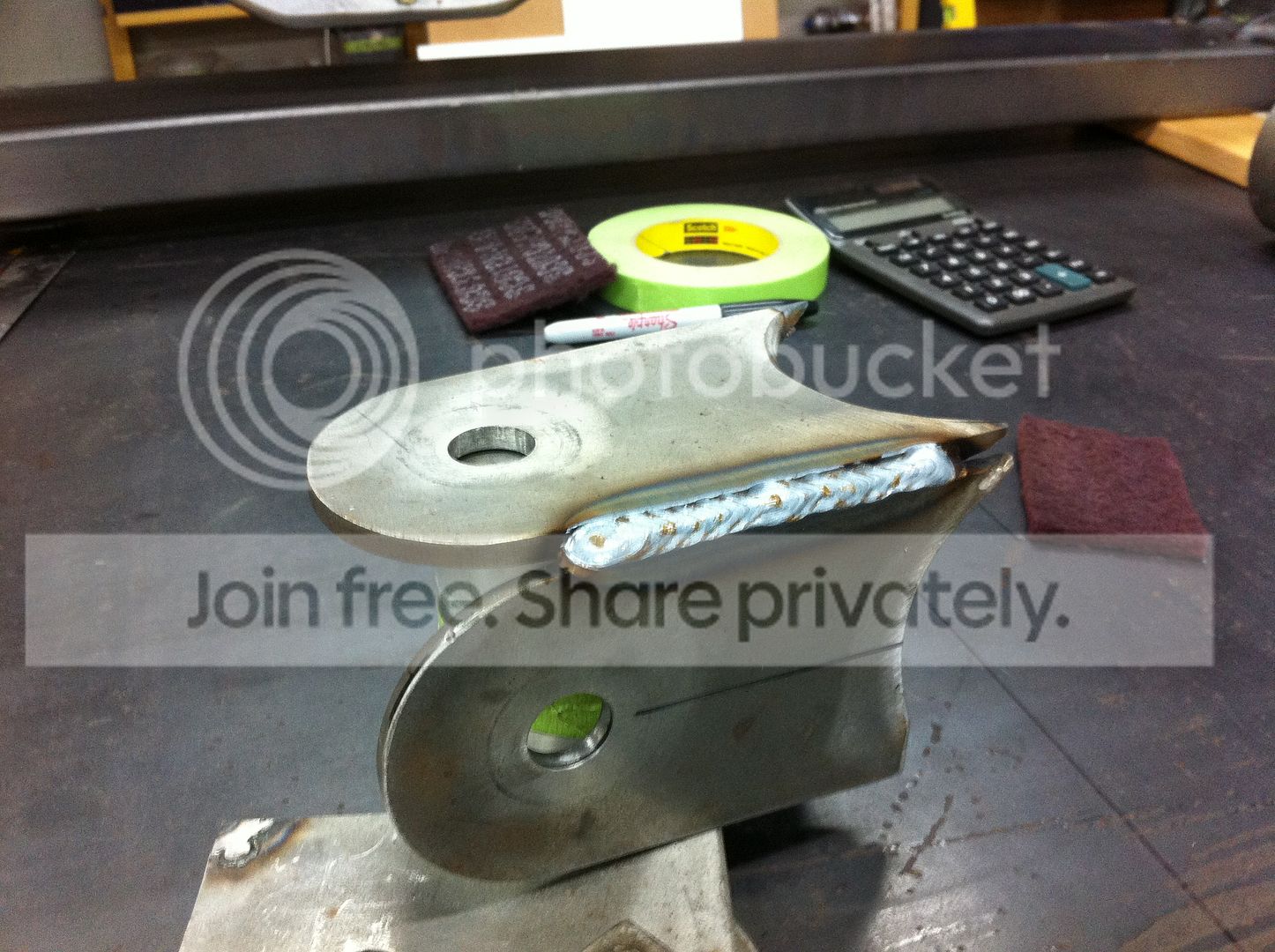
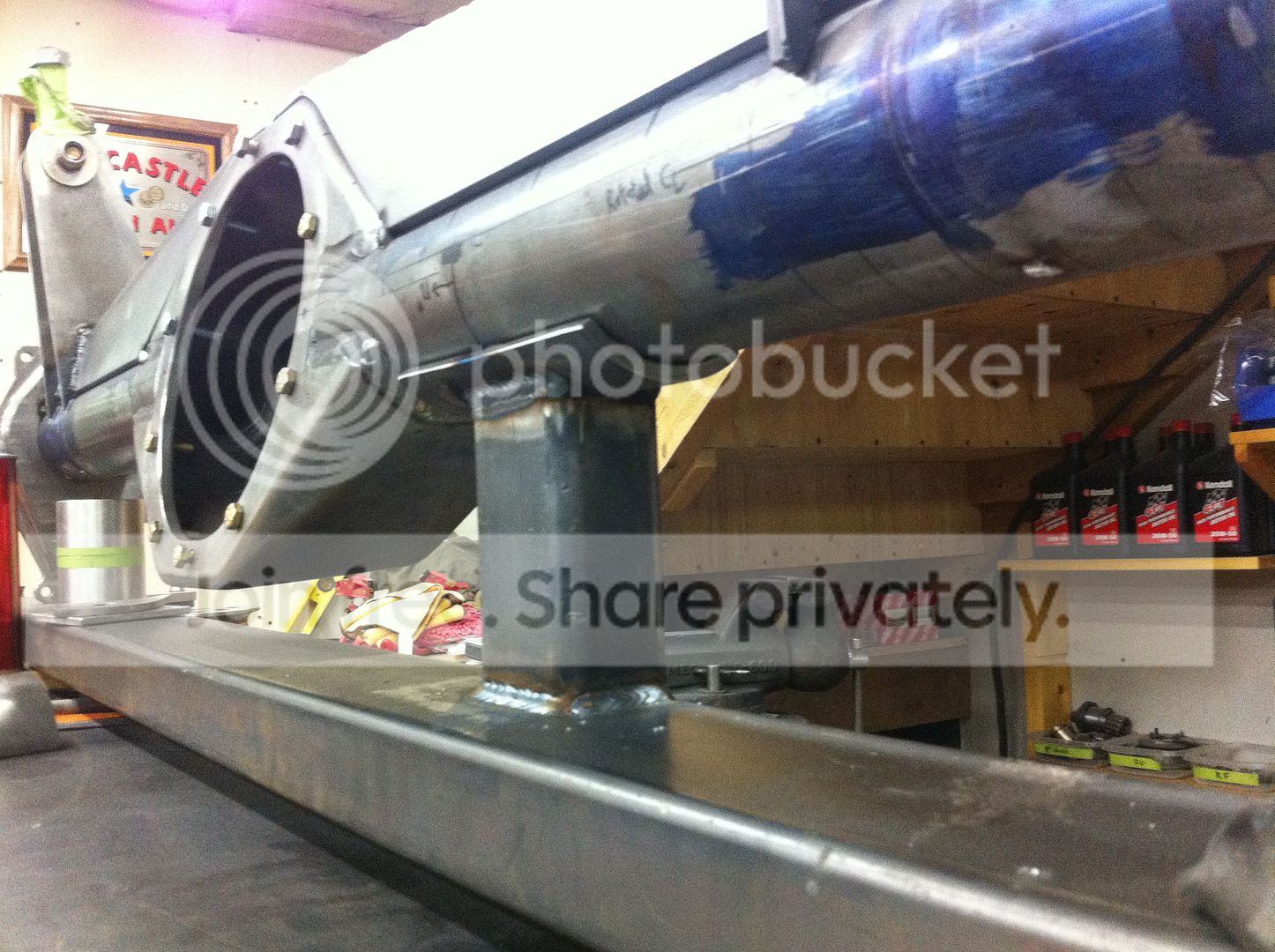
I used those same settings on the welder and burned-in one of the axle fixtures that I'd talked about a few days ago... A small section of 4" diameter (.250" wall) welded to a short standoff to lock the axle tube to the large rectangular tube that using as my base.

b9e2715d.jpg


I did careful prep on all those surfaces, and the welds all laid-down really nicely. :waytogo:


-G
 
Last edited:
Another experiment at 500 ipm:

6525c804.jpg


And the back side of the same part:

d9b704e8.jpg


That one seems perfectly fine, with no porosity.... I think the problem with the first tests were that I never cleaned the mill scale off the rectangular tubing and the extra scrap I was welding might not have been that well prepped either. My best guess is that the extended welding heat was drawing out contaminants from underneath the upper plate. :thinking:


-G

Do yourself a favor and clamp that bracket in a vise and hit it with a big hammer. I am certainly not a welding inspector, but it looks marginal. Shouldn't it have more penetration on the backside?
 
Last edited:
Damn greg, if I didn't know better I'd think you were welding a nuclear reactor or something...
 
Damn greg, if I didn't know better I'd think you were welding a nuclear reactor or something...

I guess it might seems that way, but this whole truss project is only as good as the welds holding it together. Imagine one of those link mounts tearing off at highway speeds.....not good. :eek1:

It would be nice if I could just burn this in and be done already, but this is uncharted territory for me so it is taking longer than usual. Like always, the first time doing anything new is a struggle and takes forever... But by the time I'm ready to assemble the front axle I'll have all the correct welder settings and fixturing figured out so that one will go together way faster. :thumb:

I just wish Rene would put on his Superman cape and fly into this thread with some advice and counsel! :D

-G
 
Sorry Greg, I meant to keep better tabs on this. Dean (Max02) phoned me to let me know you wanted my input.

First, gas flow is measured as CFH, not psi. Cubic feet per hour. When you turn the machine up, gas flow should also get bumped a little. You could try 25-30 CFH with the higher heat, and as long as things are reasonably clean the porosity should become just a bad memory. It may have just been some contaminant boiling through from the backside of your test pieces...but 23 is aproaching the lower end for gas flow I'd be comfortable with. also make sure to clean the crap out of the nozzle regularly (every second or third stitch weld). Last, make sure your "stick-out isn't inadvertantly getting a touch longer at the end of your weld...

Your outside corner weld on the two tabs looks pretty good. I think you could have slowed down just a hair and it would have filled slightly better and burned those edges in 100%. No big deal, as that could be dressed with a sanding disc. Outside corners are a beotch...
 
well good to know I was working in the right numbers with Gas, I always tried to keep at least 25 CFH flowing, but sometimes I bumped it up to 28 when I felt I was welding real thick metal with high heat.
 
Thanks Rene! :bow:

Good info about the gas flow.... I learn something new every day. With the dual-gauge setup, it always seemed logical that the first one was bottle pressure (currently at 1000 psi so the other one would be the regulated pressure flowing to the welder. I've had that one set at 23 forever for my sheetmetal work and for thinner work up to maybe 1/8"... I remember reading a long time ago that excessive gas flow doesn't add any value and just wastes gas. But it sounds like that's only partially accurate.

What about BARRAZA's comment / concern about the backside of the weld? Should I be seeing some filler metal coming through back there? :dunno: I haven't put the first tabs into the vice yet to give them a hammer test but I will test their strength soon.

I also noticed what I think the pros call the "wet look" on these recent welds... They are really shiny with just a touch of what looks like flux on the top of the welds. Is this a good barometer for determining if the weld setup is in the right ballpark?


-G
 
2012.06.06 - UPDATE! - HAMMER TIME!!!

I decided to get a couple more quick shots before heading out to work this AM.

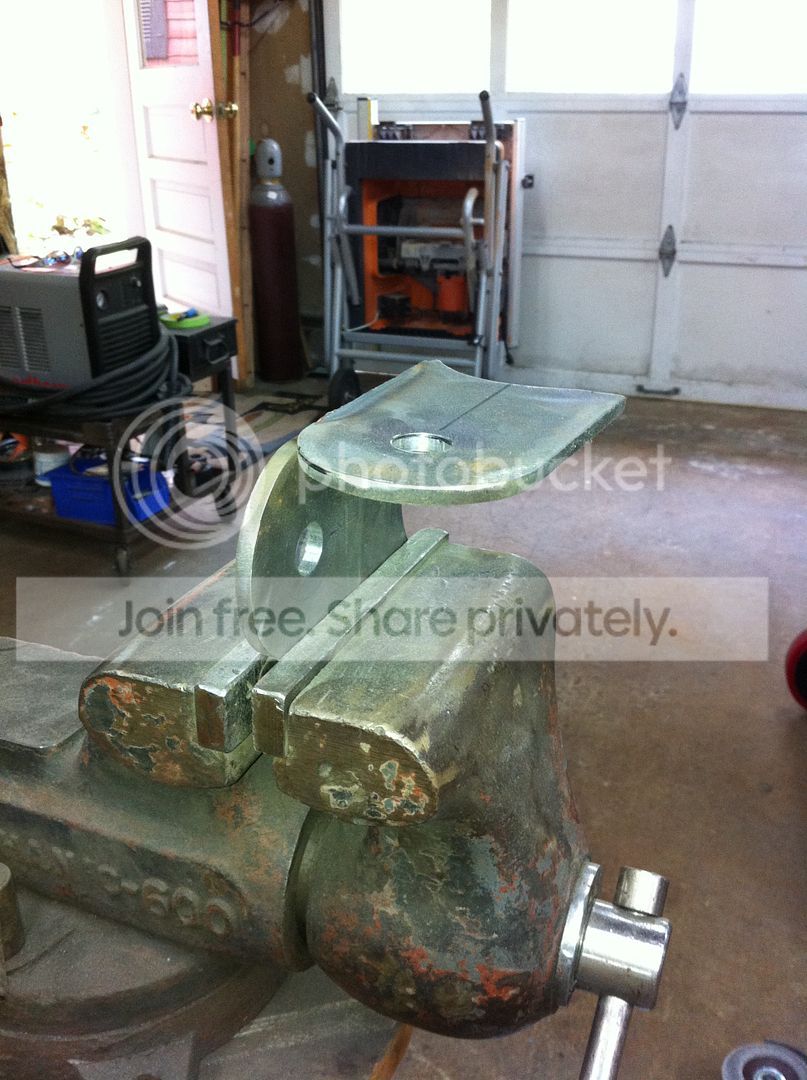
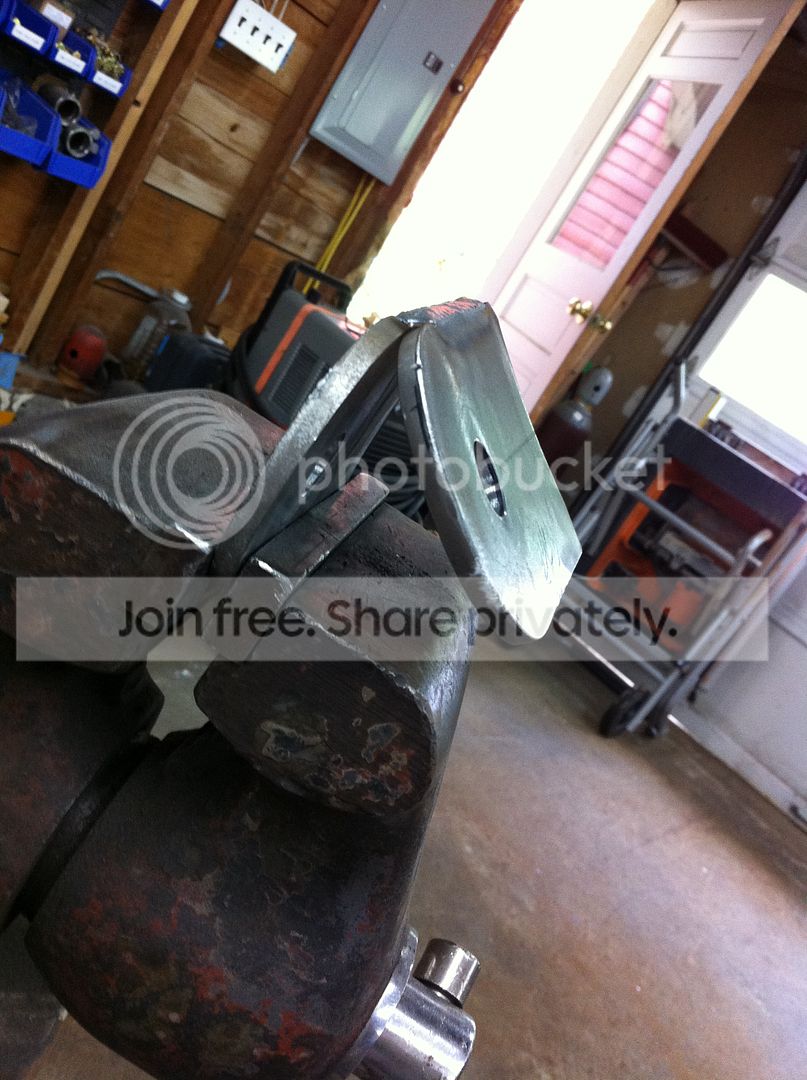
Took my last experimental weld and threw it into the vise. I wanted to clamp it fairly shallow so that I could observe where the bending would occur and not artificially re-inforce the bracket with the vise jaws.

IMG_2180.jpg


I gave it a bunch of smashes... it took a LOT of effort to get the bracket to move at all, and it even popped out of the vise about 3 seperate times no matter how hard I clamped it in there!!

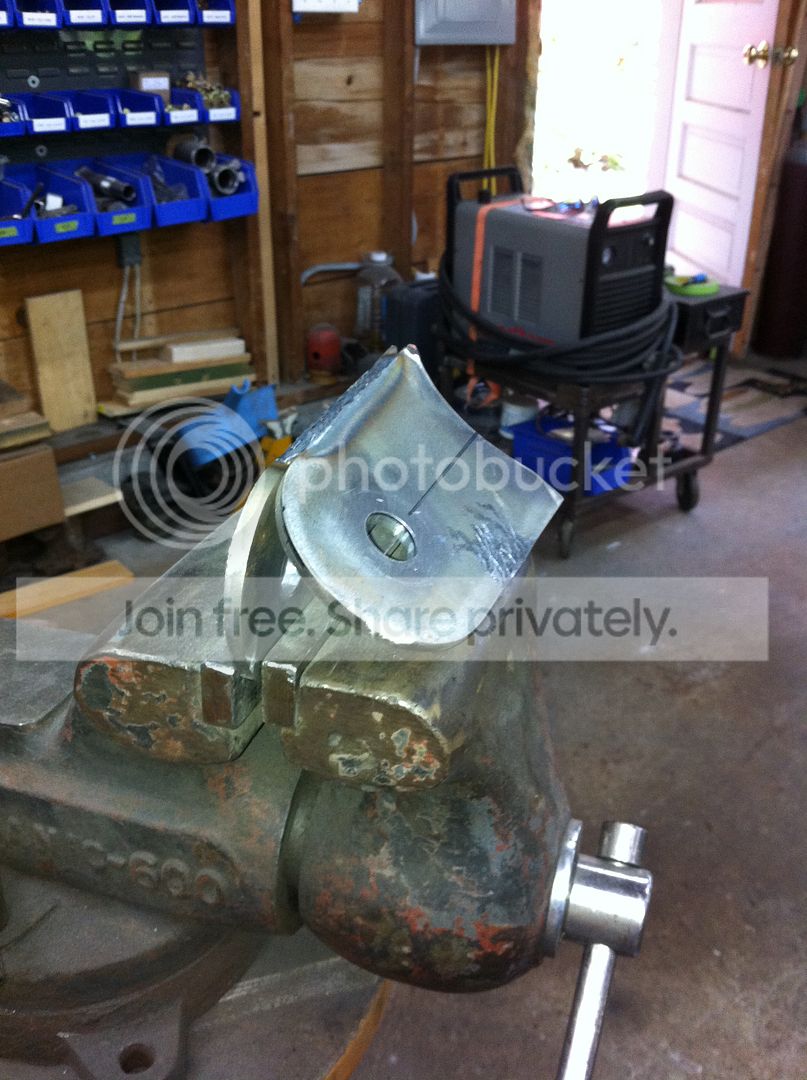
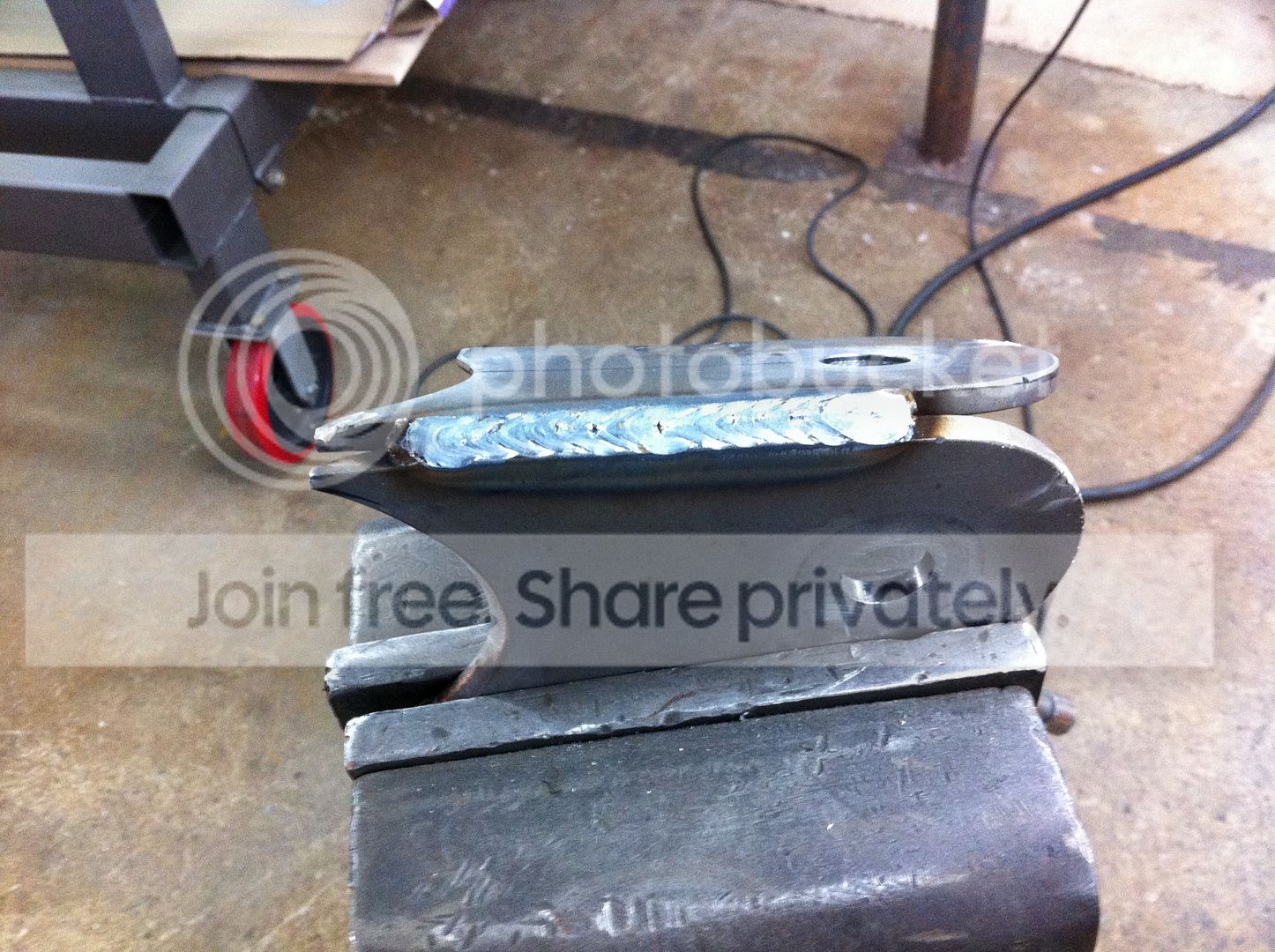
End Result:

IMG_2181.jpg


IMG_2186.jpg


It doesn't look like the metal bent much... the bend was in the weld itself, somewhere.

IMG_2185.jpg


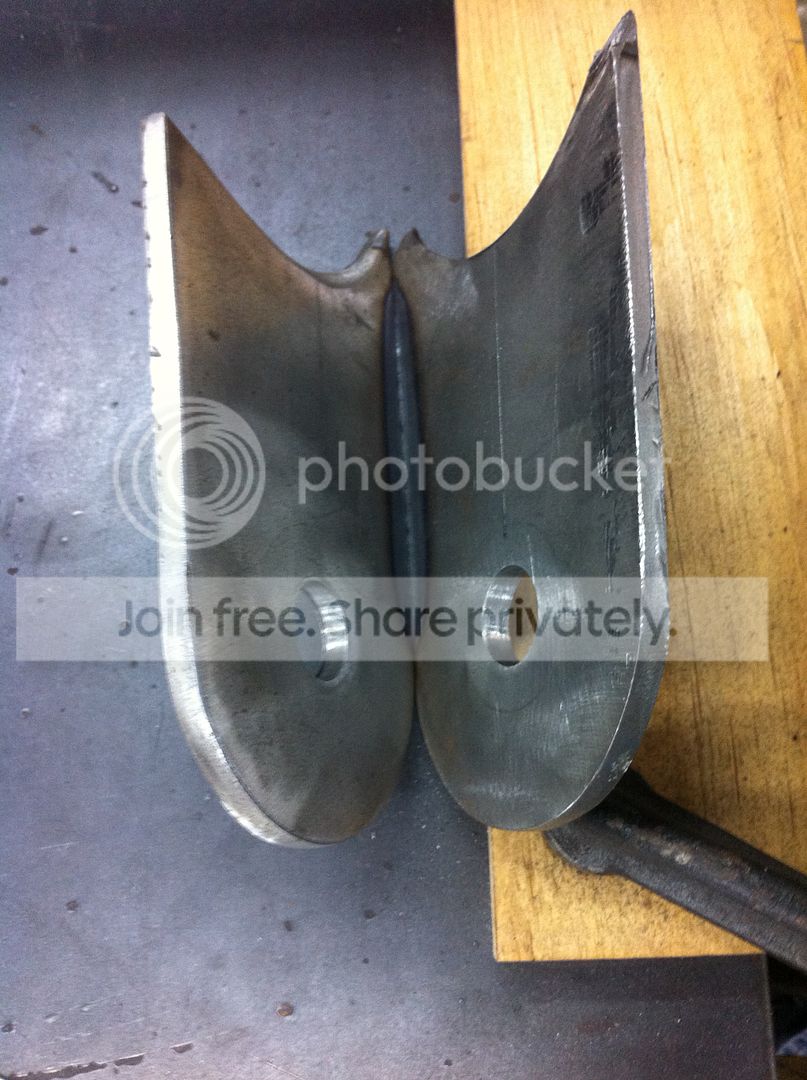
I don't see any fracturing in the weld or signs of that "graininess" when metal has fatigued or pulled away from the base metal. All of this has me thinking that I must be close to the correct settings, and just need a little more fine-tuning and practice with my technique.

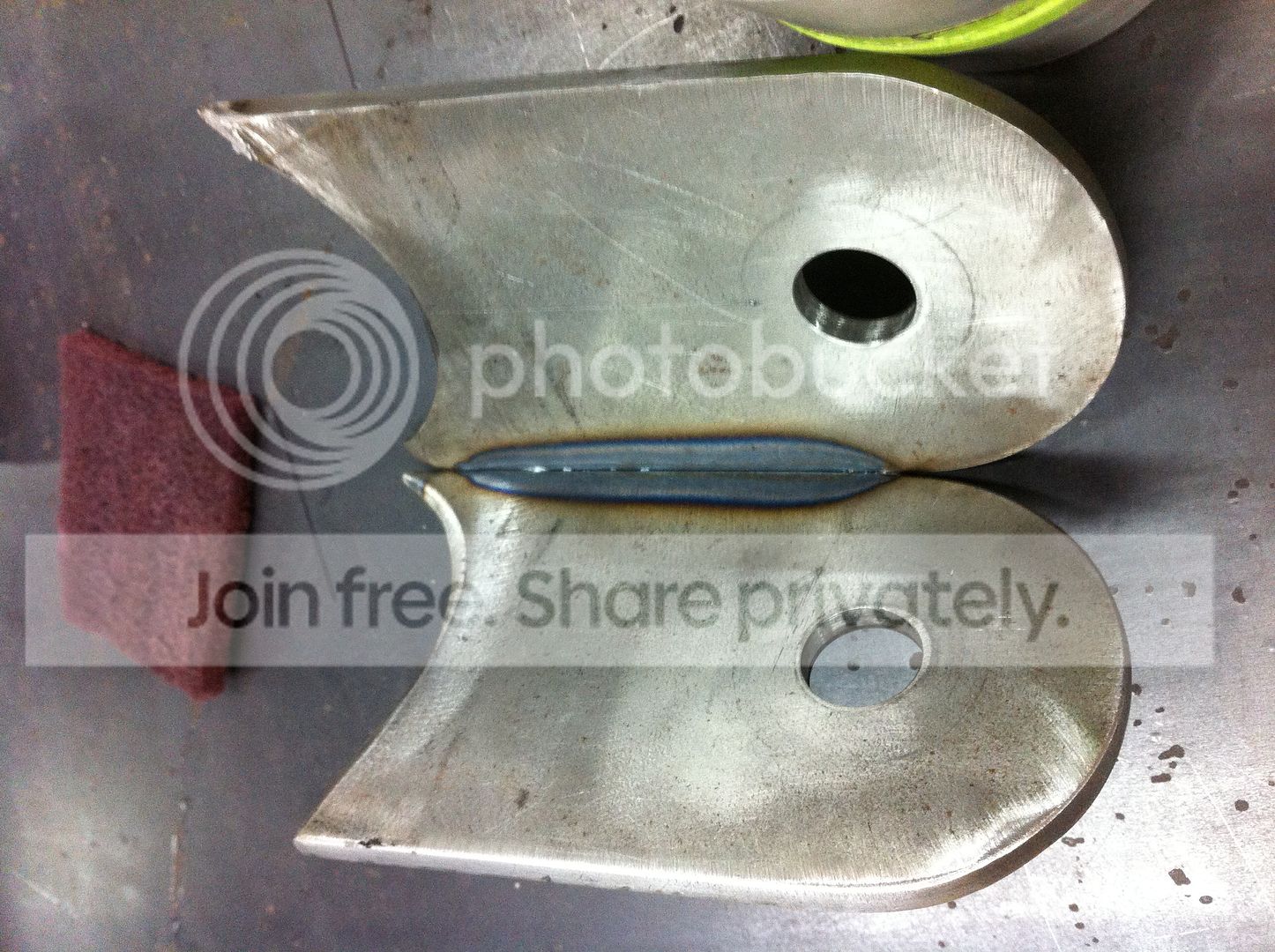
Here's a shot of the inside after the hammering process... I don't really see anything going on there either.

IMG_2187.jpg


-G
 

Latest Posts

Top Bottom