CK5
Register an account today to become a member! Once signed in, you'll be able to participate on this site by adding your own topics and posts, as well as connect with other members.
I don't know about the K, all th emetric bolts I worked with were 8.9 10.9 and 12.9
For some reason it looks like they use K or .9 behind the grade number :dunno:And yeah you want to get the grade just a hair above, but not much higher in most case, just because you don't want to change the weak point and you don't want to put a brittle bolt where it needs to be more flexible.
 
Last edited by a moderator:
Greg,
Check out THIS PAGE for a comparison. The conversions are listed at the bottom. The common relation is that 8.8 equivalent to Grade 5 and 10.9 is equivalent to Grade 8. 12.9 is on a whole other level.

For 8.8/Grade 5 level, the 8.8 bolting is actually stronger from a proof load stand point than the US equivalent grade bolt.
 
Yeah I haven't heard of this D G K thing, I am used to 8.8 or 12.9, etc. Here is what is says in the machinists handbook...

"Materials and Mechanical Properties.—Unless otherwise specified, steel metric screws and bolts, with the exception of heavy hex structural bolts, hex lag screws, and socket head cap screws, conform to the requirements specified in SAE J1199 or ASTM F568. Steel heavy hex structural bolts conform to ASTM A325M or ASTM A490M. Alloy steel socket head cap screws conform to ASTM 574M, property class 12.9, where the numeral 12 represents approximately one-hundredth of the minimum tensile strength in megapascals and the decimal .9 approximates the ratio of the minimum yield stress to the minimum tensile stress. This is in accord with ISO designation practice. Screws and bolts of other materials, and all materials for hex lag bolts, have properties as agreed upon by the purchaser and the manufacturer."

In addition, keep in mind the shear strength is usually about 2/3 of the tensile strength, so when used under shear (or double shear) the calculations are different. When calculating tension I like to use the pitch diameter, when calculating shear I tend to use the minor diameter (diameter from the bottom of the threads) as more of a safety factor.
 
Yes....thanks!

I was already on that site and noticing that the metric are all rated in MPa (Megapascals) instead of PSI, so I was over on Convertit.com figuring out the conversions to make sense of it all.

The 12.9 seems to be equivalent to an SAE Grade-9 (~180,000 psi) so I'm sure they will cost a small fortune to replace with a stainless cap screw equivalent. On those, I might just take the time to clean the current coating (I believe it's a black oxide) and just give them a Ryoken Green / topcoat and hope for better durability.

The portal perimeter bolts only appear to be around a Grade-5 equivalent, so swapping those over to a true stainless will probably not bankrupt me...and if they truly have a "shiny" finish the way I'm hoping they will it will add a little functional bling... :D


-G
 
Yeah I haven't heard of this D G K thing, I am used to 8.8 or 12.9, etc.


My understanding is that the letter designations are a relic of times before this stuff became standardized (think 50's and 60's era). My Mog axles are probably from a late 60's truck.

Apparently the hard-core concours guys who restore VW's and Porsches spend a fortune locating these old original German bolts with the proper stampings on them. These "KAMAX 8G" and "GRAFKA 8G" bolts could end up being a good moneymaker for me.... probably not enough to finance the rest of the build, but certainly good for putting a little extra cheddar into the BlazerBash 2019 change jar!! :waytogo:


-G
 
Last edited:
I meant to include the 8G & 12K in my post above, but folkenheath replied before I could edit it in. 8G is just the antiquated name for 8.8. Same for 10.9 & 12.9 with 10K & 12K. It isn't as simple as saying that x.8 == xG & x.9 == xK though. CLICK HERE for a better reference on Metric Fasteners.

*Then I get side tracked by someone at work and don't hit the reply button & Greg beats me to the punch!*
 
Geez..... My machinist is FAST!

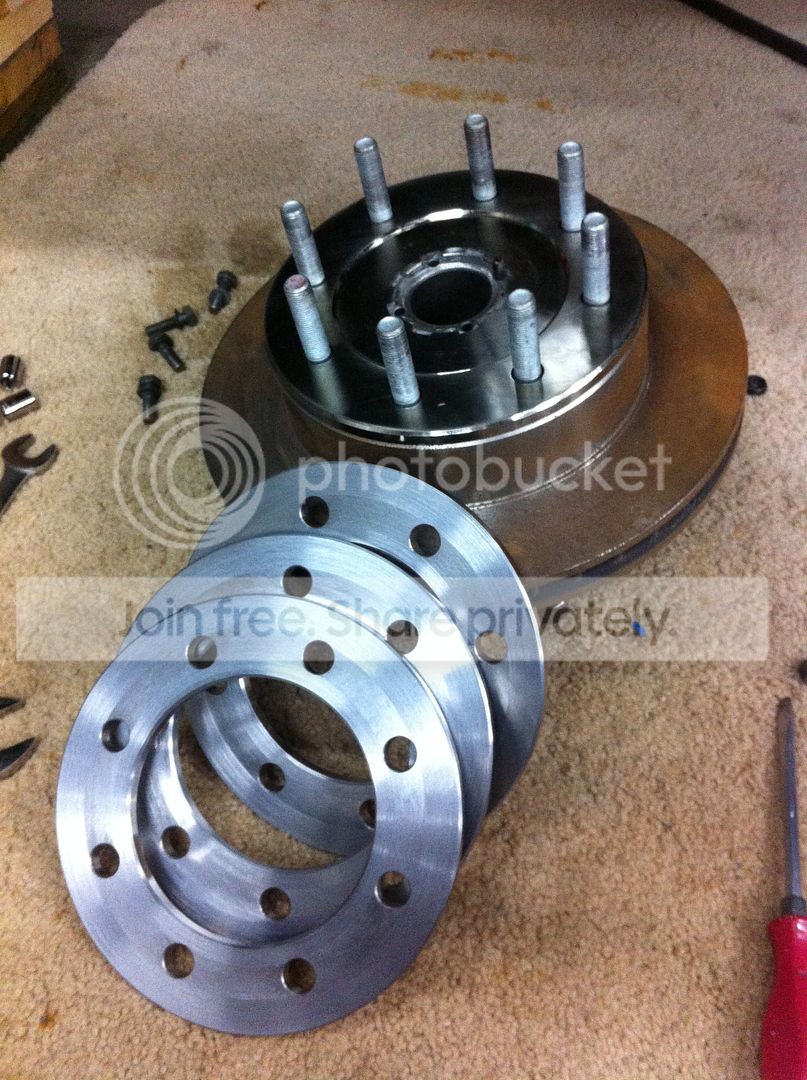
f5484075.jpg


He dropped off the hub spacers tonight (free delivery too!)...... They came From eXaXt as 1" thick spacers so that almost any wheel could be made to work regardless of the backspacing. However, I only needed .375" to clear the calipers so the extra material was just wasted clearance and making my scrub radius worse than it needed to be.

Now I'm pulling the wheels in as tight as possible to the portals. Nice!

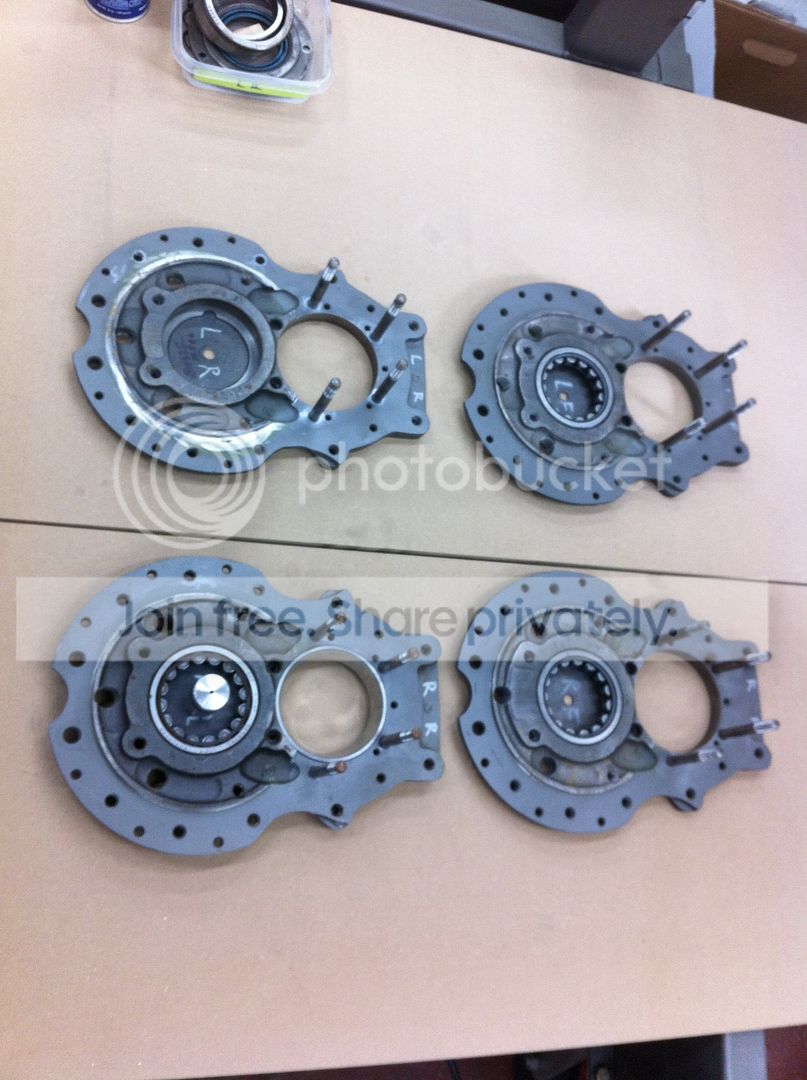
Supposedly, the backing plates will be delivered tomorrow night with the CTIS through-holes machined in. The portal boxes can be reassembled and won't need to come apart again until it's time to add the axle shafts and 3rd member.

-G
 
quick zinc em, before that humidity turns em orange....like the setup Greg!
 
2012.06.27 - UPDATE! - FASTER THAN A SPEEDING BULLET....!!

Got a call that the backing plates were finished at lunchtime today.

In fact, it's just an 11mm hole drilled in each one.... the "magic" is that it must be 100% perfectly centered inside that lower bearing or it will never work.

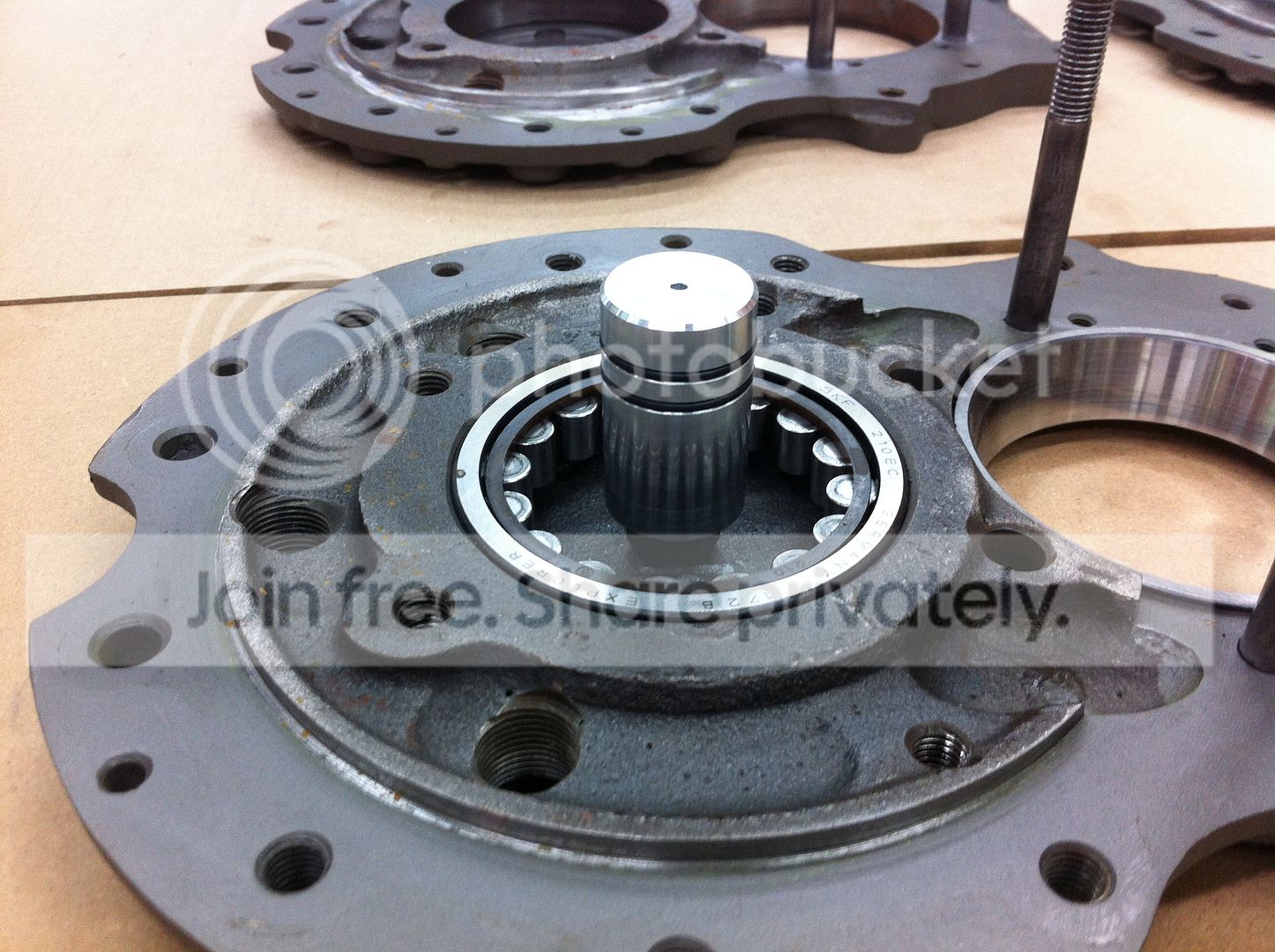
IMG_2383.jpg


Here's a shot of the rotating union that makes CTIS work.... basically it's a fixed end (bolted to the backing plate) with a nice precision sealed bearing that allows the larger portion to rotate with the wheel and seals all the air pressure from the tire so that it can't escape (until you actually TELL it to!!)

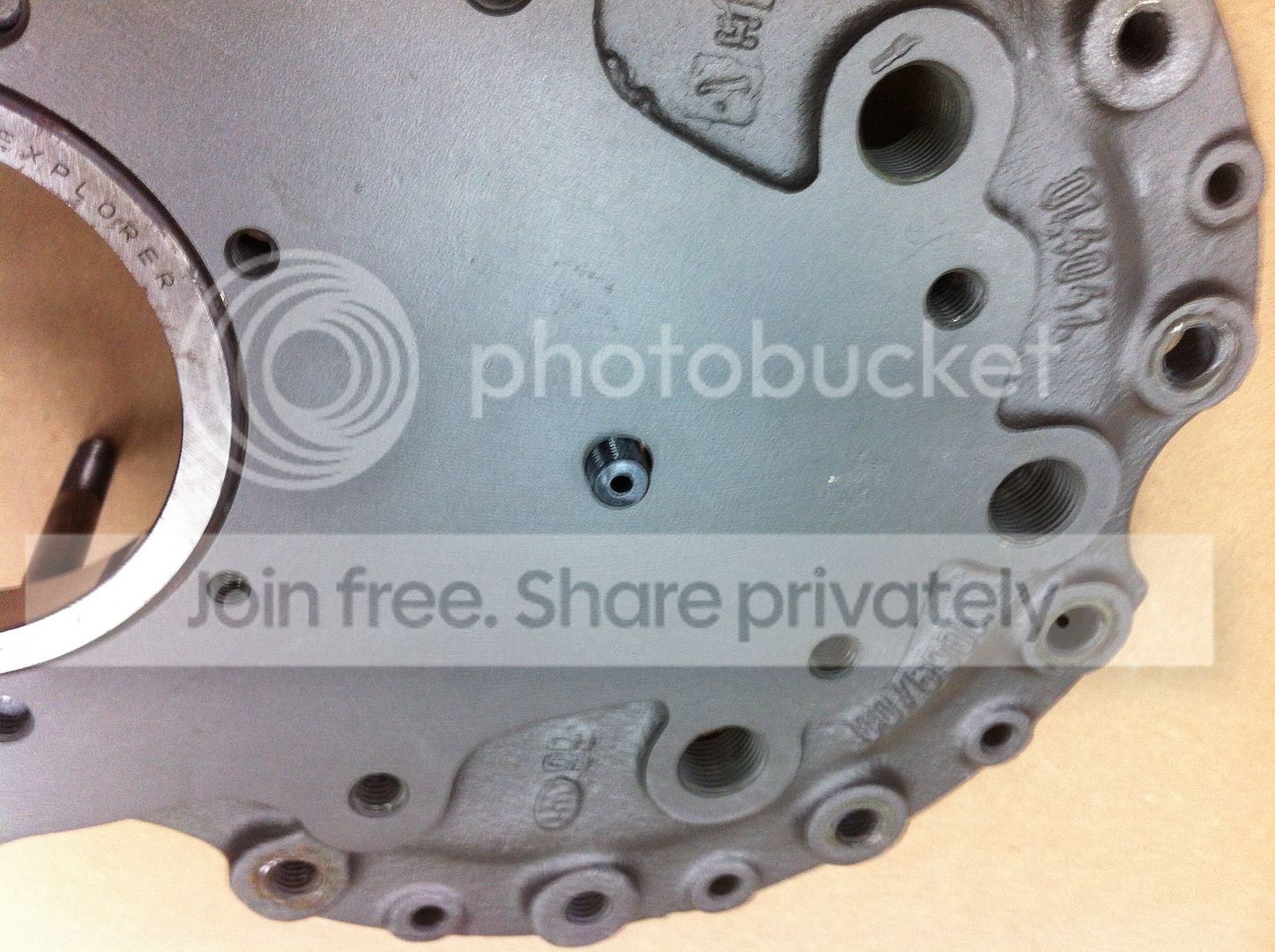
IMG_2385.jpg


...and a view from the back of the backing plate (visible from under the rear of the truck. This needs to be connected to the air source and purge valve to let the tire air-up and down.

IMG_2386.jpg


So, no more excuses I suppose (except for the backordered ARP stainless fasteners!). I should be able to now fully assemble all 4 portals, disk brake conversions and CTIS parts and get the truck back on it's own (rear) tires again soon.


-G
 
Dude, your attention to detail combined with near-retarded levels of awesome makes me feel (more) inadequate on this site! I told Mike (NorCal69) yesterday that if once this truck is done, it doesn't land the cover of any and every 4x4 mag, I will be completely dumbfounded. So badass:bow:
 
as mentioned by all the above guys... top shelf stuff Greg!
 
'Cause ya need to be able to air down/up your tires without loosening your safety belts... :waytogo::D This just keeps on getting more over the top! Keep it going Greg!!:bow:
 
'Cause ya need to be able to air down/up your tires without loosening your safety belts... :waytogo::D This just keeps on getting more over the top! Keep it going Greg!!:bow:

Can't even fit in the garage without a feature like that.... :whistle:

CTIS is definitely on the "luxury" side of my options list, but it will be nice to have once it's all dialed-in.


-G
 
I'll have to go back to double check the instructions, but I think that it's mostly done with silicone or RTV.

It's a bit of a tricky install. I would normally want to secure that rotating union to the backing plate and then install the portal housing and the hollow center hub bolt. The problem is that the alignment is super-critical and there's no guarantee that everything would line up 100% perfectly that way.

So the idea is that the rotating union is pre-loaded into the hollow hub bolt and once the portal box is installed, the bolt screws in and the small threaded section passes through the backing plate in the correct spot. It's interesting that the thread on the rotating union is an M10 x 1.0 thread (10mm) but the instructions said to drill an 11mm through hole for it. That's a pretty sloppy fit, but I think it's just to be safe I case some of the clearances are slightly off on the portal itself (or I suppose if the end-user doesn't drill the hole in the absolute center).

You basically goop in a small amount of sealer and then maybe some threadlocker and attach the outer nut. Interestingly, there's no good way to hold the rotating union securely to cinch that nut down, so the instructions suggest using a thread extractor jammed into the inner air passage to hold it in place while snugging the nut down.

Lots of tedious small details to deal with to get these set up properly.

Another issue I want to deal with is getting more clearance around the brake caliper so that it can swing freely (either from the top pivot bolt or lower pivot bolt) and completely clear the rotor in case the rotors ever need service or replacement. As it stands now, I can almost get the caliper to clear but it gets hung up while it's still overlapping the rotor by about 1"... Which means I'd have to unbolt and remove the caliper completely to deal with a rotor issue. I don't know how much material would need to be removed to give me the extra clearance. Obviously if it's some huge amount that weakens the caliper I'll have to leave it as-is.

-G
 
Last edited:
..... This needs to be connected to the air source and purge valve to let the tire air-up and down....

I love the idea of a CTIS, but I admit I have never really looked at one before. How do you keep the tire inflated if the seal or the purge valve goes bad? Does the whole thing have to be disassembled? Is there a fail-safe?
 
Yeah there are a couple of easy ways to bypass a leaking line.

The line that feeds the conventional valve stem on the wheel can be disconnected, and of course you can plumb in a shutoff near the backing plate on each wheel just in case.

Based on the clearance of the portal axles and with some careful routing of the air lines (on top of the axle tube) I'm not particularly worried about trail damage to the lines. Really the only risk is some oddball failure of an airline or fitting. With a small spares kit I should be able to deal with any on-trail leaks.


-G
 
There are countless times when I have had just a bit too much or not enough air in my tires

If I had ctis I would use it all the time
 

Latest Posts

Top Bottom