CK5
Register an account today to become a member! Once signed in, you'll be able to participate on this site by adding your own topics and posts, as well as connect with other members.
Just make the panhard as high as you can and still clear everything. Mine is just barely under the frame at full bump. I think a bent tube will be cleaner looking and lighter weight than a fabricated panhard. Just use a large enough tube like a 1 3/4 x .188 wall or something and it should be strong enough even after being bent, then you can weld in the threaded ends and make it much easier.
 
Just make the pan hard as high as you can and still clear everything. Mine is just barely under the frame at full bump. I think a bent tube will be cleaner looking and lighter weight than a fabricated pan hard. Just use a large enough tube like a 1 3/4 x .188 wall or something and it should be strong enough even after being bent, then you can weld in the threaded ends and make it much easier.

Yup

Greg if you look at the picture I put up the book of faces this morning you will see the axle side pan hard mount on the race car. It's crazy high off the axle and a good couple inches in front of the tube as well. Then add in the bend and it's all good. It's held up to a few thousand race miles and two cartwheel with a couple barrel role events so far so it must be okay.:thumb:

The behind the axle deal might just work, unconventional but there is no reason it shouldn't work fine. If it makes something else easier do it.

You are right on the parallel in all plains thinking BUT I wouldn't get too worked up on the drag link and pan hard being out of parallel looking at things from the front of vehicle to back of vehicle, this is the least critical item IMO.
 
2012.01.30 - UPDATE! - UNIMOG 404 HISTORY LESSON....


I was caught off-guard a couple days ago.

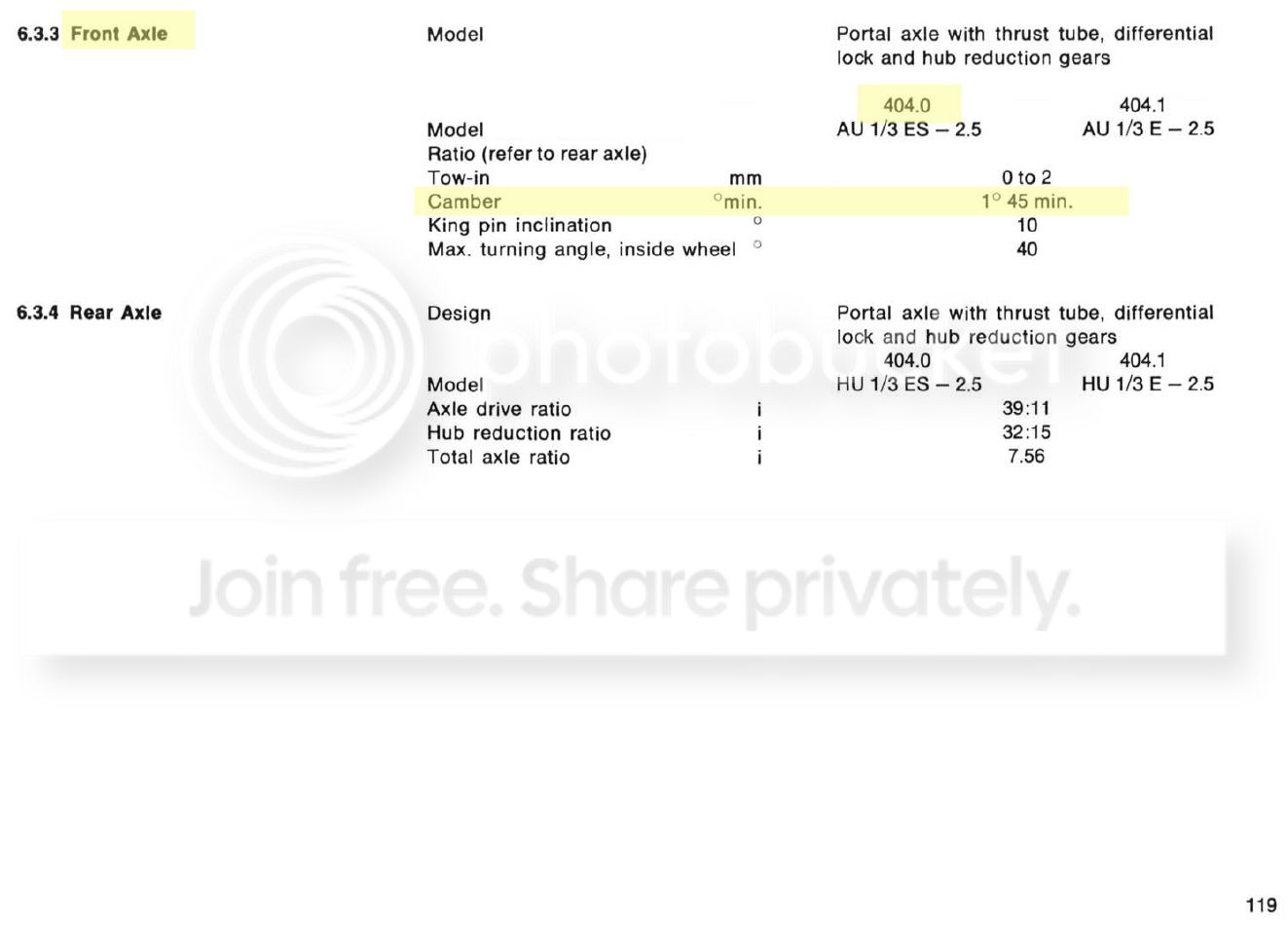
Reading through a bunch of old UniMog 404 documentation a saw a spec for the front axle that seemed odd, but didn't fully process what it would mean in my build. The Germans in their infinite wisdom decided to build the front axle with what appears to be 1.75* of POSITIVE camber in the front knuckles, and make it non-adjustable

Here is the spec:

404FrontAxleSpecs.jpg


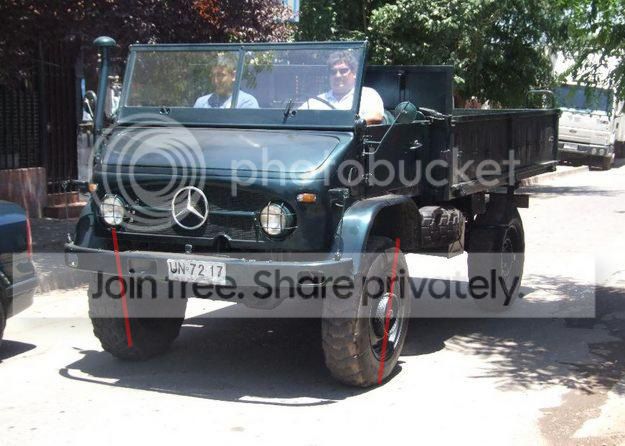
.....and here is the effect visually. Highlighted in red to make it more obvious.

MOGPosCamber.jpg


You can see that with almost 2 degrees of positive camber on the knuckles the tires have a pronounced "wedge" look \-----/

According to the Unimog historians I've been able to find, this was done deliberately for several reasons. The trucks were designed to carry heavy loads, and they rode on bias-ply tires. The paved roads back in the 60s had a substantial crown to them as well. All of these factors would lead to "wandering" of the vehicle if the camber was not set to a positive value.

In any case, the look is horrible. It reminds me of a lifted VW Beetle with a swingaxle rear end. :D There are ways to correct it, but you need to be careful which parts you modify since the axleshafts were designed to work properly with this angle designed-in.

For that reason, you can't simply machine the axle flange and bolt the Inner-C to it. The seal and bearing would end up with 2* of misalignment and would never spin freely afterwards. Guys have tried it... it was a FAIL.

So the answer is to make the adjustment in the CV-area where you have support for angularity anyway.

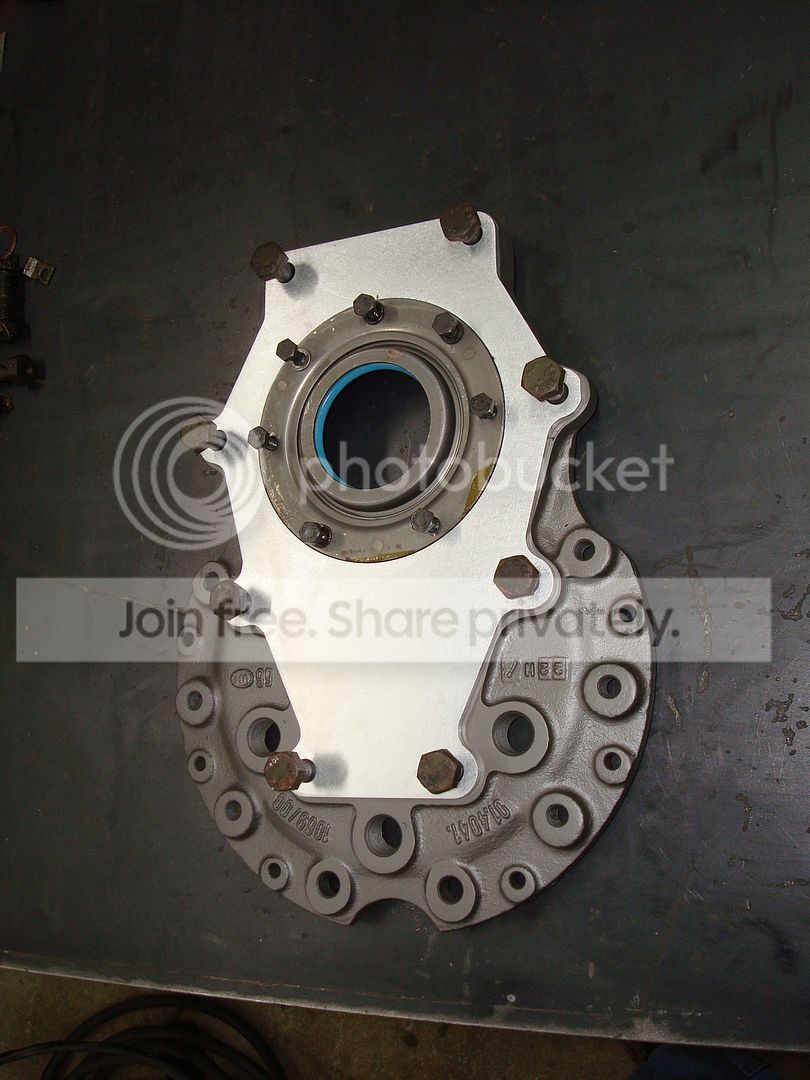
Here's an example of the plate that can be used to build an angled shim...

DSC04218-1.jpg


In this photo, top is top, and bottom is bottom when installed on the axle. Since the camber is POSITIVE, the bottom of this plate needs to get thicker to push the tires outward at the ground, and effectively pull them in at the top.

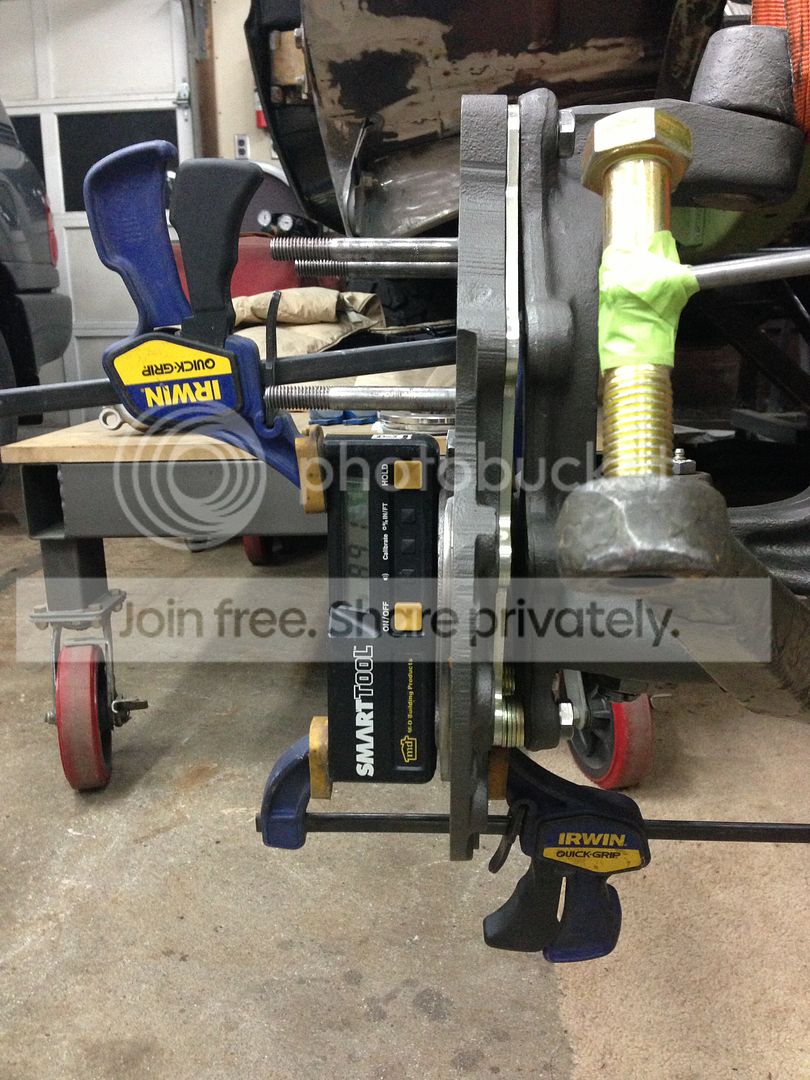
I bolted the plate into position and threw about .375" worth of washers under the bottommost bolt holes, and got this...

null-84.jpg


As you can see in this photo, the angle gauge shows that I actually got about 1* of NEGATIVE camber into the front end now, effectively dialing-out all of the positive camber...plus a bit more! :waytogo:

I like this a LOT.

So, now it's up to Scott (4X4HIGH) to come through for me (again) with another huge favor :bow::bow::bow:, and help me to get a set of these plates CNC'ed... it seems like it's doable, the question as always is how long will it take, and what's it going to cost me?! :haha:


-G
 
Last edited:
and the snowball keeps rollin'...."might as well", turns into "have to now!"
Seems like a few Sweedish trucks were made that way as well.
 
Yeah, fortunately it's not really holding up my progress on the suspension stuff at all.... I'm just glad I noticed this now. Imagine how it would have felt to get the truck all finished, step back to admire it and then go......... "what the....???" when I saw the front tires all cambered-under like that??

Anyway, Scotty's already on the case working behind the scenes to figure out a solution. He's come through a bunch of times for me already on this build so despite being 3000 miles away, this build still has his "fingerprints" all over it. :waytogo:


-G
 
Is it going to be a problem those studs are no longer parallel to the face? I am not sure how it goes together really so I don't know.

Also, if you are really going to have a plate CNC'd to fit in between there, you "might as well" CNC the plate to replace that component, that way you can keep the recessed bolt heads perpendicular to the bolts without bending the bolts that hold everything together.
 
Heath,

I've had good luck before using "spherical washers" on my D60. I ran a set of 4* shims and it screwed up the alignment of the cast spring perch to the bolts and top clamping plate. The spherical washers are a 2-piece washer with a "bowl shape" on the lower part, and a convex bowl shape on the top part. They sit inside each other and will find their own "level" when a crooked bolt draws down against them. You end up with perfect, flat bolt head contact against the parts even though the through-bolt is crooked..... at least that's the theory. They can usually correct up to a 4* misalignment issue, so they should be well suited for this task.

I suppose I could have the 8 holes on the portal backing plate spot-faced with a ~2* angle so that they'd sit flush even when the shim is installed. I guess it just depends on how much I trust the spherical washers to do their job in this kind of application. :thinking:

As for machining an entirely new portal backing plate..... WOW. That's a crap-ton of work for somebody to figure out. I guess I'd have to REALLY be convinced that there was no other viable (Safe) option for correcting the camber issue on these knuckles.


-G
 
I've seen the spherical washers before, those should work fine for the short bolts I suppose. What about those long studs? Will this angle bend them when tightened or are they not effected by it?
 
Those long bolts are for securing the outer portal housing (2-gears, etc) to the backing plate. Those flank the upper small gear and help cinch it down, and there are some additional perimeter bolts that tighten the rest of the housing to the backing plate.

Nothing would change in the relationship between the portal box and backing plate, so I should be all set there.

The only thing I could forsee changing is that the overall length of the axleshaft might get about 1/8" longer than before due to the extra material I'm adding with the shim. However, the shafts are all going to be custom made when the time comes and I haven't even measured for them yet.... (nor do I even understand HOW to measure for them.) :)


-G
 
Is it just me or wouldn't you want the washers at the top of assembly to push the top of tire/hub out? This is the Passenger side, right? If it were the driver's side then this would be perfect.
 
Is it just me or wouldn't you want the washers at the top of assembly to push the top of tire/hub out? This is the Passenger side, right? If it were the driver's side then this would be perfect.

Only if we lived below the Equator..... :whistle:

Nope. The top of the tire is already too far out. Adding even more spacers would make it even worse. Rules apply equally for both the driver and passenger side tires...


-G
 
2013.01.31 - UPDATE! - INTRODUCING PENCILCAD v1.0 !!!

Having the site down yesterday wasn't a total loss. I was forced to spend some time slogging through a panhard bar design (still in process). Doing full-scale experiments are time consuming and waste a lot of material, and I don't own or know how to use AutoCAD so I decided in the interest of time to do the next best thing.

Introducing PencilCAD v1.0 :D

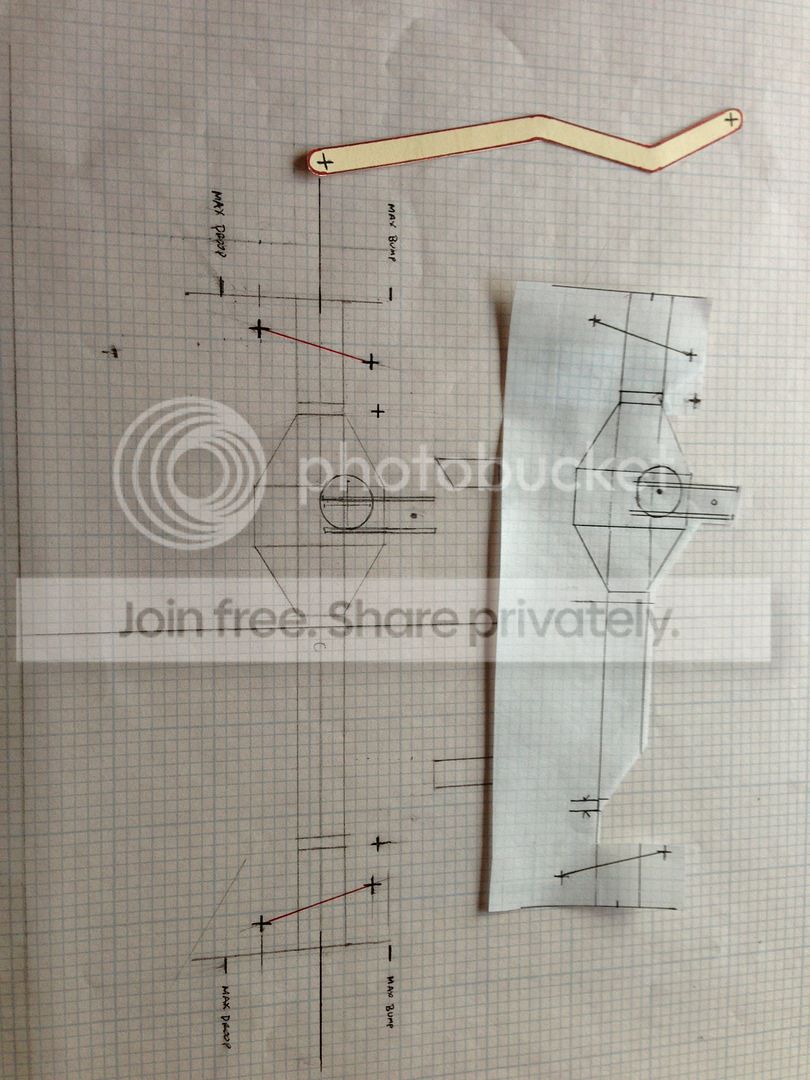
IMG_4152.jpg


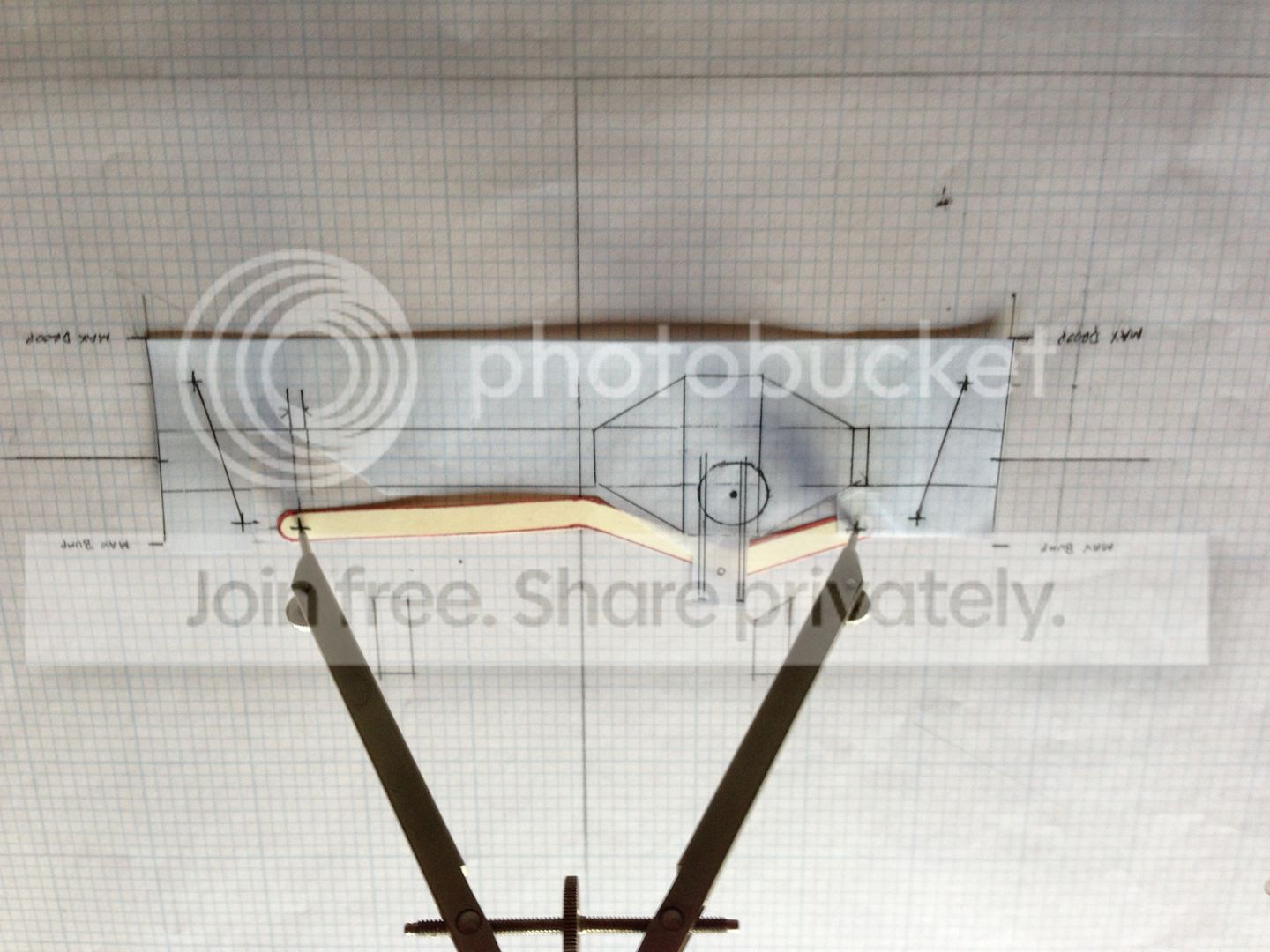
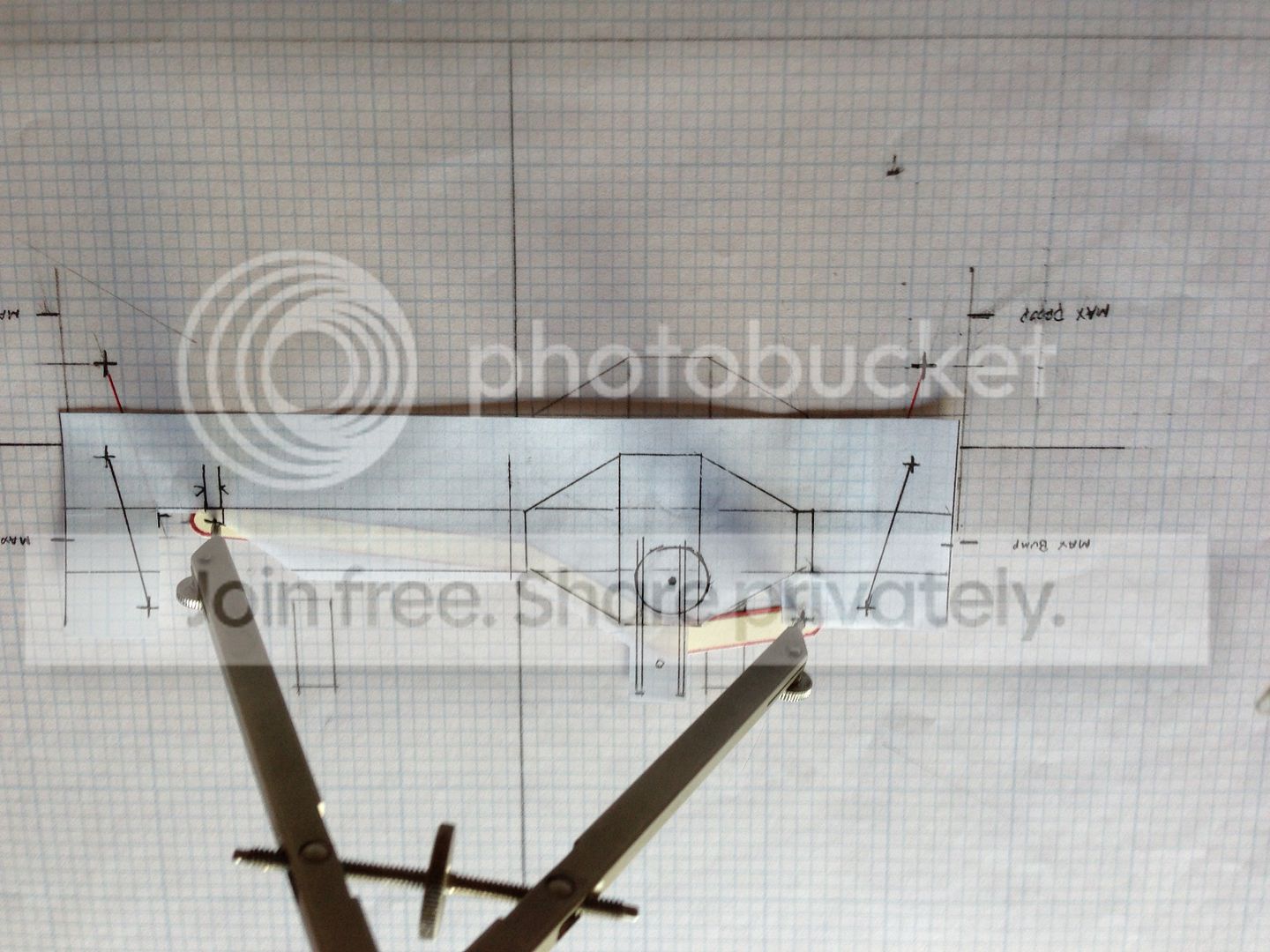
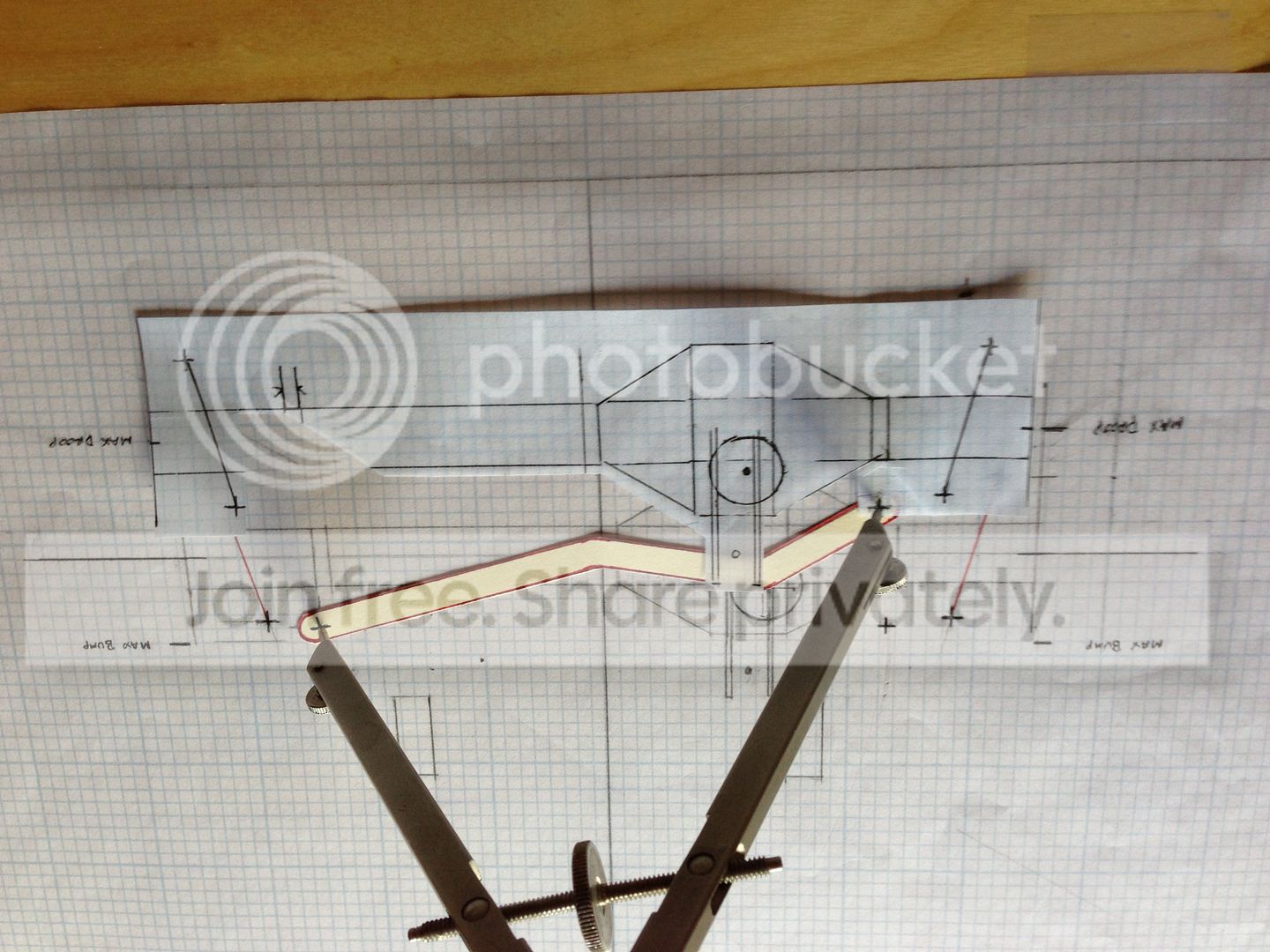
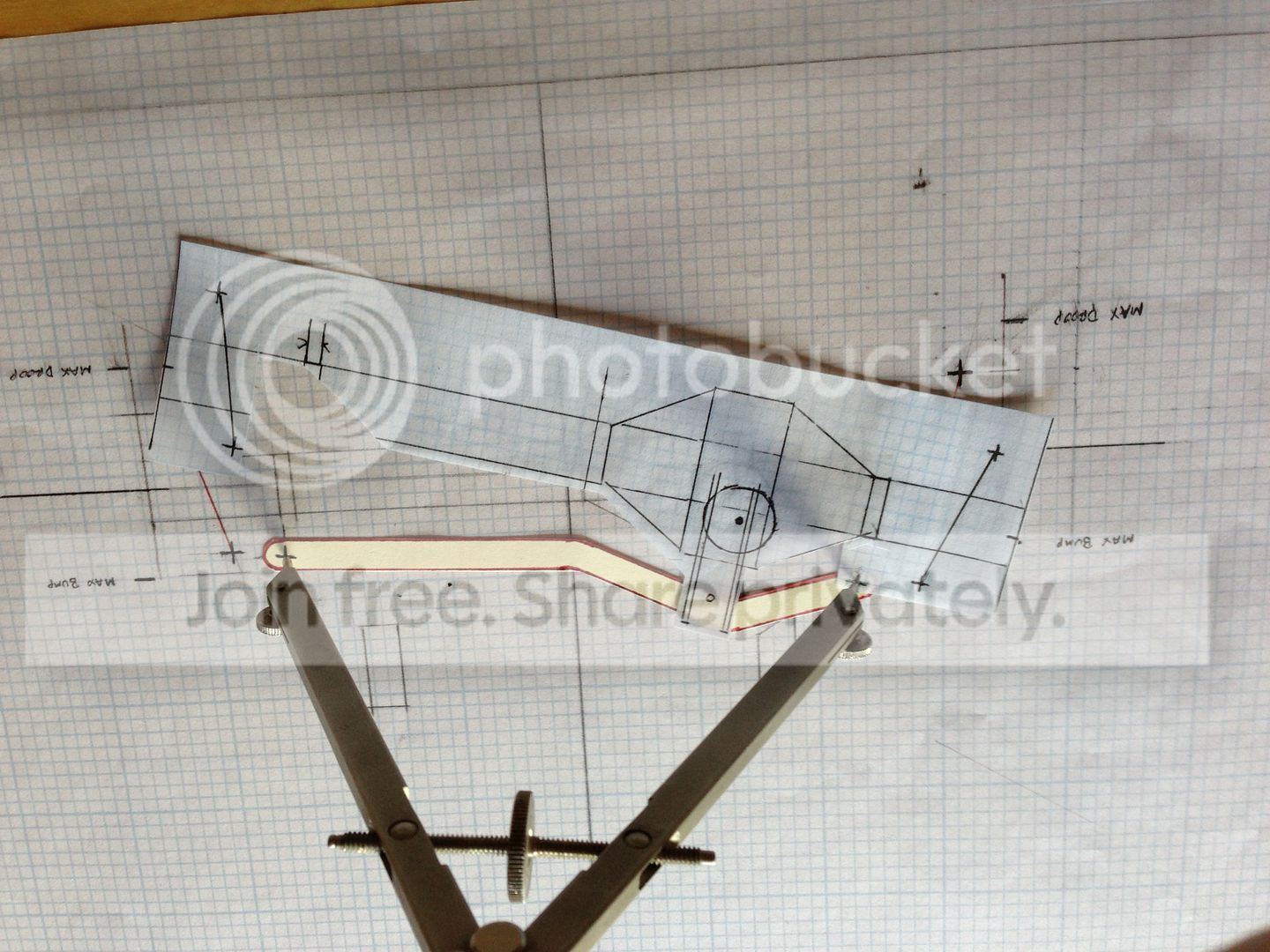
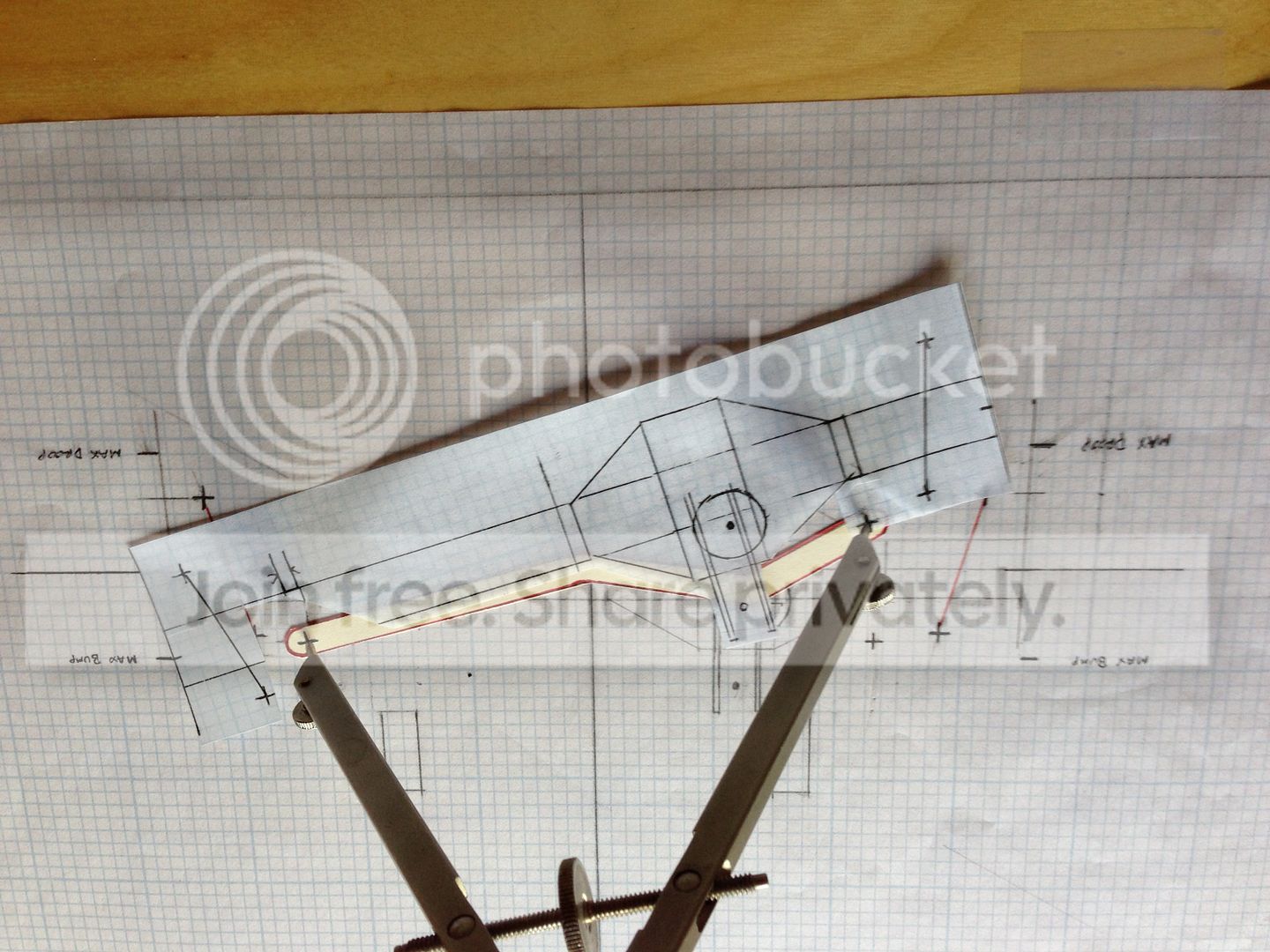
I pulled a bunch of measurements from my truck and axle in the garage and drew them to scale on some graph paper. Then I cut out a scale version of the axle so that I could "cycle" it on the page. A set of dividers holds the length of the panhard bar consistent so that I can experiment with mounting positions (frame end and axle end) and see where things hit.

Here's a shot of one revision at ride height:

IMG_4153.jpg


And that same setup at full-stuff:

IMG_4154.jpg


At full droop (both sides):

IMG_4156.jpg


Driver's Side droop:

IMG_4155.jpg


Passenger Side droop:

IMG_4157.jpg


It was a pretty good effort, and it looks like I'd maintain decent oilpan clearance and frame interference is minimal (small clearancing required). The problem with this one is that it massively interferes with the upper link & heim. :doah:

I'll keep working on it.....


-G


what a great idea Greg....hopefully it will translate well to the truck.

Looks like bumpsteer should be at a minimum!
 
Yeah.... can't really speak to bumpsteer yet but I'm pretty confident I can make a draglink parallel to whatever I come up with for this PHB.

The worst-case axle shift (full bump or full droop) appears to be around 1/2" toward the driver's side. That's certainly not bad at all. I think it's a combination of keeping the draglink as flat as possible and as long as possible. This scale mock-up has the PHB at 37-1/2" long... I might be able to sneak a couple more inches out of it before I get interference in the knuckle areas.

-G
 
I think the PencilCAD is a viable tool, you use it wisely!

Friendly reminder, maybe it's time to update the thread title to front suspension, so it doesn't say "pics and video" still? It's been a while.
 
I can`t comment on anything because I don`t know a thing about what you are doing...but I like to watch and see what`s going on. Amazing to think of how this is going to turn out. :bow:

Glad you dodged a bullet and didn`t loose any posts from yesterdays crash.:thumb:

As always...:popcorn:
 
I think the PencilCAD is a viable tool, you use it wisely!

Friendly reminder, maybe it's time to update the thread title to front suspension, so it doesn't say "pics and video" still? It's been a while.


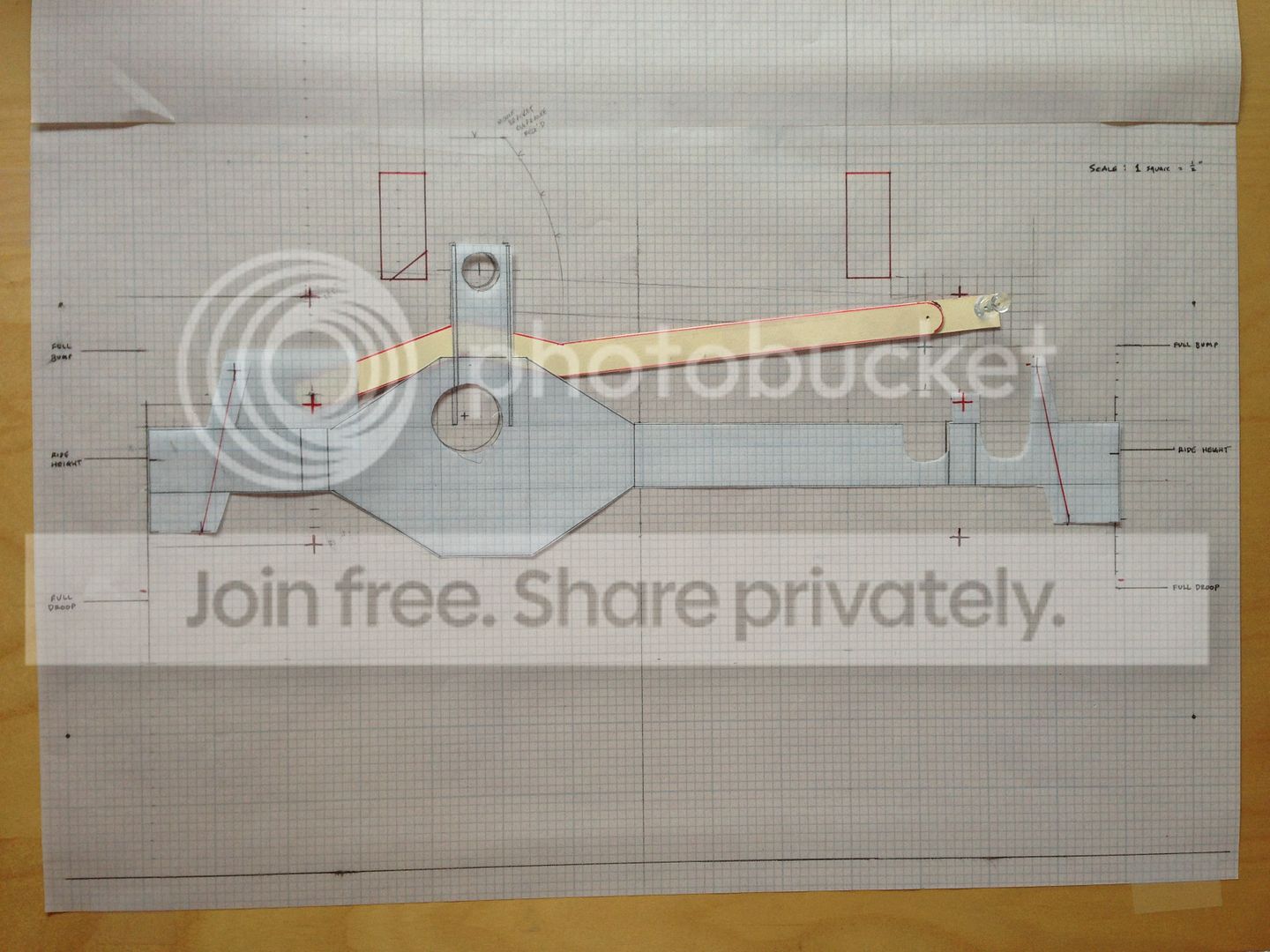
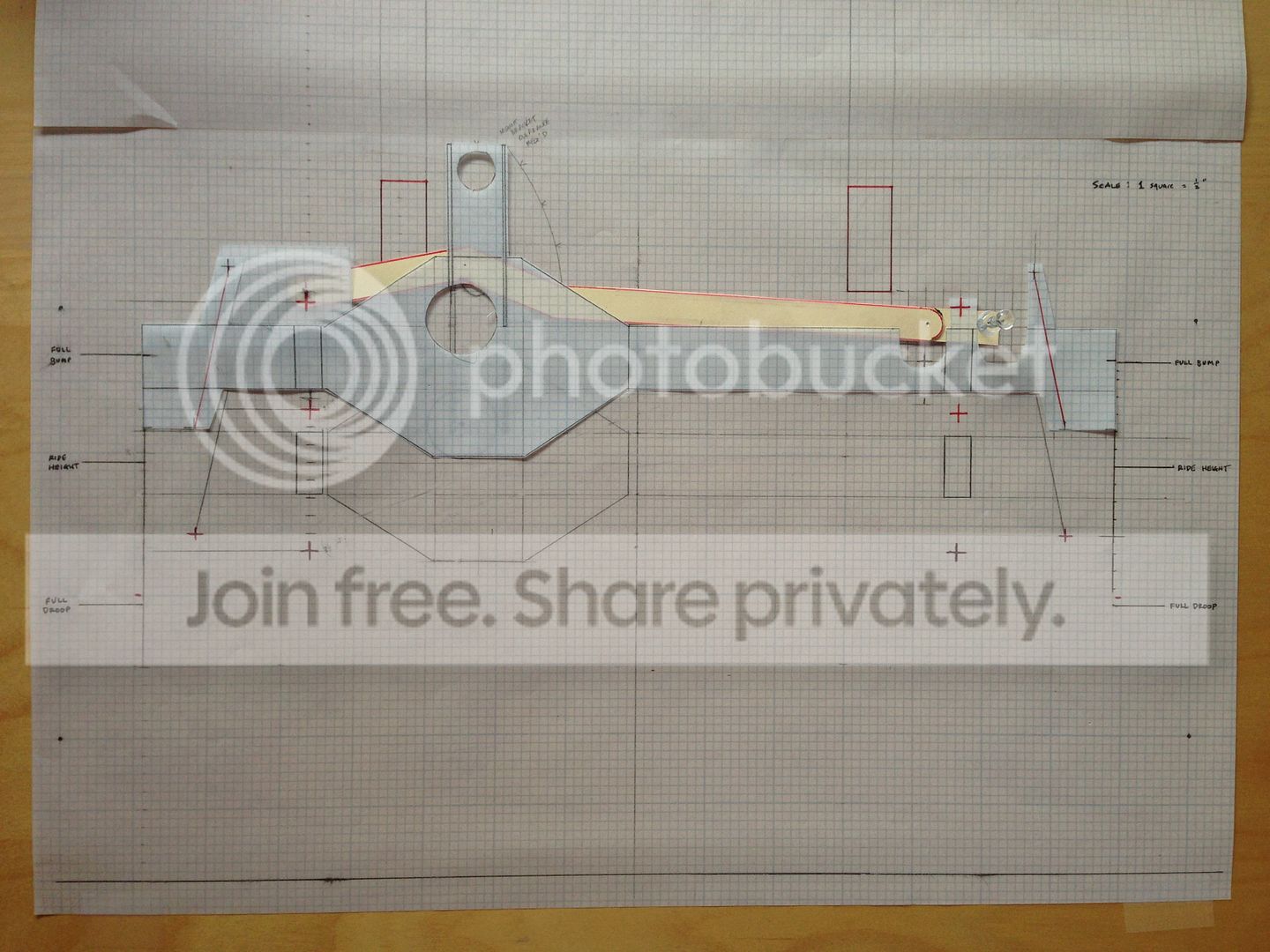
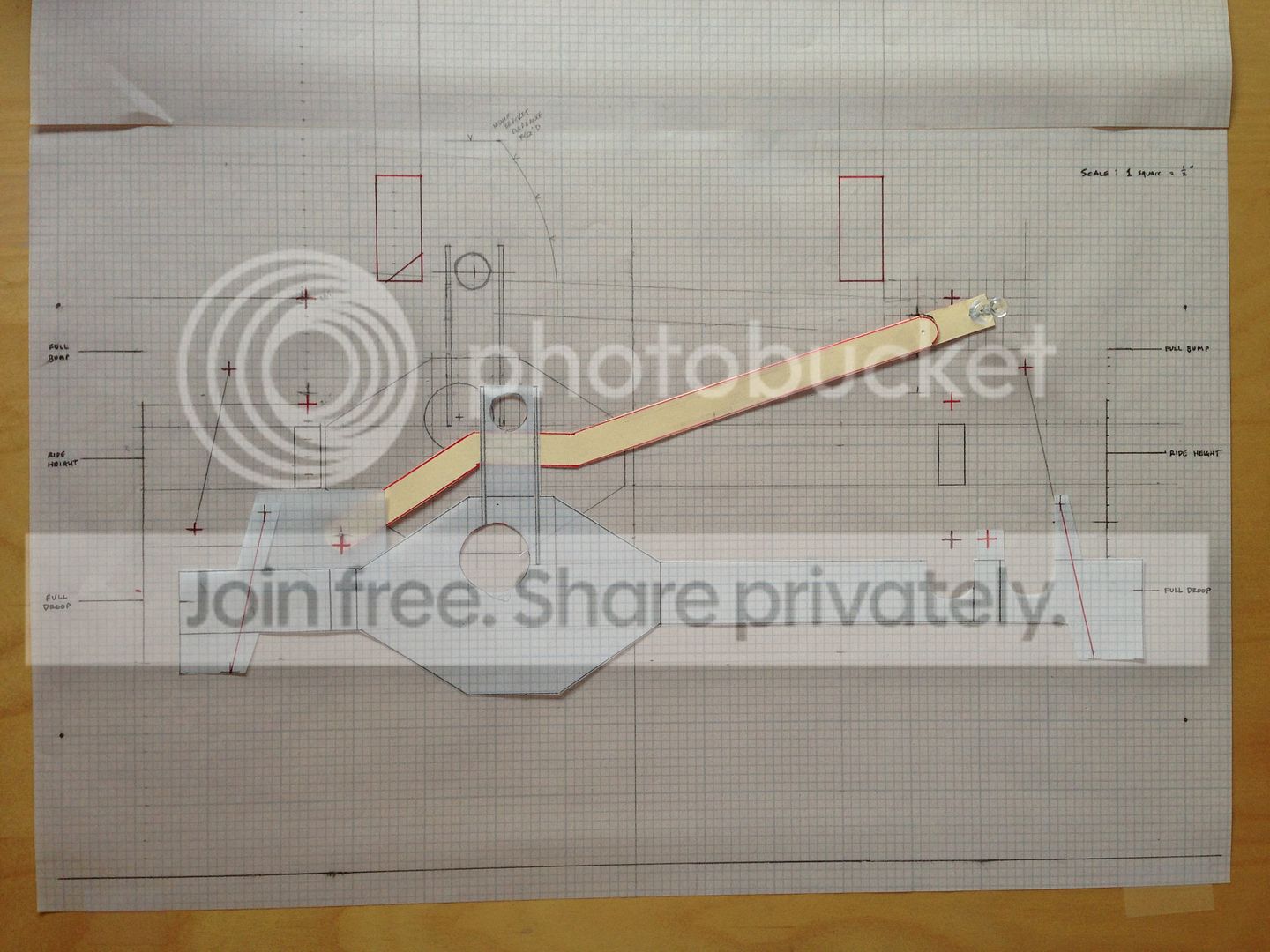
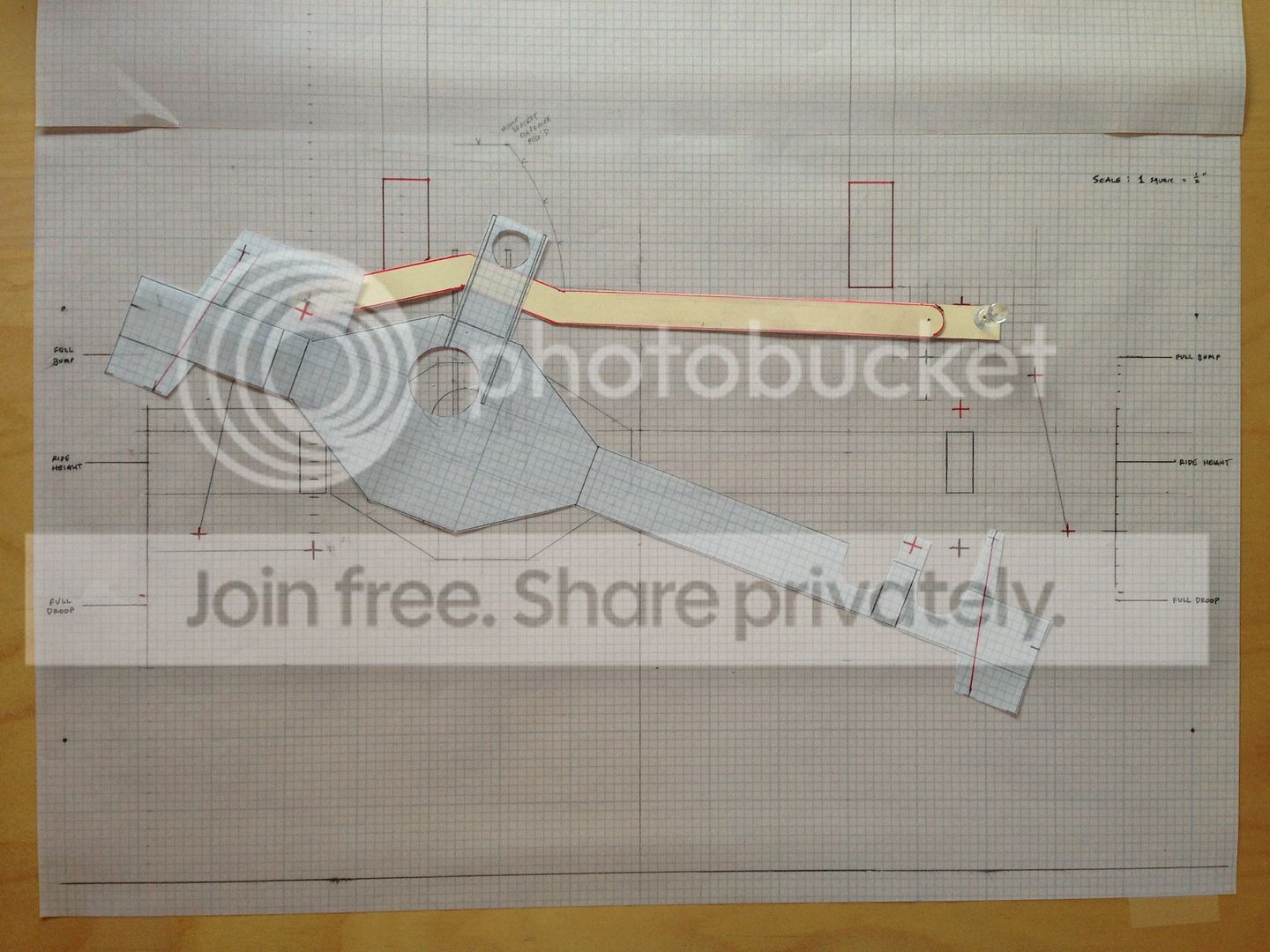
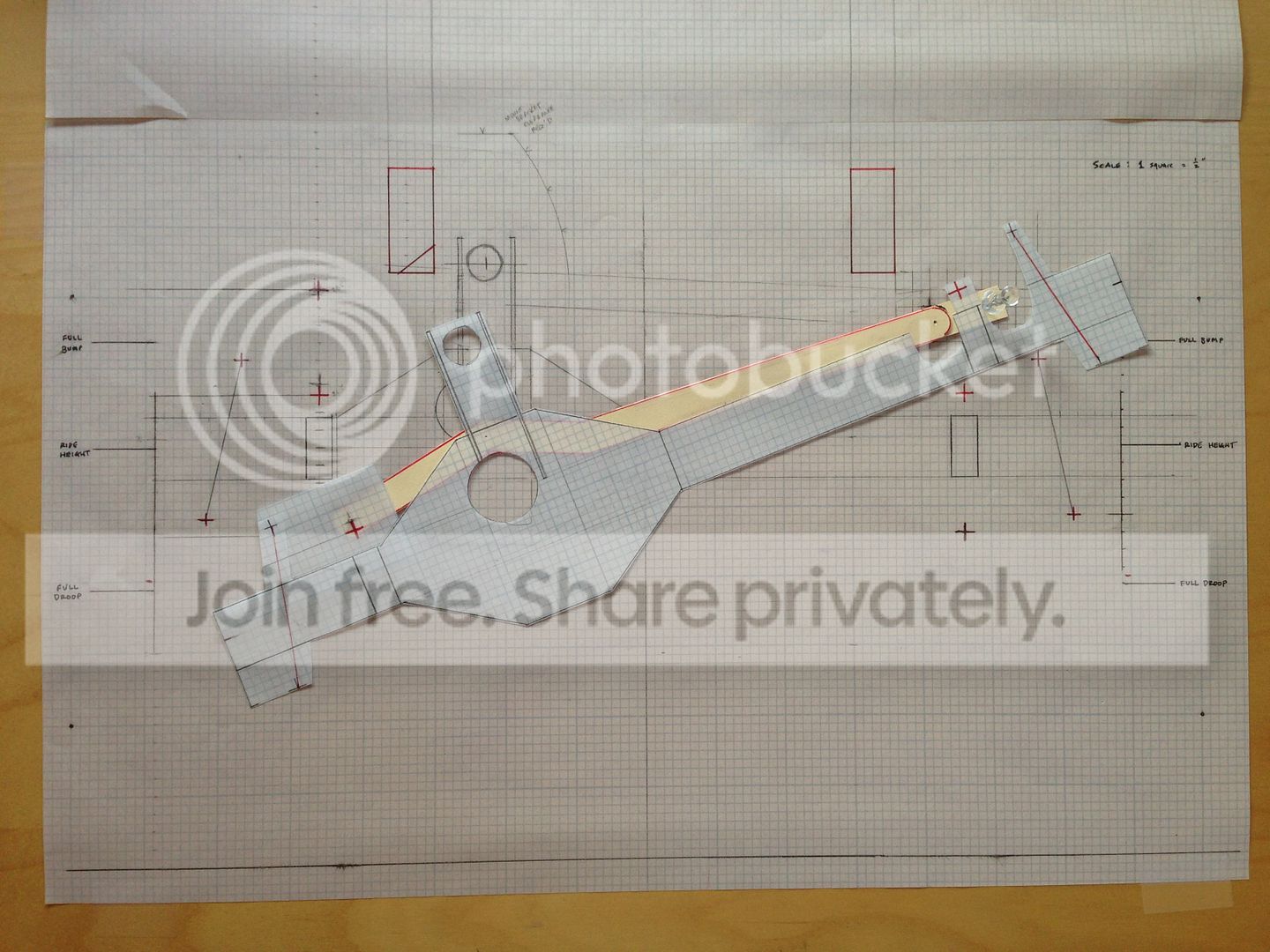
I've decided to double the scale of my PencilCAD drawing. It will just barely fit on my 11" x 17" graph paper, and should allow me to be a bit more accurate with my dimensioning. I really need to "thread the needle" with the clearances around the upper link and the front axle pinion / driveshaft, so I can't really afford to be off by an inch or more in these drawings. The whole thing feels remarkably "low tech" but working in scale like this is actually proving to be quite useful.

Thread title change, eh? :thinking: Well..... it has been completely unchanged for the entire build thus far (5 years) but I suppose I could change it up a bit.


-G
 
Is there any value / benefit to trying to align the frame side PHB mount to either vertically with the upper kingpin centerline (green dot) or to align it with the SAI of the upper/lower kingpins? (red dot)????

That would put the mount about 7" - 8" off the outside of the framerail which would require a beefy bracket, but it wouldn't be impossible to do...


PHBspots.jpg


By the way: If any of you guys want to totally steal this image and transfer the dimensions into AutoCAD or SolidWorks to help me model this more quickly, be my guest. The current scale is 1/2" per square on the page. :waytogo:


-G
 
Last edited:
Winner.....winner......chicken dinner!

With a larger and more accurate model I can see that the total axle shift is more like...

1/4" toward PS at full bump.
1.75" toward DS at full droop.
Overall draglink length was either 35" or 38" depending on which frameside mount I used.
Draglink angle was between 7.36* - 6.75*
With the double-bend in the draglink (as shown) I can avoid all interferences with the upper link heim and the axle pinion.

The angle of PHB is really convenient for setting up the draglink next. With a conventional steering box location, I should be able to land the steering arm in a "high-steer" type location in front of the axle. Should provide good clearance from rocks, especially if I also get the tierod at a similar height. :thinking:

Good stuff.... I'm definitely psyched to get back into the shop to try this in FULL SCALE.

RIDE HEIGHT:

IMG_4165_zps55b3630b.jpg


FULL BUMP:

IMG_4166_zps29d926e6.jpg


FULL DROOP:

IMG_4167_zpsd43a5530.jpg


DRIVERS DROOP:

IMG_4168_zps9090bf27.jpg


PASSENGER DROOP:

IMG_4169_zps971410d5.jpg


-G
 
Last edited:
Greg, I think I have a better idea than what you asked to have done. I'll call you tomorrow sometime to discuss it with you since right now you should be enjoying family time and about ready for bed. :thumb:
 

Latest Posts

Top Bottom