CK5
Register an account today to become a member! Once signed in, you'll be able to participate on this site by adding your own topics and posts, as well as connect with other members.
Says Greg in Jan 2008 !!


Be careful throwing around completion dates :D

Glad you are back at it again. Some of us live vicariously through this build. I actually don't want it to ever end.

Lol....

Yeah a bit of "scope creep" since those comments were made. Back then I think I was still going to do "tons and leafs"... It's amazing how little I knew about building a truck and how limited my skills were to actually get it done. :doah:

This has truly been an evolutionary process.... And I've learned a great deal along the way. There was no way I could have predicted in 2008 how ridiculous and involved this project would get.

-G
 
Lol....

Yeah a bit of "scope creep" since those comments were made. Back then I think I was still going to do "tons and leafs"... It's amazing how little I knew about building a truck and how limited my skills were to actually get it done. :doah:

This has truly been an evolutionary process.... And I've learned a great deal along the way. There was no way I could have predicted in 2008 how ridiculous and involved this project would get.

-G

Which brings up a question. If you were starting over, would you take the same path? ie what short-cuts would you take with your current knowledge to get here? Assuming here is where you think the project should be.
 
Which brings up a question. If you were starting over, would you take the same path? ie what short-cuts would you take with your current knowledge to get here? Assuming here is where you think the project should be.


Well..... of course, it's easy to look back and recognize how much easier it all could have been. No real surprise there.

The build plan has been pretty clearly defined for many years now, that helps a lot. I spent a lot of time planning out the parts list and the specific criteria that were important and didn't get distracted by what other "cool kids" on the internet were doing. :D Ultimately, that type of focus is HUGE for a long-term build. If you get a couple of years into a build and then suddenly decide that you want something different you're basically screwed. Going backwards and changing major parts of a build are expensive (both in dollars and time)... once you do that, the project is probably doomed to failure.

It definitely gets harder to find time to work on the build the longer it drags on. Life has a way of placing new priorities in your path... (marriage, kids, etc). That's not a bad thing, but there is always a limited amount of "free time" in anyone's life and when you need about 5000 hours to get a truck build finished the timeline can start to stretch out for an awfully long time..... :doah:

Probably the #1 thing that would have helped me from the start would have been getting the workshop set up correctly from the beginning. It was almost 2 years before I even built shelving to hold take-off parts, and when you blow a truck apart for a full-restoration storing those parts takes a TON of storage space. Since I share a 2-car garage with my wife's car, my efficiency is probably down in the 20% range most of the time.... there's never enough room to spread out the work, and everything I do needs to be cleaned-up at the end of each workday so she can park indoors again. Having a dedicated, large shop would make a huge difference in speed & efficiency... even this late in the project.


You guys seem to want to see everything I do, even the small stuff so here are a few photos from last night's effort:

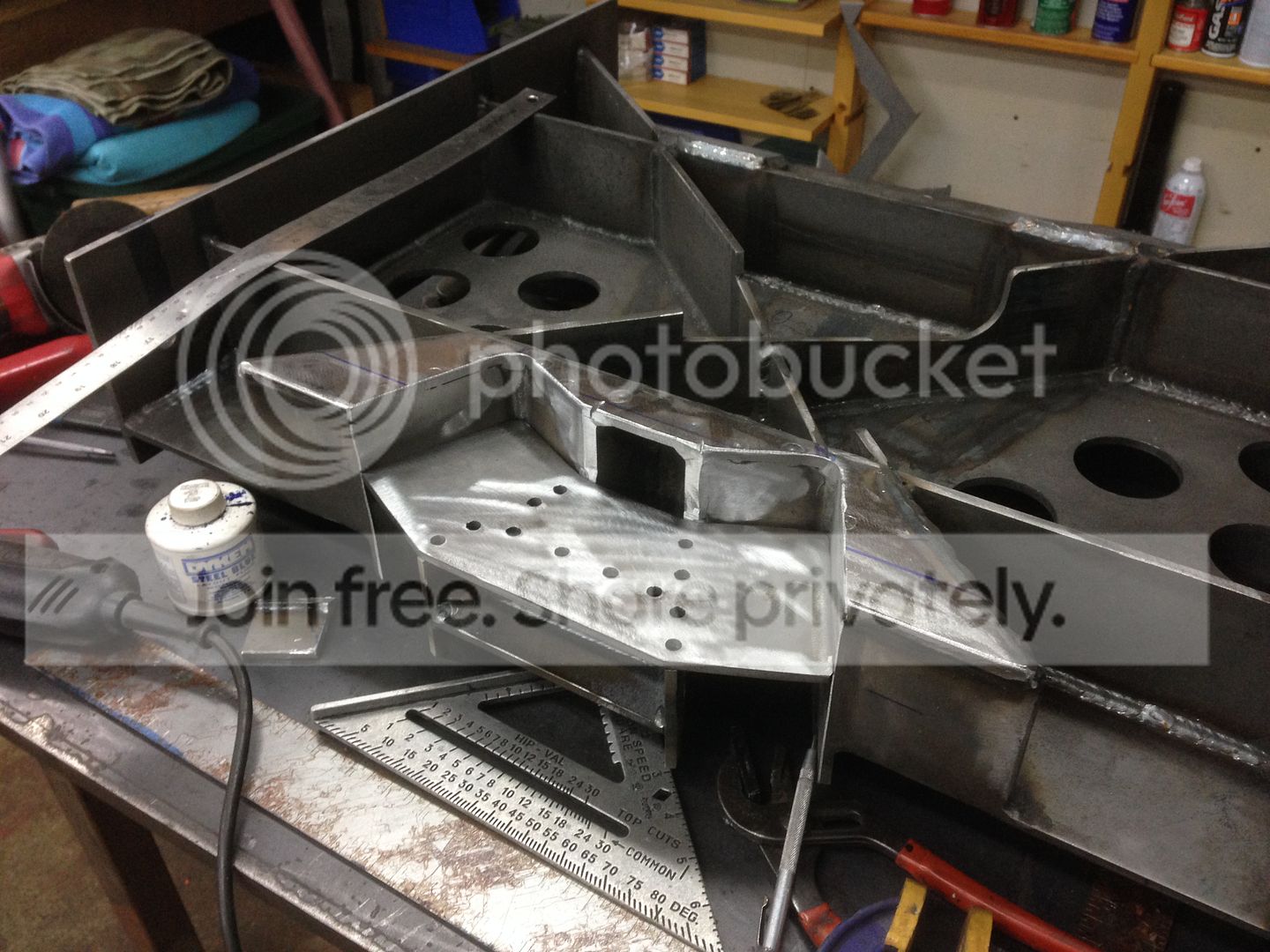
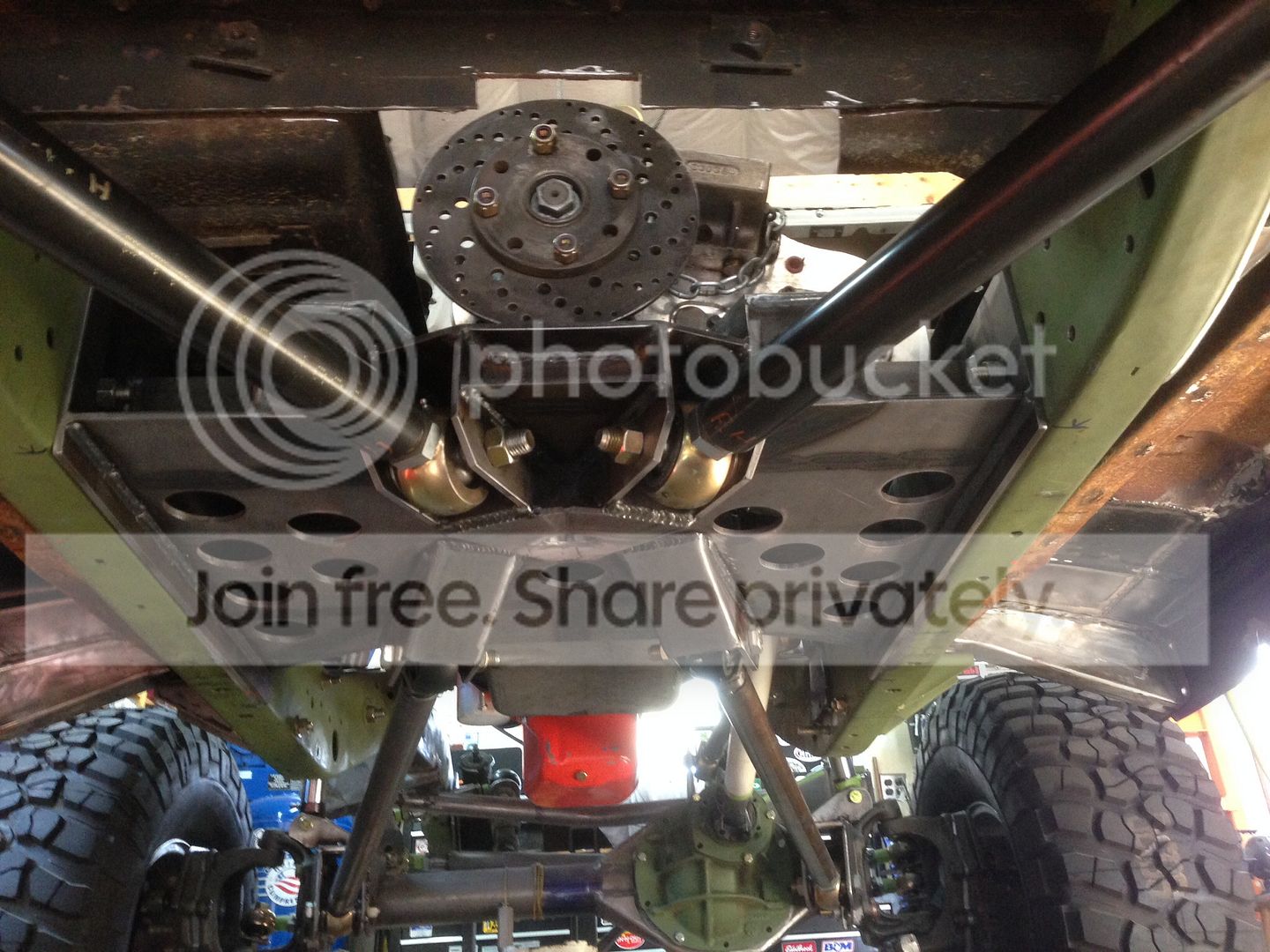
E-Brake clearance (rear of monolith) and the metal plate fitted for welding...

IMG_8513.jpg


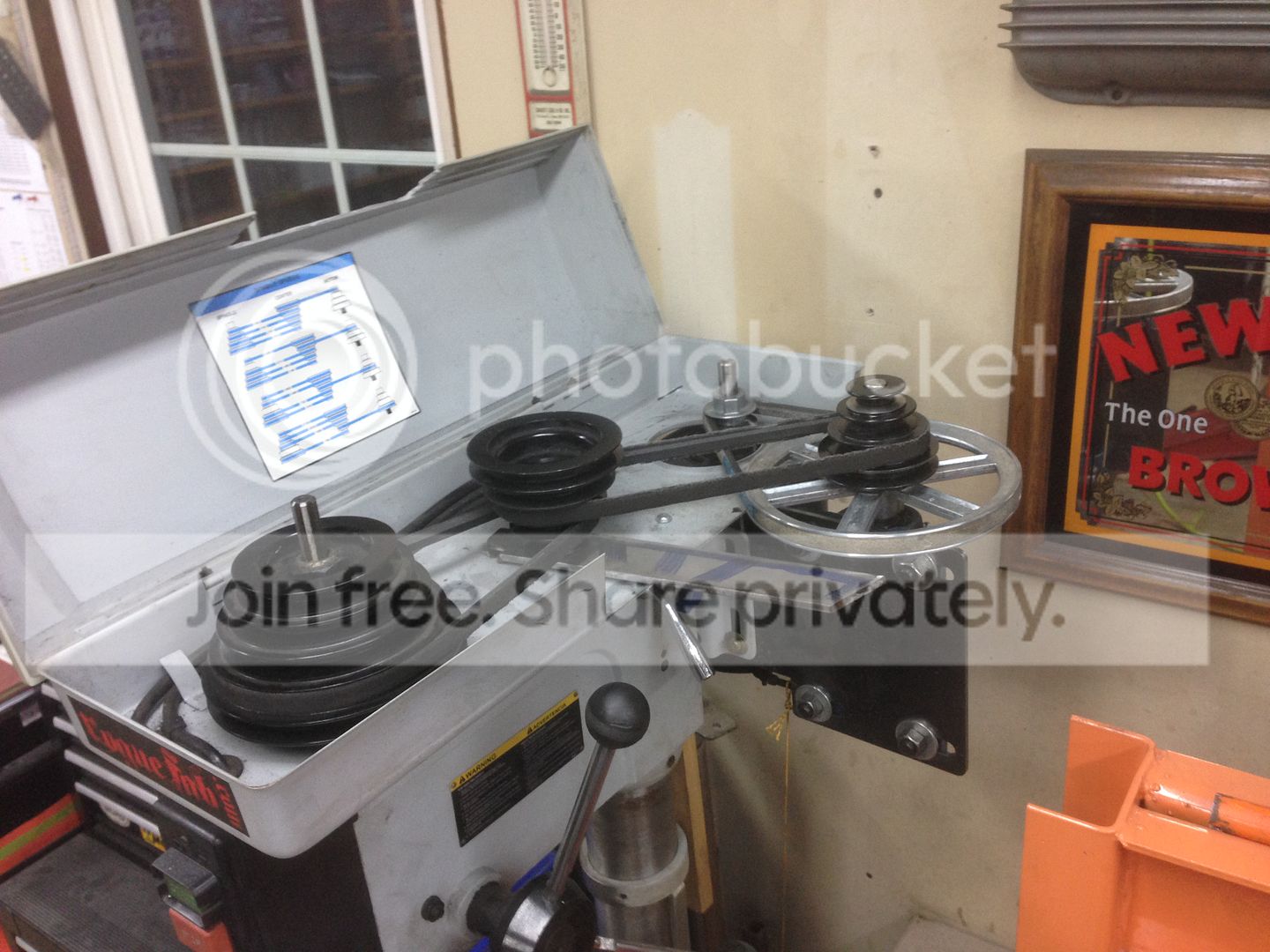
Drill press mods...

IMG_8515.jpg


As I mentioned last time, the gear-reduction pulleys helped to slow down the annular cutters, but the amount of torque being developed at the last pulley is huge. The final belt tends to slip a lot when it's under heavy load and the idler pulley (center pulley stack) was tweaking and bending when I tried to tighten up the belt tension.

My latest experiment was to weld a long piece of flat bar to the bottom of the idler stack. This serves two purposes. First, it helps to keep it from leaning over under tension but it also allows me to swing that bar and set the tension on the final belt myself, without relying on the other belts & tension adjusters to accomplish that. Now all I need is some kind of locking mechanism to set and lock the tension and it should be much more stout overall. With the limited amount of time I've gotten in the shop it bugs me to have to spend time "hacking" my drillpress but I really didn't have a choice since I needed to drill holes in my new monolith plate.


-G
 
Quick Update:

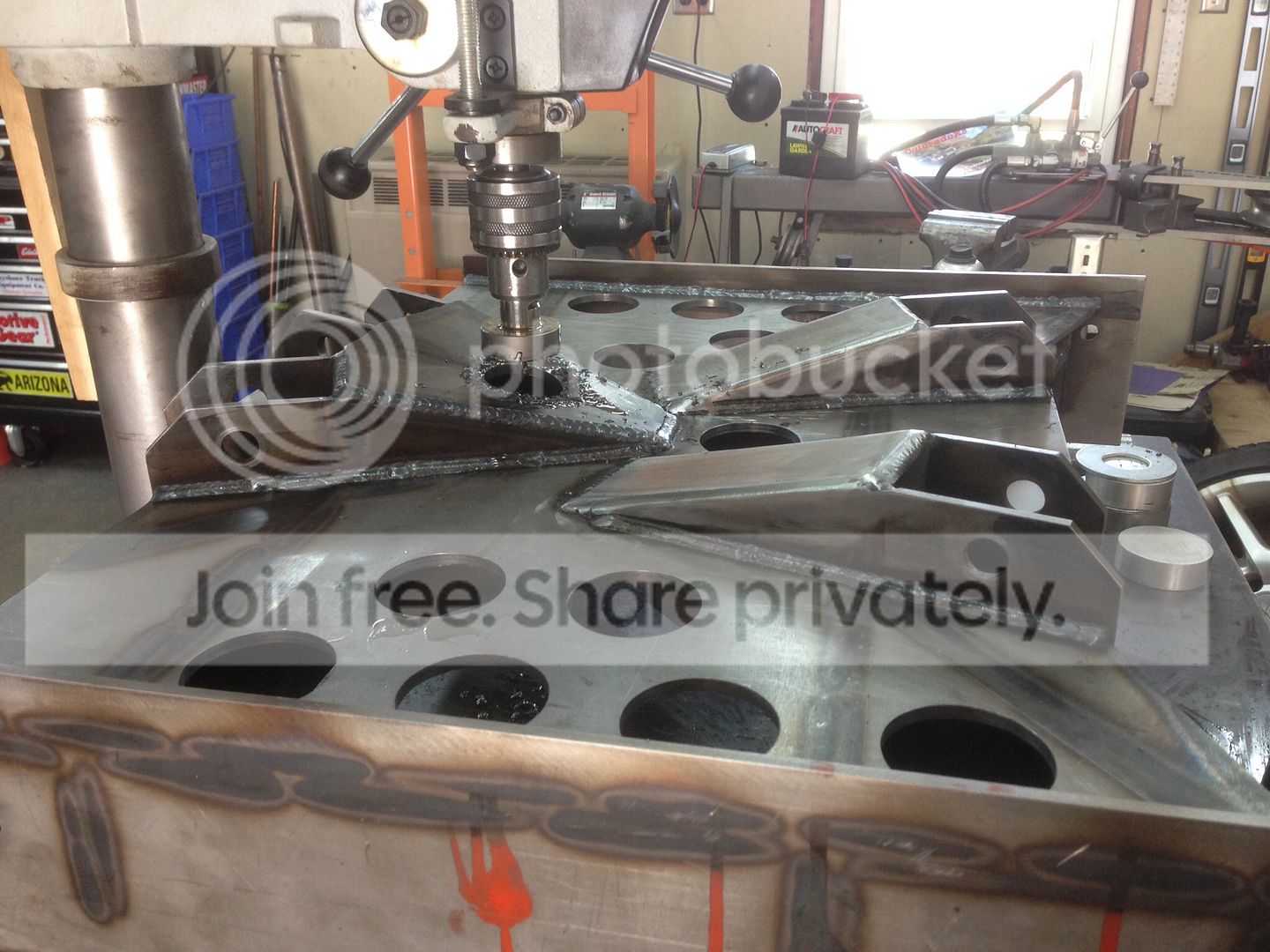
I finally got the speed holes drilled correctly....

imagejpg1.jpg


imagejpg1-1.jpg


imagejpg2.jpg


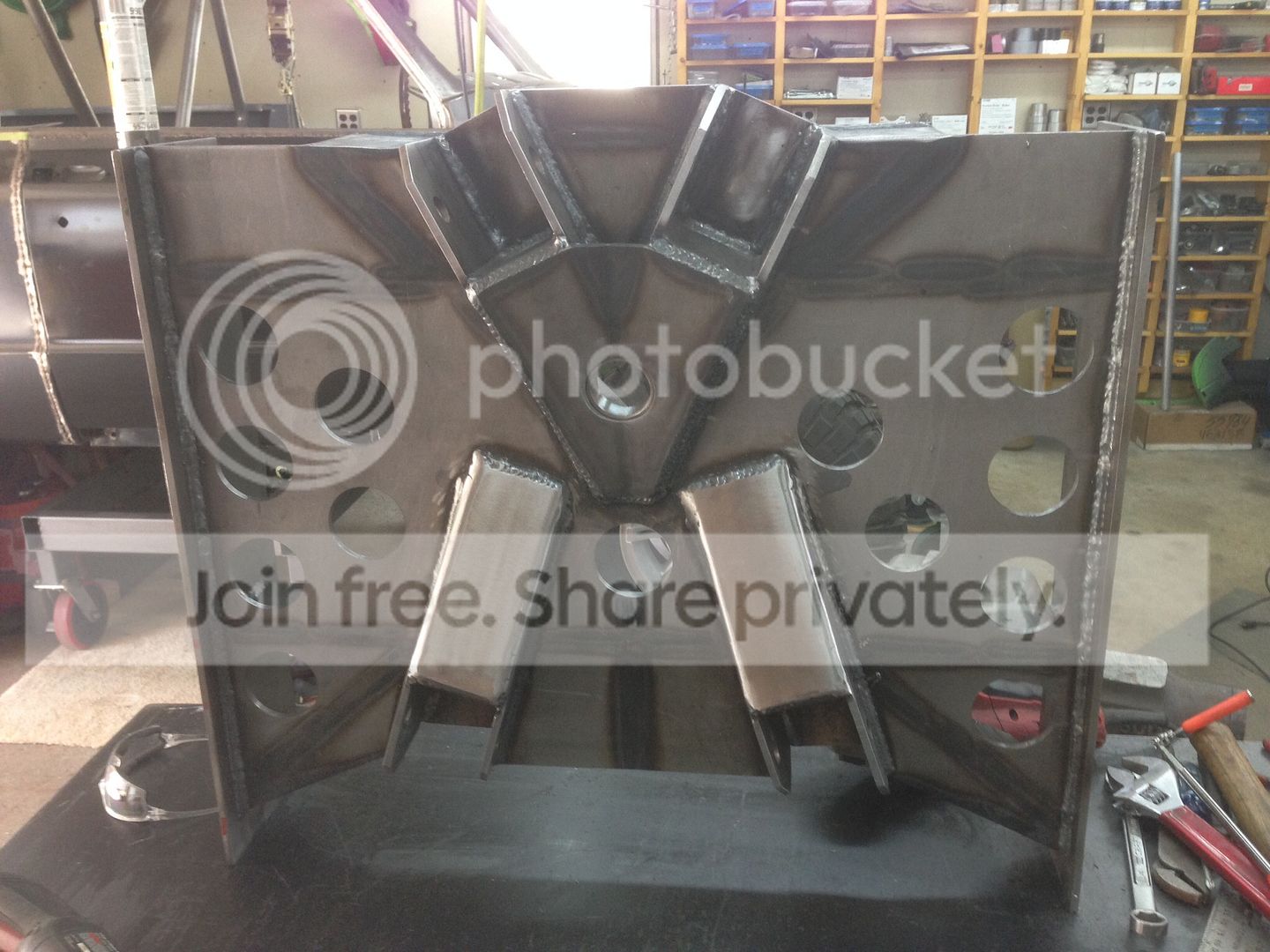
Now it's got a way to drain out water from any of the divided compartment areas. It serves the function of giving me access to the Atlas drain plugs as well..... Pretty important.

I had to do a tricky "sleeve" on one of the drain holes since it passed through the angled rear link hanger as well as the flat plate.

Even with those 2-1/2" x 1/4" thick slugs of steel removed the monolith still weighs a ton. :doah1:


-G
 
That's a cool shot of it! :thumb:

Is it done?

I assume you mean the monolith. Yes, it's done.

The HAD brake disc now fits into the new pocket I created, and the front driveshaft output got a bit of extra clearance too.

Finally. Time to work on something else! :waytogo:


-G
 
I assume you mean the monolith. Yes, it's done.

The HAD brake disc now fits into the new pocket I created, and the front driveshaft output got a bit of extra clearance too.

Finally. Time to work on something else! :waytogo:


-G
Yeah for sure Sorry. And the last pic is what I was talking about too.
Just sweet!
 
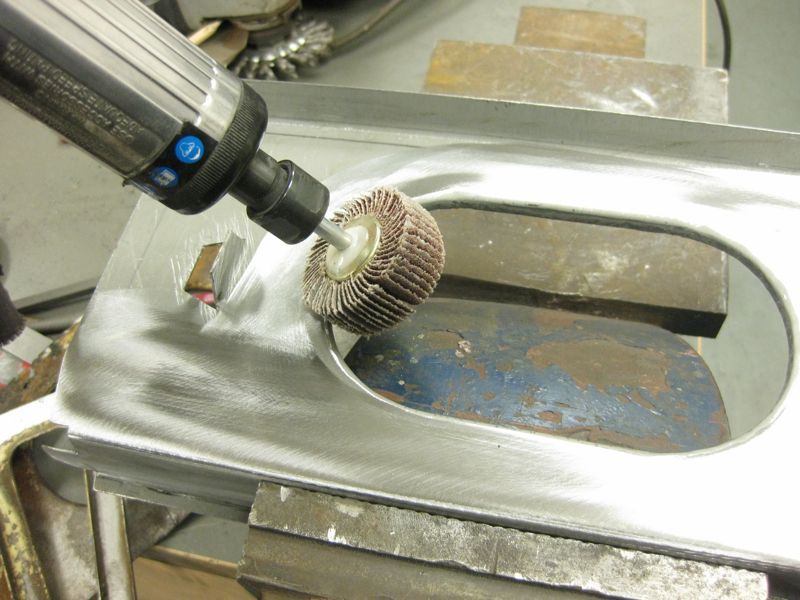
Something to clean up those holes really nice is a small 1.5" flap wheel on a die grinder...will put a beautiful rounded chamfer on the hole edges. At the least it'll make the paint stick better. Sharp edges and paint don't go well.
 
Something to clean up those holes really nice is a small 1.5" flap wheel on a die grinder...will put a beautiful rounded chamfer on the hole edges. At the least it'll make the paint stick better. Sharp edges and paint don't go well.

Thanks!

I tried to use my Roloc discs to deburr and soften those edges and all I got was a pile of crimson-colored fluff and a few wasted discs!

-G
 
yeah I love those little flapwheels, so many uses for ID work! work great for honing out a yoke for Ujoints too!
Awesome shot of the monolith Greg, so well thought out and executed!
 
Cool, an update and a noteworthy one at that. :thumb:

Now to get those links finished in final material and get an outside shot of this thing. :deal:
 
The monolith is nifty. (Same way I felt when a young girl said I think your truck is so cute)

It looks like it could be from a transformers movie, I can hear the voice of optimus prime and the monolith contorting.
 
I don't recall any one brand that stood out, good or bad.

I passed this on to Greg.

3DU83_AS01


http://www.grainger.com/product/MERIT-Flap-Wheel-3DU83?s_pp=false

At about $5 a piece they're not bad. A good companion to these are carbide burrs to knock the really sharp edge off first. Eastwood sells a 4 piece set for about $50 that has a good selection for many jobs.

p2636.jpg


http://www.eastwood.com/carbide-bur...ode=ga220010&gclid=CNv-vqKQgb4CFU5afgodInoADw

Ideally, you'd use the 1/4" straight one to remove the sharp edge and put a small chamfer on the edge of the hole, then buff it with the flap disc. You want to de-burr so the tools rotation wants to pull the tool around the hole, not fight the tools rotation. The burrs are also really good for removing weld spatter from inside corners and stuff.
 
2014.04.28 - UPDATE! - MORNING (WHEELBASE) STRETCH.....

Sunday morning was a good day. The sun was out and even though the air was still a bit cold it felt like things were going to get done. :waytogo:

No monolithic projects remained, so it was time FINALLY... to do something different in the garage.

If you recall, back when I was working on the front suspension design and was pretty close to completion I hung the stock fender and discovered that the axle was WAAAAY to far forward and didn't fit into the wheelwell opening at all. I realized that even though I had set my wheelbase to 107" (stock is 104" on a 1st Gen) I hadn't properly set the rear axle far enough back. This pushed the front axle forward too far and made everything look weird.

The short-term solution was to move the front axle back until it fit the wheelwell properly, and temporarily let the wheelbase shrink below my 107" target. When I took the first measurement, it was actually at 103.5".... I decided it was time to take some action.

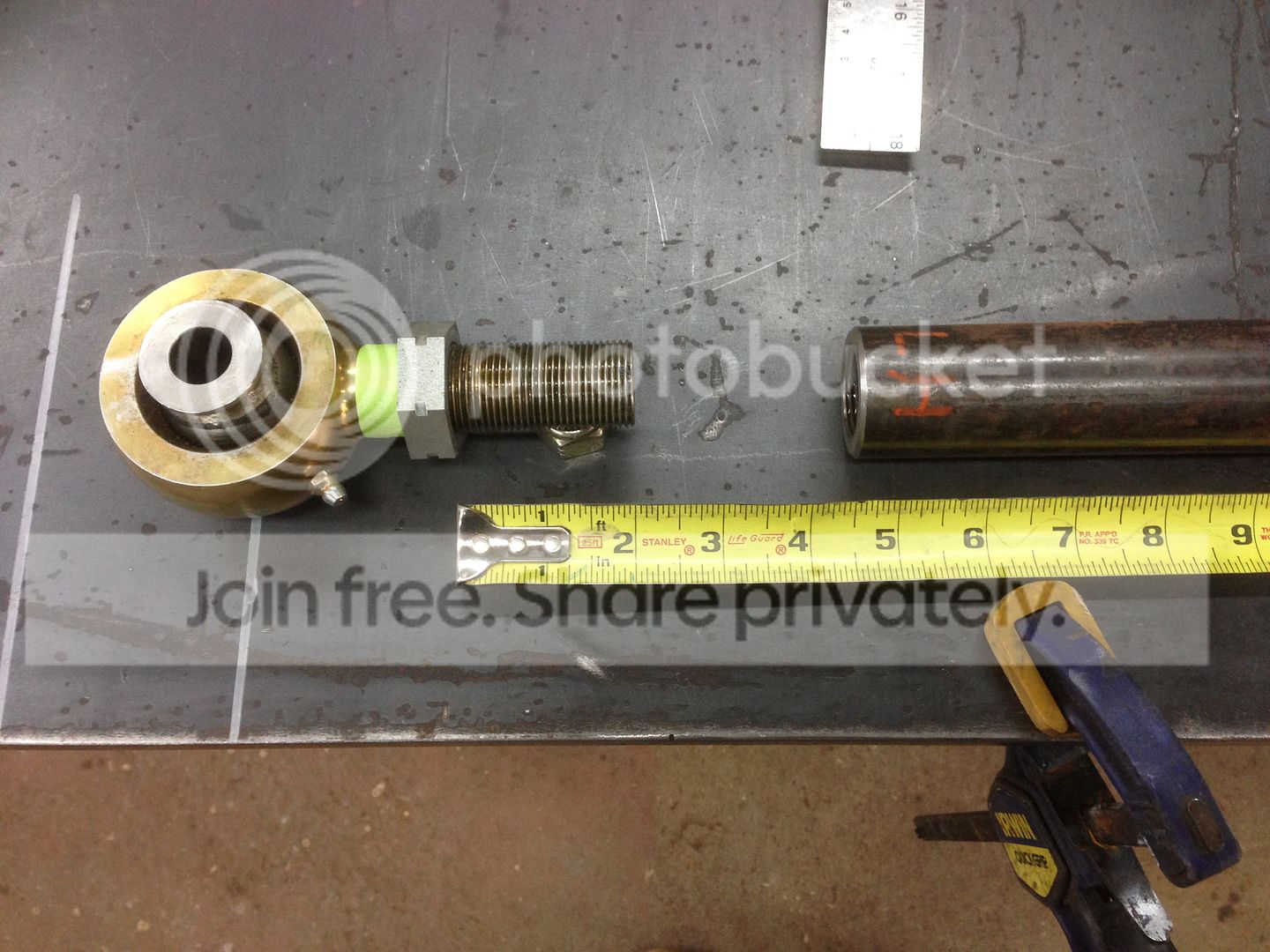
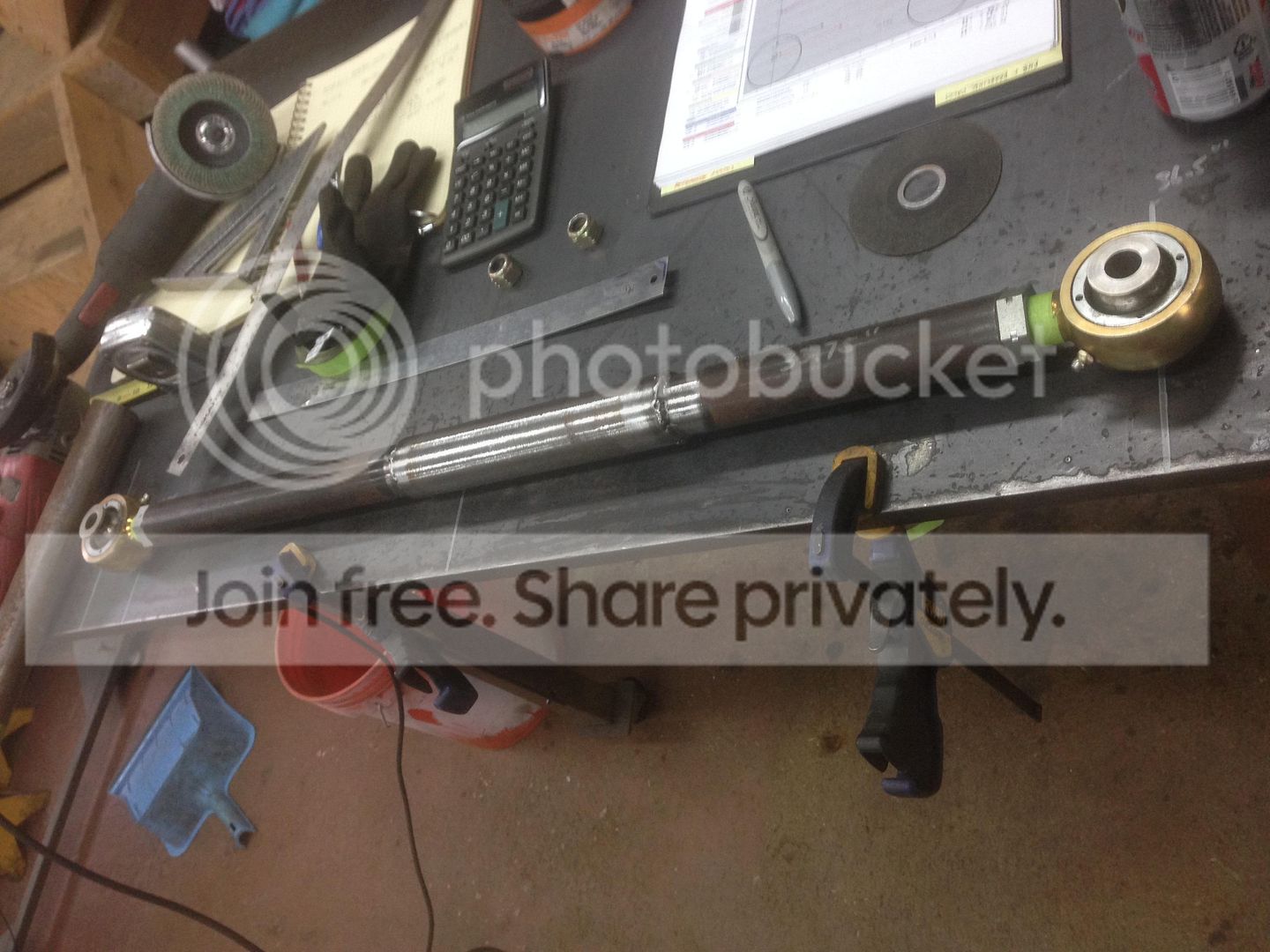
One of the nice things about working with links is that changing the axle position is as simple as just turning the links either clockwise or counterclockwise. As I unthreaded the heims I was able to stretch the wheelbase out and got to around 105" pretty fast. Unfortunately, there is a limit to how much you can unthread the heims before they simply fall out of the link. And in my case, since the truck is now resting it's weight on those links (in the rear at least) that could be a deadly event.

Safety first.

I hooked up my cherry picker to the rear hidden hitch and d-ring shackle and lifted up the truck to take the weight off the axle. I was able to extend the lower links pretty well, but the upper links ran out of adjustment and I had to take drastic measures.

IMG_8670.jpg


This shows how far off the upper links ended up being from my target value. Ultimately, since I know that I'm swapping out all of these DOM links for aluminum anyway, I didn't care about cutting them up a little. I chopped the link in half and sleeved it with a 9" section of 1.75" .125 wall DOM. This allowed me to stretch it to an overall length of 33.75"

IMG_8671.jpg


Not pretty, but it worked. Once the upper links were both modded the pumpkin rotated back up to a more believable pinion angle again.

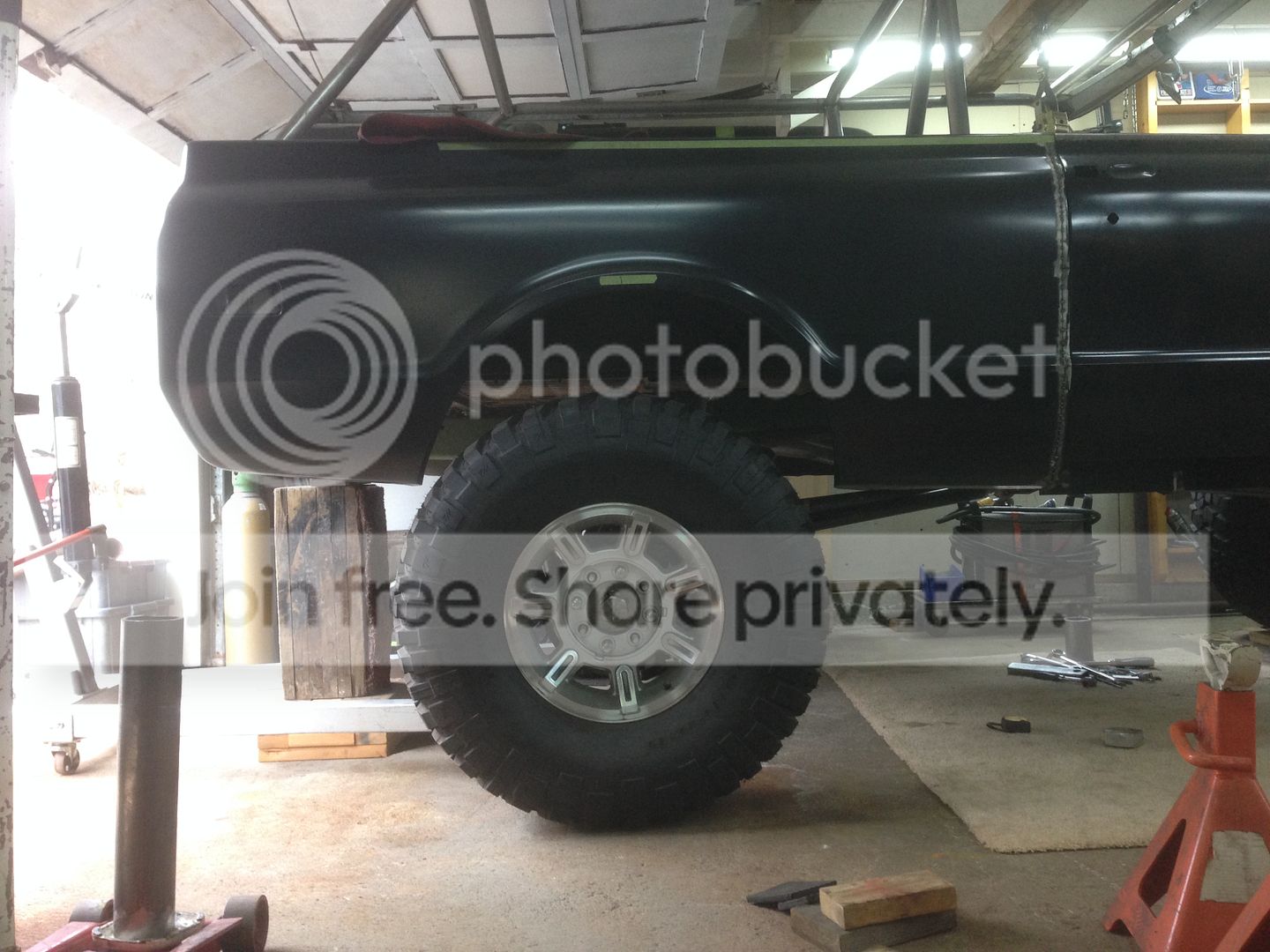
The lower links were right on the hairy-edge of thread engagement, but I was able to get the wheelbase out to my target of 107" again.... as expected, the end result looks a bit weird.... if you remember from my earlier posts, the tire used to almost touch the leading edge of the rear fender opening, now it almost touches in the trailing edge instead.

IMG_8668.jpg


Since I am adding 3" of wheelbase, and almost none of it comes from moving the front axle the visual result is pretty bad. This is not surprising. My original rear fenders were cut along the trailing edge for this exact issue though I never bothered to rework the entire wheelwell to make it look nice.

1st Gens always have the rear axle slightly forward in the wheelwell, even from the factory so I knew I could push it back at least an inch or two with no problem. Now the only question is if I've taken it a bit TOO far.... :thinking:

Of course the departure angle is great now, but when the fenderwell opening is shifted back the rear quarterpanel area may look a bit too "thin" and the overall proportions of the entire quarterpanel could end up looking strange.

Any photoshop experts feel like moving that wheelwell back so that it's centered over the tire, and then opening it up about 4" overall (while still maintaining the factory proportion and curve)? :deal:


-G
 
You going for perfectly centered? As you articulate, the arc the link travels causes the axle to move slightly to the rear...the opposite we see with a shackle flip, right? Or am I seeing that wrong in my head?

But, dang, I keep looking at your driveshaft angle, or lack thereof. Unreal.
 
You going for perfectly centered? As you articulate, the arc the link travels causes the axle to move slightly to the rear...the opposite we see with a shackle flip, right? Or am I seeing that wrong in my head?

But, dang, I keep looking at your driveshaft angle, or lack thereof. Unreal.

As far as I can tell, the arc will actually pull the axle slightly forward on bump... These links are crazy long though (47" lowers and 34" uppers). That really keeps the axle motion pretty straight up and down. Shorter links will more dramatically shift the axle under articulation.

Really, the worst case scenario should be both wheels up (like a hard landing after a jump). Both tires need the full wheelwell's clearance to absorb that hit. In a one-wheel up situation, the tire tucks at a sharp angle and even a small wheelwell opening will work fine. Of course on the drooping side the tire has no worries at all.... :D

EDIT: I didn't even have driveshaft installed out back yet. That lower link is deliciously flat (like maybe 8*). The driveshaft goes to a high pinion 3rd member, so it will be practically level with the ground! :yikes:

-G
 
EDIT: I didn't even have driveshaft installed out back yet. That lower link is deliciously flat (like maybe 8*). The driveshaft goes to a high pinion 3rd member, so it will be practically level with the ground! :yikes:

-G

DAAAAAAAAANG :eek1:
 
Top Bottom