2014.08.24 - UPDATE! - MAX BUMP, MAX DROOP & MAX STEERING....!!!
The list is small and getting smaller!!!

I spent about 30 minutes this weekend playing around with the fender openings before I got to the real "business" of moving the project forward. It was important to settle my mind about the overall shape and proportions of the fender opening and although I had achieved the clearance I needed, the aesthetics weren't quite right and it was making me uneasy.
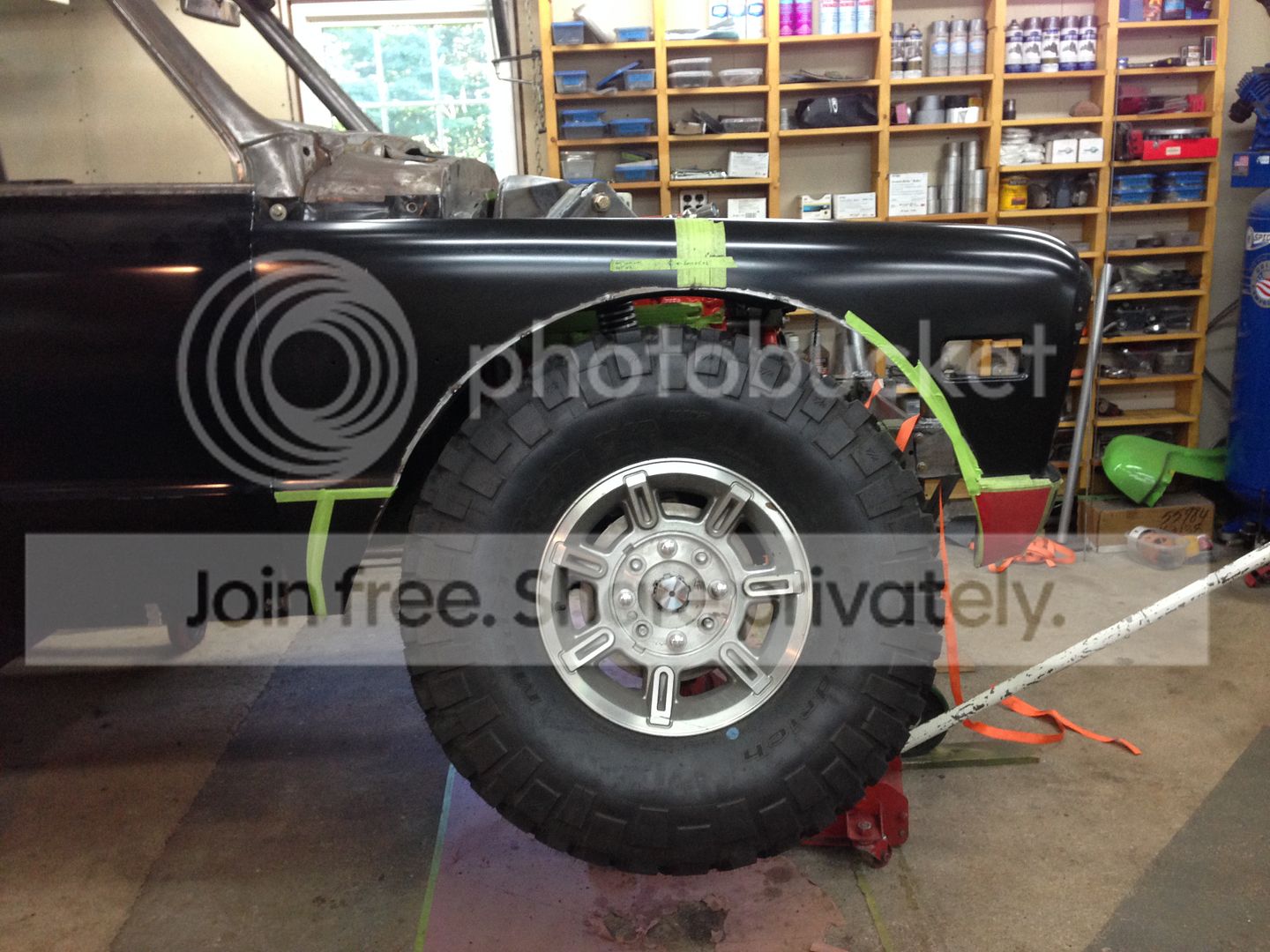
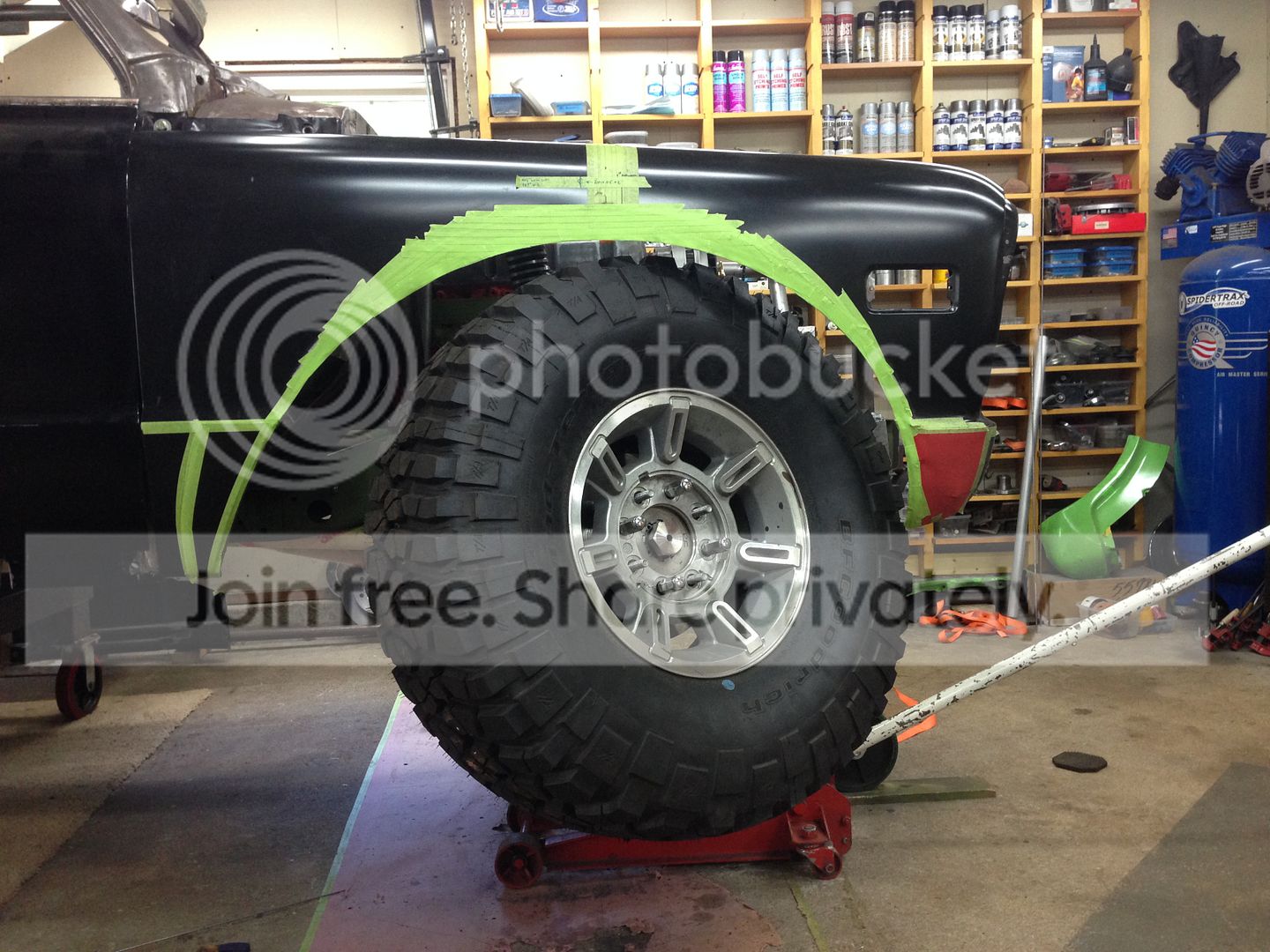
As a quick comparison, here is the fender with the large original cutout with plenty of clearance for the tire in all positions.
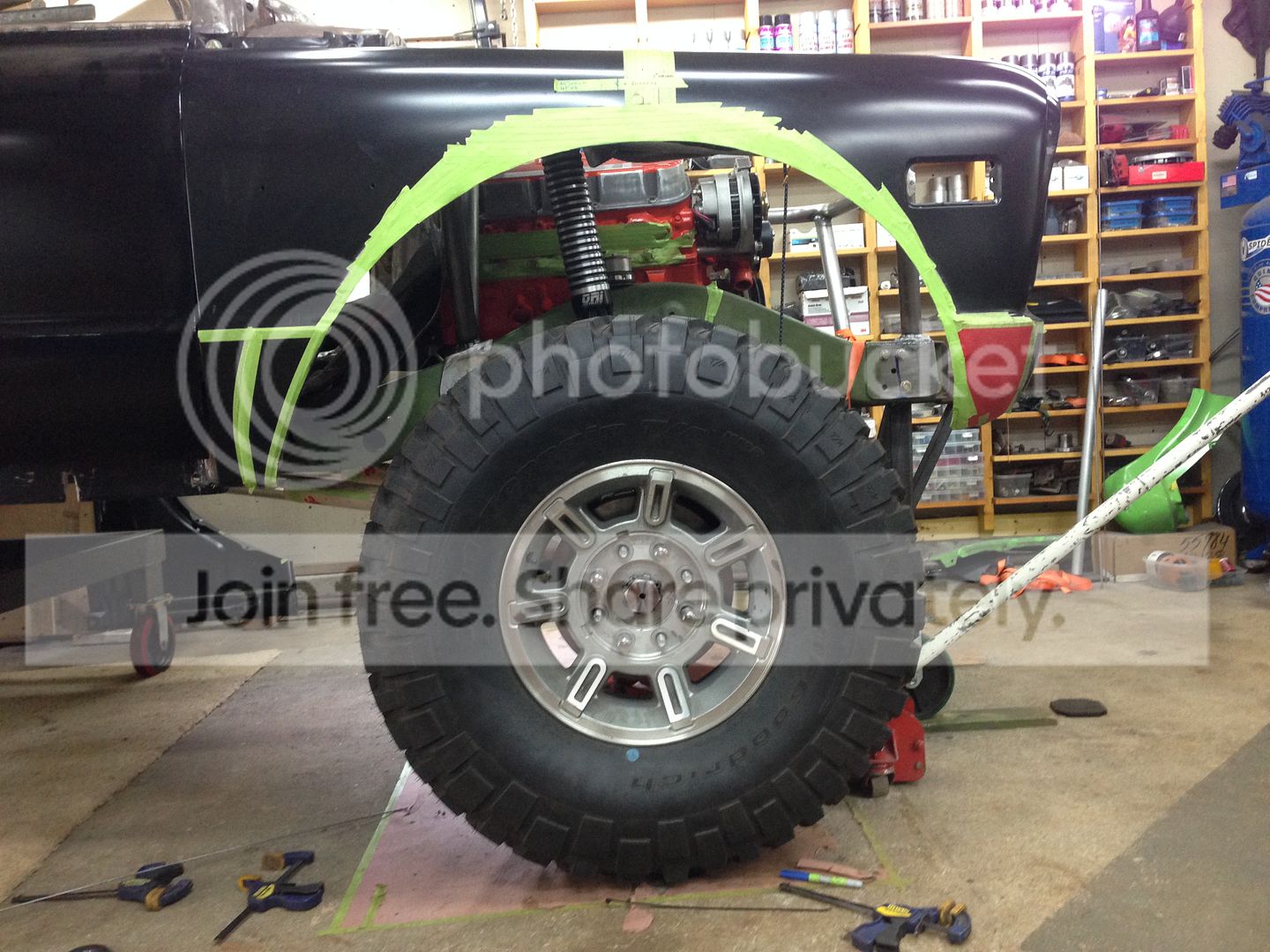
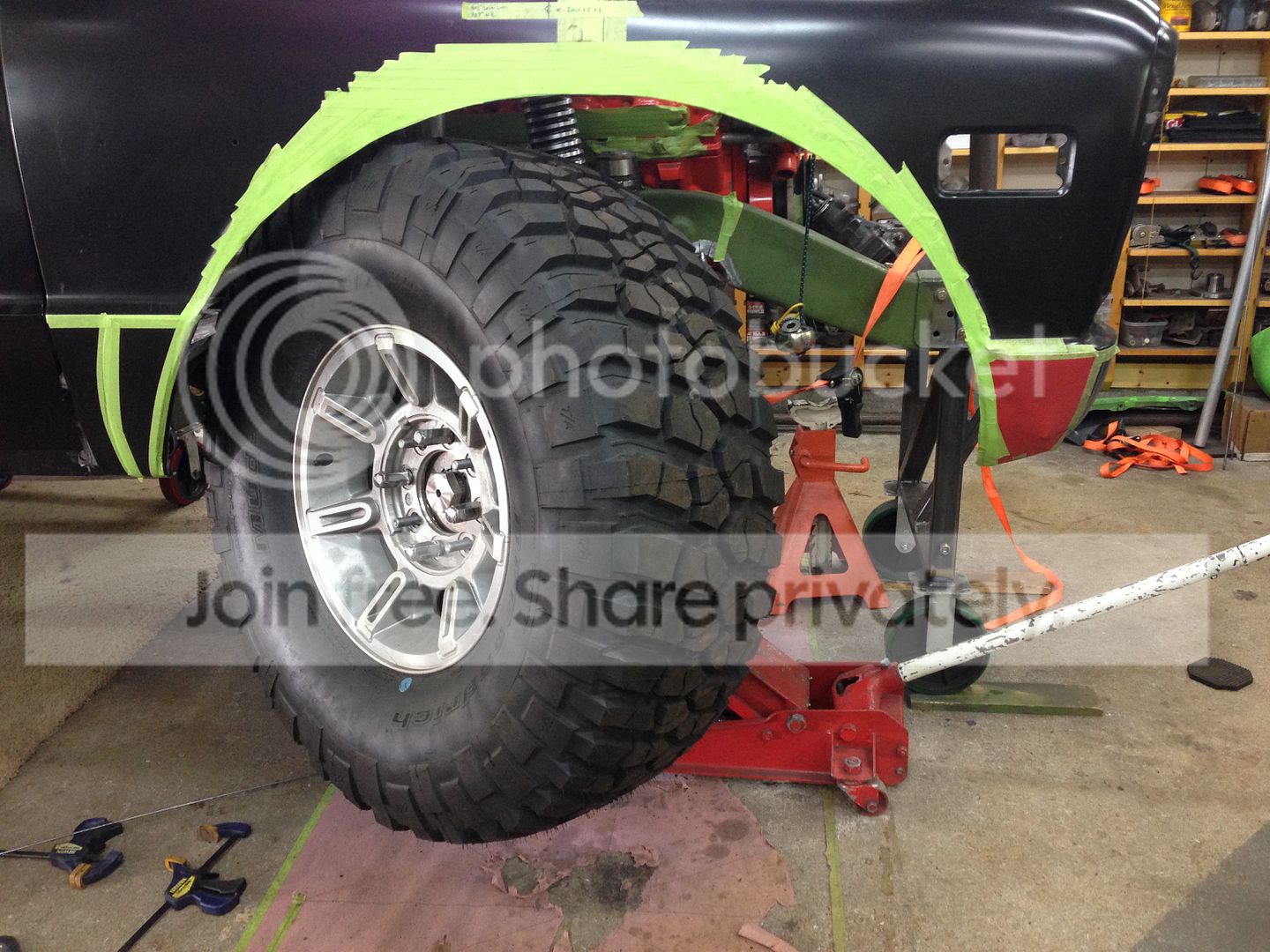
The process involved adding 3M Green Tape along the edges and slowly bringing those shapes down. I did this with the tire at "full-stuff" to insure that I was seeing any interferences as they happened.....and I swung the tire full-left & full-right (against the steering stops) to confirm everything fit properly. As you can see, because of the way the tire "tucked" under the fender at the very top it was actually possible to run a straight section of tape across there and still not have the tire hit it.
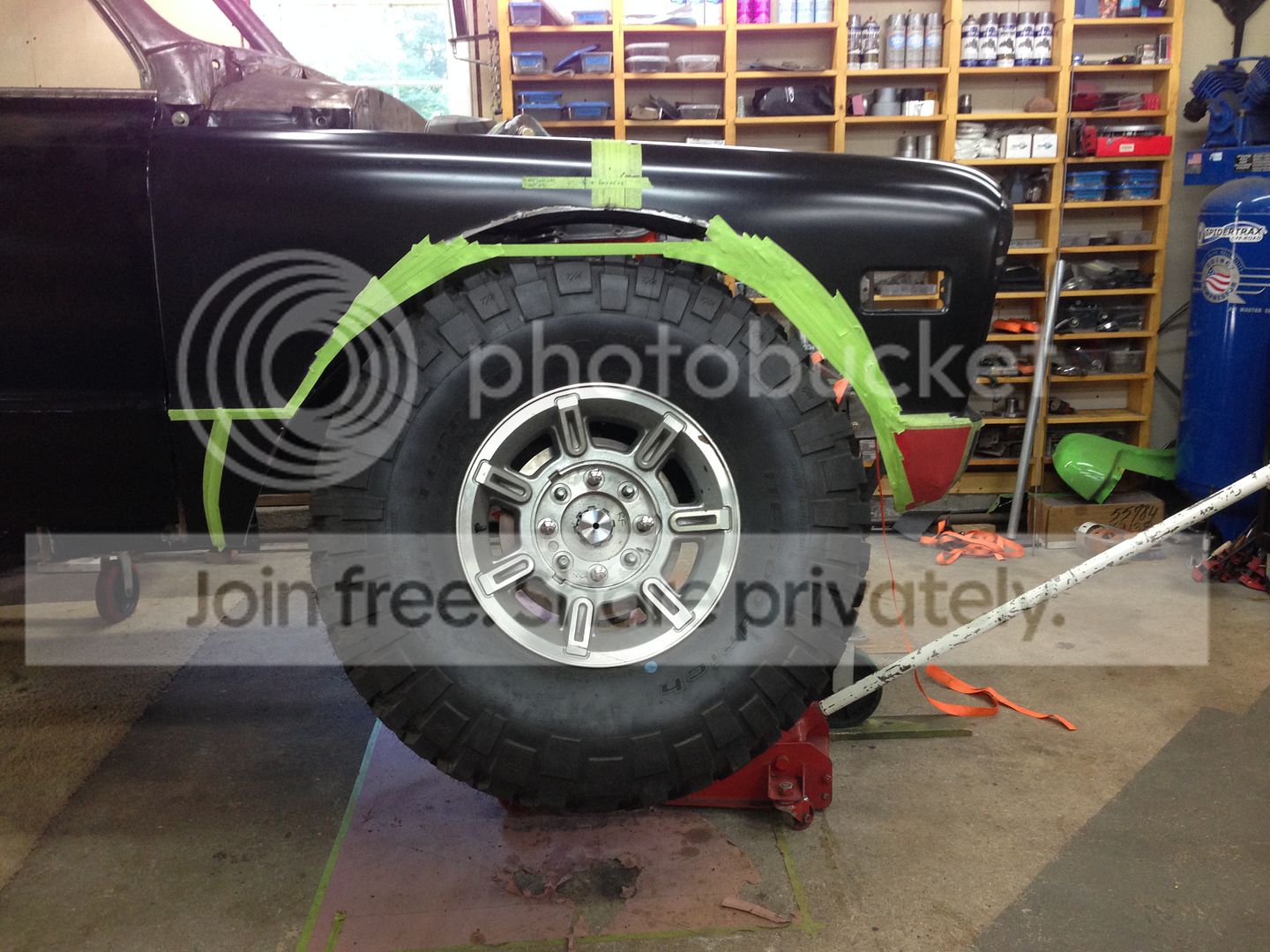
So that quick set of tests and tape boundaries established the minimum opening size for the fenderwell. Of course, it wasn't a pretty shape so the next step was to reshape the fender in the style of what a 1st Gen fender actually looks like. For those of you who don't know, the stock fender is only a perfect circle shape at the very top. As the fender sweeps back to the firewall it becomes much more of a straight line until it terminates at the lower fender bolt area. At the leading edge, the curve has a different radius and actually starts to "undercut" and swing back outward at the fang area... this is one of the classic and subtle styling cues that is often lost when fenders get modified for larger tires. That small "point" of the fang is always the first thing the tire hits.... so most people just chop it off. IMHO, that is a mistake.
After spending some time trimming and shaping the taped areas, I had a pretty good representation of the factory shapes for both the front and rear curves.... and the fang sheetmetal was still INTACT!!
I think this is just about as good as it's going to get.... short of doing something drastic like installing shorter struts or limit straps. Everything DOES clear now with the new shape....
HARD RIGHT (against the steering stops)
HARD LEFT (against the steering stops)
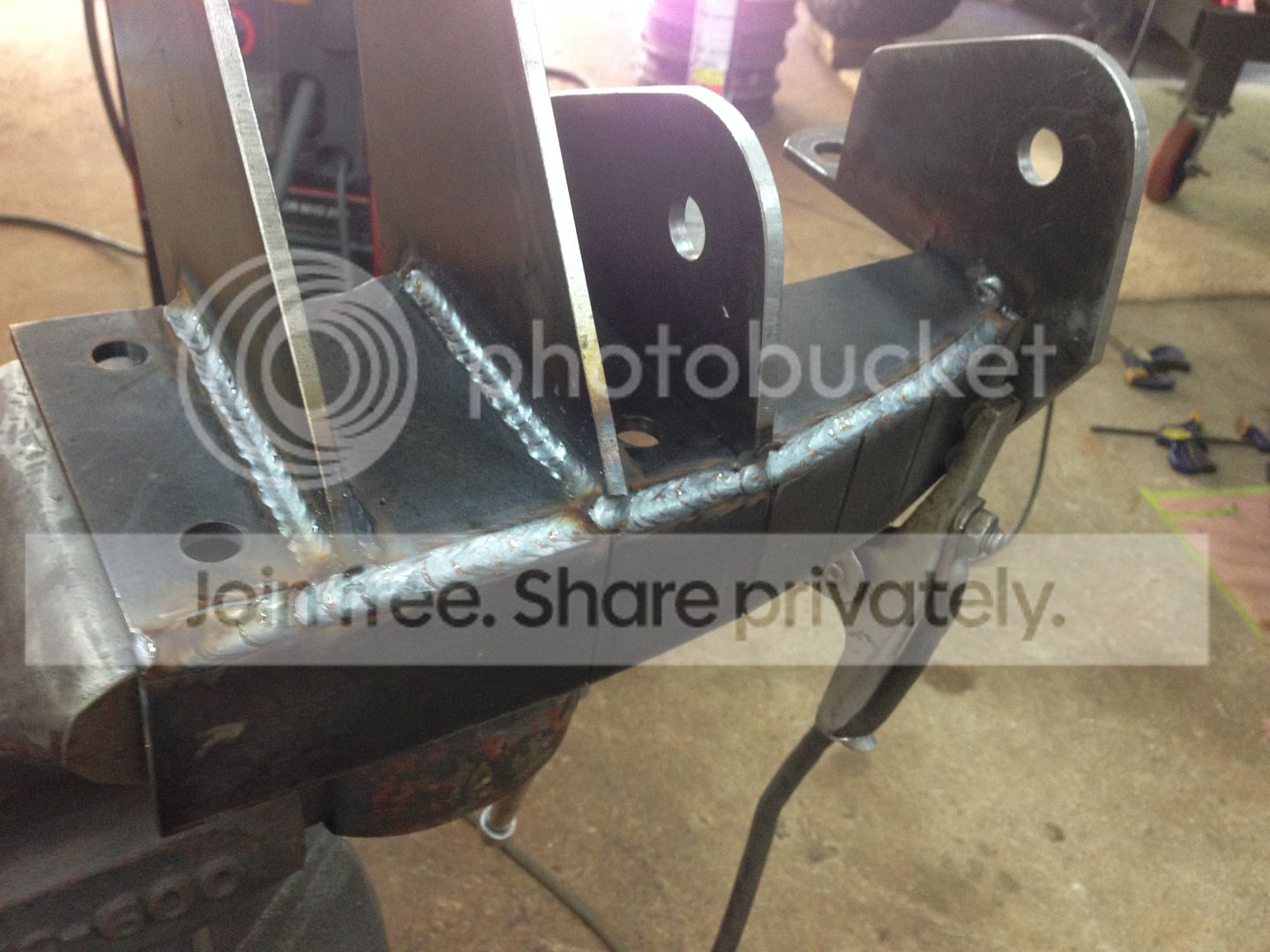
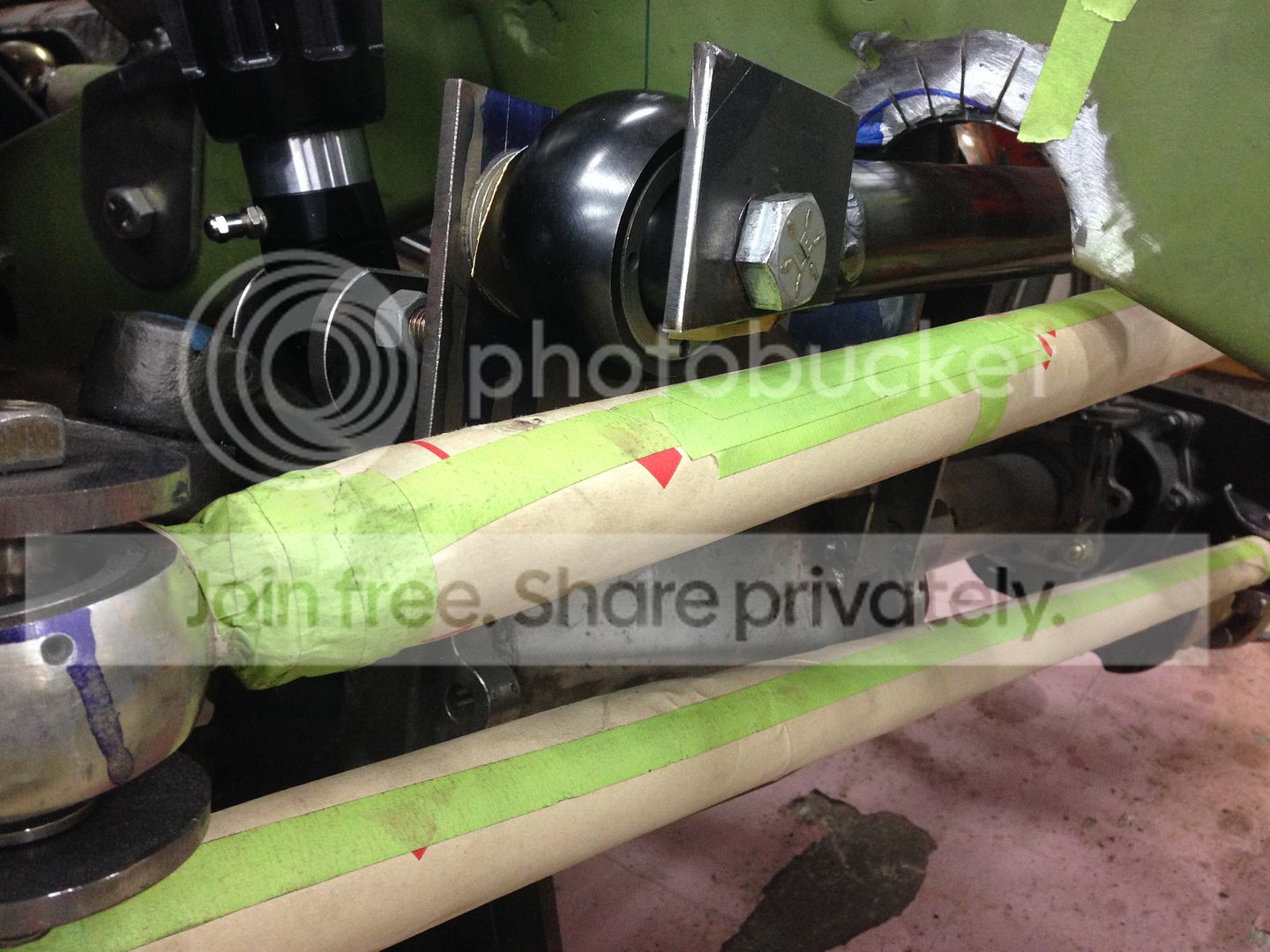
.....the only caveat is that to get to HARD RIGHT (against the steering stops) I had to disconnect the draglink. There were still some interferences between the idler swingarm and the bracket it's mounted to. So the next order of business was to unmount it from the frame and give it a bit more clearance. I decided it was probably time to do the finish-welding too.... since the PHB brackets were only tack-welded and probably wouldn't survive once the full weight of the truck was pushing against them.

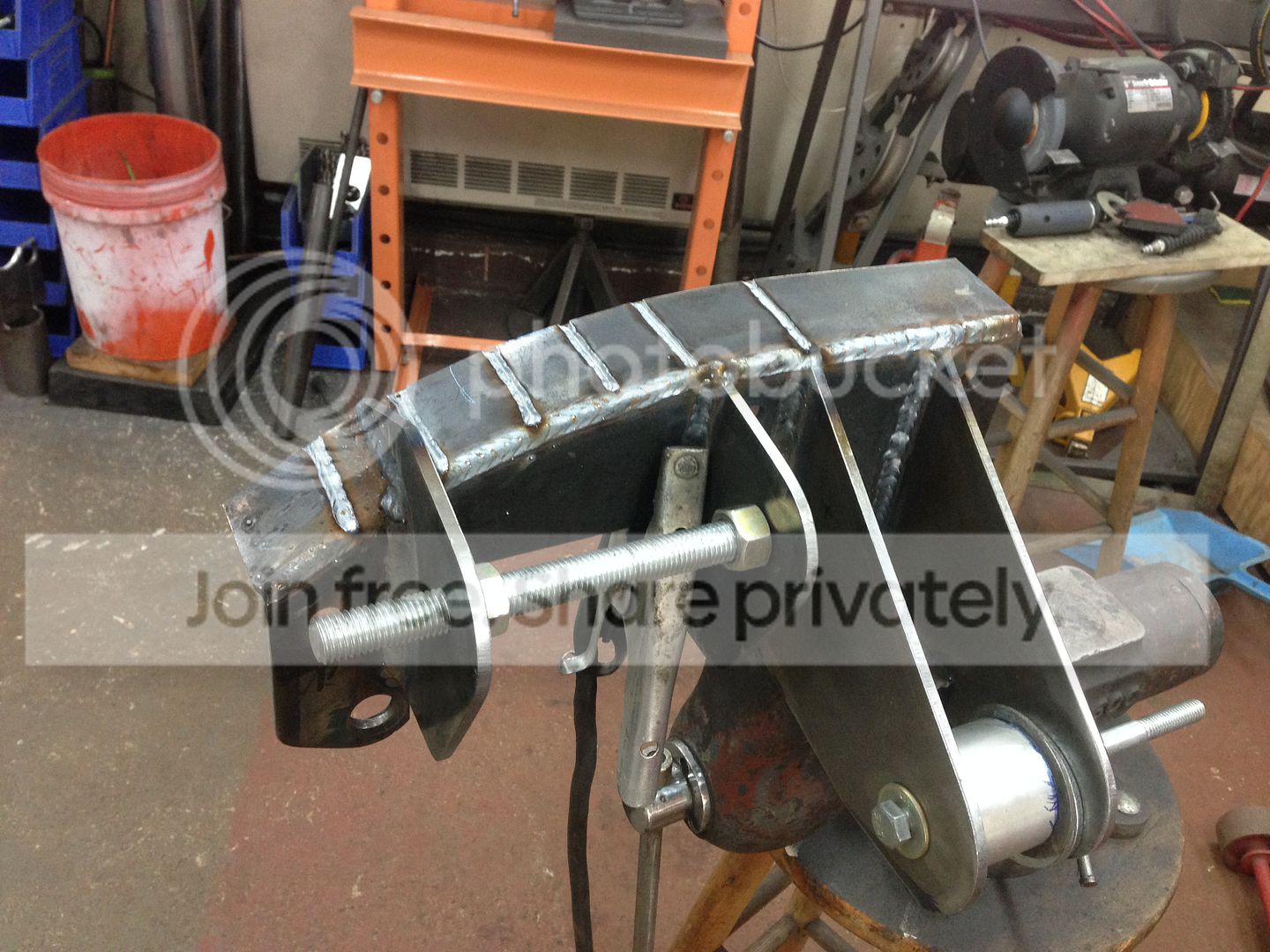
I used my same "spreader trick" that was used on the engine cradle saddles for this part as well. Since I knew that I'd do the interior welding first I didn't want the brackets to shrink and pull-in and prevent me from bolting the idler and PHB heim back into place. I set my clearances with the allthread and dropped some beads down!
Then I welded up those splits that I'd cut when I was first forming this part to follow the framerail profile.
With a little flapwheel and Roloc disc time... the area was blended-down and ended up looking like a formed part.
Once everything was re-installed, the steering would FINALLY go all the way to the steering stops on hard right turns.

The only thing left to do was to focus on the axle-side PHB mount and make sure that it had adequate clearances in all suspension positions......
It didn't.

Unfortunately, at full-stuff the draglink would collide with the heim body of the PHB. I was hoping that there would be some kind of simple way to maybe add a thicker shim behind the heim to bring it forward, but the geometry didn't improve and I could never get the draglink to pass underneath the heim the way I needed it to.
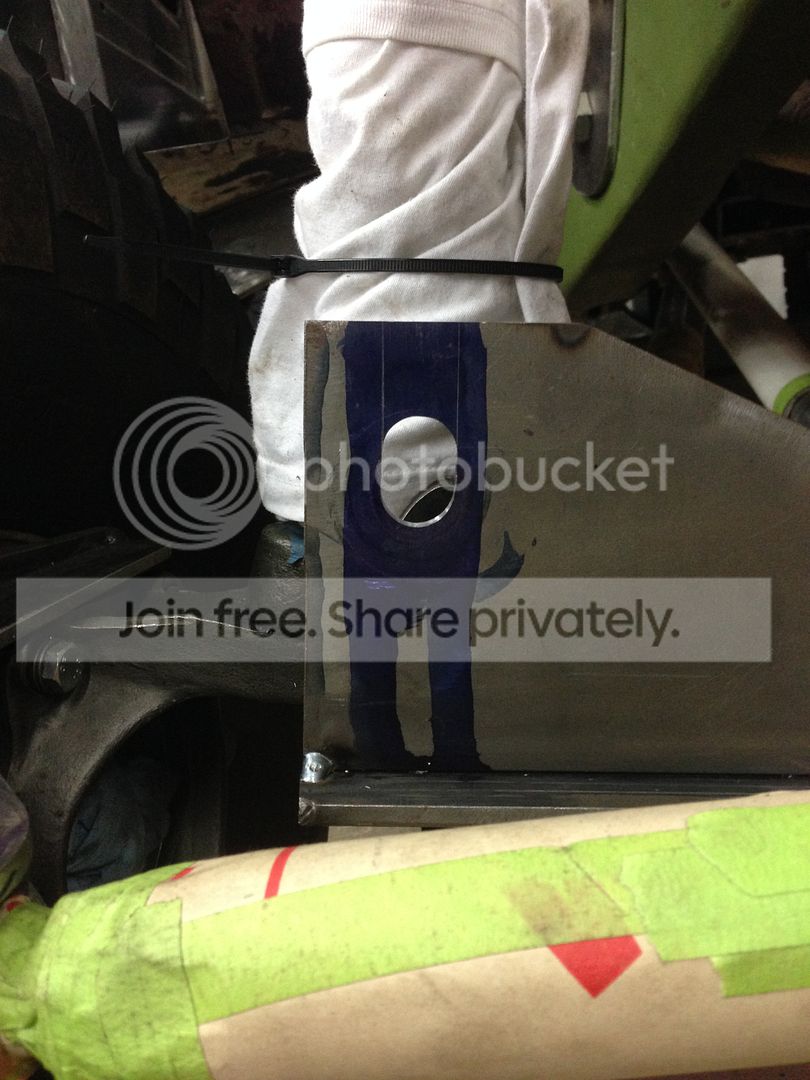
So I unbolted the heim to expose the mounting hole, marked it with Dykem and a scribe and broke out my new carbide bit set to raise the hole by 3/8" to see if that would resolve the issue.
For the time being I simply tack-welded a 3/4" washer to the backside of this ovaled-out hole (at the new higher position) so that the bolt wouldn't drop out of position during testing. It worked great and was a LOT faster than cutting out that entire mounting plate, and building a completely NEW one with a relocated hole in it.... assuming everything worked out all I'd have to do is weld up the lower part of that hole and put a thicker washer (fully welded) and call it good.
As it turned out, the experiment was a complete success. The new PHB mounting location gave just enough clearance for the draglink to pass underneath and allowed the knuckles to hit their steering stops perfectly.
Now the outer PHB plate can be recut (in a larger size) and the entire heim can be plated-in from above to give it additional strength.
The only downside to raising the PHB by 3/8" is that the clearance I used to have between the actual panhard bar and the oilpan has vanished....there is NO daylight between them anymore. But the simple fix will probably be to add a 1/8" spacer to each of the motormounts, and I should be right back to where I was before.
Overall, a pretty good day (and evening) in the shop. Hopefully, I'll be able to get out there in the evenings this week to finish-up the PHB bracing, and then it will be time to do a massive series of bump/droop/turning tests in ALL positions, both on the driver's and passenger sides.....
Assuming that there are no additional surprises, I'm going to call the front suspension DONE and it will be time to charge the struts with nitrogen and pull those caster wheels off the front end for good.
-G