2014.12.08 - UPDATE! - 12 NEW SPEED HOLES..!!!!!
Let me tell ya something...... making cool-looking holes in metal takes a LOOOOONG time.

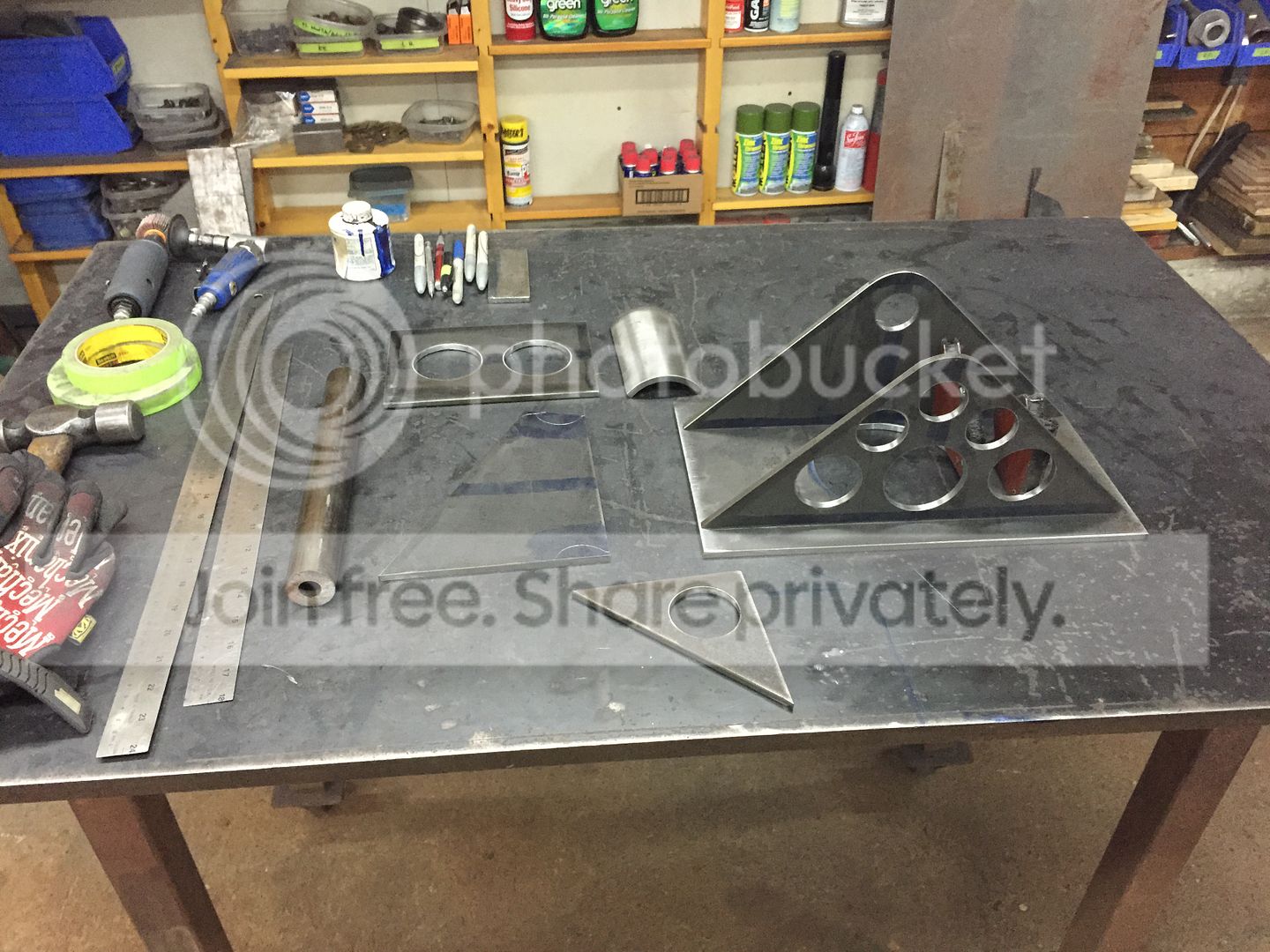
Yesterday's project was to push forward on the rear upper strut mounts and to pull a bit of weight out of the 1/4" plate that was being used liberally for this part of the build.... as everyone knows, you can save a few pounds by cutting "speed holes" into a part, but mostly what you gain is AWESOME.... and that doesn't add any weight at all!!!

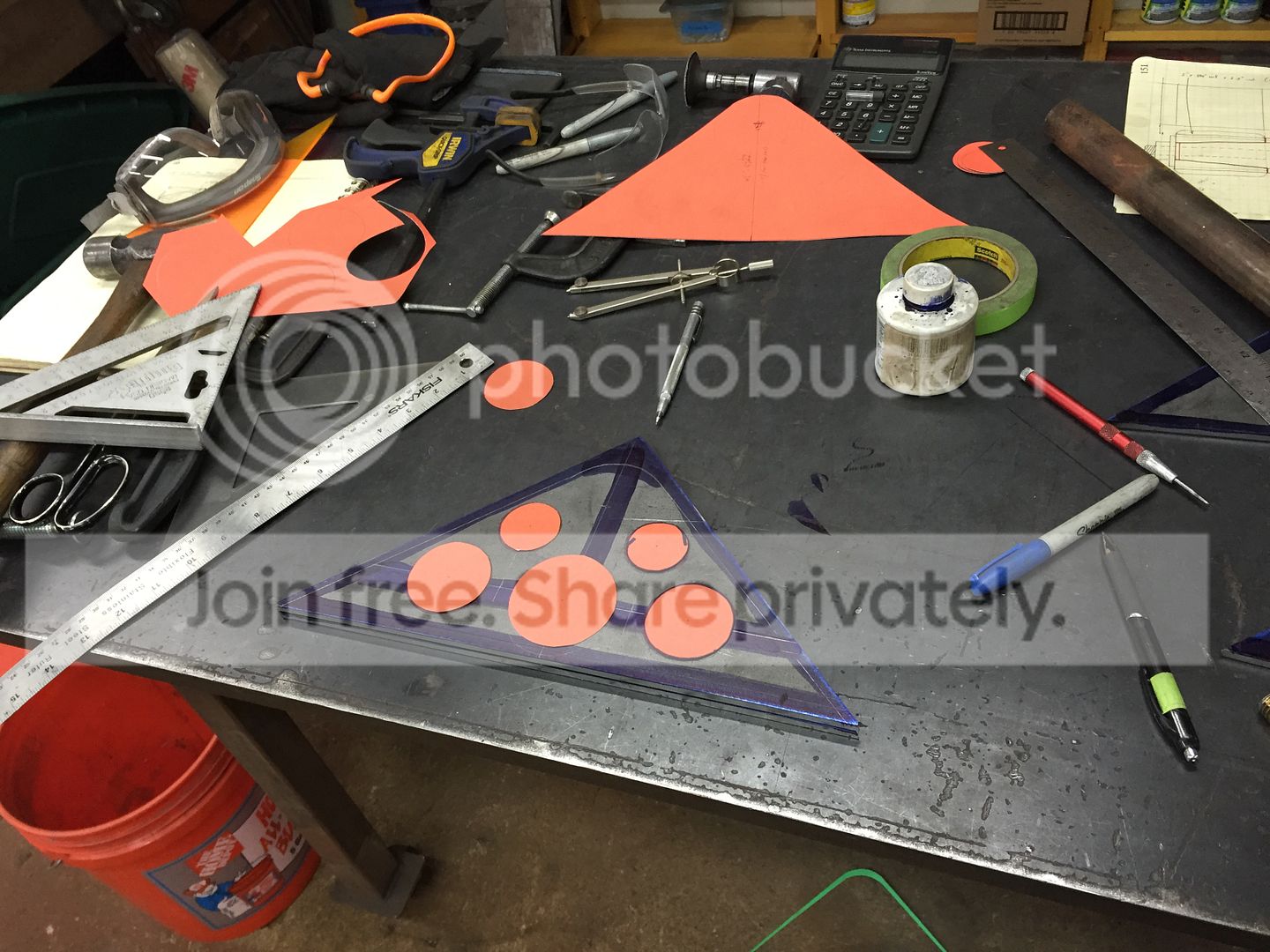
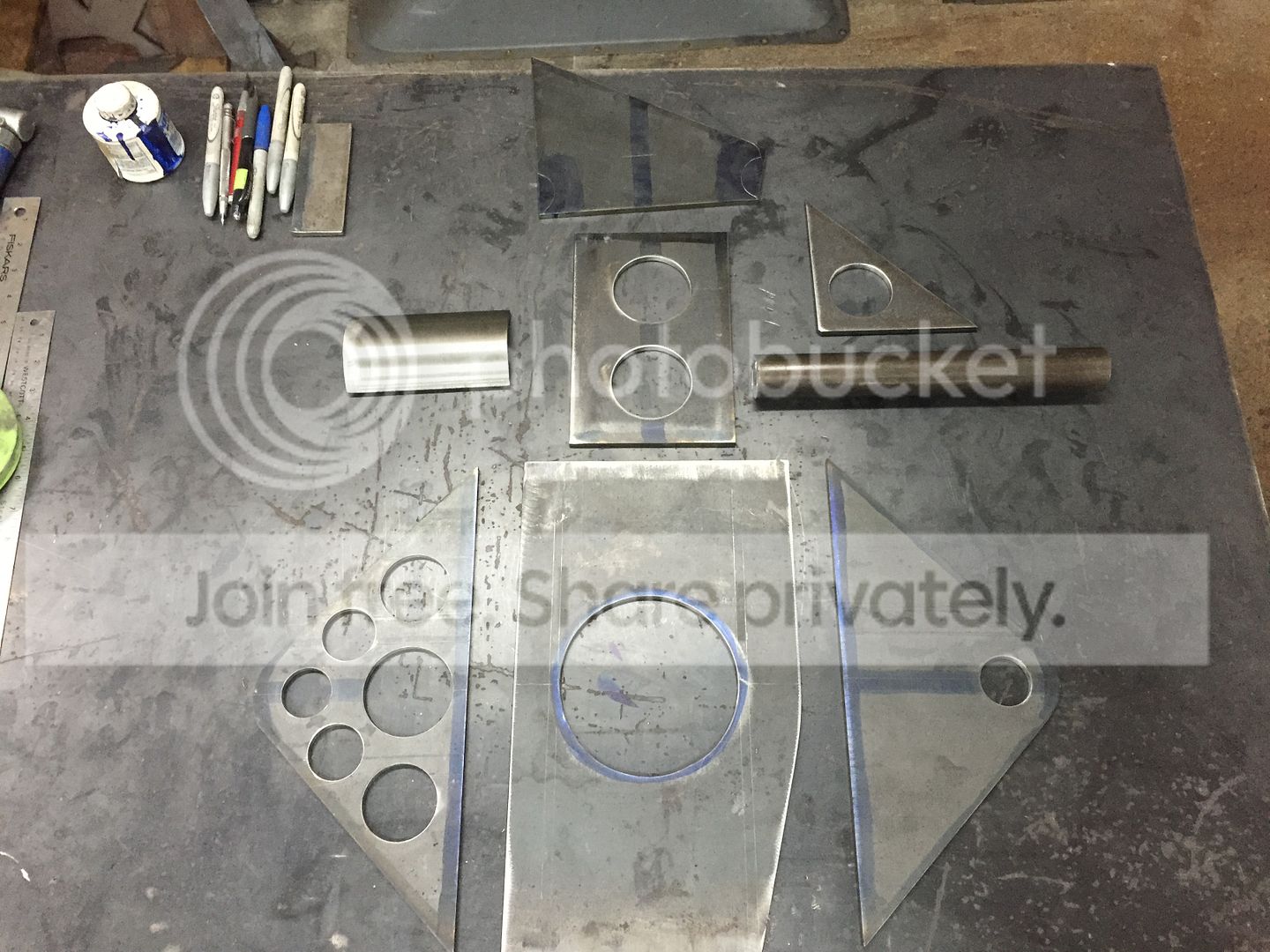
First off, I cut up some small paper templates that matched the annular cutters I own..... 1.375", 1.5", 2", 2.5" so that I'd have an easy way to play around with patterns and see what would make sense. Without any sort of CAD program it's impossible to know how much weaker the part is getting as you turn it into swiss-cheese. So my logic was to make sure that I kept around 3/4" of material around each hole and kept the spacing of the holes uniform to maintain that strategy....
My target layout ended up looking like this:
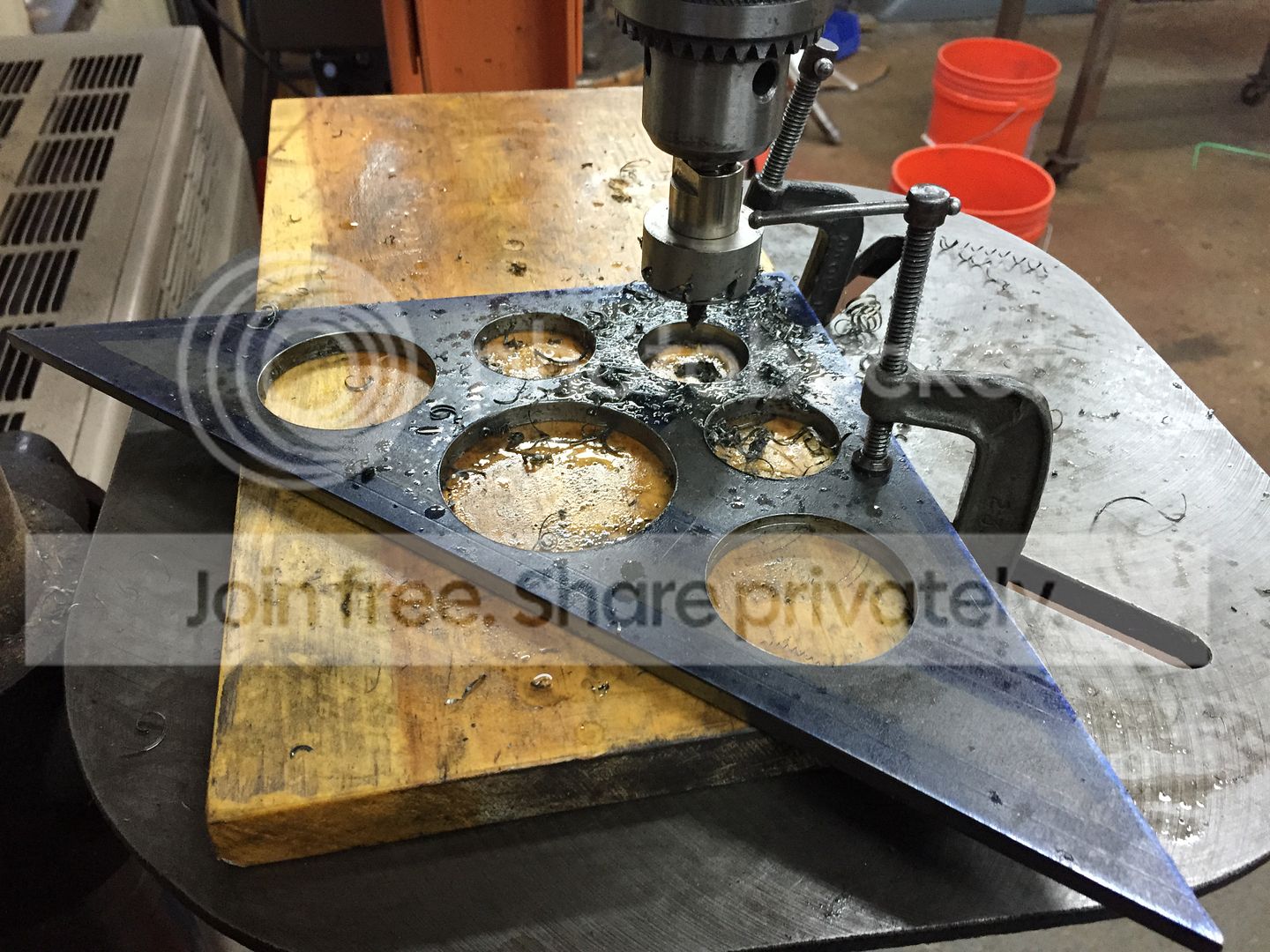
Unfortunately, this pattern used no less than 4 different hole sizes (1-3/8" for the DOM slug, 1.5", 2" and 2.5")... LOTS of cutter changes in the drillpress and lots of time consumed to get them all done....
The other time-waster was the struggle to remove the round slug from the annular cutter at the end of each cut.... These cutters aren't really intended to cut 1/4" thick material so when you bury the cutter that far into a piece of plate steel, the waste "circle" ends up really tightly wedged inside the cutter and it takes a bunch of fancy language and careful prying to get it back out!!
Fortunately, I was smart enough to do all of my cutting at a given hole size (for both the DS & PS) at the same time.... this at least reduced my tool changes and made things as efficient as possible.
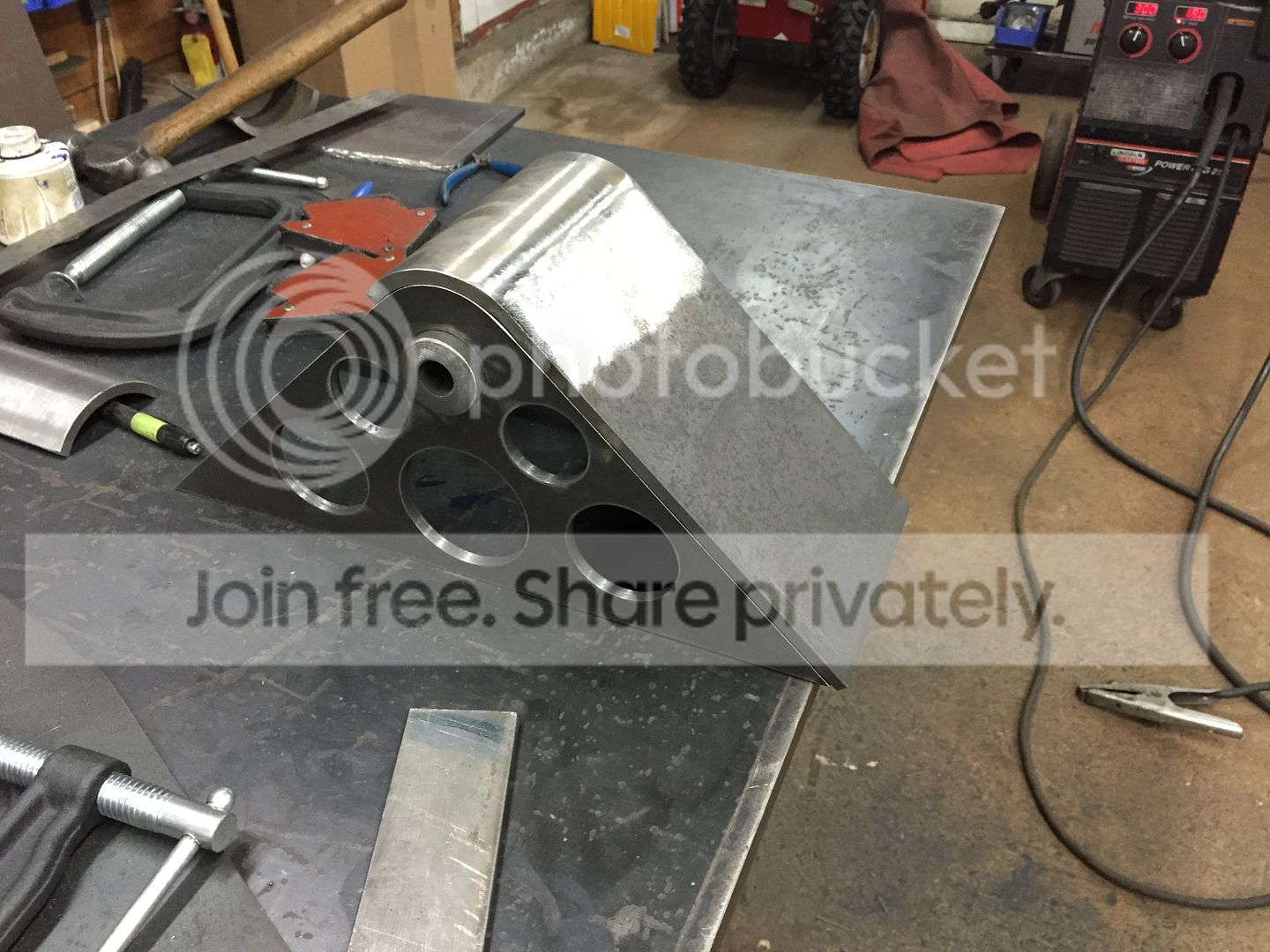
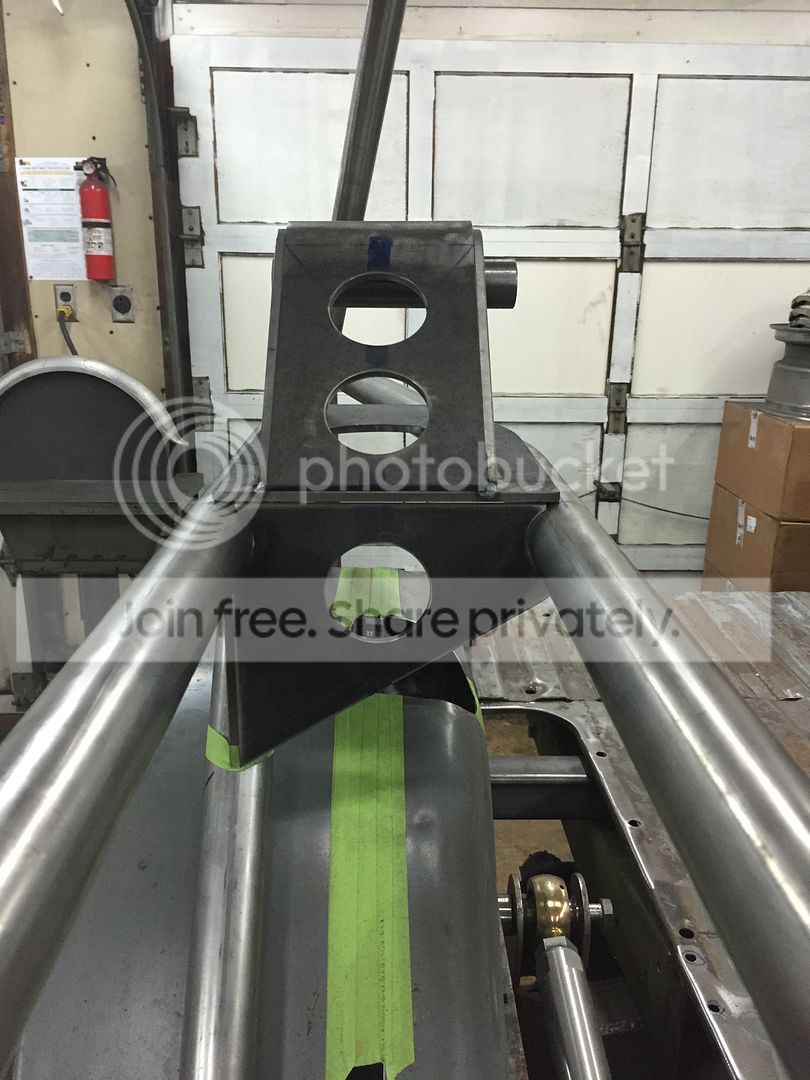
Next up was a cap plate to help stiffen up the two verticals, and to help "block off" the upper strut mount area from rear seat passengers so that fingers don't end up pinched in there...
This was nothing more than a 3.5" (.250" wall) tube sliced the long way, and then welded to a section of 1/4 plate.... and smoothed-out. I left the back portion open so that I'd still have access to the Schrader valve for pressure adjustments. On the interior vertical plates, you will also notice that I did NOT drill out the same speed holes. This was again to keep the strut area blocked-off as much as possible from rear passengers. I would have liked the "cool" look of more holes there....but safety won out over aesthetics on that one.

I will put a couple of speed holes in that top plate at some point, but I need to remain cognizant of pinch points on those too...
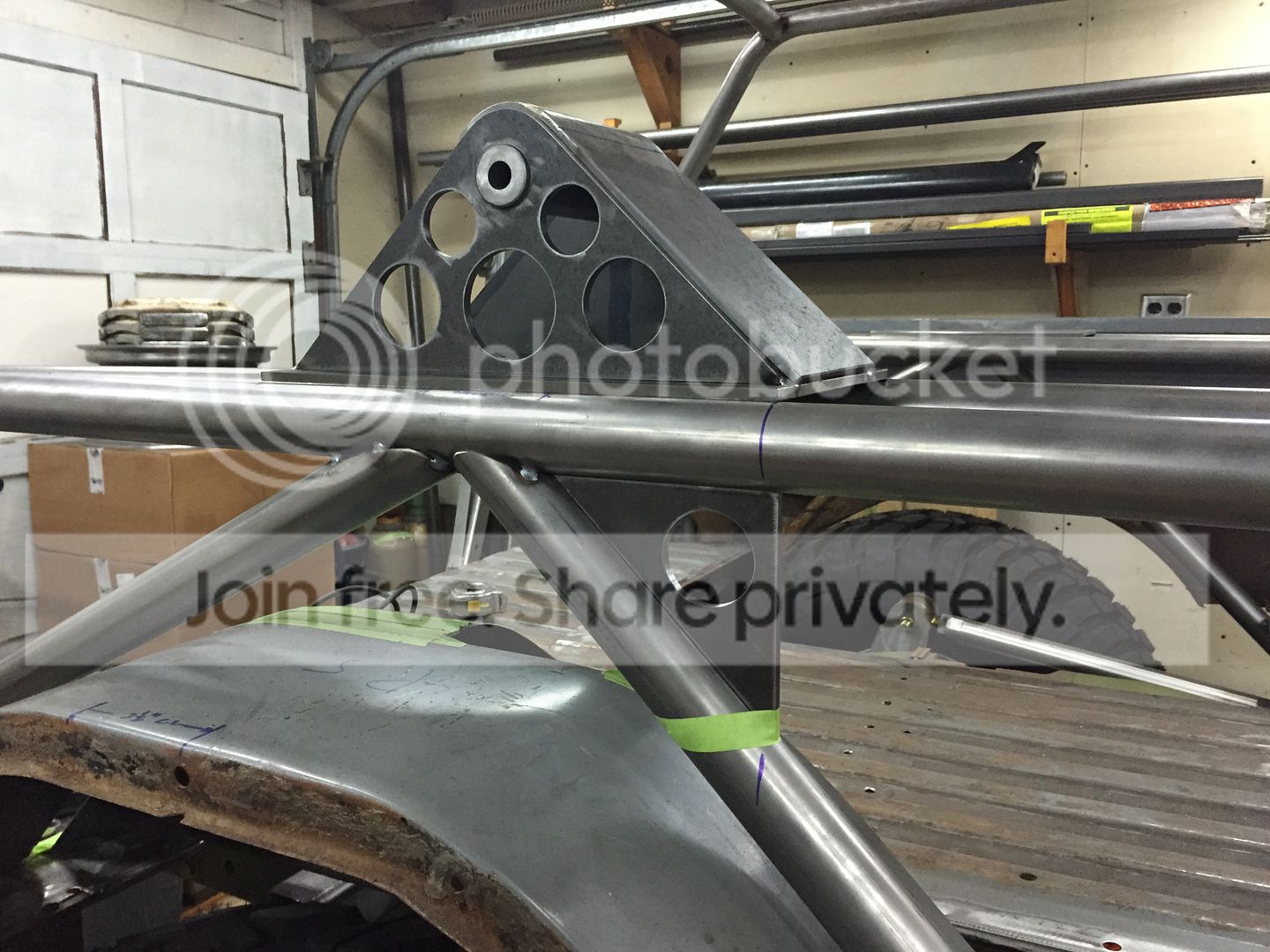
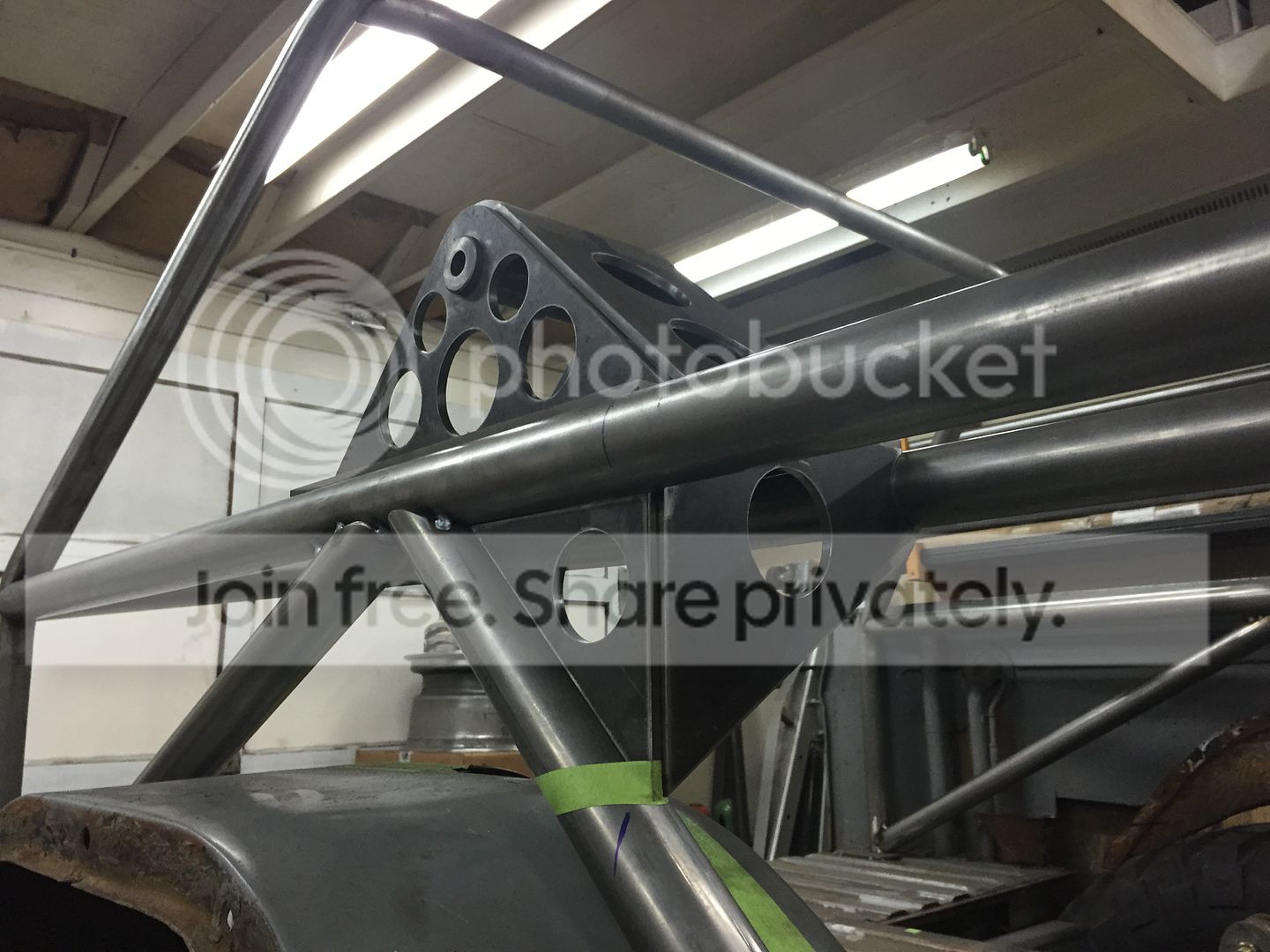
Moving the whole assembly back over to the top of the bedrail supports now looks like this:
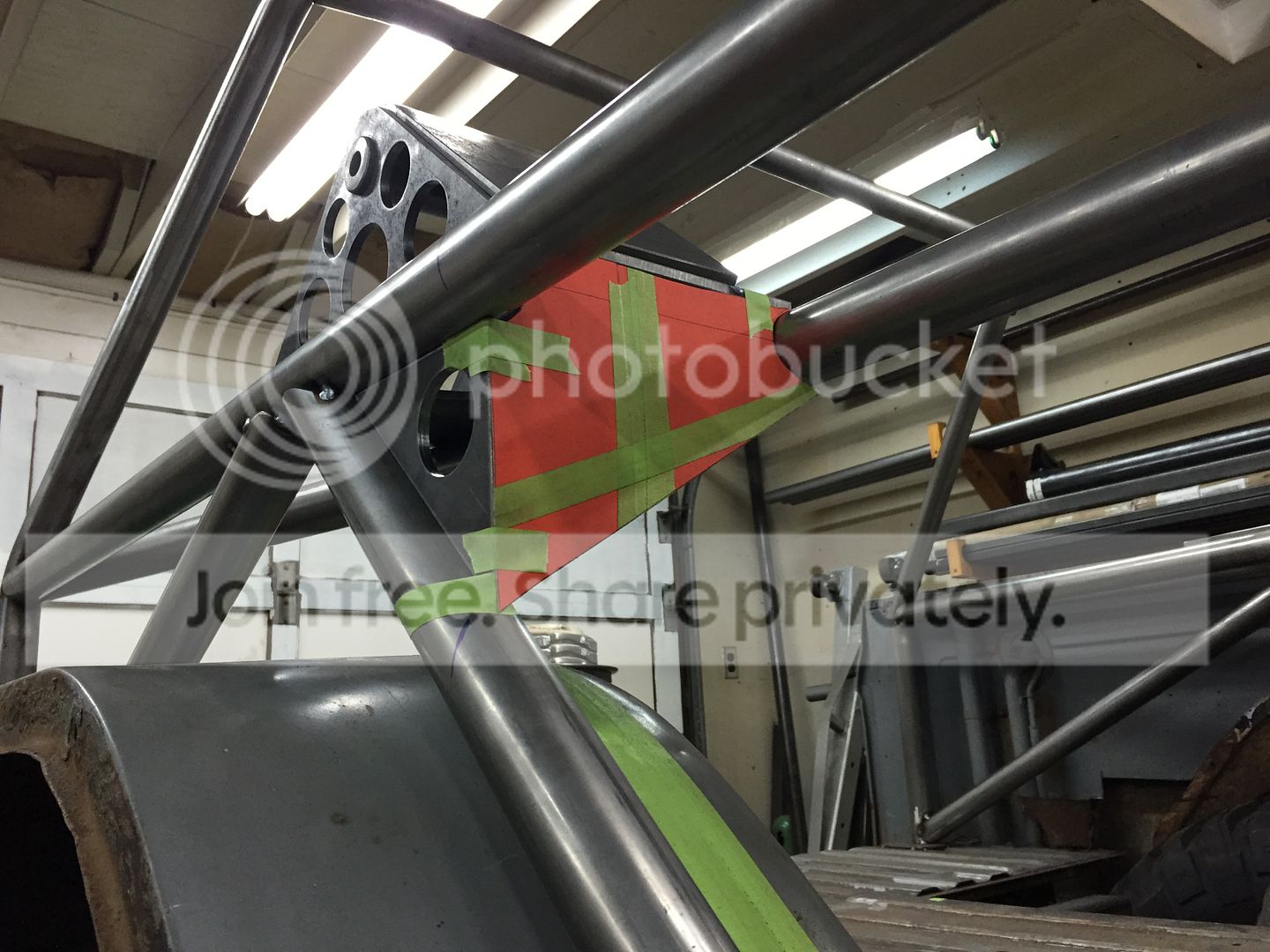
In these images, the areas below the horizontal tube are starting to get small gussets (and speedholes!) to help spread the loading of the strut to the adjacent tubework....
The final shot of the night was this paper template (which will also be filled with maybe 2 - 3 speed holes)
These small structures underneath will help to resist the upward loading of the strut as it bears the weight of the vehicle, and helps to tie the outer and inner horizontal rails more tightly to each other. My hope is that by doing all of this extra reinforcement (and perhaps a similar configuration on the trailing edge of this strut mount) I will have more than enough strength to avoid any cage tie-ins above the bedrail to the upper parts of the cage.

-G










 I can't wait to get that machining done so that I can start screwing around with my new dial indicator and trying to true-up the wheels for final welding (and bolts!).


