CK5
Register an account today to become a member! Once signed in, you'll be able to participate on this site by adding your own topics and posts, as well as connect with other members.
Making it look easy. Triangles and squares are so much easier to do then slugging tubes. Then spending hours making a not so good body lift. :popcorn::popcorn:

Ironically, Mike's new version of his body mounts will be triangles and squares...(and speed holes!).

Looks like he's finally coming around to my way of thinking! :D


-G
 
2014.12.08 - UPDATE! - 12 NEW SPEED HOLES..!!!!!


Let me tell ya something...... making cool-looking holes in metal takes a LOOOOONG time. :doah:

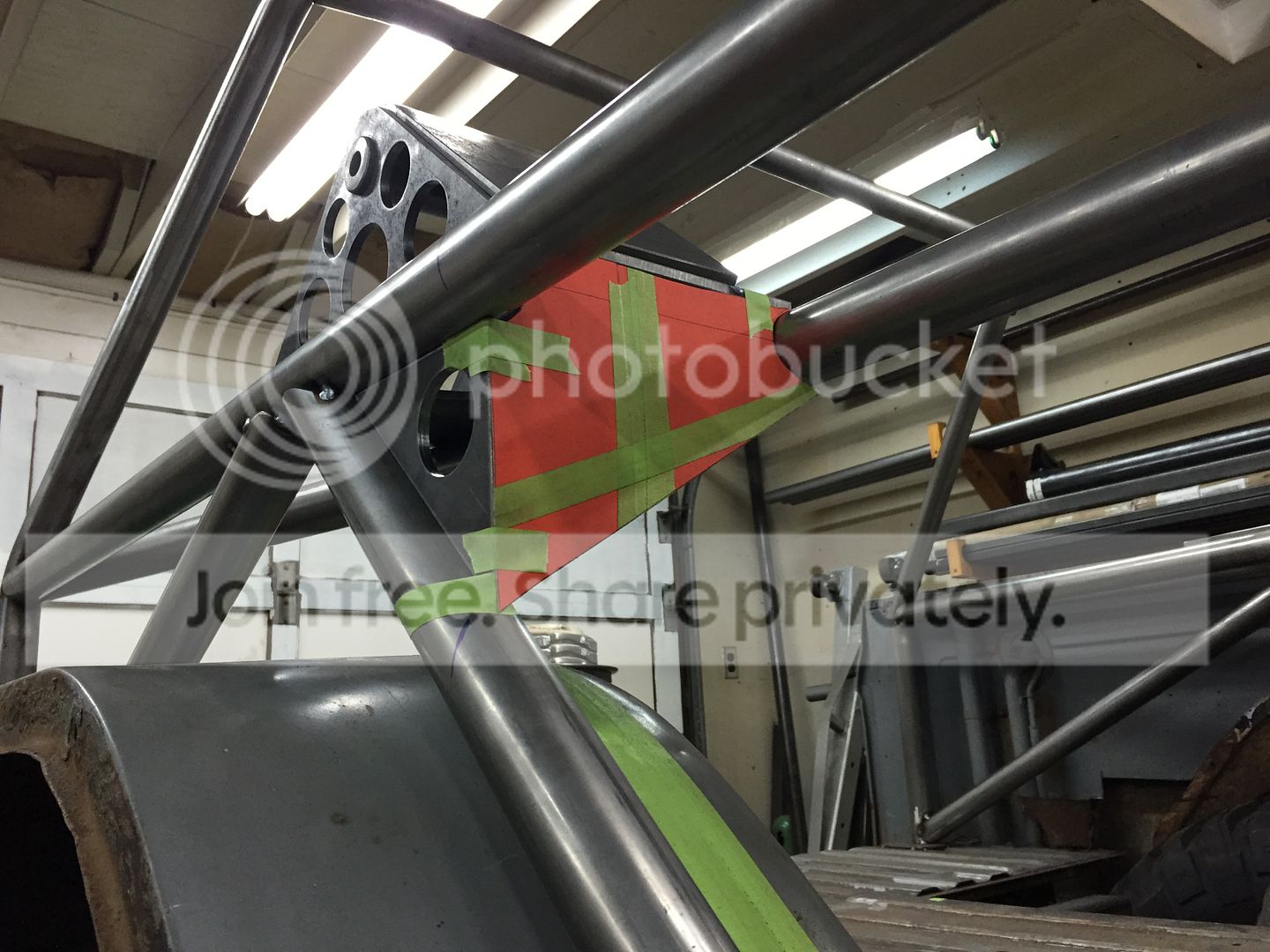
Yesterday's project was to push forward on the rear upper strut mounts and to pull a bit of weight out of the 1/4" plate that was being used liberally for this part of the build.... as everyone knows, you can save a few pounds by cutting "speed holes" into a part, but mostly what you gain is AWESOME.... and that doesn't add any weight at all!!! :haha:

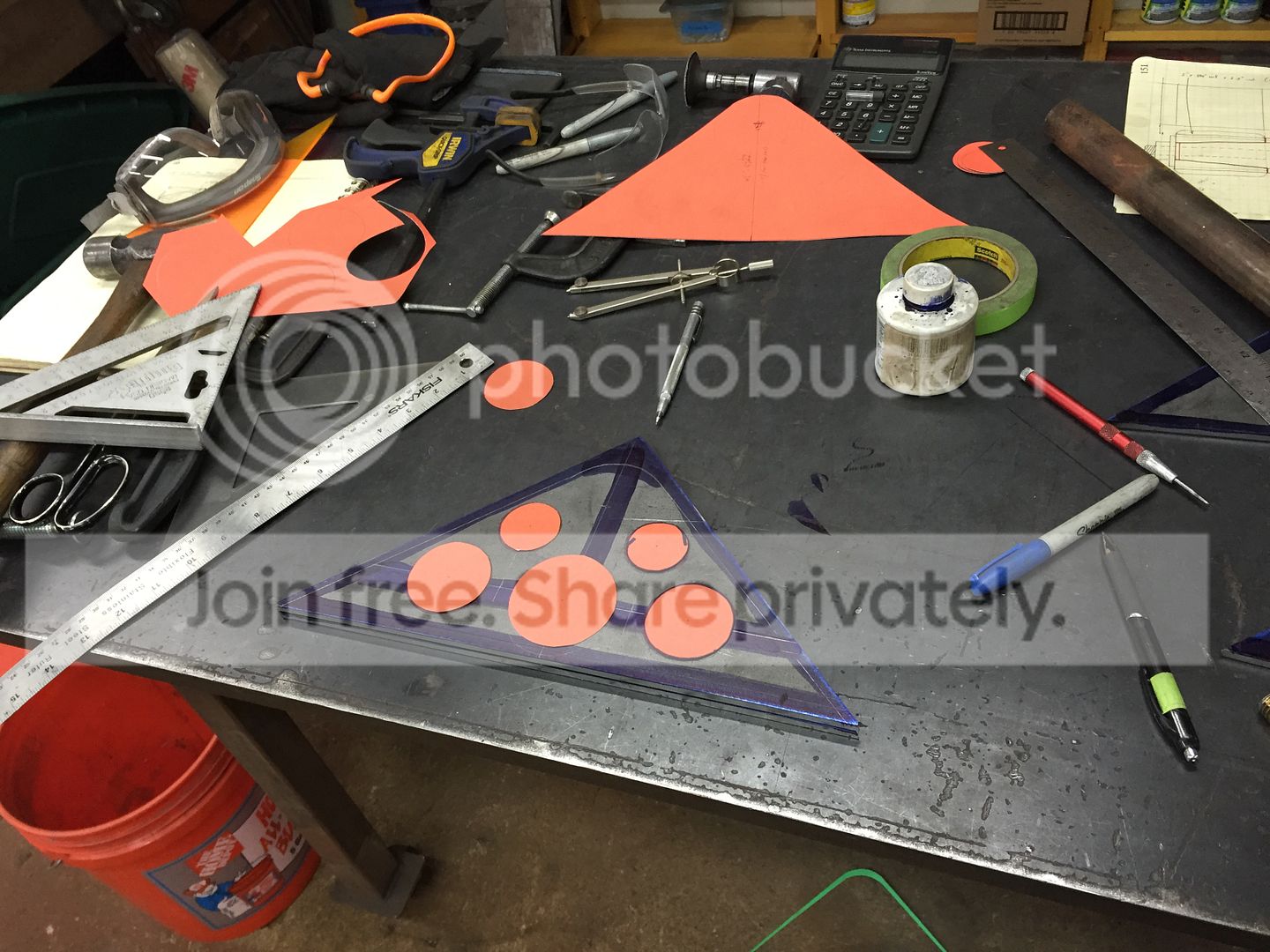
First off, I cut up some small paper templates that matched the annular cutters I own..... 1.375", 1.5", 2", 2.5" so that I'd have an easy way to play around with patterns and see what would make sense. Without any sort of CAD program it's impossible to know how much weaker the part is getting as you turn it into swiss-cheese. So my logic was to make sure that I kept around 3/4" of material around each hole and kept the spacing of the holes uniform to maintain that strategy....

My target layout ended up looking like this:

IMG_2187-1.jpg


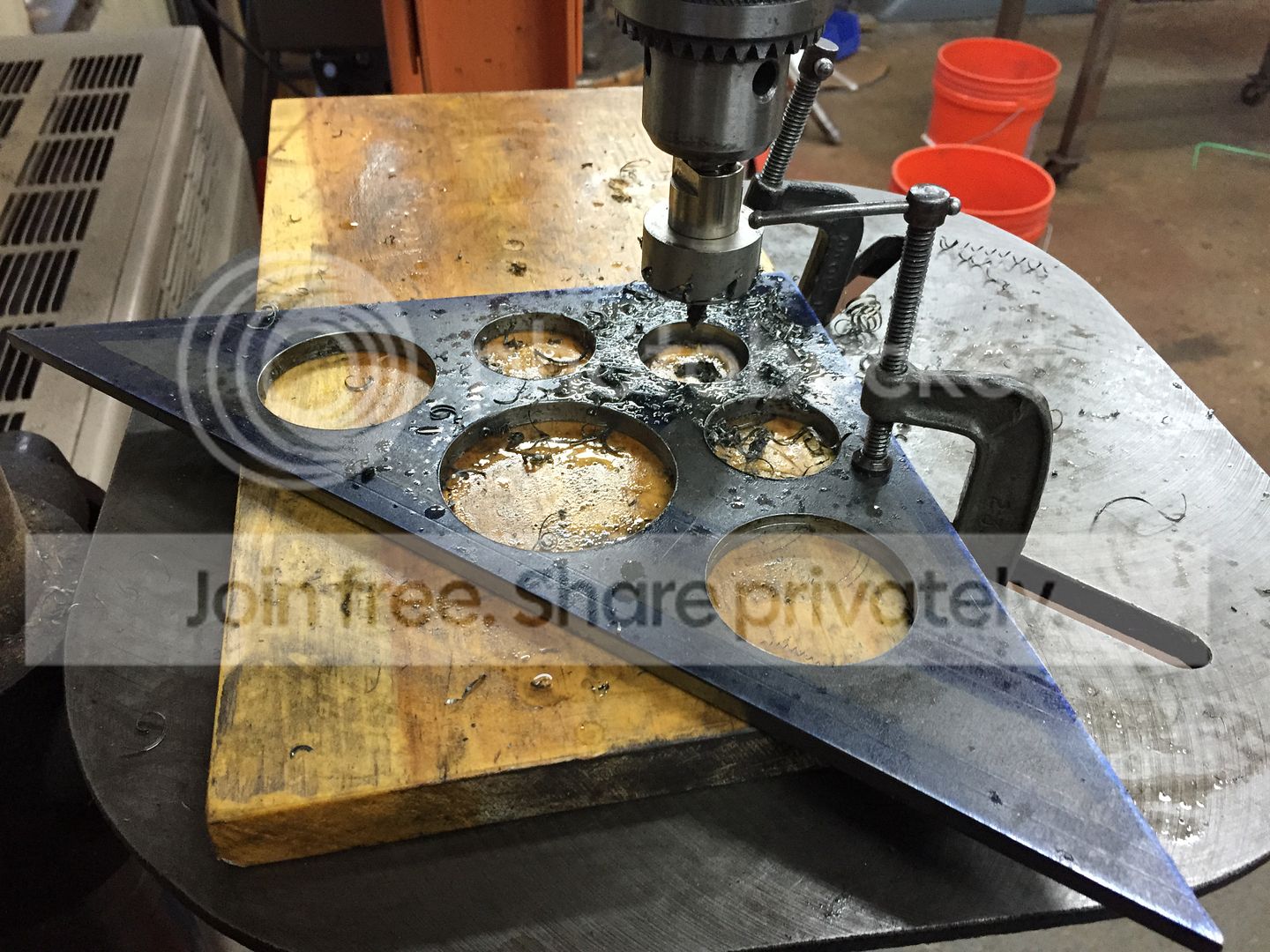
Unfortunately, this pattern used no less than 4 different hole sizes (1-3/8" for the DOM slug, 1.5", 2" and 2.5")... LOTS of cutter changes in the drillpress and lots of time consumed to get them all done....

IMG_2191.jpg


The other time-waster was the struggle to remove the round slug from the annular cutter at the end of each cut.... These cutters aren't really intended to cut 1/4" thick material so when you bury the cutter that far into a piece of plate steel, the waste "circle" ends up really tightly wedged inside the cutter and it takes a bunch of fancy language and careful prying to get it back out!! :doah:

Fortunately, I was smart enough to do all of my cutting at a given hole size (for both the DS & PS) at the same time.... this at least reduced my tool changes and made things as efficient as possible.

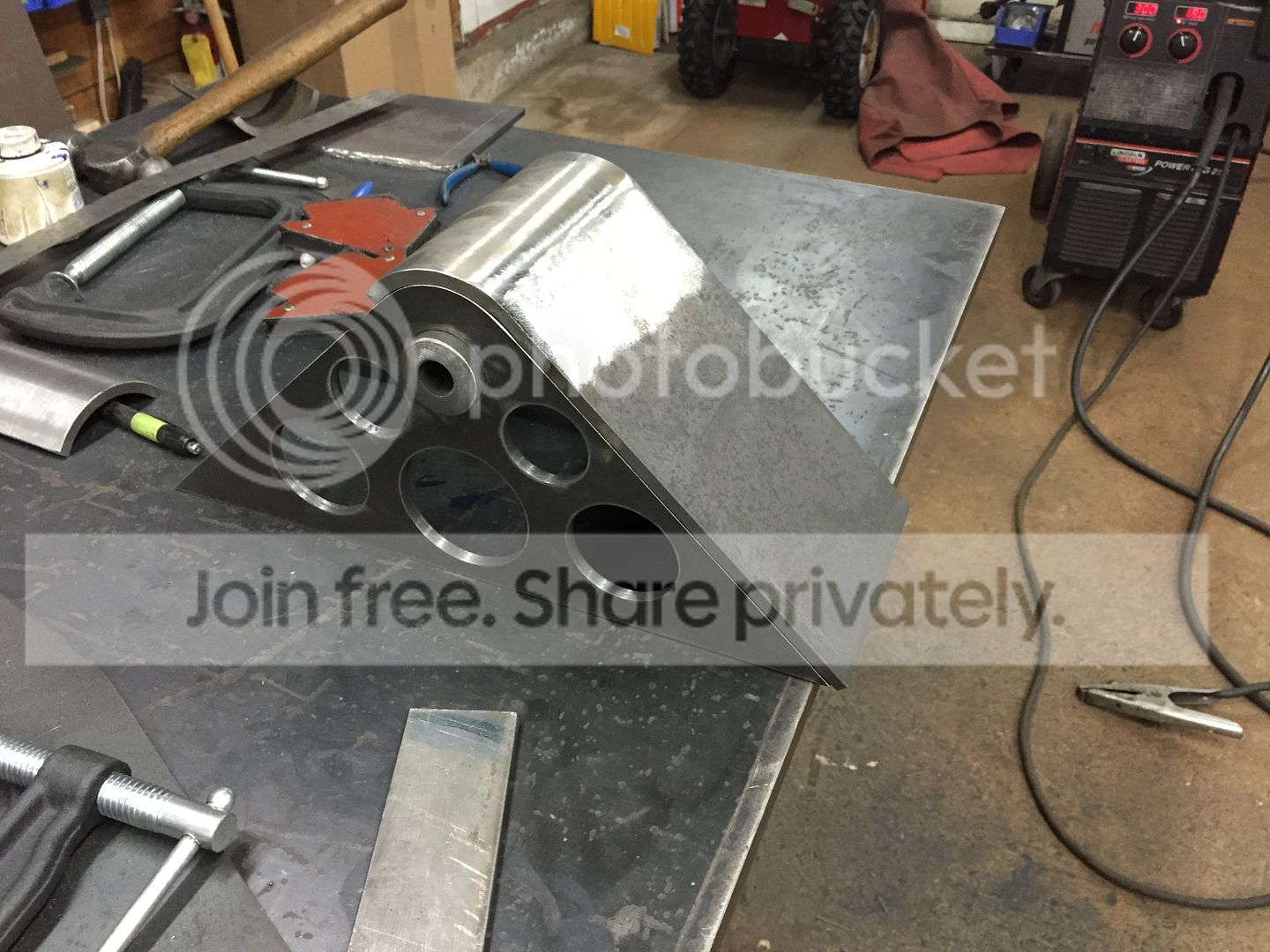
Next up was a cap plate to help stiffen up the two verticals, and to help "block off" the upper strut mount area from rear seat passengers so that fingers don't end up pinched in there...

IMG_2201.jpg


This was nothing more than a 3.5" (.250" wall) tube sliced the long way, and then welded to a section of 1/4 plate.... and smoothed-out. I left the back portion open so that I'd still have access to the Schrader valve for pressure adjustments. On the interior vertical plates, you will also notice that I did NOT drill out the same speed holes. This was again to keep the strut area blocked-off as much as possible from rear passengers. I would have liked the "cool" look of more holes there....but safety won out over aesthetics on that one. :D I will put a couple of speed holes in that top plate at some point, but I need to remain cognizant of pinch points on those too...

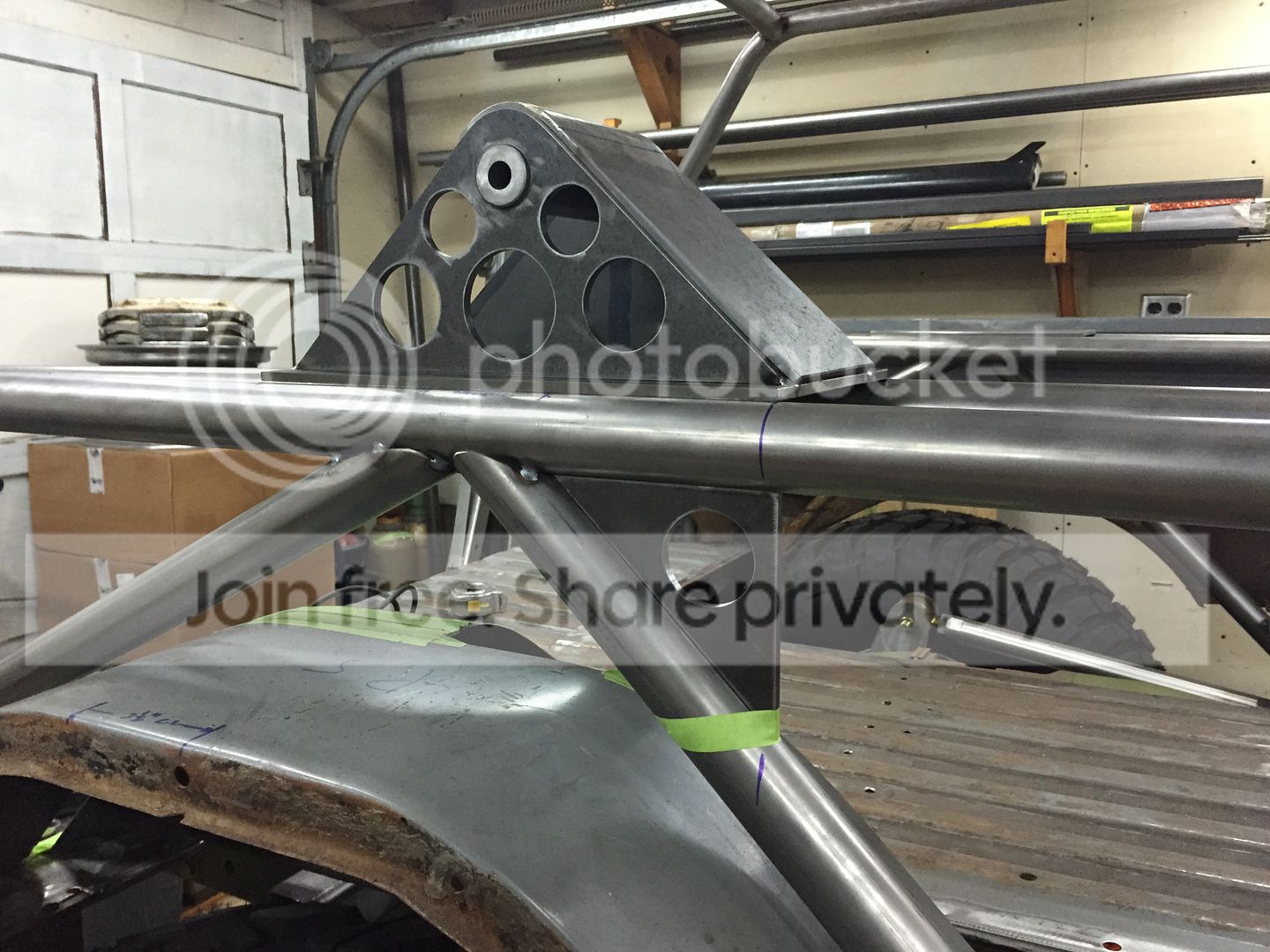
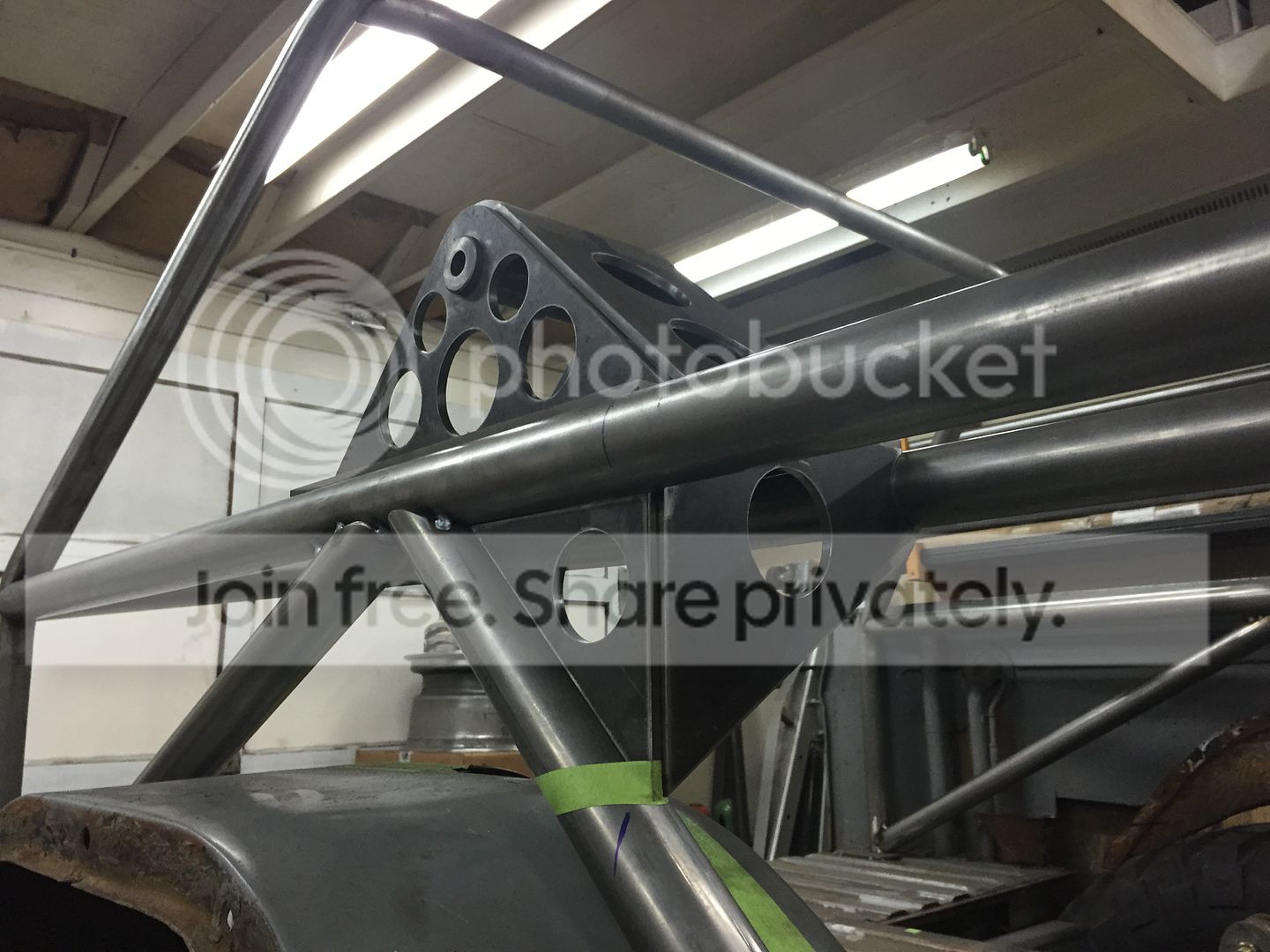
Moving the whole assembly back over to the top of the bedrail supports now looks like this:

IMG_2210.jpg


In these images, the areas below the horizontal tube are starting to get small gussets (and speedholes!) to help spread the loading of the strut to the adjacent tubework....

The final shot of the night was this paper template (which will also be filled with maybe 2 - 3 speed holes)

IMG_2217.jpg


These small structures underneath will help to resist the upward loading of the strut as it bears the weight of the vehicle, and helps to tie the outer and inner horizontal rails more tightly to each other. My hope is that by doing all of this extra reinforcement (and perhaps a similar configuration on the trailing edge of this strut mount) I will have more than enough strength to avoid any cage tie-ins above the bedrail to the upper parts of the cage. :thinking:


-G
 
If this was lumber (or timber as the Canadians call it), the speed holes on that big triangle plate would take a lot of strength away from it according to all the books. But I don't know how those rules translate to steel. I always try to leave one "hole diameter" of material around each hole, but that is more a rule of thumb, not based on anything real.
 
Now they know how many holes it takes to fill the Albert Hall.

You're like Colin Chapman, dude, gotta "add lightening" :haha:

-- A


Could almost be Dio lyrics as well.....

"Add the Lightning!!!...... DA DUM DA DUM DUM DUUMMMMM!!!!!"
:saweet: :saweet: :saweet: :saweet: :saweet: :saweet: :saweet: :saweet::saweet: :saweet: :saweet: :saweet: :saweet: :saweet::saweet: :saweet:

-G
 
2014.12.08 - UPDATE! - 18 SPEED HOLES & CLIMBING..!!!!

Sorry for the slow progress... I'm sure it's starting to drag on a bit with these strut mount updates, but I can't really move along to anything else until I can get the rear struts mounted and pressurized.

Last night a total of 6 new holes were added to the "speed hole count"... I don't know how much more lightness I can add to this build before the truck just becomes TOO LIGHT.... :haha:

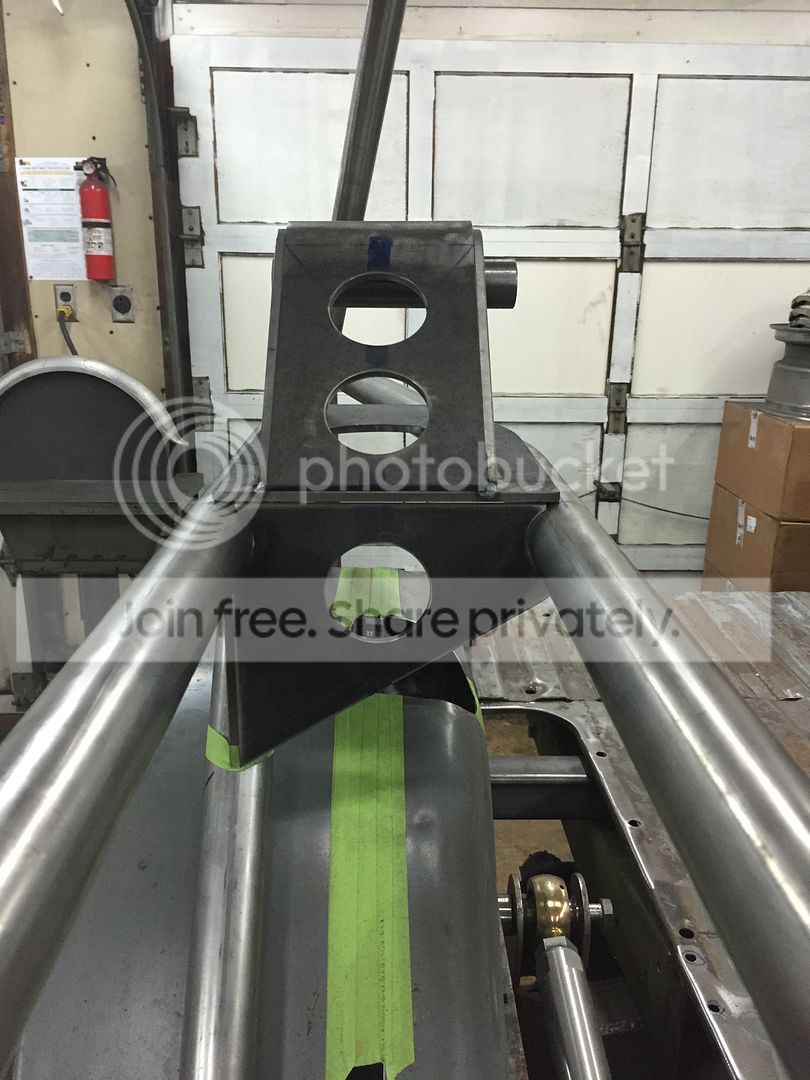
First order of business was cutting out another plate from the cardboard template that was posted in yesterday's update. Once that was fitted and looking good, I took a fresh look at the two adjacent plates (the diagonal cap plate and the new underside plate) and decided that a simple linear set of 2-1/2" holes would have the right aesthetic, and would still leave plenty of "meat" for strength.... fewer tool changes too!!! :D

After some quality time standing in front of the drillpress, and a little finishing work with the sanding rolls this was the result:

IMG_2233.jpg


Here's a shot from behind the front passenger seat to show the alignment of the most recent holes..... simple (and dare I use the word "elegant"?) :dunno:

IMG_2231.jpg


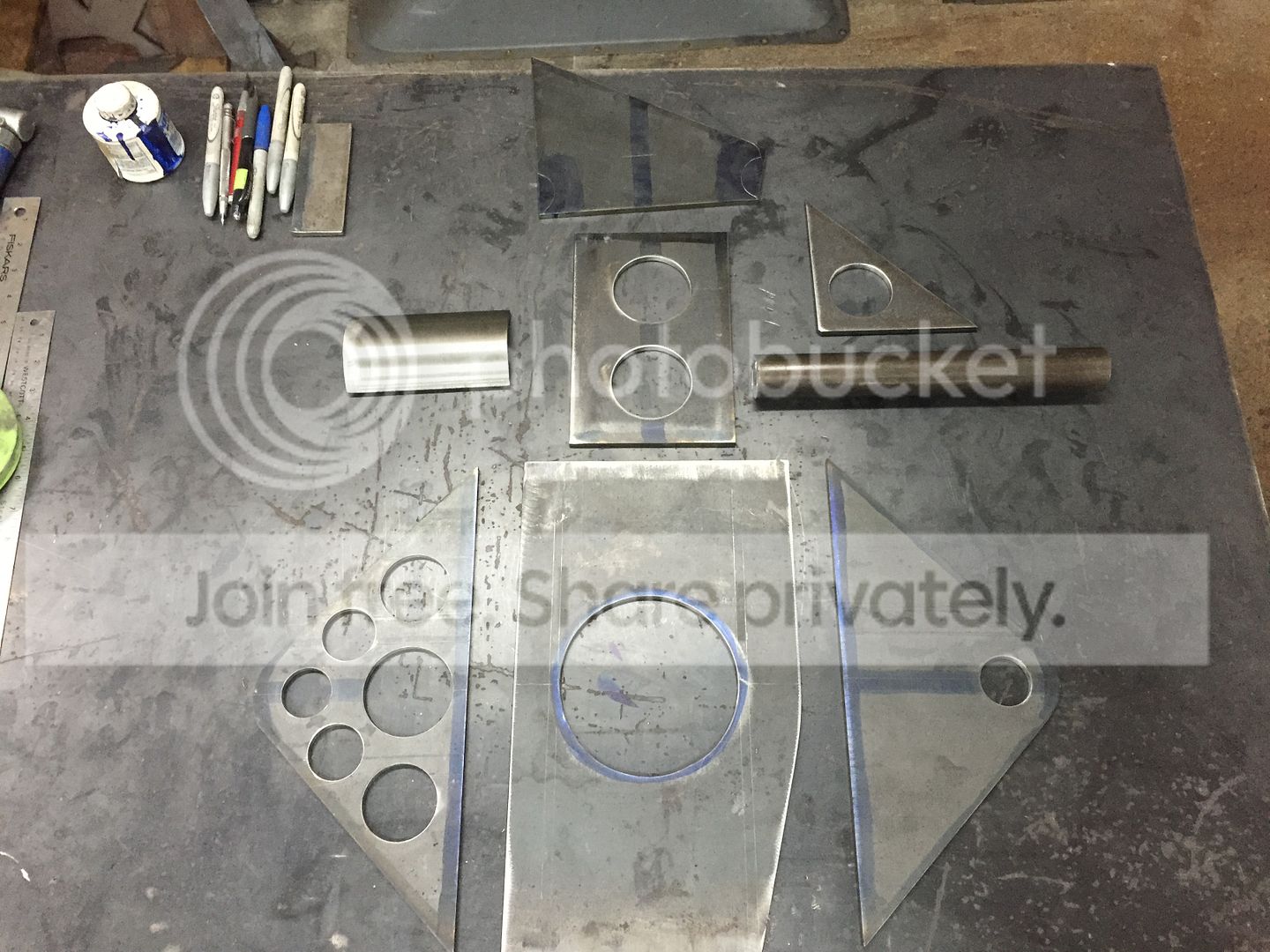
A large reason for the slow forward progress is that I'm building TWO of every part as I go... and hoping like crazy that the final parts will work as planned. Otherwise, the mistake is twice as costly both in terms of materials and time wasted.

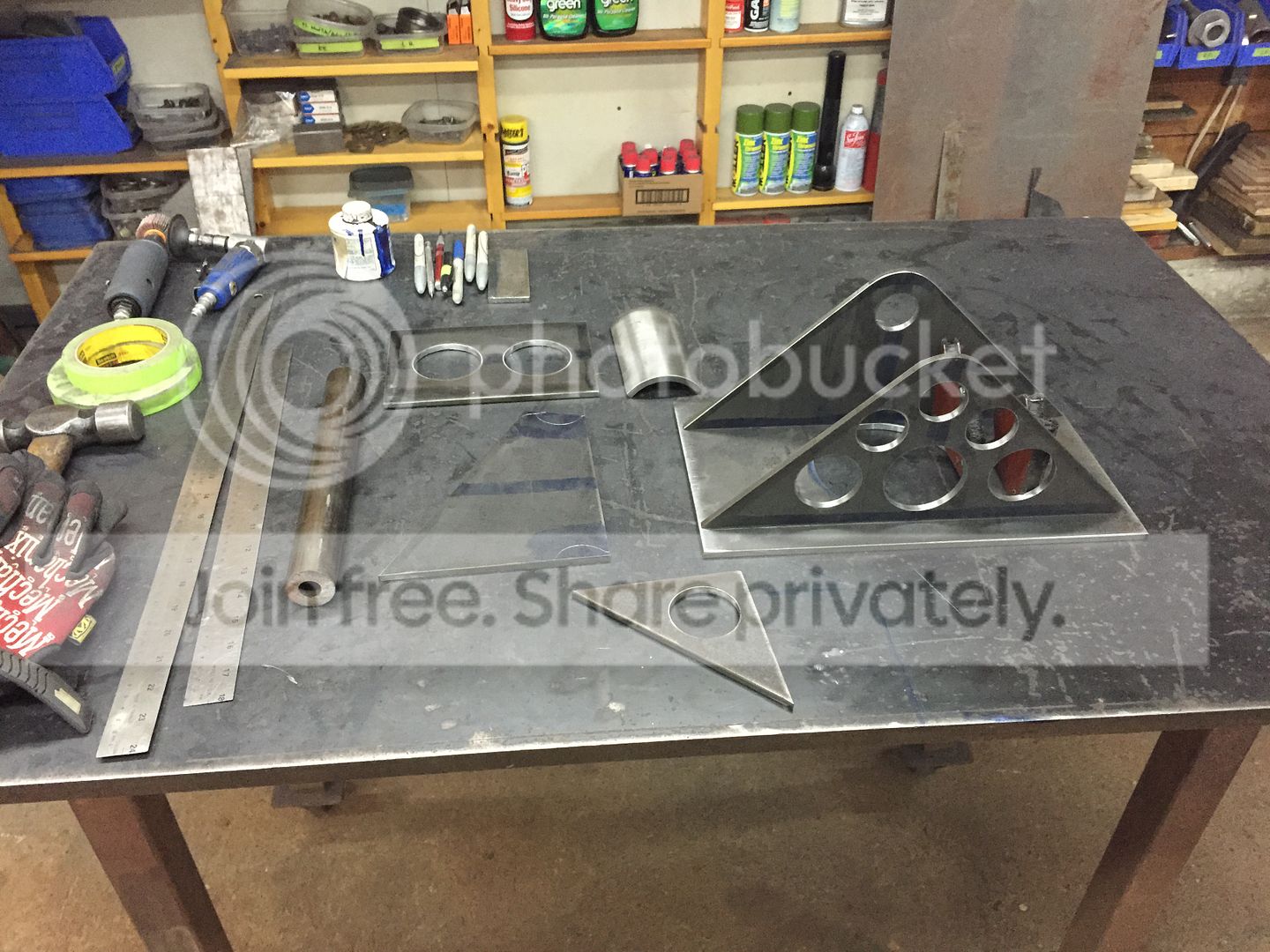
To illustrate this point, here are a whole lot of extra finished pieces that you HAVEN'T seen in the previous few updates as I've been working on the passenger side mount:

IMG_2237.jpg


That's basically all the parts for the driver's side. Since I've already assembled and dry-fit the passenger side, these should go together really quickly by comparison! :waytogo:

One final shot to give some additional clarity.... partially assembled:

IMG_2239.jpg


Not bad.

In other news: I got a call from my local buddy with the CNC.... he wants to get together next week to knock out the remaining 4 steel wheels. :woot: I can't wait to get that machining done so that I can start screwing around with my new dial indicator and trying to true-up the wheels for final welding (and bolts!).


-G
 
I can imagine the work doing those..


some day....


just run some of these on em when done! :haha:


Machine-Safety-Label-LABEL_TRIANGLE_23_c_300.gif
 
I'm hoping that when spring rolls around, you'll have another outside picture shoot, with it on 4 stock looking wheels, all suspension done, maybe cage and rockers done... maybe? :-)
 
I like the speed holes!

How much room do you have around the shock? Do the ORIs not have a remote rezi to pass through? Are they emulsion?
 
I can imagine the work doing those..


some day....
just run some of these on em when done! :haha:


You mean the hole edges? :confused:

With the sanding rolls and a little work with the green Roloc discs the edges actually end up quite smooth and nice. I can work them harder to get an even gentler radius if desired... for now I like the harder edge profile of the speed holes.


I'm hoping that when spring rolls around, you'll have another outside picture shoot, with it on 4 stock looking wheels, all suspension done, maybe cage and rockers done... maybe? :-)


That sounds reasonable. :deal:

The hardest part of the build these days is actually the logistics of working in the garage during cold weather. The concrete is almost always cold... and it really sucks the heat out of the shop even when the heater is running full-blast. Most problematic however is the challenge of maintaining decent air quality when I can't open the doors & windows to let in fresh air. Plasma cutting, grinding and cut off wheel dust is nasty stuff.... so these days I'm wearing full goggles, earplugs and a 3M dust mask the entire time.

It's a bit of a clunky way to work.... and not quite as "fun" as when the sun it out and the garage doors are open wide. But hey, progress is progress.... and "winter mode workshop" adaptations won't last forever. Once springtime rolls around I will DEFINITELY be excited to roll this truck back out into the sunshine to get some updated pics!!! :waytogo:


-G
 
I like the speed holes!

How much room do you have around the shock? Do the ORIs not have a remote rezi to pass through? Are they emulsion?


Heath,

The ORI strut body is 3.25" diameter. The through-hole on the strut plate is 5" across, and given its proximity to the upper strut mount it seems like it will have plenty of clearance during cycling...

The rear of the mount is open for Schrader valve access. ORI does offer a remote mount reservoir for full-size (aka: chubby) trucks so that the have a larger nitrogen capacity.... this is supposed to soften the ride in the first couple of inches of travel. They can be purchased with a 6" or 12" steel braided hose and mounted remotely. It seems like they will be easy to find space for with the upper strut configuration I've got going on now.


-G
 
Heath,

The ORI strut body is 3.25" diameter. The through-hole on the strut plate is 5" across, and given its proximity to the upper strut mount it seems like it will have plenty of clearance during cycling...

The rear of the mount is open for Schrader valve access. ORI does offer a remote mount reservoir for full-size (aka: chubby) trucks so that the have a larger nitrogen capacity.... this is supposed to soften the ride in the first couple of inches of travel. They can be purchased with a 6" or 12" steel braided hose and mounted remotely. It seems like they will be easy to find space for with the upper strut configuration I've got going on now.


-G

Make sure to leave room for the hose to pass through if it sticks out the side of the shock, that one spot may need more than 1.75" extra. You could possible pass it through at an angle depending on what angle the hose comes out, but you definitely don't want to have to disassemble the shock and bleed it if you need to remove it for some reason.

And I don't know about ORIs, but usually remote reservoirs seperate the nitrogen from the oil for less fade and more consistent performance. Are the ORIs already seperate without the resi? If not, I would definitely recommend the rezi.
 
just run some of these on em when done! :haha:

Machine-Safety-Label-LABEL_TRIANGLE_23_c_300.gif
I don't know what you have planned for finishing your interior but it seems like with a moving suspension part this close to passenger seating it would make sense to have some sort of cloth/leather/vinyl/etc sock that fits over the strut mounts. :dunno:
 
I don't know what you have planned for finishing your interior but it seems like with a moving suspension part this close to passenger seating it would make sense to have some sort of cloth/leather/vinyl/etc sock that fits over the strut mounts. :dunno:

Who knows...???

I could end up upholstering the strut and flat front area as a big luxurious armrest!!! :D


-G
 
that's what I was implying, moving parts, not sharp edges... and they would serve double duty as comedic relief...
 
Heath,

The Schrader points straight out the back with my current bolt orientation... clearance should not be an issue.

BTW -> I don't fully understand the inner workings of the ORI but here is a link to the reservoir I'm referring to.... maybe it will make more sense to you? :thinking:

http://shop.oristruts.com/collections/accessories/products/remote-reservoir


-G

It looks like the ORIs are emulsions in the upper and lower chambers. That reservoir you linked just adds more volume(a larger volume will have less rate of change over the stroke of the shaft because you are changing volume less percentage over the travel). This rezi looks better...

http://shop.oristruts.com/products/high-capacity-reservoir

However, neither of them seperate the nitrogen from the oil, so some fade may be experienced when they get hot.

Anyway, the main point I was trying to say is, you don't want to have to take the shock apart to pass it through the hole during installation to the rig if there is a hose sticking out the side of it, so be aware of that.
 

Latest Posts

Top Bottom