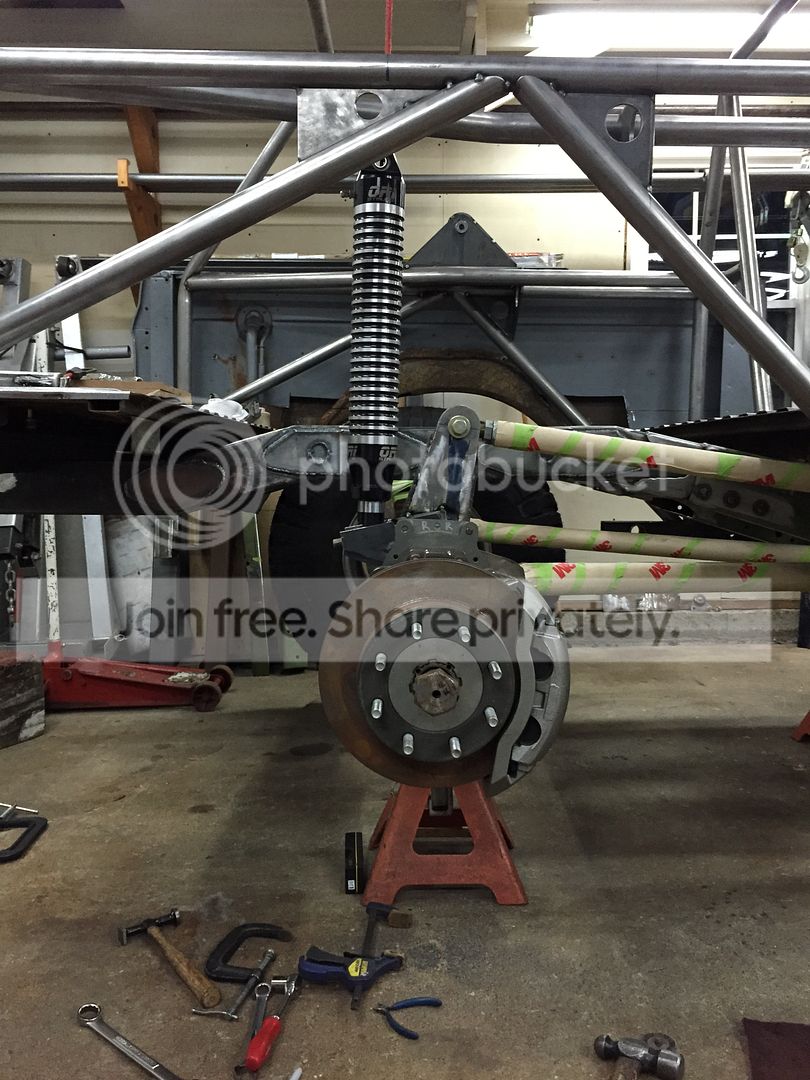
2015.05.04 - UPDATE! - SHOCKING-LY SMALL PROGRESS....!!!
Some days it's just tough to get into "the zone" and knock out some serious fabrication. All you can do is just knuckle-down and fight through it and take whatever progress you can get.
Such was the case yesterday.
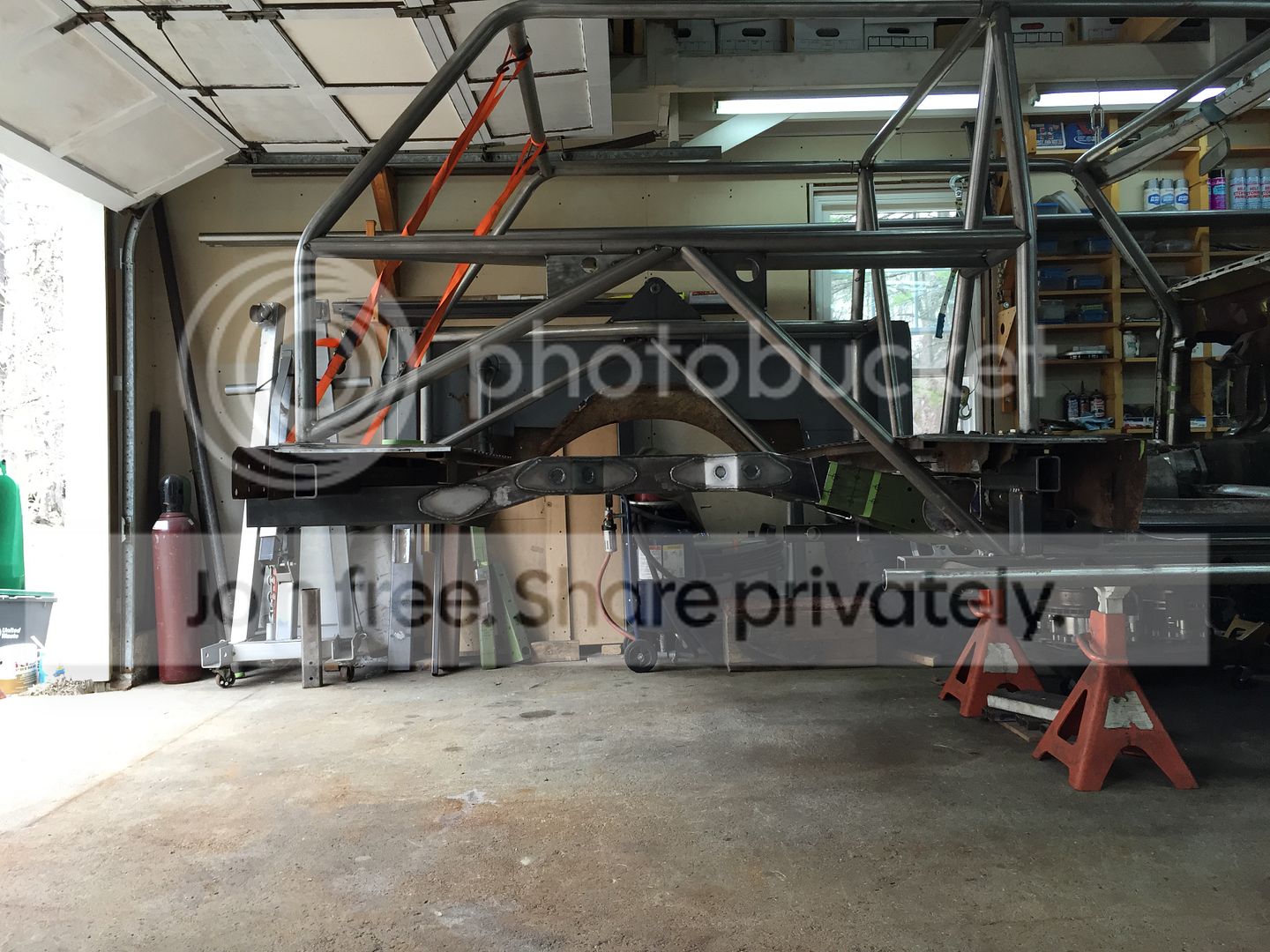
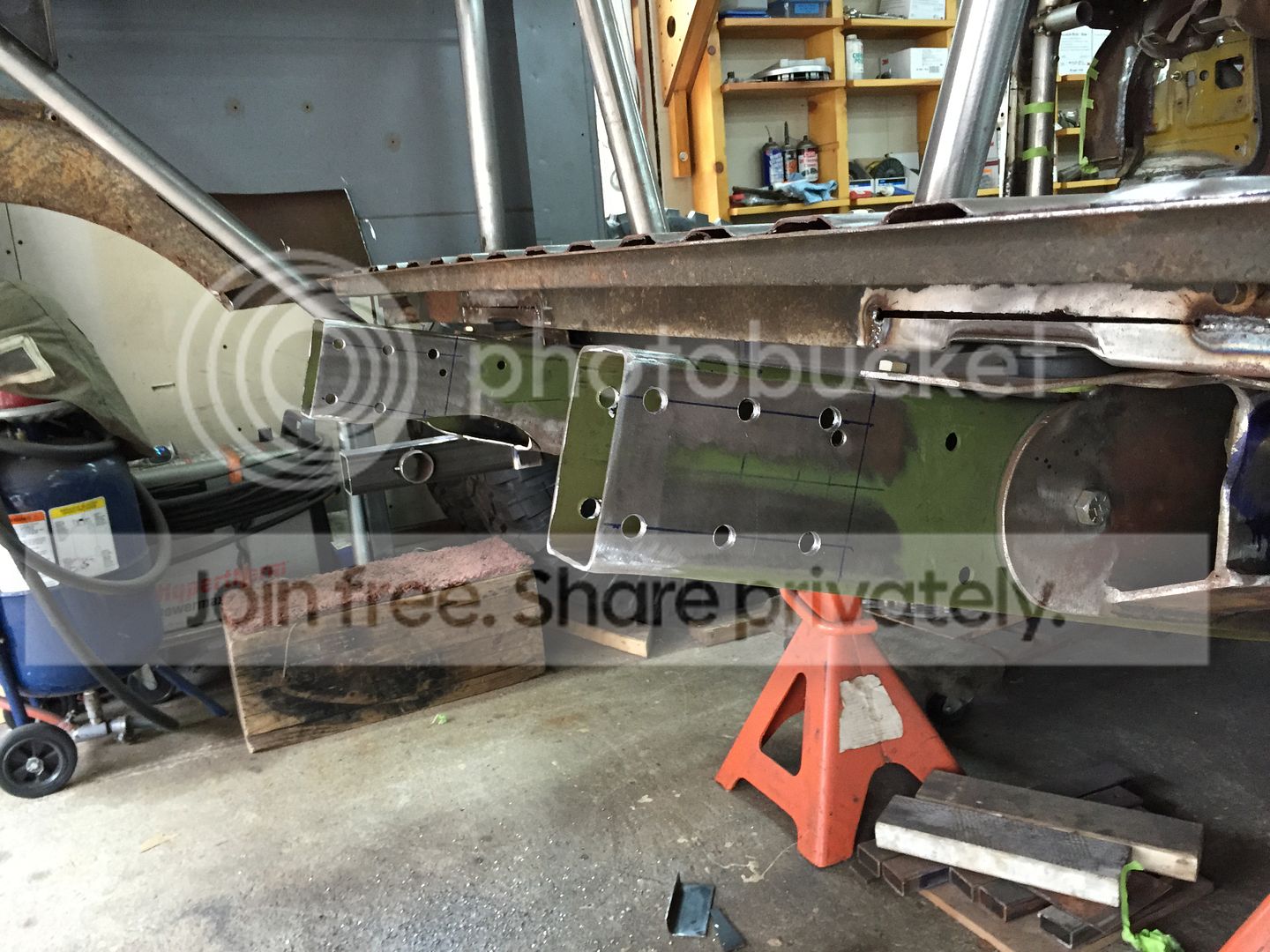
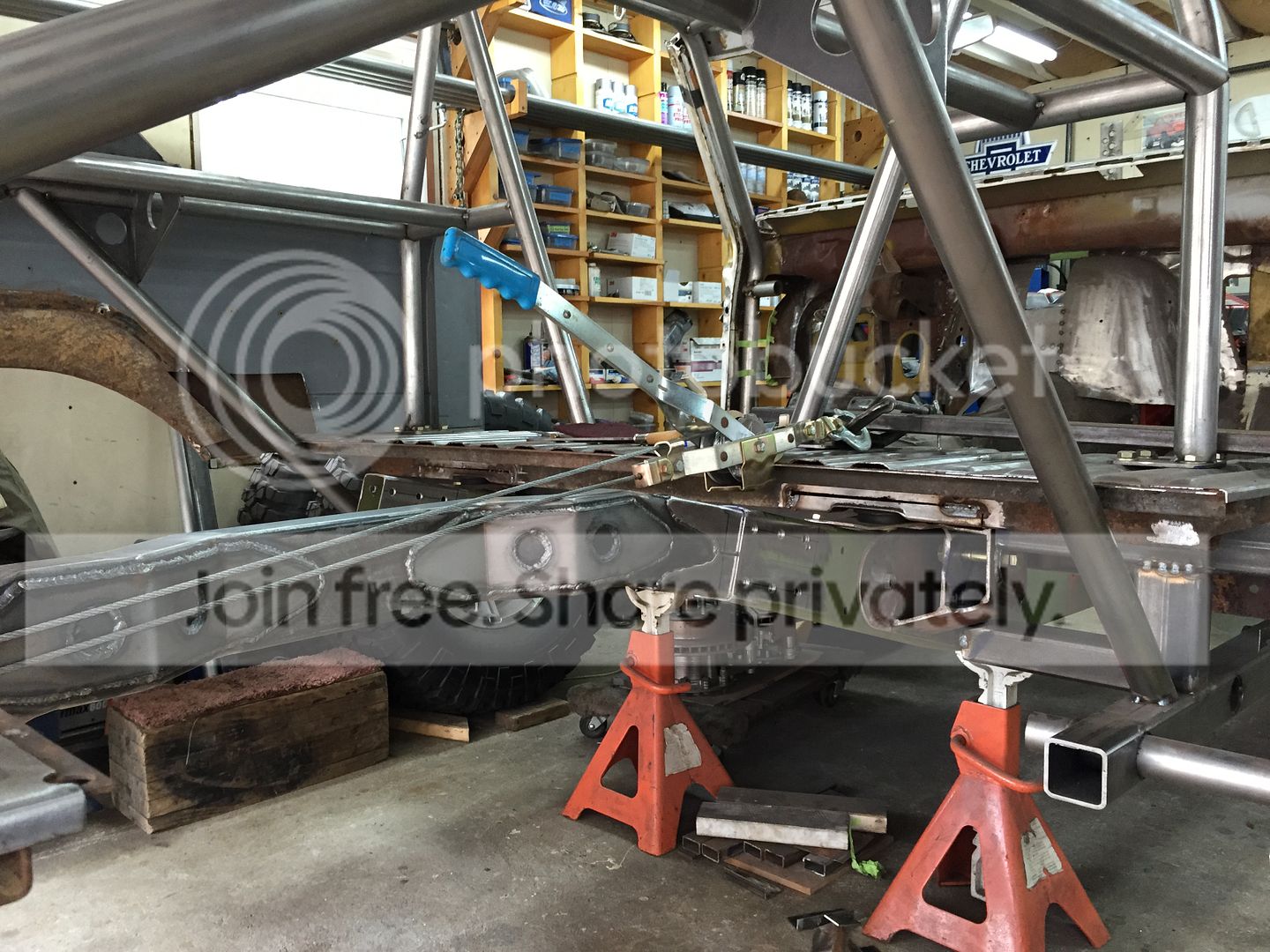
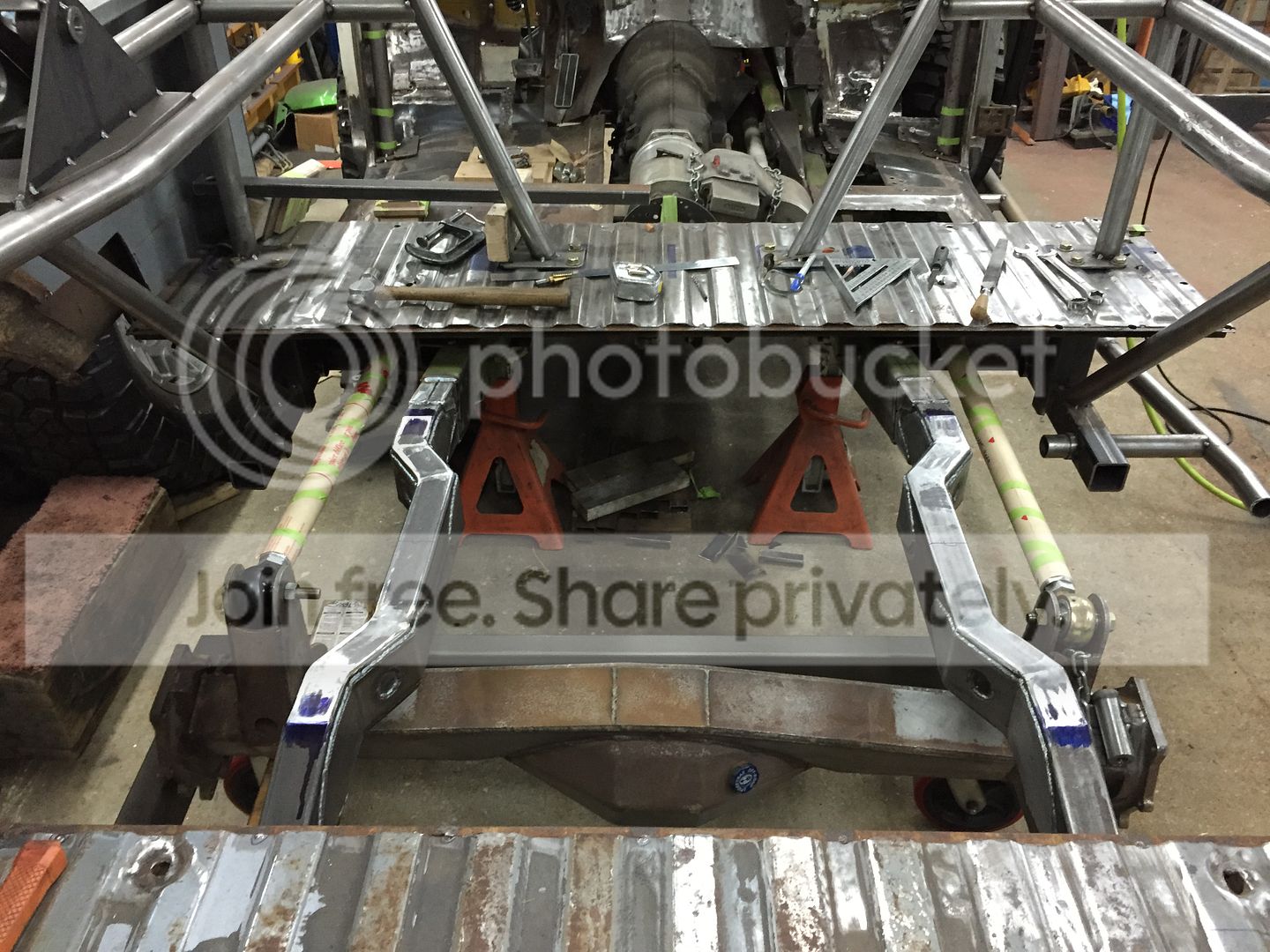
After getting the rear back-half frame welded in place, I re-installed the rear axle and all the links , portal housings and wheels/tires....and spent a little time confirming that everything was still level, and plumb and ready for the rear ORI installation.
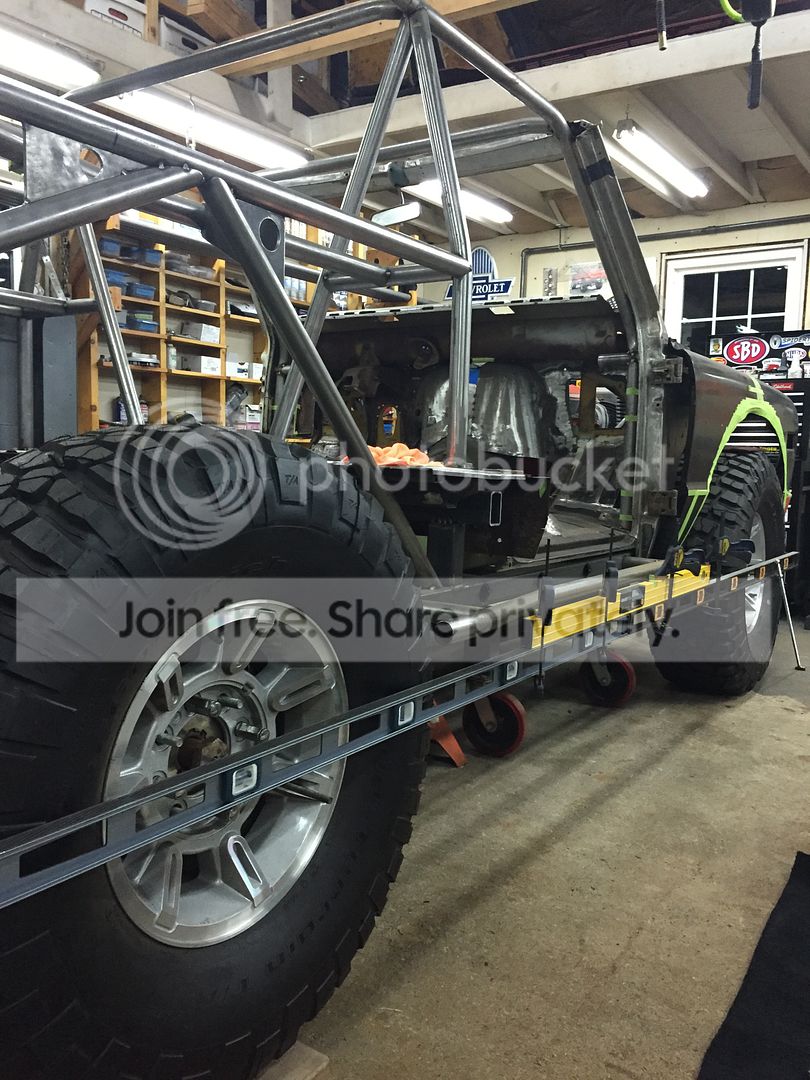
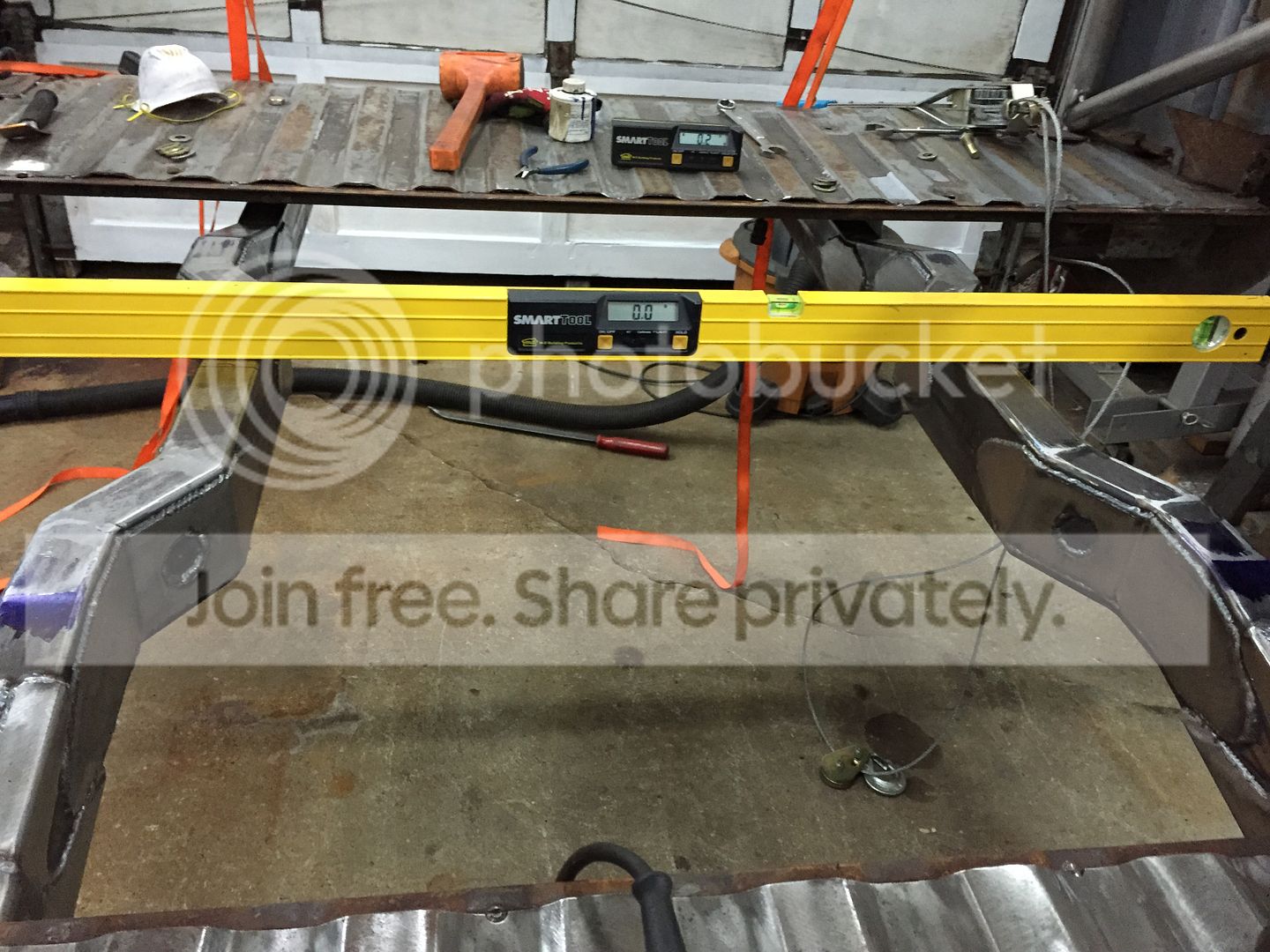
What makes it tricky is the sloped concrete floor, and the fact that I want a 1* forward rake on the body (as measured at the bedside) for the proper stance of the truck. So my first steps were to get the bedside(s) at the correct angle, and then put some blocking under the rear tires to account for the sloping floor. By putting some threaded rod into the CTIS air holes (center of the wheel hub) I was able to drop my multi-part digital level across them and measure my wheel heights (front-to-rear) to insure that they were at a perfect 0.0* on the readout.
I dropped the front end onto it's bumpstops so that I don't have to worry about any shifting of the struts and accidental changing of ride height.
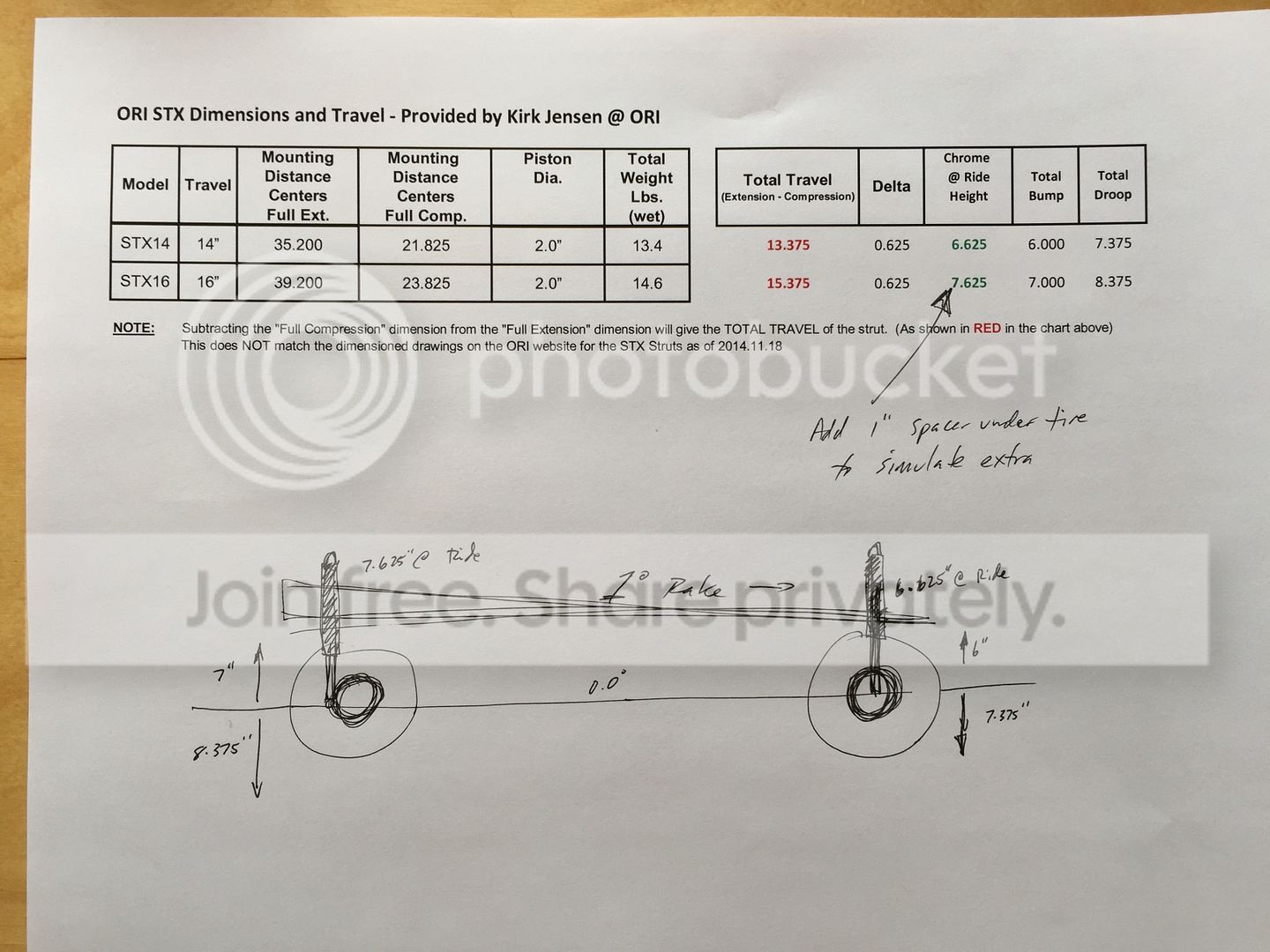
The next challenge is to account for the fact that the rear ORIs are 2" longer than the fronts (16" vs 14"). I decided to throw that extra travel equally at both the bump and droop side of the equation so the final setup would look like this:
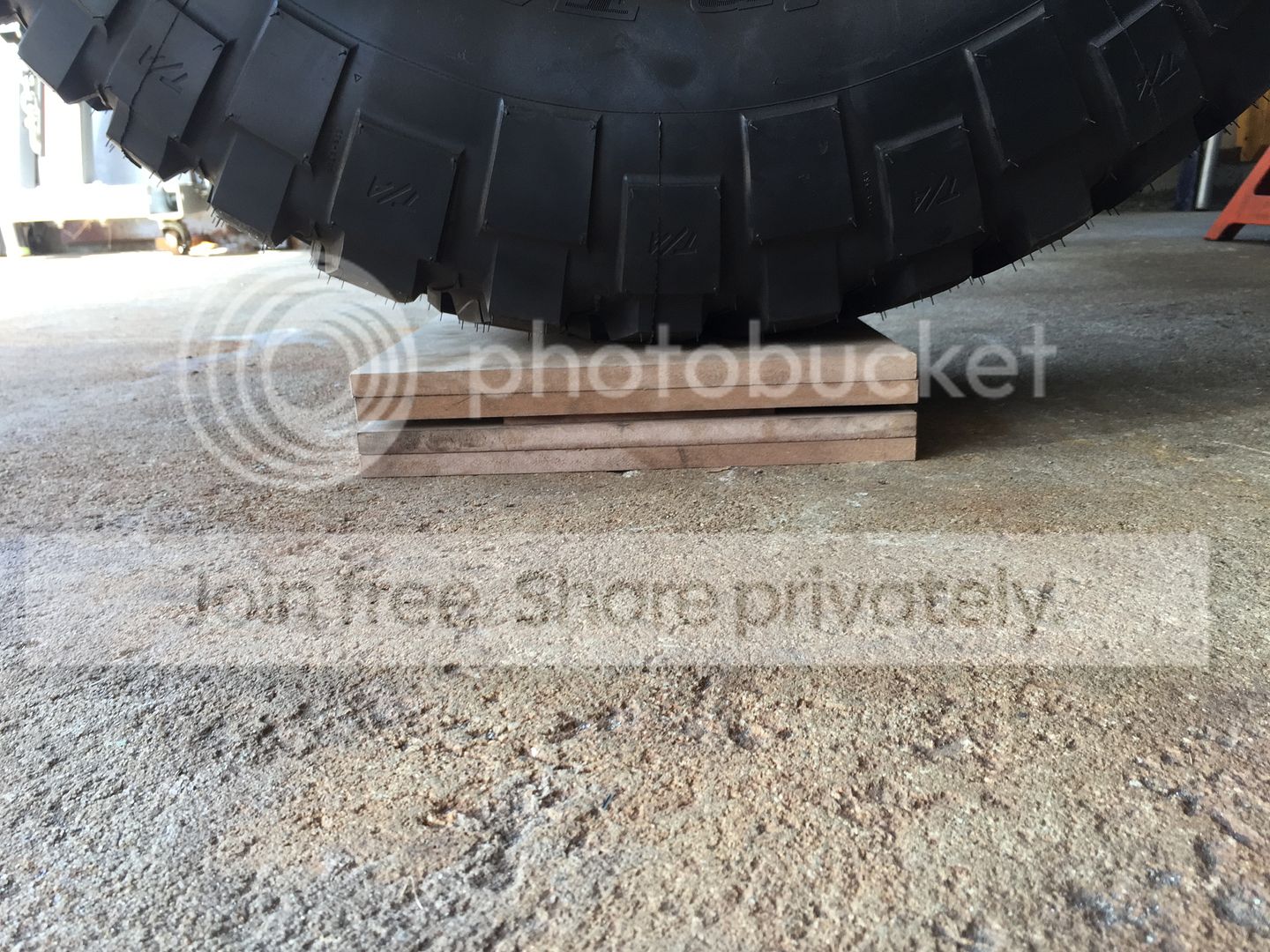
For the shop work, that means that the rear tires actually need to sit an additional 1" HIGHER than the fronts if I want to build everything at full-bump.... so I put some additional blocking under each tire to add the establish the perfect axle position before I started welding up any strut mounts.
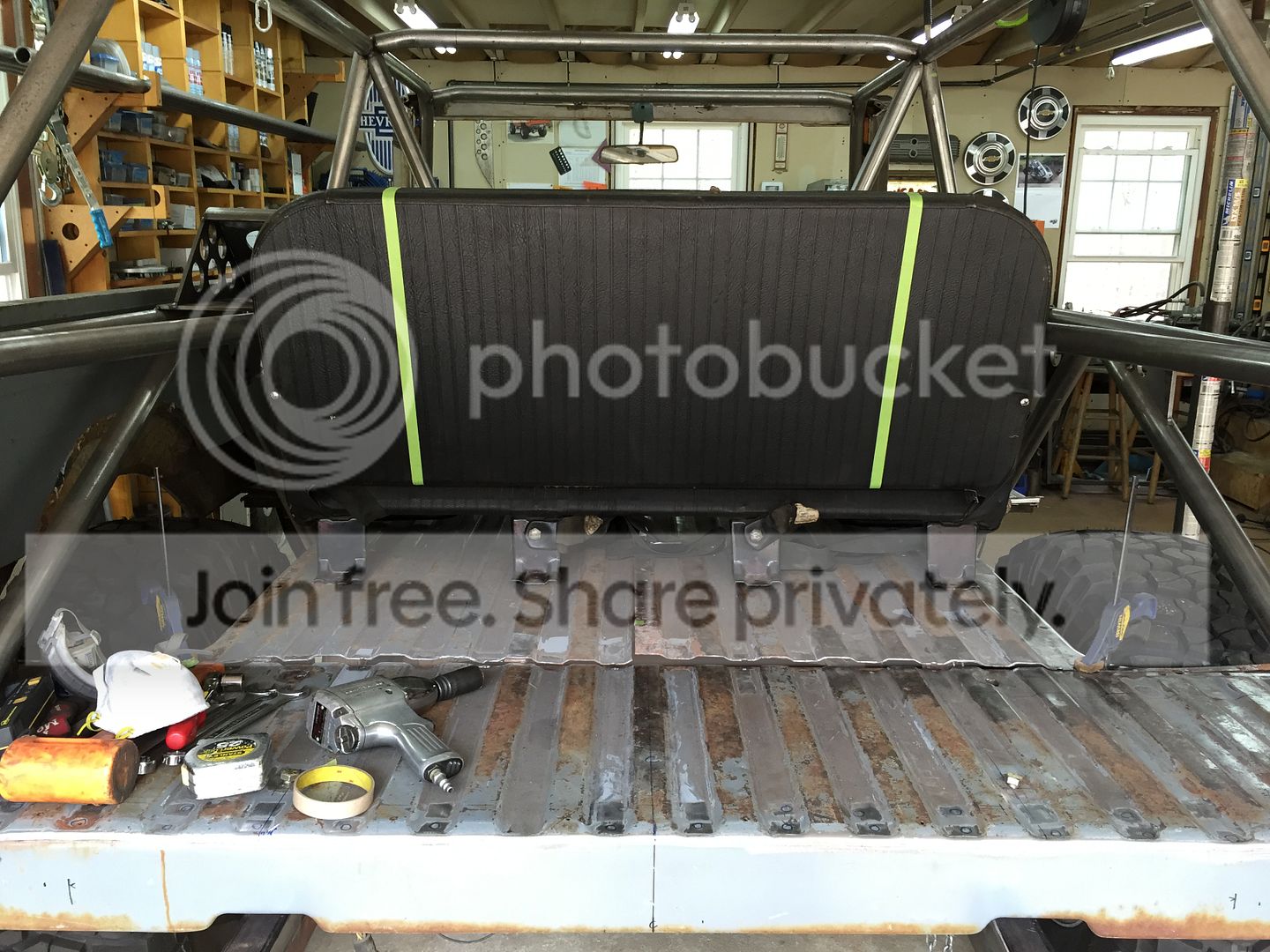
Knowing that I'm going to mount the strut behind the axle now... I can drop the entire thing a lot lower than my previous attempts, but with the articulation of the axle I still need to keep the upper mount pretty steeply angled inward to avoid contact with the inside tire sidewall. There's really NO chance to fit the stock width seat into that equation, so I temporarily set it in there just to mark how much narrower I think it will end up being.
The seat is originally about 48" wide, but realistically it's going to end up at around 30" wide to allow the installation of all the upper strut mount tubing. The main structural components are going to drop straight down to the top of my new frame sections, which will be a lot stronger than trying to support the weight of the truck from the current horizontal cage tubes.

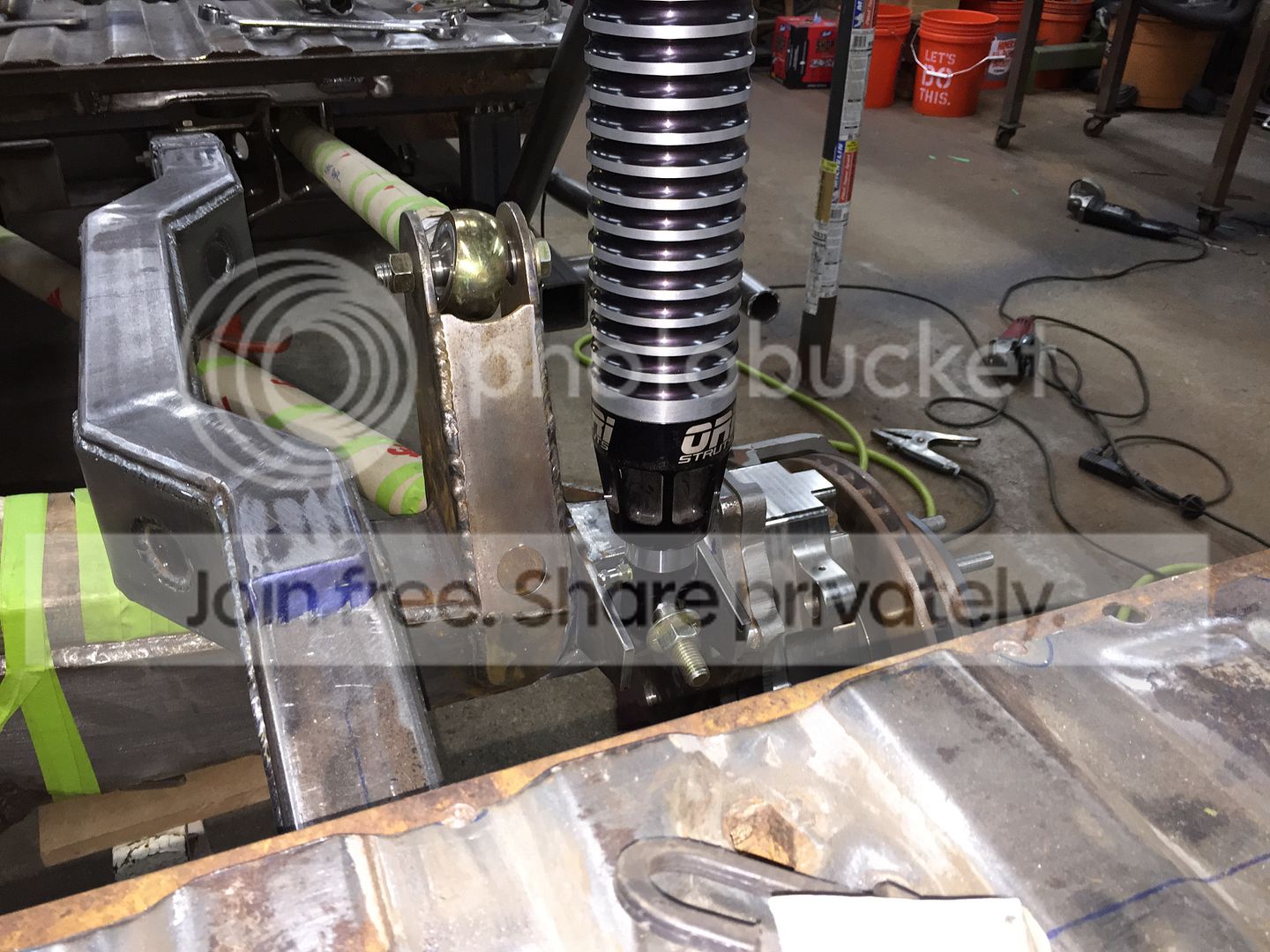
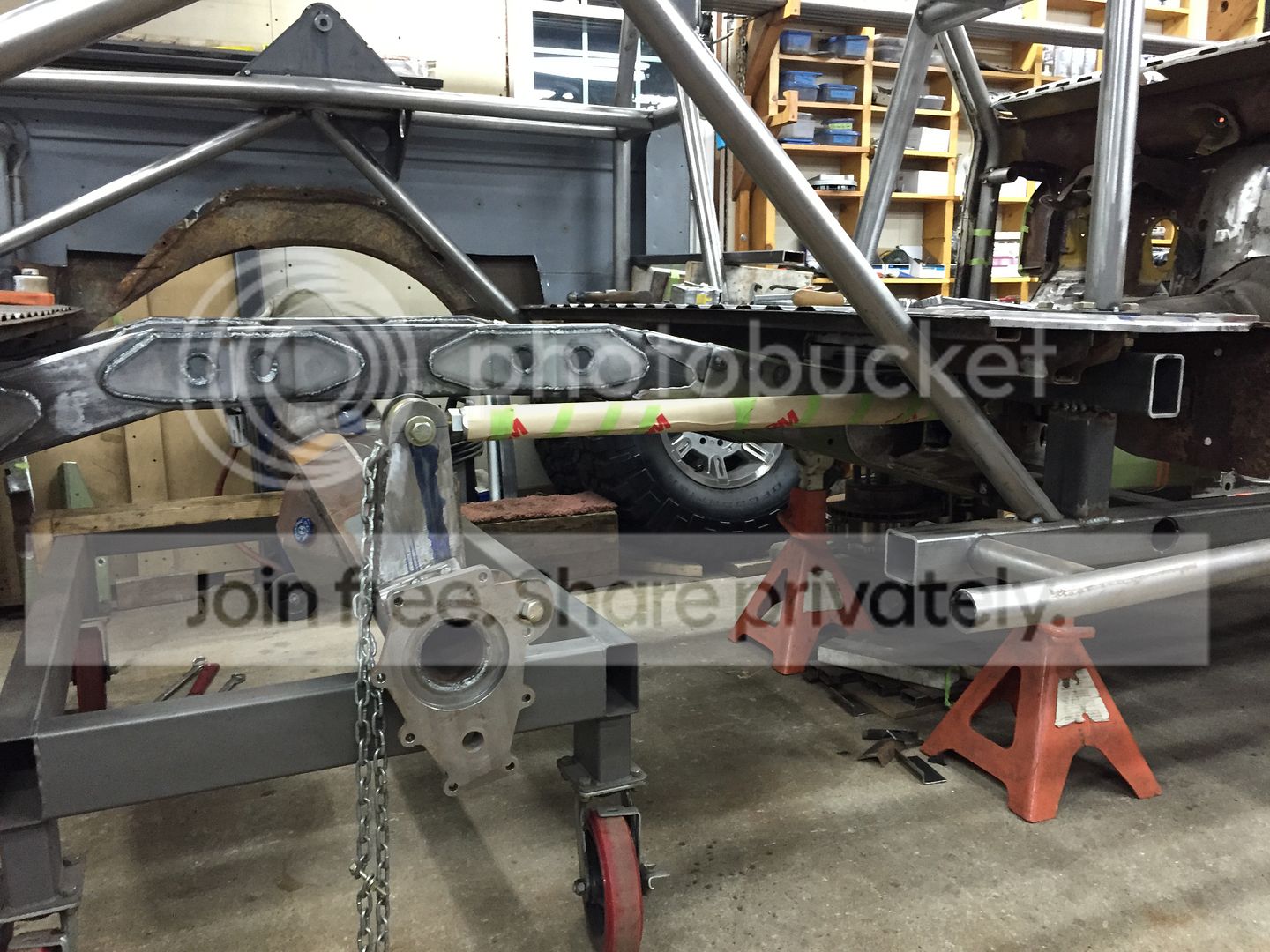
I started doing some templating of the lower mount first (using the fully-compressed ORI) to get a feel for how the packaging will go.
Since I was trying to build a set of brackets onto a trussed housing, the left and right side plates were totally different. I'm also trying to run the mounting bolt in the front-to-back configuration which makes the bracket a bit more complicated since I need wrench access to both sides of the bolt. To add a bit more "fun" the portal housings have about 8 perimeter bolts that I can't block-off with my new shock mount, or I'll never get the portals on or off ever again.....
In retrospect, I guess my progress wasn't actually TOO bad considering all of the tedious considerations that were involved. And like so many of the prototypes on this truck, the lower mount gets built 2 times.... so I'm reworking my paper templates constantly to insure that the driver's side can be built about 100x faster once I get a design figured out that works well....
-G




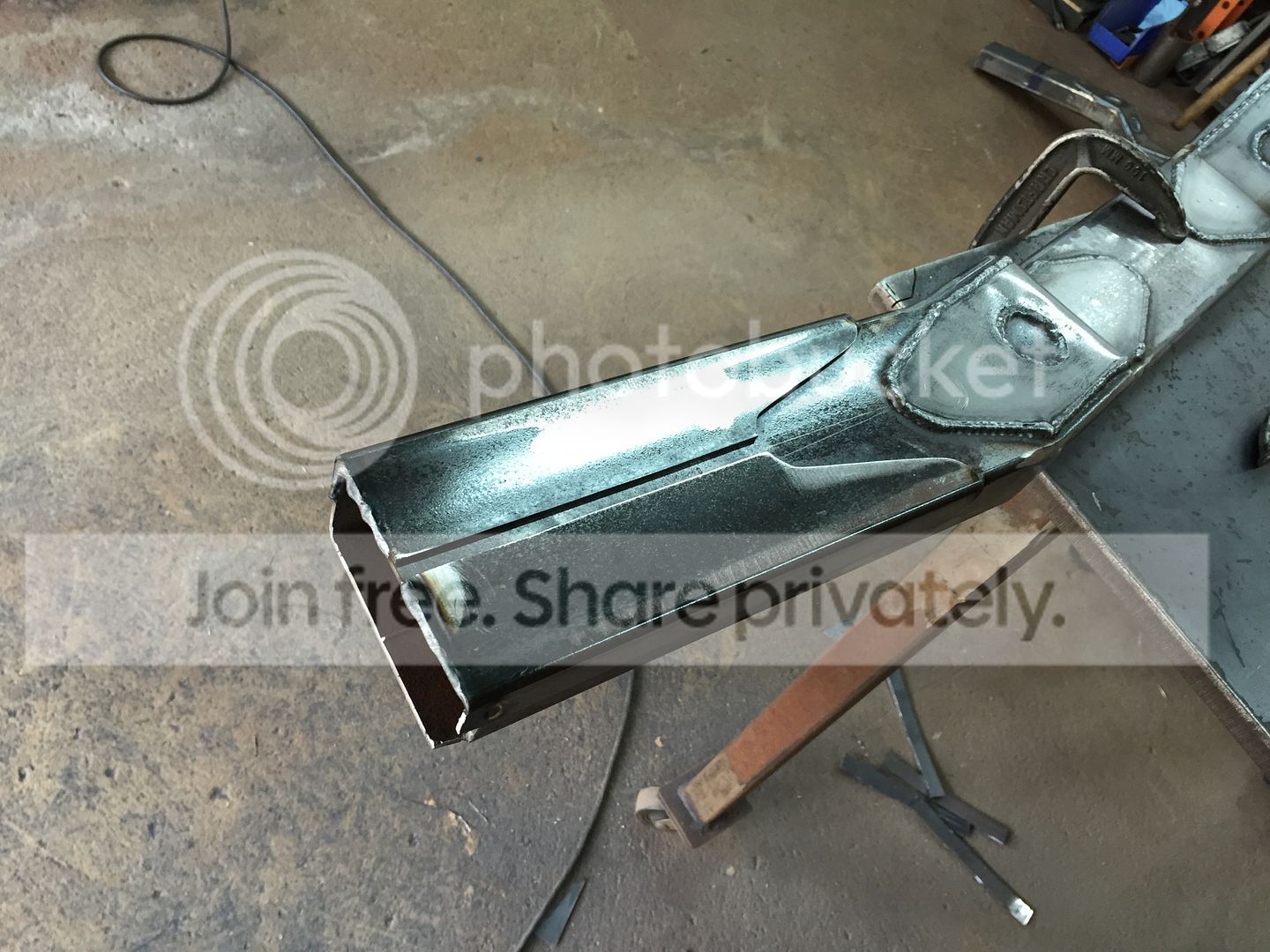



 At least I got some points this go round.