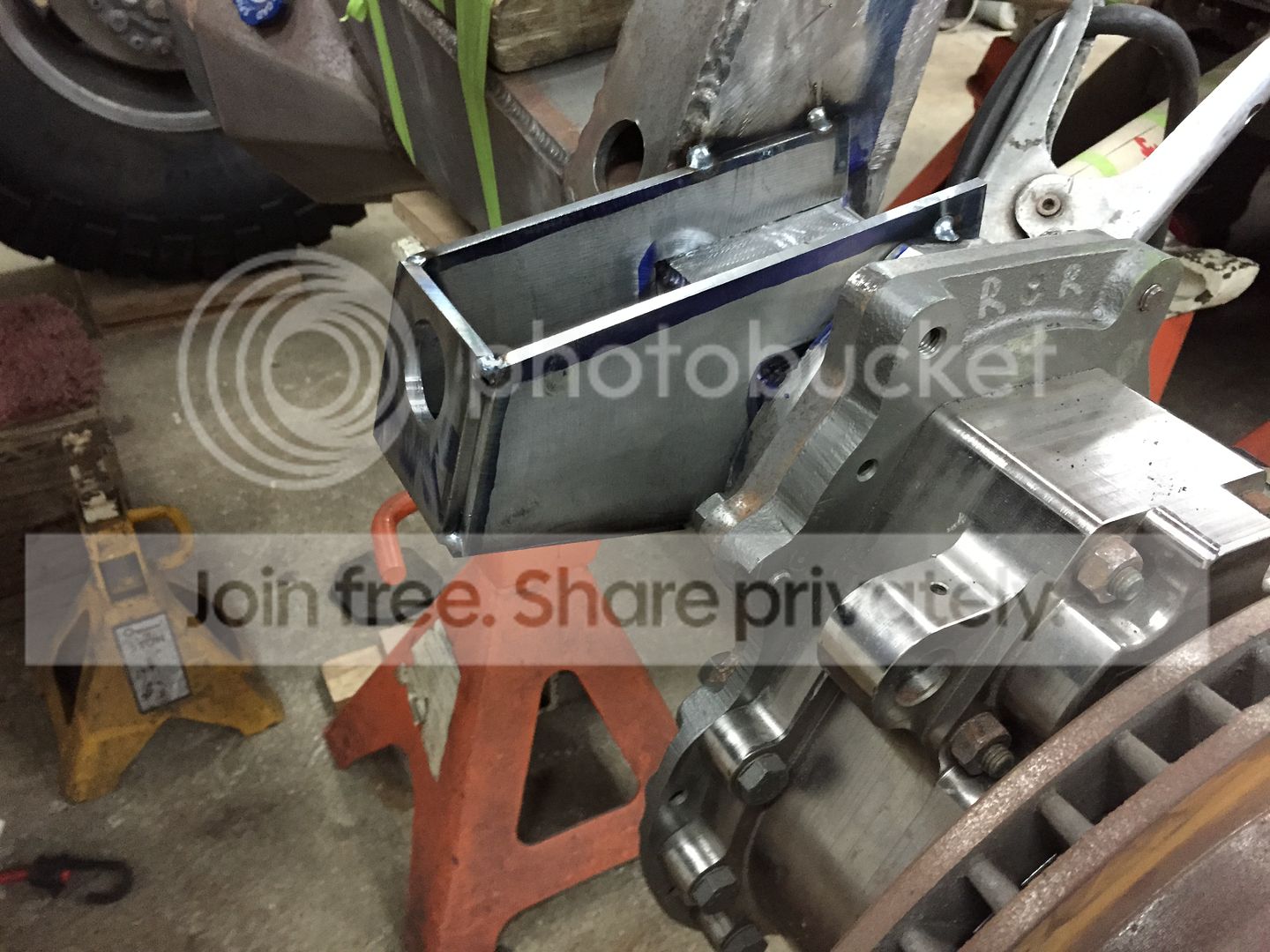
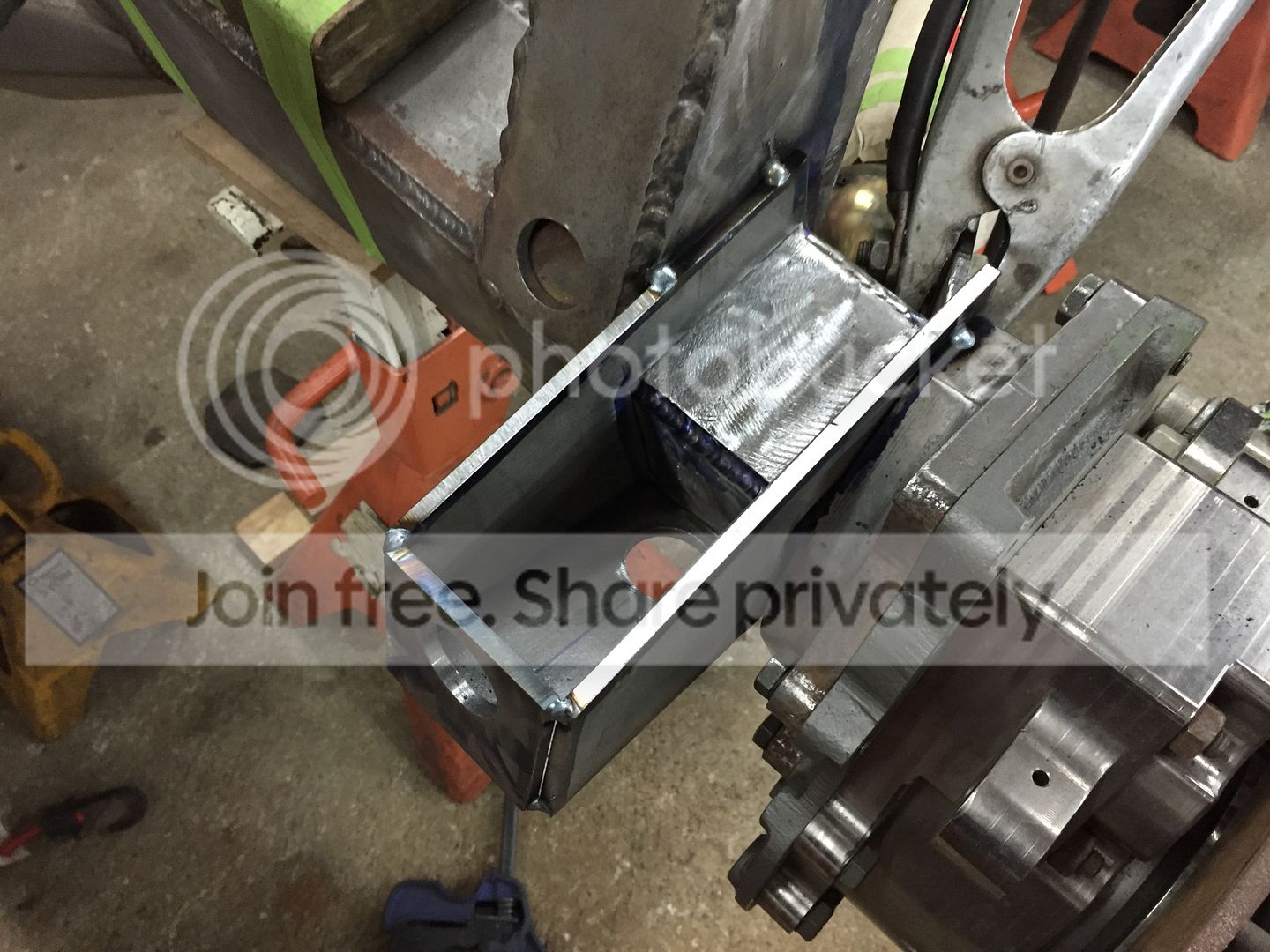
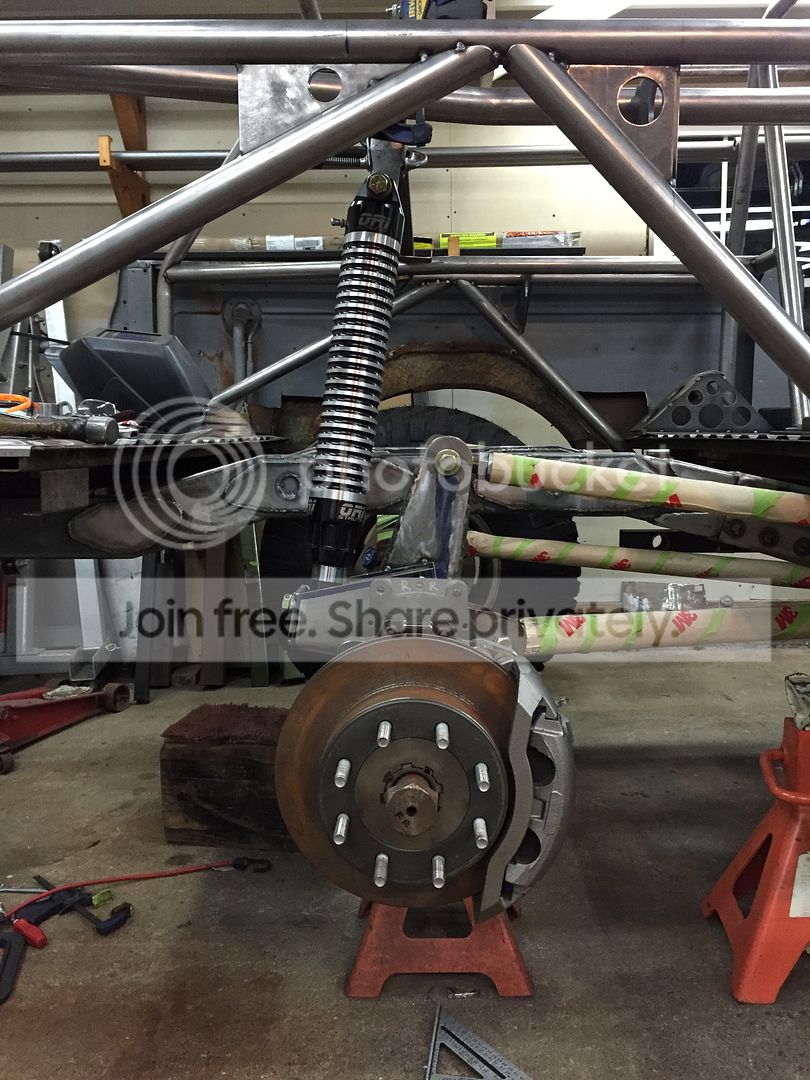
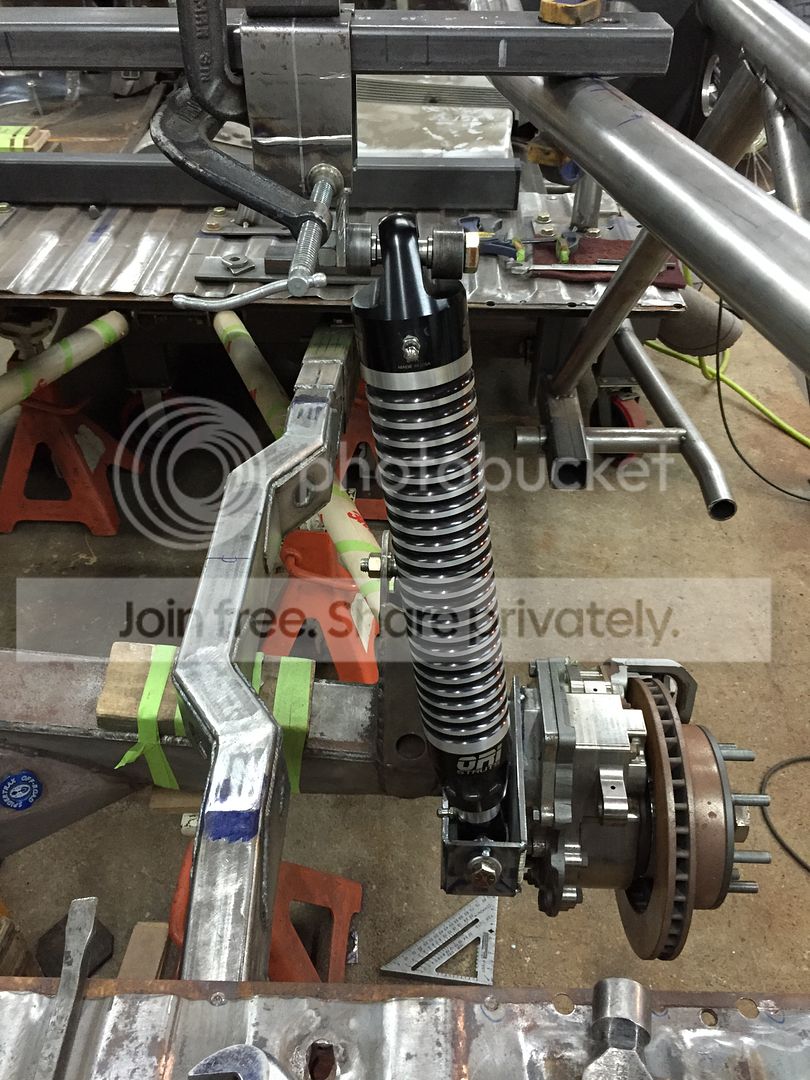
Rig is looking great Greg, love the new frame rail clearance, and nice job implementing it with the old new frame.

As for the shock dampening, there could be some discussion as to being perpendicular to the ground vs perpendicular to the links, theoeretically vertical at ride height or full compression will give you the most dampening for the same shock settings. And angled slightly will lose some dampening, how much is dependent on the angle, but can be easily calculated with the angle from vertical. Just take the cosine of the angle from vertical. So for 15 degrees from vertical, cos is .966, so you are getting 96.6% of your available dampening. Or to calculate the loss of dampening:
Dampening loss = (1-cos(angle))*100, so (1- cos(15))x100 = 3.4% loss. If we chart the angle from vertical, it looks like this...
Angle = % loss
5 = 0.4
10 = 1.5
15 = 3.4
20 = 6.0
25 = 9.4
30 = 13.4
35 = 18.1
40 = 23.4
45 = 29.3
Now, with that said, angle alone shouldn't matter if you angle it back vs forward, however, what does matter is that when you angle it back vs forward it affects how the shock angle
changes throughout the suspension travel.
The closer the shockle angle is to perpendicular to the control arm angle at ride height, the less the shock angle will change through the travel. If you lean it forward, you will notice more angle change through the travel, as the suspension compresses the angle will increase, decreasing your dampening at full bump, which is not really what you want, but can work just fine if the dampening is set right, although it is only completely possible with sometype of bypass shock to increase dampening in certain travel ranges.
However, if you angle it back slightly, you will see the angle change is nearly nothing throughout the travel, since the axle moves back as it moves up, and moves forward as it moves down, which maintains a relatively consistent angle. This maintains a more consistent dampening rate from droop to compression.
Leaning it forward actually decreases dampening under stuff with more angle at compression. Now if the angle is small it won't matter much as you can see from the chart, but if the angle is 20 degrees or more it really starts to increase drastically.
So to answer your question, in the rear, it really can be beneficial for the suspension to angle the shock back, and because of that I think it looks just fine angled back.
The real issue with that is the front, where you would have to angle it forward to produce those results, and angling the front shock forward really does look pretty dumb I think, so most people just keep the angle low and not worry about it.




 I'd love to bang a few ideas around in-person. I'm amazed at how much you guys "see" just from a few photos that I post up, I can only imagine how much easier it would be if you could actually walk around the truck in 3-dimensional space and see things from every angle.