CK5
Register an account today to become a member! Once signed in, you'll be able to participate on this site by adding your own topics and posts, as well as connect with other members.
Those amp recommendations are just that, recommendations. Every welder is gona be different obviously and can vary greatly from one machine to the next.

To me it looks like you're to hot and not enough filler rod.

To be honest though, for a first time, I'd have felt pretty good if mine looked like that.

Skip the flat stock for practice. Stick with the tubing.


EDIT: what does your torch look like? can you bend the neck or is the neck designed to be bent at different angles? I find that feature really helps with round stuff.
 
Have you tried any simple fuse welds yet? It may help you get a feel for moving the torch and how much heat you are pouring to it?
 
Those amp recommendations are just that, recommendations. Every welder is gona be different obviously and can vary greatly from one machine to the next.

To me it looks like you're to hot and not enough filler rod.

To be honest though, for a first time, I'd have felt pretty good if mine looked like that.

Skip the flat stock for practice. Stick with the tubing.


EDIT: what does your torch look like? can you bend the neck or is the neck designed to be bent at different angles? I find that feature really helps with round stuff.

Kert, the torch is a WP20 (Miller Dynasty 200DX with water cooling). I'm a little disappointed that there are no stubby gas lens kits available for this torch style (I contacted Miller directly).... And it is a fixed head design. I guess my only option will be to find an aftermarket torch that bends and can use stubby lenses. Being able to replace the back piece (where the extra tungsten protrudes) with a compact cover would certainly help me get into tight spots better too.

Have you tried any simple fuse welds yet? It may help you get a feel for moving the torch and how much heat you are pouring to it?

I did a few fusion welds just to hold the tubes together initially. I had a few blow-throughs... But that might have just been my own carelessness and inexperience. :D


-G
 
Kert, the torch is a WP20 (Miller Dynasty 200DX with water cooling). I'm a little disappointed that there are no stubby gas lens kits available for this torch style (I contacted Miller directly).... And it is a fixed head design. I guess my only option will be to find an aftermarket torch that bends and can use stubby lenses. Being able to replace the back piece (where the extra tungsten protrudes) with a compact cover would certainly help me get into tight spots better too.


-G


Yep, you're right, the shorter cap would definitely help you. I forget about that sometimes even though, that's the only one we use. That 5"er or whatever it is just always in the way.

There should be lots of stuff available aftermarket. Weldcraft seems to be a good supplier.

For doing tube work, I'd ditch the water cooled torch. To heavy and cumbersome, never as flexible as the air cooled. Your welds will be short and quick so no real issue with heat build up.

Nice to have the water cooled around though.
 
And probably holding the tungsten too far from the workpiece, thus needing more amperage to span the gap. That was my biggest learning experience when I took an official class at the community college last year after being self-taught 15 years ago. No matter what I did I had sugary grey welds. Dropped amperage and held closer to the workpiece and they got better. The risk is you will dip your tungsten. A lot. Especially when you are just learning. Then you have to stop and re-sharpen.

Definitely. I had to overcome this hurdle when I started. Then you break through into the "damn it I dip it every 3 seconds" phase.


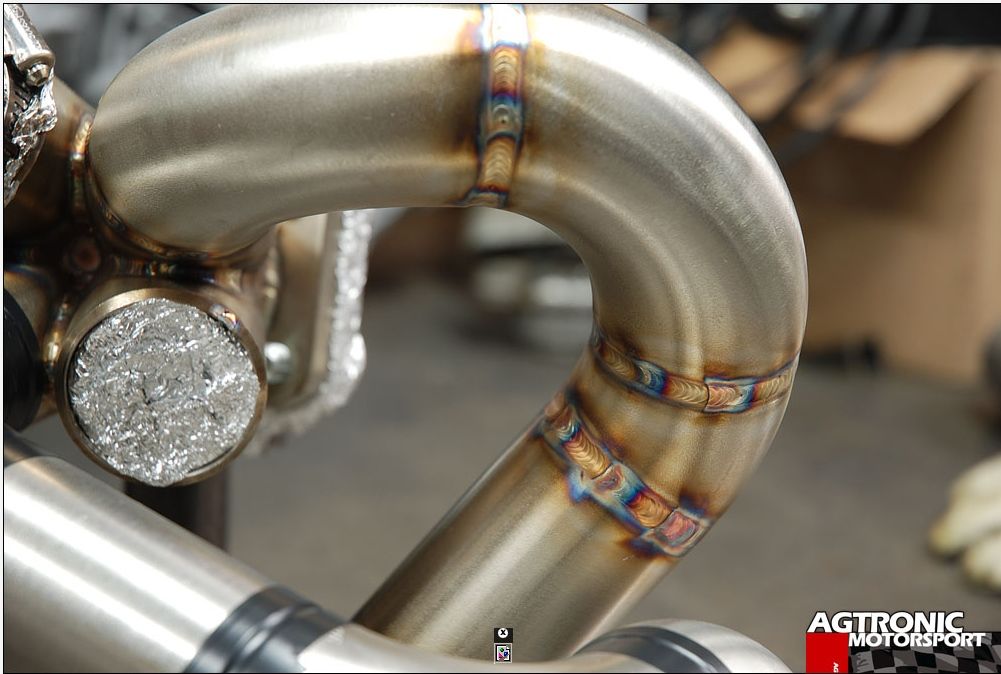
Greg you're definitely welding better than I did the first time. You're definitely still frying that stuff as already noted. Your weld stainless welds should have some nice blue hues in them at the start and remain shiny as you work away from the start point when you have proper heat. You appear to be too far away with the tungsten though as I can see the sugary dull gray area protrudes well beyond your weld puddle meaning you liquefied far more than you should.

Make sure that tungsten in super sharp. Like a damn tiny ice pick.

Also make sure your cap for back-gassing has a hole in it. The o2 needs to escape.


O and the 1 amp per .001 rule is mild steel. SS is way less. Although I would set the machine hotter than you want to run the bead in order to start the puddle quickly to prevent any heat soak and then back off it as you continue laying the bead.

O and also just do the 5 ticks technique, dont try to work around the pipe it takes years of experience and even then most guys dont do it. Just start a puddle and travel and tick off 5 dabs of filler. Stop, re-position so the next section is flat and start your next bead right on the heel of the end of the last. It actually looks really good.

Like this.

835a131de346fe6cd9a1e66c108dcf39.jpg
 
That looks like fun. I always enjoy learning something new and That's pretty common in this thread. :waytogo:
 
Drop your amps or Atleast with you foot, slow down use a little more filler rod.

I usually set my machine to 45 or so and live about half pedal.

I only use a shade 10 gold lense. The gold reflects the light back into your work space and provides a very clear window. I hate the typical green lense/auto dark for that reason. Nothing come close to my gold lense.
 
Why not jug MIG weld it?

Martin

Why build headers? Why mog9s? Why do any of this?

Tig welding is the most visually pleasing weld one can do and happens to have the side benefits of 100% penetration and the least heatsoak making it the strongest weld going.


Once you get into tig welding things, even good migs start looking ugly to you. Plus all that ugly bulk in the weld. Its one thing doing a joint, or open root but mig welding closed root butt joints is just fugly.
 
I really like to get welding. I'm not overly good at it but I like how it's like you are really telling the metal what to do. Mig isn't as precise. You can move your puddle .010" to the left or right or whatever you want! It's like a detailed version of welding. Anyway, it's fun.
 
Great advice everyone! :bow:

I made a few adjustments to my setup and technique....

Today's progress:


:waytogo:

I pulled the tungsten in to about 1/8" stick out. Kept the amperage at 45, and got the tungsten a LOT closer to the part. I was miles away last time. The #10 shade seems to help me see the puddle better too.

I've been mostly doing "no filler" so far today just to practice travel speed and dragging the cup along to part for extra stability. I've dipped the tungsten about 4 times so far!!!! :haha:

-G
 
This build is always fun to watch! Awesome seeing all your practice shots also, keep it up man :waytogo:
 
This build is always fun to watch! Awesome seeing all your practice shots also, keep it up man :waytogo:

Thanks...

The "tuition" got a little painful today:


Safety first, kids! :)

-G
 
Been there. Now it is hard to weld for days. I wear thin deer skin gloves when tigging. Has save my hands a number of times.
 
Sorry about the burns but as you know nothing new. If your're welding your getting burned in some way usually lol. Stoked for the progress brother. I agree with cyberfire. Little hot needs more filler. Get really comfortable and relax and take your time. Heat dab move heat dab move heat dab move heat dab move.... Move in 1/3 weld pool diameter increments for that tight dime stack. I know you already know all this. Just ramblin lol. Good luck brother! :waytogo:
 
Its looking a lot better with the heat. Have you tried a gas lens? I bought a stubby gas lens kit from HTP and not only is is much shorter but the gas lens gives you better coverage for stainless.

And yes, make sure you poke a hole for the air to escape the purge. Also, the hole should be at the highest point if possible. Argon is heavier than air so treat it like water in the purge.

I like the thin TIG gloves, fit them snug.
 
I like the thin TIG gloves, fit them snug.

For TIG gloves I generally just go with the Harbor Freight super thin goat skin gloves. They are cheap and with the thin gloves it seems when you get them too hot the tips of the fingers shrink so at this price I can treat them more like throwaways.
 
2015.08.10 - UPDATE! - MORE TIG TIME...!!!!!


It's hard for me to spend a whole day just "practicing" a new skill, but I knew that there really wasn't much point in moving forward until I got a better handle on my TIG welding. I got quite a bit of good advice from everyone here, so I decided to do some experimenting and see if I could get my mistakes sorted-out.

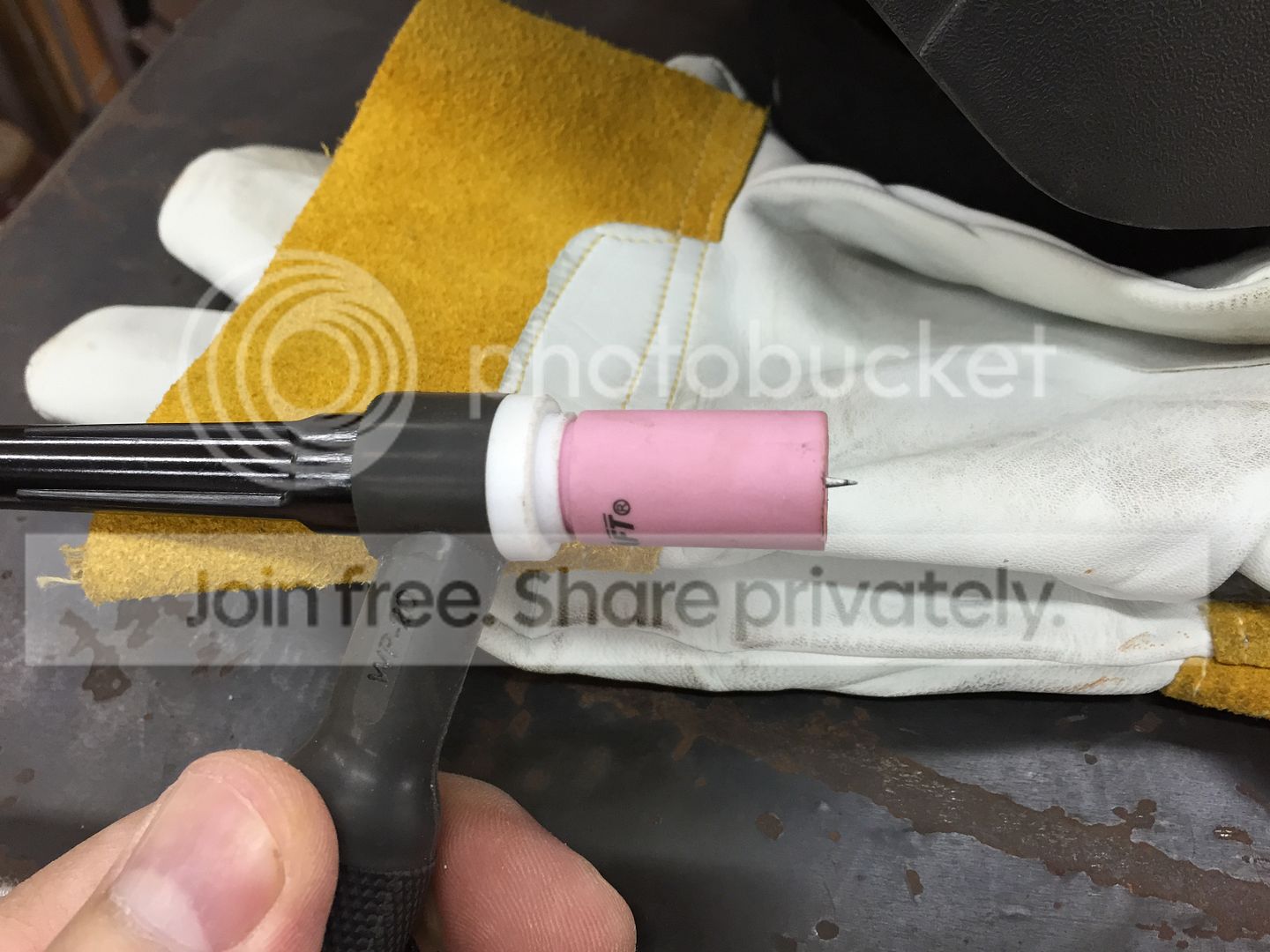
The first thing was to address the most glaring issue. I was using a LOT of stickout on my torch.... I think this was just a habit from MIG where I would start my welds with around 3/8" of wire sticking out from the nozzle before starting a new weld bead.

As you can see from the photo below, my gas lens is pretty small so at 20CFH of Argon flow, I probably didn't have a very good shielding cloud which was leading to those crusty, gray welds.

I pushed the tungsten in so that the stickout was only around 1/8" and sharpened it to the best point I could muster.

IMG_5899.jpg


I also figured out that my distance from the workpiece was WAY to large as well. This caused the arc length to be a lot bigger than it should be (which has the side effect of making the arc bigger and brighter and making it hard to see the puddle and details of the weld)... Being that far away makes it even HARDER for the argon to protect the weld, so I think the combination of those two things were really hurting my efforts.

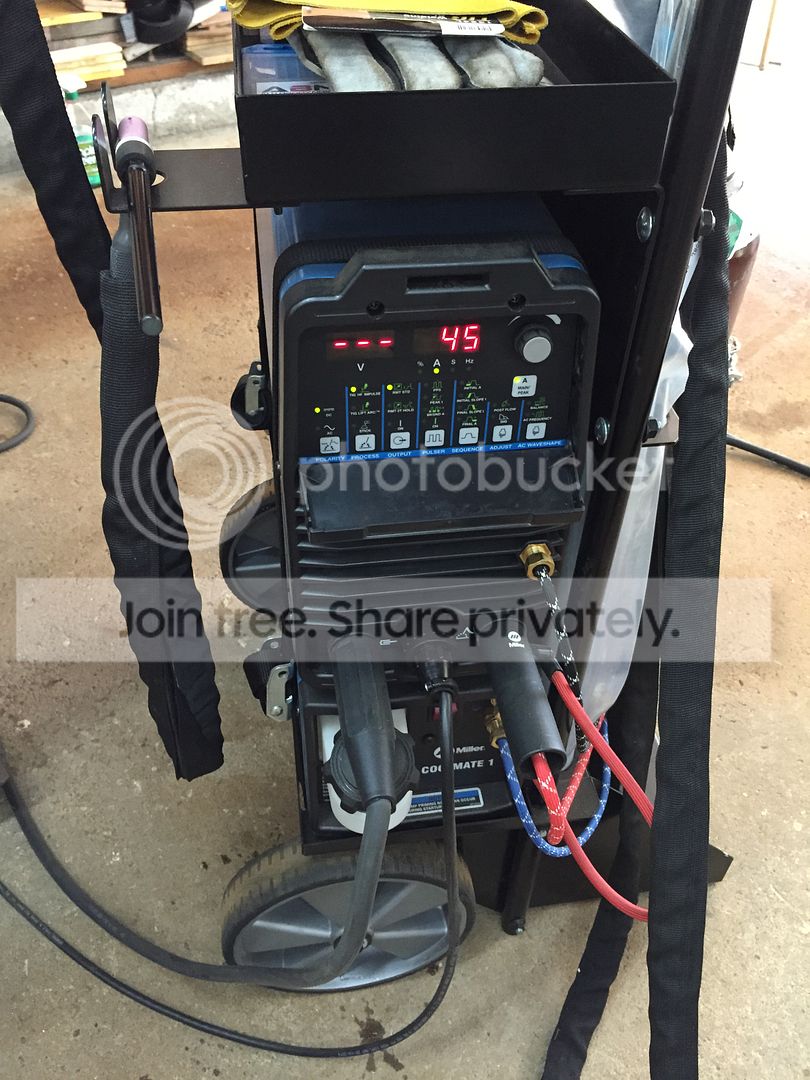
This is the TIG setup. I left most of the settings alone and only adjusted the amperage knob. Everything else is basically "off" or at "default" settings.

IMG_5920.jpg


I had a big pile of 304 stainless coupons from a local metal fabrication shop, so I decided to just sit down and work on one specific skill at a time. With a simple butt-joint and NO FILLER rod, I just practiced getting the arc really close to the workpiece, and trying to see the puddle melting so I could step the torch forward in small steps.

Here's the first coupon:

IMG_5900.jpg


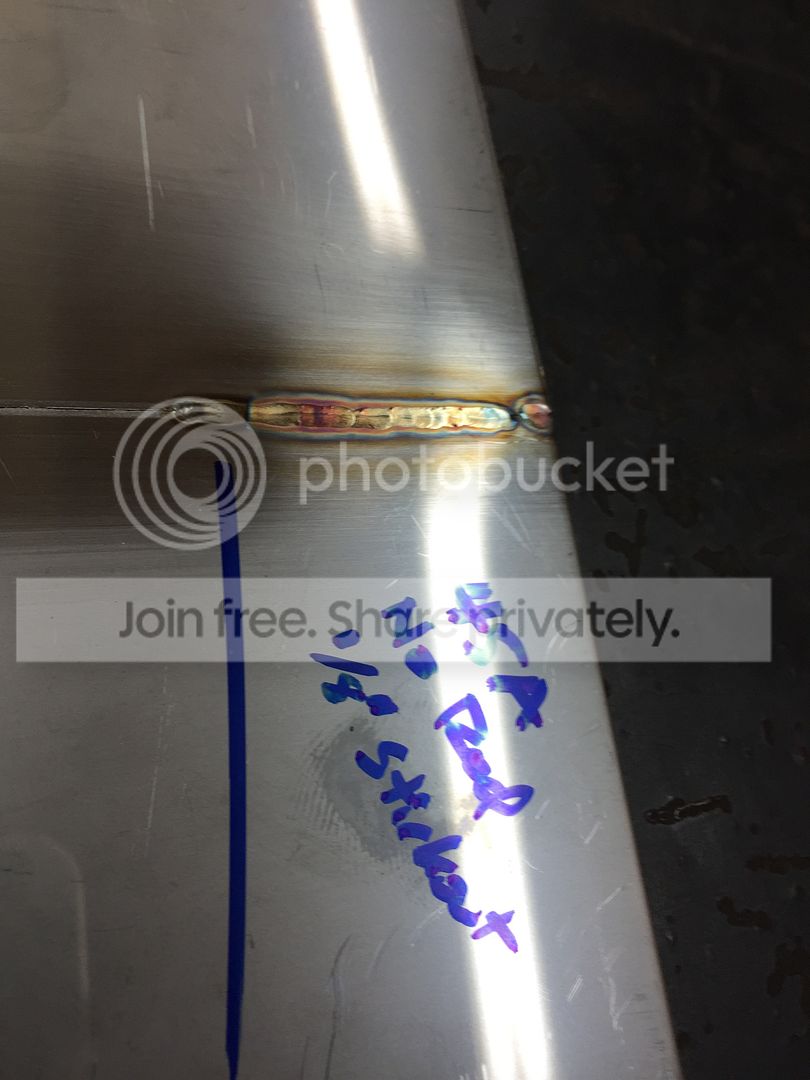
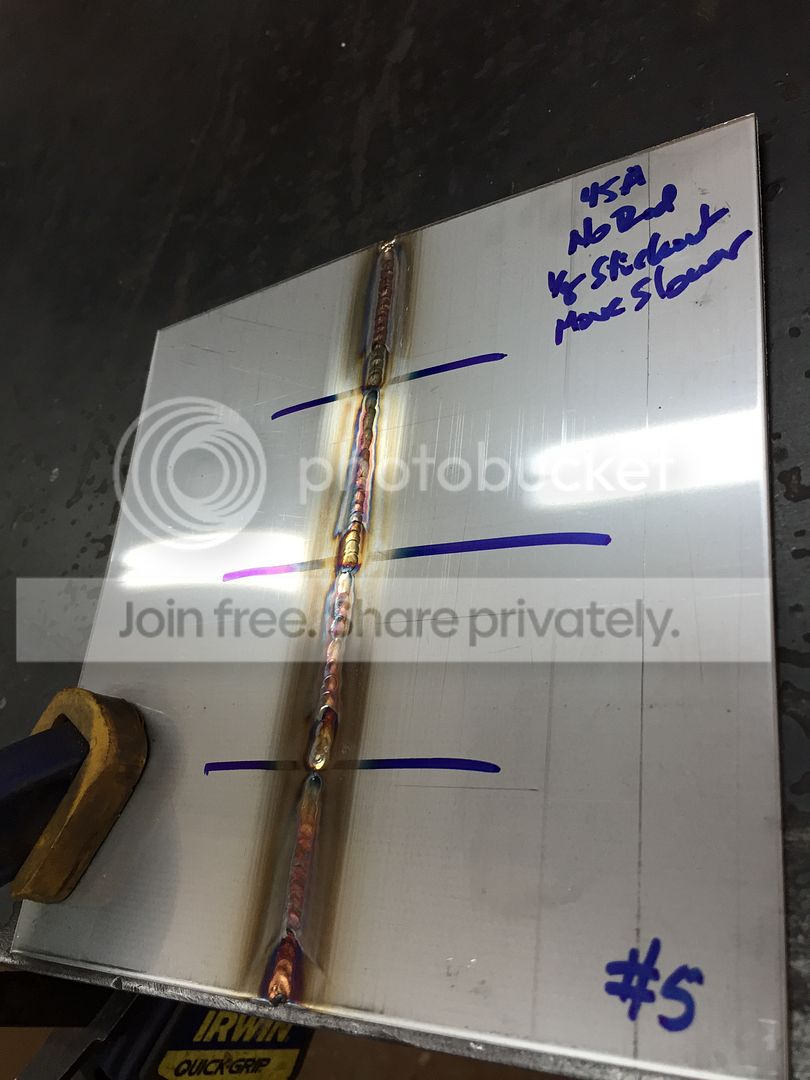
The coloration was immediately a LOT better... no more dark, sugary gray welds... they were more of a nice shiny orange. I would run about a 2" pass, then stop when I got to the blue Sharpie line and let the purge gas flow for a few seconds once I released the pedal. The gas kept the weld really clean at those spots and the weld (in that last 1/2") was usually a nice silver color.

I did several coupons and went up to 50A to see what that looked like, and I tried a small pass with .030" filler rod, but it was just too much to do at one time so I went back to simple fusion welding (no rod) to continue my practice. One thing I realized is that if you can keep part of the cup against the workpiece and drag it along, its REALLY easy to maintain a tight arc during the weld... that's not to say that I didn't "stick" the tungsten a few times (I DID!!!) but I think that just shows that I was getting more consistent about being in the correct "arc zone" for TIG welding. :D

Here's a shot of Coupon #5:

IMG_5922.jpg


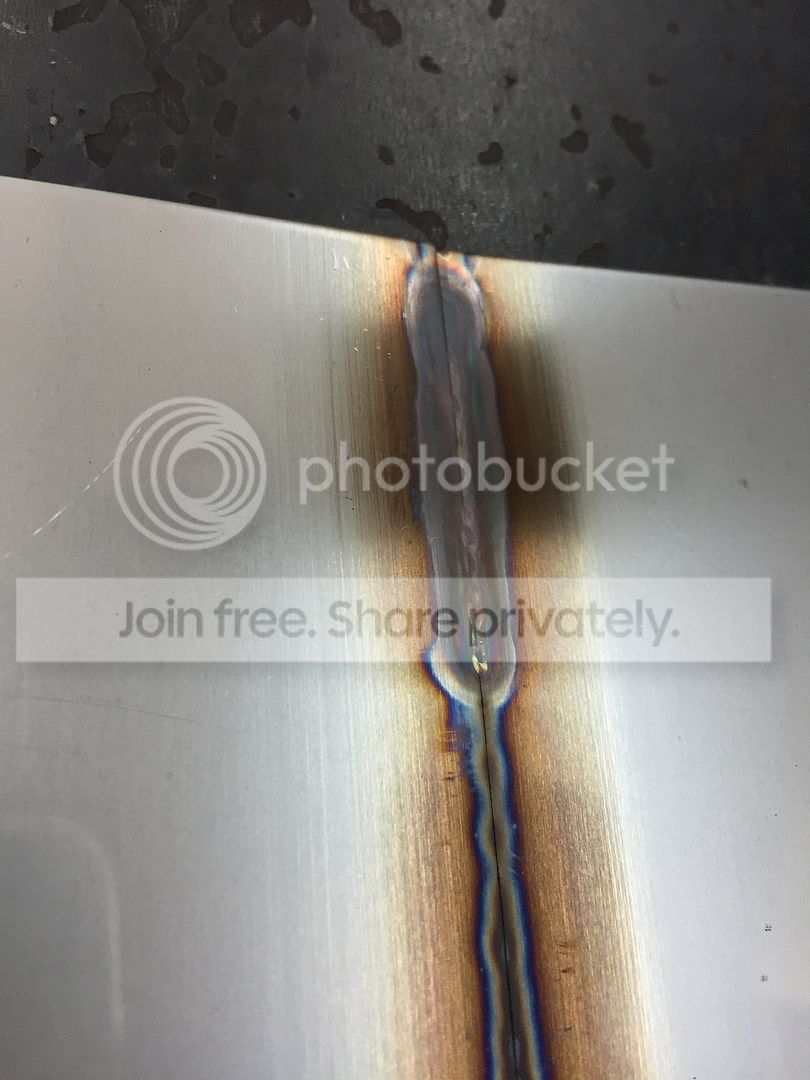
Each time I completed a coupon, I tried to study it to see if I could identify the problem areas and understand what caused them. I would occasionally see a "hole" in the middle of a nice weld bead, which makes me think I was moving too fast and not allowing the parent metal to melt and flow into the center completely. So I kept telling myself "SLOW DOWN"!!! By the fifth coupon, it seemed like I was getting a good travel speed and I felt like I was "seeing" the puddle a lot more clearly.

This is the backside of the #5 coupon. It looks like the slower travel speed is really helping me to get 100% penetration (or close to it) even at only 45A in 16GA metal. Considering that I wasn't using any filler rod, this seemed pretty impressive... and it illustrates why REALLY tight fitment joints are important with TIG.

IMG_5926.jpg


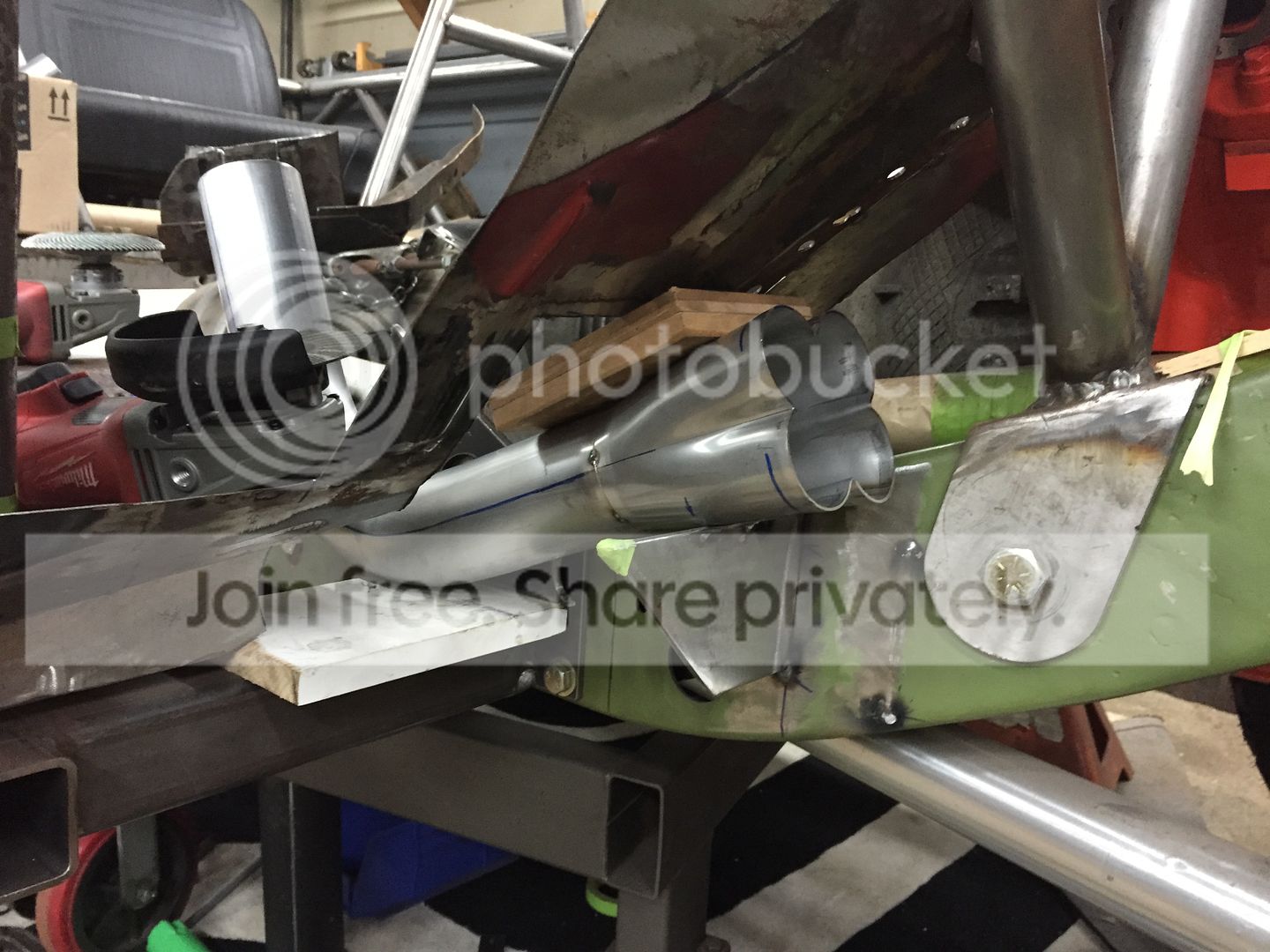
By the end of the day, I was getting pretty bored with just welding coupons so I rewarded myself by tacking a few small bits of the 304 stainless exhaust together and dropping them into place....

IMG_5936.jpg


As you can see the mild-steel header has been removed from the truck, and I'm now taking notes on the number of bends (and angles) for each exhaust port, so that I can transfer those dimensions to the new stainless material. I did just a small amount of that last night. I feel pretty good about my ability to tack-weld using TIG so even though I still have a LOT of practicing to do, I can at least make some forward progress on the exhaust mock-up as a way to break up the monotony of welding practice plates for hours at a time!!! :waytogo:


-G
 

Latest Posts

Top Bottom