CK5
Register an account today to become a member! Once signed in, you'll be able to participate on this site by adding your own topics and posts, as well as connect with other members.
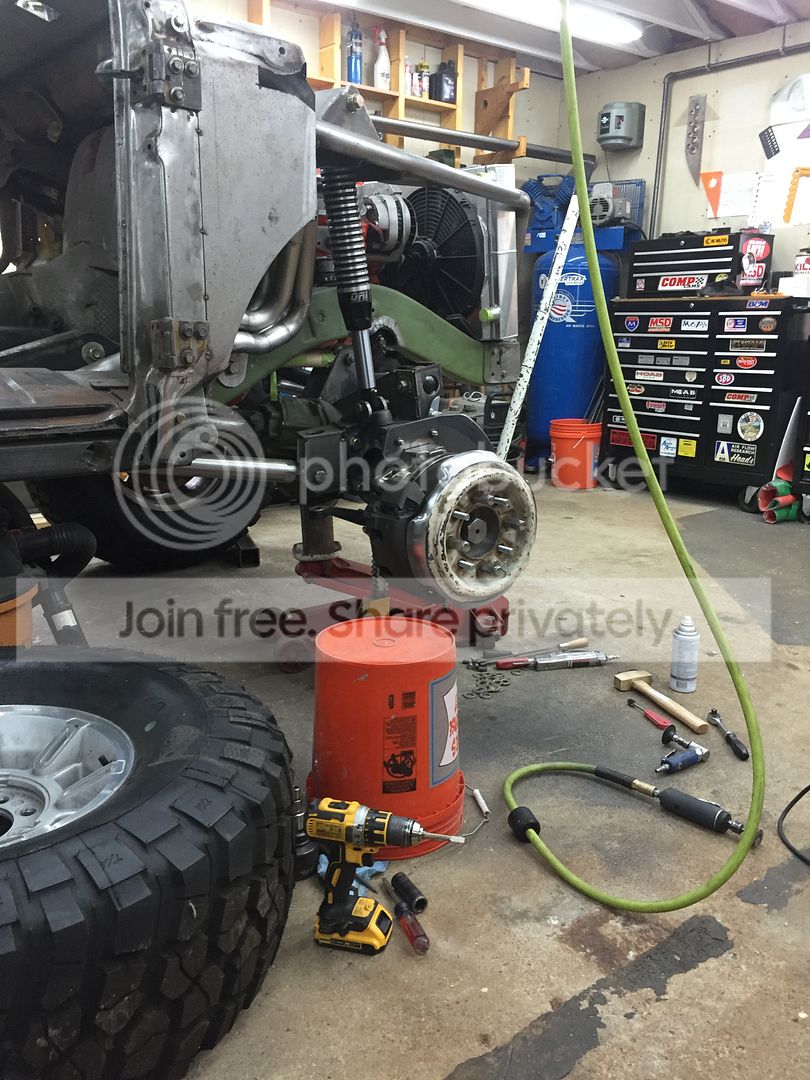
It's crazy how small those wheel centers look, bolted to the axle.
IMG_8997.jpg


Martin
 
FRIDAY BONUS MATERIAL:

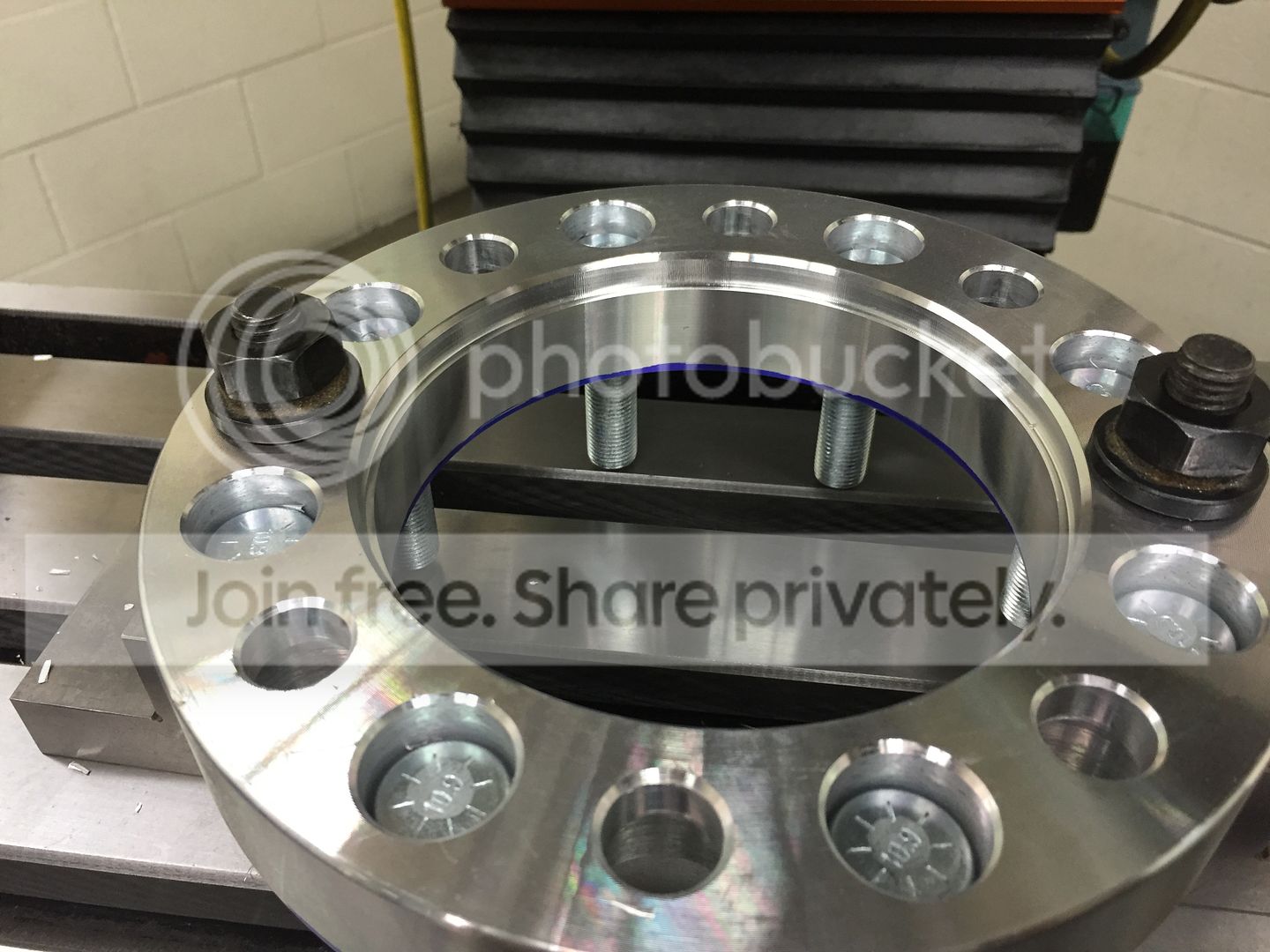
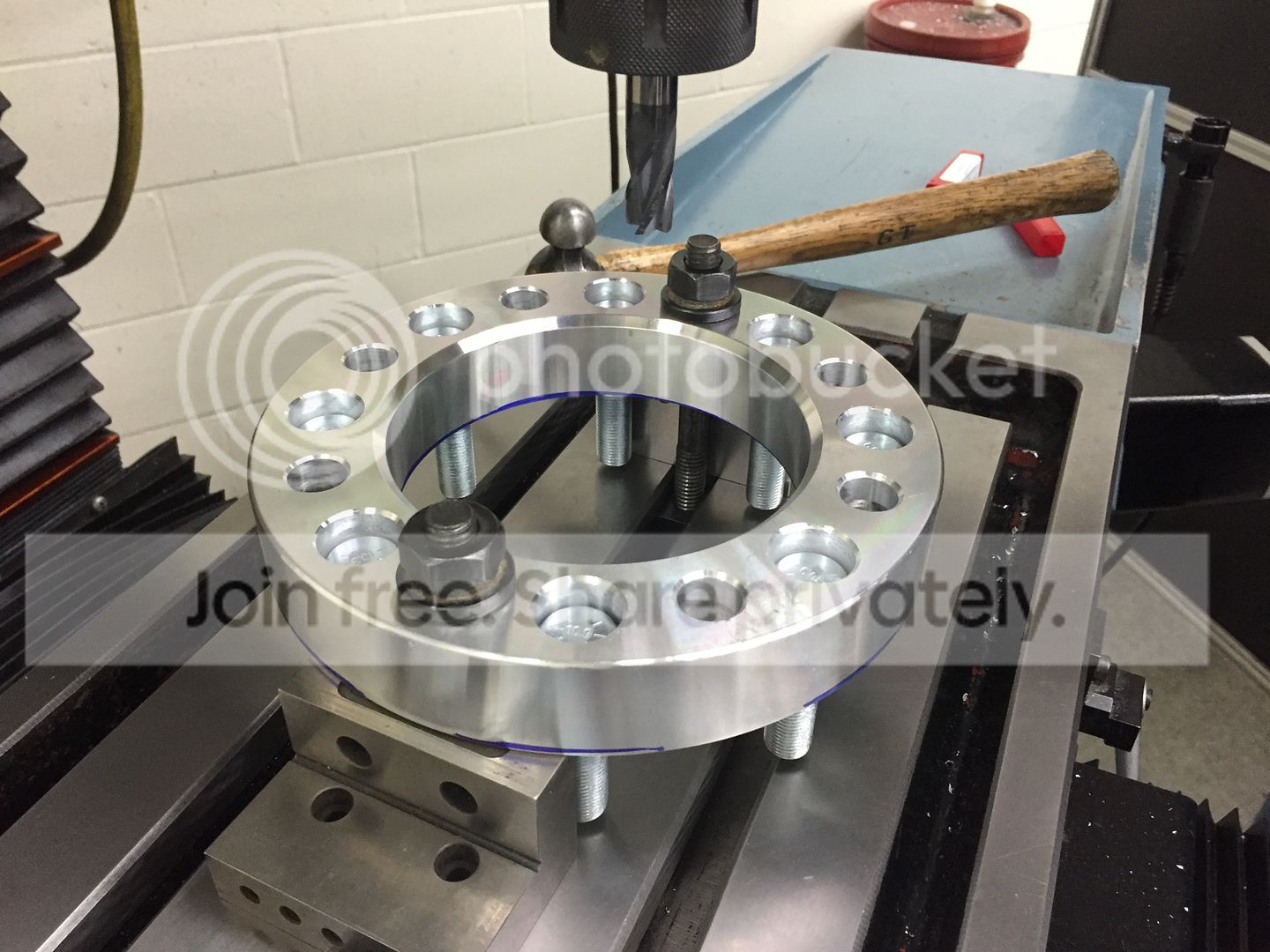
This week I also got some CNC time with a buddy of mine, and he helped me to open up the center bore to 5.125" on some wheel spacers that I needed for my Steel Wheels & Hubcaps project.


BEFORE:

4.970" bore....
IMG_8931.jpg


DURING:


AFTER:

IMG_8935.jpg


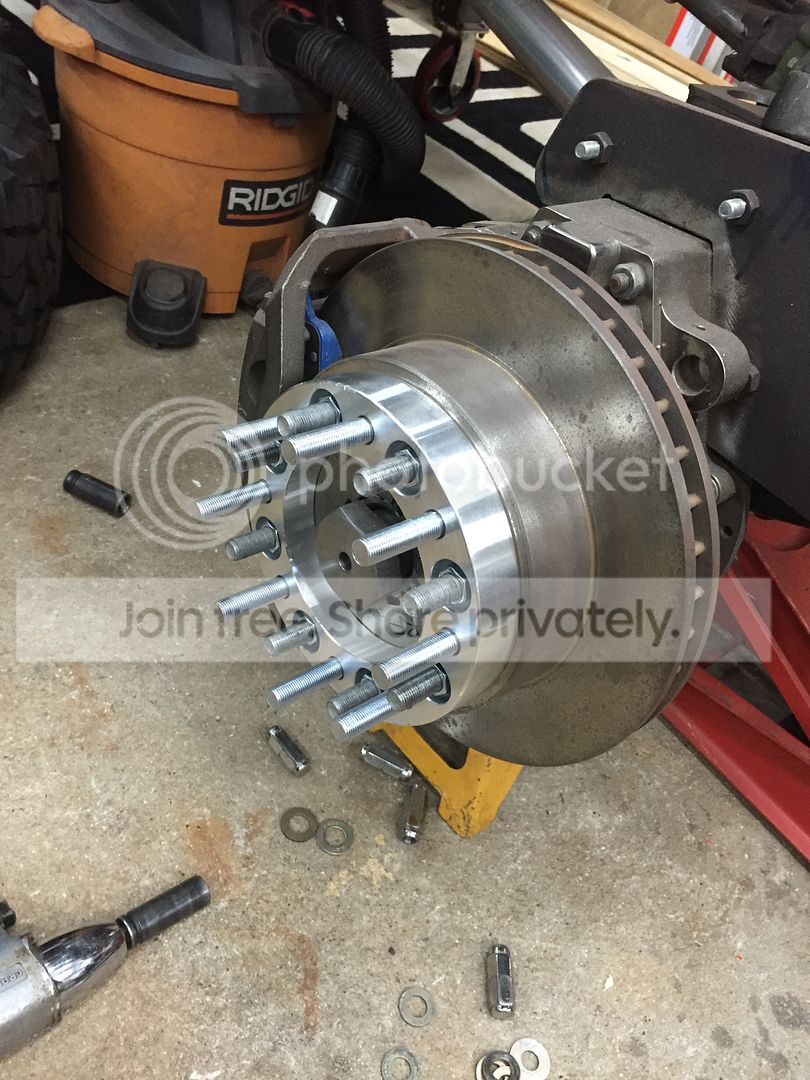
INSTALLED: :saweet:

IMG_8939.jpg


-G

Those rings look a little familiar
 
Are they so you don't have to press out studs for rotor replacement? Thats why I machined the rings I made a long time ago. They look identical.
 
Are they so you don't have to press out studs for rotor replacement? Thats why I machined the rings I made a long time ago. They look identical.

Rob, these just bolt onto the existing studs that are part of the eXaXt 8-Lug conversions I purchased.


For a rotor swap:

1. Disconnect the CTIS airline from the tire valve
2. Unbolt the wheel/tire
3. Unbolt the 1.25" adapter and remove more CTIS airlines
4. Unbolt the caliper and hang with bungee cord off to the side
5. Remove brake rotor....

Easy-peazy!! :haha:


-G
 
2016.03.29 - UPDATE!!! - FLOOR MODS BEGIN...!!!

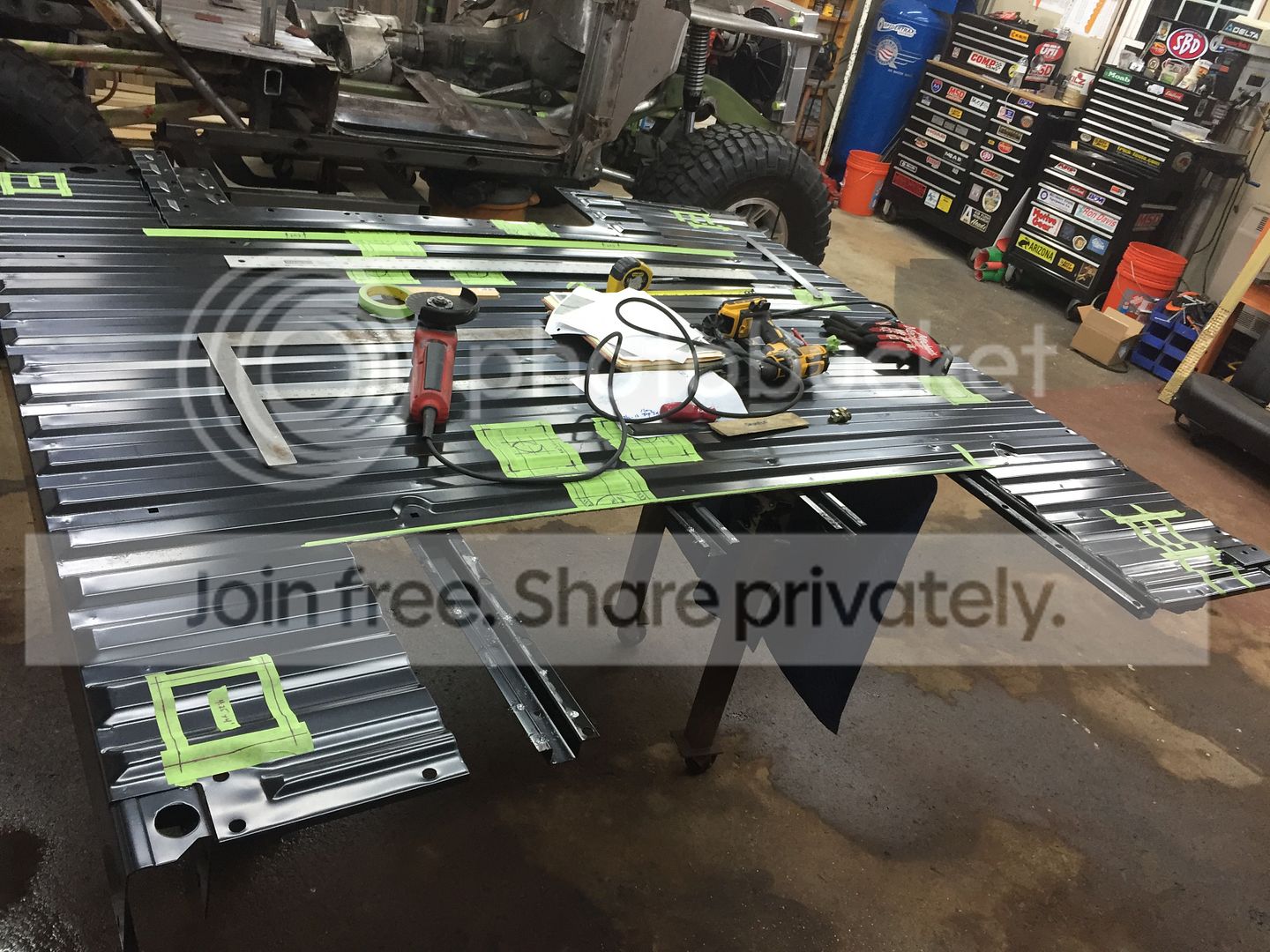
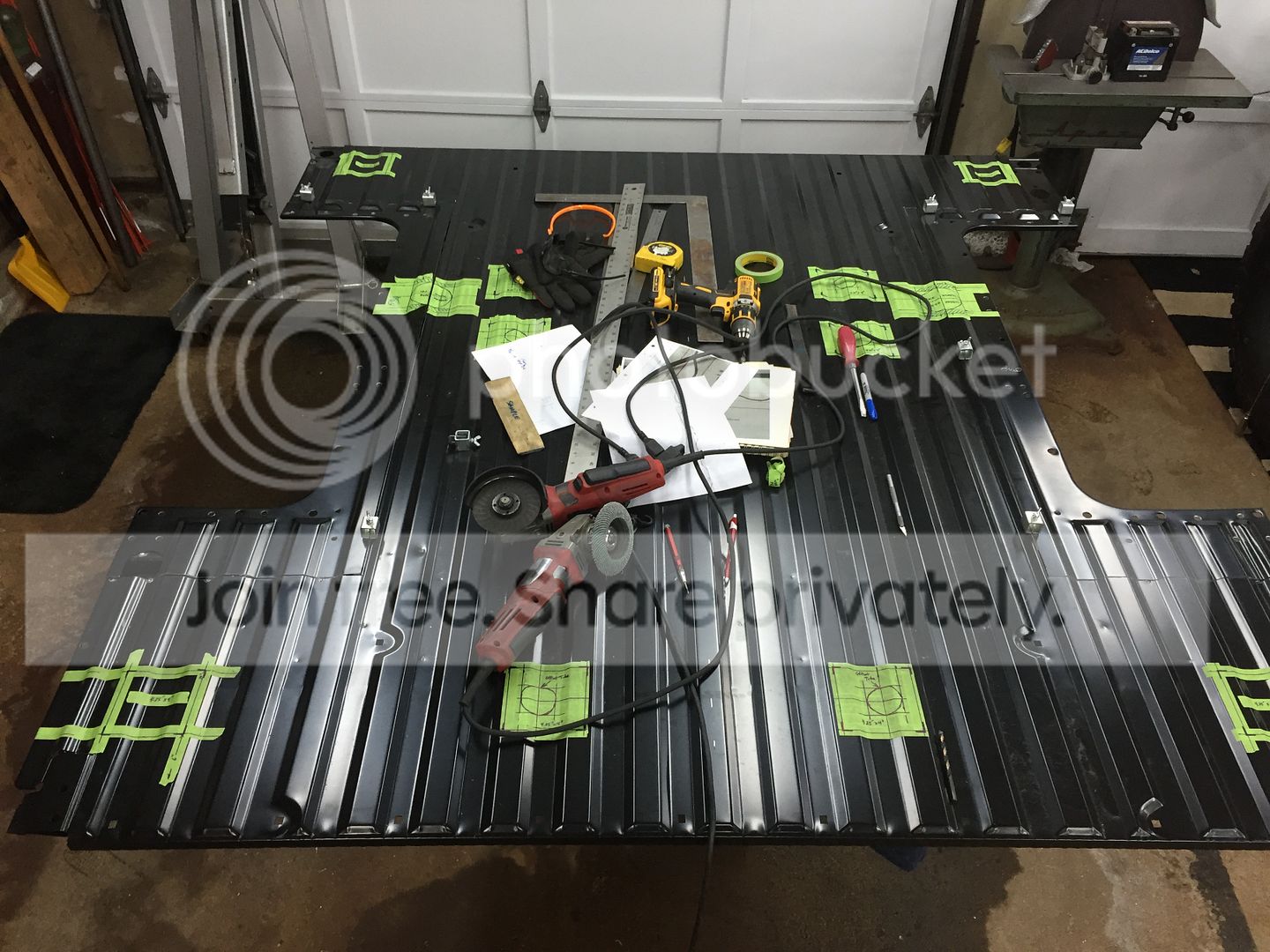
I've been looking at it for a few days....measuring a lot, and double-checking my work. But last night I had to just dig in and start carving up that new bedfloor or this project will never move forward.

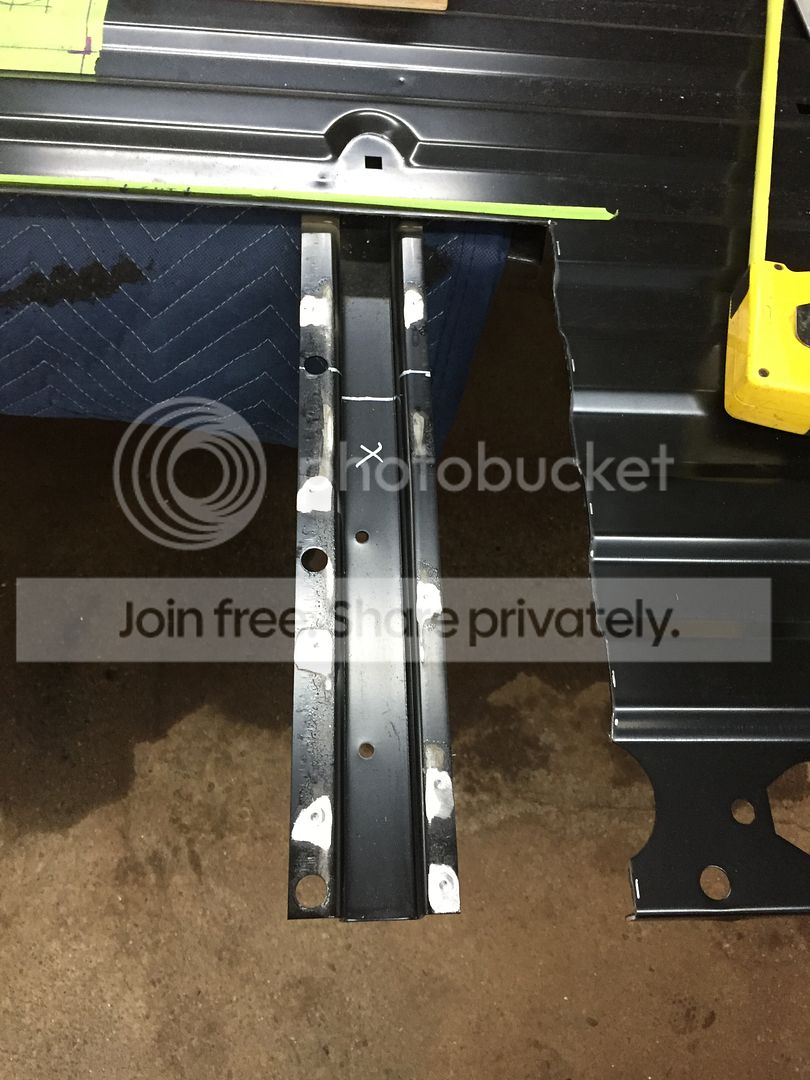
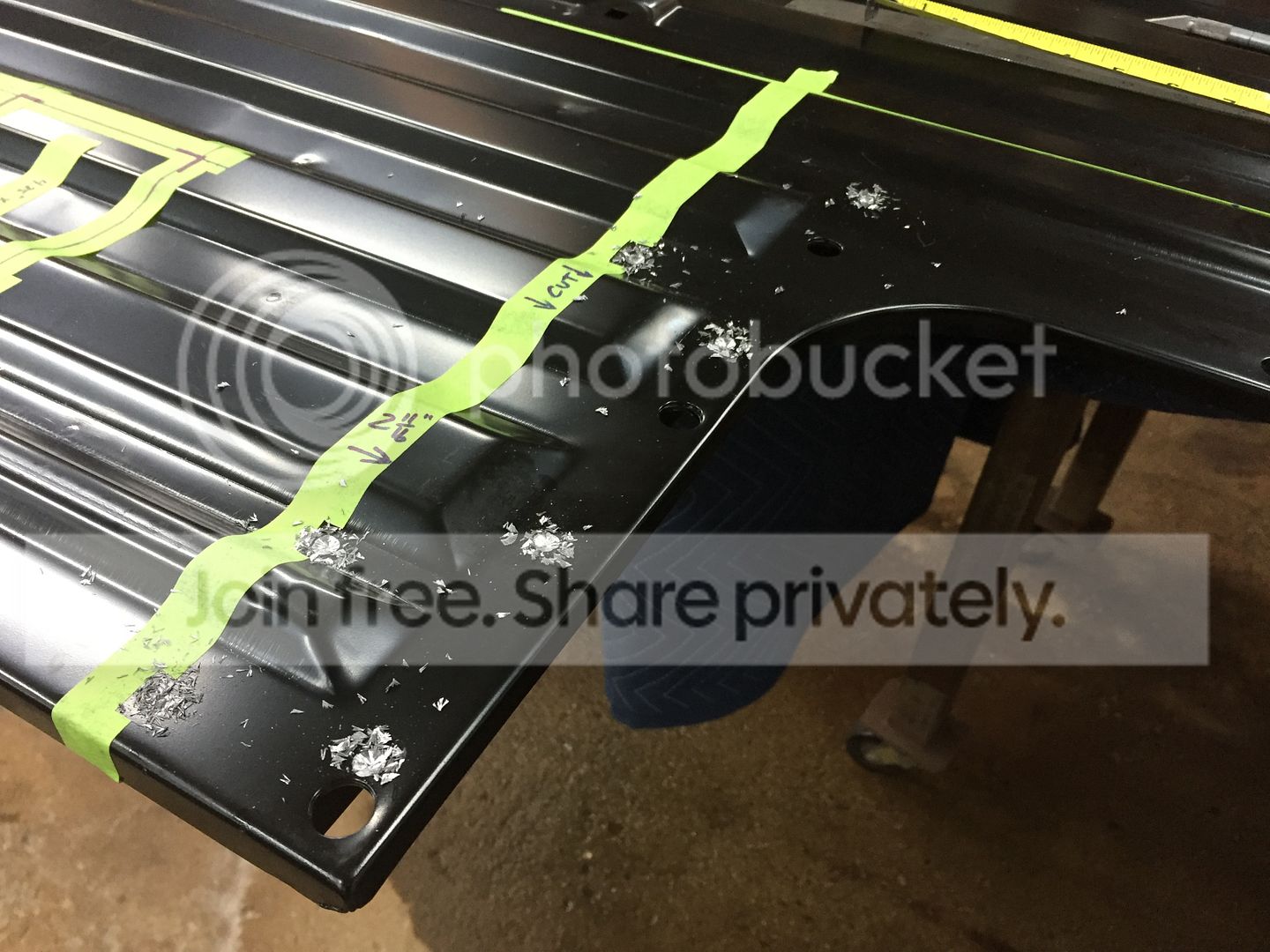
Start by carefully drilling out about 50 spotwelds....

IMG_9212.jpg


Then break out the 4-1/2" angle grinder and load it up with a fresh Walter disc. Cut slowly, and try not to breathe... and keep those cuts STRAIGHT!!!

IMG_9220.jpg


After about 30 minutes of slow, deliberate work this is reward:

IMG_9229.jpg


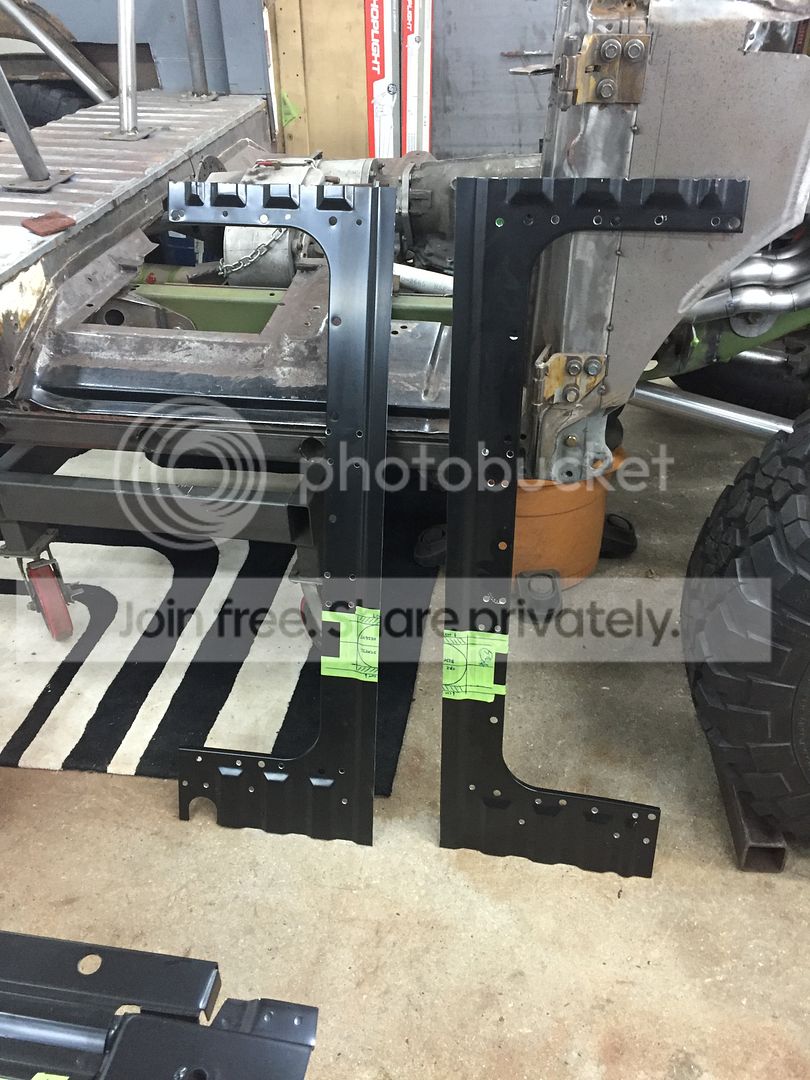
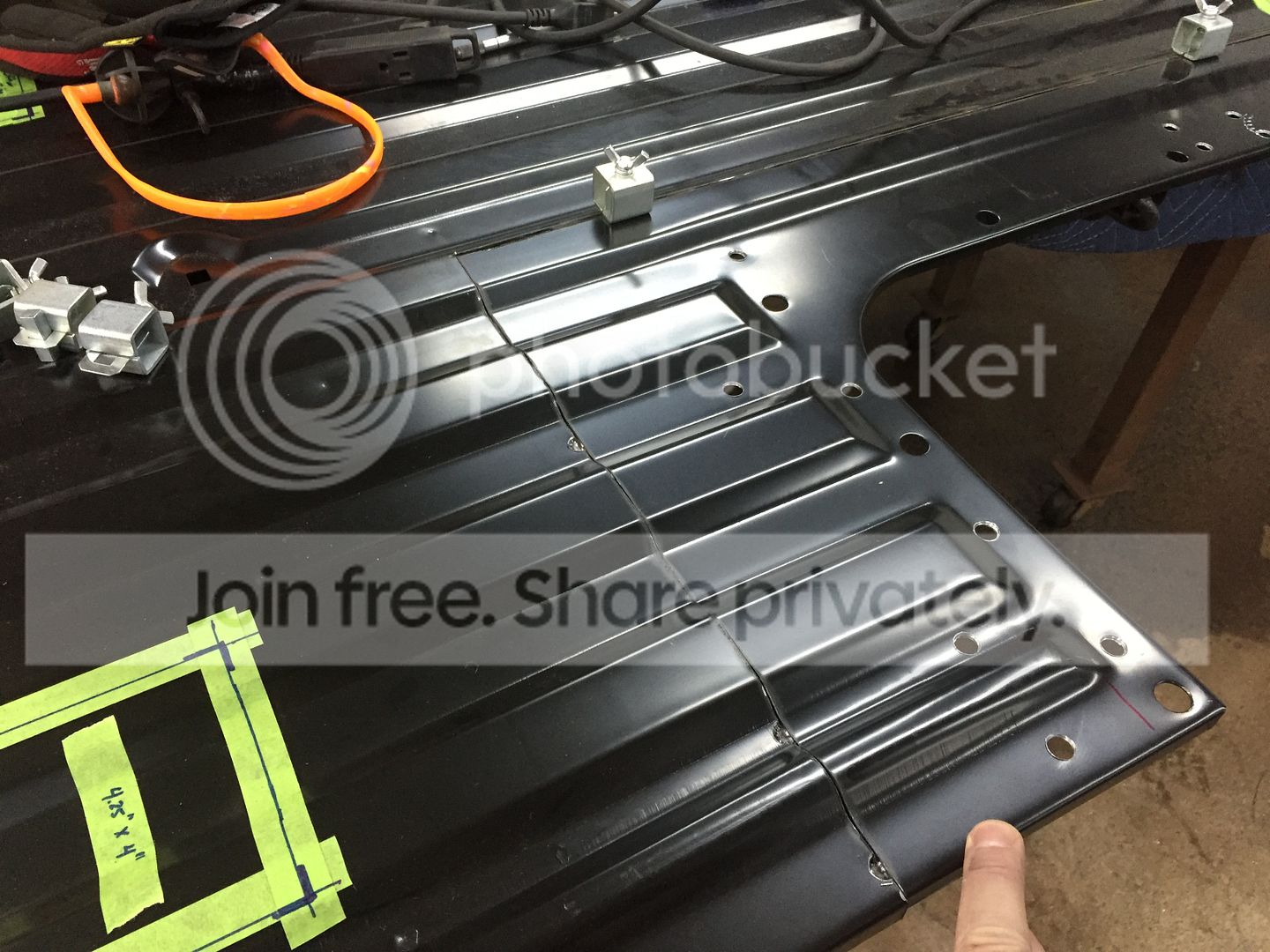
You can see the "offset" that was planned into those wheeltub cuts. There's an extra 3.5" of material on one side vs. the other... and that's what allows me to simply "flip" the part to the opposite side of the bedfloor as a perfect patch without doing a bunch of other filler-panel work (which would have been required if I just did a symmetrical cut on both sides of the wheeltub). The panels lifted off cleanly, and the only thing stopping them from dropping right back down into place was a rear cross-sill that was now inside the wheeltub instead of beside it.

IMG_9237.jpg


Cut that back to match the other two cross-sills and then dropped the panels back into their new homes. The end result was just as I expected:

IMG_9241.jpg


IMG_9245.jpg


All of the convoluted sections lined up nicely and the gaps all the way around the patches were nice and even. It should be a simple matter to start tacking these back in place and the end-result should be just about impossible to notice.

I'm tempted to try this sheetmetal repair with my new TIG, but I'm not sure if the panel gaps are too large or not... and I don't know what sort of filler rod is necessary for mild-steel. I'll think on that one a bit more, in the meantime, I can buzz a few MIG spotwelds around the parts just to hold them together to continue my mock-up work.


-G
 
Nice!
That turned out almost invisible.

Thanks.

Yep, now that I've got the parts flipped I can work on the last two cage mount points. There is a diagonal bar that runs from the horizontal bedside tube down to the top of the rockslider support. It sits just forward of the wheeltubs on both sides (now that they've been shifted!) so I can come up with a set of mounting plates for them.

As you've probably guessed, I need to go back into my rear cage and Sawzall a total of 6 tubes that were direct-welded to the frame / or rockslider areas. Otherwise, the cage won't come out, and I'll never get this new floor to drop down into position. :D


-G
 
Tig is a bit more heat than mig, if you wanted to to tig, you could use silica bronze filler rod, manufactures are recommending silica bronze now for body repairs.

It is easy to weld with, I've fixed quite a few sheet metal cracks with it on custom motorcycles.
 
That turned out pretty slick. I thought you had to open up your wheel wells more towards the center too, or do you not need to do that anymore?
 
Tig is a bit more heat than mig, if you wanted to to tig, you could use silica bronze filler rod, manufactures are recommending silica bronze now for body repairs.
It is easy to weld with, I've fixed quite a few sheet metal cracks with it on custom motorcycles.

Hmmm... :thinking: I thought I'd read that TIG is nice for sheetmetal work because the weld is more malleable and tends to be less brittle than MIG? I had "assumed" that TIG would focus the heat more effectively and could also help prevent panel warpage. Do you typically still jump around with TIG and do small tacks all over the panel so that the heat is always spread around?


That turned out pretty slick. I thought you had to open up your wheel wells more towards the center too, or do you not need to do that anymore?

This is just "STEP 1"... :D

I did a lot of checking when I cycled the rear suspension, so the rear seat (and wheeltubs) shouldn't have to get any narrower. The only thing I may have to do is slightly open up the inside corner (where the wheeltub meets the floor) and create a bit of a diagonal sheetmetal enclosure.... maybe 3" high and 3" into the floor area for the upper link mount. It should all fit underneath the seat frame so I shouldn't have to modify the seat at all... hopefully.


-G
 
Hmmm... :thinking: I thought I'd read that TIG is nice for sheetmetal work because the weld is more malleable and tends to be less brittle than MIG? I had "assumed" that TIG would focus the heat more effectively and could also help prevent panel warpage. Do you typically still jump around with TIG and do small tacks all over the panel so that the heat is always spread around?

-G

Ive never had a issue with anything mig welded being brittle, in my experience tig welding builds heat when starting the puddle. But if you panel fitment is nice it can start quick (or start on a tack) and with silica bronze it doesn't take as much heat to maintain. Tig is considerably easier to grind and Prep. The last chop top sedan I did I used a mix of tig and mig, mig on the bigger easy to get to sections, still jumping around and tig on the tight hard to grind areas. In your case with the floor I think I'd tig weld the extruded floor areas, mig weld anything easy. I usually run a 1/2" to a 1" so at a time, move around and watch the panel, try and use the weld to your advantage, hammer and dolly what you can.
 
The properties of the weldment are dictated by the filler material and the base material. MIG weld on mild steel with an E70s filler and the weld will be identical to a weld done with TIG and a mild steel filler rod. TIG has wonderful control, however IME it puts more heat into the piece than MIG does. My method is MIG with the heat set "too hot" for sheet metal. I subscribe to the 'million tack welds'. I want my tack hot enough to get full penetration in a few tenths of a second without burning a hole. Then it's the standard skip around tedium we're all familiar with. My theory is get the tack weld done really fast not allowing the surrounding metal to get too hot. I usually see a pretty tight HAZ. Smaller HAZ,= less warpage.

Your floor should stay pretty flat due to the forming adding rigidity you wouldn't see on most body panels...
 
Thanks Rene... I'll just stick with MIG. It's a learning curve I've already traveled. :)

You might have noticed that when I made my long longitudinal cuts, I kept it within about 1/8" of the raised bed floor stamping. The idea is to use the strength on that corner seam to resist warping from the tack welds...

Guess I'd better put on my "grubbies" and head out to the garage to find out! :waytogo:


-G
 
Thanks Rene... I'll just stick with MIG. It's a learning curve I've already traveled. :)

You might have noticed that when I made my long longitudinal cuts, I kept it within about 1/8" of the raised bed floor stamping. The idea is to use the strength on that corner seam to resist warping from the tack welds...

Guess I'd better put on my "grubbies" and head out to the garage to find out! :waytogo:


-G

I did notice where you made the cut, and silently applauded your foresight. :D
 
for those of us unfamiliar...Rene' what is HAZ?
 

Latest Posts

Top Bottom