CK5
Register an account today to become a member! Once signed in, you'll be able to participate on this site by adding your own topics and posts, as well as connect with other members.
Did I miss why you chose foam over fiberglass?


I've already got an attic full of moldy R-39 fiberglass..... that was my previous attempt that failed.

Apparently, the non-vented roofdeck combined with the high temperature differential caused moisture to accumulate as the cool air inside the garage met the hot air that was driving through the insulation in the summertime. All the paper got wet and eventually turned black and moldy. No Bueno.

I've been slowly removing the fiberglass as I go.... a vented roof deck is a much better way to deal with the summer heat, but the effort involved to create air passages with wooden strapping and foam sheets is not trivial. At least I've really been careful about getting all the small air gaps sealed along the way. It remains to be seen if a leaky R39 fiberglass is better than a well-sealed R-24 foam sheet setup... certainly, I will have solved the moisture issues.

I always have the option of doing ONE more layer of foam sheeting over the top over everything. The nice part of that is that it will lay on top of the rafters completely, so I don't have to to any fussy fitting and cutting into 14" wide strips like I've been doing. Just lay full-size 4'x8' sheets across the whole mess and foil tape the seams and that will put me at R-36.


We'll see....

I really want to get back to truck building, and exit the home renovation sideshow as quickly as possible.


-G
 
I've already got an attic full of moldy R-39 fiberglass..... that was my previous attempt that failed.

Apparently, the non-vented roofdeck combined with the high temperature differential caused moisture to accumulate as the cool air inside the garage met the hot air that was driving through the insulation in the summertime. All the paper got wet and eventually turned black and moldy. No Bueno.

I've been slowly removing the fiberglass as I go.... a vented roof deck is a much better way to deal with the summer heat, but the effort involved to create air passages with wooden strapping and foam sheets is not trivial. At least I've really getting all the small air gaps sealed along the way. It remains to be seen if a leaky R39 fiberglass is better than a well-sealed R-24 foam sheet setup... certainly, I will have solved the moisture issues.

I always have the option of doing ONE more layer of foam sheeting over the top over everything. The nice part of that is that it will lay on top of the rafters completely, so I don't have to to any fussy fitting and cutting into 14" wide strips like I've been doing. Just slay full-size 4'x8' sheets across the whole mess and foil tape the seams and that will put me at R-36.


We'll see....

I really want to get back to truck building, and exit the home renovation sideshow as quickly as possible.


-G

Ah, so the top side of the sheets are vented to outside? Those gotta be pics as good as all the other stuff.
 
Ah, so the top side of the sheets are vented to outside? Those gotta be pics as good as all the other stuff.

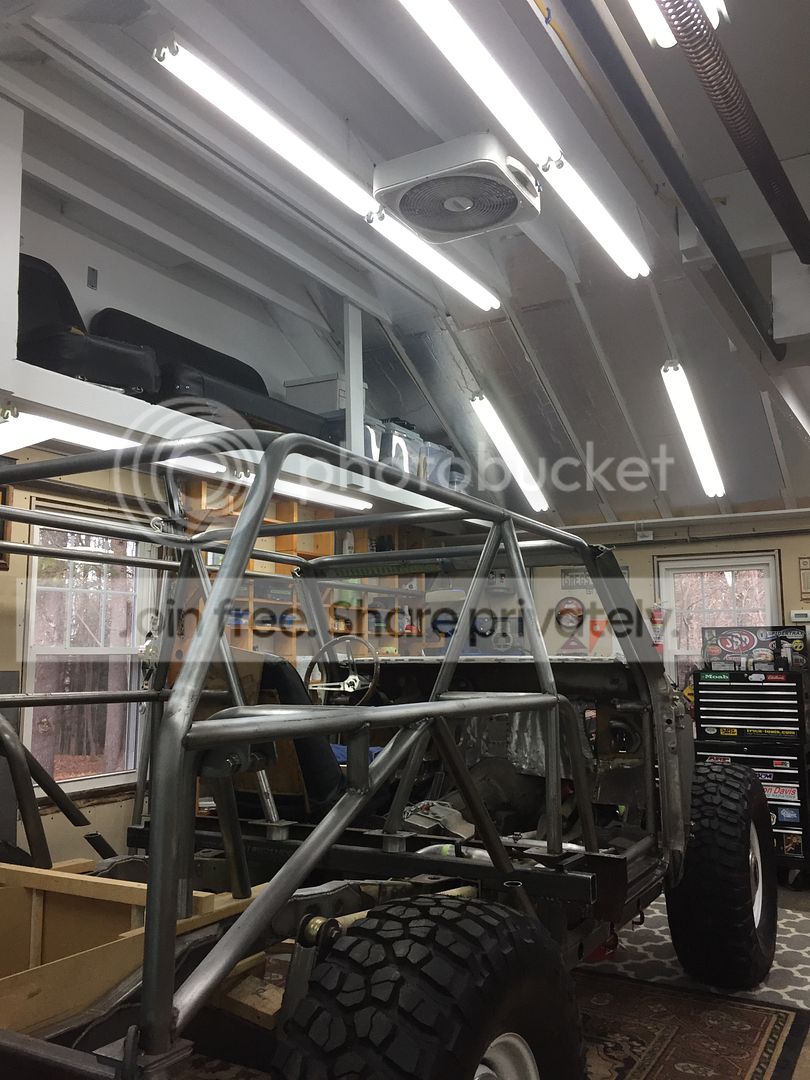
Look at this pic....


It's a little hard to tell, but the rafters are 2x10's and there is a visible space between the plywood on the roofdeck and the first layer of foam. It's basically a 4" air channel that will run cooler air from the soffits (once I cut vent holes and install bug screens!) all the way up to the peak of the roof.... I've got a big thermostatically controlled fan up there, so when the air is hot it will turn on and draw the cool air up both sides of the roof and push the hot air out.


-G
 
Look at this pic....


It's a little hard to tell, but the rafters are 2x10's and there is a visible space between the plywood on the roofdeck and the first layer of foam. It's basically a 4" air channel that will run cooler air from the soffits (once I cut vent holes and install bug screens!) all the way up to the peak of the roof.... I've got a big thermostatically controlled fan up there, so when the air is hot it will turn on and draw the cool air up both sides of the roof and push the hot air out.


-G
Makes perfect sense now.
 
2016.11.28 - UPDATE! - FUEL TANK!!!!


Happy Thanksgiving Everyone.... :D

I've been quietly logging hours in the shop doing "behind the scenes" type stuff to improve the workshop and hopefully improve my productivity in the coming months... :waytogo:

The upper mezzanine area is now complete, and fully-painted, with good insulation everywhere. I even blocked-off the stairwell opening with a removable double-thick foam sheet, so that I can retain the heat in the workshop instead of letting it all float upwards where it does nothing but melt the snow off my roof, create ice dams....and keep my takeoff parts warm! :haha:

There is still some good useful storage above the truck, but now I finally have enough overhead space to fully articulate the suspension (which will be useful when doing the fender mods and checking tire clearances) and I can pull the upper cagework up & out of the interior when it comes time (soon) to install the bedfloor and create the new transmission tunnel and front floors.

IMG_3746.jpg


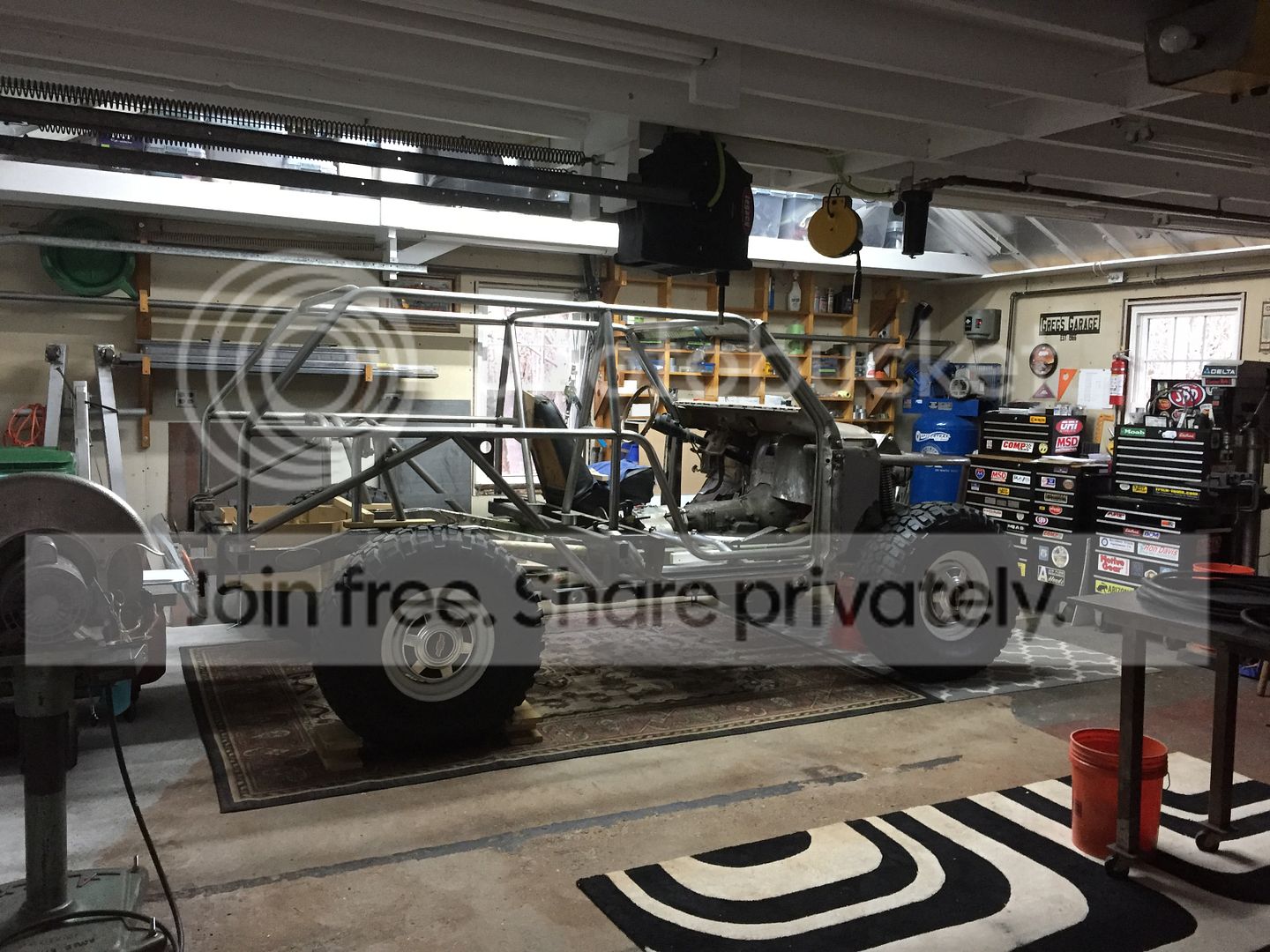
I also got a new (discarded) rug that is a little easier on the eyes than the crazy black/white "hippy modern" one that I've been using for the last year or so.

IMG_3747.jpg


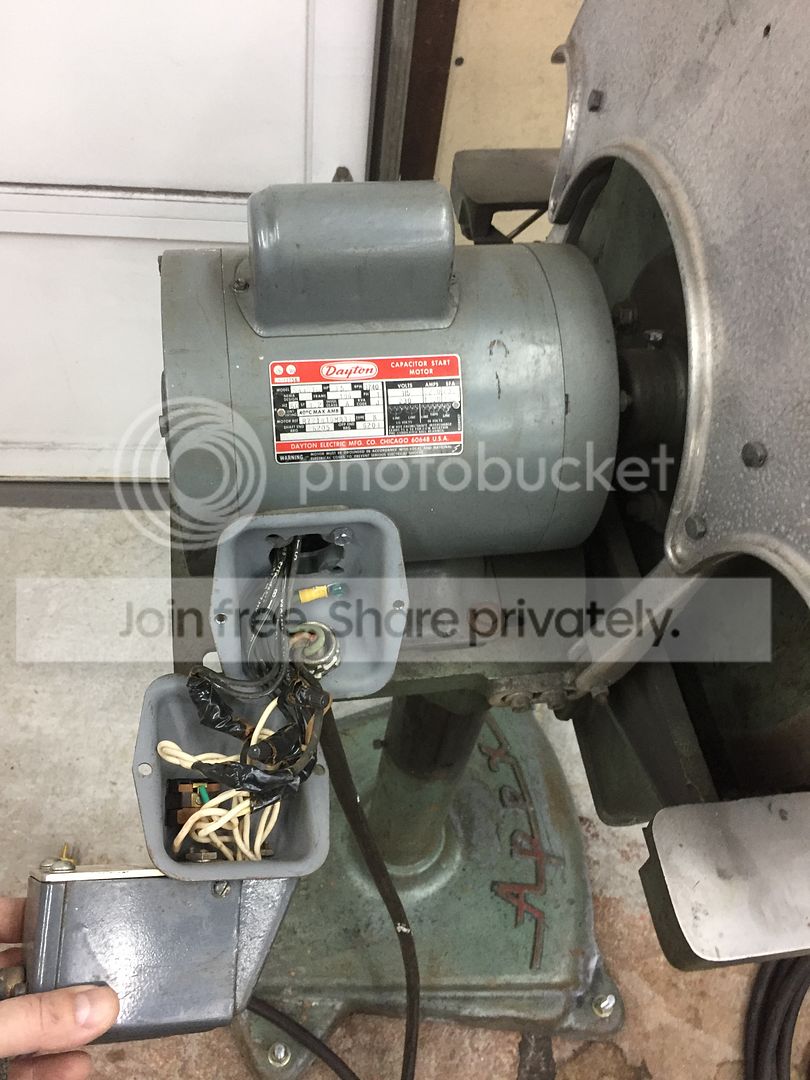
With that stuff complete, I turned my attention to another bothersome issue that I've been tolerating for a LONG time. The 20" APEX disc grinder that I use regularly is set up for 110V operation. Unfortunately, it pulls about 23A when it first starts spinning up.... and it's plugged into a 20A circuit. It blows the breaker just about EVERY time I try to start it, unless I play a game of ...."power on for 2 seconds...off for 5 seconds....on again for 4 seconds....off...on...off..... on...... " until I can gradually bring it up to full-speed where it will run on the 20A circuit. Even with that technique, the breaker in the panel would blow at least 50% of the time... so I'd be walking across the shop constantly to reset it and try again. :doah:

I briefly considered re-wiring the motor to 220V, but the motor also supports running in CW or CCW rotations and when I took a look at the amount of wires involved to get it converted it made more sense to just run a beefy new 110V dedicated circuit for the grinder..... so that's what I did.


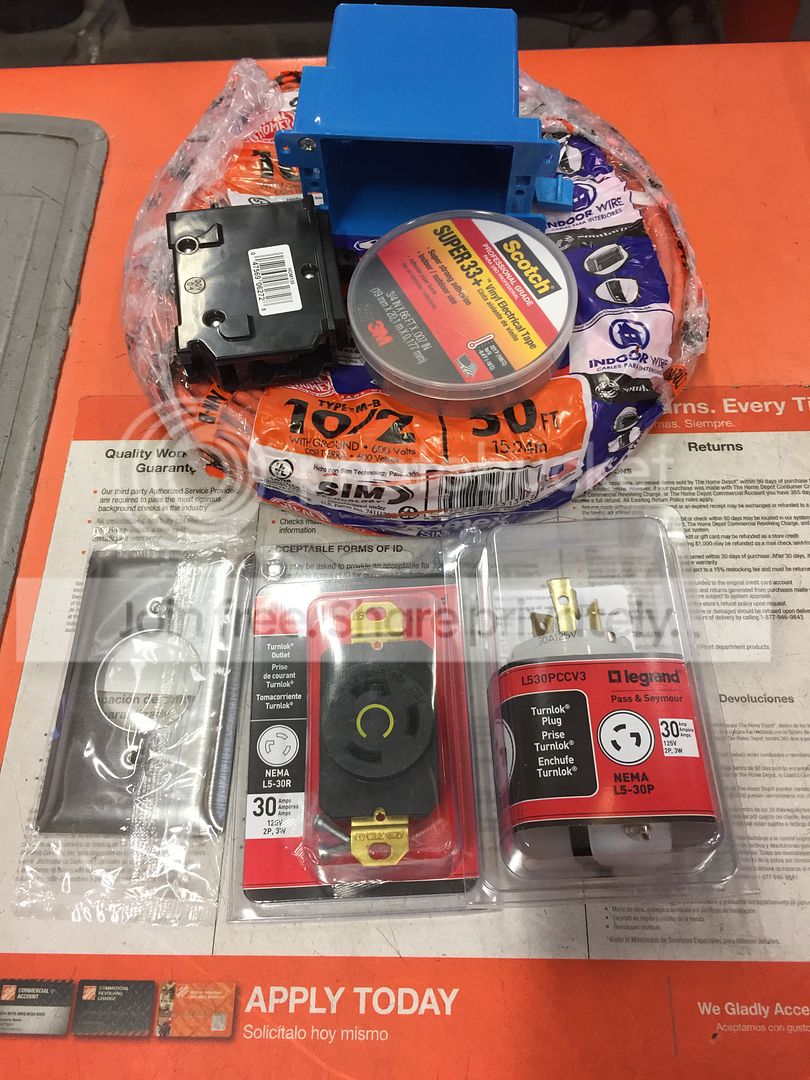
10/2 Wire.... and a 30A breaker and plug set:

IMG_3877.jpg


Works like a champ now!!! :waytogo: It's amazing how much nicer it is to just flip the switch and have the machine come up to full speed immediately.... no drama, no fuss. And no more excuses not to get back to work!!! :waytogo:


So yesterday that's exactly what I did.... :)

With the exhaust system coming along nicely, it makes sense to also get the fuel tank built and block-out that space underneath so that there aren't any surprises when finalizing the exhaust routing in the coming days/weeks.

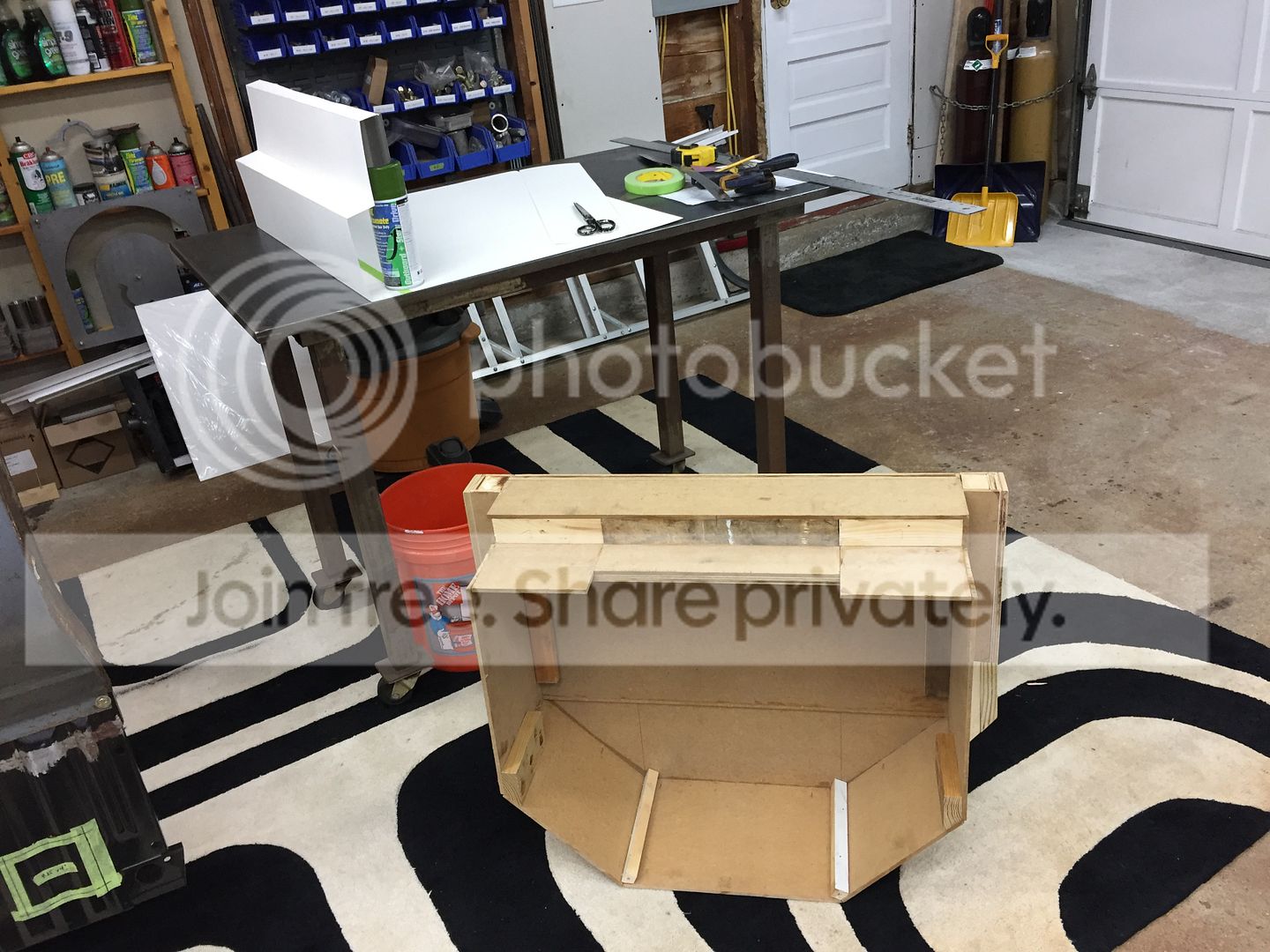
The MDF tank was removed and the process of transferring the design to a paper template began.

IMG_4079.jpg


This is where things start to get tricky and I need to make a few decisions. I've decided to have a custom fuel bladder made to fit my tank, which will save me from having to worry about leaks from any of the welded joints... and will allow me to remove the bladder for repairs (if needed) as well as providing a second method of fuel containment if there was ever a crash or rollover. With an internal bladder holding the fuel, there really isn't a requirement that the tank be made from stainless steel (11GA).... I could make it out of mild-steel and have the whole thing powdercoated (inside and out) and end up with something just as durable. I will have to look at the pricing again to see if there is a huge difference between stainless steel and mild-steel and whether I'd need to use the same thickness for either one (11GA?) to maintain adequate strength? :thinking: Of course by the time I pay for powdercoating, I'm probably spending more for mild-steel than I would have for stainless anyway.
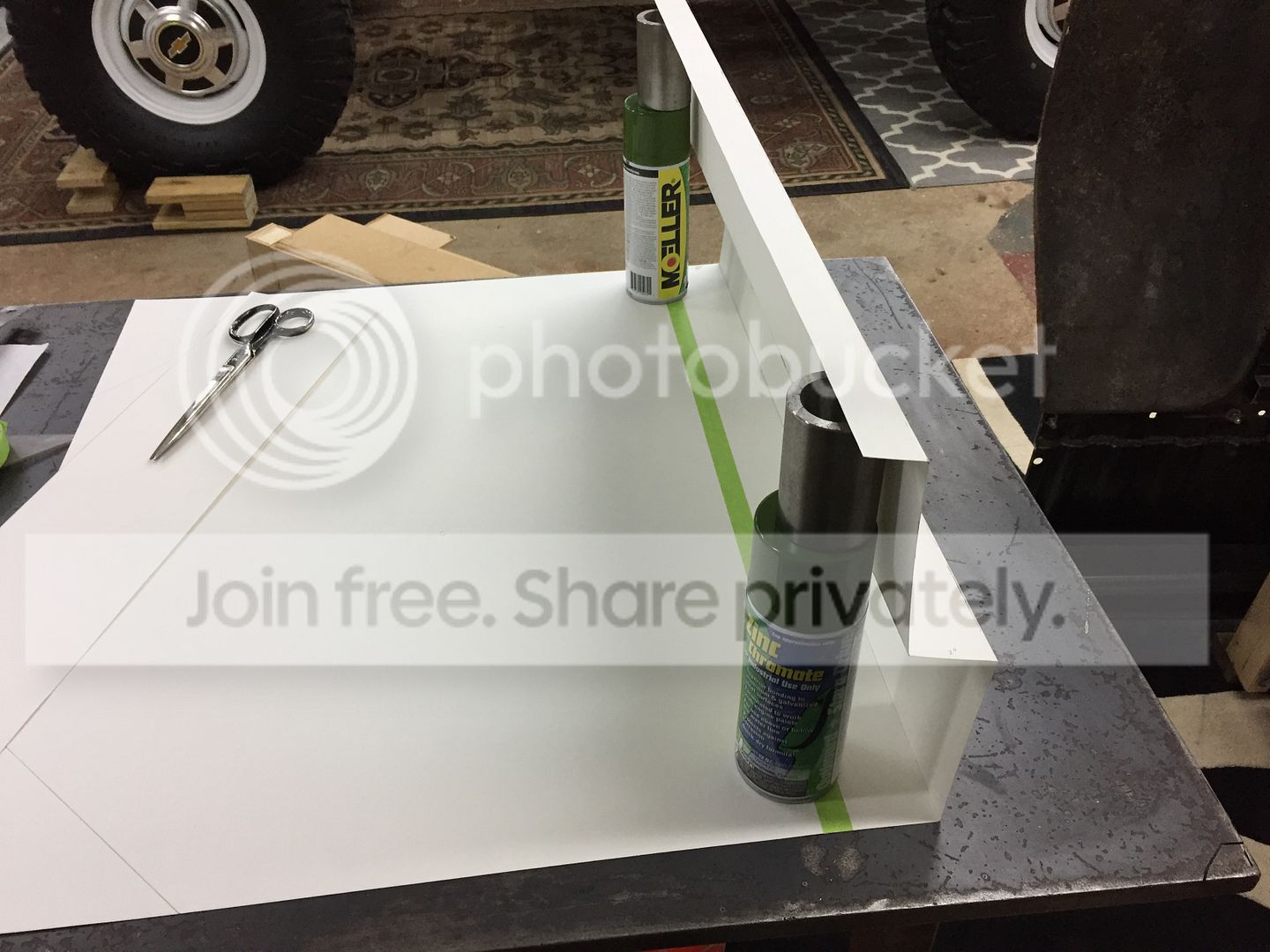
The other thing that needs to be figured-out is how to plan this tank out to minimize the amount of welded seams. The idea is to use my cardboard template to "unfold" the design and lay it flat on the table. From there I can plan the bends and flanges and figure out the best way to maximize strength. The "trick" is that every bend of the flat sheetmetal needs to be planned so that it doesn't change the overall dimensions of the tank. If I want a 10.5" tall tank on one side, I can't just mark-out 10.5" lines and bend the metal there. The thickness of the metal and the small radius of each bend will make the end result quite a bit taller than 10.5" when I'm done.... and if there are complex bends (like the one that goes around the rearmost crossmember) I'm chasing dimensions in a couple of different planes as well....

Like so:

IMG_4083.jpg


I'm sure there is sheetmetal bending software out there for this kind of thing. But there is probably also a way to calculate the dimension gain/loss for an 11GA bend at 90-degrees (etc). :dunno:

Anyway... That's the current process. I'll be out in the shop again tonight laying out my "unfolded" fuel tank design to see how this is all going to work. I've got a local sheetmetal shop that does a LOT of industrial bending, etc. so I may just take my MDF tank and paper template to them and see if they can give me some advice, and maybe even do some precision bending for me.


-G
 
Greg-

Great update!

My recommendation (as a guy that used to do sheetmetal) is to just take your MDF tank to your preferred shop - they will be able to give you good insight on how this will come together.

They will also know the bend deductions to make and best places to put a bend vs. a weld seam so that it is manufacturable for a given sheet size as well as press brake clearance. For instance - they will have recommendations on things like below...

upload_2016-11-28_9-7-40.png
 
Thanks IGOR,

Yeah, I'm trying to imagine what the most important bends are. It seems like I should try to maximize the bends at the bottom of the tank since the weight of all the fuel is pushing down on those the hardest. Then, I'd like to come up with flanges on the vertical seams (3/4"? or 1") that would wrap around the corners and reinforce those areas so I'm not just trying to get a full-penetration and leak-free weld on a corner-to-corner joint.

I'm a visual guy, so cutting up some cardboard and taping it all together helps me to visualize the "fuel tank origami" that will need to happen. If nothing else, it will help me when it comes time to talk with the sheetmetal shop about what is possible and impossible. :)

-G
 
Looks like a lot of progress made outside the rig which should help the rig soon. :waytogo:

I feel you on the sander circuit, I went through the same thing with my little 110 air compressor for most of the truck build. You had to drain the air tank real low before you turned it on or it would trip the breaker.

Can't you wire that sander motor for 220V operation? Many of those single phase industrial style motors can be wired for either in the little junction box on the motor. It will likely drop less voltage and startup even faster yet, and you can use the same 10/2 wire you ran just change it in the breaker panel.

As for the fuel tank, 11 GA? Holy canoli batman, is this a fuel tank/skid plate in one?

Powdercoating inside the fuel tank might prove difficult, especially in the corners.
 
When I was at WARN as a Manufacturing Engineer, that was one of my favorite things to do during a design review - minimize welding. Welding is expensive - we would always try to minimize welds and maximize bending whenever possible. Maximizing bends made the part stronger and more consistent then production hand-welding. Also eliminated the need for fixturing.

And Folkenheath is right - you won't get powdercoat on the inside corners of that tank - it seems to me that Por-15 makes a fuel tank liner paint kit https://www.amazon.com/POR-15-Fuel-...001NGB57M/ref=cm_cr_arp_d_product_top?ie=UTF8
 
Looks like a lot of progress made outside the rig which should help the rig soon. :waytogo:

I feel you on the sander circuit, I went through the same thing with my little 110 air compressor for most of the truck build. You had to drain the air tank real low before you turned it on or it would trip the breaker.

Can't you wire that sander motor for 220V operation? It will likely drop less voltage and startup even faster yet, and you can use the same 10/2 wire you ran just change it in the breaker panel.

As for the fuel tank, 11 GA? Holy canoli batman, is this a fuel tank/skid plate in one?

Powdercoating inside the fuel tank might prove difficult, especially in the corners.


I thought that 11GA was the consensus last time we all discussed this part of the project.... I'll have to go back and look at this thread a few dozen pages back to confirm. (EDIT: ~ Post #5811)

The sander supports 220V, but the reversing switch requires two different wire combinations and when I took a peek at the existing wiring in the switch and started thinking about the amount of time involved to figure it out... I just went with the simpler way. Maybe it's just my imagination, but the motor DOES seem to spin up faster now that it's on a dedicated 30A breaker? :dunno:

Egads!!

IMG_3740.jpg


I was planning to have the top of the tank removable with a bunch of perimeter screws and some kind of fuel-proof gasket. (EDIT: Actually I just realized I don't even need a gasket if the tank has a fuel bladder) Seems like I've seen a number of aftermarket tanks and fuelcells that do it that way. Plus, I have no idea how much trouble I'll have installing a fuel bladder if I make upper access panel too small... having a large removable top cover makes the powdercoating easy, assuming that going with a steel tank actually makes financial sense.


-G
 
I'm sure it spins up faster with the 30A circuit, but it's still dropping V with that high of amp draw and would startup even faster and run more efficiently at half the amps on 220V operation. You would notice the difference I bet. All you would need to do is swap the breaker and change the wiring at both ends. Your 10/2 wire would still be fine. Your NEMA plug might not meet code for 220V but you could just use the same plug as your welder at that point as long as the breaker works with the wire AWG. (30A w/10AWG). And you would have an extra welder outlet if needed. (up to 30A)
 
Top Bottom