CK5
Register an account today to become a member! Once signed in, you'll be able to participate on this site by adding your own topics and posts, as well as connect with other members.
11 AWG just seems way too thick to me. Most stamped car tanks are just ~.030 steel. Now granted they have formed shape to strengthen them, so I don't think you should go that thin, but .120 seems way to thick. Somewhere in the middle seems more appropriate.

So I wrote these guys...

http://rickstanks.com/

and asked them how thick of material they use on their stainless tanks, and they responded in 3 minutes (very fast service)...

It depends. Truck tanks are 14 and most car tanks are 16.

Thanks

Rick

Here is a 32 gallon steel powdercoated fuel cell using 20 AWG....(not recommending that cell I'm just saying 11 AWG is way overkill)

http://www.jazproducts.com/store/jeepspeed

If you go with AL then maybe .120 wall might make more sense, but still seems too thick, .100 should already be pretty thick.
 
Last edited:
Wiring for 230 is the best. It will put less wear an tear on the starter cap. A bad starter cap will cause the breaker to blow almost every time. If you are used to the motor spinning one way just wire it up that way and do not worry about the switch.


Also I just got done buying foam sheet insulation, and some 10-2 wire as well. :)
 
Greg,

Just an offer...if you can figure out all the outside dimensions of the tank, I use software all day long that figures out all the bend calculations, sheet size, etc. I'd be happy to send you back a 3D file you can give to a local shop to bend into shape. It can calculate the volume, weight, etc too.
 
Greg,

Just an offer...if you can figure out all the outside dimensions of the tank, I use software all day long that figures out all the bend calculations, sheet size, etc. I'd be happy to send you back a 3D file you can give to a local shop to bend into shape. It can calculate the volume, weight, etc too.


Thanks Brian!

Actually I decided not to bother building those small MDF "kickouts" that follow the underside of the framerails.... so the overall shape is dead-simple.

Just a rectangular box with a tapered bottom, a notched area to clear the rear crossmember and then a couple of 45-degree sides (on the pumpkin side) to allow the dual exhaust to sneak through...

I'll gather up the dimensions tonight and post them up here... :waytogo:


-G
 
Is the plan to just butt-weld the joints or add a flange and lap weld them? Using an interior bladder might make it safer to avoid any sharp edges on the inside you'de get with a flange. But the flange tends to be a bit stronger.

Or you could do exterior flanges, but those don't quite look as nice.
 
Is the plan to just butt-weld the joints or add a flange and lap weld them? Using an interior bladder might make it safer to avoid any sharp edges on the inside you'de get with a flange. But the flange tends to be a bit stronger.

Or you could do exterior flanges, but those don't quite look as nice.

I'm flexible on where the flanges go... ultimately 95% of this tank will be invisible anyway, hidden either by the bodywork/bumper and the extra skid plate underneath it.

-G
 
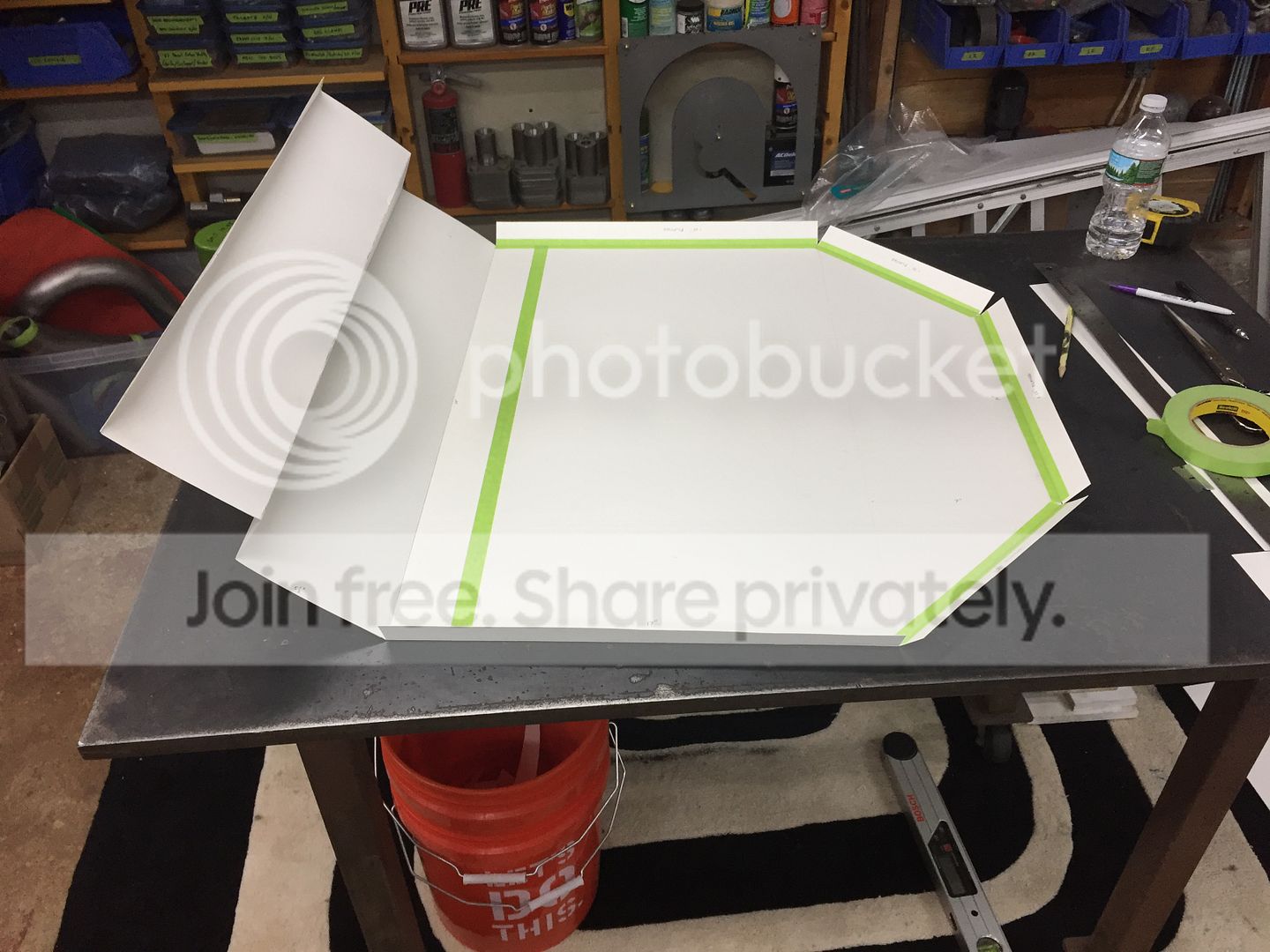
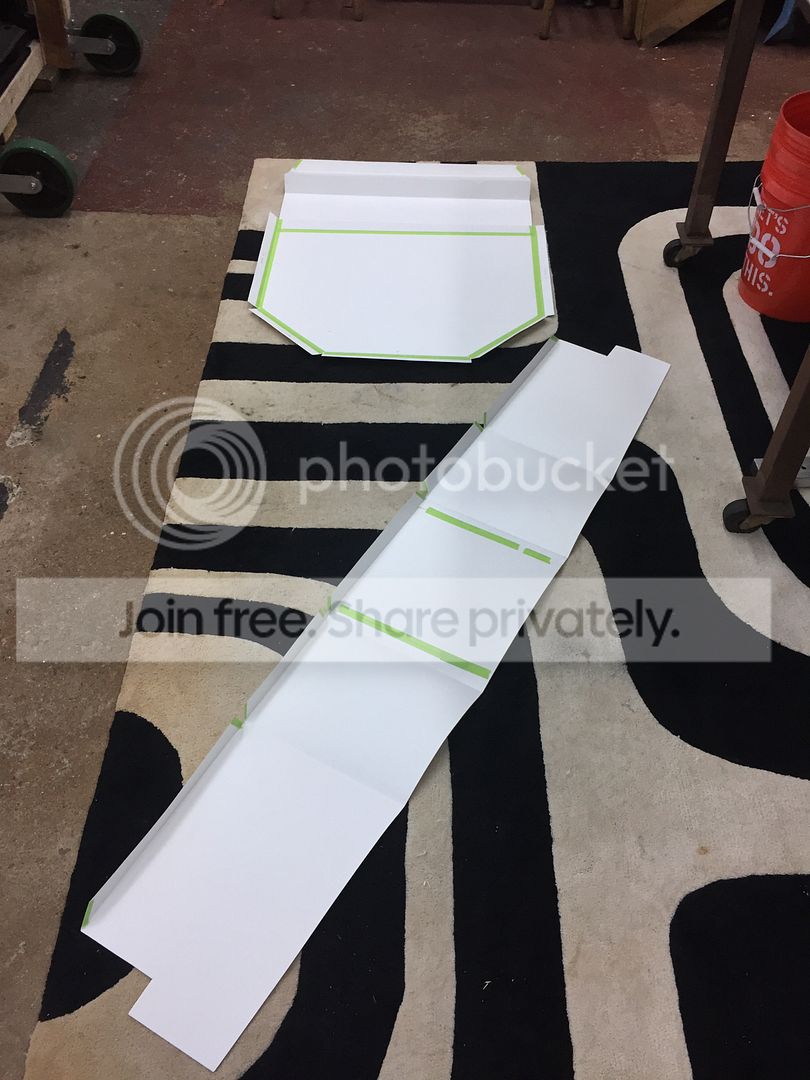
2016.11.29 - UPDATE!!! - PAPER FUEL TANK... :) !!!!!


It was a pretty successful night.

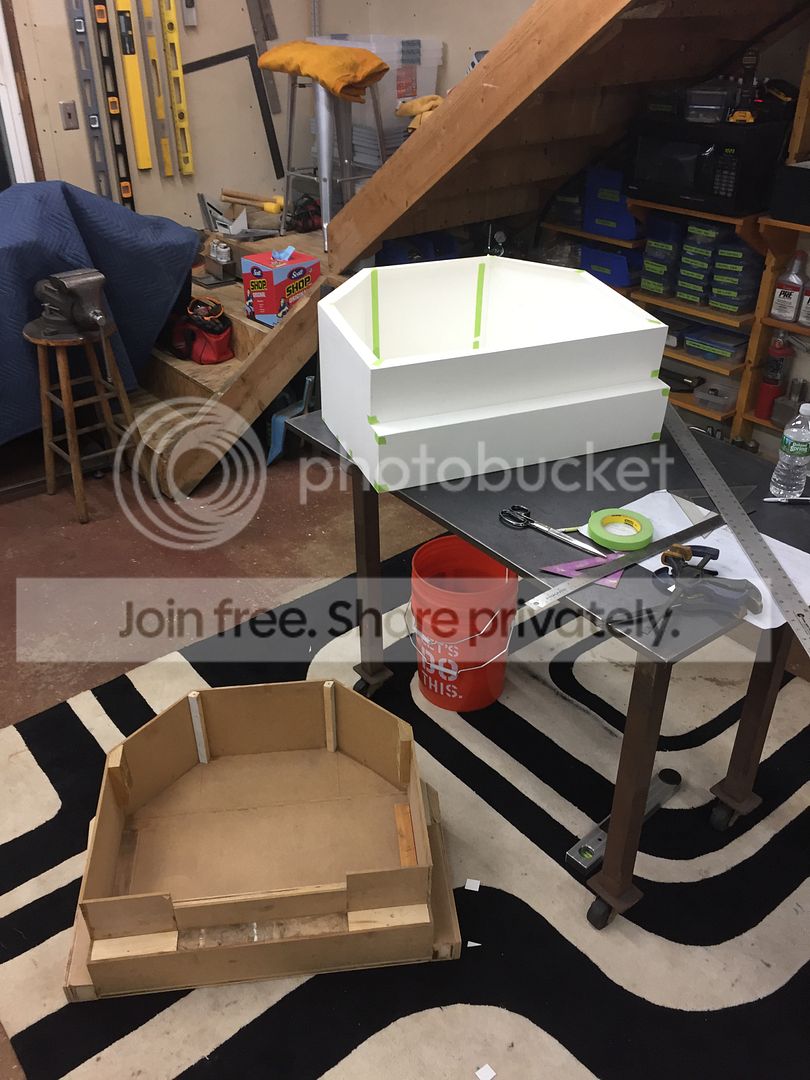
The MDF tank was transferred fully to cardboard and all dimensions were checked.

IMG_4104.jpg


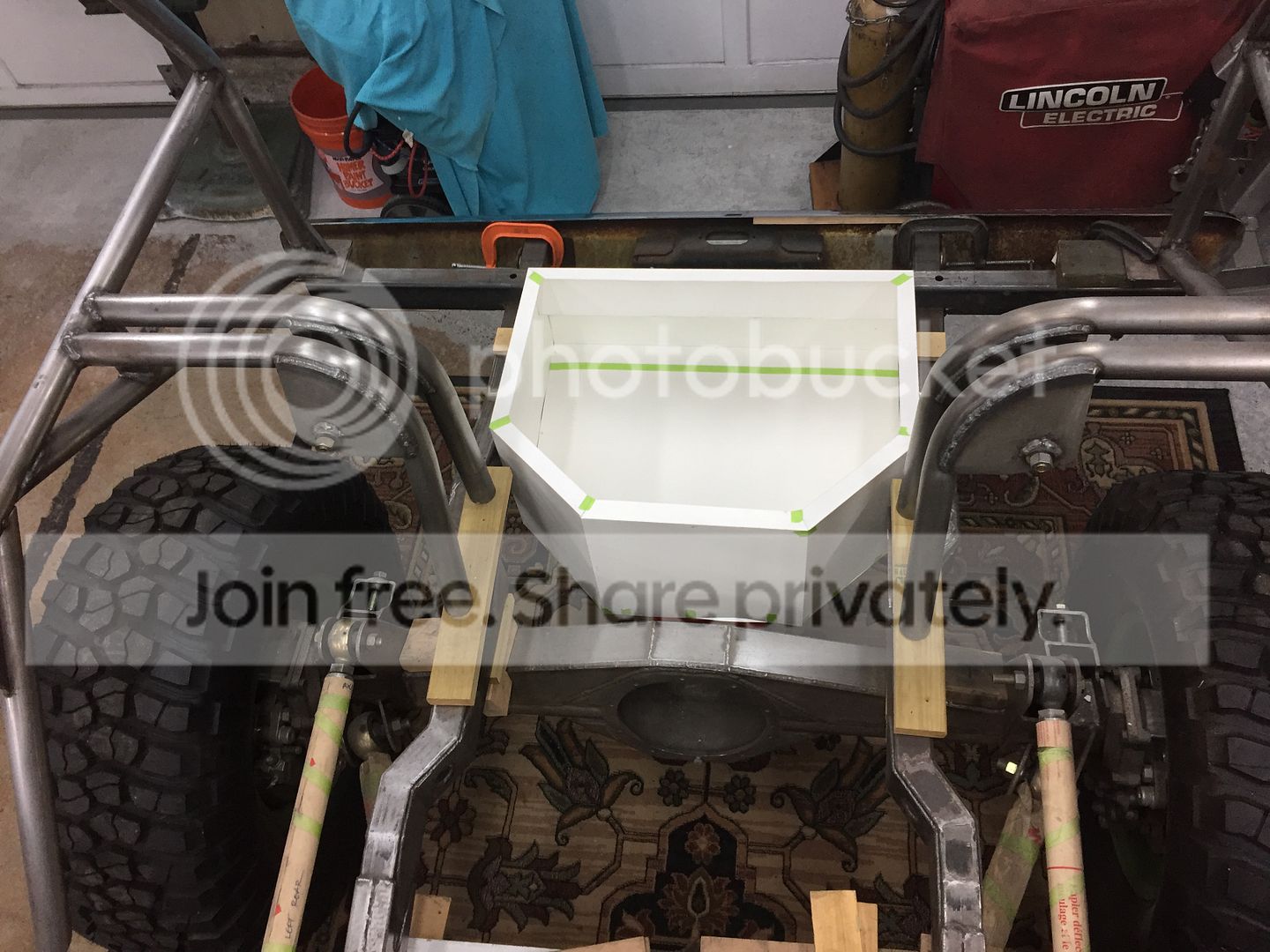
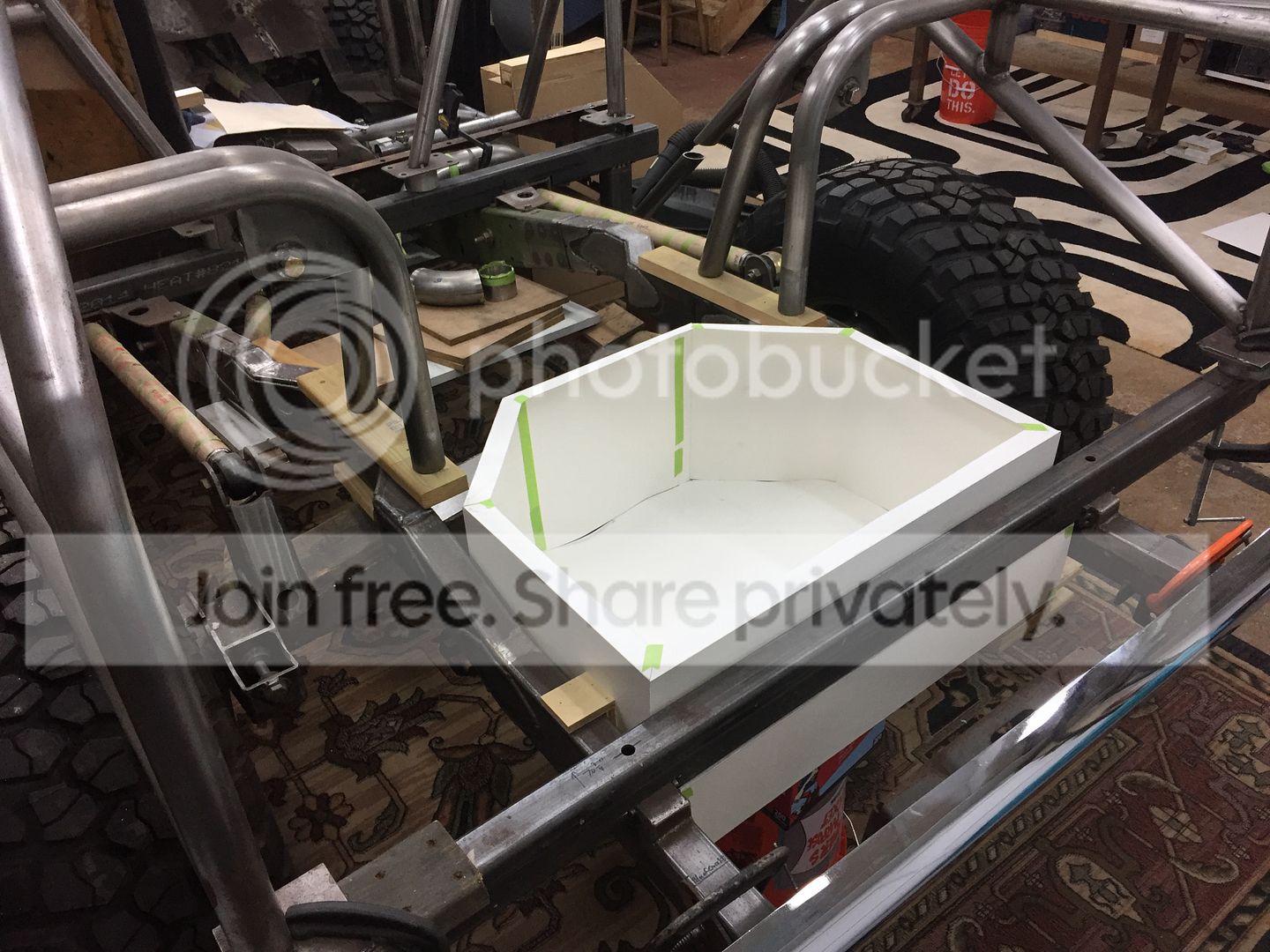
Dropped it (actually raised it up from below) into the framerails to confirm that nothing was amiss...


IMG_4111.jpg


IMG_4109.jpg


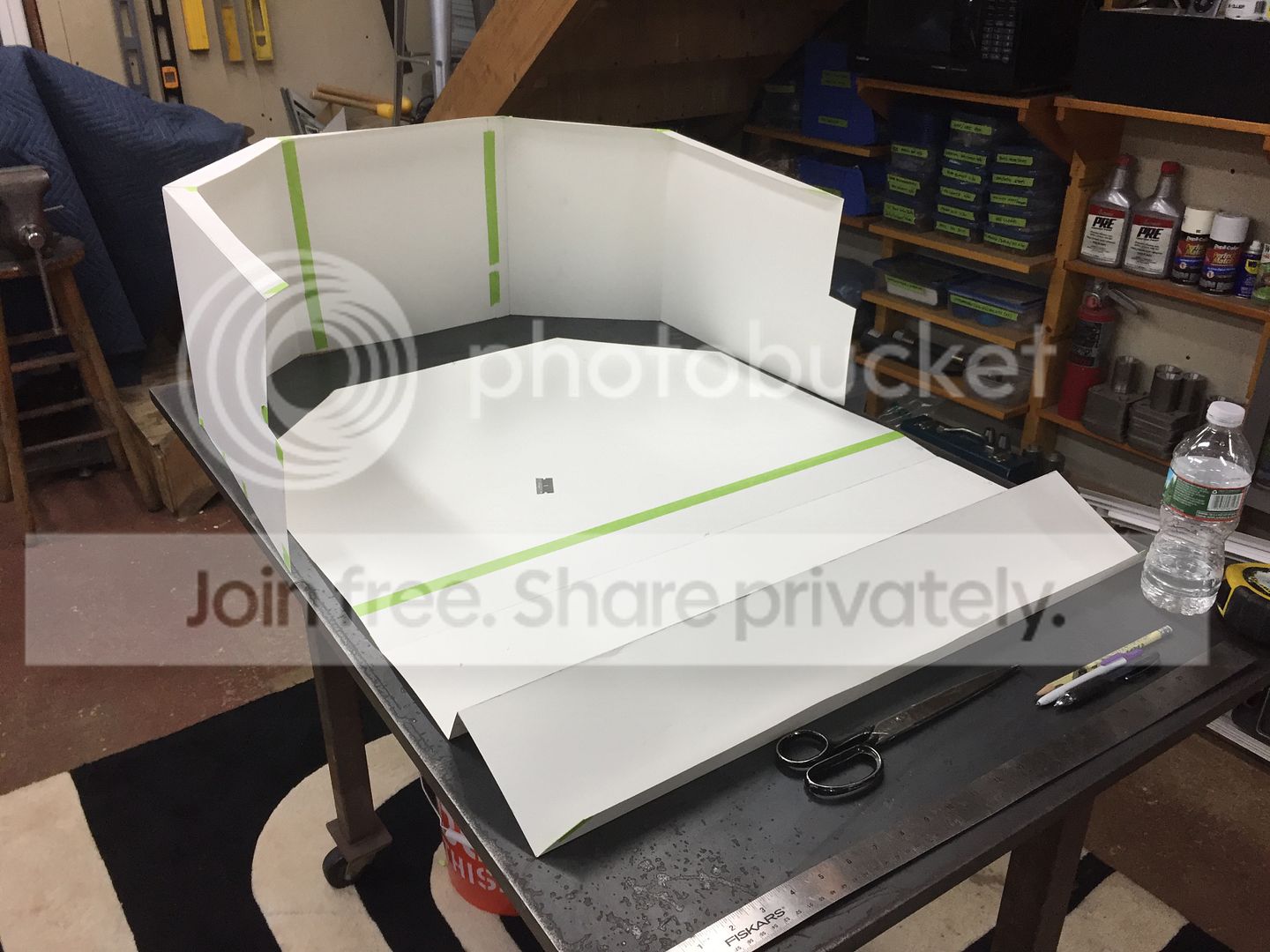
Then, began the thoughtful process of determining how to "flatten out" the design, and which seams to cut to create a pattern that could be transferred to stainless sheet. The priorities were doing it with the fewest bends, and making sure that the template could actually fit into a press-brake for each of the bends.


IMG_4116.jpg


It seemed to make sense to remove the bottom "pan" and make that it's own part. By adding a 1.25" flange all around 3 sides, it can wrap up the vertical sides of the tank and be welded from the outside, leaving the interior nice and smooth for the fuel bladder. On the 4th side, a few bends would form the entire "crossmember notch" feature and would save a TON of fussy welding and fitment nightmares of individual parts there.


IMG_4118.jpg


The remaining part of the tank design was the vertical "walls" and flanges that form the top mounting surface for the fuel tank cover. This was a pretty simple part to just unwind and then lay flat on the floor. Should be very simple for a compent shop to make this part.


IMG_4122.jpg


Next Step is to get the dimensions to Brian :wink1: so that he can mess around with dimensioning for me.... then I will have a .DXF-type file to bring to my local sheetmetal shop for a quote. :waytogo:


-G
 
2016.12.01 - UPDATE! - CAD-RENDERED FUEL TANK!!!!


Wow! Brian (@bp71k5) came through in a big way for me. :bow:

He sent me a bunch of renderings that make my own efforts look like they were just made out of paper or wood!!! :haha:


IMG_4138.jpg


IMG_4137.jpg


IMG_4139.jpg


29.1 Gallons according to the application software, so I'll have to use a REALLY large filler hose to hold the remaining 0.9 Gallons!!!

Now it's off to a couple of local sheetmetal shops with the .STP and .IGES files to see what sort of costs will be involved to cut and bend these parts to match the drawing.


Thanks Brian!!!

-G
 
Greg have you checked the new fuel pickup mat available?
 
Since I haven't seen mention of it yet i'll go ahead and ask. You said you're going to do a fuel bladder, how does one use a bladder and have a fuel level sender? Does the bladder allow for this somehow?
 
Greg have you checked the new fuel pickup mat available?

Zim, I wanted to use that Holley Hydramat but I don't think it will work with the bladder system. Probably just regular foam...

Since I haven't seen mention of it yet i'll go ahead and ask. You said you're going to do a fuel bladder, how does one use a bladder and have a fuel level sender? Does the bladder allow for this somehow?

Scotty, with a top cover access hole you can still get s sender in there. With anti-slosh foam it probably requires some kind of plastic tube around it so it doesn't get tangled up in the foam...


-G
 
Zim, I wanted to use that Holley Hydramat but I don't think it will work with the bladder system. Probably just regular foam...


Scotty, with a top cover access hole you can still get s sender in there. With anti-slosh foam it probably requires some kind of plastic tube around it so it doesn't get tangled up in the foam...


-G

Let's not confuse your "removable top cover" of your tank with the bladder itself. The sender needs to be IN the bladder. Am I missing something here? What brand bladder are you going to use?
 

Latest Posts

Top Bottom