2017.01.25 - UPDATE! - 2017 FUEL TANK v.2...
So there's been quite a bit of back-and-forth going on with the tank design / build over the last few weeks.
Brian did some great renderings in CAD and I took them to a local sheetmetal shop and discussed how they could assist in getting it all bent-up for me. It became clear VERY quickly that the costs were skyrocketing based on the complexity of trying to minimize welded seams... there was at least $1000 in labor (and probably quite a bit more than that) just to get everything into the final shape. It made sense to try to simplify the design and accept the fact that it would have to be welded in more places to simplify the construction, reduce costs and speed up the schedule. Waiting around for a 3rd-party to schedule me several weeks out doesn't sit well with me either.
The other area where I spend a lot of time considering (and reconsidering) my options was with the fuel bladder. I was concerned that with a large open fuel cavity, there would not be adequate bracing of the fuel tank. It is roughly 24" long and 33" wide across the bottom and that is a very large unsupported span of metal, especially with the weight of 30 gallons of fuel pressing down on it... and sloshing around creating dynamic loads as well. Ultimately, I decided that I could do a better job of building a strong tank if I went with a more conventional design that was internally baffled. This adds good strength to the tank, and makes the whole thing more impervious to damage from the underside. As a concession to the loss of the bladder system, the outside corners will all get wrapped with 1" x 1" stainless "L bracket" shaped pieces. This will add more corner strength and will also make it more likely that the tank will be leak-free at all the welded seams since they will effectively be "doubled up" with metal and welds.
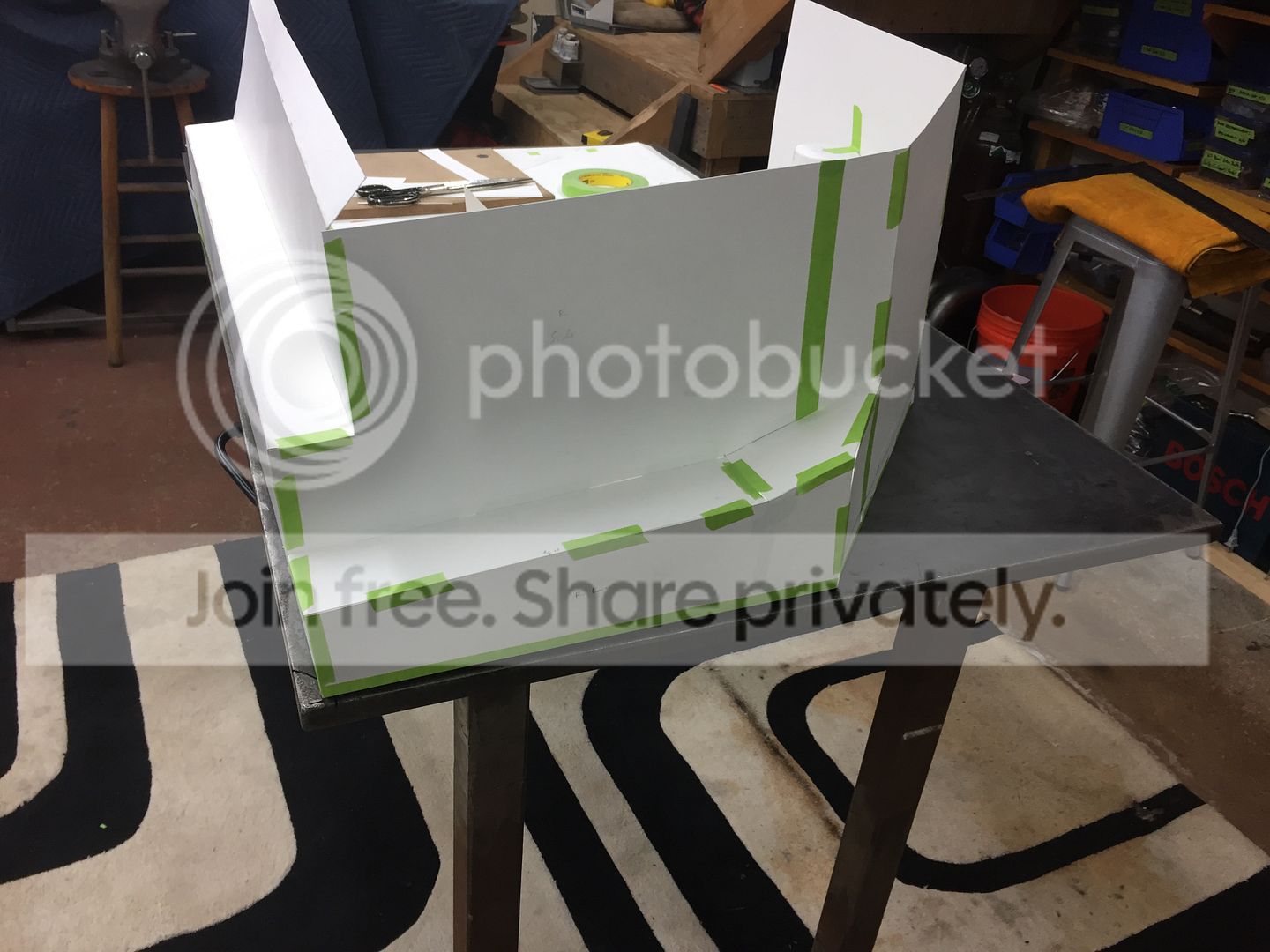
It goes without saying that a lot of time has been logged just building MDF and paper tempates of the fuel tank.....so it was time to finally just spend some money and get some real material into the shop to start the building process once-and-for-all.
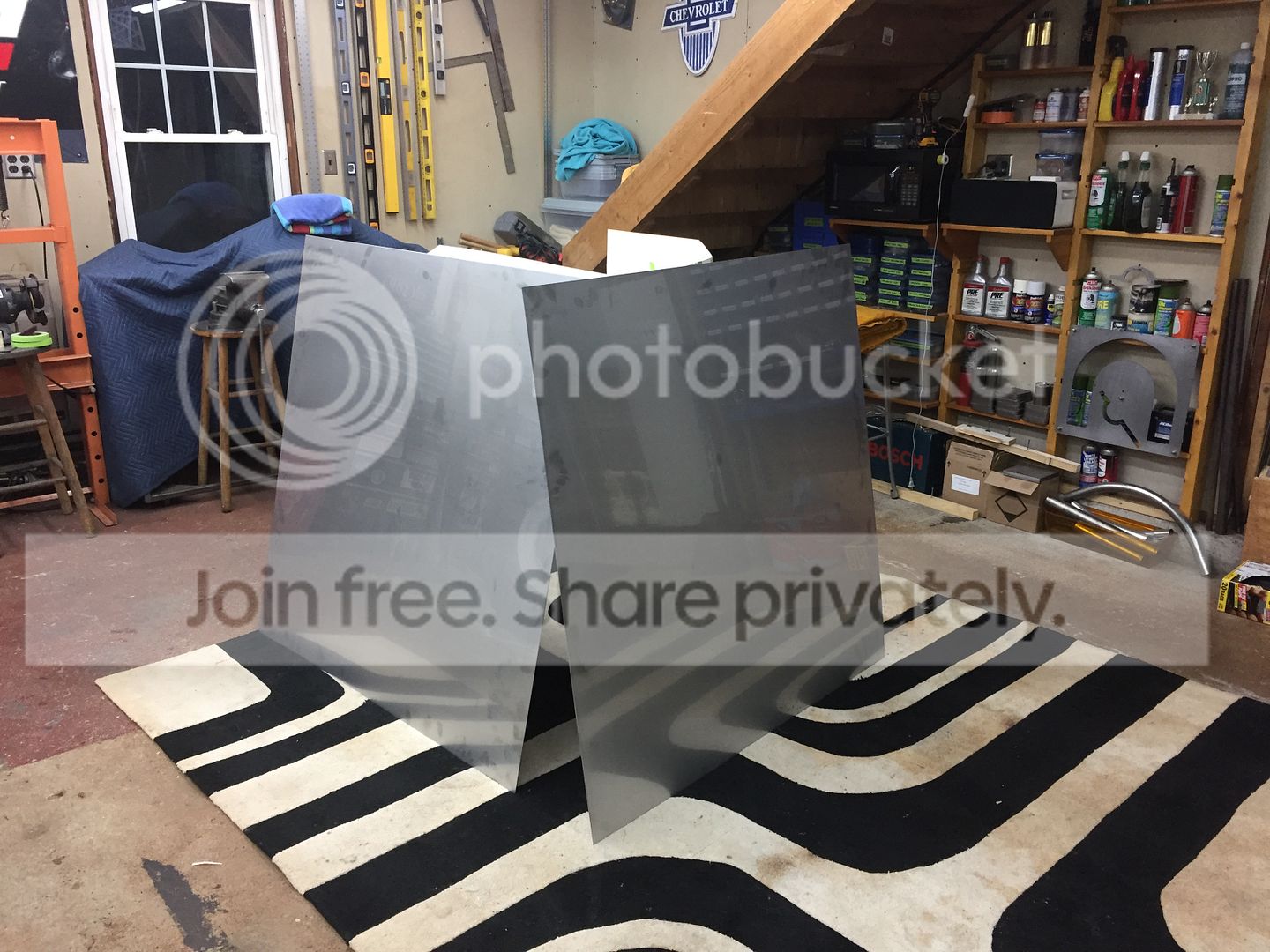
The decision was made to go with a 4x8' sheet of T304 (Stainless Dull finish) in 16GA (.060") thickness. This seemed like a good compromise between strength, weight and cost.... and given that this tank will be protected with a full steel skidplate from underneath, going with a thicker material was not justified.
The one design element that was added back in were the small "wing" pockets on either side of the tank.
These serve a couple of functions. First, they add about 1 gallon of extra fuel capacity to the overall design... putting it comfortably in the 30 gallon capacity that was envisioned. Second, these kickouts fit directly underneath the rear framerails so that when the tank is raised into position they will serve as a solid anchorpoint to draw the tank up to the frame. This will allow for a very simple anchoring setup without using long sling-type straps underneath the tank. I have also toyed with the idea of installing pivoting brackets on one side of the tank to allow it to "swing down" for access to the top panel if I need to access the fuel sender, or internal fuel pumps for replacement. This would be a lot more elegant than building a large trapdoor into the rear bedfloor and makes me feel more comfortable about going with an "in-tank" pump vs. a framerail mounted one.
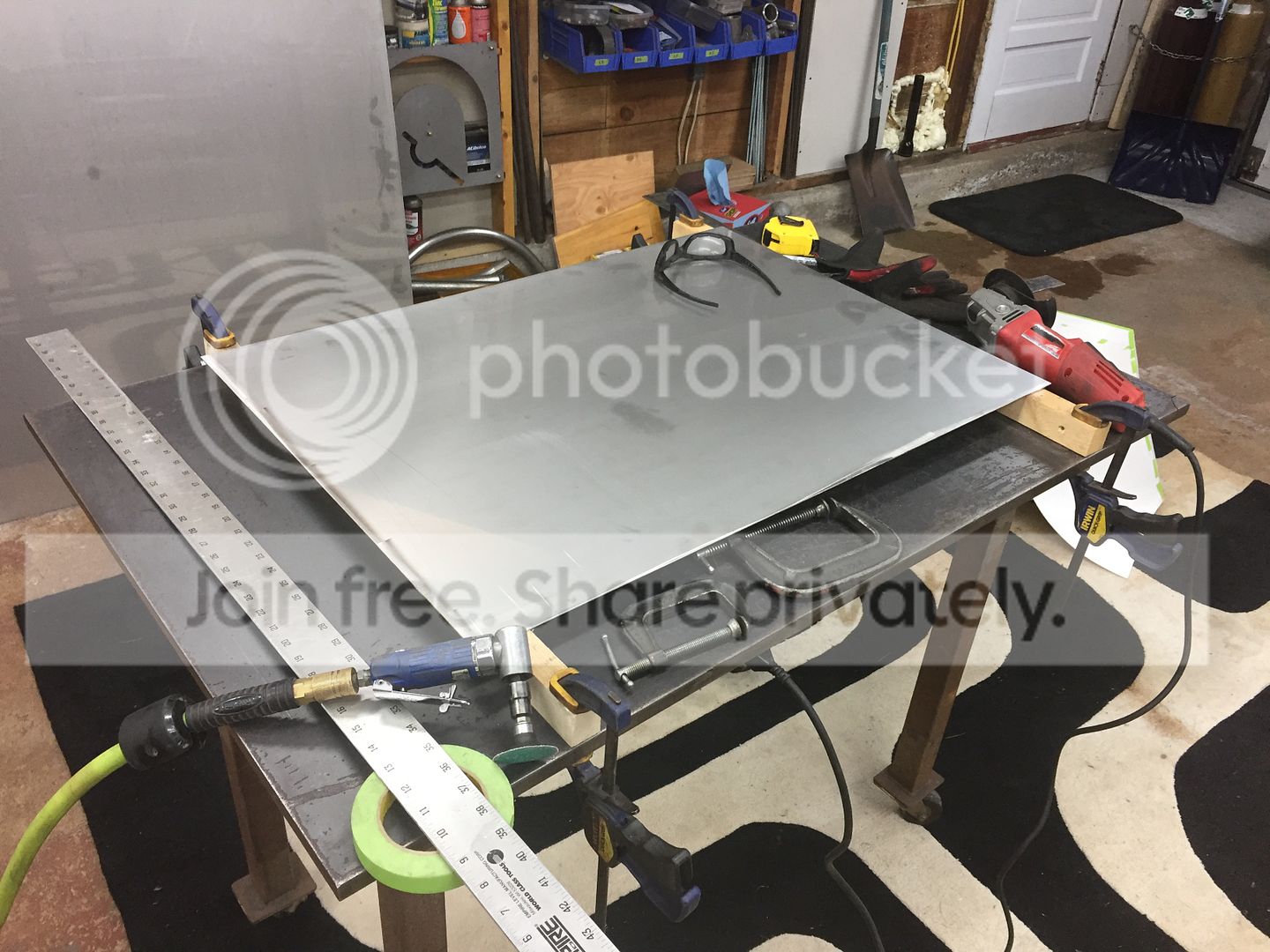
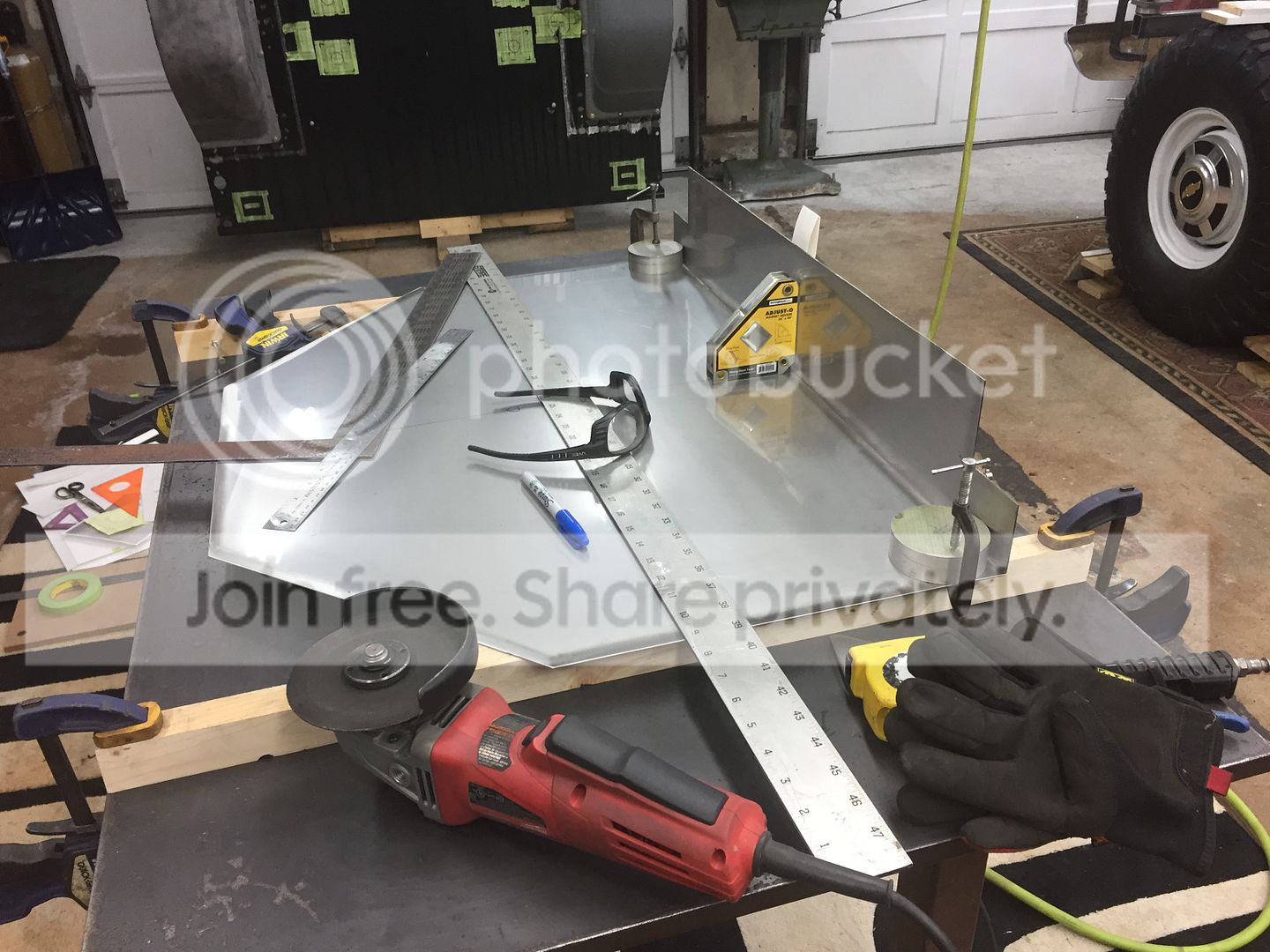
The first order of business was getting those massive 4x4' sheets of stainless down to a more workable size. Since the bottom of the tank is 24" x 33"... it made sense to cut that first and build the tank from the bottom-up.
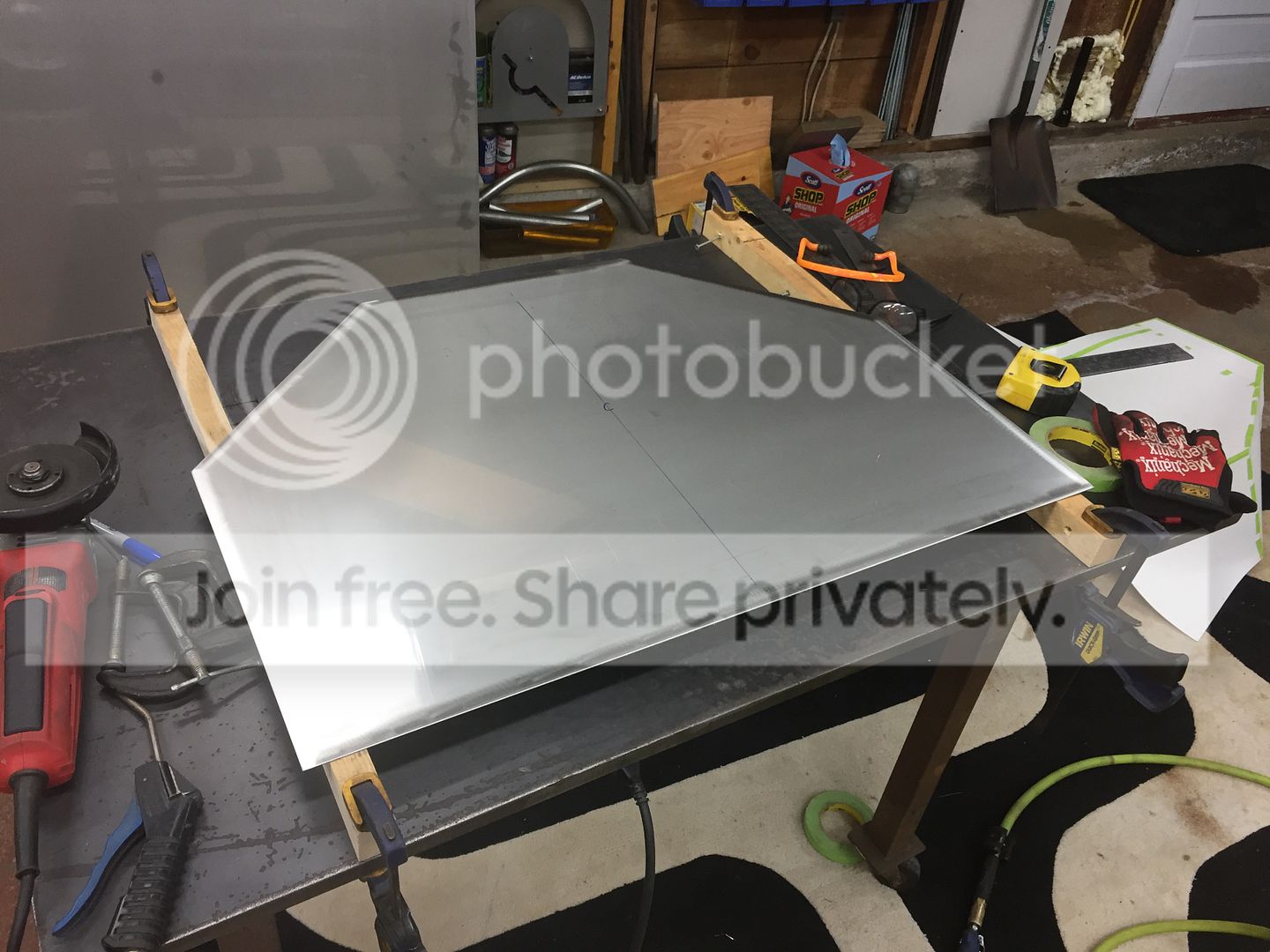
The tank has two corners that are cut at 45* to allow the dual-exhaust to pass by on the way out the rear corners of the truck. So those cuts came next.
The construction of the front wall began next. This section fits up against the rearmost crossmember (just below the tailgate area). Of course the hardest thing about working with stainless that you learn right away is that all of the conventional methods you are used to using to fixture and hold parts in place for welding (aka. magnets) DON'T WORK!!!! T304 is a non-magnetic alloy, so I had to get creative so that the first few TIG tacks could be laid-down.
A few items were recently added to the shop. The new WEN overhead air filtration system was a good one for health and air-quality, a simple 36" long outlet strip was attached to the underside of the workbench for grinders and cutoff tools, and I bought an el-cheapo LED task light with a magnetic base that I can now use to illuminate my TIG welding area. I cannot overstate what a great improvement that last item was... being able to REALLY see the tungsten and distance from the parts makes a huge difference in being able to initiate a weld, and puddle quickly when doing tacks.... $15 well spent!!

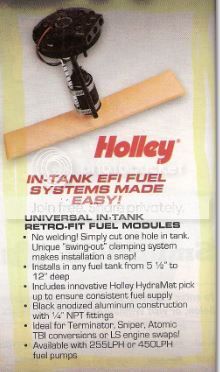
For consideration: This is the setup that I'm now looking at for my in-tank pump setup. It's from Holley and comes with a small Hydramat as part of the kit. It seems like a good solution to drop into the baffled part of the tank.... though I still need to sneak in a fuel sender somewhere because I don't think this setup has one.

That's it for now! More progress tonight.....
-G




 I threw down the gauntlet several years ago and promised that I'd have this truck finished in time to get there..... and I have no intention of slowing down now.