CK5
Register an account today to become a member! Once signed in, you'll be able to participate on this site by adding your own topics and posts, as well as connect with other members.
Nvh would be the issue in a normal vehicle. The issue is the body on its own bushings and the rest of the system mounted to the frame and engine can and will vibrate at different frequencies.

I've had a system set up with the rear most hangars off the body and the rest was on the frame. Got a wicked buzz at the rear mount.

In your case with the body being sandwiched between the frame and the cage I don't think it will behave like a normal vehicle.
 
Both, and logistics. The engine is mounted to the frame, and the exhaust is bolted to the engine, so the exhaust should be hung from the frame as well.

When I was 16 I custom mounted an exhaust hanger to the sheet metal in my trunk using large washers and only one dual inlet/outlet muffler and 2 hangers, it was only 2.25" exhaust. I figured it was strong enough because there was a large 80 degree bend right next to the mounts, and several bends for strength similar to a truck bed. However, it pulled the sheet metal right through. Then I used even larger metal plates, 3/4" x3" x 3/16" thick in the bend groove, it pulled one through and was working on the other. Then I ended up using a 1" x 2 ft long 1/8" thick metal strap across both holes and it finally held, but it looked wrong and never seemed right to me until I remounted it directly off the frame 15 years later.

Also, when you are re-assembling this fancy rig of yours after you get it all painted and finished, wouldn't it be much nicer to assemble the entire drivetrain and hang the exhaust on the chassis before you drop the body on?

About the air tanks, I know after the 2 comments and you worried about corroding inside your cage, you won't be comfortable using your cage for air pressure, my aluminum air tank came from the low rider crowd, looks like this....

Aluminum Air Tank

However, there are many options and sizes, even seamless tanks, I'm sure some of these would fit where you need?....

Aluminum Low Rider Tanks
 
Last edited:
Both, and logistics. The engine is mounted to the frame, and the exhaust is bolted to the engine, so the exhaust should be hung from the frame as well.

When I was 16 I custom mounted an exhaust hanger to the sheet metal in my trunk using large washers and only one dual inlet/outlet muffler and 2 hangers, it was only 2.25" exhaust. I figured it was strong enough because there was a large 80 degree bend right next to the mounts, and several bends for strength similar to a truck bed. However, it pulled the sheet metal right through. Then I used even larger metal plates, 3/4" x3" x 3/16" thick in the bend groove, it pulled one through and was working on the other. Then I ended up using a 1" x 2 ft long 1/8" thick metal strap across both holes and it finally held, but it looked wrong and never seemed right to me until I remounted it directly off the frame 15 years later.

Also, when you are re-assembling this fancy rig of yours after you get it all painted and finished, wouldn't it be much nicer to assemble the entire drivetrain and hang the exhaust on the chassis before you drop the body on?

About the air tanks, I know after the 2 comments and you worried about corroding inside your cage, you won't be comfortable using your cage for air pressure, my aluminum air tank came from the low rider crowd, looks like this....

Aluminum Air Tank

However, there are many options and sizes, even seamless tanks, I'm sure some of them would fit where you need?....

Aluminum Low Rider Tanks


Heath,

Gotcha.

Keep in mind, the MAW setup is 100% hardmounted (Body / Frame) and all rubber bodymounts were purged several years ago. At this point, the entire frame/cage/body is one large "unibody" structure locked together.

It's a double-edged sword. I should benefit from the extra rigidity but will have more NVH everywhere since there are no bushings to isolate the body from the frame. To that end, it didn't appear that tying the exhaust mounts to the floor reinforcement structure was much different from building a new crossmember for that purpose.

Guess I'll have to show more detailed illustrations of what I'm planning to sanity-check my idea.... so stay tuned, and keep that feedback coming! :waytogo:


-G
 
Heath,

Gotcha.

Keep in mind, the MAW setup is 100% hardmounted (Body / Frame) and all rubber bodymounts were purged several years ago. At this point, the entire frame/cage/body is one large "unibody" structure locked together.

It's a double-edged sword. I should benefit from the extra rigidity but will have more NVH everywhere since there are no bushings to isolate the body from the frame. To that end, it didn't appear that tying the exhaust mounts to the floor reinforcement structure was much different from building a new crossmember for that purpose.

Guess I'll have to show more detailed illustrations of what I'm planning to sanity-check my idea.... so stay tuned, and keep that feedback coming! :waytogo:


-G

Well based on what you just said that eliminates 1 of the 3 reasons, and knowing you will likely make the strength to the floor reinforcement overkill to not pull through that eliminates reason 2 out of 3. So the only thing that might be left is final assembly and how easy it is to work on, how are we going to get a fully assembled rolling chassis shot if you can't install the exhaust until the body is on? :pimp:
 
how are we going to get a fully assembled rolling chassis shot if you can't install the exhaust until the body is on? :pimp:


LUMBER Baby......LUMBER!!! :haha:


(Actually it's not a terrible idea. For the "beauty shots" I could swap out those 3/4" thick scraps of wood for some 3/4 x 3/4" square steel tube and run my threaded hangers into those).

It's certainly preferable to work from above with no floor in the way, but I do have to be careful that I make everything serviceable from the underside.


-G
 
LUMBER Baby......LUMBER!!! :haha:


(Actually it's not a terrible idea. For the "beauty shots" I could swap out those 3/4" thick scraps of wood for some 3/4 x 3/4" square steel tube and run my threaded hangers into those).

It's certainly preferable to work from above with no floor in the way, but I do have to be careful that I make everything serviceable from the underside.


-G

I like that, and after you take the picture weld that tube to the chassis so you can mount your exhaust to it instead of the body.;)
 
I like that, and after you take the picture weld that tube to the chassis so you can mount your exhaust to it instead of the body.;)

LOL....

The factory U-shaped floor bracing is formed from .080" (~14GA).... and is there to hold the weight of humans sitting in the rear bench seat. 16GA Stainless exhaust is heavy but I'm going to need to think about how "overbuilt" is overbuilt enough on that one. :)

-G
 
2020.06.04 - UPDATE!! - MUFFLER BEARINGS....


No bearings were hurt in the making of this update.

It's been a while folks, sorry about that... lots of hours at my paying job. Not so many available to spend in the garage... but progress is still being made.
When last we spoke @folkenheath was teasing me about being stubborn about my strategies to tie the muffler hangers to the bedfloor supports. While I'm sure it could have been accomplished, the idea of building a complete rolling chassis (complete with mufflers and hangers installed) won me over, and being able to test fit everything without reinstalling the bedfloor was too attractive to ignore

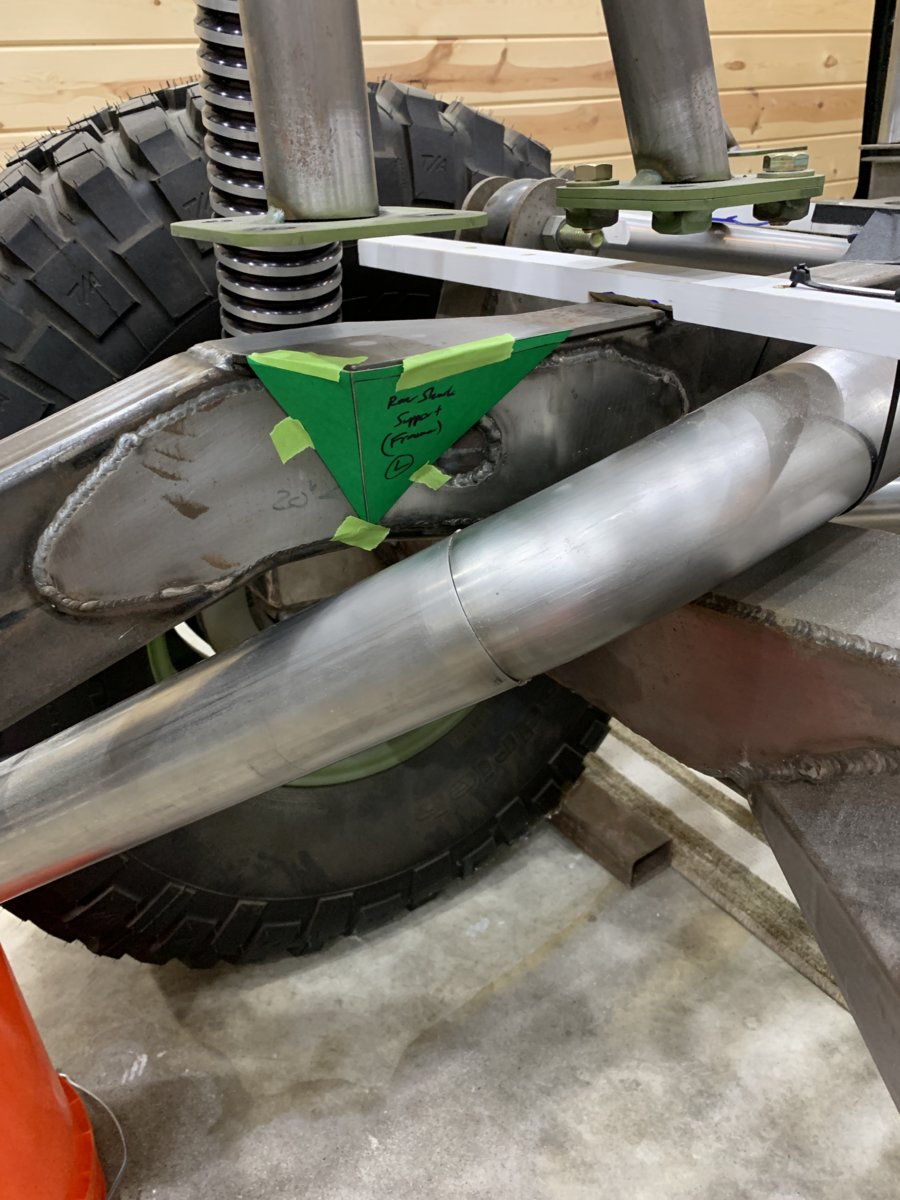
Step 1: Install a small triangulated support under the floating tube that holds the rear ORIs in place. This has been an "IOU" project from when the rear back-half frame was built. There just wasn't a well supported landing pad for that tube but the fix was simple enough to make.

Paper templates to the rescue:


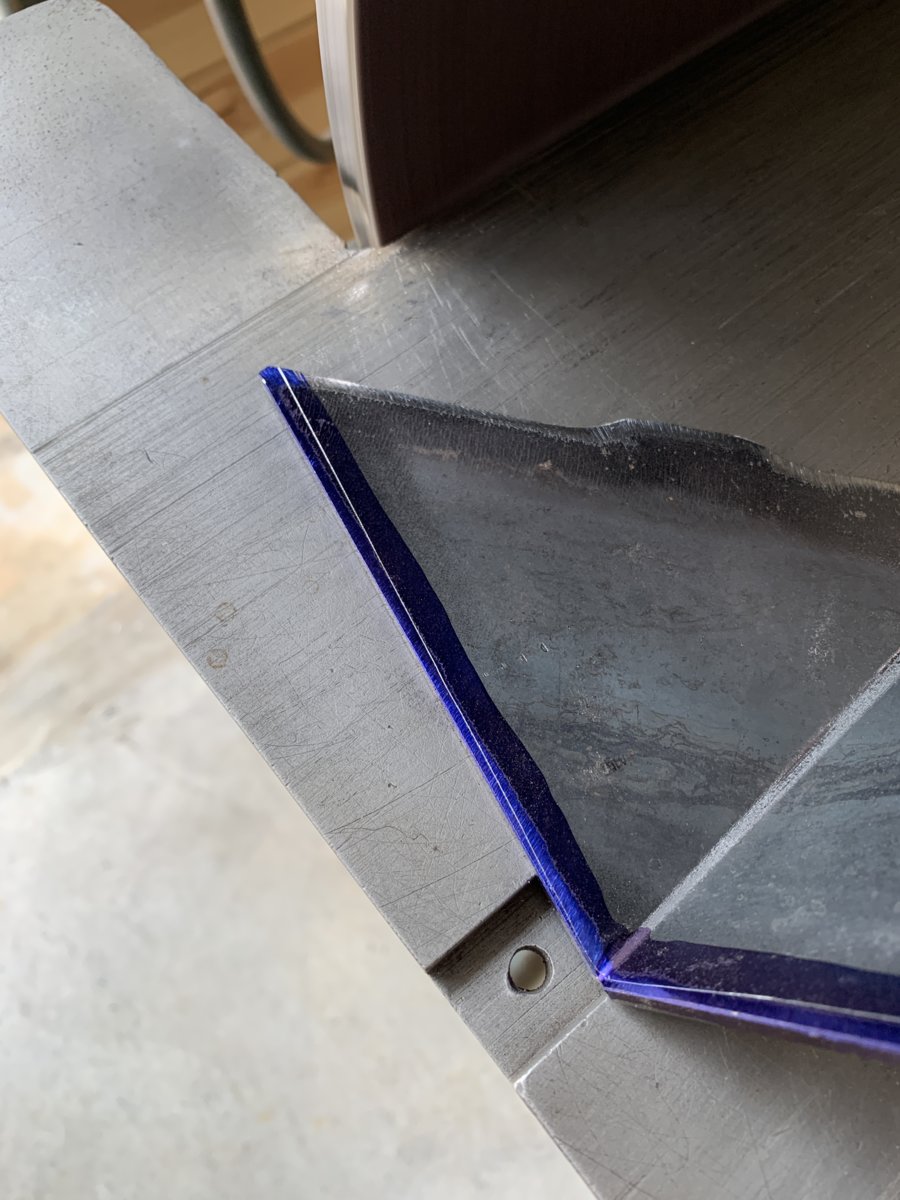
Never did find my last bottle of Dykem marking fluid from the TX move, so Amazon sent me a new one... it felt good to get back to marking and scribing metal like the old days and dressing-down the edges in a hurry on the 20" APEX grinder.


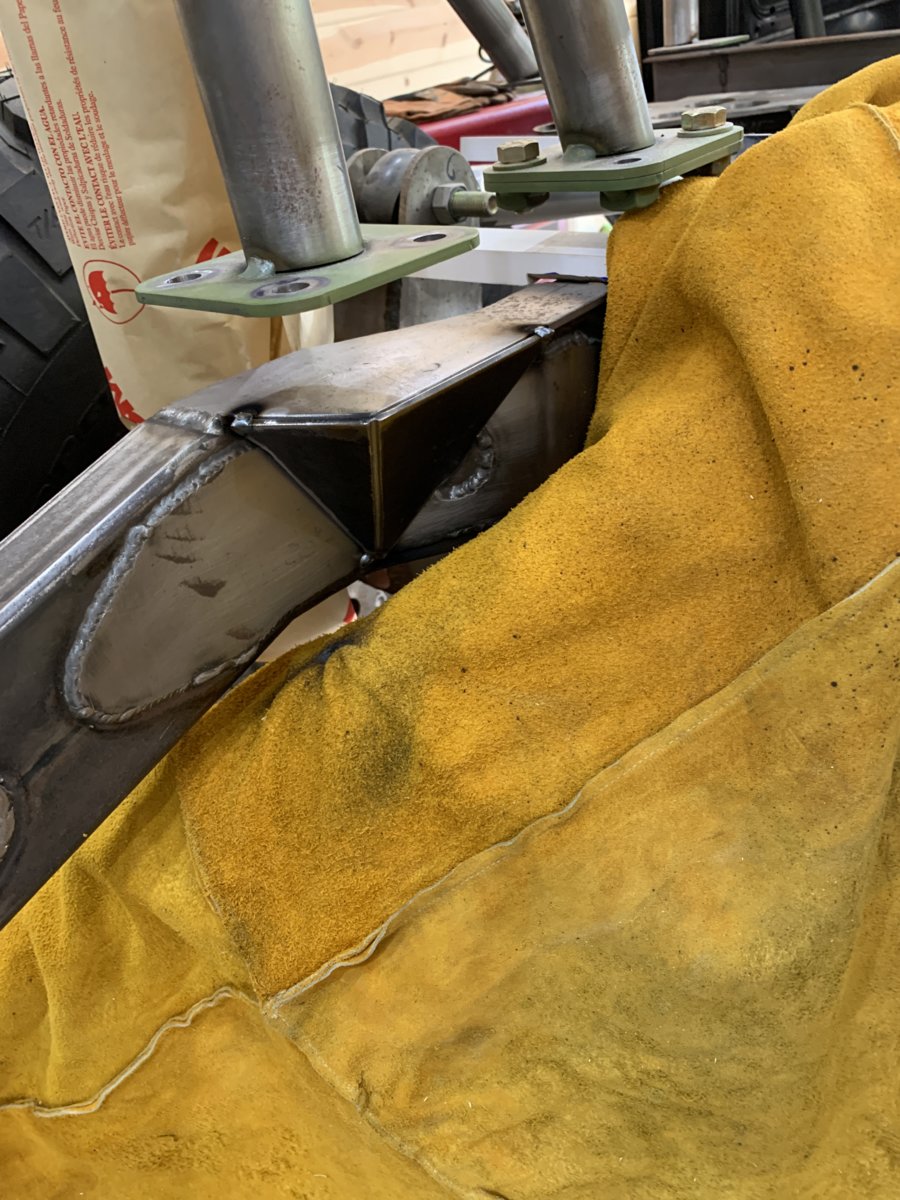
The test Fit....... fits! A couple of tack welds for now is enough. There is a TON of finish welding all over this frame and rollcage to do someday, but don't want to commit to fully welding joints until there is 100% certainty that they won't need to be cut or relocated by some future build step. Tacks cut easier than full perimeter welds.


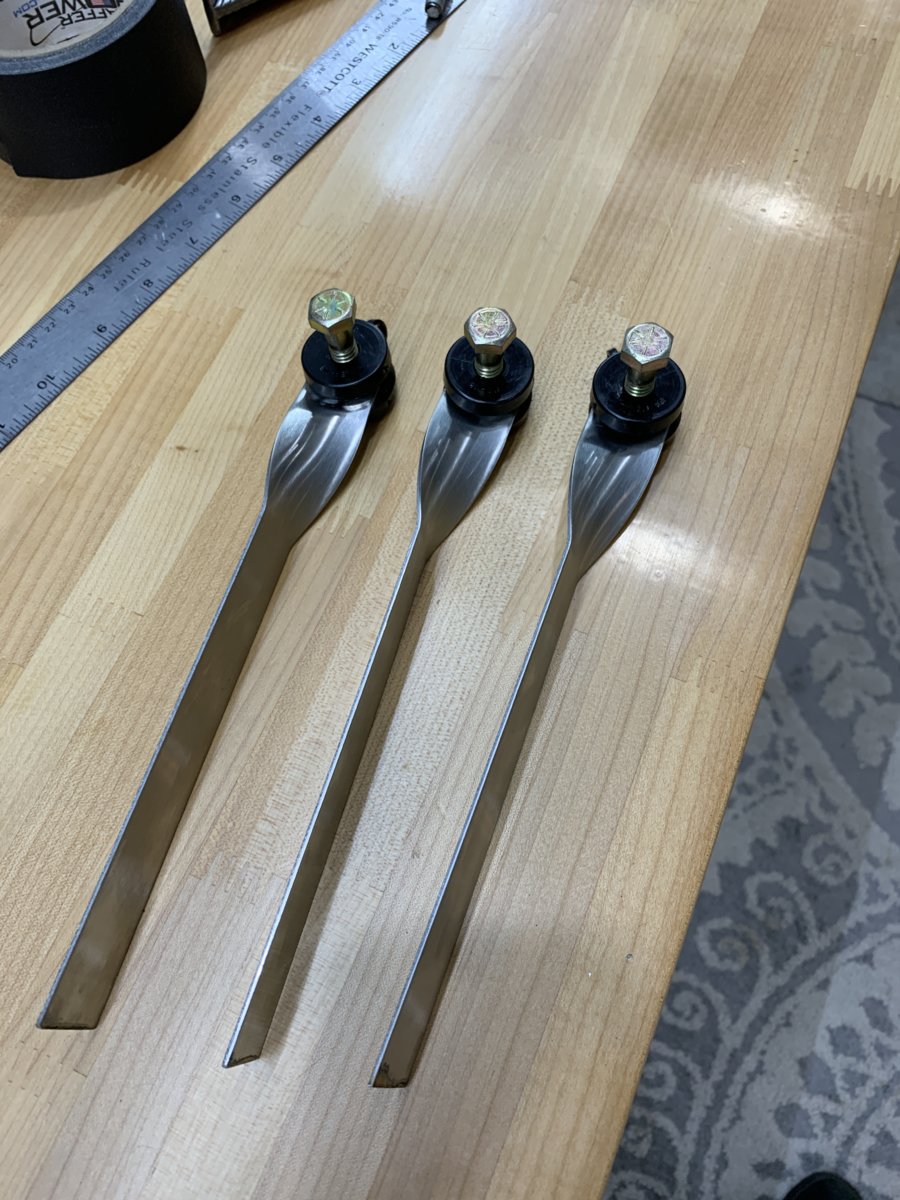
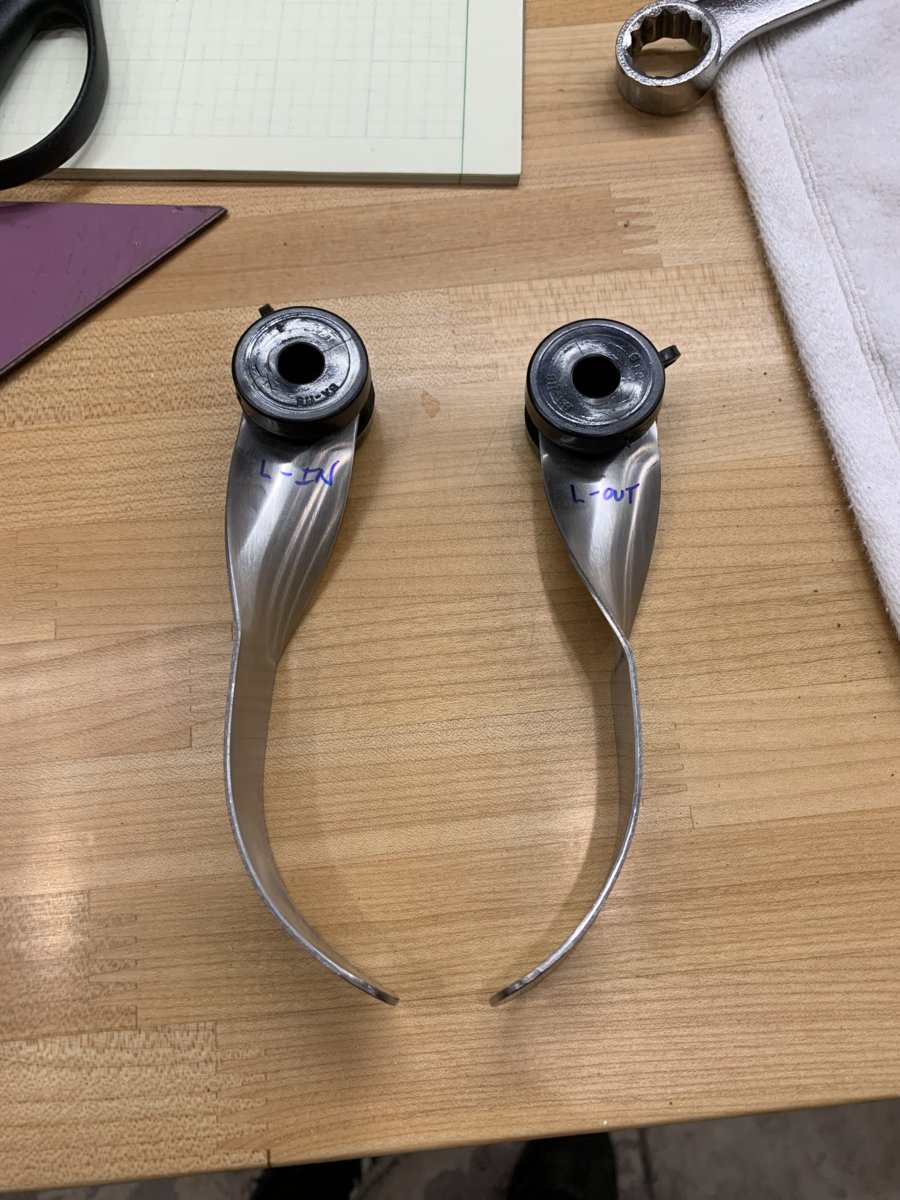
A number of different concepts were sketched out, but the simplest and most elegant seemed to be using 1" wide straps of T304 as hangers, installing the poly bushing on one end and then shaping them to fit the circumference of the 3" exhaust and welding them on.


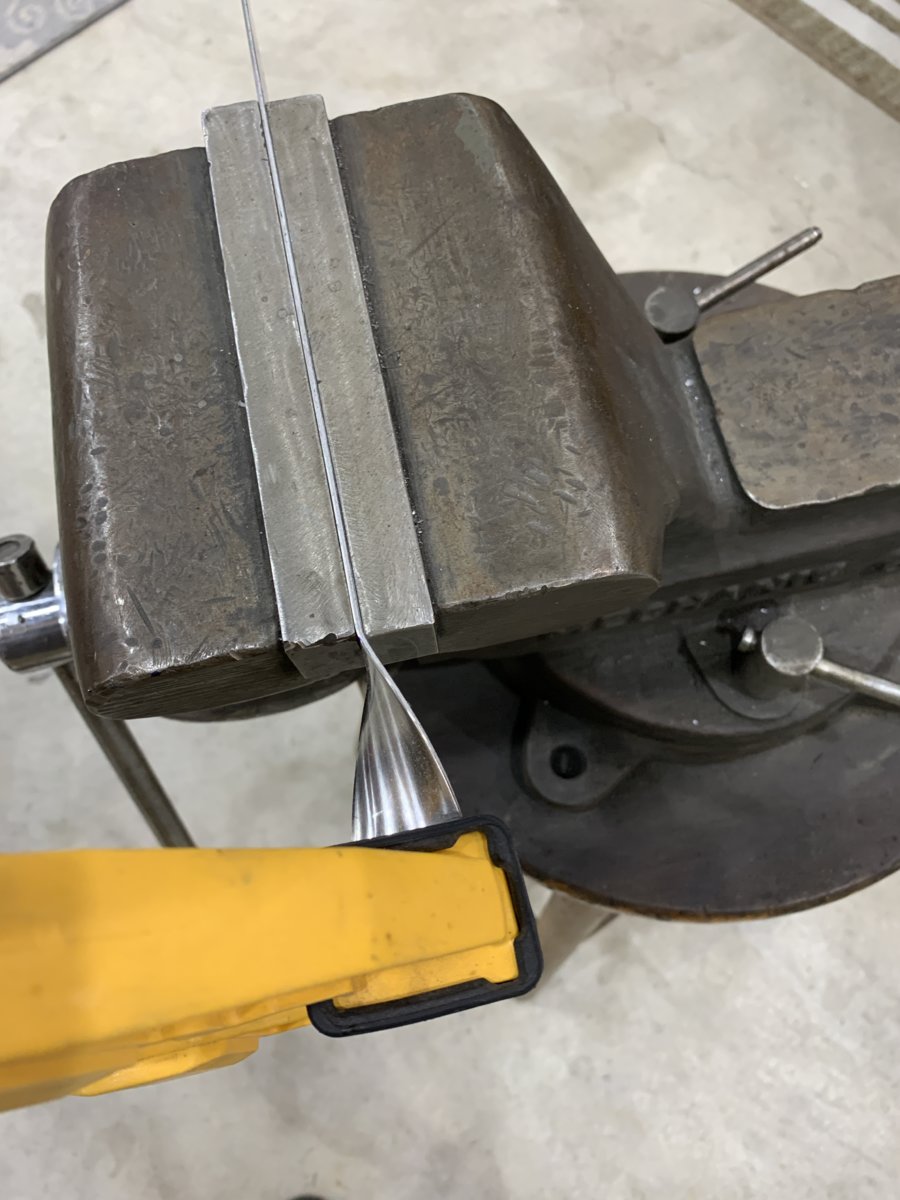
The straps were clamped in the vise, then a second bar clamp was used to rotate the end by 90* so that the mounting bolts would be in alignment with the new 1"x2" crossmember


After installing and bending and marking the straps were cut down to the final lengths and were ready for welding and installation on the exhaust tube


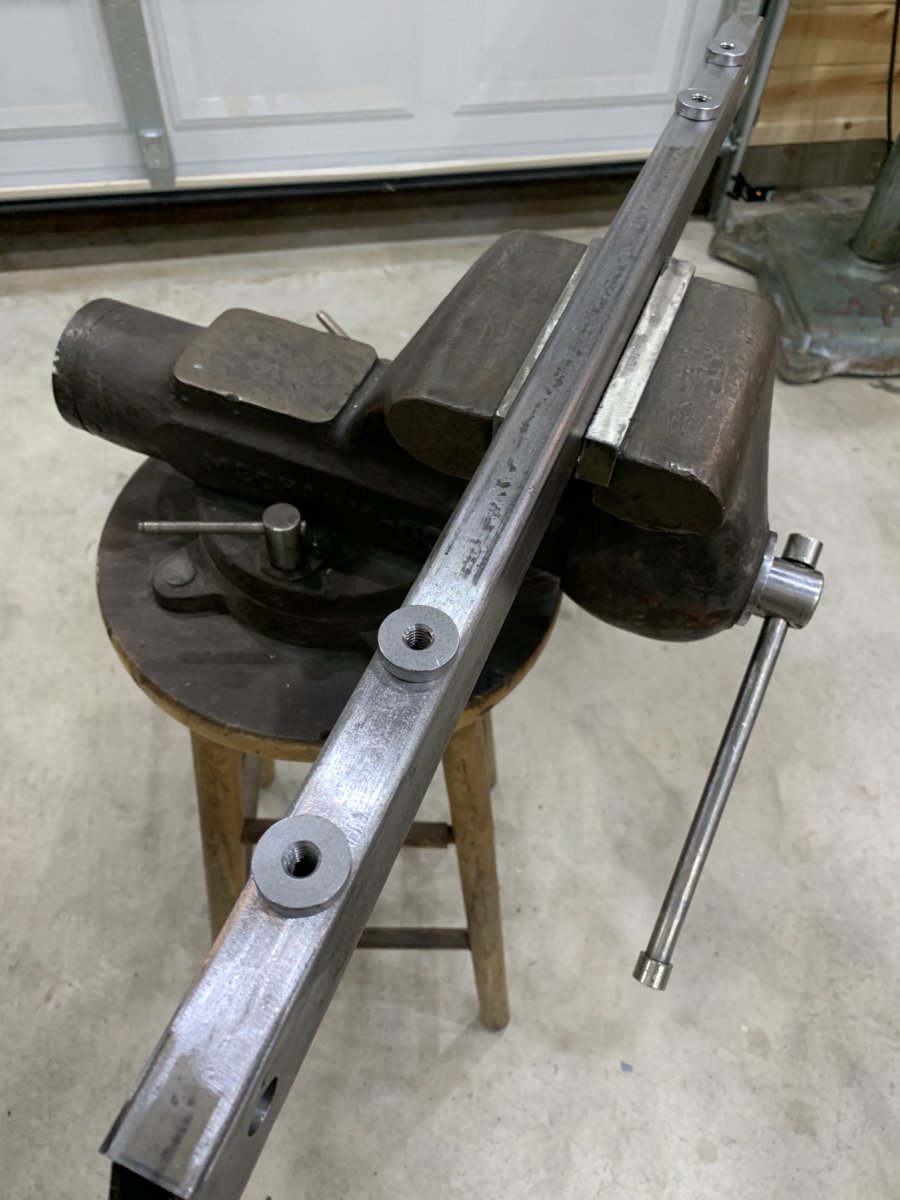
Here's a shot of the crossmember. Nothing too fancy, just a low-profile .125" wall tube with threaded inserts to hold the bushings. A couple of threaded inserts were welded into the top of the frame as well so that this crossmember could just drop down easily and snug into place without a long through-bolt or extra brackets. Did weld in some internal supports so that the tubing wouldn't crush when the bolts were torqued-down. Thinking back now, for such a simple-looking crossmember there were actually quite a number of process steps involved to get it built and installed as intended.


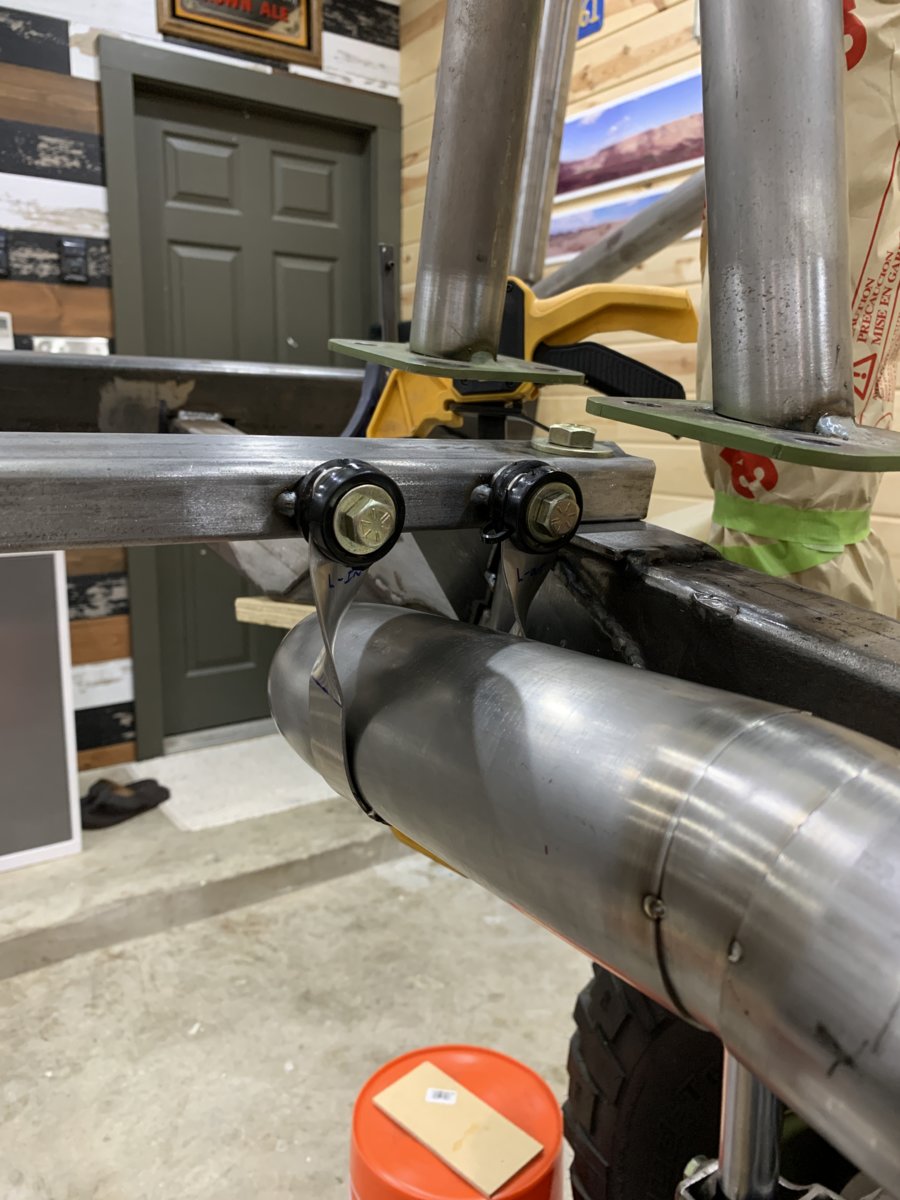
So here you can see the end result of the effort. The exhaust is supported on both sides with a bushing to prevent excessive lateral movement and to keep the weight of the long bent section of tube from twisting out-of-position and causing the exhaust tips to sag lower than desired.


So that's the update.... lather, rinse, repeat for the remaining exhaust locations... but now that it's been done once and looks good, it's just a matter of logging hours and replicating parts.


-G
 
2020.06.04 - UPDATE!! - MUFFLER BEARINGS....


No bearings were hurt in the making of this update.

It's been a while folks, sorry about that... lots of hours at my paying job. Not so many available to spend in the garage... but progress is still being made.
When last we spoke @folkenheath was teasing me about being stubborn about my strategies to tie the muffler hangers to the bedfloor supports. While I'm sure it could have been accomplished, the idea of building a complete rolling chassis (complete with mufflers and hangers installed) won me over, and being able to test fit everything without reinstalling the bedfloor was too attractive to ignore

Step 1: Install a small triangulated support under the floating tube that holds the rear ORIs in place. This has been an "IOU" project from when the rear back-half frame was built. There just wasn't a well supported landing pad for that tube but the fix was simple enough to make.

Paper templates to the rescue:


Never did find my last bottle of Dykem marking fluid from the TX move, so Amazon sent me a new one... it felt good to get back to marking and scribing metal like the old days and dressing-down the edges in a hurry on the 20" APEX grinder.


The test Fit....... fits! A couple of tack welds for now is enough. There is a TON of finish welding all over this frame and rollcage to do someday, but don't want to commit to fully welding joints until there is 100% certainty that they won't need to be cut or relocated by some future build step. Tacks cut easier than full perimeter welds.


A number of different concepts were sketched out, but the simplest and most elegant seemed to be using 1" wide straps of T304 as hangers, installing the poly bushing on one end and then shaping them to fit the circumference of the 3" exhaust and welding them on.


The straps were clamped in the vise, then a second bar clamp was used to rotate the end by 90* so that the mounting bolts would be in alignment with the new 1"x2" crossmember


After installing and bending and marking the straps were cut down to the final lengths and were ready for welding and installation on the exhaust tube


Here's a shot of the crossmember. Nothing too fancy, just a low-profile .125" wall tube with threaded inserts to hold the bushings. A couple of threaded inserts were welded into the top of the frame as well so that this crossmember could just drop down easily and snug into place without a long through-bolt or extra brackets. Did weld in some internal supports so that the tubing wouldn't crush when the bolts were torqued-down. Thinking back now, for such a simple-looking crossmember there were actually quite a number of process steps involved to get it built and installed as intended.


So here you can see the end result of the effort. The exhaust is supported on both sides with a bushing to prevent excessive lateral movement and to keep the weight of the long bent section of tube from twisting out-of-position and causing the exhaust tips to sag lower than desired.


So that's the update.... lather, rinse, repeat for the remaining exhaust locations... but now that it's been done once and looks good, it's just a matter of logging hours and replicating parts.


-G

looks awesome. Assuming those rubber/urethane bushings are heat resistant?
 
looks awesome. Assuming those rubber/urethane bushings are heat resistant?
Being that the strap gets rid of some of the heat and the exhaust is not that hot especially past 5 feet from the engine I wouldn't worry about that
 
looks awesome. Assuming those rubber/urethane bushings are heat resistant?

Hey Brian,

Those are from Speedway Motors:

https://www.speedwaymotors.com/Spee...UCaWQxKboW9bCYbF8gxgMmS7ukYN1KuhoCO0UQAvD_BwE


It's supposed to be for exhaust applications, so I'm hopeful... still not sure how much effort will be spent on JetHot and other gold foil / heat shield items for the exhaust.
I guess that's another advantage of building a complete rolling chassis... the entire thing could just be started up and left running (without the body mounted) and it would be easy to take temperature measurements everywhere with an IR gun... find the hotspots, and address anything that seemed problematic while there is easy access...


-G
 
Hey Brian,

Those are from Speedway Motors:

https://www.speedwaymotors.com/Spee...UCaWQxKboW9bCYbF8gxgMmS7ukYN1KuhoCO0UQAvD_BwE


It's supposed to be for exhaust applications, so I'm hopeful... still not sure how much effort will be spent on JetHot and other gold foil / heat shield items for the exhaust.
I guess that's another advantage of building a complete rolling chassis... the entire thing could just be started up and left running (without the body mounted) and it would be easy to take temperature measurements everywhere with an IR gun... find the hotspots, and address anything that seemed problematic while there is easy access...


-G

Hmm. If they are made for that than I’d have to assume they’re at least a little heat resistant. I guess other bushings like that I’ve seen for exhaust just looks like normal rubber so maybe I’m overthinking it.
 
I guess that's another advantage of building a complete rolling chassis... the entire thing could just be started up and left running (without the body mounted) and it would be easy to take temperature measurements everywhere with an IR gun... find the hotspots, and address anything that seemed problematic while there is easy access...
Just asking due to this remark is all.
 
Just asking due to this remark is all.


Don't let the subtle positivity of that sentence fool you.... there is a generous helping of "coulds" and "woulds" in there to tamp down any assumptions about it's viability as a running vehicle (or chassis)... :haha:


Still plenty of major projects to go before this things starts burning fuel and making noise.


-G
 
Top Bottom