CK5
Register an account today to become a member! Once signed in, you'll be able to participate on this site by adding your own topics and posts, as well as connect with other members.
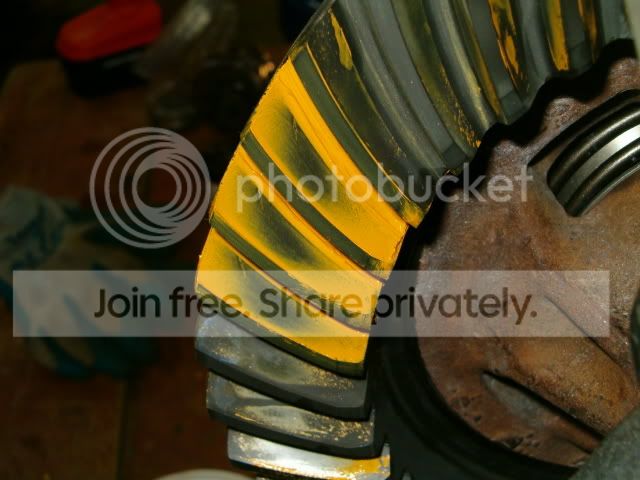
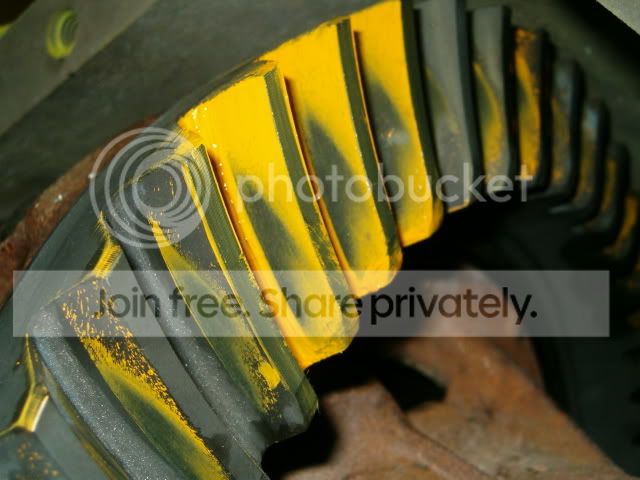
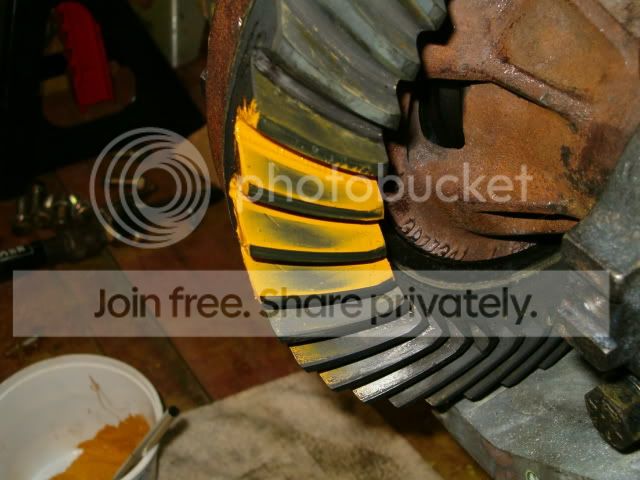
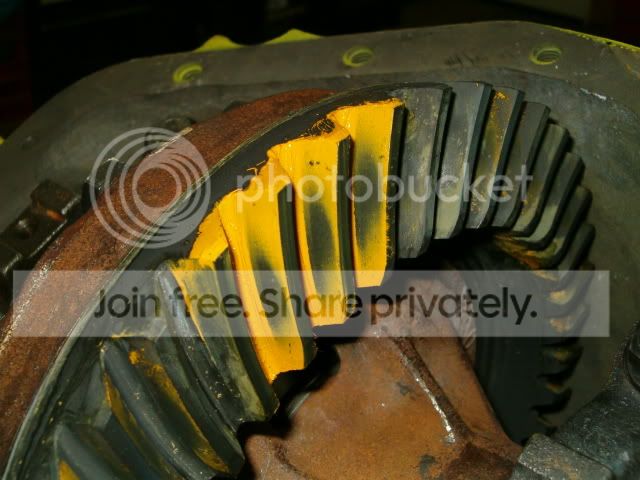
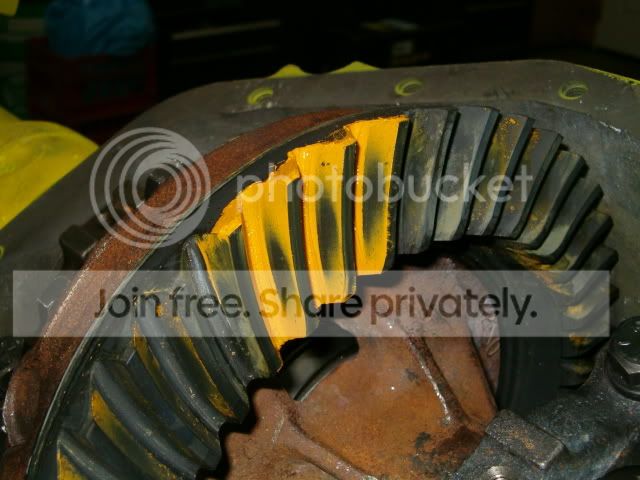
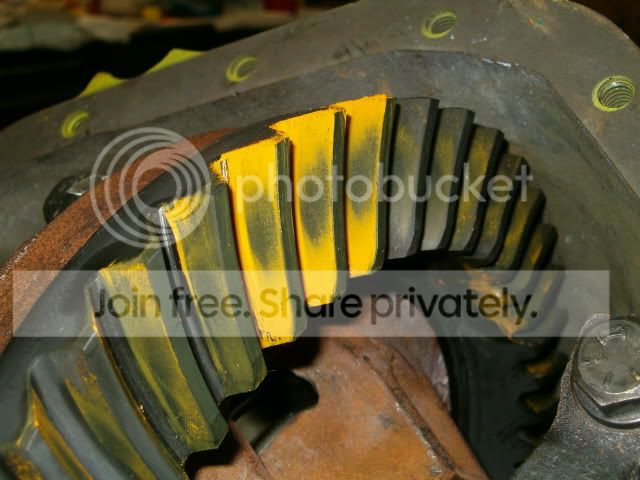
The pattern look to be just about where it needs to be. If anything I would add .002 to the pinion shim and check it again.
 
Awesome Brian, thanks for the input. I'll do that and see if theres much of an improvement in the pattern. New gears are so much easier to see the pattern, and I guess the yellow gear compound helps too. I mixed it with some 5w30 to help thin it out some.
 
I played around with the pinion shims, and backlash tonight.

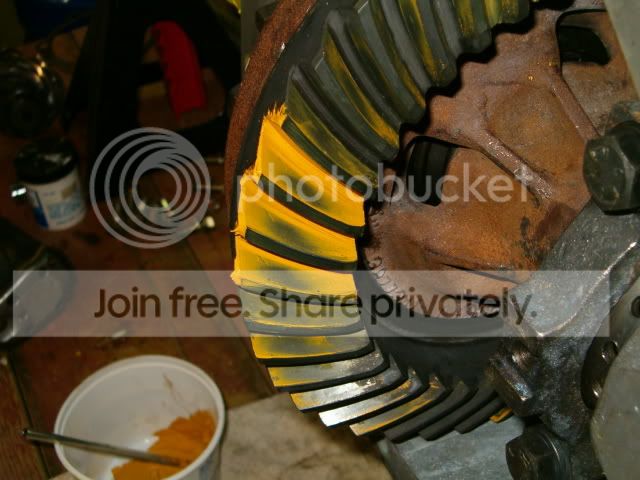
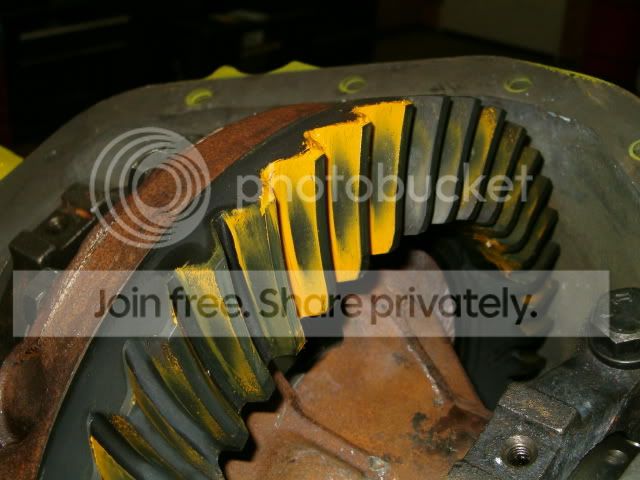
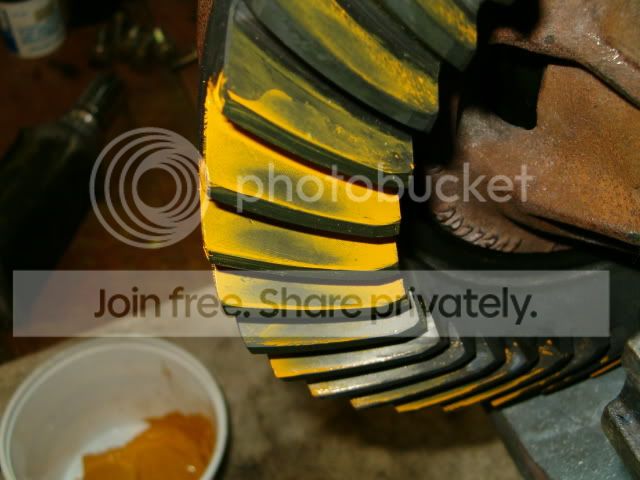
Here is what I had with each movement.

.012 shim and .006-,007 b/l

HPIM1495.jpg

HPIM1496.jpg


.015 shim and .007 b/l

HPIM1501.jpg

HPIM1502.jpg

HPIM1503.jpg


.015 shim and .011 b/l

HPIM1500.jpg

HPIM1499.jpg


.018 shim and .011 b/l

HPIM1497.jpg

HPIM1498.jpg


I'm thinking the .015 and .007 are the best set-up.
 
Yes Brian, every 90* it was never more than .001 difference.

OK, finally can finish this rear axle up.
 
ya know, just that I didn't have a feeling for what direction I needed to go in when making changes was the hardest part. Starting with a BAD set of used gears didn't help me any either.
I gotta add that when checking the pattern, that the more resistance you can put on the gearset, the better the pattern will show also. I've also heard that by turning the ring gear bolts, instead of turning the piinion, it will give a better pattern. ALL of the pics I took were taken using the pinion as the turning point.
Anyhow to all those who have chimed in to make this work for me, THANK YOU. I feel like I've been working on this damn axle for months. I need to pick up the pace on this project to get it usable by May. Crack the whip.
 
I did not want to muck up the diy4x boxing thread or Ryoken's thread but you mentioned over there that your frame was really "flexy" when you pulled it off your trailer after being chemical dipped.

I was curious of you thought the frame had loosened up at all from the dipping process. I had considered a chemical dip for my frame as well but I was concerned with the rivets/joints loosening with rust/debris being removed from between said joints.

Do you think the frame is looser after the dip? If so, were you considering knocking out the rivets and replacing them with grade 8 hardware to tighten things up or going straight to welding everything in?

Thanks in advance for your insight.

Cheers,
Rufus
 
My frame is really flexy right now due to the trans and transfer case crossmember, and motor mount crossmembers being unbolted from the frame. I do believe this frame is structurally sound. It is basically two rails with nothing between the forward most crossmember, and the crossmember in front of the rear axle. I think the trans/transfer case crossmember gives a lot of rigidity to the frame as it has a slight amount of triangulation in it by bolting to the upper and lower frame rails.

The stripping process is as follows:

Put parts in an oven to bake for 24 hrs. (not sure what temp) but it breaks down the bond between paint, rust, coatings, etc. Then to the sulfuric acid/water tank. A 12-48 hour dip. I don't believe the acid has any affect on the good metal present, other than etching, which is good for painting. If you look at my frame shots you can still see where the factory frame coating was on the metal, and where it wasn't when it went into the acid tank. The smooth metal is where it was protected from rust, the slightly pitted metal where it wasn't. So any weakness that the frame has encountered was due to age and corrosion before any acid cleaning. Also notice the pic of the rear axle after it was stripped. It went through the oven and then to the acid/water tank. The frame was too long to get into the oven, so they put it in the acid tank twice. First time for 18 hours, second time for 36 hours. It isn't no where near as clean as the oven treated parts. In retrospect it would have been better off taking it to a sand blaster.
Having the frame, a GM truck door, the 2 removed crossmembers, engine mounts, rear tailgate brackets, gas tank, D60 spring plates, and 2 gas tank straps, and a receiver hitch, done cost approx. 250$. Now how much time would it take to sandblast these parts if you had the equipment, and sand to do it, I don't know, but to not have to mess with it was worth the 250 for me. And the acid stripping gets everywhere.
I plan on removing each of the remaining crossmembers on the rear to put the kit on the frame. This will include removing the rivets, tacking the new boxing kit in place and modifying the factory crossmembers to weld back into place when ready for them.
As Kert said this kit isn't for a bolt on DIY'er. And this is the major reason for removing the body too. I think the time it takes to remove the body, pays big dividends by not having to work "underneath" the vehicle all the time.
 
Last edited:
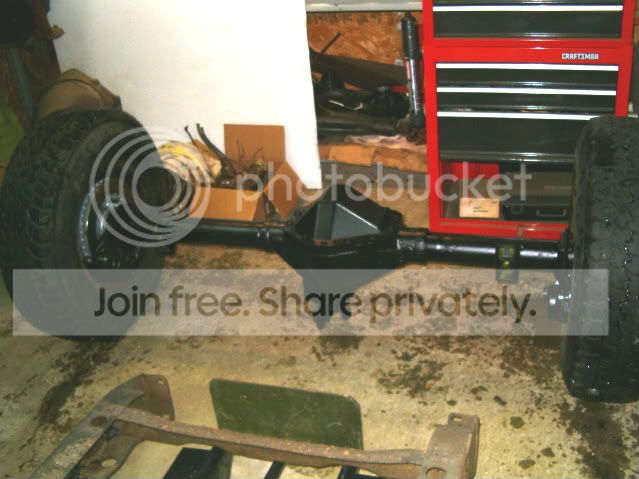
Finally pretty much done with the 14BFF build. Still need to add shock mounts to it, but that will be in the frame to do that.
The first major component done....at this rate, I won't be done by May....gotta figure something out soon to get sh!t done in a more timely manner.

The completed 14...

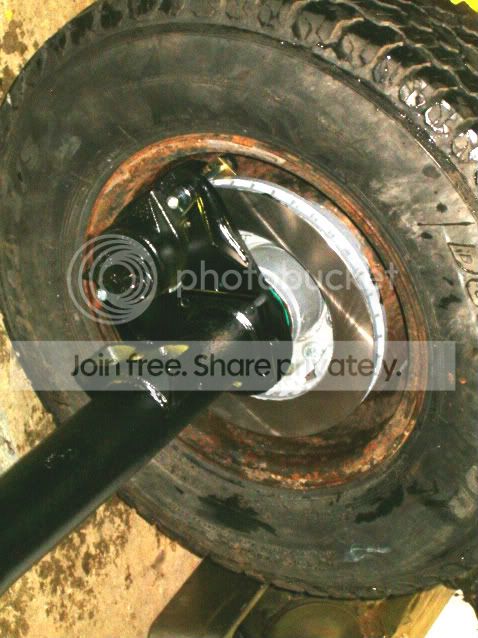
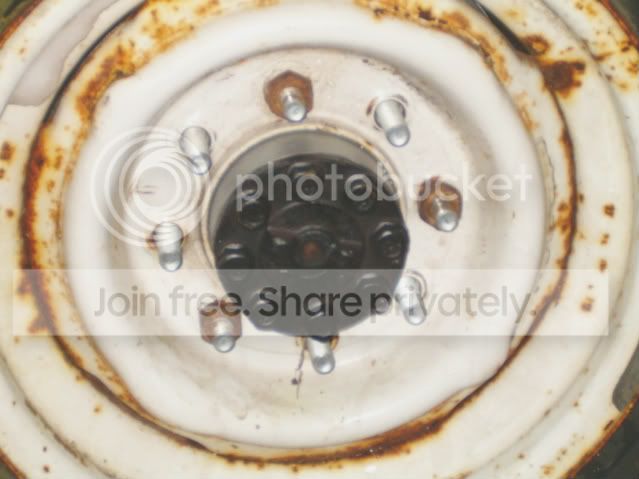
4.56'd, Detroit, DIY4X disc/caliper mounts and 3/8" Flatback diff Cover, disc's, DRW studs.

HPIM1509.jpg


HPIM1510.jpg


HPIM1511.jpg


The tires are just roll arounds....
 
Last edited:
I don't recommend this stuff:

VHTSP671.jpg


It sprays like crap, and easily scratches off...
 
subscribed!

Doing a diff setup will teach you patience!
 
which I was running out of on the r&p set-up with the old gear set. It just seemed like no matter what changes I made it just wasn't showing up right in the pattern.
Again, I think that by putting more resistance on the ring gear while turning the pinion gave me a better pattern on the new set.
Anyhow I'm glad that's setup now. Now I need to find a place to put that thing til its ready to go under the frame.
 
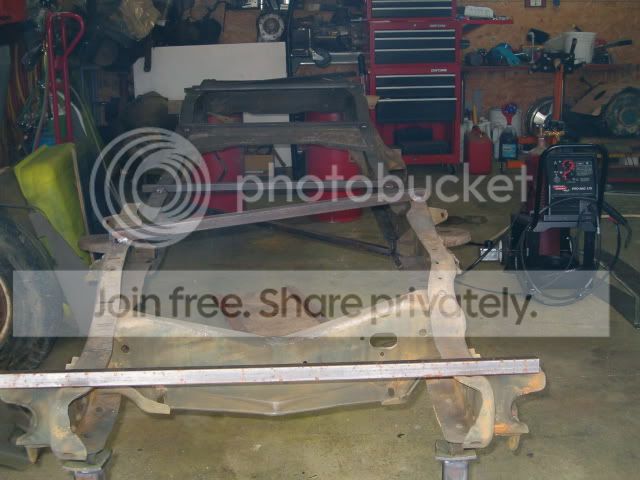
I got some square tubing for bracing today, to reinforce the frame rails while I remove the crossmembers to fit the boxing kit.
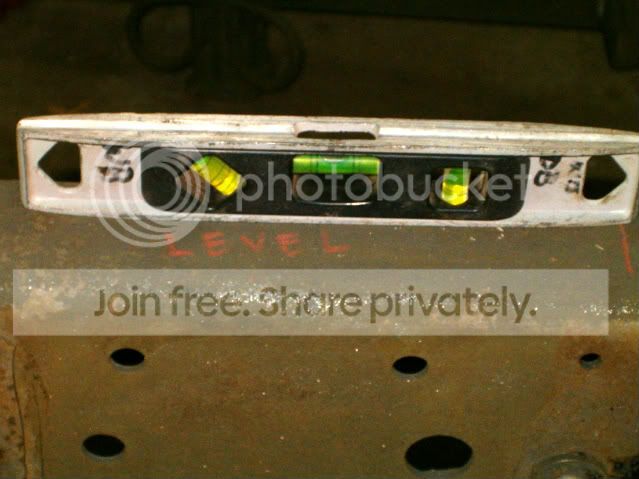
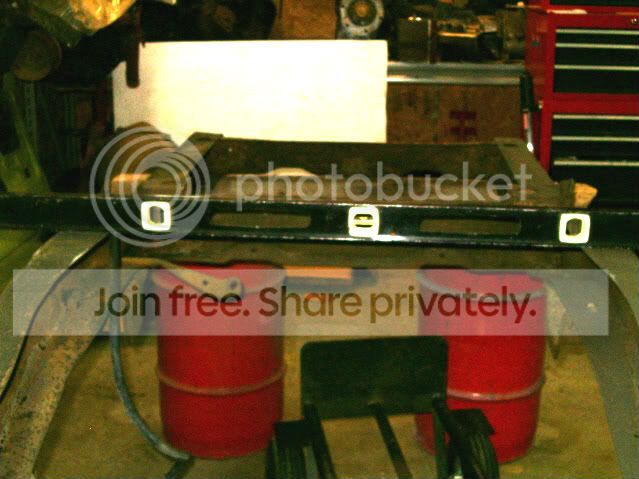
I set the frame on jackstands and leveled it (middle of side rails) with the rear supports (the 2 garbage cans with the landscape tie on it)
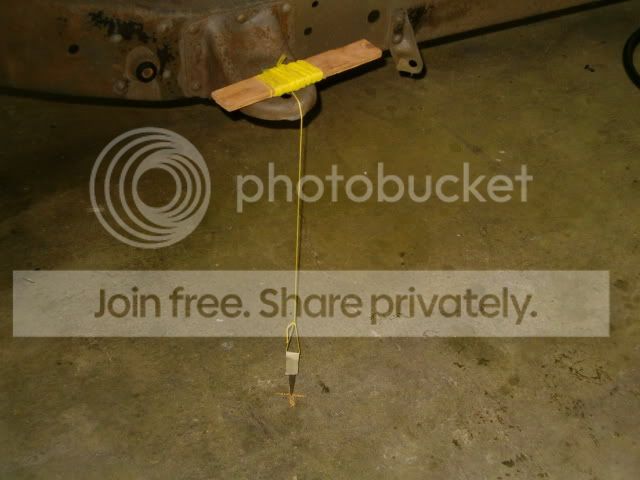
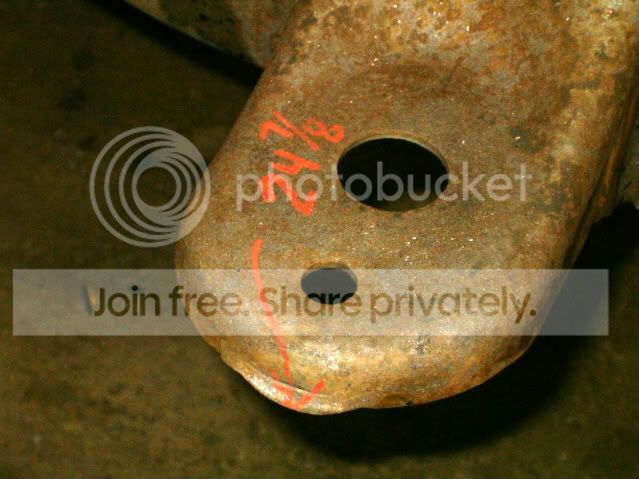
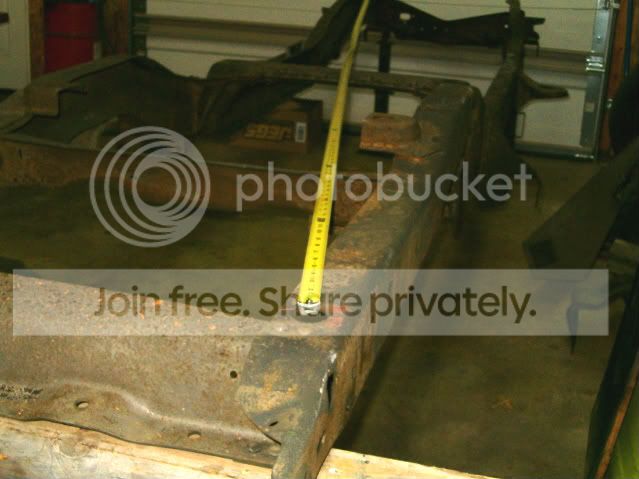
I took measurements from 4 points on each frame rail to a marked spot on the floor with a makeshift plumb bob. measurements were recorded, on the frame and on a piece of paper. I also took measurements from a common point on each frame rail, diagonally to check for squareness of the frame and to make sure it stays that way.

Checking level:

HPIM1514.jpg


HPIM1515.jpg


plumb drop measurements:

HPIM1512.jpg


HPIM1513.jpg


checking for squareness, diagonally across the framerails.

HPIM1518.jpg


All squared away, and level, measurements recorded, bracing added:

HPIM1519.jpg


Next step torch off the rivets holding in the crossmembers. Only the rearmost crossmember, and the frontmost crossmember will remain intact.
 
I've been meaning to do this for a few days now:

Project Total to date ..........$4706
Stripping/derusting..............250
Rear axle gear set/install kit....302
Coan trans kit/valve body.......462

total to date......................$5720


Rear axle total to date ........$1401 includes $100 purchase price
Transmission total to date.......$612 includes $150 purchase price
__________________
 
Hey Eric, I actually have a diagonally cross braced link on the bottom, in the middle. I thought that along with the front and rear crossmembers being left in place would be sufficient. I will take some measurements across the bottom in 4 places for reference, and keep tabs on it.
I actually picked up the frame by the rear c/m and its quite a bit stiffer now than before. We'll see how it is with the other 2 c/m out. Before I tack any plates in place I'll check my measurements again.


Thanks for the input, more is welcome. This is new territory for me.
 
I took measurements today of the bottom framerails at 4 points for reference. I need to talk with Kert about how his intention of the kit is to be installed or if its up to the owner. The framerails are not a straight cut on the inside. there is many places where the frame is scalloped in or out, and may have a pointed ridge here and there. I was thinking to just put the boxing pieces flush with the lower or upper frame rail where the fit, and then where there may be a pointer on the frame rail, or a scallop, move the metal inboard so it is in full metal contact.

If you look down the inside of the framerail in this shot, you can see how uneven the inner edges, upper and lower are.

HPIM1519.jpg
 
Made by union workers man. Especially in the 70's...probably drunk ass **** too.:D:thumb:
 
Top Bottom