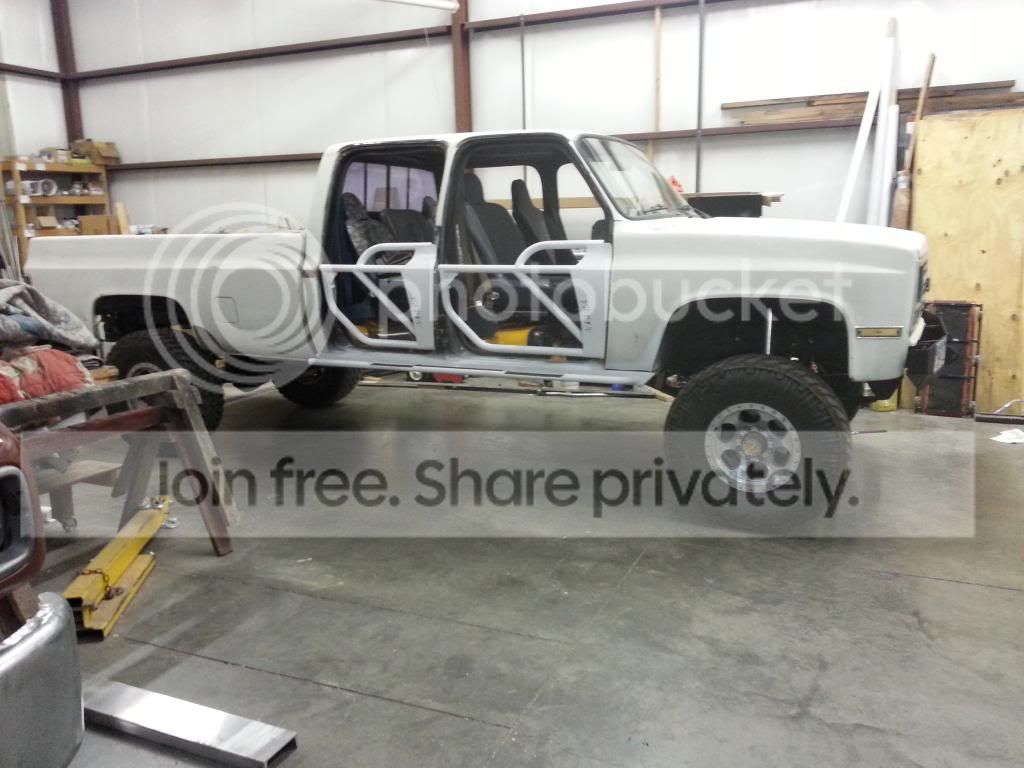
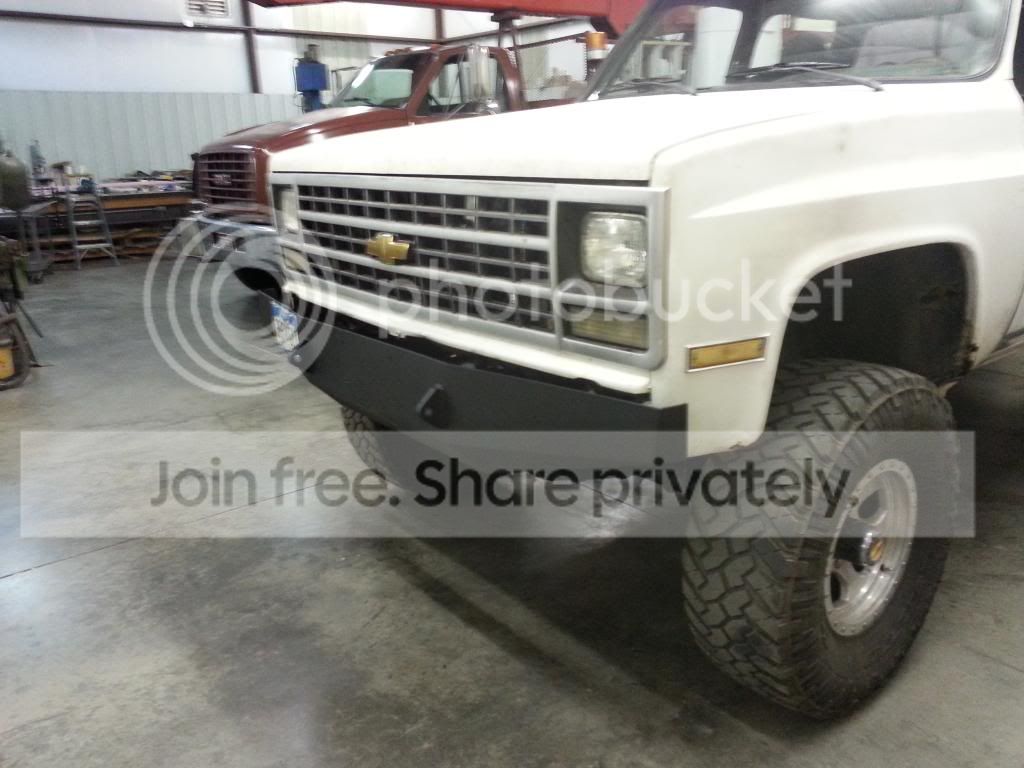
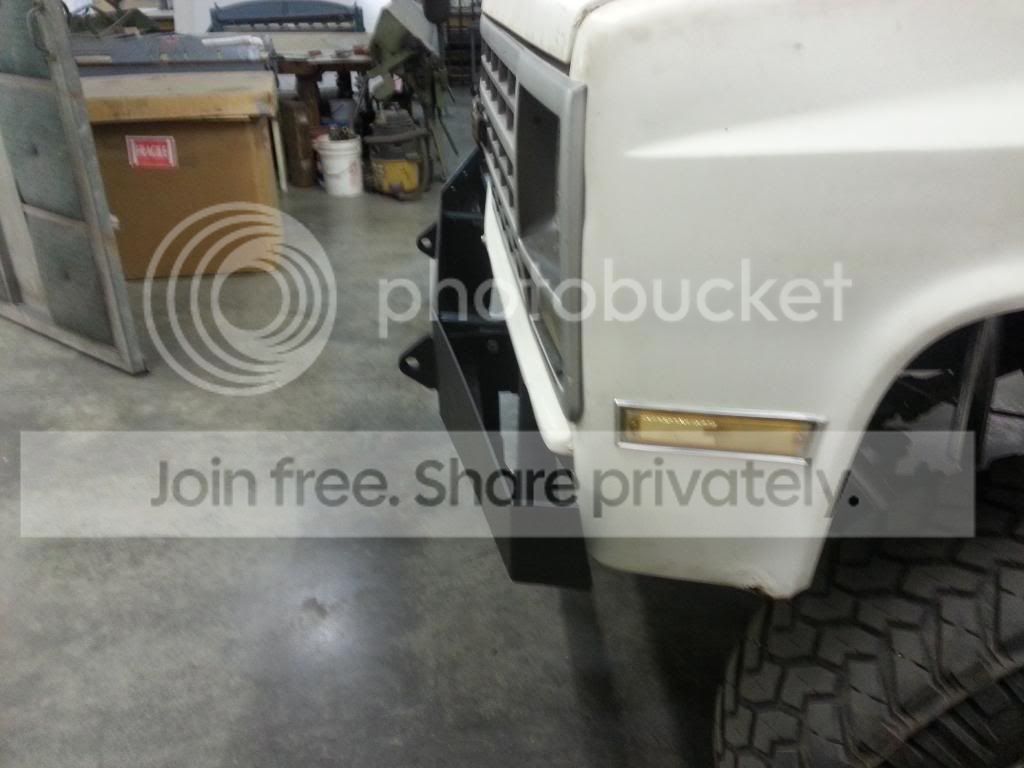
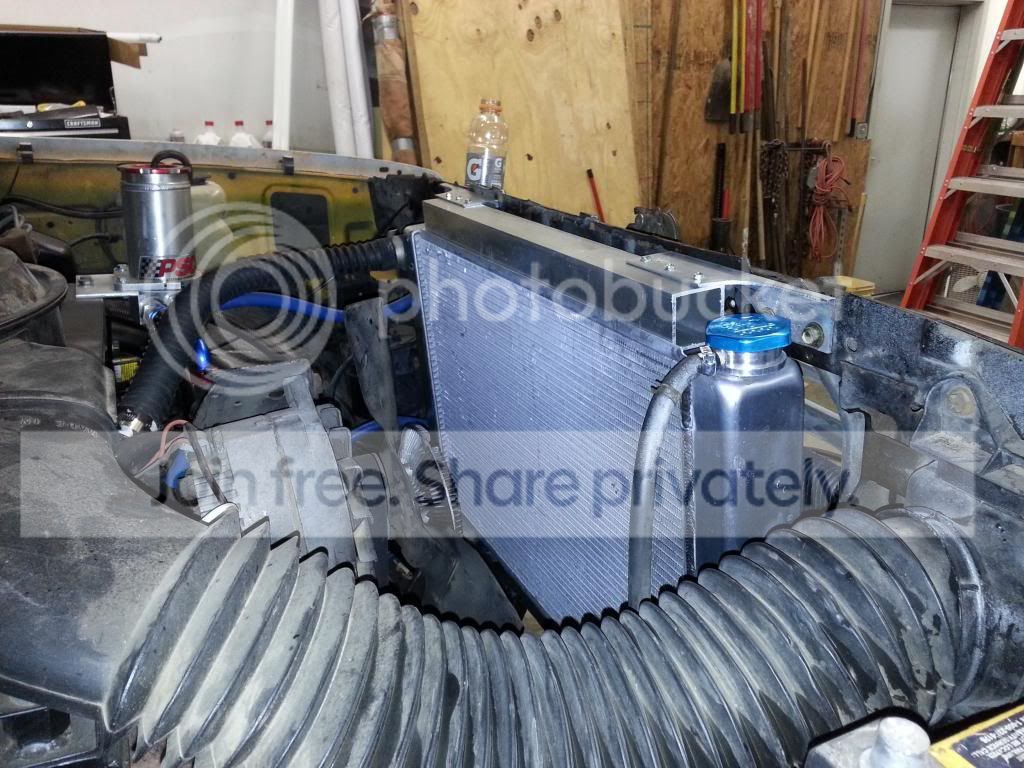
I installed the new radiator on Labor Day. I wasn't sure I could get it done before our trip Sunday and that was almost a mistake.
I knew the long pull up into the mountains would be hard on the truck and it was. The temp got over 250° before I finally pulled over. It is capable of cooling itself off at idle which tells me the fan and clutch are pulling good.
We were able to make our trip work by running the heater on high. Which worked okay since it was cool day with off and on sprinkles. The cooler weather felt really good after sweating my face in the shop the day before.
So that was my motivation to get the radiator in on Monday.
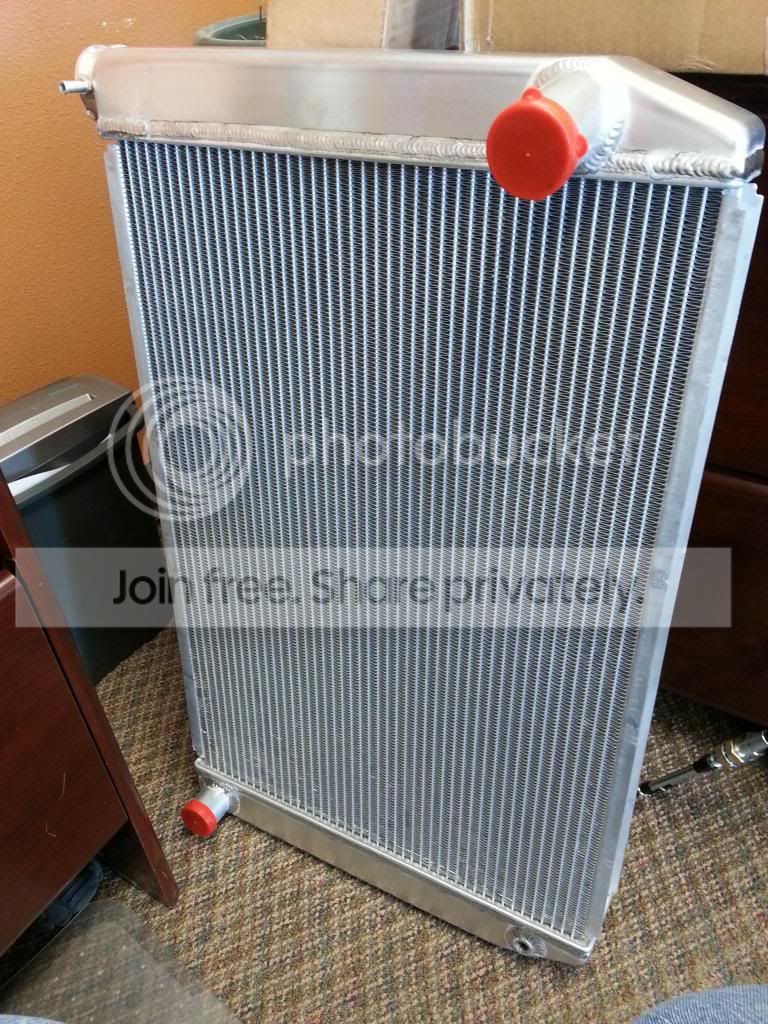
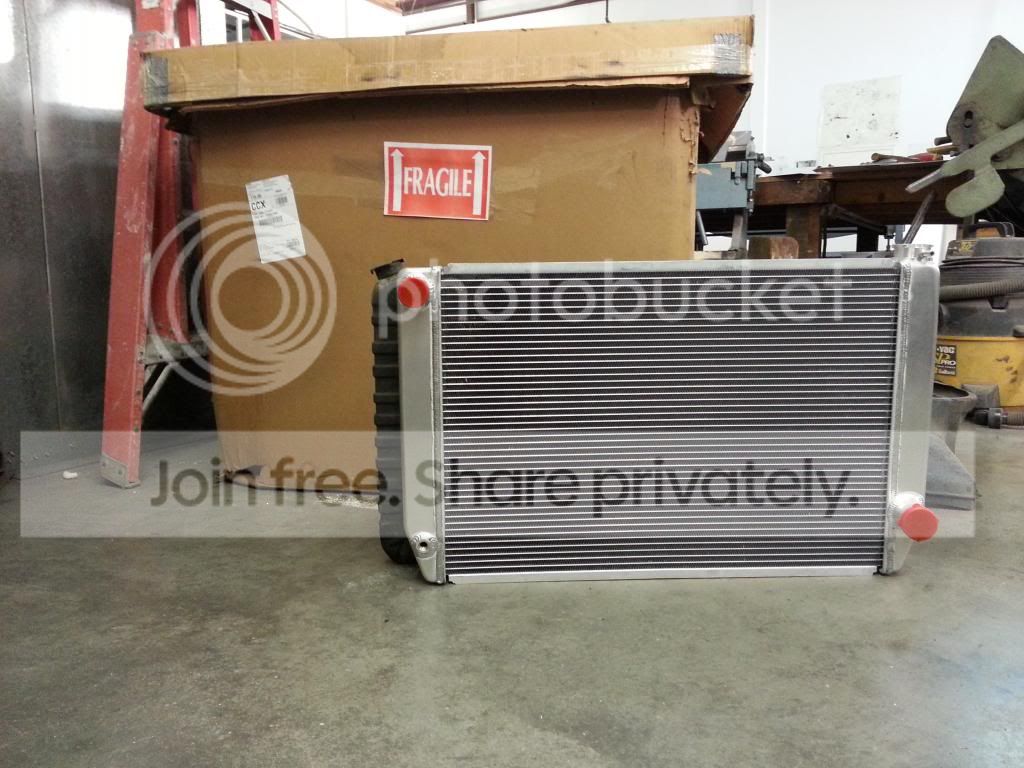
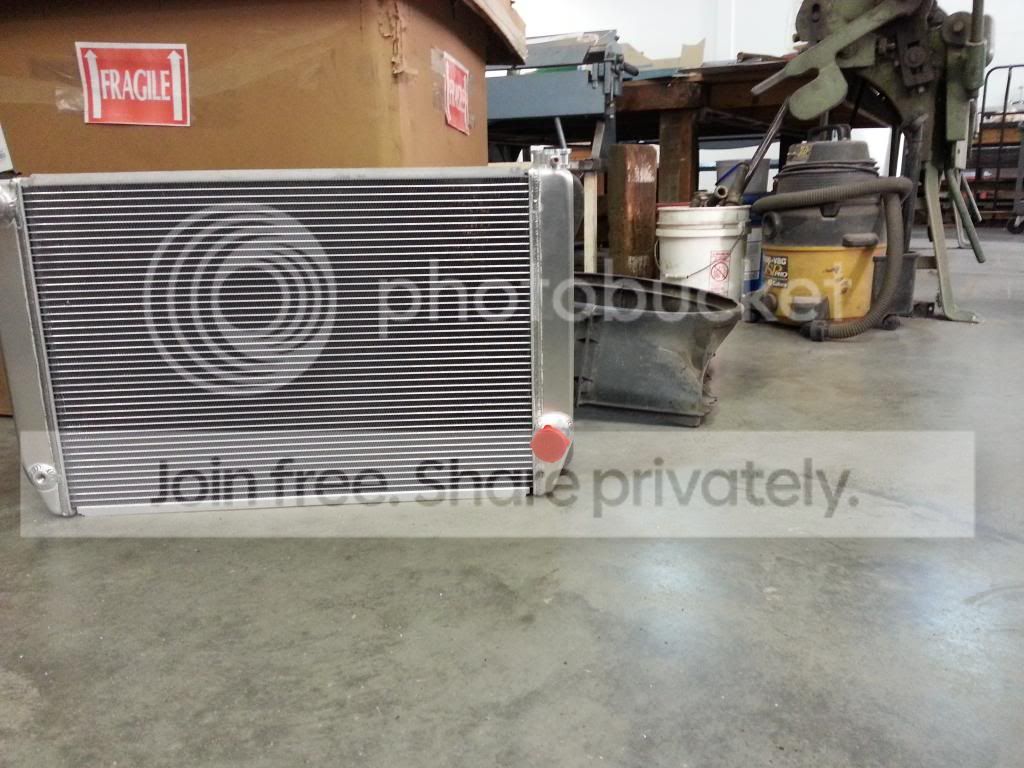
I purchased the Griffin 1-25272-X. I has 2 rows of 1" tube. Overall Size 31"x19". Core Size 26"x18.9". It's a universal style intended for 1-400HP motors. I went with the Griffin because it's made in USA and they support offroad events.
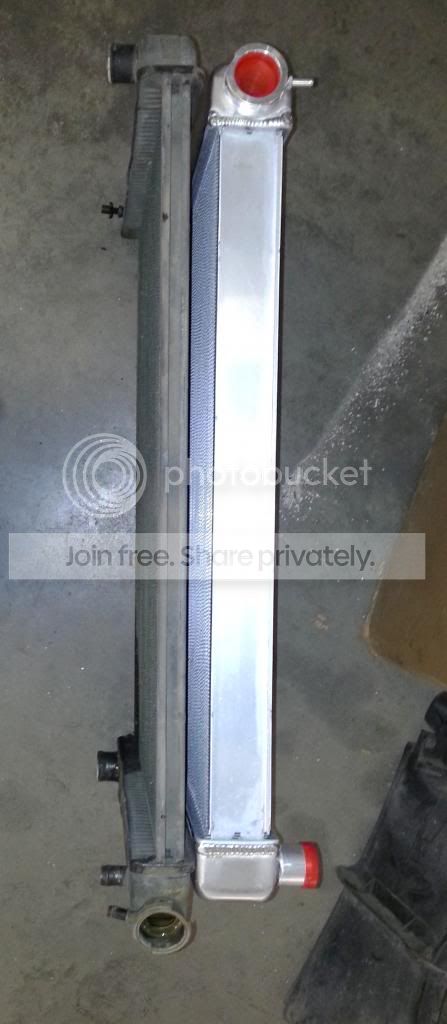
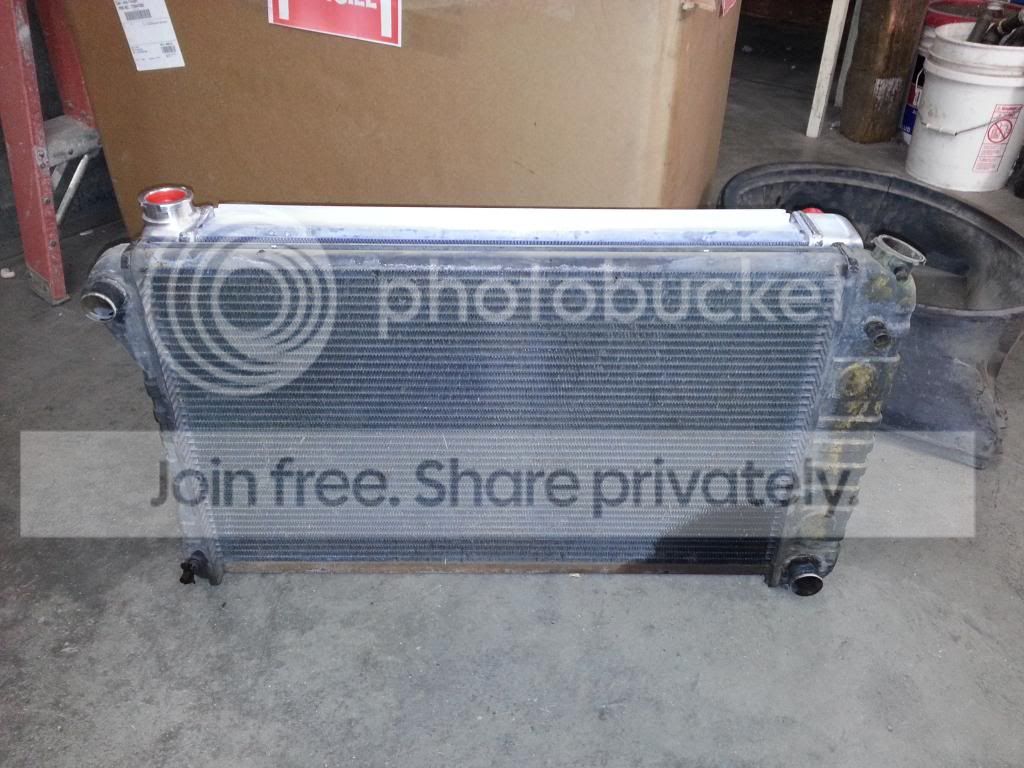
Here it is compared to the piece-o-crap radiator I pulled out.
What is that like a 1-row radiator?

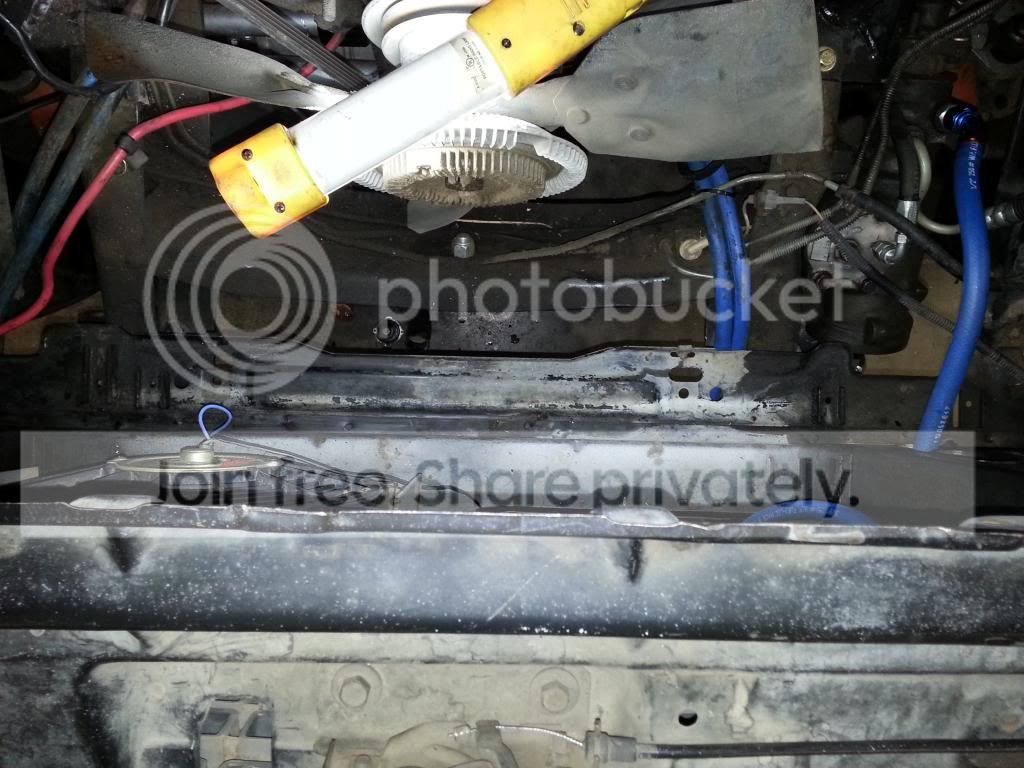
Here's what the bottom of the core support looks like with the radiator removed.
For reference if anyone is curious, you can see the tabs that hold the rubber bumper for the driver side of the radiator just above the steering box. If you look about 6" further to the right in the photo (just to the right of the blue hose) you can see where a diesel radiator ends up with the tabs to hold the rubber bumper.
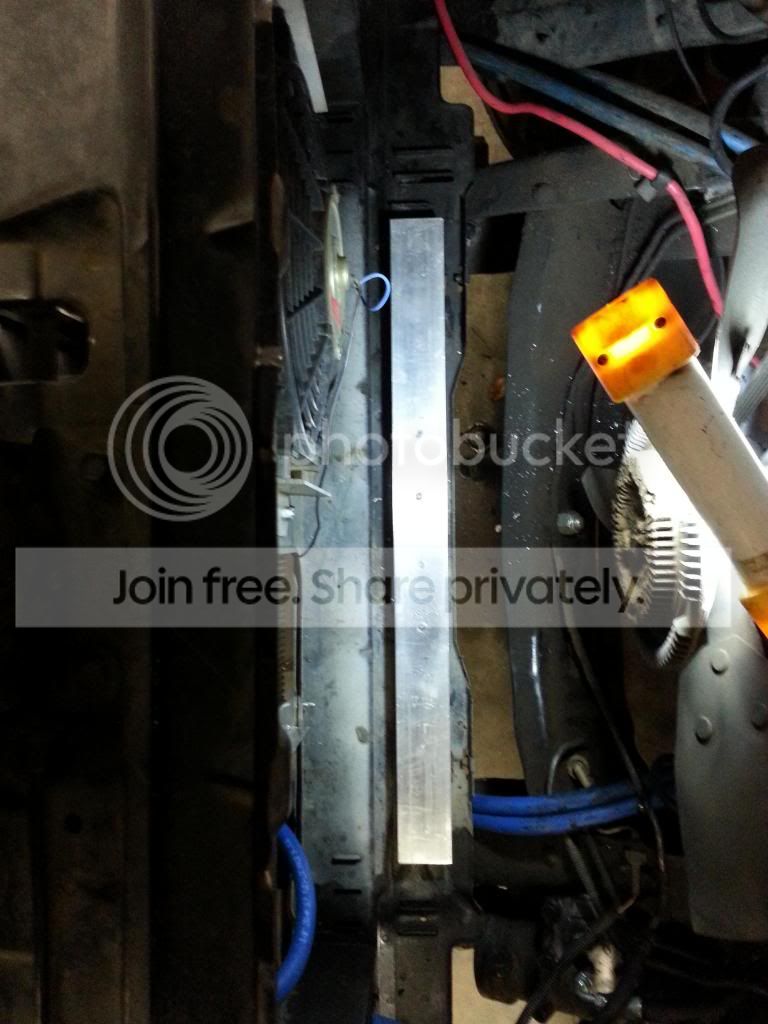
I used the embossed area in the middle as the mounting platform for the lower radiator mount. The radiator measures 2" between the rails on the core. So I cut a piece of 2" wide, 1/4" thick strap to run under the radiator. I added a 1/2" thick spacer block under that to keep the radiator from hitting those tabs I mentioned earlier.
The radiator nested down on that with a piece of 1/8" thick neoprene rubber between the radiator and saddle.
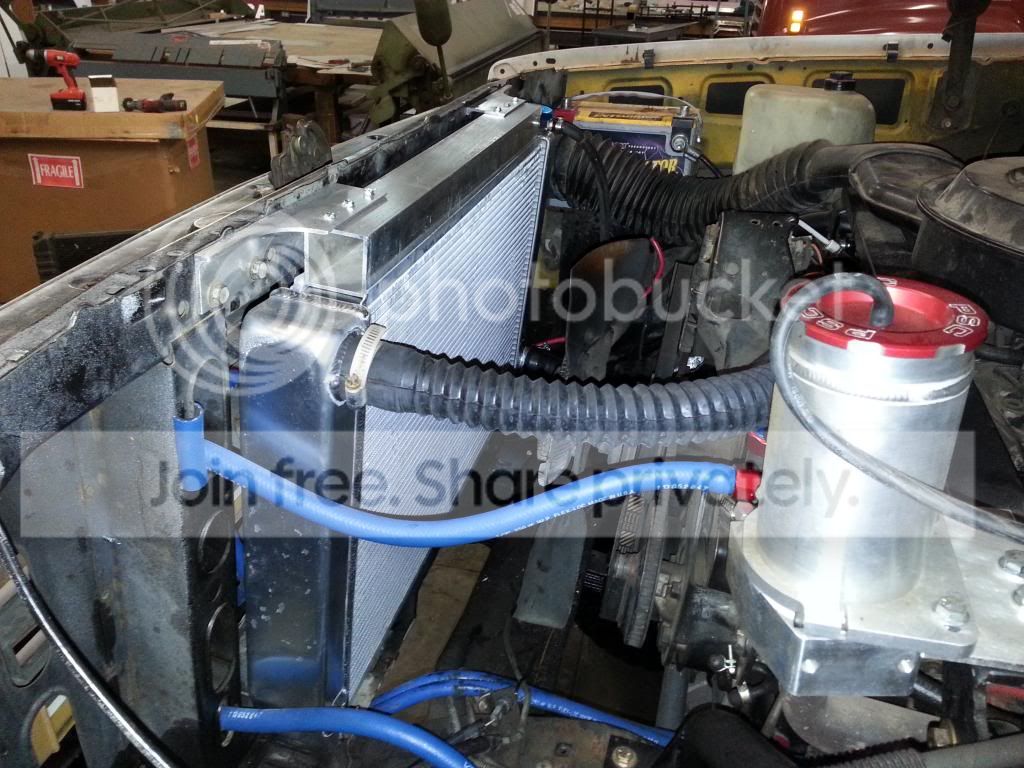
For the top I used a length of 2" square tube with pieces of 2" angle for brackets. I modified the angle brackets to bolt to the original mounting holes which were captive nuts inside the core support. I also had to make room for the filler neck and cap on the passenger side.
Something to consider with most aftermarket aluminum radiators are the hoses. A factory radiator has 1.6" outlet on the bottom and 1.4" inlet on the top. The aluminum radiator has 1.75" on the bottom and 1.5" on the top. As it turns out the aluminum radiator matched the motor which has water pump inlet at 1.75" and the water neck outlet at 1.5". The factory hoses reduce down a little.
I believe some people have had success stretching factory hoses over the tubes on the aluminum radiators. I tried this on the bottom but I just couldn't get it. Luckily knowing this might be an issue I had purchased both factory hoses and universal hoses. The advantage of the universal hose is both ends are the same size. I really like the universal hoses. I've used them before in the General to match up a diesel radiator with a 350 gas engine. The are very thick and sturdy. IMO they seem more durable than factory hose. I suppose some people may not like the way they look. You can see the upper hose in the pictures above.
Now I need to come up with a fan shroud. Because this radiator is about 2" narrower at the core, the factory shroud won't fit. The outside edges land on the lower outlet on one side and the drain petcock on the other.
I'm also thinking about going electric, but I don't know if I'll have money for it.