CK5
Register an account today to become a member! Once signed in, you'll be able to participate on this site by adding your own topics and posts, as well as connect with other members.

FullSize S10 Bogger/Mud Racer

There really isn't much around here other than mud. It's about a two hour tailer ride to get to anywhere for something else (sand, rocks, etc). This is something I've wanted to do for a while now, been collecting parts for it and have a real good idea for the direction I'm going with most everything on it.

I will say this, the major downside of the the mud is the maintnace it takes. Weather you make one pass or a dozen, you need to plan on a couple hours with the power washer and some time going through wheel bearings, brakes and u-joints.

thats the big reason I don't like it as well...when I got back from Bundy, I spent $10 and 1/2 hour at the car wash, and we didn't even really get into the mud bad.
Looks like fun Ryan!
 
Got the holes opened up in the body mounts so the mount will drop in. Picked up a new step bit and finished them off with the die grinder. I had one spot on the cab that was close to the valve cover on the BBC so I cut that out and put a flat panel in, should have a little more room now. Stuck the headers and water pump on to get an idea of my clearances for running the water pipes. Also put the passenger side fender on so I'd know if I had problems there. I think I'm going to get the box mounted/cut down so I can get the radiator in...that way I know where I need to end up.

Body mount hole opened up. I sprayed some more paint on the bare metal after.


I've got a real good idea how I will run water to the back, but I'd like to get the radiator mounted first.


Got the holes opened up in the body mounts so the mount will drop in. Picked up a new step bit and finished them off with the die grinder. I had one spot on the cab that was close to the valve cover on the BBC so I cut that out and put a flat panel in, should have a little more room now. Stuck the headers and water pump on to get an idea of my clearances for running the water pipes. Also put the passenger side fender on so I'd know if I had problems there. I think I'm going to get the box mounted/cut down so I can get the radiator in...that way I know where I need to end up.

Body mount hole opened up. I sprayed some more paint on the bare metal after.


I've got a real good idea how I will run water to the back, but I'd like to get the radiator mounted first.


Started the mounts for the box the other night, finished them and got them onto the frame. Only partily welded until I get the box off again, but there on there good enough to where I can continue on.

Mounts, fronts are on the left, hadn't drilled the holes in the rears yet. Holes are sloted (I cleaned them up with a file) for side to side movment.


Front mount on frame.


Rear mount


Next time out I'll cut the floor of the box and get going on the radiator.
 
Cut the floor of the box and started mounting the radiator.

I might cut more from the floor and some of the sides still, or put a couple tabs in the hole so I can drop the cut out piece back in. Haven't made up my mind yet. It's about 60lbs taken out.


Made some mounts for the radiator.


Added the rubber piece


Welded to the box


Idea of what I'm going for. Still need to make the top mounts. Hard to tell from the picture, but it's angled forward quite a bit. Top will be about level with the bed rails.

 
Finished mounting the radiator and started getting the master cylinder on the firewall.

Used some stock top mounts for the top of the radiator. Cut a few slots into the bed rail and welded some nuts in place. It feels real solid, but I still might add some bracing mid-way down the tanks.


Since I'm using a manual master cylinder, to get the proper pedal ratio I needed to move the pin on the brake pedal. It needed to move about 1" up. Having no booster to mount the master to, I made up a plate to make up the differance in the holes and to raise the cylinder up inline with the new pin. Still need to get some longer bolts (they will get welded to the plate) and open up the holes in the firewall some.


Once I figure out what I'm going to need for brake lines at the wheels, I'll order those and some bends to run the piping for the cooling system.
 
Finished up mounting the master cylinder and got the steering shaft sorted out.


Welded my longer grade 8's to my plate and opened up the hole in the firewall. Still need to make up a push rod, will do that once I get the lines plumbed.


Mounted on the firewall. It feels super solid and doesn't move/flex at all, unlike the stock way on the end of the booster.


Shot up under the dash. Hard to tell from the angle, but the pin and master are inline with eachother. I don't know why, but for some reason the PO used a torch to cut some of the dash....no clue what they cut because everything was there when I got the cab.


I had a u-joint from another car laying around to use to get rid of the factory rubber joint. Only problem was it wasn't the correct spline/shaft style to mate with the GM box. No big deal, made up an adapter. Next time I run across an XJ in the yard I'll grab it's steering shaft and replace this one, but for now it'll do. I may even move to full hydro down the road as well....so it may not even be in use very long.

The parts. Box side of the factory shaft, plate to hold the stub shaft, stub and u-joint.


Stub shaft. It's ground to fit into the female side of the u-joint and has a slot of the bolt to index with. Drilled a pilot hole to accept the nipple on the end of the input shaft of the box.


Assembly order. It might look weird in some of the pictures, that's because everything was loose. I got things as straight/true as I could when welding it. I replaced the short bolts with the correct length ones so the threads aren't in shear. The adapter is seperate from the clamp on the input shaft. The two bolts hold it together (can't be any worse than the piece of rubber and rivets holding the stock part together), if I have any problems with it I can weld everything together. I have enough slip at the column end where I don't need it to disassemble at the box.


Plan on ordering my soft lines and caliper brackets tomorrow.
 
Order most of the parts for my brakes as well as the stuff to plumb the cooling system.

Jumped on a pair of seats that popped up on facebook. I was actually going to order these exact ones from Summit tomorrow. They sell for about $75 each without the covers, plus $15 shipping/seat. Paid $100 for the pair. One was only used for mock up and he decided to go a different route.


It's supposed to be in the single digits the next few days so I doubt I'll get out to do any work on it until it warms back up to 20 or so.
 
Box of goodies showed up from Summit today. Still waiting on parts from WFO, Lugnut4x4 and Rock Auto.

Bends for the coolant pipes and some ignition parts. I've always felt this motor had ignition problems in the upper rpm's. Went with the 6AL2 and a start retartd/retard box. The 6AL2 has two built in rev controls, one for stage/launch and one for rev limit. The retard box has a start retard, another area I had problems with on this motor (running locked out advance) and timing retard for when/if I decide to spray it. Once I move up to the BBC this system should work nicely too.

 
I would put two u-joints in that steering shaft.

Looks good though


I had thought of that, what you can't see is the other joint at the end of the column behind the firewall. It's simular to the joint at the base of a square body steering column, but it has more movement in it. So another u-joint would make 3 joints then I'd need a support somewhere in there. The steering column joint isn't even close to it's max working angle yet.

Cycling the steering so far hasn't shown any problems, and that's been without the power assist. I'm planing on crossover and hydro assist in the very near future.

I will defently keep an eye on it and may even change the whole setup before too long. This was mainly to get the steering workable.


FWIW: If you take a look at some of the S10/fullsize builds that have the body several inches above the frame...my solution dosen't look that bad compared to them. Not saying it's perfect but it could be a lot worse.

Thanks for the input.
 
My brake parts came in earlier this week and I ran my brake lines tonight. Still need to get 4 rotors and another pair of calipers and banjo bolts.

Parts from WFO. Weld on brackets for the rear axle, braided stainless soft lines, misc adapters to go from -3 to 3/8-24 inverted flare, couple T's, tabs and their clips. I didn't end up using all of the parts. I wasn't sure how I was going to run them before I ordered. I couldn't decide whether to run two of the soft lines straight off of the T or to make a short hard line and use the adapter/tab/clip. I ended up hooking right into the T's with two of the flex lines. I also didn't run a single flex line down to the rear axle, instead using one from the frame to each wheel, saved myself from buying a fifth soft line and a few adapters.


The brackets to use 3/4-ton brakes on the D60. I won't need the extra stopping power of the larger rotors/calipers. But, I mainly wanted to loose the 50 or so pounds from the front end, most of that being rotating weight.


Coil of 3/16 line and fittings.


Horribly blurry picture of the first of many flares.


The brake lines curve back toward the center of the cab because of how the inner fender sits. Put a few pieces of rubber over anywhere that looks like it may rub. Still need to get a few more cushion clamps. Can see how I ran the flex line out of the bottom of the T. They look close to everything, but that's just because it's hard to capture the depth of everything in the picture. I'm not using a proportioning valve for few reasons. 1) I'm using the same rotors/calipers at each wheel. 2) My master cylinder is a straight 24mm bore. 3) This thing will be in 4wheel drive 99% of the time, with welded/locked axles. So if one wheel locks up...they all lock up. I did however give myself a union in the rear line should I need to add one. Probably should have put one in the front as well (for line lock if I decide to add one), but that line has enough in it where I can tie into it easily enough.


Around to the passenger side. The line goes under the frame and follows the engine crossmember. With the boxed frame (and motor already in place) it would have been difficult to go through the frame, so I went under instead. I had thought about running the passenger line along the firewall behind the motor, but that would have put the T up on the firewall (similar to most newer cars) and I would have had to make more lines/flares.


Drivers side rear. The line follows the tank crossmember over to the passenger side, ending with an adapter fitting/tab. I don't have huge amounts of wheel travel/flex so I don't feel I need the center drop line.


I think next time I'll work on getting the radiator plumbed or maybe get some framework made up to mount the seats.
 
Knocked out some of the radiator plumbing today.

Started with some U-bends and two 12' sticks of exhaust pipe. My pipe expander crapped out after using it twice. So instead of having a little bit of a flare to make welding a little easier, I had to butt weld pretty much all of the joints.


And through the magic of the internet....this is what I ended up with. Actually I forgot to take pictures of the process as I went. They aren't connected to each other, just showing how they will run. Had two pin-holes in the one pipe I had to fix. Unsure if I'm going to clean up the welds or not before I paint.....they look like ass. Need to add a few tabs to hang it from the bottom of the cab before paint also. The pipes start just under the firewall (about 6" behind the passenger front shock), hug the bottom of the cab back to the opening I cut in front of/bellow the radiator. I wanted a removable joint at the point because when I go to the BBC I plan to use fenderwell headers. Will make up a couple short pieces to connect to the water pump and intake.


Opening I cut bellow the radiator. Should help get a little more fresh air in there. It's the same width as the big cut out and runs between the front two crossmembers of the bed. I have a radiator that's in better shape than this one, just didn't want to be cutting/grinding/R&R the good one all the time. For hoses I used part of an upper one for the top and part of a lower one for the bottom. Wanted to keep it simple so replacements would be easy.


I'll get some pictures of how it all goes together once I get the tabs on it and mount it up. I'm thinking I should put a place somewhere along the runs to drain the system. I could always pull one of the fittings at the bottom of the block, but that isn't very convenient.
 
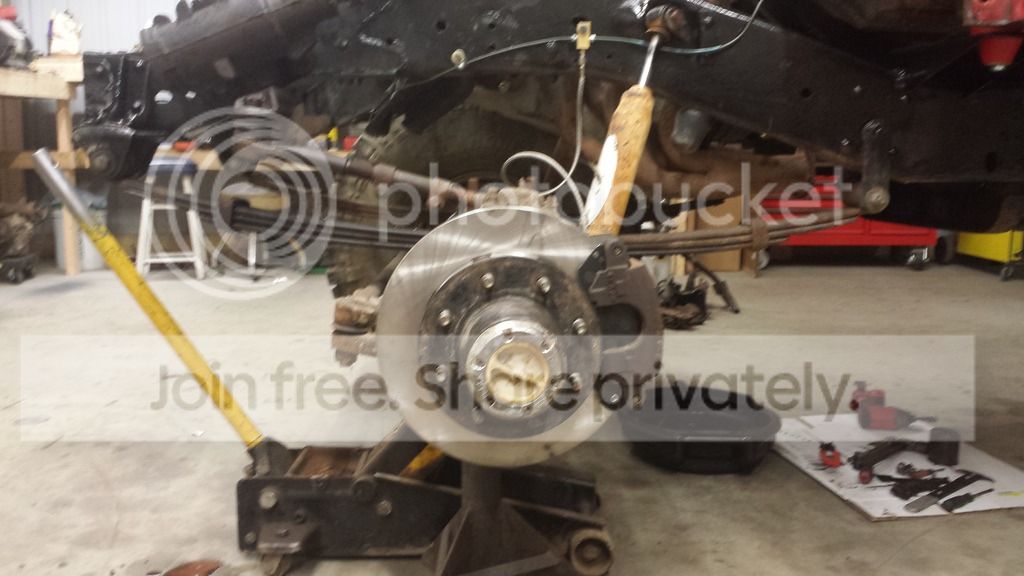
The rest of my brake stuff came in this week so that's what I did today. Had every intention to get both the front and rear done, but only managed to get the front finished. The banjo fittings I needed came in, two of each, -3 to 10mm and -3 to 7/16. Rotors came in a few weeks ago and I picked up two new sets of brake pads earlier this week.

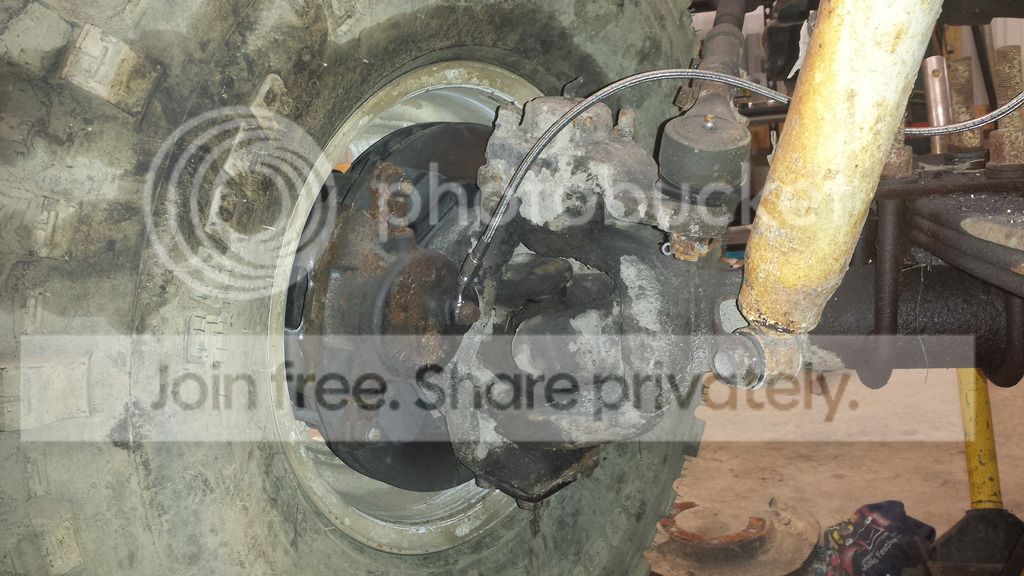
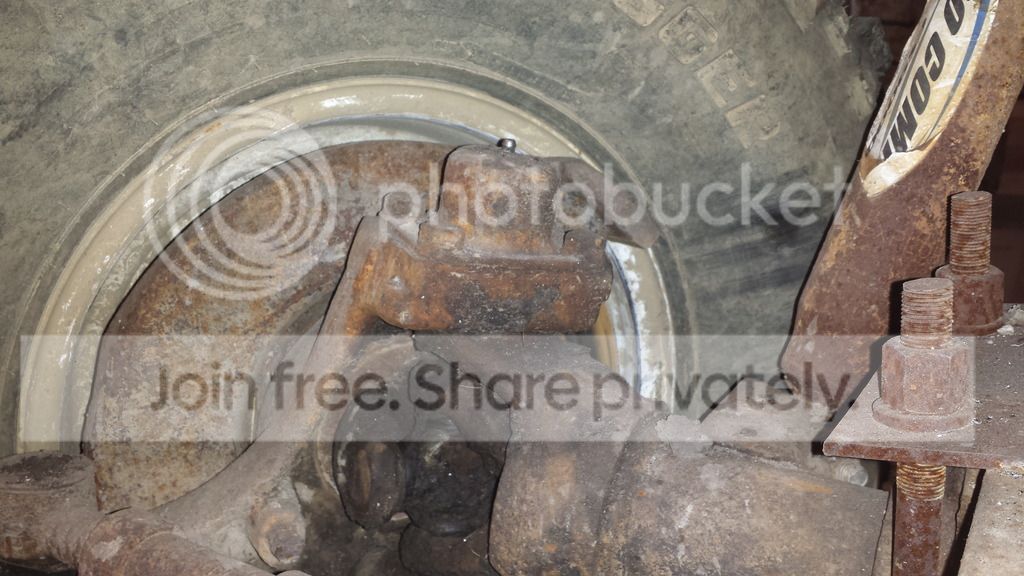
It took me just under 6 hours to get the fronts changed out....which was way longer than it should have. As is usually the case when mixing non-stock, OEM and aftermarket parts, some fitting/adjustments are needed. The dis-assembly went very quickly, however when I started putting things together is where I ran into problems. I had to drill out the lug holes in the rotors to 11/16 so the larger 1-ton studs would fit, this was expected and was outlined in the directions with the Lugnut4x4 parts. What wasn't expected was the new brake pads not fitting between the rotor and caliper bracket. I had to grind some of the backing plate of the inner pads so they would clear the bracket. Took me a few minutes to figure out why the caliper wouldn't go down all the way. Then when I went to put the wheel on I had clearance problems with the caliper. Had to grind a good amount to get the wheel on and have sufficient clearance. That ticked me off quite a bit. It wasn't as much grinding as if I were going to use the stock D60 brakes, but it seemed unnecessary to me. Especially when they advertise the caliper brackets as fitting a 15" wheel with no grinding. I'm thinking it was a combination of the wheel offset, larger aftermarket calipers and the profile of the rim. The second side went much quicker, but still took me about 2 hours....most of which was grinding the caliper.


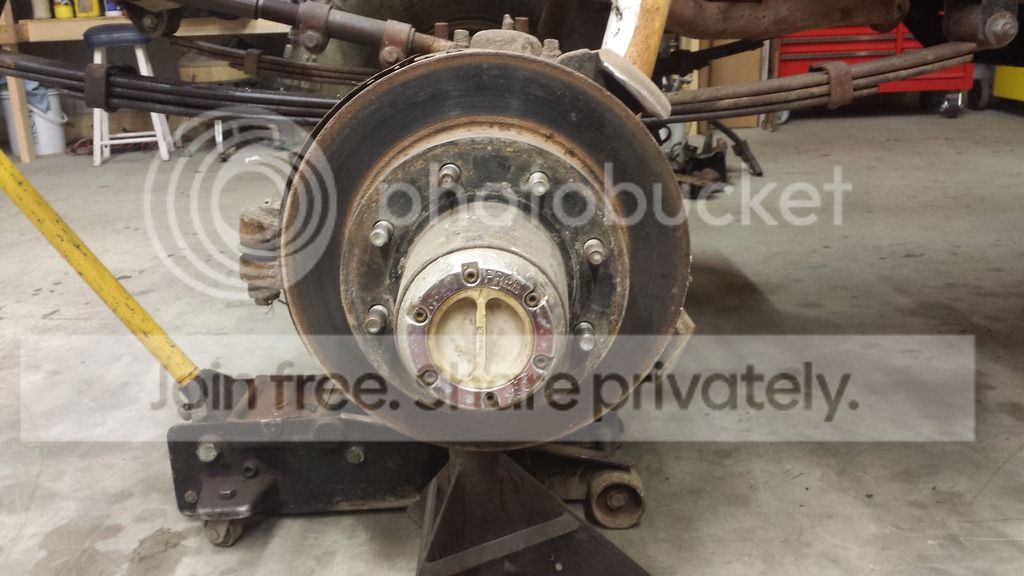
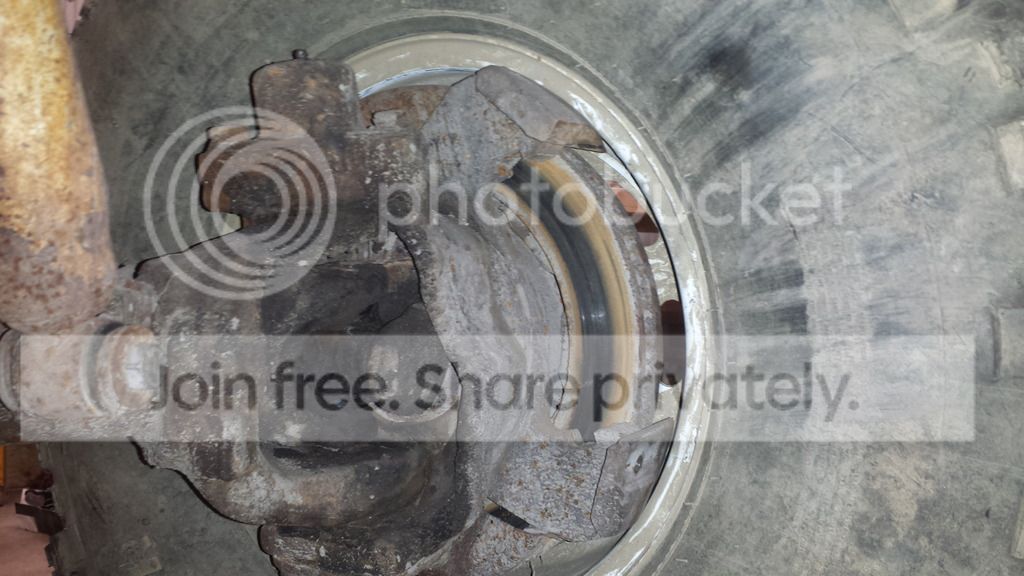
What I started with, stock D60 brakes minus the caliper. I pulled the calipers off and only ground the mounting brackets so I could get my Boggers on, knowing I wasn't going to be using the stock brakes, I didn't bother grinding the calipers.


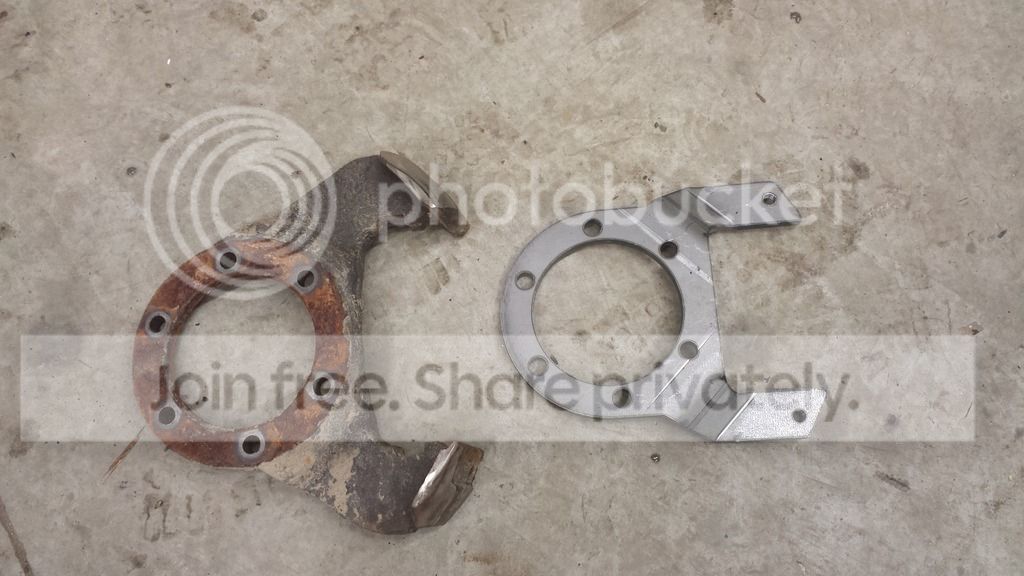
Stock D60 caliper bracket next to the Lugnut4x4 3/4-ton bracket.


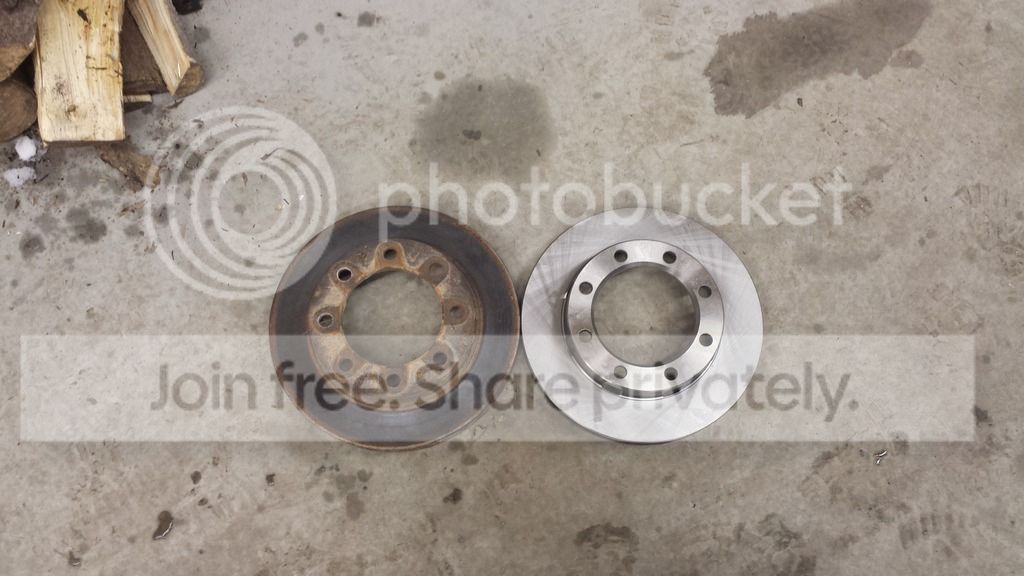
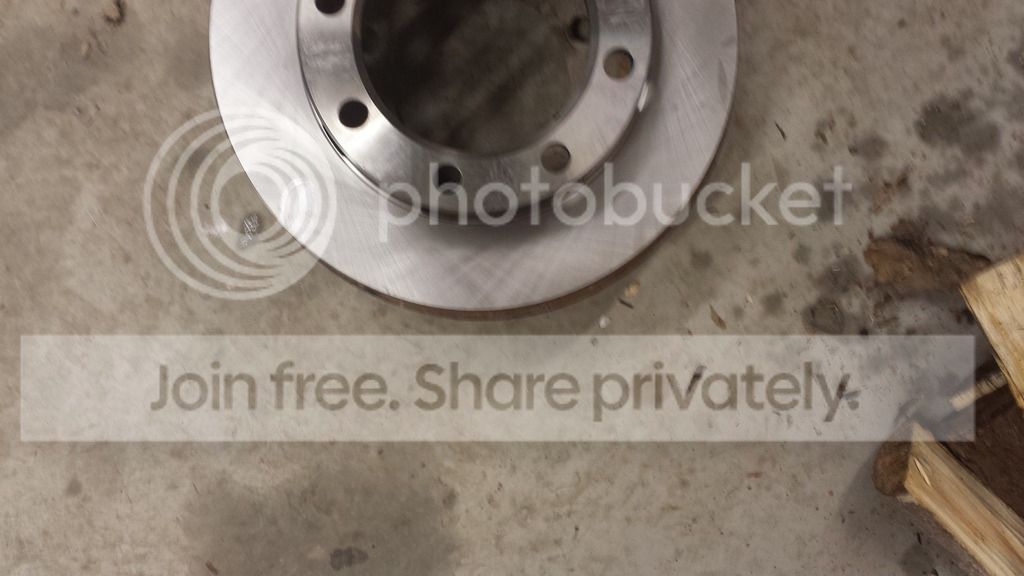
1-ton rotor next to the 3/4- ton rotor. The 1-ton is slightly larger in diameter, I was actually surprised how close they were. The 1-ton was quite a bit thicker and had more weight/mass to it though. Second picture shows how close they are in diameter.


End result. The caliper is much smaller than the 1-ton piece.


Final clearance after grinding the caliper down some. I have about 1/8" between the caliper and wheel.
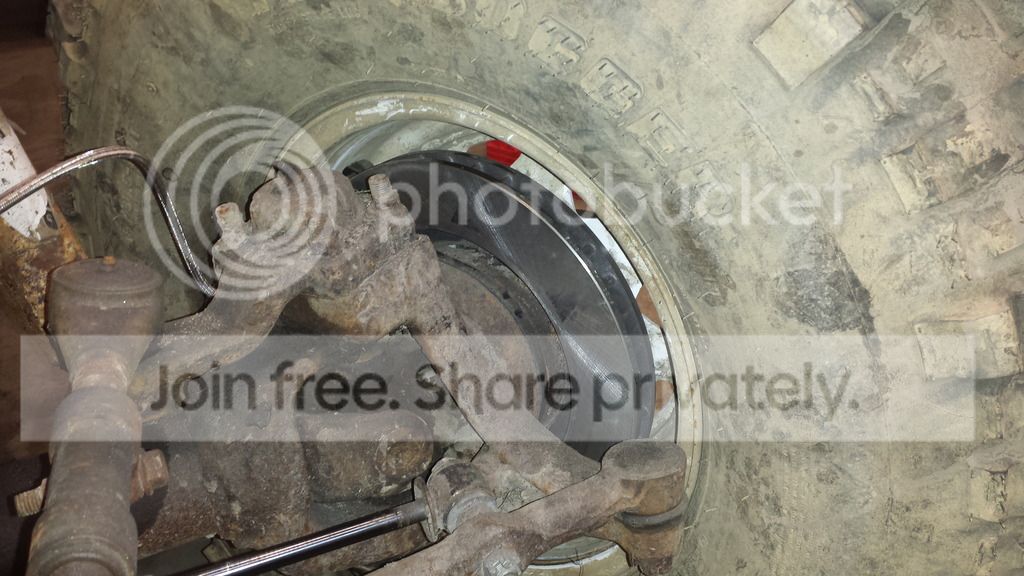


Stock for reference. I didn't put the dust shields back on. All they do is hold mud in and one of them was pretty beat up anyway.


Next time I'll get the rears on, make my pushrod for between the pedal and master, add fluid and bleed the system.

I've gotten all of the parts to finish my fuel system and am starting to collect parts to get going on the electrical.
 

Latest Posts

Top Bottom
