CK5
Register an account today to become a member! Once signed in, you'll be able to participate on this site by adding your own topics and posts, as well as connect with other members.

Lets talk wiring

76zimmer

Flyin Rat
Staff member
Moderator
GMOTM Winner
Joined
Nov 14, 2005
Posts
33,009
Reaction score
34,788
Location
Kzoo, Mi
Feel free to ask questions (for those who have answers, help us with good sound answers, and don't make us feel like we're asking a stupid question)
For the most part its something that has always been just out of reach for me. I struggle to understand it and more so properly apply it. I've always relied on others to help me through it.
So in my quest to be better educated on it, I thought I would open the proverbial can of worms and get it on the table for discussion.

First up for me is understanding relays. I understand that they can control (switch?) heavier current carrying wires without having to have a much larger amperage rated switch to handle the power.
So what exactly are single pole (SP), double pole (DP), single throw (ST), double throw (DT)...etc?
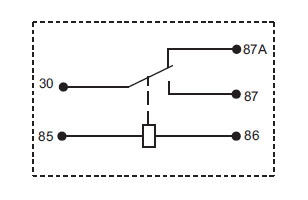
I see a typical SPDT Relay has a common (30), ground (85), power (86) and open and closed circuits (87 & 87A).
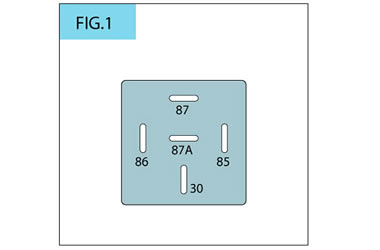
fig_1copy.jpg


My first questions concerning Relays are:
1) Are relays a circuit protecting device (like a fuse)?
2) What is the common circuit (30)...what wires would hook to this circuit? How does its purpose fit in with the rest of the relay's circuits?
3) Does the ground circuit (85) go to chassis ground or the device being controlled ground?
4) Does the power circuit (86) come directly from battery power?
5) Opening a circuit means no power passes through the relay to the device, and closing the circuit sends power to the device, so I'm assuming(?) with power going to the device it needs a ground as well. Does this come from the device mounting (and/or a separate wire to chassis ground) and does the relay have to be grounded to the controlled device as well?

Feel free to take the above relay and use it as an example of a circuit for wiring a device and a switch controlling the device.

On behalf of myself and many others (I hope) thanks for your patience and input!
 
So....

1. So technically no, you should have a fuse on the input power to the relay, but they definitely burn out when they're overloaded. I've been running most of my accessory for years on a couple relays and have to replace them from time to time but have never burned anything out. Best practice, put a fuse on em.
2. 30 is batt (or acc) +ve, your feed voltage.
3. 86 is actually the ground. 85 is your switch voltage. Technically on your truck everything is a chassis ground. They all end up at your -ve batt terminal. When I'm putting these in the engine compartment, I usually run a short ground wire with an eyelet hooked to a self tap I've used to secure the relay on the inner fender or firewall. Works great.
4. 85 is your switch power. It can be either batt or acc, should be fused (very small, very little current) through a single pole switch for example. Switch off, no voltage here. Switch on, +12v.
5. So on a SPST you have a single out (87). Switch on power on. Switch off power off. On an SPDT you have 87 and 87a. Switch off - 87 off - 87a on. Switch on - 87 on - 87a off. Useful for example my headlights run off an SPDT, switch off power goes to low beam lead, switch on power goes to high beam lead.

HORNRELAY_SPDT_CIRCUIT.jpg


Hope that helps!
 
It does help.....some!
So if I was to power up a single speed, temperature triggered cooling fan, that draws 22amps, I should supply power to terminal 30, including a 25 or 30amp? fused circuit with #10 stranded copper automotive rated wire coming from a continual hot 12v sourced supply?
Then use the same #10 wire to feed the cooling fan from terminal 87. I would assume the cooling fan has its own source to ground?
Where do I wire in the temp sender unit?
Then use a 16ga. (big enough?) wired circuit (from a continual hot 12v source?...with fuse protection?) to a single pole switch then out to terminal 85. That leaves terminal 86 being the ground.
 
We can talk this stuff till you're blue in the face if you want zim! Only a couple weeks away now.
 
It does help.....some!
So if I was to power up a single speed, temperature triggered cooling fan, that draws 22amps, I should supply power to terminal 30, including a 25 or 30amp? fused circuit with #10 stranded copper automotive rated wire coming from a continual hot 12v sourced supply?
Then use the same #10 wire to feed the cooling fan from terminal 87. I would assume the cooling fan has its own source to ground?
Where do I wire in the temp sender unit?
Then use a 16ga. (big enough?) wired circuit (from a continual hot 12v source?...with fuse protection?) to a single pole switch then out to terminal 85. That leaves terminal 86 being the ground.

Ok, so on a fan that draws 22 amps, most motors have a start up draw 5-10% higher than their running draw (sometimes more). 30a should be fine matching the relay rating unless you want to pull the fan specs and double check to bring it down. Shouldn't matter, as long as you're taking care of a full short. When I'm running 30a, I usually go with a #8. Yes from a continual (batt) supply.

Same wire to the fan, and same gauge or 1 size larger on the ground from the fan, likely just a chassis ground. For a fan you can probably find an easy spot to run a ground to on the rad support.

For the sender, depends on the sender. Some switch +12V, some switch ground. I"m guessing it's not a sender it's a temp switch we're actually talking about? If the sender is just NO and closes at temp, I'd actually put it inside the ground circuit for your relay. Ie 86 to sender, sender to ground. If you have the sender already post the part number and I'll check the wiring. If it's single wire most of the time they're just closing to ground so you just need to run 86 to the sender.

I don't go any smaller than #14 in my truck. Easier to follow, less chance of pinching or ripping the ends off, little safety margin. Whether your switch runs off batt or acc is up to you, but if it were me I'd probably come off one of the already fused circuits in the fuse panel, to the switch, then to the relay. Unless you're planning to run it while the truck is off, doing it this way not only gives you the fuse, but also the acc switched power.
 
FWIW, when you start talking about this stuff, it's also time to start talking about another fuse/relay panel, often off a newer model vehicle.

They make a lot of sense for under hood wiring. They normally incorporate relays AND fuses, which is typically cleaner. The only "switching" you then need to do from the vehicles original electrical switching is ignition switched vs. battery.

They also make electrical expansion and mods at a later date easier...headlight relay mods, dual fans, etc.
 
Ok, so on a fan that draws 22 amps, most motors have a start up draw 5-10% higher than their running draw (sometimes more). 30a should be fine matching the relay rating unless you want to pull the fan specs and double check to bring it down. Shouldn't matter, as long as you're taking care of a full short. When I'm running 30a, I usually go with a #8. Yes from a continual (batt) supply.

Same wire to the fan, and same gauge or 1 size larger on the ground from the fan, likely just a chassis ground. For a fan you can probably find an easy spot to run a ground to on the rad support.

For the sender, depends on the sender. Some switch +12V, some switch ground. I"m guessing it's not a sender it's a temp switch we're actually talking about? That would be correct! If the sender is just NO and closes at temp, I'd actually put it inside the ground circuit for your relay. Ie 86 to sender, sender to ground. If you have the sender already post the part number and I'll check the wiring. If it's single wire most of the time they're just closing to ground so you just need to run 86 to the sender. Somewhat hypothetical at this point!

I don't go any smaller than #14 in my truck. Easier to follow, less chance of pinching or ripping the ends off, little safety margin. Whether your switch runs off batt or acc is up to you, but if it were me I'd probably come off one of the already fused circuits in the fuse panel, to the switch, then to the relay. Unless you're planning to run it while the truck is off, doing it this way not only gives you the fuse, but also the acc switched power.

The twin fans in the Iron Maiden are set up (by a buddy) to run when the ignition switch is in the run position only. I"m not sure what they draw but I think we have two separate 30a relays controlling each of them. So the ignition switch in the run position is actually the "controlling switch" for those relays then right? They do have motor grounds going to the radiator support which in turn has a large (4awg?) to the engine block and frame.

FWIW, when you start talking about this stuff, it's also time to start talking about another fuse/relay panel, often off a newer model vehicle.

They make a lot of sense for under hood wiring. They normally incorporate relays AND fuses, which is typically cleaner. The only "switching" you then need to do from the vehicles original electrical switching is ignition switched vs. battery.

They also make electrical expansion and mods at a later date easier...headlight relay mods, dual fans, etc.

Like a junkyard 90's GM truck with the big fuse/relay panel in the engine compartment?
I do have one from the 98 Dodge I dis-assembled for the Cummins engine. I removed everything wiring related from the truck.
 
The twin fans in the Iron Maiden are set up (by a buddy) to run when the ignition switch is in the run position only. I"m not sure what they draw but I think we have two separate 30a relays controlling each of them. So the ignition switch in the run position is actually the "controlling switch" for those relays then right? They do have motor grounds going to the radiator support which in turn has a large (4awg?) to the engine block and frame.

It's easy enough. Run the power supply for the relays from constant batt power. All you need to do to have them only come on while the truck is on, is to power the switch via acc power. You can either put a new fuse in the panel for it, or easier you get the little pin connectors and hook into an existing one (fused side).
 
So what exactly are single pole (SP), double pole (DP), single throw (ST), double throw (DT)...etc?

SP is one common in(thing you are switching) DP is two commons. Single throw is one output, Double throw is two outputs.


So on a SPDT relay you will have one common, and a Normally closed(NC) contact( continuity when power is off) and Normally Open(NO) contact that has no continuity when power is off.


On a DPDT relay you will have two commons, and a NC/NO per common.

Feel free to text me anytime dave.


The Coil is what operates the switch for the relay. You will need 12V and a ground. For a fan setup, most people use a thermo switch in the head with a set temperature for ground. . Then run a 12V Switched ignition power. When the temp gets above the set temp of the themo switch it makes connection to ground turning on the relay when the key is on. These wires for the coil do not have to be a heavy gauge because most coils draw very little power. Less than 200mA.
 
Last edited:
Like a junkyard 90's GM truck with the big fuse/relay panel in the engine compartment?
I do have one from the 98 Dodge I dis-assembled for the Cummins engine. I removed everything wiring related from the truck.

Pretty much anything 90's onward. Have to get an idea of what you may want/need in the future along with the present, but most of them are pretty well equipped with relays and fuses. If I were to re-do what I've got going, I'd try harder to find something that is more of a "standard" rectangular/square shape that was easier to mount.

Although apparently not critical (I've been running an open fuse center for years under hood), getting one with a cover would be smart.
 
What size fuse do I use?


In school I was taught Ohm's law.
V= I X R

To keep it simple this means
Volts = Amps X Ohms

If you have a 12 volt system,
Divided by a 22 amps you should have a resistance of about .5 ohms.
I agree you should bump up the Amperage of the fuse by 10-15% for voltage spikes & use a 30amp fuse.

Let's say that you don't know that the fan is 22 Amps and you want to know what fuse to use.

You should take your DMM ( digital multi meter) and set it to Ohms and measure how much resistance is in the fan. This should be measured without any power hooked up to it.

The meter will send a reference voltage through the fan motors and you get a reading of resistance ( ohms)

For this example we know you should be around .5 ohms.

...but let's say you want to wire up something and you got a reading of 2 ohms.

12volts divided by 2 ohms = 6 amps

Add the 10-15% for voltage spike protection and you are looking at 6.6-6.9. You can use a 7 amp fuse for this example.

How does this help in a real world situation?
If you're at the junkyard pulling parts and you don't have a battery to plug it into, and no specifications for that part, you can measure to resistance to see if you you have continuity, and also use Ohm's law to determine what type of circuit protection you will need for it.

I hope this helps.
 
DPDT switches

I would like to use my fan switch to explain how a Double Pole Double Throw switch works.

In an attempt to Keep It Stoopid Simple I will use a little word play and simple terms.

I think of Double Pole as "Double Pull" as in it's pulling power from 2 sources.

And Double Throw as it sending or "Throwing"power to 2 sources.

In my example I have a DPDT on-off-on switch.

In the default ON position the switch draws Ignition power from the fuse box and sends power to the relay that powers only one fan.

In the OFF position no power is leaving the switch and neither fan is on.

In the other ON position the switch is drawing constant battery power, and sending power to both fans.

Why would I do this?

During normal operation the primary fan runs like the normal pulley mounted fan and is fine for driving on the road.

When I'm out on the trail going slow speeds my engine coolant temps tends to get hot because not a lot of air flows through the radiator.
I can flip the switch and turn on the other fan and literally watch the coolant temp drop.
I can run both fans with the engine off to cool it down while parked.

If I pop a fuse on the primary fan I can flip the switch and run both fans off the other circuit.

The OFF feature allows me to dip into creek crossings without breaking a blade, and also allows the engine to warm up faster in the winter time.
Also if I have to reach my hand down in the front of the engine I can switch it off for safety.

Remember Poll is "pulling" power
And Throw is "Throwing" power

I hope this helps.
 
Great tips guys.
The closed box for relays and fuses does seem quite prevalent these days, good idea!
Relating DP and DT in more relatable terms helps as well!

I've heard to think of electrical flow like water flow.
It takes the path of least resistance.
With that in mind, reducing resistance seems as though it would help voltage reach its intended destination with minimal drop. I know using cheap connectors increases resistance and perhaps the best is crimped, soldered, and shrinkwrapped connectors and terminals. I've had limited success trying to solder with a Weller gun and with a pencil tip butane unit. Any tips for soldering?
Also have read that the old glass fuses and even spade fuses create resistance, and fusible links are a less resistive way to conduct voltage... Thoughts?
 
I agree that electricity is like a river.
The river has a current (amps) and in the river there is resistance (ohms) like rocks and logs. As the resistance increases, the current decreases and vice versa.
The current will always take the path of least resistance. If there are too many rocks and logs (excessive resistance) the current will eventually flow around it creating a short cut (short to ground).


Soldering can be easy, like welding it takes some practice.
My advise is to use a wet sponge and keep the tip of the soldering iron clean. You may even need to file off the old funk from the last time it was used.

Next you can "silver" the tip. With the iron hot take some solder and melt it onto the tip. Somehow this helps the solder melt faster when you go to solder the wires together.

You will need to prep the wire. Some folks like to twist the wires together before you solder them, but my instructors in skewl said to 'fluff' them a little spreading each strand apart a little bit and put them together in line without twisting them.
The reason they do this is so the solder melts into each strand of wire rather than just coat the outside of the twisted strands.
Either way, don't forget the heat shrink.

Now, with the heat shrink slid back, and your wires ready to be connected, take that hot iron and touch the tip to the wire. Don't hold it there so long that the insulation melts, just long enough to get the solder to drip onto the wire.
Let it cool for a few seconds and give it a firm tug to make sure it has a good connection.
Make sure there are no high spots that could poke a hole in the heat shrink. If there is you can carefully melt it away with the iron.
After you get it smooth and let it cool down again, slide the heat shrink over the connection and shrink it.
I like to use the heat gun rather than the lighter, because with the lighter you can get it too hot too quick and it leaves that black spot on it and it looks like the wire has been shorted out.

Blade fuses and/or bus fuses are used in fusible links, so I don't see how they have any more or less resistance because they are one in the same.
 
Throw the soldering iron in the garbage! Use a pencil tip butane torch and get yourself some solder crimp connectors and a roll of solder.
 
The fusible link I was referring to is the wire type that I understand is a size smaller wire than used on the circuit and has no "inline fuse"
Kert I like the all metal connectors just have a hard time getting the solder to flow!!!
I'll bring what I got!
 
OK, I have been soldering for, oh about 40 some odd years now, ( some of them very odd......) so maybe I can help.
First, DO NOT randomly file your soldering tip. The better tips are plated iron, and if you file them you remove the plating and leave just the iron.
Which is next to impossible to solder with.
If you have one of the old time Weller guns with the square copper busbars, they are solid copper, so some light filing is OK.
Next, your tip has to be "tinned". Which means coated with solder which has bonded with the metal, not just stuck to it. Only then will you get the amount of heat transfer you need.
Its very difficult to tin a hot iron. The flux does not stay there long enough to react with the metal to clean it properly. To tin a tip, you let it cool, and then wrap it with some good quality rosin core solder.
If you are trying to use bar solder or solid wire solder with rosin paste, I suggest finding some rosin core. Its much easier and less messy. If you have to use the paste, let the tip get just warm enough to melt the paste to it then turn it off.
Then, wrap the tip with solder. Either rosin core, or solid solder over the paste.

Hold the tip over some water or something that hot solder will not hurt, and turn it on.
After the smoke clears, you should be able to wipe the tip with a wet paper towel or sponge and see a nice shiny silver coating. If so, and you are not going to use it right away, apply a small amount of extra solder and let it harden on there to protect the coating.

When you are ready to solder some wire, make sure the wire is as clean as you can make it. A little tarnish will not hurt if you are using a good quality rosin core solder. But oil or grease needs to be cleaned off with a solvent. Heavy corrosion means you need new wire if you can. If that is not a option, you can scrape down to clean metal, but new is better.

For a solder joint to work, the metal, NOT the iron, needs to melt the solder. You put the clean tinned tip onto the wire to be soldered, and let it get hot.
Apply the solder to the wire, not the iron, and it should melt and flow. You should see it soaking into the wire and bonding to it. If the wire does not seem to melt the solder easily, you should touch the solder to the intersection of the tip and wire, to let a small amount melt there.
That does two things:
It lets a small amount of flux touch the wire, cleaning it and letting the solder touch it better.
Plus it creates a wider surface area between the wire and tip letting the heat transfer faster.

Usually you will see the solder melting on the wire, but at first it may bead up and not flow. This is usually due to larger wires that are taking longer to reach soldering temperature.
Normally you can just wait a few seconds and it will suddenly sag down and soak into the wire. Then you can add more solder. Different formulas of solder will melt and flow at different temps.
If the wire is dirty, you can sometimes rub it with the tip coated with solder to scrape away the tarnish or whatever. If you break through the coating and the solder starts to flow, the flux and solder will tend to "run under" the problem and let it solder.
60/40 Lead/Tin is the most common, and is a great mix. If you need to solder at lower temps, you can try to find some 63/37 mixtures which is called Eutectic and is the lowest melting point solder. Stay away from 50/50. Its great for plumbing, but sucks for electrical stuff.

So far I have been talking about lead solder. Its getting scarce due to EPA foolishness, and the replacement stuff is not as good or easy to use.
If you can find the lead stuff, grab it while you can.
Also, brand of solder is important. I try to use Ersin Multicore. Its getting hard to find these days. It has 7 different fluxes in it, and will do a good job when others fail.
Kester is an old name that is still around. There are better solders, but its a solid performer.

All this time I have been talking about rosin solder. They also make acid core. Not only must you not use it, but if you were to accidentally do so, you need to take steps immediately.
First, remove the soldering tip and throw it away. Its ruined, and will ruin whatever you try to solder after that.
Then, if you soldered a piece of wire, you need to cut it back about 6 inches to a foot from both sides of the joint and throw that away. If you have waited a while, you may have to remove more.
If you have soldered a board or component, and cannot lose it, then lots of hot water and scrubbing with a brush and coating with grease might save it.
If you think I am being excessive, I once found heavy green corrosion 8 feet up a piece of RG-8 coax inside the insulation after the PL259 connector had been soldered on the end with acid core solder.
I cut the cable a foot beyond that, and had corrosion troubles again later. Finally just gave up and replaced the whole cable up the tower.

Hope this helps.
 
Last edited:
Top Bottom