CK5
Register an account today to become a member! Once signed in, you'll be able to participate on this site by adding your own topics and posts, as well as connect with other members.

1989 K5 - Gradual Learning

First 4x4 - learning basic maintenance / upkeep and maybe some small mods.
you can get white smoke and condensation in a damp/close to dew point on a cold engine. Check your oil if if is nice a and clean oil or black even thats good. If baby s*&t brown and runny thats bad.

look on the bottom of oil filler cap, for creamy brown gunk. bad.

Iac not opening can cause a crank no start until you crack the throttle.
 
also now that dist is tight double check timing, make sure dist didn't turn when tightening
 
If an injector is sticking open it would wash down the cylinders with fuel. You'd be able to tell by pulling the dipstick. If the level is high or smells like fuel that would be a clear indicator.

The thing is, if an injector was leaking, it would lead to a hard start/extended crank because most if not all the fuel pressure would have been bled off by the injector(s) that might be stuck open.
 
Yeah, don't worry about condensation in the exhaust on initial start up. It can also be running a little rich because the engine is cold.
 
Thanks so much guys!!! I fear the head gasket issue less now.

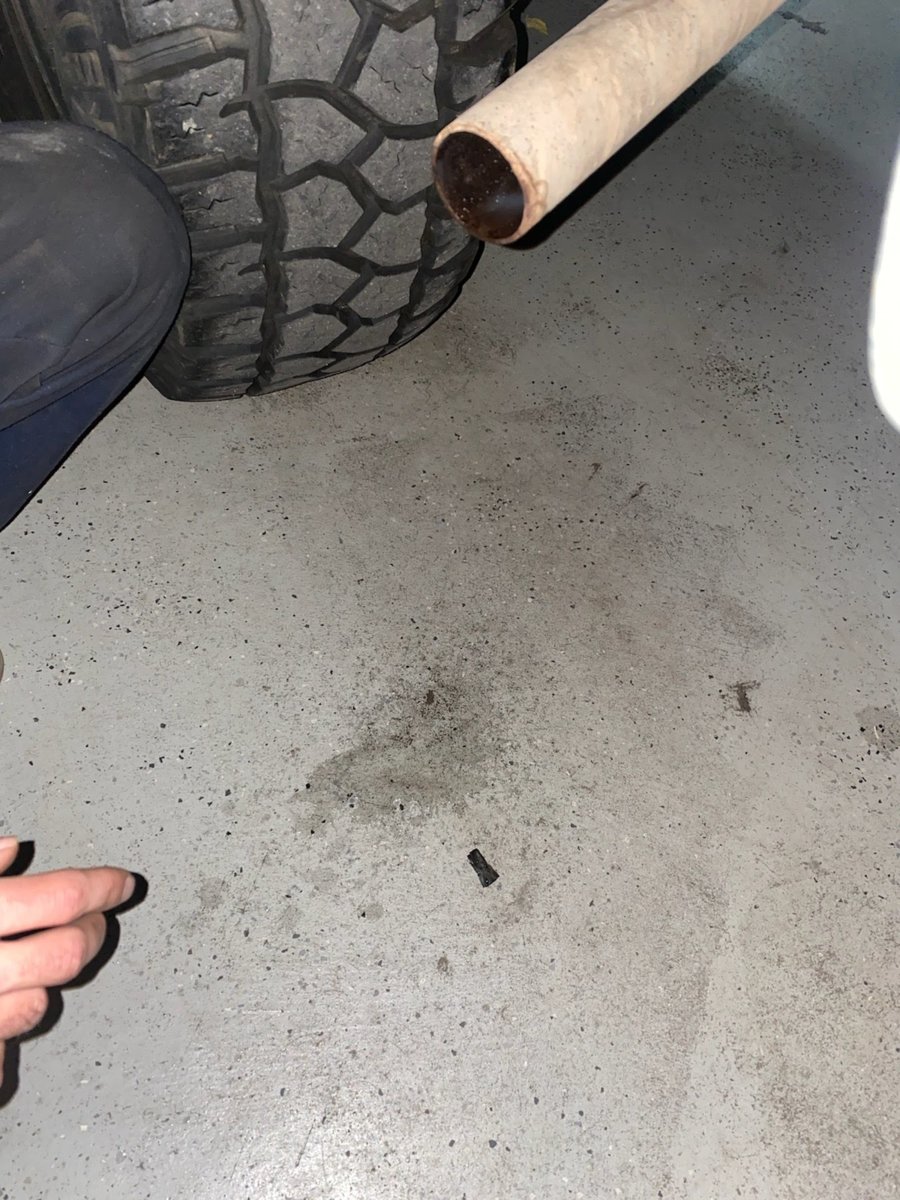
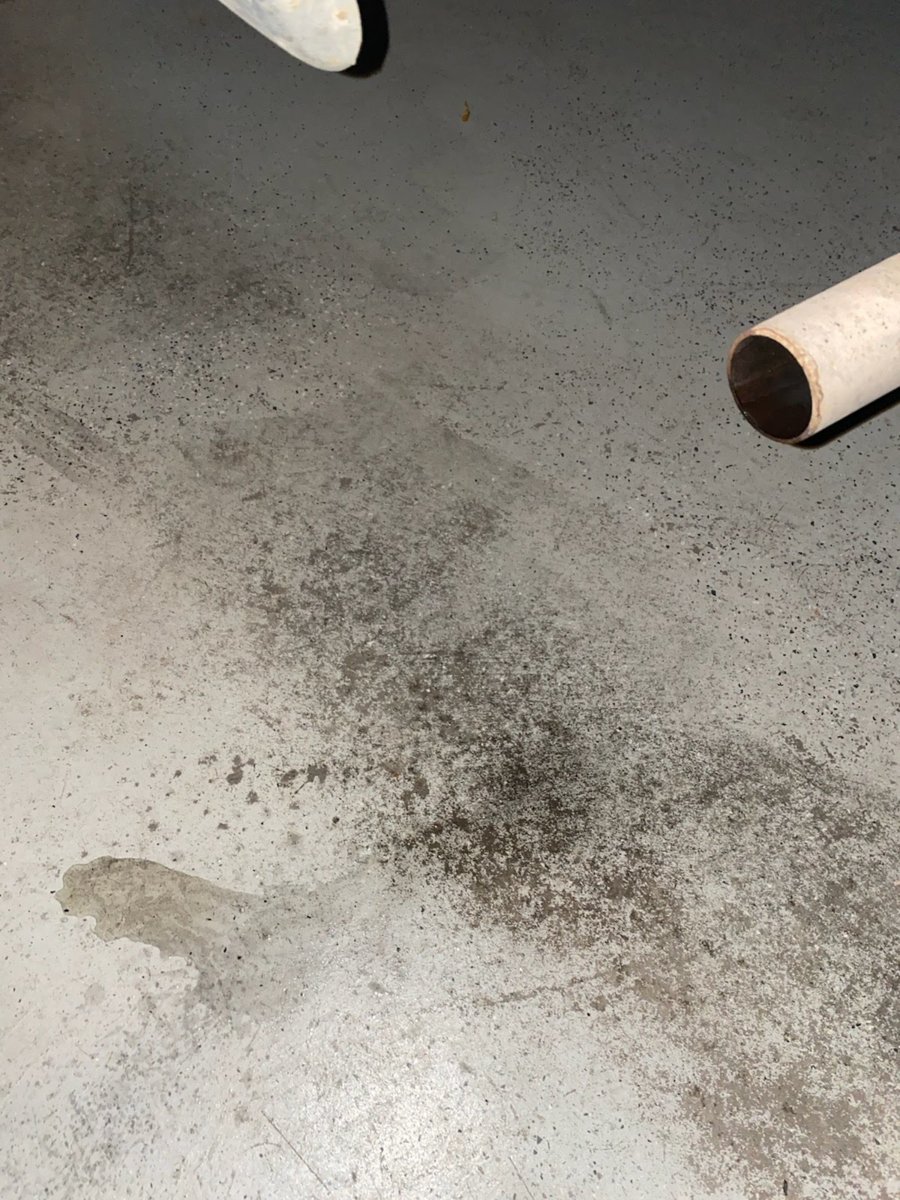
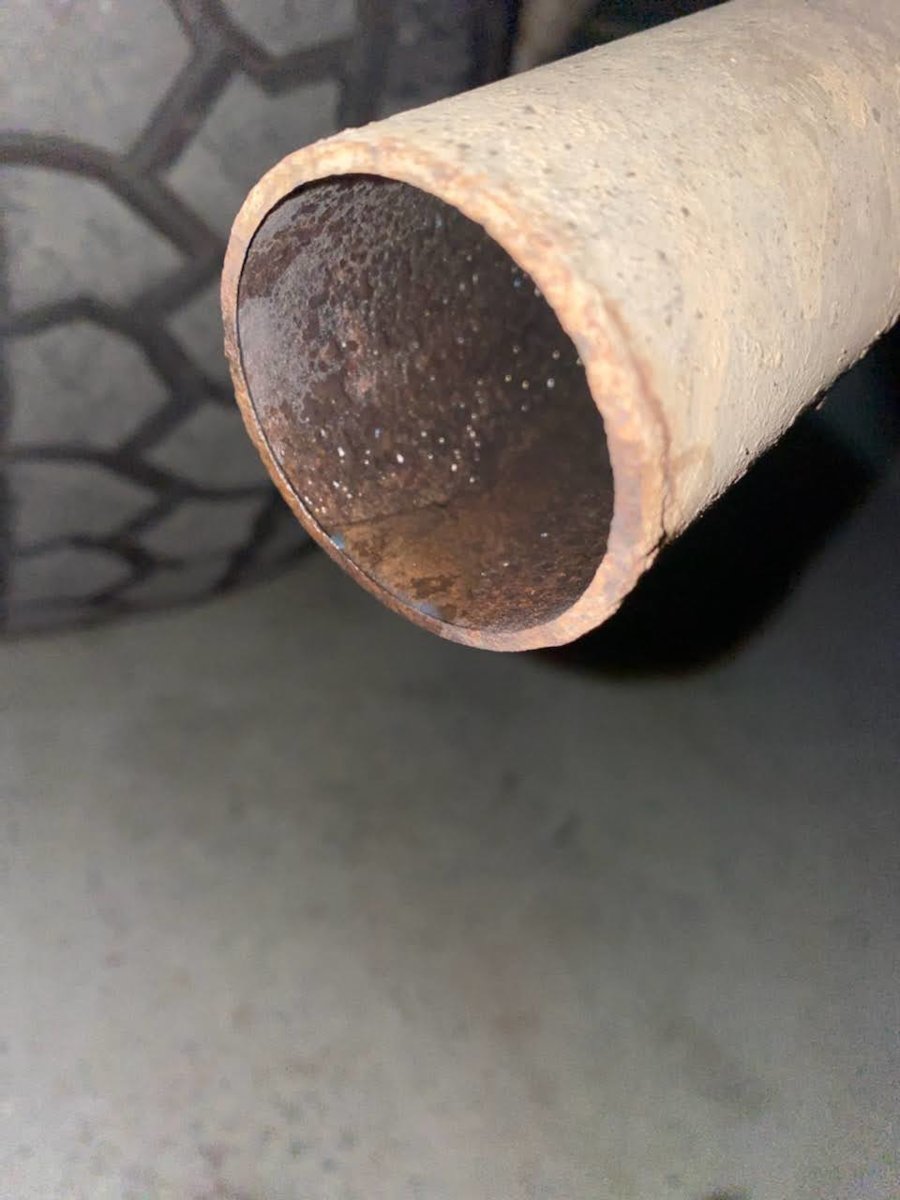
Here are some pictures and videos of what we were dealing with last night:

Video 1:

Video 2:

Pictures:


Tonight I'll check the oil first thing. If black, I'll test drive... if brown, I won't (and I'll cry tears).
 
Thanks so much guys!!! I fear the head gasket issue less now.

Here are some pictures and videos of what we were dealing with last night:

Video 1:

Video 2:

Pictures:


Tonight I'll check the oil first thing. If black, I'll test drive... if brown, I won't (and I'll cry tears).
That type of moisture in the exhaust on cold startup is normal. I bet the oil is black.
 
Normal clean burning engines actually produce a fair amount of water out the exhaust. But since yours won't stay running correctly I'd say you have an issue.
 
Here is my wife’s 2020 on a semi cold start. Hers doesn’t smoke but there is plenty of water.
 
Thanks a ton to all of you.

If I go out and the oil is black, I plan to drive it if it'll start up for me. It tends to start up the first time and then refuse to start again once I shut it off (due to flooding). I really want to stretch its legs... take it out for 30 minutes or more.

Does anybody think I'll harm it by doing that or that I'll get stranded? Maybe I'll just stay close to home, lol.
 
Tonight's sequence of events was somewhat good, somewhat bad:
  • Checked oil immediately. Didn't look thick at all. Smelled a little gassy perhaps but I think it's safe to say I don't have a head gasket issue.
  • Tried firing it up. Started and immediately died. Just cranks after that. My mind goes straight to flooded engine.
  • Pull the #1 plug. Smells a little gassy but not dripping or anything. I have a buddy crank the key after I disconnect the injectors. Nothing pushed out of the cylinder hole but air. So okay it's not flooded.
  • Reconnect the injectors and the spark plug. Have the same buddy crank the key. No fuel coming out of the injectors. Turns out the fuel pump fuse was blown. Another short in the same freaking spot as before. This time the green injector wire instead of the white injector wire. Same exact injector. Oh well, at least it was easy to diagnose. Cover it up with electrical tape and keep on keeping on. I need to remember to buy another 10A fuse, because I tossed a 15A in place of the blown one.
  • Try starting it again. Fires right up. We go for a test drive.
  • No power at all. Disconnected the EST wire, listened to the RPMs change, drove it with the EST disconnected for a short bit, still no power. LOUD "womp womp womp" sound coming from beneath the truck the whole time. Reconnected the EST and pulled it back into the garage. Didn't go more than a few blocks total.
  • Kept it running after parking it in the garage. Pull out the timing light. My buddy grabs it and asks if it is supposed to be at 0 degrees. I say yeah and he tells me it is set to way below 0 degrees. 0 is the lowest mark on the timing light but the dial goes far past that point if you turn it that way. So I say oh shit I bet I set the timing with the light at the wrong setting. Put it back to 0 degrees and turn the distributor a little bit to get the mark lined back up where it needs to be.
  • Idle RPMs sound pretty decent now and the gas pedal feels good when I hit it with the truck parked. Did not go for another test drive. Changing focus to the "womp womp womp" sound. Buddy says hey maybe you have a dead cylinder - one of the spark plugs might not be firing.
  • I get up into the engine bay with the truck running and start pulling spark plug wires off of the distributor cap. #1 wire comes off fine, but we don't hear much of a change in RPM when it is disconnected. When reconnecting it, we hear a clear rise in RPM. So okay #1 is probably fine.
  • I pull the #8 plug wire off the distributor cap and get shocked. Freakin' hurt pretty bad. Buddy shuts off the engine and I reconnect the wire and call it a night. Go back to sitting down and drinking my beer.
The good thing from tonight would be that the truck started up multiple times in a row after the fuse was replaced. Also I am optimistic about the gas pedal feeling strong when I tested it tonight. Makes me think that if I did test drive it again it would have had more power.

The bad thing from tonight is the super loud "womp womp womp" sound. Who knows, perhaps it's not a problem at all. I think I am paranoid about screwing something up when I drove the Blazer with the spark plug wires on backward. Makes me think I damaged a wire, a plug, or both. Bums me out because all of that stuff is obviously brand new.

Tomorrow, I will probably try test driving it again just to see whether the power is back. But I need to make absolutely sure I don't have a dead cylinder first.
 
A dead cylinder would show at idle, motor would shake, might smooth out as you increase rpm. The noise described doesn't say miss fire or cylinder issue.
Exhaust ? ... Hard to say thou
 
Yeah is always funny when it happens to the someone else .
Pulling wires on a point ign system was common practice, not many continued to do so on hei( high energy ignition). It is also better for the dist, cap and rotor to pull wire at plug. Do not pull wires on a distributor less ignition, the module has big chance of being damaged.
I would recommend using a vacuum gauge to detect a dead cyl. If vacuum gauge indicates a miss. You can do further investigation.
FYI you can feel the spark and the plug fire on a good cylinder. Lightly pinch the wire in a convenient spot, bare thumb and index finger. Feel each wire and compare.
 
I went out last Saturday and:
  • Applied fresh dielectric grease to each end of each spark plug wire.
    • Before greasing the spark plug end, I ensured that the spark plug was screwed in tight.
  • Pushed each end on firmly until I heard a "click".
  • Took it for a test drive.
Low power, low power. In my mind lower power would mean timing is off or I have a dead cylinder. I know how to check timing now and already ensured that it is right at the 0 degree mark when the EST is disconnected.

So, I am going to dive into the dead cylinder analysis next. I am guessing that running the truck a few times with the spark plug wires on backward may have fouled something? Or perhaps flooding the cylinders so many times screwed up my plug ends?

Regardless, if I pull plug wires one at a time from the spark plug end instead of the distributor end... do I have a better chance of avoiding getting shocked? Maybe I'll use gloves and pliers just to be extra safe!!
 
I went out last Saturday and:
  • Applied fresh dielectric grease to each end of each spark plug wire.
    • Before greasing the spark plug end, I ensured that the spark plug was screwed in tight.
  • Pushed each end on firmly until I heard a "click".
  • Took it for a test drive.
Low power, low power. In my mind lower power would mean timing is off or I have a dead cylinder. I know how to check timing now and already ensured that it is right at the 0 degree mark when the EST is disconnected.

So, I am going to dive into the dead cylinder analysis next. I am guessing that running the truck a few times with the spark plug wires on backward may have fouled something? Or perhaps flooding the cylinders so many times screwed up my plug ends?

Regardless, if I pull plug wires one at a time from the spark plug end instead of the distributor end... do I have a better chance of avoiding getting shocked? Maybe I'll use gloves and pliers just to be extra safe!!

Go to the parts store and get something like this tool or similar.
https://www.autozone.com/test-scan-...r/oemtools-in-line-ignition-tester/900800_0_0

That should save you from getting zapped.
 
Before you get, deep into plugs and such. Adjust the timing, with spout disconnected, to 2-4 degrees advanced. Then test drive.
Do we know how many miles on this motor. If it's been rebuilt?
Also since it has been flooded, see if you can light the oil on your dip stick on fire. If you can change your oil.
 
Wow, that is cool. The only thing is that it looks like it only tests whether the plug wire is delivering a spark to the spark plug. If my plug end is bad, this tool may not help. Is that right?
If the tester isn't lighting up then the plug isn't getting the energy. They make different styles. I've got an inductive style that looks like a pen. Slide it over the wire and you'll see a light flash on the side. If the plug isn't firing at all, you won't see it flash for either style. It's worth while to inspect the actual plugs to determine if they are fouled out and by what. Look the porcelain for signs of cracks or carbon tracking.

The brightness of the tester flashing also gives a good idea of how strong the spark is. Brighter is better.

If you get a tester you could compare the k30 to the K5 just to see if they both show the same on the tester or if the K30 is stronger. Might be an indication that the coil is weak on the K5.
 
Before you get, deep into plugs and such. Adjust the timing, with spout disconnected, to 2-4 degrees advanced. Then test drive.
Do we know how many miles on this motor. If it's been rebuilt?
Also since it has been flooded, see if you can light the oil on your dip stick on fire. If you can change your oil.

Sorry Wes you say with the spout disconnected? What spout?
 
Top Bottom