CK5
Register an account today to become a member! Once signed in, you'll be able to participate on this site by adding your own topics and posts, as well as connect with other members.

2000 Buick Sleeper build - 2nd engine trashed!

Has anybody here rebuilt a 3800?

What exactly would you replace and recondition?


I see that my other block has formed a little surface rust in the bores. If this cleans up with just some oil, I'm OK, right?

I would check clearances on everything. Mic the crank and compare to factory specs. Keep the lifters matched to their lobes and you should be ok using the cam if it mics good. I would put new performance valve springs in it if you are going to run it hard. Have the valve guides checked out and a good valve job wouldn't hurt. This would be the minimum.

When it comes to engine building, you can do as much or little as you feel like the gains are worth. There could be a little gain by smoothing the bowls behind the valves, intake and exhaust port matching, ect.
 
Last edited:
I'm not sure why roller lifters have to stay matched to their lobes and the cam had better be good with only 1000 miles on it. The springs are LS1 90# units also with 1000 miles, so they will get used again. If rebuilt this engine I would probably pull the heads, leave the valves in place and then slap the heads back on when done. The best approach is probably to pull the good crank and rods from the original engine and put them in the engine I've been running, but with a good cleaning and checks.

But I think I'll try another used motor, which I already bought and tore down.
 
I think that is a carry-over from the old flat tappet lifter days. You wanted to keep them matched to prevent future wear.

Its probably not bad practice to do the same with roller lifters but I am not sure how critical it is compared to the old stuff.
 
Its probably not bad practice to do the same with roller lifters but I am not sure how critical it is compared to the old stuff.

I'm not sure if it's a big deal or not, but I'm just erring on the side of caution. I would imagine it would be fine, but if reusing a cam they could have developed some form of wear pattern that could affect the tips but that's a cautious guess.
 
with boost I would think a nice bore perfectly round and finished for the particular rings your running would be most advantageous. At a minimum check for roundness (less than .005) out of round, and finish with a flex hone (I have one for a 4.030 bore and silicone carbide for moly rings if your want to borrow it)
I would only use new rings as well, not used from another cylinder bore.
Check the mains/rods with plastigage @ 90* apart to look for roundness, and for proper sizing on the bearings.
 
I think that is a carry-over from the old flat tappet lifter days. You wanted to keep them matched to prevent future wear.

Its probably not bad practice to do the same with roller lifters but I am not sure how critical it is compared to the old stuff.

You are correct. That is mindset that guys stuck to. Same thing with break in. There is no break in. Not sure about these v6s but the LS guys highly recommend new lifters with a new cam.
 
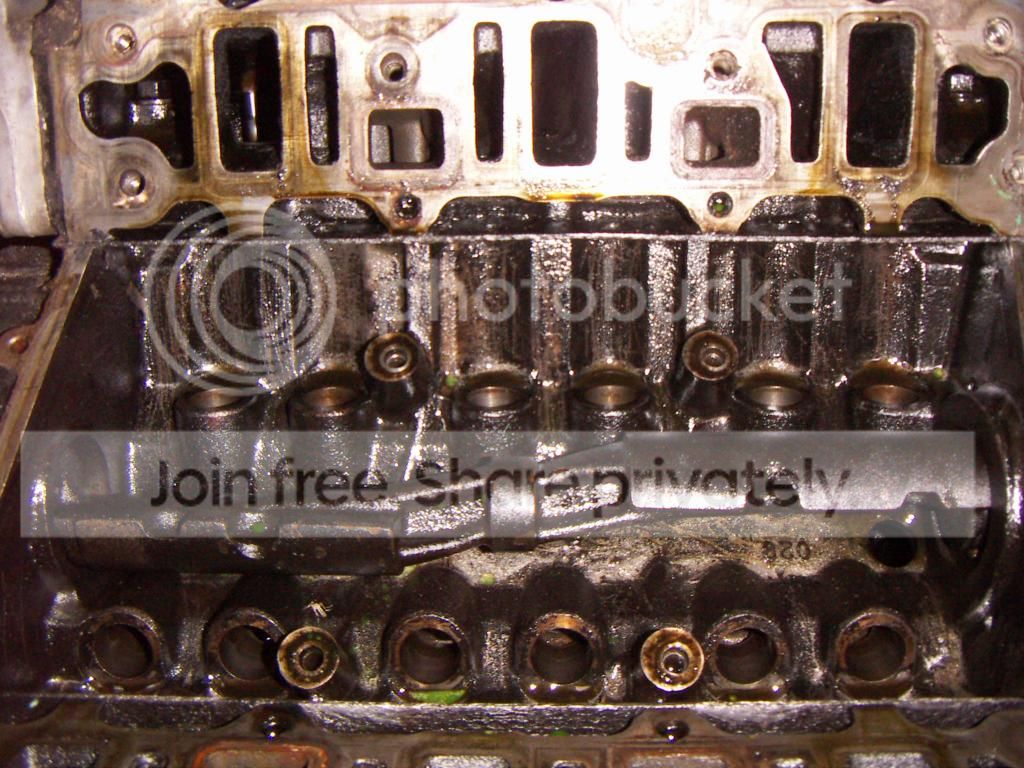
Here's the new motor. It's much cleaner than the other one was. All 6 holes make 165psi on a tired starter and they all hold air. I can't find any up/down play in the rods. The oil pan is dented, but I'll just swap it. That broken valve cover bolt spun right out with a pick.

PICT0688.jpg


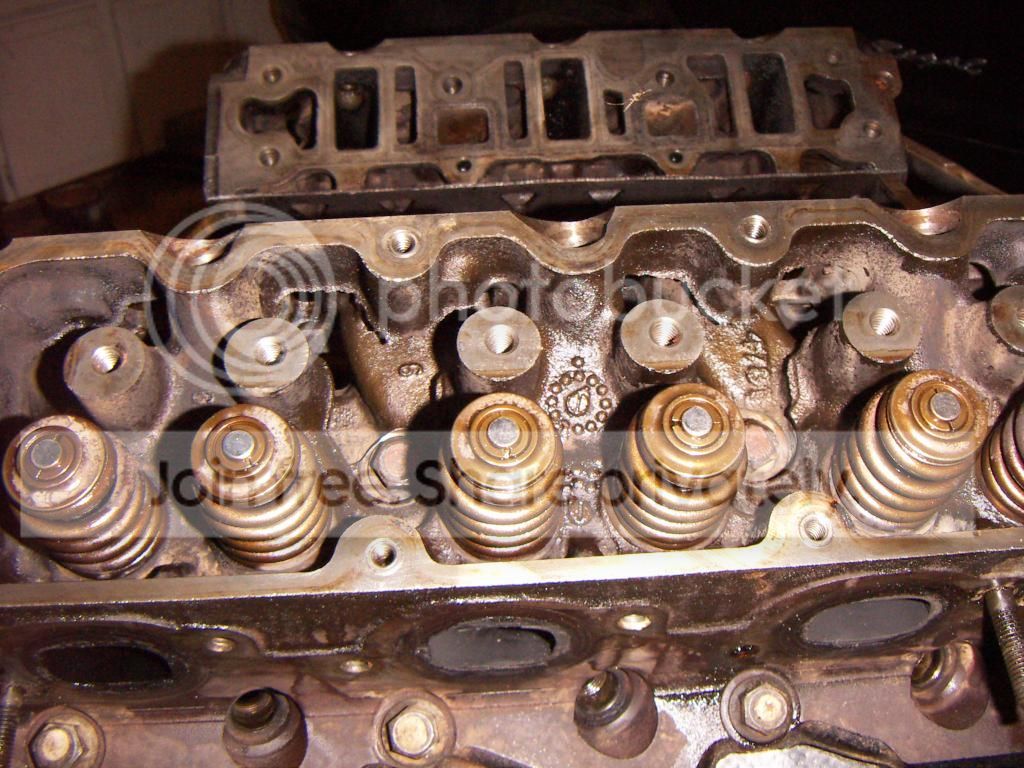
Next I'll pull the engine from the car and steal the cam, springs and retainers. I just put new valve seals in that engine. Any reason not to just transfer them over to these valves?

I'm thinking I can flop the intercooler core somewhere out of the way and not even open up that plumbing. Same with the power steering pump and A/C compressor.

EDIT: Look at the mosquito captured mid flight in the picture above (in front of the far head). Honestly what's most amazing is that ONLY ONE shows up. They hatched with a vengeance last week.
 
The knocking motor is out. Cam is swapped into the new motor. In the process of swapping the valve springs and retainers over.

PICT0692.jpg
 
I wanted to get over 300WHP. My first pull (on the big pulley) was 275. At 20% drivetrain loss, that's 344CHP, at 7.4PSI. In this range, 0.1" of pulley drop is about 1psi and about 10HP. The small pulley is 0.3" smaller, which would have put me over that mark, not to mention the shift points going up 400RPM and potential timing changes. So the potential is there for 310WHP or 390CHP. Although it's possible there would be some knock detected and I would end up with some intermediate size. I could always run race gas to use a smaller pulley for some fun sometime.

Right now I'm more interested in just making it hold together, you know? Maybe after some time has passed I'll look into dropping below my 3.1" (big) pulley.
 
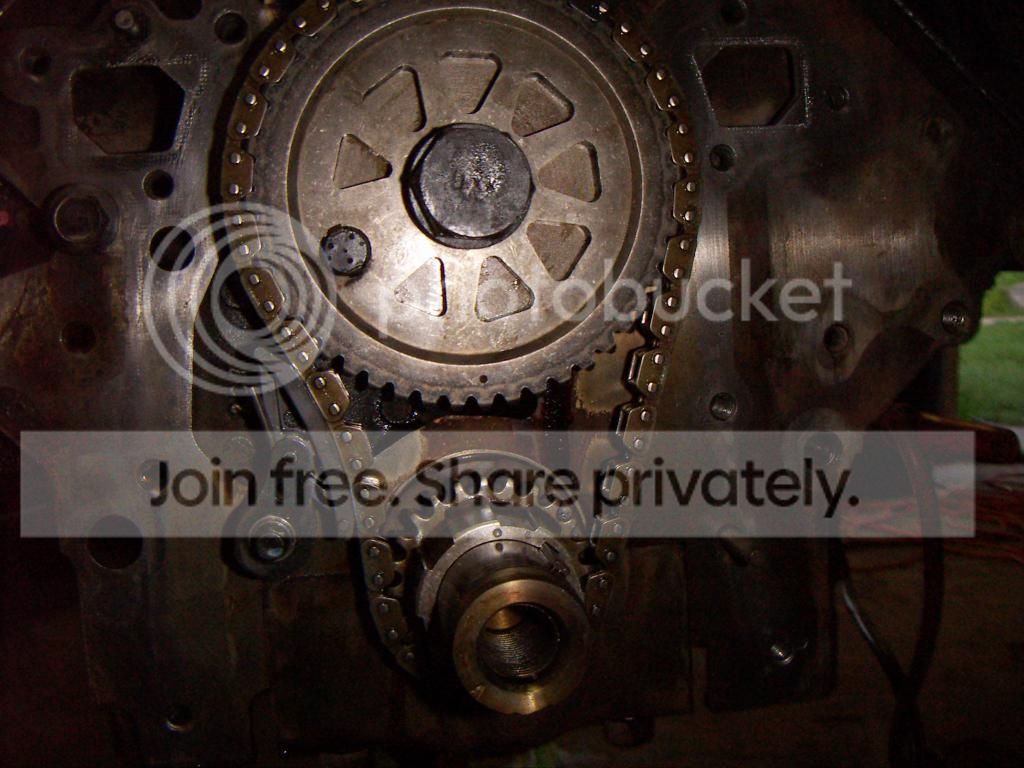
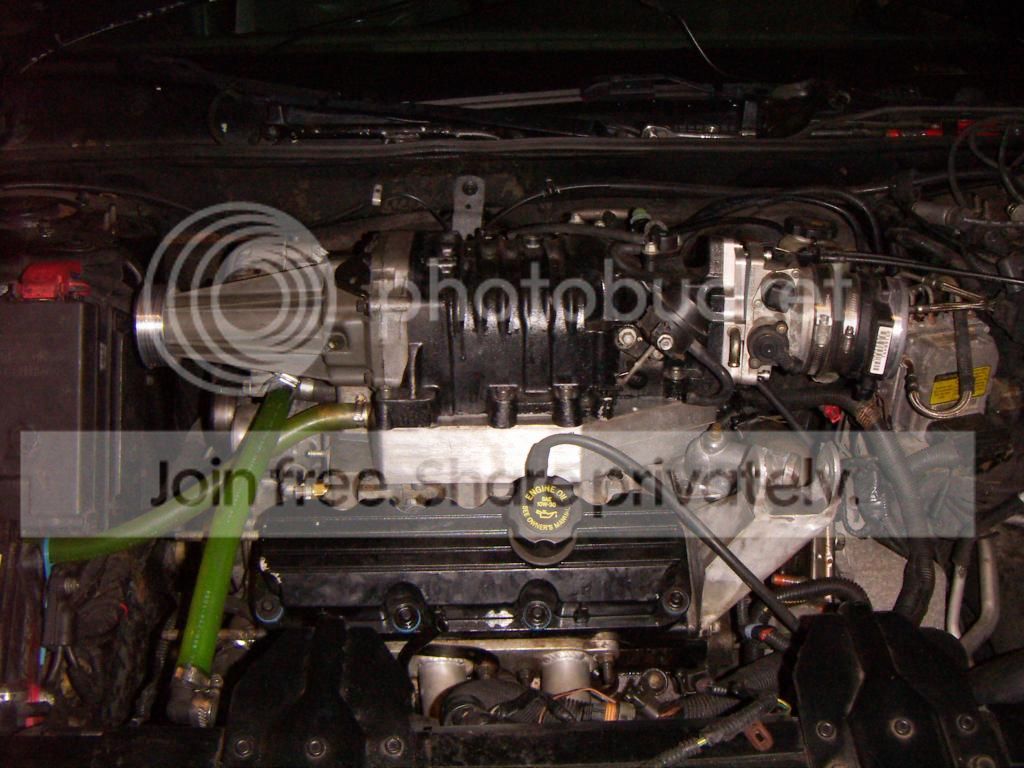
I was hoping to get this thing running again with the long weekend, but you now how other stuff always comes up. I was able to put a lot of time in, pulled the old motor, swapped the cam and valvetrain over, finished assembling the engine and dropped it in.

PICT0697.jpg


I still have to attach the PS pump, A/C comp, install belts, prime the oil pump, install ignition module and wires, run the engine harness back around and all that good stuff.

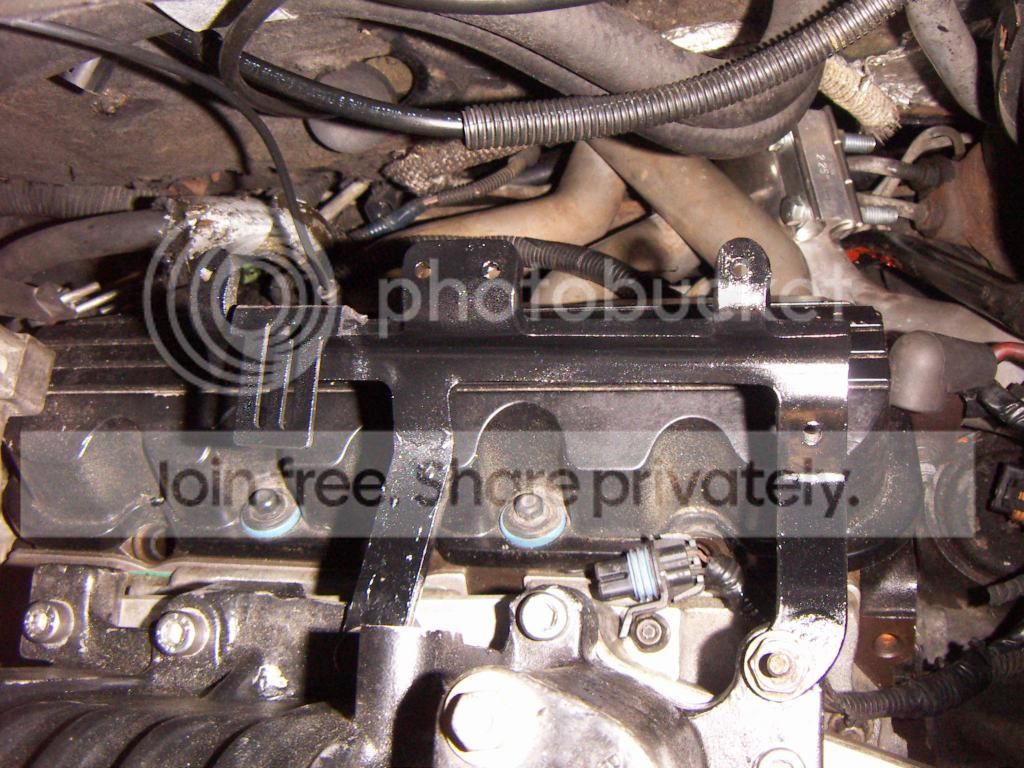
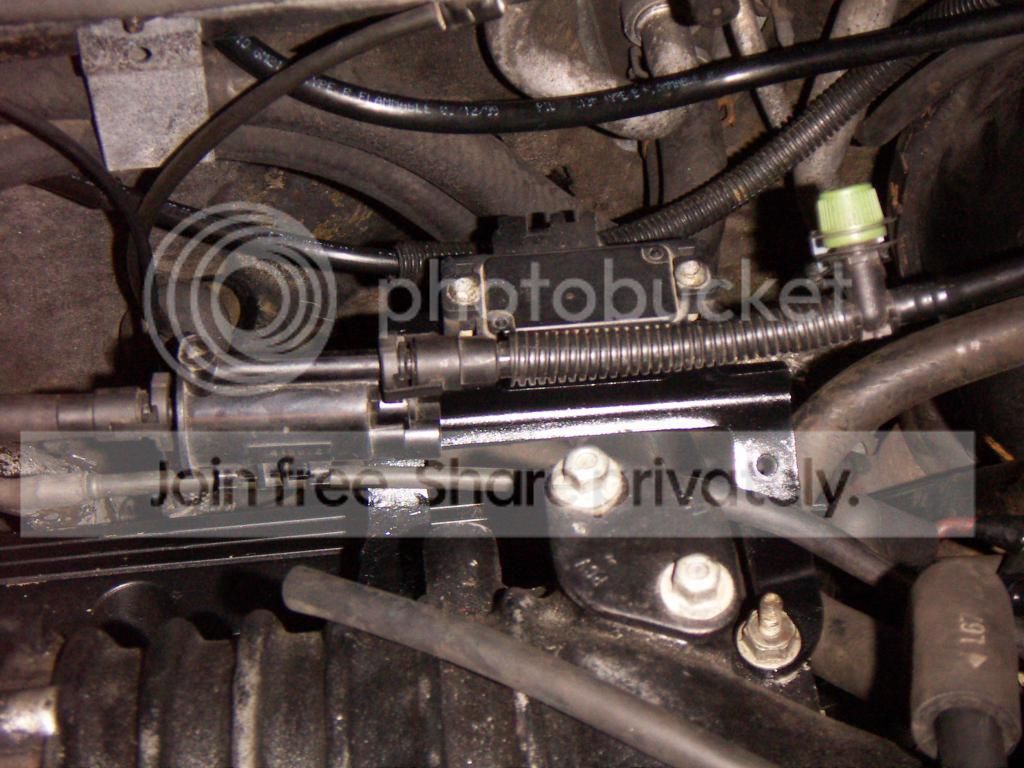
The only new thing is this bracket I made for the MAP sensor and EVAP solenoid. I was able to use a tab that came on the new donor engine to improve on my first design.

PICT0695.jpg


PICT0696.jpg
 
Started the engine a few times last night. Ran it for about 10 seconds each time, since there was coolant on the headers (had just swapped in new heater hoses). Plus it was really late and I wasn't ready to start on anything new.

Need to get a laptop on to scan, check for vacuum leaks, etc. but it sounded fine, mostly. It still needs splash guards, inspection cover, intake hose, wheels, etc. and I should also check harness routing again to make sure nothing can hit a header.

I had no problems with tall lifters this time - probably because I pulled them out shortly after the rockers. I think leaving them in with no valve spring pressure on them is what makes them swell, sucking up whatever oil is still in the galley. I primed the pump in the car this time (since I can't seem to fit the oil filter adapter past the strut tower when the transmission is in there), going right to the 8 quarts of oil instead of trying to be clever. Simple is better - oil pressure was up in like 2 seconds. Then I installed the plugs, ignition module, etc.
 
Started the engine a few times last night. Ran it for about 10 seconds each time, since there was coolant on the headers (had just swapped in new heater hoses). Plus it was really late and I wasn't ready to start on anything new.

Need to get a laptop on to scan, check for vacuum leaks, etc. but it sounded fine, mostly. It still needs splash guards, inspection cover, intake hose, wheels, etc. and I should also check harness routing again to make sure nothing can hit a header.

I had no problems with tall lifters this time - probably because I pulled them out shortly after the rockers. I think leaving them in with no valve spring pressure on them is what makes them swell, sucking up whatever oil is still in the galley. I primed the pump in the car this time (since I can't seem to fit the oil filter adapter past the strut tower when the transmission is in there), going right to the 8 quarts of oil instead of trying to be clever. Simple is better - oil pressure was up in like 2 seconds. Then I installed the plugs, ignition module, etc.


I've swapped a fair number of 3800's in MonteCarlos, Impala's, Grand Prix's, Bonnevilles, Buicks, I think most every platform they came in. It's tight getting the motor to drop down with the adapter still on. If you lower the drivers side in first at a steep angle and get the flexplate into the bellhousing. Then you can re-hook and straighten it out. They usually fall into place after that. I'm down to about 6 hours from drive in/drive out. Very easy to do as far as a FWD out the top gets.
 
I had the same problem with my 3400 in my grand am. Took awhile to squeeze her in there.
 
It's easy enough to put the filter adapter on in the car. It sticks right in the PS wheel-well. I've heard of people breaking them when pulling an engine. It's just as easy to prime the pump in the car, too. It has a battery and cables built in. The headers have to be off to drop the engine in, which means the dipstick has to come back off, too. With manifolds you can pull/drop the engine with all that in place.

Now if there was a problem and pressure didn't come up and this had to be investigated, that would be way more work than having it all primed on the stand.
 
Put the rest together and drove it tonight. Runs pretty good, but my O2 voltages are stuck. Maybe I messed up a harness or connector pin during the engine swap. All the other sensors are working fine. It didn't stop me from giving it a little throttle and seeing 4.5psi. Felt nice...mostly the part about driving it instead of wrenching it.
 
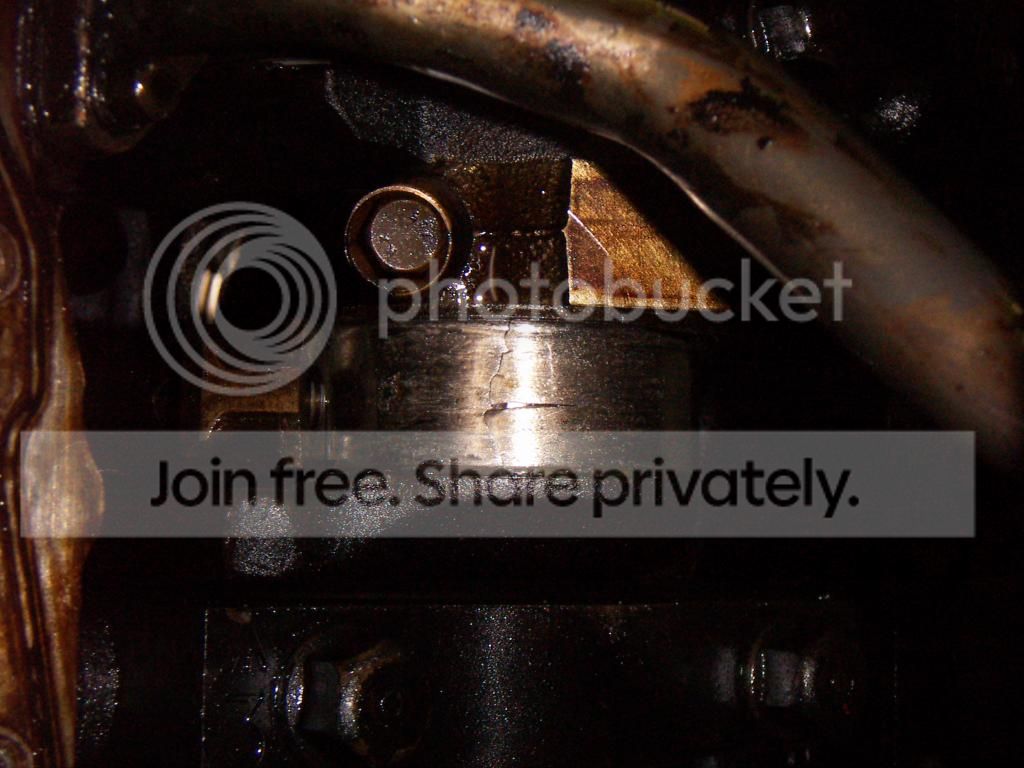
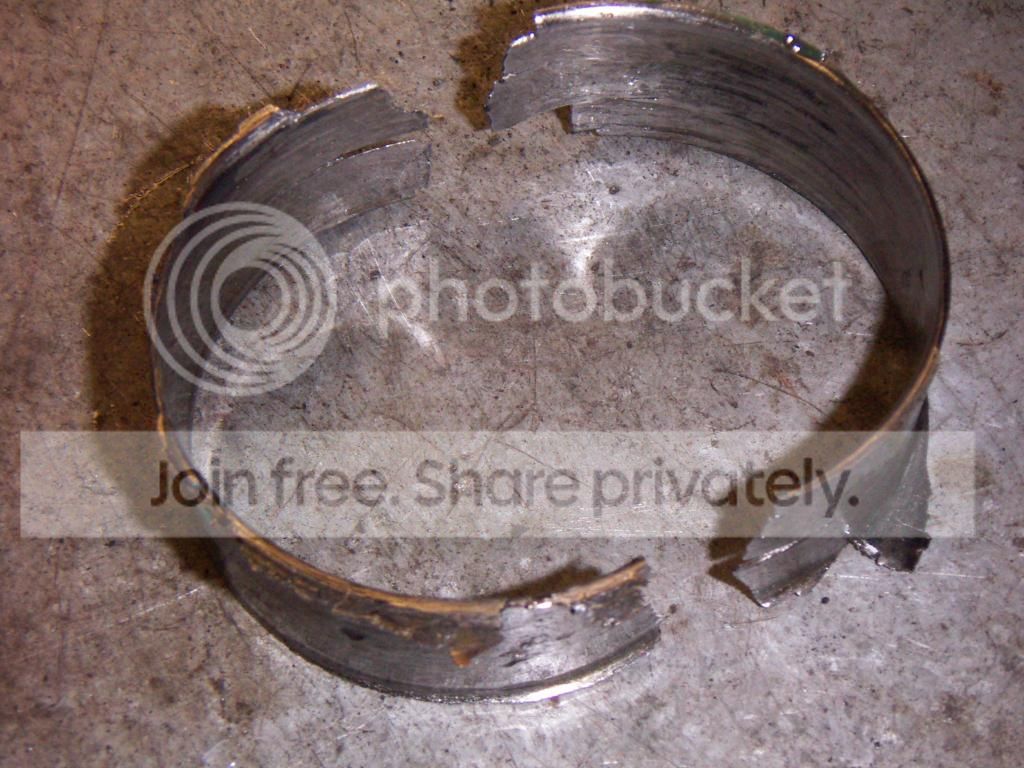
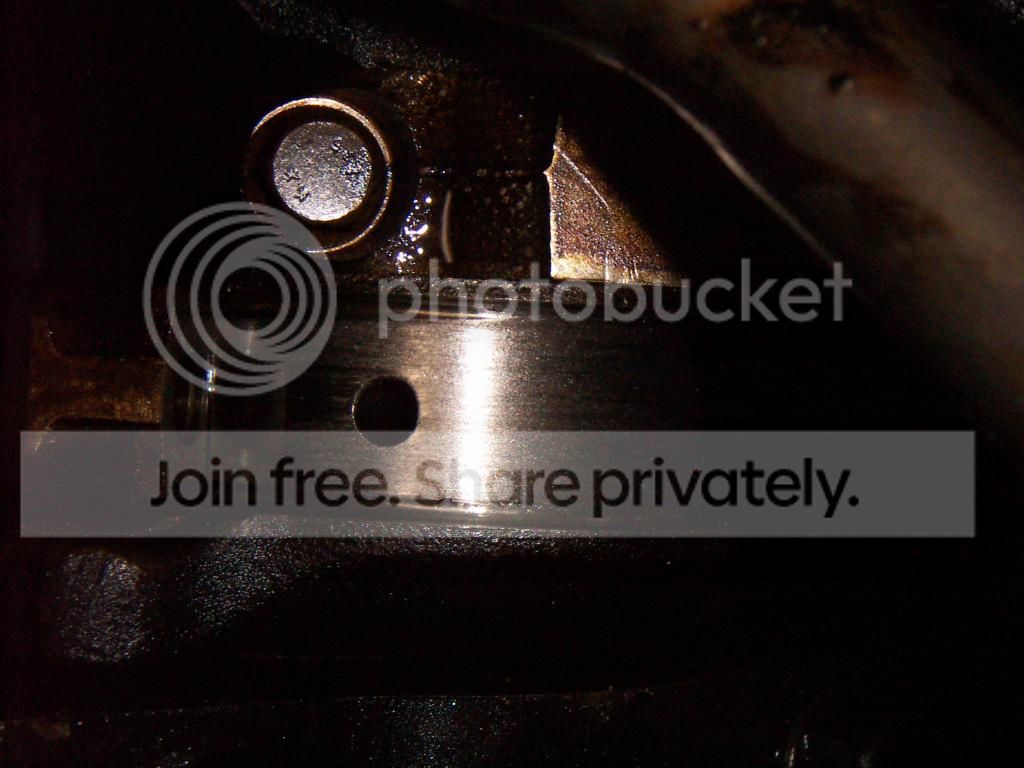
I know you've all been waiting for carnage pics. The two bearing halves were actually stacked when I took the cap off. They had moved to the "side" so that the rod could move nearly 1/4" on the crank! Of course the rod and crank are scored.

PICT0709.jpg


PICT0711.jpg


PICT0710.jpg


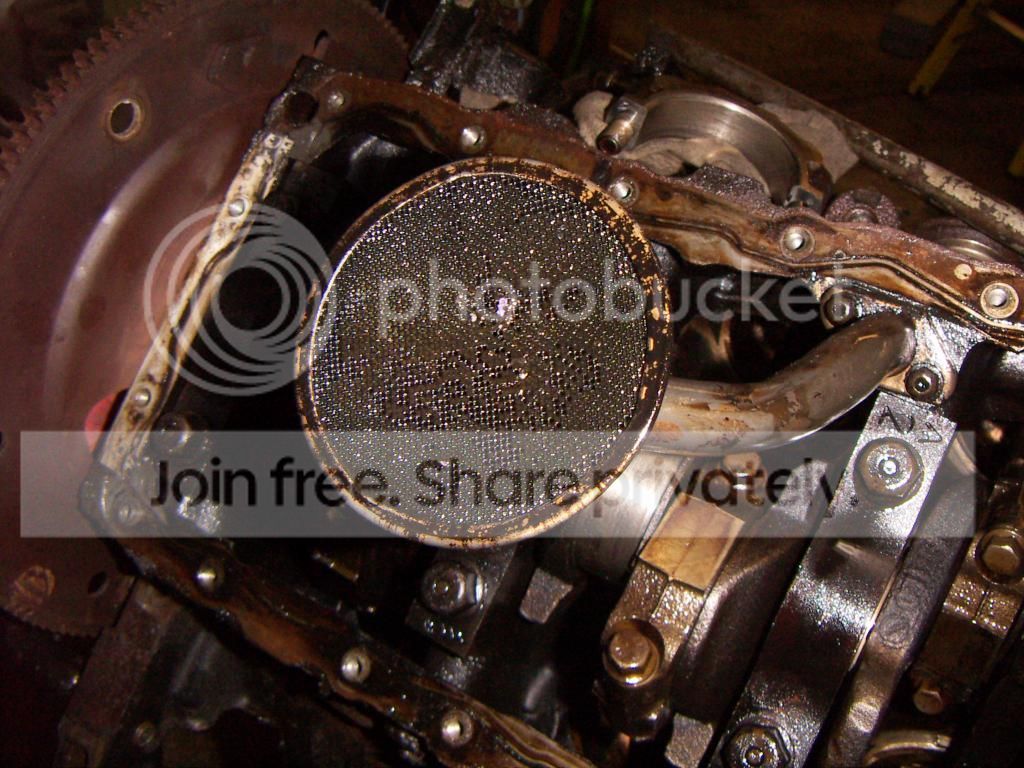
It looks like the oil pickup was starting to plug:

PICT0712.jpg


It's clear that the engine was starting to clean - the sludge was coming off all over. I had actually just given it new oil and filter the night before it blew up. It looks like I had been working it with a wire brush, but that's just how it opened up.

PICT0693.jpg
 
Top Bottom