CK5
Register an account today to become a member! Once signed in, you'll be able to participate on this site by adding your own topics and posts, as well as connect with other members.
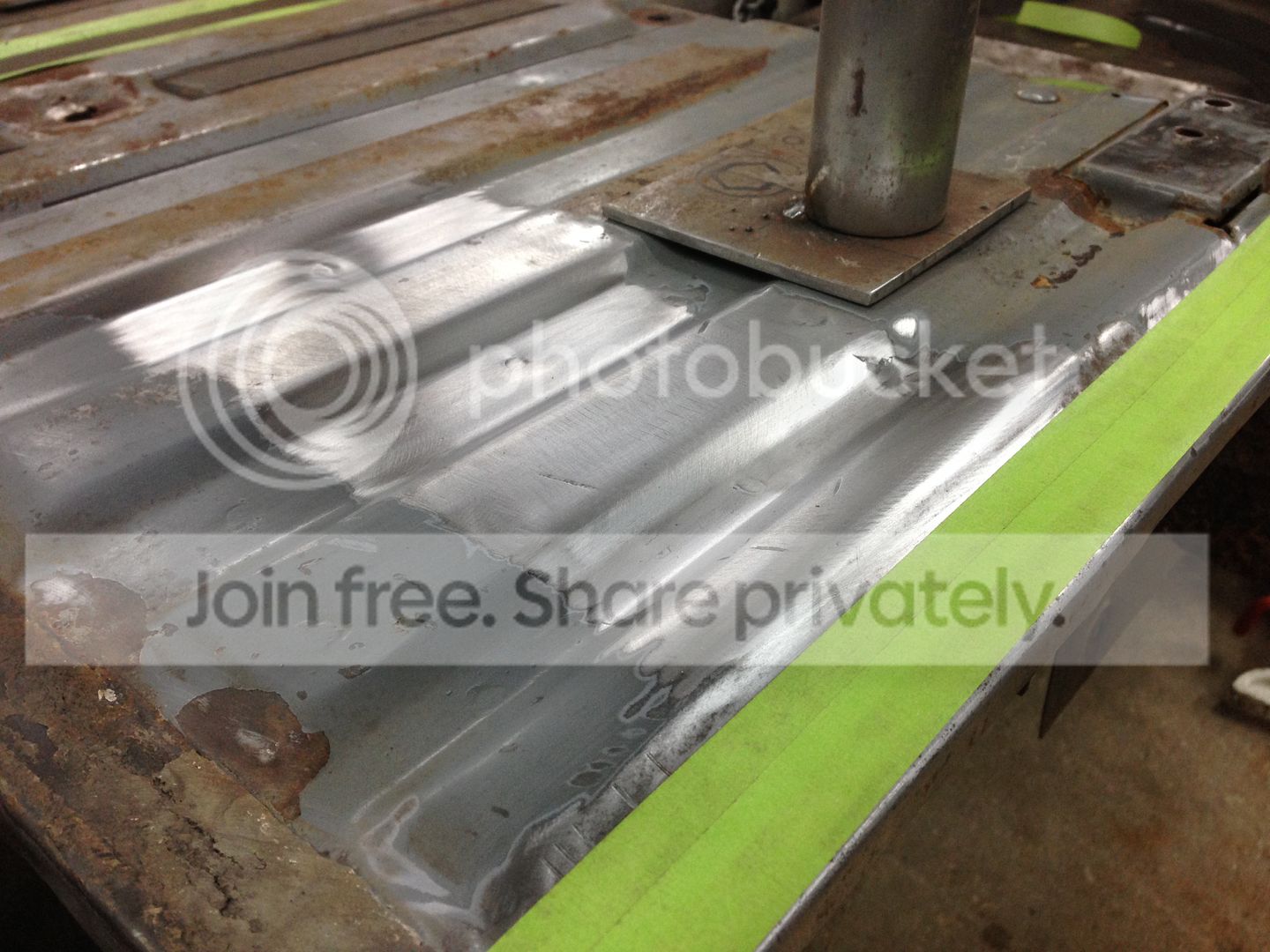
I think these shims and plates are looking killer accurate, however, I think no matter what you do you will have moisture and debris in there. To actually create a metal to metal seal requires surface deformation of the two metal surfaces which you will not achieve. You would have to use some sort of gasket and then it might not be safe if the gasket deforms over time.

Have you thought about leaving it open so you can blast it out or it will dry on its own? You could use some thick metal strips to space some flat plates out on the bottom, and the top you would have to align your bolt holes with the high side metal.
 
Heath,

I'm planning to take a page from the Ryoken school of metalworking for these.

"The Plan"

1. Clean all metal, remove all existing rust.
2. Address any small rust pits with acid wash or ???
3. Topcoat with Zinc Chromate (Ryoken Green) prior to assembly (bed floor and underside of metal shim)
4. Small tack welds at edges to hold shim in place
5. Topcoat outer surfaces with Zinc Chromate
6. Cover all exterior edges and junctions with seam sealer
7. Epoxy primer on top of that
8. Final body color on top of THAT...
9. Line-X / Rhinoliner / LizardSkin on top of THAT (masking off the area where the cage foot will actually bolt down.....
10. Drink Beer and enjoy! :D

I really don't see an water intrusion being an issue with these any more than it would be with dozens of other places on the body where two panels are joined together with an exposed edge...... but I'm sure you guys will correct me if my thinking is wrong! :haha:


-G
 
I think no matter what you do you will have moisture and debris in there. To actually create a metal to metal seal requires surface deformation of the two metal surfaces which you will not achieve.

Are you mounting the pieces to the cage plates or to the floor? If it's the plates this shouldn't be a huge concern, and you can remove the cage and repair when needed. At least it will be good quality fresh metal.
 
2014.10.01 - UPDATE! - OOOOOPS...!!!


I'm not too proud to admit a mistake, and not so self-absorbed that I can't give credit where credit is due.....

Mike (NorCal69) texted me last night and noticed something in my build that I had completely overlooked. :waytogo: It's a bummer, but I'm glad that he saw it NOW so that I can fix it before it became a heartbreaker later on.

In my recent zeal to add cageplate shims all over the place I lost track of an important detail that I'd previously gotten right.

Here's the look of the original cage plates I'd mocked-up a couple of years ago...

IMG_0822.jpg


Just a small 4" x 4" square plate made out of some 3/16" flat stock. When I pulled the bedside off, I guess I was tempted to really stretch out those plates a bit more to take advantage of the space.... and since I had shims worked out, there was no reason not to allow the plates to "span" across an extra valley (or two!) in the floor.

Well, it turns out there actually WAS a reason why I made the original plate the size I did, and specifically why I offset it so strongly toward the inside of the truck..... if the plates get any wider than that, I won't be able to remove the rollcage later on for final welding and finishing!!! :doah::doah::doah:

So..... my new beautiful cage plates are going to need to change a bit. I think the solution might be pretty simple: If I rotate them 90-degrees, the "long side" will run front-to-back, and the width will be 4" (across) just like the old plates were. This could end up being a pretty simple fix..... but I'm glad Mike saw it when he did, or it would have been a lot bigger hassle to resolve.

Anyway... moving on. :waytogo:

Last night I worked on the new design for the B-pillar triangulation bars. Now that I have a strong rectangular support beam directly underneath those 4 cage attachment points, it's less important where I land those angled bars..... since I can now support them strongly regardless of where they land on the floor.

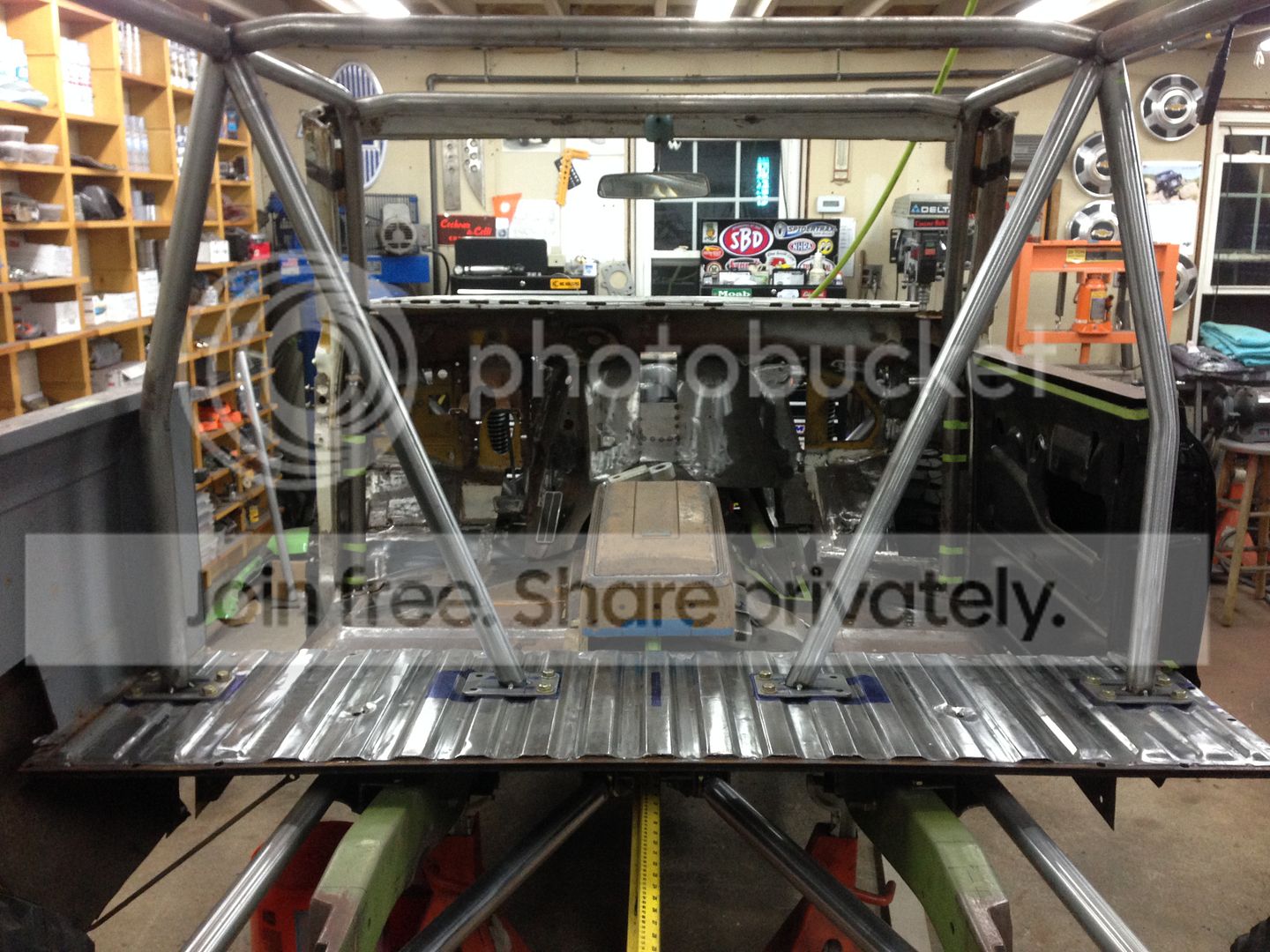
I played around with a few options, but the final spacing put the tubes about 18" apart (at the floor) so that climbing into the back seat will be a lot easier than it was with the tubes forming a sharp "V" at the floor.

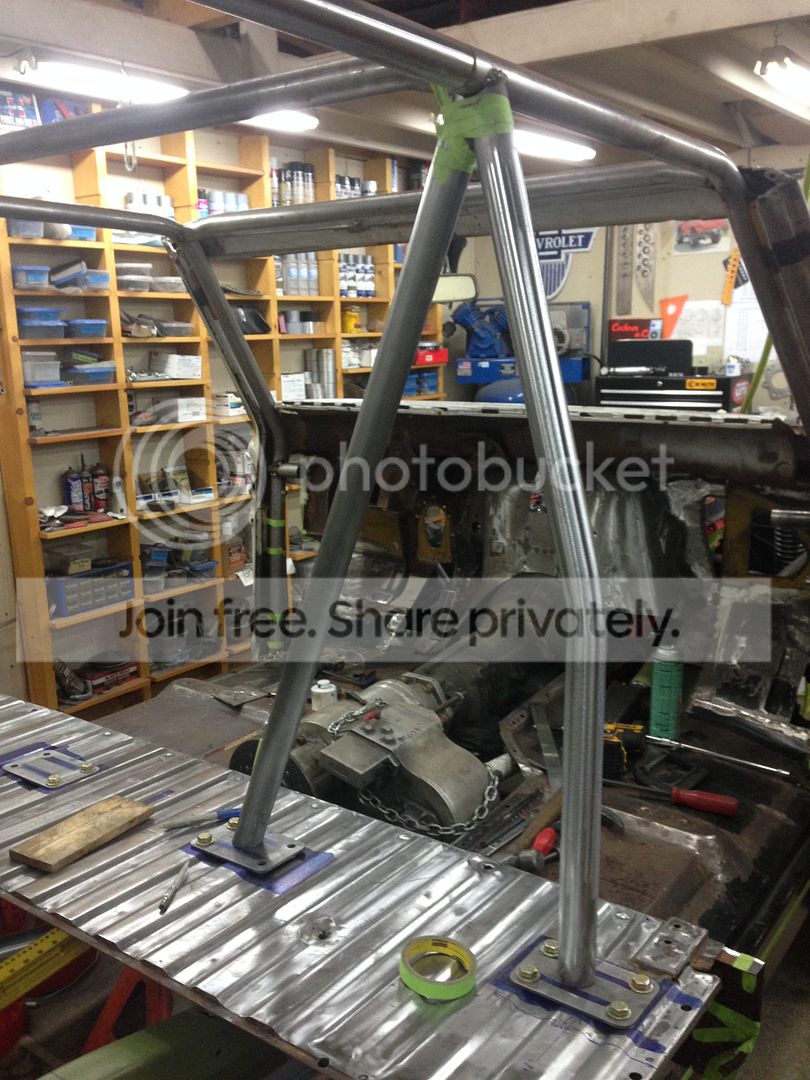
Here's the first bar going into position.....

IMG_1016.jpg


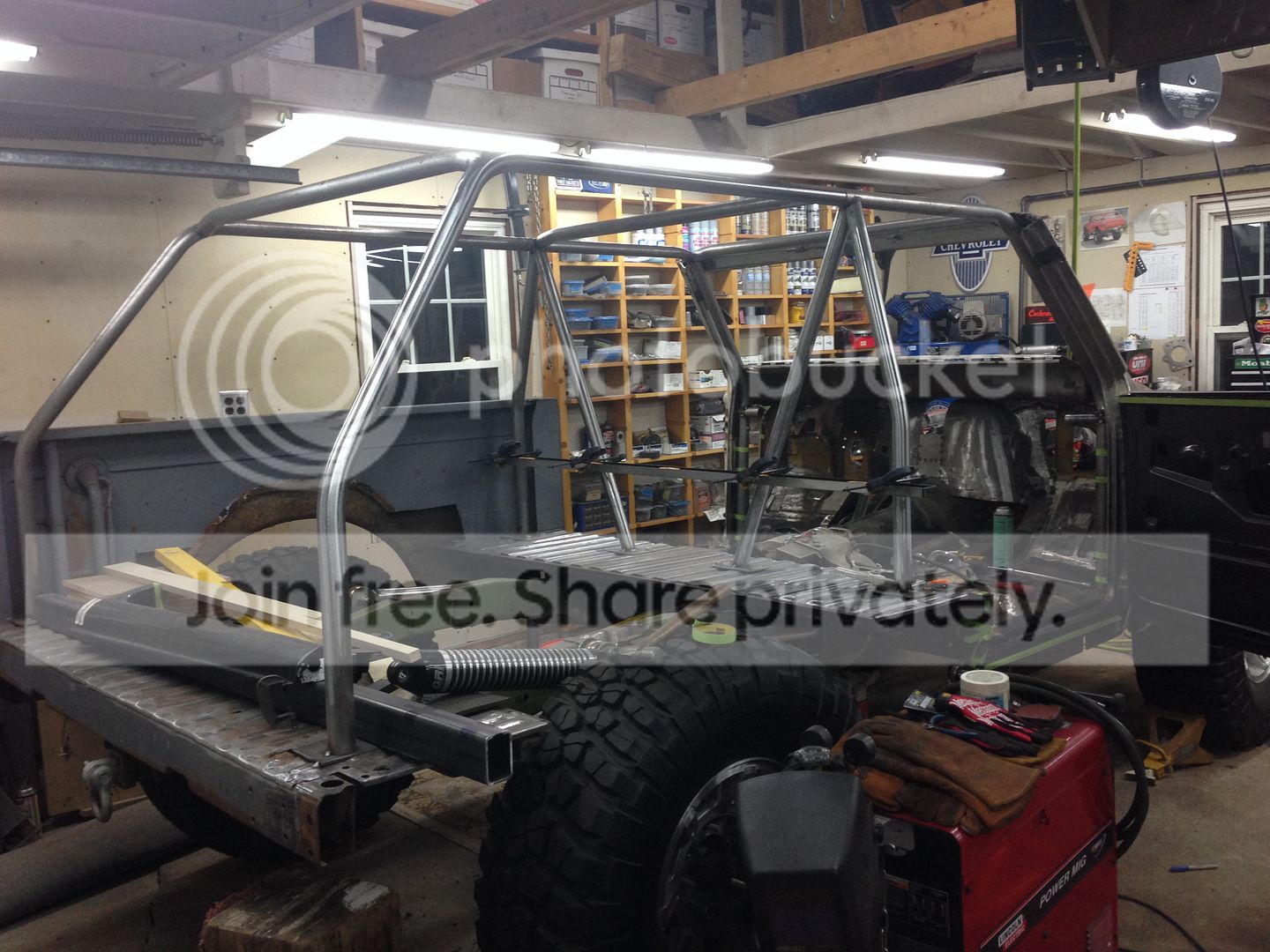
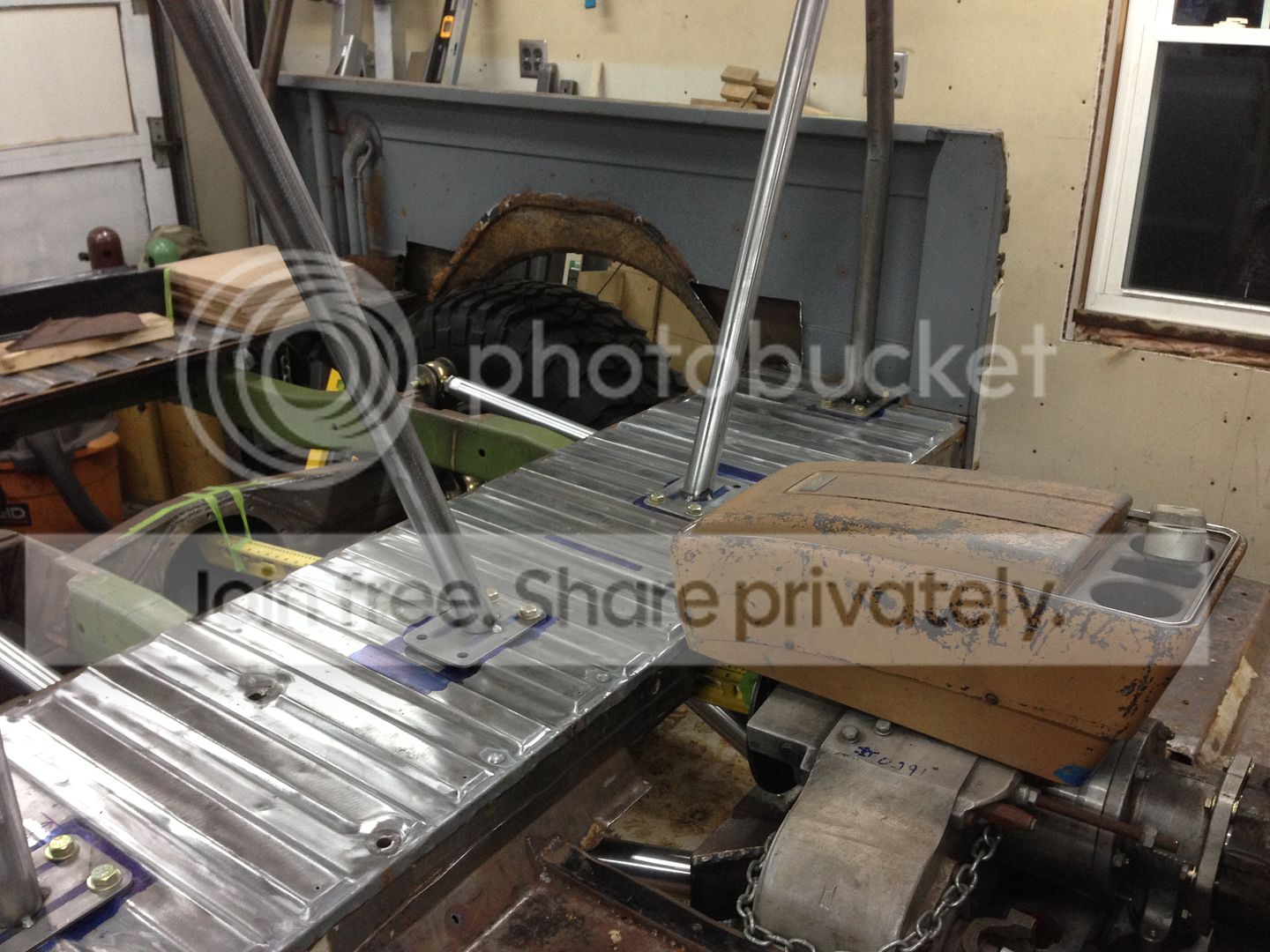
Since the 4 bars are all supposed to be in the same plane, I clamped them all to a common straightedge to force them into alignment...

IMG_1019.jpg


Once the first bar was fitted up, I used the fishmouths to create a paper "wrapper" and transferred those patterns to the driver side tube. That saved me a bunch of tedious fitment and cutting time.

The end result, with just a few tack welds per tube to lock everything down...

IMG_1021.jpg


....and here's the shot from the passenger side where people would actually load in to the back seat area. I put the center console in there temporarily also, just to block-out the space it will need and to confirm that it's still possible to step in / up / over those areas.

IMG_1025.jpg


Good forward progress...... with just a touch of backward progress. :D


-G
 
So just something simple I do. I never put my supports of the b pillar on the same plane. Looking straight down at the b pillar from above my supports are always just ahead or just behind. It is supposed to add just a slight bit more rigidity. Another thing i started doing is making sure that b pillar has braces that split up the long span of the b pillar. Sometimes its really hard to do and I typically use smaller tube to do it with.

One other thing. Dang man don't give Mike all that credit publicly. His head is already big enough:D
 
A horizontal bar across those b-pillar supports is part of the final plan. It will be a great spot to land the shoulder harness straps for a 4-point type belt.

-G
 
One other thing. Dang man don't give Mike all that credit publicly. His head is already big enough:D


What did you just say???


:haha::haha::haha:


C'mon Eric, don't be jealous, I've helped you with your builds too. :whistle:

Can we just all get along? :D
 
I think these shims and plates are looking killer accurate, however, I think no matter what you do you will have moisture and debris in there. To actually create a metal to metal seal requires surface deformation of the two metal surfaces which you will not achieve. You would have to use some sort of gasket and then it might not be safe if the gasket deforms over time.

Have you thought about leaving it open so you can blast it out or it will dry on its own? You could use some thick metal strips to space some flat plates out on the bottom, and the top you would have to align your bolt holes with the high side metal.

Heath,

I'm planning to take a page from the Ryoken school of metalworking for these.

"The Plan"

1. Clean all metal, remove all existing rust.
2. Address any small rust pits with acid wash or ???
3. Topcoat with Zinc Chromate (Ryoken Green) prior to assembly (bed floor and underside of metal shim)
4. Small tack welds at edges to hold shim in place
5. Topcoat outer surfaces with Zinc Chromate
6. Cover all exterior edges and junctions with seam sealer
7. Epoxy primer on top of that
8. Final body color on top of THAT...
9. Line-X / Rhinoliner / LizardSkin on top of THAT (masking off the area where the cage foot will actually bolt down.....
10. Drink Beer and enjoy! :D

I really don't see an water intrusion being an issue with these any more than it would be with dozens of other places on the body where two panels are joined together with an exposed edge...... but I'm sure you guys will correct me if my thinking is wrong! :haha:


-G

Just an observation; won't the shims ultimately be weaker and require more work than just "frenching" in a piece of plate thick enough to span the thickness of the floor?

With the shims, there will be more "layers in the sandwich" so to speak, with the upper cage foot, a shim, the floor sheet metal, the lower shim, and then the lower cage foot, which no matter how much you tack weld and bolt, there will be movement between everything, not to mention worrying about keeping a good seal between all of those uneven surfaces (there's no way the factory floor will hold the same tolerances as the CNC machined shim).

With the solid one piece plate, you knock out three of the "layers" and have a stronger tie in between your upper and lower cage mounting feet since you won't have to worry about the solid plate compressing and possibly allowing your bolts to loosen like the shim/sheet metal combo would.

Another benefit of the single plate is it would be easier to drill over sized holes through it to allow the body to be shifted around for alignment while keeping the cage locked in the same place.

Just my two cents. Keep up the good work.:waytogo:
 
With the solid one piece plate, you knock out three of the "layers" and have a stronger tie in between your upper and lower cage mounting feet since you won't have to worry about the solid plate compressing and possibly allowing your bolts to loosen like the shim/sheet metal combo would.

Another benefit of the single plate is it would be easier to drill over sized holes through it to allow the body to be shifted around for alignment while keeping the cage locked in the same place.

Just my two cents. Keep up the good work.:waytogo:

Am I understanding you correctly? The suggestion is to cut a square/rectangular hole completely through the existing floor...... then carefully fit-up the plate and perimeter weld the floor back to it? :dunno:

That sounds like a pretty delicate assembly, even if I can do a perfect job welding the 18GA floor back to the plate....... :thinking:


-G
 
The other issue is that the floor and the cage will ultimately move a little differently and the welds would crack.
 
Am I understanding you correctly? The suggestion is to cut a square/rectangular hole completely through the existing floor...... then carefully fit-up the plate and perimeter weld the floor back to it? :dunno:

That sounds like a pretty delicate assembly, even if I can do a perfect job welding the 18GA floor back to the plate....... :thinking:


-G

If so I cant say I agree. The whole point of the sandwich plate on the body is that theres no welding between two extremely different thickness metals. I could see 18ga to 1/4 plate cracking in a situation like that...
 
Greg, why not cut a large enough hole in the floor so that you can weld the cage plate directly to the cross sills then fit the floor section back into place with a grommet around the tube to seal out elements? I'm assuming you're still planning on running some form of body bushing?
 
Scotty,

Nope.

The body mounts are being hard-mounted to the frame... At this point, I'm just trying to make this truck as close to a unibody vehicle as possible.

There's so much cagework going on with the upper cage, engine cage and frame (including integrated rocksliders and suspension monolith) that it's basically impossible for the body to "float" on it's factory mounts anymore.... I decided to just acknowledge that and swap in a metal puck in place of each rubber body mount and build from there.

-G
 
Then I would suggest just cutting a hole in the floor and landing your cage directly onto the cross sills, if you want to remove make the cage removeable for painting then just weld a mount plate to the cross sills and then a matching plate to each cage leg so it can bolt together then make a removeable floor section to access the bolts and facilitate the removal of the cage. You will no longer have to deal with the corrugated floor and it would end up being the strongest possible.
 
That sort of works.... the cage-to-subframe connections probably get a little stronger(though I'll be honest, I think we're starting to split hairs here about absolute strength, sheetmetal and plate flatness, etc. :D )

My concern is that the tub itself needs to be supported as well.... and if I only use the factory body mount locations, that is 10 small bolts instead of large and well-reinforced cage plates helping to distribute the load (across not only those 10 factory locations, but across at least 8 other cage plate locations throughout the tub)

If I did all the cage points as "through-the-body" type connections, I've got a lot of weatherproofing to do around each of those tubes. Plus, the engine cradle has already been built using the firewall as an attachment point. I'd have to cut off those plates, and do the same weatherproofing process for the tubing that would then pass through the firewall.

I've been thinking different options quite a bit. There really isn't a "perfect" solution, each idea has some pros and cons.

As this moves along over the next few weeks and I get more of the complete structure built and installed, I think the overall design and layout will make a lot more sense.....


-G
 
why are you worried about more body support than came from the factory? It's not like the body is going to fall off the frame. I don't think it's a good idea either to solid mount the body either as you'll probably end up with door gap issues down the road that you'll have to deal with after the rig is done and painted. I would solid mount the cage to the frame/cross sills but leave the rubber body mounts intact so there is a slight bit of allowable movement.
 
why are you worried about more body support than came from the factory? It's not like the body is going to fall off the frame. I don't think it's a good idea either to solid mount the body either as you'll probably end up with door gap issues down the road that you'll have to deal with after the rig is done and painted. I would solid mount the cage to the frame/cross sills but leave the rubber body mounts intact so there is a slight bit of allowable movement.


BECAUSE RACECAR!!!!!!


:D


-g
 
Am I understanding you correctly? The suggestion is to cut a square/rectangular hole completely through the existing floor...... then carefully fit-up the plate and perimeter weld the floor back to it? :dunno:

That sounds like a pretty delicate assembly, even if I can do a perfect job welding the 18GA floor back to the plate....... :thinking:


-G
I believe he meant to make the plate machined in one piece instead of having a plate and shims.
It also allows you to lock the cage vs the floor and have slotted holes to adjust the body on the frame laterally.
But I could be the only one that misunderstood him.
:)
 

Latest Posts

Top Bottom