CK5
Register an account today to become a member! Once signed in, you'll be able to participate on this site by adding your own topics and posts, as well as connect with other members.
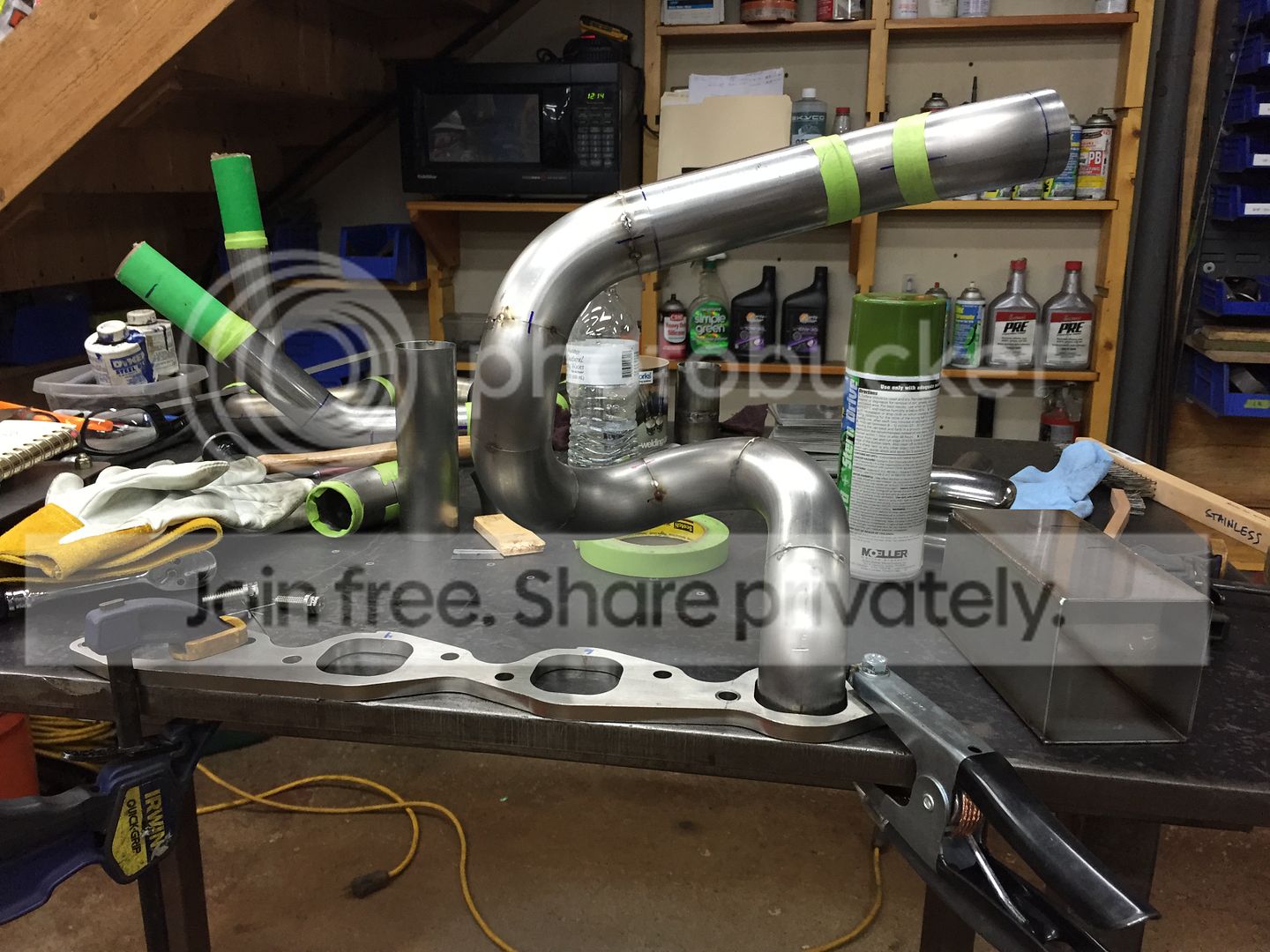
All the sections in that one tube...that's craziness. Making progress.

 
All the sections in that one tube...that's craziness. Making progress.

12 sections per primary tube.....8 primary tubes.

Someone's going to have PLENTY of TIG practice before this whole story is finished. :waytogo:


-G
 
2015.08.13 - UPDATE! - 12 SEGMENTS DOWN, 84 TO GO...!!!!

Cylinder # 8 is complete!!! Check that one off my list!! :saweet:

12 segments, all fit up and tacked into place and it lands nicely in the collector just the way it needs to. With only 7 more cylinders remaining, this process should be done in no time. :haha:


On the bench doing the last few segments:

IMG_5971.jpg


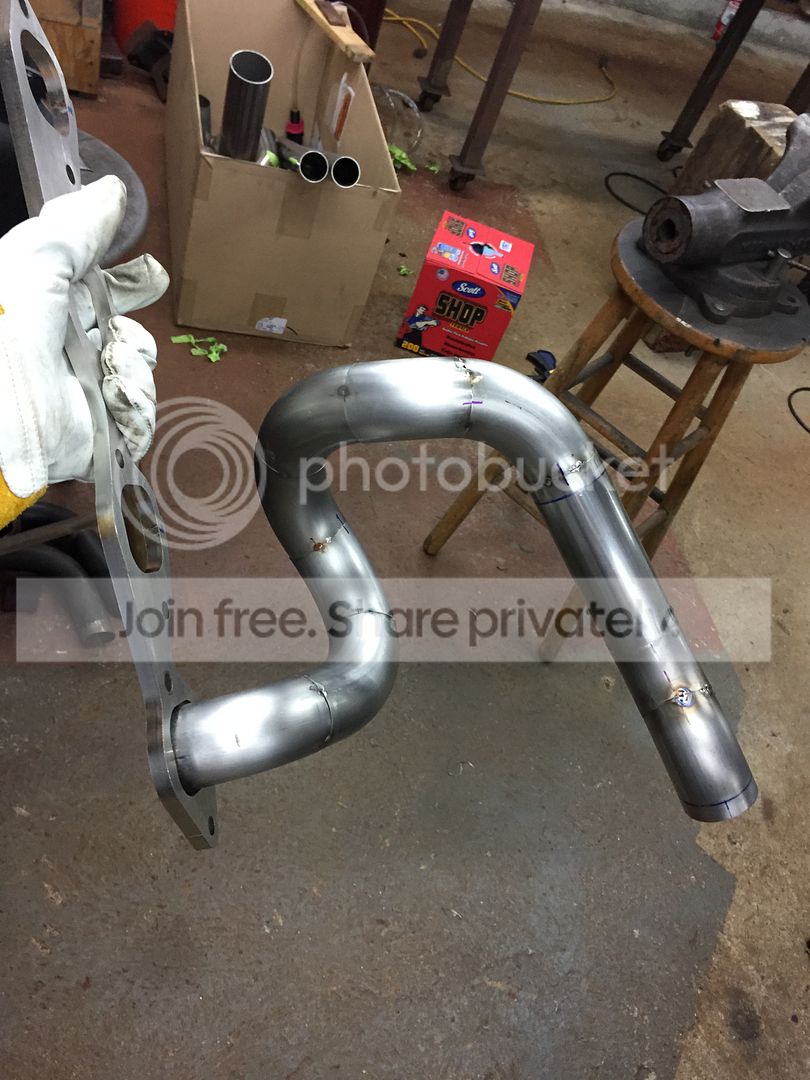
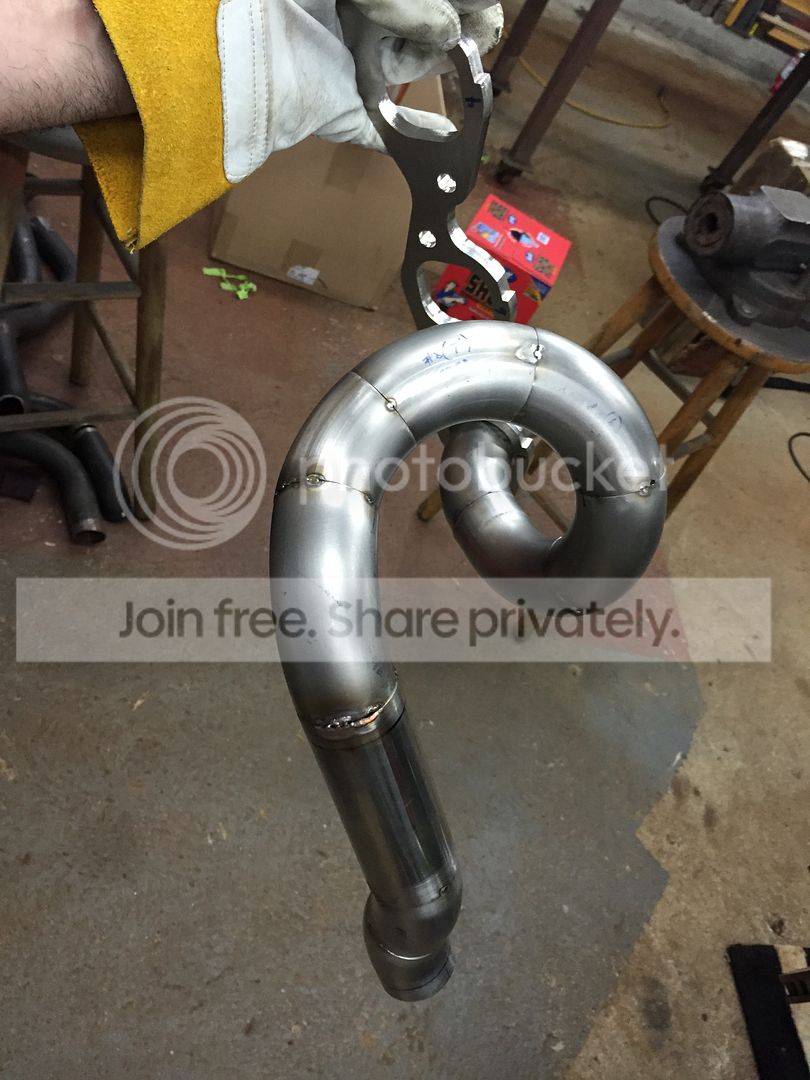
That's some crazy-ass bending going on.... :D


IMG_5972.jpg


IMG_5974.jpg


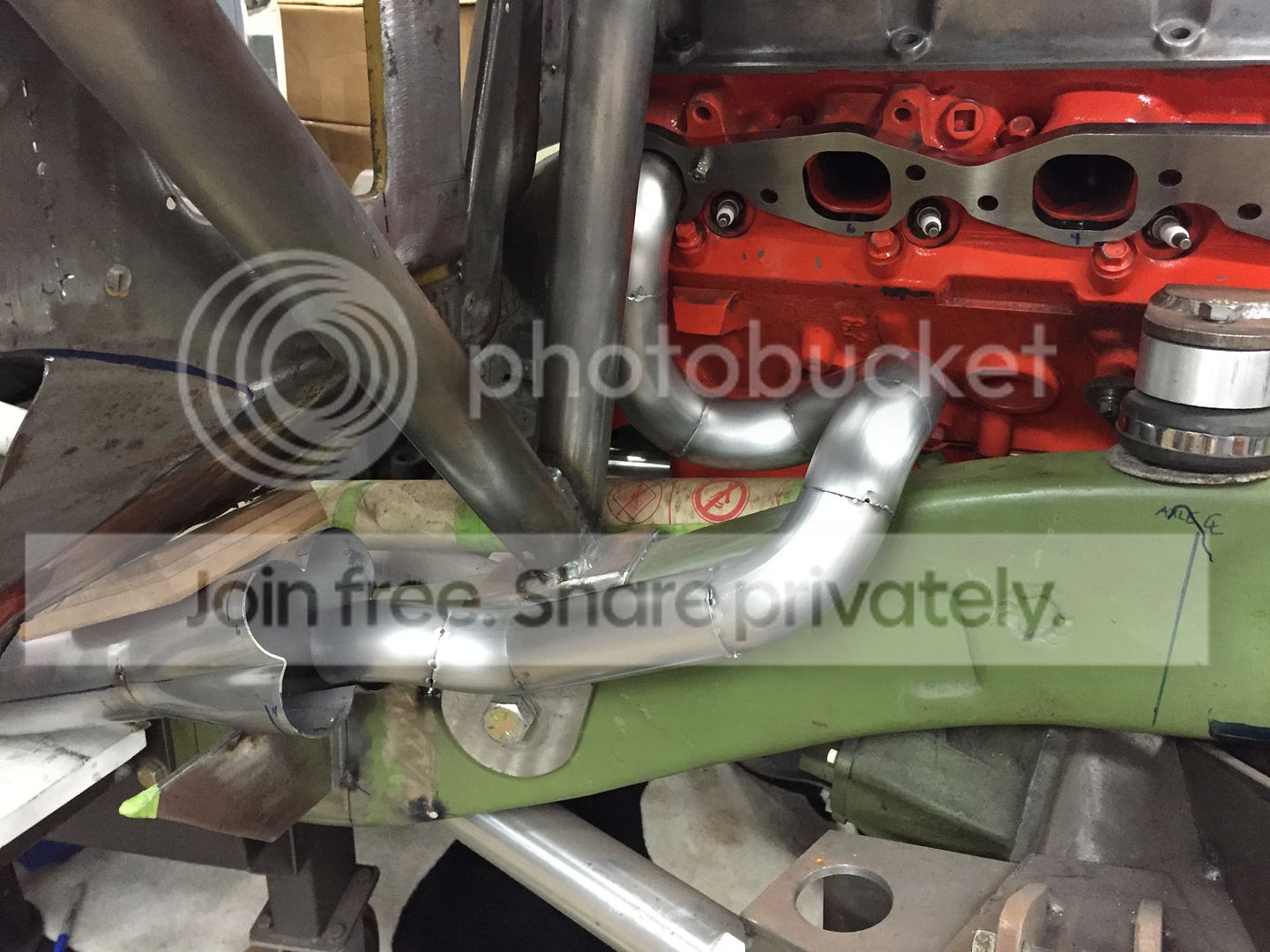
The final shot at around 1AM..... it was a late night. :eek1:

IMG_5977.jpg


One thing that continues to frustrate me is the inconsistency of being able to do a quick tack-weld with the TIG. If I am laying the part on the bench with the seam facing upward, I can almost always get a nice small tack weld across the seam. If I try to do anything in a vertical position, it seems like all I get is a blow-through on the tubing. :doah: The seams are all nice and tight (no gaps). I'm trying to keep the torch really close to the tube, and I've tried aiming the torch straight down into the seam, and also coming in at around 45* from the side. I have tried going maybe 1/2 pedal (max is 45A) to see if I can ease into the puddle and avoid holes... but at this point I just can't figure out a good method to tack things together in anything other than a perfectly FLAT benchtop configuration.

This is not going to work forever.... eventually I will NEED to tack something that's already installed on the truck, so if anyone has tips or tricks please let me know!!! :bow:


-G
 
I don't have any advice, except to biuild a really large and strong bench that can hold 5000lbs. :) Those stainless headers videos were pretty neat to watch. I wonder if you can build some kind of fixture that fits on your bench like they did?

Is the plan to take each cylinder tube off and fully weld it up and then weld them all to the flange and collector at the end? I could see it being really hard to access all the joints once all four tubes are tacked in.
 
I don't have any advice, except to biuild a really large and strong bench that can hold 5000lbs. :) Those stainless headers videos were pretty neat to watch. I wonder if you can build some kind of fixture that fits on your bench like they did?

Is the plan to take each cylinder tube off and fully weld it up and then weld them all to the flange and collector at the end? I could see it being really hard to access all the joints once all four tubes are tacked in.


Yeah, that's what I need..... a complete vehicle rotisserie!! :D

I will have to go back and watch the videos again to see how they normally do it, but I'm pretty sure that each primary tube is removed and is fully welded....then they are welded to the head flange, and the last step is welding the collector end together with the "star point" to seal up the center gap between the four tubes. The last step is the perimeter weld the collector to the primaries. :thinking:


-G
 
When I tack something I always find its best to blast it with the heat all at once. Sometimes you need to dab some filler, even for a tack. Somethings not right if you're blowing through.

Going from an angle can be a good way to push something that has more material into a puddle on something that has less, or even something with a slight gap.


Also you're probably going to want to grab a toxic cup for doing the collector. Its expensive but only use it when you need it for stuff like that. It lets you have like a 2in stickout to sneak in tight places.
 
When I tack something I always find its best to blast it with the heat all at once. Sometimes you need to dab some filler, even for a tack. Somethings not right if you're blowing through.

Going from an angle can be a good way to push something that has more material into a puddle on something that has less, or even something with a slight gap.


Also you're probably going to want to grab a toxic cup for doing the collector. Its expensive but only use it when you need it for stuff like that. It lets you have like a 2in stickout to sneak in tight places.


What sort of distance do you keep from the tungsten to the workpiece? I think I might also be getting TOO aggressive and trying to lay it in there like 1/16" above the tubing. It's possible that the arc isn't even the right length/shape to initiate the melting...??? :dunno:

All I know is that I stuck the tungsten about 10 times last night, so I know that I'm definitely working a LOT closer to the puddle than the first time I posted my TIG photos!!! :haha:


-G
 
Nice ram horn on that exhaust. :) you look to be making decent Progress. That's tough to learn a completely new process of welding. You look to be doing much better than most would though.
 
my tungsten is typically very close to the work piece. You have to realize, the bends of the u bends are much thinner than the straights, theyre also inconsistent from the bending process. So, what you might be thinking is your own fault may in reality due to the material being thinner.

i start my tacks cold and dab some filler and burn the filler in.

my first or 2nd post here i talked about the sequence of building the headers and you have it right. tack everything, leave the tacks on the header flange easy to get to so then can be removed later. once your happy with the complete header mark how the tubes are clocked on the flange, remove each tube and weld them completely. reassemble header tack it together, test fit. install the collector and mark its orientation, i then tack all my tubes together remove the collector and fit the center cone or plate. weld it and as much of the tubes as you can, install the collector again tack it and finish weld. you can finish weld the header flange before or after the collector, just dont do it before the 4 primaries have been welded.

i have a 3/8 thick piece of 2x4 tubing i drilled and tapped for the header flanges i bolt it down to that and then weld it. Ive never had a problem
 
BONUS QUESTION:

For anyone who may know of a site with a calculator for CLR lengths of tubing?

My primaries are 1-7/8" with a 3" CLR...it would be fun to figure out the exact length of each runner just by plugging in a few specs on the tubing.

For example: A typical 30* segment that I use is around 3" long on the outside edge... so maybe the CLR distance is something like 2"??? :dunno:

I use a lot of 20*, 30* and an occasional 10*... but knowing how many inches/degree would allow me to add up all the segments from each primary and actually KNOW what the final numbers were.

BECAUSE NERD.


-G
 
If all the bends use a 3" CLR, it's not hard to add up if you have the angle that each tube bend was cut at (which you do).

For example a 360 degree circle has a circumference of 2*pi*r= 2*3.14*3=18.84"

30 degrees is 30/360=.083 (8.3% of a circle)

18.84 *.083= 1.57".

Add each bend up with the length of each straight section to get an answer for each one. Maybe someone can check my math.
 
If all the bends use a 3" CLR, it's not hard to add up if you have the angle that each tube bend was cut at (which you do).

For example a 360 degree circle has a circumference of 2*pi*r= 2*3.14*3=18.84"

30 degrees is 30/360=.083 (8.3% of a circle)

18.84 *.083= 1.57".

Add each bend up with the length of each straight section to get an answer for each one. Maybe someone can check my math.

I think you are right.

Ultimately it doesn't matter that it's tube or whatever. It's just a circle of some diameter at the CLR. In this case it's a 6" diameter circle.

The math looks right, I did a quick spreadsheet with sample values. I can check it against the actual parts later as a sanity check

-G
 
For that I would just make a spreadsheet so you could input the angle of each bend in each row, and excel could calculate the lengths and add up the rows for you, regardless of how many bends are in it.
 
T.G.I.F.!

The only thing better than Friday morning......is THURSDAY NIGHT!!! :waytogo:

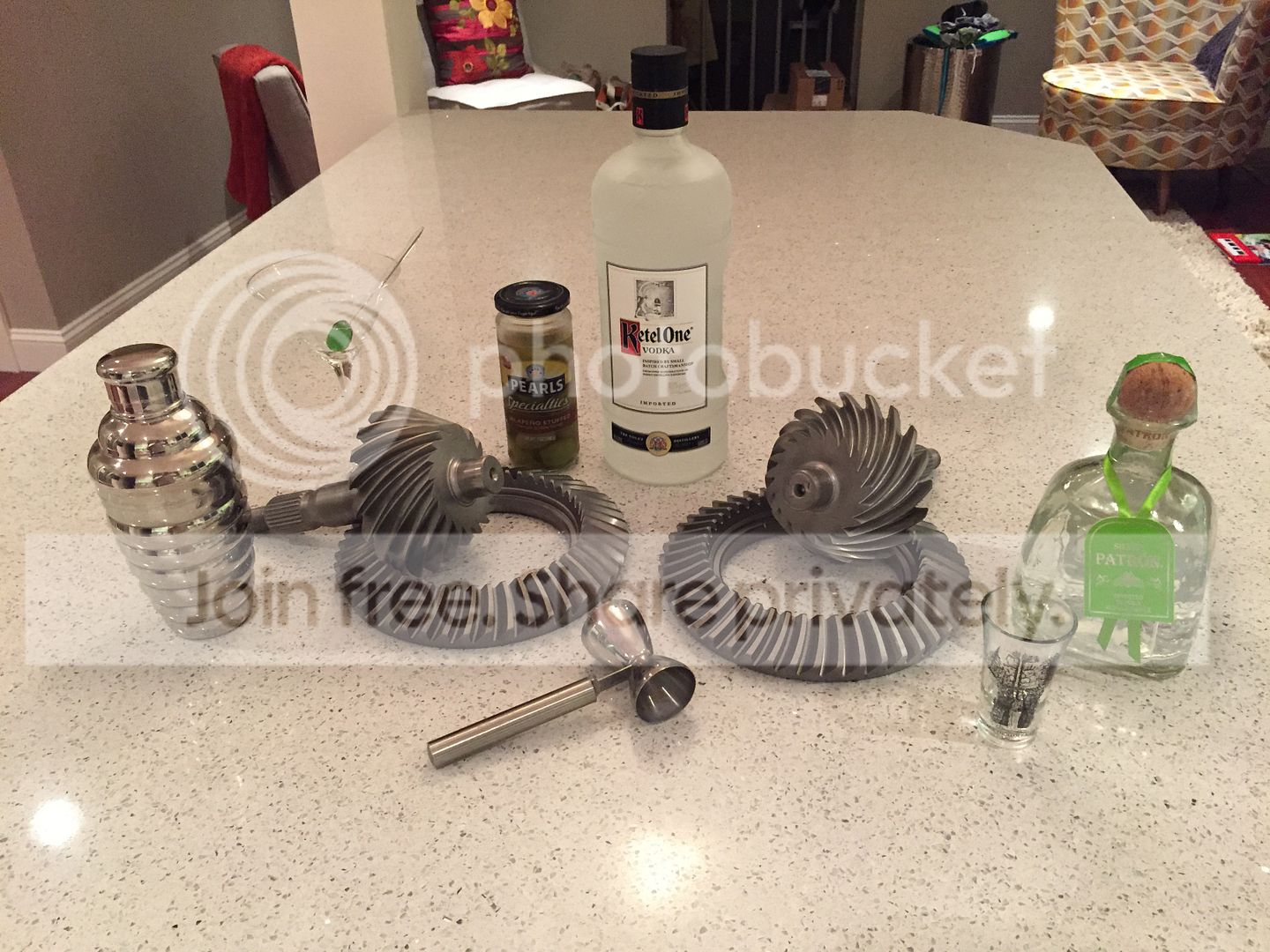
My wife and I have had a long-standing tradition since we first started dating. Thursday nights are called "Martini Night" and we get an early jump on the weekend by having a nice dinner and a few cocktails... :)

As it turned out, I got a sweet delivery from UPS last night so I decided to integrate them into the celebration....

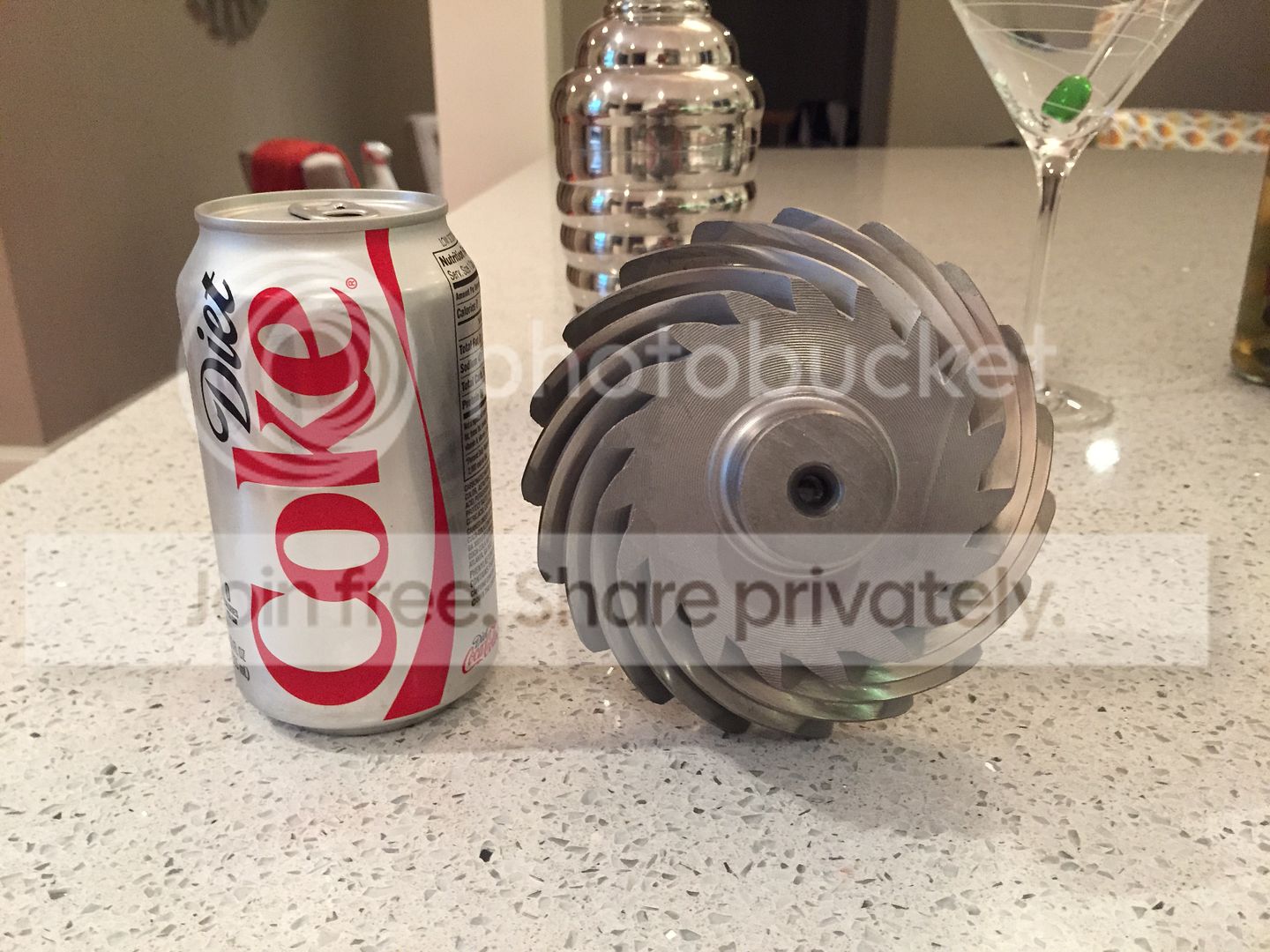
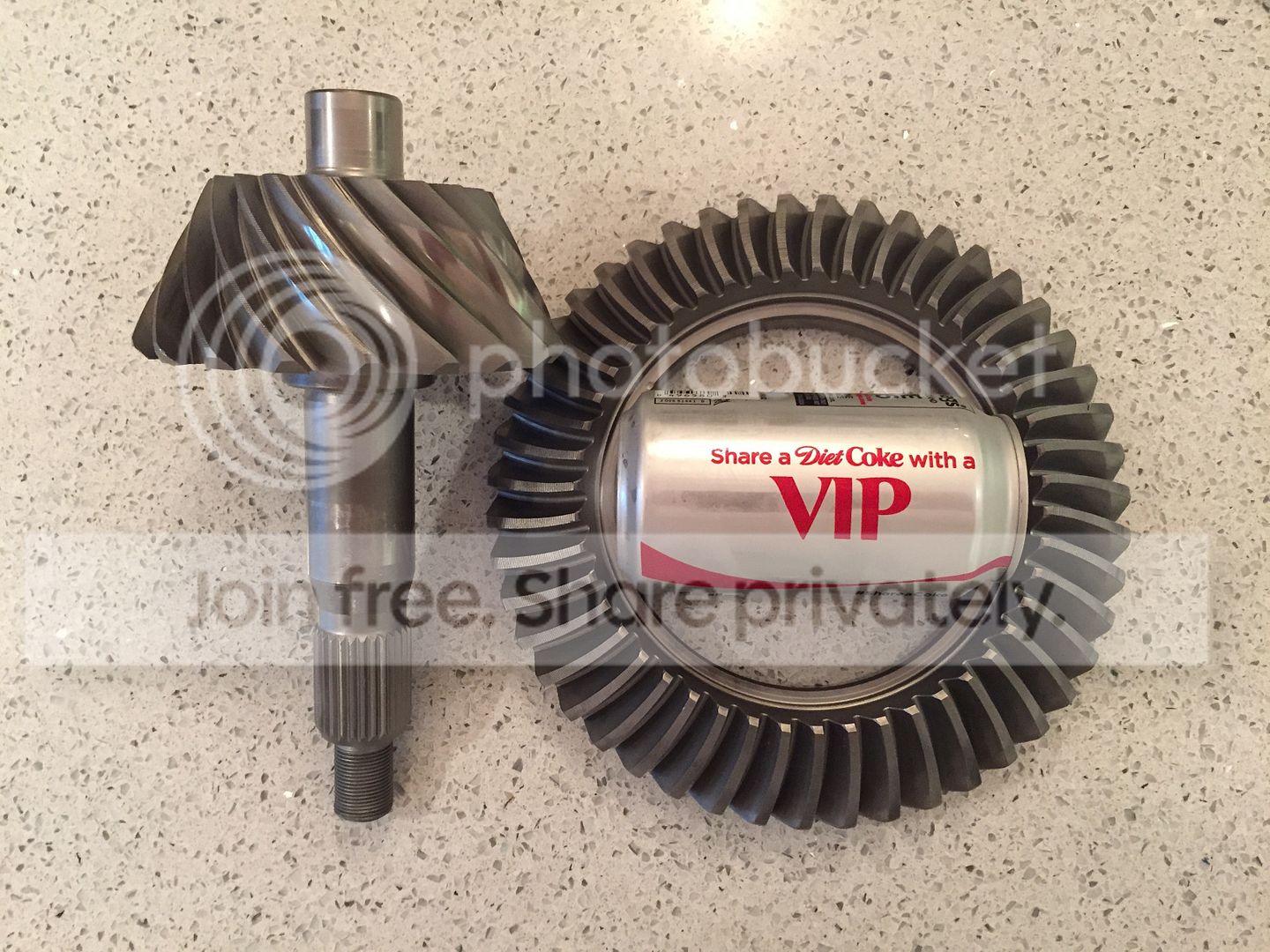
Two VERY nice gearsets: Ford 2.47:1

IMG_6018.jpg


The de-facto photo to show "scale".....The Diet Coke can!

IMG_6020.jpg


Insane Pinion Size..... !!!

IMG_6021.jpg


I don't know how many of you have ever seen a typical "deep" Chevy 14BFF gearset (like 5.13s), but the pinion is usually pencil-thin on those... and is a real weak-link in axle strength when trying to gear-down the axles for really good low-end torque and high crawl ratios.

By way of comparison, these gears when coupled to the 2.13:1 reduction in the portal housings will give an overall axle ratio that's even DEEPER... (5.26:1) and with MASSIVE improvements in pinion strength, and tooth engagement. The fact that the Ford pinion has a bearing on BOTH sides is a huge improvement also... less pinion deflection under load. More better. :waytogo:


-G
 
Sweet gears. Did you buy the center sections yet? Going aluminum?

The 14BFF also has a 3rd pinion bearing as well, just like the 9".
 
Do you prefer the Ketel One to Grey Goose? I haven't tried it. I just finished my last bottle of Grey Goose coincidentally on Thursday. Dirty martinis FTW.
 
Sweet gears. Did you buy the center sections yet? Going aluminum?

The 14BFF also has a 3rd pinion bearing as well, just like the 9".


I'm not sure yet about the center sections...

The 2.47s were not that easy to find, and I really just wanted to buy the completed 3rds from a reputable vendor, but since none of them had used 2.47s to build with it made the whole process complicated.

I seem to recall reading that the Ford 9" 3rds are one of the easiest to setup... so at this point I will probably just give it a try myself. I bought a dial indicator about a year ago, and I don't think there are any other tools needed (case spreader, etc). :dunno: I figure if I can get them assembled and get a couple photos of the gear pattern with that yellow paste someone on here will be able to tell me what needs changing / adjusting.

From what I've learned, the stock case is the worst... the aluminum cases are stronger than stock, and the aftermarket iron 3rds (with extra ribbing) are stronger still.... the Nodular Iron ones are supposed to be the strongest? I'm not sure how much real weight savings is available by going to alumnum vs. iron, and if the weight savings is worth the risk of using a lighter duty part in such a heavy truck.

The other recent breaking news was the release of the Yukon Gear "Zip Locker" for the Ford 9".... it's basically an ARB Air-Locker, but the internals look to be a lot beefier, and the air pressure is used to "UNLOCK" the device intead of locking it.... so if you were on the trail and blew an airline, or lost a compressor, the axles would actually stay fully-locked. That might be the difference between driving out and walking home! :)

It only comes in a 35-spline version, so that might change the bearing size on the 3rd member (3.062" vs. 3.25"?). I know there are two sizes, and it seems like the larger one gets used on the high-spline count axle shaft stuff.

Also need to get a pinion oiler from Currie since I'm running the axle upside down... so it doesn't starve for oil. And I heard that they make a solid spacer kit that replaces the crush sleeve so maybe that will make the setup a little easier (even if it costs a few dollars extra).

Anyway... lots of unanswered questions remain, but I guess that I will figure it all out eventually. Setting up gears is kind of like another "TIG skills" thing to me.... I've wanted to do it myself for a long time, but never had an opportunity to learn it.


-G
 
Last edited:

Latest Posts

Top Bottom