CK5
Register an account today to become a member! Once signed in, you'll be able to participate on this site by adding your own topics and posts, as well as connect with other members.

K10: Built HP60/241-205 Doubler/tons of tube

I managed to squeaze the timing cover in without dropping the oil pan but it was a pain the ass. I recomend just dropping the pan, it'll be be quicker and easier.

 
well, obviously you had no clue that their was a range of qualities, amp ratings, etc..... but that's cool, go put some low amp solenoid in a rig with a high amp draw, I'll be reading about your rig catching on fire...
 
well, obviously you had no clue that their was a range of qualities, amp ratings, etc..... but that's cool, go put some low amp solenoid in a rig with a high amp draw, I'll be reading about your rig catching on fire...

I'll play....I have seen the quality of work you do Ryoken, I would look for and buy the solenoid you suggest, IF I WANTED TO DO IT RIGHT! :bow: :thumb: Having said that, the one I am running is technically a F@#% part. It's rated @ 600 amps.... Glow plug relay for a Powerjoke! err I mean a Rattlesmoke...:haha:
 
or you could actually learn about the products your installing... :rolleyes:

I worked on dozens and dozens of electric pallet jacks with high amp solenoids. In this case all we are doing is by passing the starter solenoid on the starter and installing one off a ford meant for the same duty. I guess since it is more or less a direct replacement that is what I use. I know there are better ones but for the price and avaliblity I think they work fine. If I was controlling constant power I would find a better one. I know you are super smart at electrical so I am not trying to start a war just explaining that in my case I think what we are using is fine.
 
Can't we all just get along?!?!? :)


Ok back to the build thread...

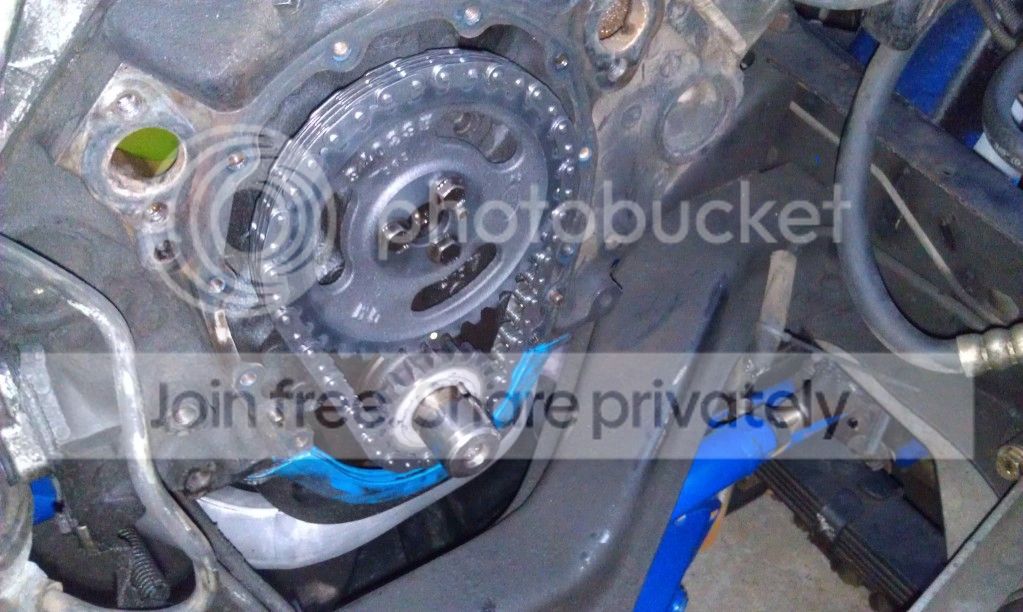
I had to go buy a small puller tonight because my puller wouldn't fit between the face of the block and the back of the crank gear. So after I got back I pulled the gear off, cleaned stuff up and got the new timing set put on. It's quite a bit tighter than the one that came off.

IMAG0966.jpg


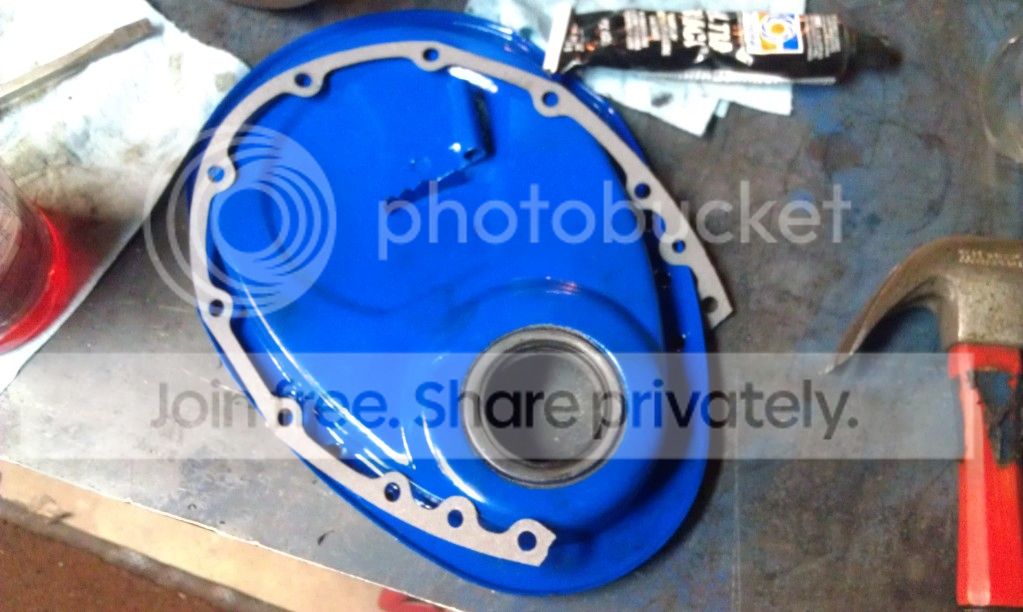
Is it easiest to loosen the bolts on the oil pan and lower the front lip of it then put the timing cover on then put the pan back up? I did a dry run with it tonight and it seems like the oil pan seal is going to fight me a lot to get it into the little groove on the bottom of the timing cover.
Also should I use rtv with the gasket? That's what was on there before but I didn't know if that was right.

IMAG0967.jpg


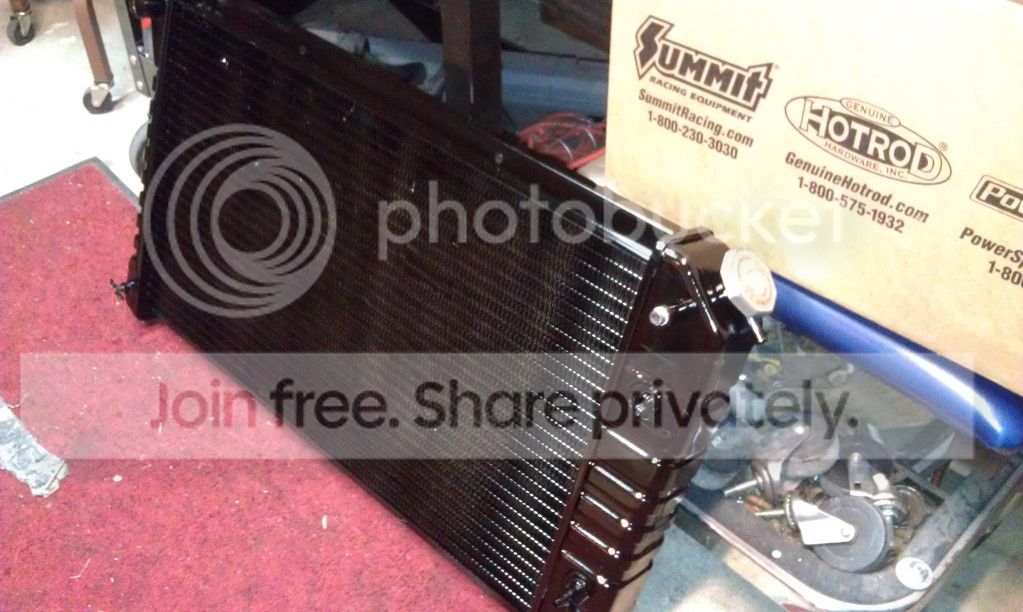
Oh and I picked up the radiator today during my lunch break. They boiled it, tested it for leaks and got it all cleaned up. He said it's a nice radiator without having the plastic tanks and should work well compared to my little two core I currently run.

IMAG0969.jpg

You need to cut the very corners of the timing chain cover off. Then trim the seal in the block to just at the edges of the block where they meet the oil pan and remove the part that is in the curved part of the front of the pan. I would loosen the pan only leaving the back few in but loose. Then I would glue the cover gasket to the block and the new rubber pan gasket to the groove in the cover trimmed to me the piece you cut out. Then put a nice dab of rtv in each corner so it will seal the 2 pieces together on each end to the rubber piece. The biggest pain is getting it pushed down enough to get over the front pins but once you do you should be home free.
 
I worked on dozens and dozens of electric pallet jacks with high amp solenoids. In this case all we are doing is by passing the starter solenoid on the starter and installing one off a ford meant for the same duty. I guess since it is more or less a direct replacement that is what I use. I know there are better ones but for the price and avaliblity I think they work fine. If I was controlling constant power I would find a better one. I know you are super smart at electrical so I am not trying to start a war just explaining that in my case I think what we are using is fine.

I should clarify that you're not bypassing the factory starter solenoid. In fact it still has to work in order for this mod to work. All you're doing is putting a slave solenoid in series before the factory one. However, this gets you full battery voltage to the factory starter and solenoid possibly making it function better than when its powered by the fuse box which often results in a voltage drop across all the wiring and ignition switch. I've never done the mod but with all my new wiring, I never have any trouble with hard or slow starts even with my long tubes. If your wiring is fresh and you never have a problem with hard or slow starts then why bother?
 
well, obviously you had no clue that their was a range of qualities, amp ratings, etc..... but that's cool, go put some low amp solenoid in a rig with a high amp draw, I'll be reading about your rig catching on fire...

How did you draw that conclusion from what I posted??? Why are you so angry? If you ask for a Ford starter solenoid at the parts store, they will give you one that is sufficient for installing on one theses rigs.

Martin
 
How did you draw that conclusion from what I posted??? Why are you so angry? If you ask for a Ford starter solenoid at the parts store, they will give you one that is sufficient for installing on one theses rigs.

Martin


how did I draw that conclusion? cuz you obviously have no idea what is "sufficient" or why varying amp ratings may be desired or needed...

I'm not angry, but annoyed with your snide replies.. you started this, not me.. I'm just defending knowing and understanding what mods you are doing require for proper operation and safety, as opposed to "assuming" something is going to work ok.......
 
I'm not gonna argue this in Avery's build.. I'm done...
 
I think the point he was trying to make is while it's easy to grab a ford setup from napa, it might not rated to handle the load some setup a might have. A winch and a **** loa f lights and what ever else might be enough to overload what the ford setup is rated for. So it might be easy to just grab that... It's important to understand the setup that way you don't inadvertently overpower the ford solenoid and burn your truck down.
Now. Let's get Avery's rig back running with shiny blue parts
 
Why would the winch have anything to do with the Ford solenoid. You would wire the winch directly to the battery, not?

Martin
 
yup, all starter motors draw the same, low comp 305 vs nasty BB...

throw in some electric fans, lights...

sorry Avery...
 
Last edited:
Why would the winch have anything to do with the Ford solenoid. You would wire the winch directly to the battery, not?

Martin

Ya I thought the slave solenoid only powered the starter, everything else it hooked directly to the battery.
 
I say just let him put whatever solenoid he wants to on his truck.

When you go to put the gasket on the timing cover/oil pan, you should have a one piece gasket for your year. It's an '84 or '85 right? On my '85 305, I was able to use the one piece and it was still a pain, but not that bad. Just take out the front few bolts on the pan and leave the rear ones. Just loosen ther rear one up some. You won't even loose any oil if you do it right. An extra set of hands will help. I think that if you take the oil pan off, it may actually be harder to get the gasket to stay in the right place.

I hope this new timing chain and gear set will fix your problem. At the least, now you know you have a new set that won't jump time anytime soon. It just trips me out that the marks were lined up when you took the cover off, even though it wouldn't run.
 
So back to what is important, is this truck running yet? Comp test?
 
Ya I thought the slave solenoid only powered the starter, everything else it hooked directly to the battery.


I've seen gas motors draw anywhere from 50 to nearly 500 amps depending on the motor and starter.. throw in an already taxed dc system running fans and lights potentially and that # goes up even more...
 
I've seen gas motors draw anywhere from 50 to nearly 500 amps depending on the motor and starter.. throw in an already taxed dc system running fans and lights potentially and that # goes up even more...

I don't doubt you but it shouldn't matter what else is drawing off the battery because the slave solenoid only sees the starter load right?
Obviously anything drawing on the battery while cranking is going to drop the voltage causing a higher amp load and slower cranking.
 

Latest Posts

Top Bottom