CK5
Register an account today to become a member! Once signed in, you'll be able to participate on this site by adding your own topics and posts, as well as connect with other members.

The Shop Truck

1971 Chevy C20 with a custom flat bed.
Sorry I didn't get the video's uploaded yesterday, I was drinking heavily for some reason... We're getting ready to pull the engine today to assess the damage. I could pull the heads in the truck, but since we'll likely be pulling a piston it will be easier to just pull the engine first since I can't drop the pan in the truck.

In other news, I can't say for sure, but I'm pretty sure I lifted a wheel on the last pass on Friday night. Here's a screen grab from Amber's video, if she wasn't so short, maybe we could have seen better :D.
1758471185989.png
Here's the first run with the 250hp jets for 7 seconds:
Here's the second run with the 300hp jets for 6 seconds:
Here's the final run with the 350hp jets for 5 seconds:
 
Using a 350 shot, your probably going to pull the engine a few times in the future.
I'd identify any hard to get at, or in the way things and modify/clearance them while your doing it to save headache later.

I've had the one in my burb out so many times I've gotten it whittled down to a system lol.

Like the first thing that happens is the grille, bumper, and core support comes out. Because I'm too old to bend over fenders.

And last time I found a couple bellhousing bolts hard to get at due to a body pinch weld. So that pinch weld got bent some while stuff was out of the way. Etc.
 
Thinking about this.... I wish I had a cool reason like a 360 shot as to why I've had my engine out so many times lol.
Sorta jealous :thumb:
 
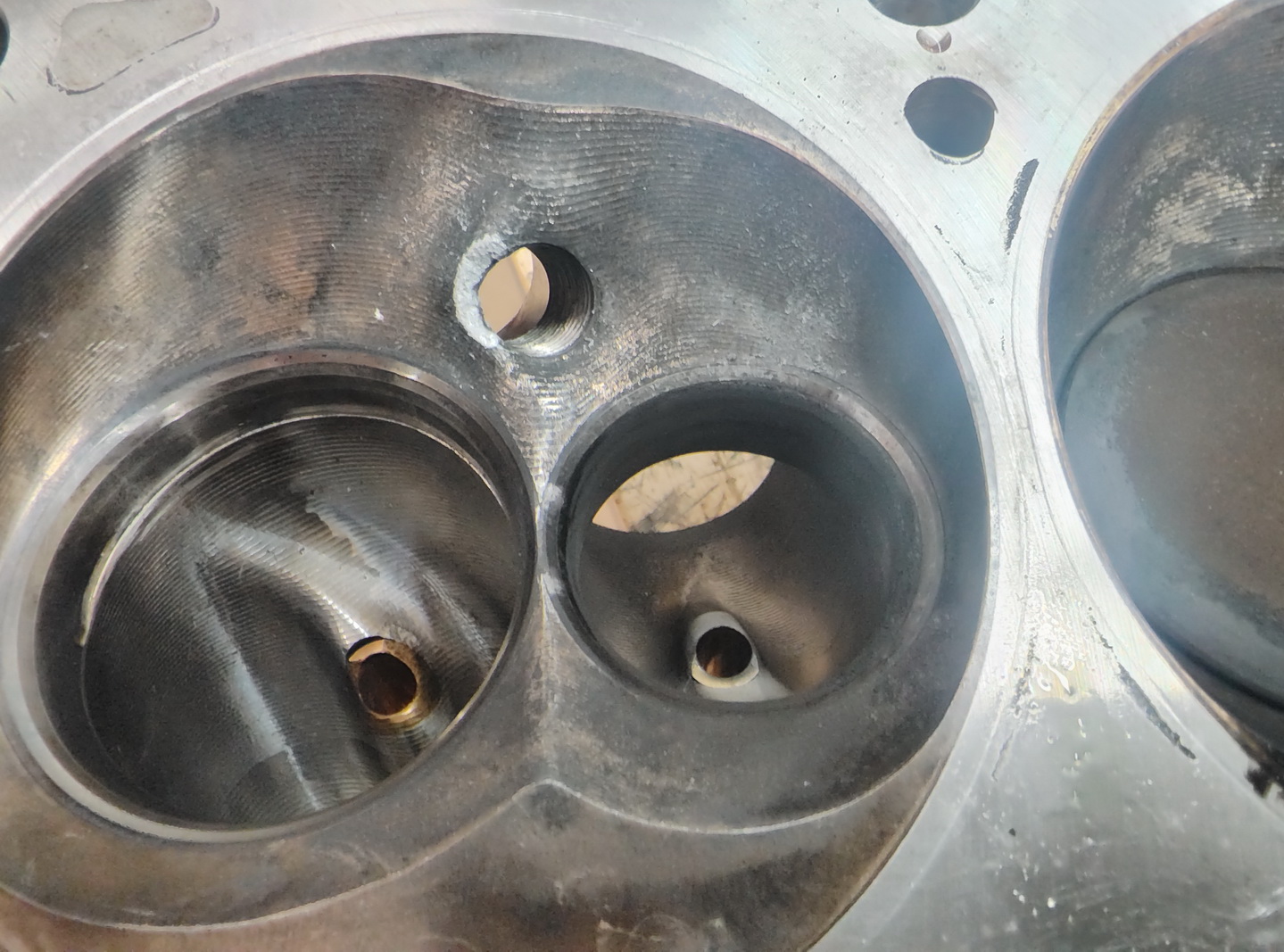
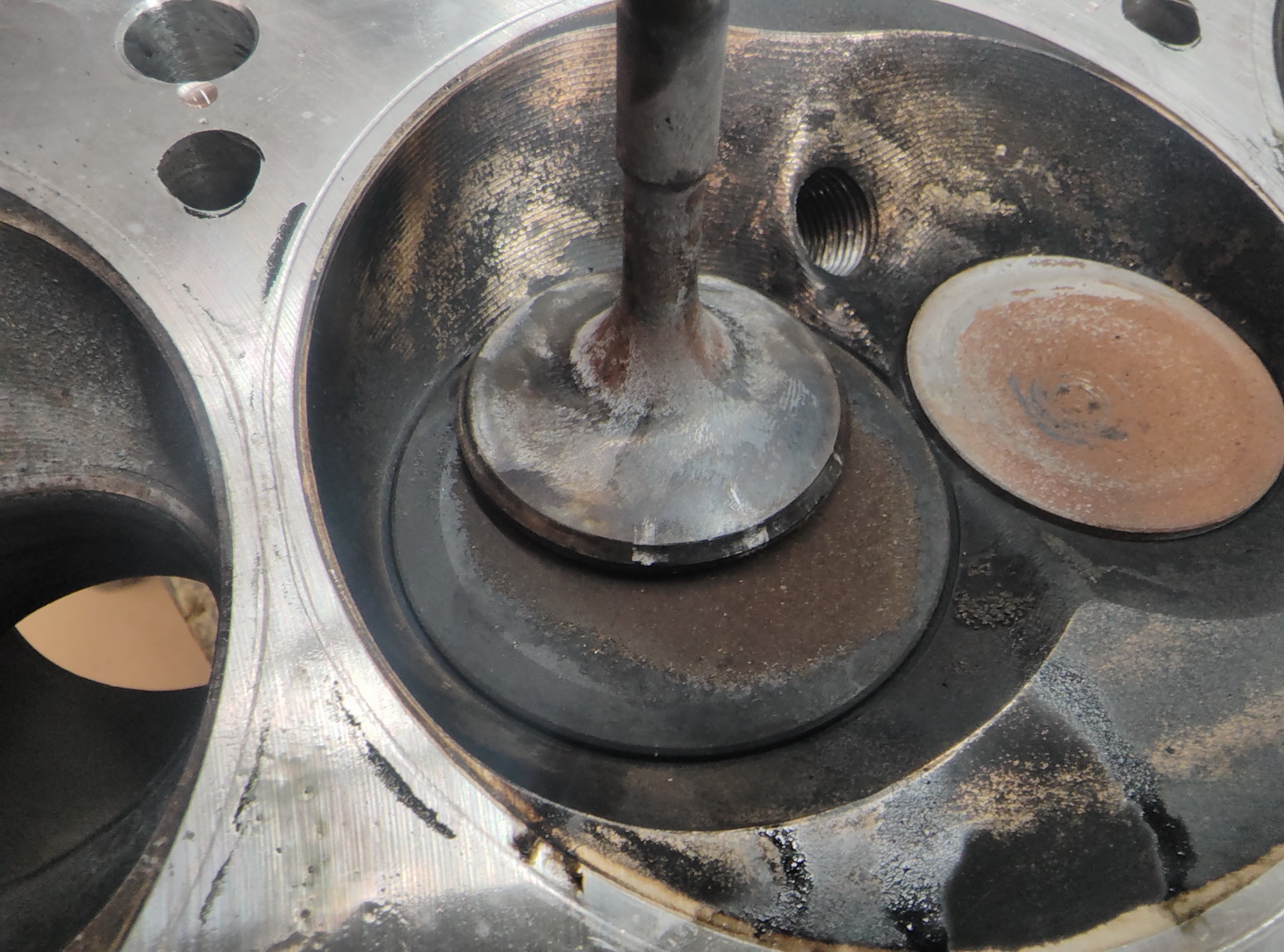
It's torn down, looks like I burnt an exhaust valve and possibly damaged the seat, I need to pull the valves and check for sure. The spark plug got hot enough that part of the head where it protrudes into the combustion chamber burnt away. I'll get pictures once I get the valves out.
 
Here's the damage, it's really not that bad. I can see where it was leaking by the valve on the seat but I can't feel it, I can feel the grooves on the valve though.
IMG_20250921_164516688_HDR.jpg

IMG_20250921_164527316.jpg

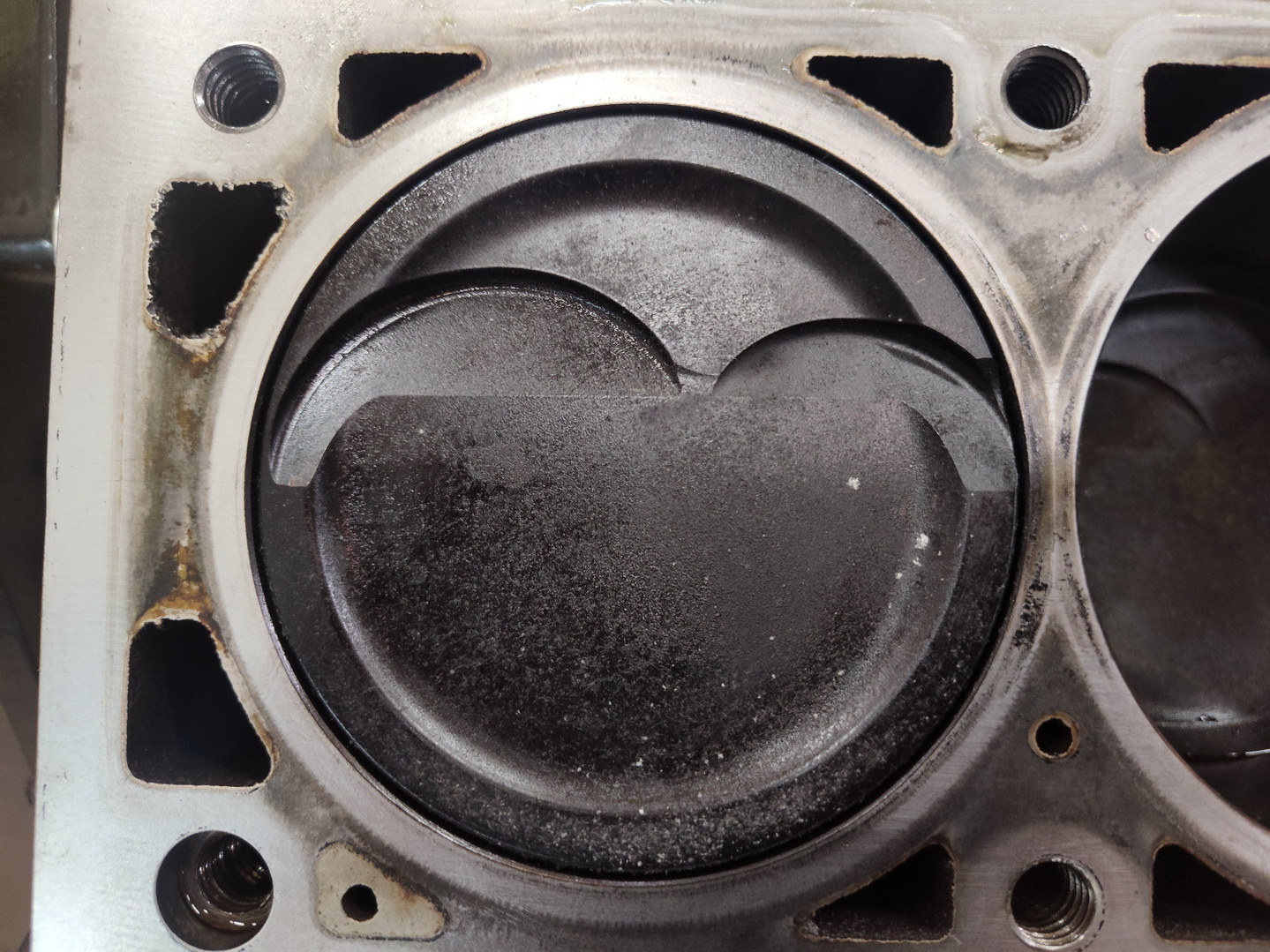
The piston looks fine, you can see where some of the spark plug bounced off of it, but you can't feel anything there.
IMG_20250921_164639827.jpg


I think we got lucky, I just need to swap out the valve and put everything back together. I'll definitely be installing the EGT probes so I can figure out the cylinder to cylinder tune on nitrous. There are at least 5 different nitrous plates that work just like the one I'm using, so there must be a way to make it work right. I'll be calling Induction Solutions tomorrow to talk to them about it, obviously a lot more nitrous ends up at the back. It may mean putting a smaller jet on the back 4 cylinders just to be safe.

Here's hoping I can get all the parts and do some more testing before Duct Tape Drags.
 
That's basically what this nitrous plate does. The issue is that when the valve is closed it bounces back into the plenum.
I think this would be an issue even with a lot that puts a jet and nozzle in each port. With that setup you can change jets cylinders by cylinder to tune them though.
 
Because you are excelerating? :D
The way I think of it, at the throttle plate there is 100% air, as the air travels over each port going to the back ports it's picking up some nitrous that is bouncing out of the ports it's going over making the nitrous concentration higher and higher as the air moves to the back of the plenum.
 
My dad used to theorize that the air going to the very front and back has more velocity and drags air from the center. Not so much with the fuel, because it has mass. He had no way of proving it. But nitrous used to burn down the rear cylinders first. Zero technology back then.
 
I think I know what happened now. I've spent the last couple days going over logs, talking to the guy from Induction Solutions and getting tuning help from EFI system pro. I came to a realization last night that just because I shut the nitrous solenoid, that doesn't mean the nitrous stops as the manifold, hoses and solenoid are still full of nitrous. I checked my logs to see what happened when the nitrous shut down and:
1758726727031.png
The Yellow line is the nitrous stage ending, .12 seconds later the AFR spikes to 17.29:1.
Now this didn't explain why it only happens sometimes, then I remembered that up to the 250hp run I was tapering the nitrous off with PWM over the last second. Looking at the logs from my 250hp run:
1758726906272.png
There's just a minimal spike, nothing dangerous. Now thinking back I melted the back plug one other time, it was on the 250 shot while I was testing (so disabling should have been a shut throttle which would have also prevented the lean spike), but I accidentally hit the rev limiter which would have just shut it off at 7200rpm before the 7500rpm rev limit. I looked at that log and once again there was a huge lean spike.

This makes me feel much better about getting the truck back together and putting that tapered shutdown back in.
 
I would say you found it. It feels good to actually see the problem and not have to guess at it.

Checking logs after every run may be needed.
I was checking logs after every run, but I wasn't looking at the shutdown. That was never an issue before so I didn't focus on it as we were rushing to get the truck turned around for the next run. It is definitely a relief to find the smoking gun. This means Amber should get to drive on the 10th and I can work on the tune.
 
Top Bottom